

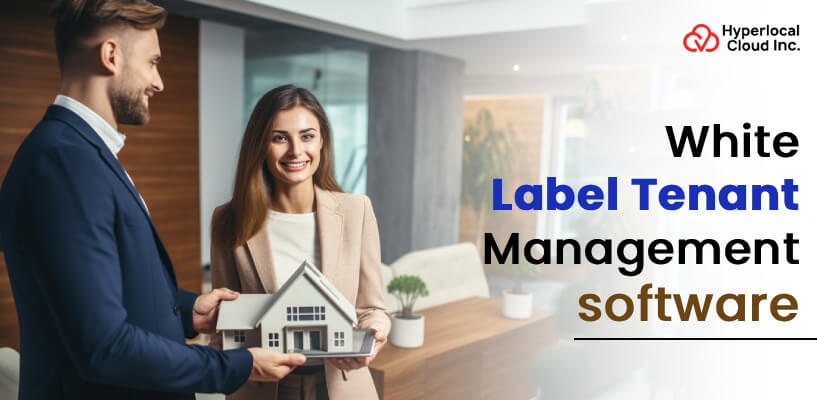
Handling the tenants should not feel like a circus. Awkward paychecks, work orders stacking up, renewal letters dropping off the paper—sound familiar? Spreadsheets and paper-trials used traditionally cannot keep up with increasing portfolios. That is where tenant management software comes in. This digital solution integrates all the communication related to rent collection, transforming scattered processes into streamlined workflows.
Convenience is not the sole concern of property management companies and real estate businesses, but scalability, fewer mistakes, and providing their tenants with unparalleled experiences. When investing in the right software, it is a time-saving and cost-cutting operation, enabling a business to grow sustainably in a market that is becoming increasingly competitive.
Overview Of Tenant Management Software Solutions
Tenant management software is a web-based solution that enables landlords and property managers to organize and automate rental transactions, including tenant screening, lease processes, rent collection, maintenance requests, and financial reporting, all within one platform. Often, this platform includes tenant portals that allow tenants to self-service. It simplifies the work, enhances communication, saves paperwork, and makes it more efficient to deal with residential or commercial buildings.
Start Offering Tenant Management Under Your Own Brand
How Property Managers Use Tenant Management Software
Tenant management software streamlines property management by automating processes, centralizing data in a single database, and offering financial solutions to support various services. The following are the steps on how it works:
1. Listing & Marketing
Properties will be listed and include detailed descriptions, photos, and virtual tours as a way of attracting potential tenants and creating leads.
2. Application Submission
Those interested tenants complete application forms online and attach their necessary documents, such as ID proofs and income statements.
3. Screening & Approval
The system has automated background checks, credit checks, and income verification by automated screening services.
4. Lease Generation
The lease agreement is signed electronically by approved applicants, and all the documents are saved online in the central database.
5. Rent Collection
Rents are being paid online on the portals, and the system keeps a track of the payments as well as reminders and automatic imposition of late fees.
6. Maintenance Management
Repair requests are done via the internet, and managers dispatch job orders to contractors, with real-time monitoring of the status of work.
7. Communication Hub
Parties can communicate based on secure messages, announcements, and documents via a central tenant-manager portal.
8. Financial Tracking
The software is applied to manage accounting, expense tracking, and invoices are generated, and it automatically produces detailed financial reports.
9. Lease Renewal
It has automated lease renewal offers and pre-lease expiry alerts to facilitate lease renewal.
10. Move-Out
The software will process the move-out checks, security deposit returns, and final documentation to finish the tenant life cycle.
Strategic Benefits Of Investing In White Label Tenant Management Systems
The following table shows the benefits of investing in the white label tenant management software:
| Benefits | Description |
| Brand customization | You are free to add your logo, colors, and company name to make the software look like it is your own product. |
| Faster market entry | Deploy your tenant management product within a short time without taking years to create software. |
| Cost-effective solution | Save a lot of money in development, testing, and maintenance as opposed to developing in-house software. |
| Revenue generation | Sell or license the rebranded software to the property managers and landlords as a source of extra revenue. |
| Regular updates included | The provider itself takes care of all technical updates, bug fixes, and new features. |
| Scalable for growth | Expandable to accommodate the growing needs of your business technically without hindrance. |
| Focus on core business | Focus on customer relations and property management rather than on software development headaches. |
Which Features Matter Most In Tenant Management Software?
The features of the tenant management software are usually arranged into various panels with specific roles (administrator, tenants, and owners). Here are the main features that each panel includes:
Administrator Panel Features
1. Tenant & Lease Management
A complex system of tenant data, lease contracts, registration of the renewal date of the lease, moving in, and moving out.
2. Accounting & Financial Reporting
Software to track income and expenses, automate rent reconciliation, accounts payable and receivable management, and detailed financial reporting (e.g., 1099s), owner statements.
3. Online Rent Collection
Implement safe payment gateways to take online rent (ACH, credit cards, and so on) and send automatic reminders, in addition to managing late payments.
4. Maintenance & Work Order Management
A system that will accept, prioritize, assign, and monitor maintenance requests made by tenants, service vendors, and keep a history of maintenance.
5. Vacancy & Listing Management
Ability to make and distribute property postings to various online listing services, monitor leads, and also handle the tenant applications/screening procedure, including background checks.
6. Document Management & E-Signature
All important documents (leases, inspection reports, insurance documents, etc.) are stored securely in a digital way supported by digital signatures and an audit trail.
7. Communication Hub
Announcement, rent reminder, and other important communication with tenants and owners will be done through centralized tools (email, SMS, in-app messaging), etc.
8. Reporting & Analytics
Dashboards and reports to create a report about important metrics such as occupancy levels, cash flows, and property performance that can be used to make decisions based on data.
9. User & Role-Based Access Control
The administrator will be able to control the information, which is sensitive to the company, and can be accessed only by authorized users due to the ability to control user accounts and grant access in the form of granular permissions.
Owner Panel Features
1. Revenue and Expense Tracking
The in-depth monitoring of all the revenue (rent, fees) and expenses (maintenance, utilities, costs of the vendors).
2. Automated Rent Collection Oversight
Real-time rent payments, the identification of outstanding accounts, and the payment history of all tenants.
3. Financial Reporting
Preparation of detailed income statements, expenses reports, profit/loss statements, and tax reports to understand business performance.
4. Analytics
Analytics offers data-driven information and suggestions, e.g., occupancy ratios, turnover forecasts, and the most effective rent pricing plans.
5. Multi-Property Management
This will allow an account to control multiple properties, units, and their occupancy statuses in one centralized account.
6. Tenant Management
Access to all tenant data, including their contact details, lease agreement history, background check history, and communication history.
7. Vacancy & Listing Management
Vacant units can be listed on different sites, and availability can be updated in real-time using tools to reduce vacancies.
8. Maintenance Oversight
A system that will follow all the maintenance requests, track the progress, assign the staff or vendors to work, and follow the costs and completion status.
9. Communication Hub
This is a centralized organization of communication with tenants and personnel, where mass notifications (such as email/SMS) are used to communicate announcements or emergencies.
10. Document Storage & Management
All the main documents like leasing agreements, property certificates, tax forms, and others are securely stored in a digital format and can be accessed easily, and also meet the legal requirements.
11. Role-Based Access Control
The right to provide custom permissions to property managers or other employees, restricting access to sensitive information and enhancing the efficiency of the operations.
12. Mobile Accessibility
The ability to use the dashboard and features through mobile applications, which would enable the owner to remotely manage their properties and get push notifications about important updates.
13. Cloud-Based System
This is where all the data is safely kept in the cloud and can be accessed anytime without any restrictions.
Tenant Panel Features
1. Online Payments
There is a secure portal to see invoices, one-time rent payments, recurring payments, and a history of payments.
2. Maintenance Request Submission
It is the possibility to easily place maintenance requests online (with photo/video attachments) and monitor their progress, as well as communicate with maintenance personnel.
3. Communication
There will be a special channel where big announcements from the property manager and messages will be received.
4. Document Access
The tenants have the ability to reach such documents as lease agreements, move-in checklists, and community rules.
5. Amenities Scheduling
In properties that have the amenities feature on, the feature allows one to view and book amenities such as meeting rooms or parking slots.
6. Lease Renewal Management
See the dates of lease expiration ahead, get renewal messages, look at the new terms, and make renewal decisions through the portal.
7. Visitor Management
Pre-register visitors to have a hassle-free entrance, create visitor passes, view visitor history, and inform security or the front desk of the visitors coming.
8. Utility & Expense Tracking
Track the use of individual utilities, see the breakdowns on other charges, track the shared expense allocations, and download monthly consumption reports.
9. Community Feed & Events
Get to know what is happening in the neighborhood, registering or declining community events, interacting with other members of the community, and voting or discussing events in the building.
Book a Live Walkthrough of Our White Label Tenant Software
AI-Based Innovations In Tenant Management Platforms
Artificial intelligence functionality in your tenant communication software will simplify the task at hand, reduce mistakes, offer multilingual services, and offer real-time updates, and this will be a more productive and fulfilling work environment among the managers and the tenants. The following are the ones that you can take into consideration:
➤ Smart Rent Prediction
AI evaluates market conditions, location of the property, and its amenities to recommend the best rental prices that should maximize revenues and remain competitive.
➤ Automated Tenant Screening
Machine learning evaluates the applications, finds out the high-risk tenants, and makes approval decisions on the basis of credit score, rental history, and income verification.
➤ Predictive Maintenance
AI forecasts the equipment status by predicting failures and preventive maintenance before they occur through the analysis of the usage patterns, eliminating emergency maintenance and expenditure.
➤ Intelligent Chatbots
24/7 virtual assistants respond to tenant inquiries in real-time and respond to routine requests such as payment receipts, and forward complicated problems to property managers.
➤ Expense Forecasting
AI uses past information to forecast forthcoming property expenses and can assist landlords in planning properly in preparing a budget for repairs, utilities, and seasonal expenditures.
➤ Tenant Behavior Analytics
Machine learning monitors payment, frequency of maintenance, and adherence to the lease agreement, and removes potentially conflicting tenants and predicts problems promptly.
➤ Automated Document Processing
Artificial intelligence will analyze the updated files, including ID, pay stubs, and contracts, and will fill the form automatically, so that one will not have to add the data to the form manually.
➤ Smart Lease Renewal Suggestions
AI suggests the most appropriate moment to send a renewal offer and propose competitive terms depending on the scores of tenant satisfaction and market conditions.
Software Development Process For Tenant Management Solutions
The tenant management software for landlords can be developed in a systematic manner through planning, design, development, testing, and implementation of the software. Some of the main steps include defining features, platform development approach, and improvement through continuous user feedback.
1. Requirements Gathering & Planning
Get to know their pain points and the needs of your target audience. They develop an elaborate list of features to be developed, such as rent collection and maintenance tracking, and communication tools. A roadmap containing a timetable, budget, and milestones is made to direct the whole process of development.
2. Market Research & Analysis
Research competitor software to find market gaps and opportunities. Examine the existing trends, regulations, and compliance of property management in the industry. The study will help in identifying special characteristics that will distinguish the software from current solutions.
3. UI/UX Design
Designers develop wireframes and mockups of how every screen and functional area will appear and operate. They make the interface user-friendly and simple to use for non-technical and technical users. Various design models are put to test to offer optimum user experiences in both desktop and mobile platforms.
4. Software Development
Here comes the development part, where you need to decide on what process you will follow for the software development. Below are the differences between the two approaches:
| Feature | Custom-Based Solution | White Label Solution |
| Development Time | Takes 6-12 months or longer to build a tenant management platform from scratch. | You can launch your tenant management platform with our white label property management software in days or weeks with your branding. |
| Cost | High upfront investment and ongoing maintenance costs. | One-time investment with lifetime licensing. |
| Customization | Fully tailored to your exact business needs and workflows. | Limited to existing features with some branding and configuration options. |
| Technical Expertise | Requires an in-house development team or external developers to build and maintain. | No technical team needed—vendor handles updates and maintenance. |
| Scalability | You control scaling, but must invest in infrastructure and updates yourself. | Easily scales with your business—vendor manages backend growth. |
| Risk & Responsibility | You own all bugs, security issues, and compliance requirements. | Vendor handles security patches, updates, and regulatory compliance. |
5. Integration & Testing
Service providers such as payment providers, background service providers, and financial management tools are incorporated into the system. The QA team conducts high levels of testing in order to detect and address bugs, security vulnerabilities, and performance concerns. The users are involved in user acceptance testing, where real property managers are involved to ascertain that the software meets their expectations.
6. Deployment & Launch
The software will be deployed on secure cloud servers where there are backup and disaster recovery systems. The training materials, user guides, and video tutorials are developed to enable users to start as soon as possible. Before the mass launch, having some beta users facilitated by a soft launch is useful in collecting feedback.
7. Maintenance & Updates
Software performance is constantly checked by the development team, and any bugs that appear after the launch are corrected. New features are introduced regularly with new updates, depending on the way users might use them and the requirements of the industry that are in flux. Security patches are also implemented promptly in order to secure sensitive tenant information and financial information against emerging security threats.
Key Factors to Consider When Choosing Tenant Management Software
Some of the major traits to be considered when selecting tenant management software are as follows:
1. User-Friendly Interface
The software must be user-friendly to the property managers and tenants without the need to provide them with a lot of training. The design with easy and faithful intuitiveness makes all people use the features easily and accomplish tasks effectively.
2. Comprehensive Feature Set
Seek such crucial features as online rent collection, maintenance requests, lease management, and automated communication. The software is expected to manage all property management requirements under a single centralized system without multiple tools.
3. Mobile Accessibility
Select software that has mobile-responsive applications or web-based applications so that you can manage properties on the go. The tenants must also be capable of making their payments, requests, and communicating anywhere, anytime, using their smartphones.
4. Security & Compliance
Make sure that the software is bank-level encrypted to make sensitive financial and personal data secure. It must meet data protection laws and standards in the industry to ensure that the information of the tenants is not susceptible to breach.
5. Integration Capabilities
The software must be able to integrate with accounting software, payment gateways, background checks service, and other must-have third-party software. Good integrations remove the need to duplicate data and automate your business processes.
6. Scalability & Support
Choose a software that is scalable to your business (10 properties or 1000 units). Good customer service and quick response time result in you having help whenever you have any technical problems or queries.
Launch Your Own Branded Tenant Management Platform Today
What Is The Monetization Strategy For Tenant Management Software?
The following is a list of revenue streams that businesses can consider to make money through the tenant management software:
➤ Subscription Fees (SaaS)
The basic model, with property managers paying a small fee every month or year, is usually based on the number of property units under management or features available (e.g., basic vs premium).
➤ Transaction Fees
To encourage tenants to use the convenient online payment options, such as credit/debit cards, transaction fees should be charged for this service, though ACH transfers should remain free.
➤ Premium Features
Sell more sophisticated analytics, an owner portal, or support with a particular type of property (e.g., short-term rental).
➤ Affiliate Programs
Businesses can make a commission by referring to other services (such as insurance or financing) via the service.
Wrapping Up With Key Insights!
Tenant management software is no longer an option; it is a must to remain competitive and efficient. The correct system will change the way you handle properties, and it saves time and increases profits. Are you willing to upgrade your operations? Hyperlocal Cloud is the best real estate software development company that also specializes in white-label solutions, starting at $7,000, to suit your business requirements. Your brand can easily scale using our low-cost, customized platforms without sacrificing your brand. Don’t let outdated processes hold you down. Contact us now to learn how our solutions can help your property management business take the next step.

Patt Cummins is an experienced content writer with over 10 years of experience creating clear and engaging content for technology-focused industries. He specializes in simplifying complex technical topics into easy-to-understand stories that educate readers, support brand communication, and help businesses effectively share their solutions.

Need Help With
Development?