

Today, millions of users prefer learning languages through apps that offer flexibility, personalization, and short lessons. Apps like Babbel, Duolingo, italki, and Preply have changed the education industry by making language learning accessible anywhere, anytime. The demand for language learning apps is growing due to globalization, remote work, travel and cross-border communication. Users want more than vocabulary drills; they want fun experiences, speech recognition, AI feedback, and personalized learning paths.
If you plan to build a language learning app like Babbel, understanding the features, technology, and cost is essential. In this guide, you will learn how such apps work, what features are necessary, how to develop an MVP, and what it costs to launch a product.
Latest Market Statistics of Language Learning Apps
The language learning app industry is expanding rapidly, driven by demand for digital education and AI personalization. As of 2024, the global language learning apps market was valued at approximately $6.34 billion and is projected to grow to around $24.39 billion by 2033, at a steady CAGR of over 16% (Source). This strong growth is fueled by rising smartphone penetration, remote learning adoption, and the need for multilingual skills in global workplaces.
Mobile language learning apps alone generated over $1.1 billion in revenue in 2024, highlighting the dominance of subscription-based learning platforms (Source). The industry also recorded more than 316 million app downloads globally in 2024, showing consistent user demand across regions.
In terms of market leadership, Duolingo remains the dominant player, with over 50+ million daily active users in 2025 and more than 12 million paid subscribers, making it the most widely used language learning platform worldwide. Meanwhile, competitors like Babbel continue to focus on structured learning models, while platforms such as italki and Preply dominate the tutor-based learning segment.
Overall, these figures clearly show that the language learning industry is not only growing but also shifting toward AI-driven, personalized, and gamified learning experiences, creating strong opportunities for new app development.
Hire an Expert to Build Your Feature-rich Language Learning App Like Babbel
What is a Language Learning App Like Babbel?
A language learning app like Babbel is a web-based platform that helps users learn new languages through structured interactive lessons. Instead of traditional classroom learning, these apps focus on short, engaging modules that make it easier for users to build vocabulary, understand grammar, and improve speaking skills consistently over time.
These platforms typically break down language learning into bite-sized lessons that include reading, listening, writing, and speaking exercises. The goal is to simulate real-life conversations and practical usage rather than just theoretical knowledge. Apps like Duolingo, italki, and Preply follow similar models but differ in approach; some focus on gamification, while others emphasize live tutoring or structured coursework.
In essence, a language learning app like Babbel combines technology and education by using features such as gamification, AI-driven personalization, and progress tracking to keep learners engaged. It allows users to learn at their own pace, track improvement, and practice consistently, making language acquisition more accessible and effective in a digital-first world.
How an App Like Babbel Works
Language learning platforms like Babbel are built around a product flow that guides users from onboarding to continuous learning. The system is designed to maximize engagement, habit formation, and long-term learning outcomes.
Onboarding Flow
The onboarding process typically begins with user registration followed by a placement test or skill assessment. This helps the app understand the learner’s current proficiency level, goals, and preferred language. Based on this data, the system personalizes the learning path and recommends suitable beginner, intermediate, or advanced courses.
Lesson Structure
Lessons are usually broken into short, focused modules that cover vocabulary, grammar, listening, reading, and speaking. Each lesson is designed to take only a few minutes, making it easy for users to complete daily sessions. The content often follows real-life conversational scenarios to improve practical communication skills rather than theoretical knowledge.
Progress Tracking
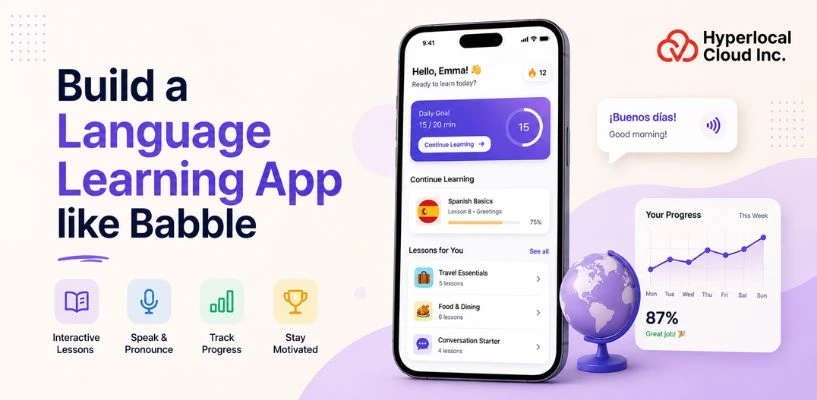
Progress tracking is a core engagement feature. The system continuously monitors lesson completion, accuracy rates, streaks, and skill improvement areas. Visual dashboards and milestone indicators help users stay motivated by showing measurable progress over time. Many apps also adapt future lessons based on performance data to reinforce weak areas.
Subscription System
Most language learning apps operate on a freemium or subscription-based model. Users typically get access to limited free lessons, while advanced content, offline access, and personalized features are locked behind paid plans. Subscription tiers are usually offered monthly or annually, creating a recurring revenue stream while incentivizing long-term learning commitments.
A successful language learning app like Babbel must include a strong combination of engagement, personalization, and AI-driven learning features. These features ensure users stay consistent, motivated, and able to progress effectively over time.
Interactive Lessons
Interactive lessons form the core of any language learning platform. They include exercises like fill-in-the-blanks, listening tasks, matching words, and short quizzes. These activities keep learners actively involved rather than passively consuming content. The goal is to improve retention by encouraging users to practice reading, writing, listening, and speaking simultaneously.
Gamification System
Gamification improves user engagement by adding game-like elements such as points, levels, badges, streaks, and leaderboards. It motivates users to return daily and complete lessons consistently. This system helps build learning habits by rewarding progress and maintaining a sense of achievement throughout the journey.
Speech Recognition
Speech recognition technology helps users improve pronunciation and speaking skills. The app listens to the user’s voice and compares it with native pronunciation models. It then provides real-time feedback to correct errors and improve accent clarity. This feature is essential for building conversational fluency.
AI Chatbot Tutor
An AI chatbot tutor acts as a virtual assistant for learners. It allows users to practice conversations, ask grammar questions, and receive instant explanations. The chatbot adapts responses based on user level and learning history. This creates a more personalized and interactive learning experience outside structured lessons.
Progress Tracking
Progress tracking helps users visualize their learning journey. It monitors completed lessons, accuracy rates, daily streaks, and skill improvements. Dashboards and progress reports keep learners motivated by showing measurable growth over time. It also helps the system adjust future lessons based on performance.
Offline Mode
Offline mode allows users to download lessons and access them without an internet connection. This is especially useful for learners who travel frequently or have limited connectivity. It ensures uninterrupted learning and improves app accessibility in different environments.
Personalized Learning Path
A personalized learning path adapts content based on user behavior, goals, and proficiency level. The system identifies strengths and weaknesses and adjusts lessons accordingly. This ensures that users are always learning at the right difficulty level, improving efficiency and engagement.
Multilingual Support
Multilingual support enables users to navigate and learn in their preferred interface language. It helps expand the app’s global reach and improves usability for non-English speakers. This feature is essential for scaling across multiple regions and increasing user adoption worldwide.
Turn Your App Idea Into Reality With a Latest Development Strategy
Development Process of A Language Learning App Like Babbel
Building a language learning app like Babbel requires a structured development approach that ensures scalability, user engagement, and long-term product stability. Each phase plays a critical role in transforming an idea into a functional and market-ready application.
Market Research
The first step is understanding the target audience, competitors, and market gaps. This includes analyzing successful platforms like Duolingo, italki, and Preply to identify what features perform well and where user pain points exist. The goal is to define what unique value your app will offer in a competitive market.
Define MVP
The MVP (Minimum Viable Product) focuses on building only the essential features required to launch the app. This usually includes user onboarding, basic lessons, progress tracking, and simple gamification. The purpose is to validate the idea quickly, reduce initial costs, and gather real user feedback before scaling.
UI/UX Design
UI/UX design focuses on creating an intuitive and engaging user experience. The design should prioritize simplicity, mobile-first navigation, and interactive learning flows. A well-designed interface improves retention by making lessons easy to access and enjoyable to complete.
Choose Tech Stack
Selecting the right technology stack is crucial for performance and scalability. Common choices include Flutter or React Native for frontend, Node.js or Django for backend, and cloud services like AWS or Firebase. AI components such as speech recognition or chatbots may require integration with machine learning APIs.
Development
This phase involves actual coding of frontend, backend, and AI features. Developers build user modules, lesson systems, gamification engines, and admin dashboards. The focus is on creating a stable, scalable architecture that supports real-time learning and personalization.
Testing
Testing ensures the application is free from bugs and performance issues. It includes functional testing, UI testing, performance testing, and compatibility testing across devices. Proper testing ensures smooth user experience and reduces post-launch errors.
Deployment
Once tested, the app is deployed to platforms like Google Play Store and Apple App Store. This phase also includes setting up servers, databases, and production environments. Proper deployment ensures the app is stable and accessible to users globally.
Maintenance
Post-launch maintenance involves fixing bugs, updating features, improving performance, and adding new content regularly. Continuous updates are essential to keep users engaged and maintain competitiveness in the market. Analytics and user feedback play a key role in guiding future improvements.
Tech Stack to Develop A Babbel-Like App
Choosing the right tech stack is critical when building a scalable and high-performance language learning app like Babbel. The technology decisions directly impact app speed, user experience, AI capabilities, and long-term maintainability.
Frontend
The frontend is responsible for the user interface and overall experience. Popular choices include Flutter and React Native for cross-platform mobile development, allowing a single codebase for both Android and iOS. For web applications, React.js is commonly used to build responsive and interactive interfaces. The focus here is smooth navigation, fast loading lessons, and an engaging learning experience.
Backend
The backend handles user management, lesson delivery, progress tracking, and subscription systems. Common technologies include Node.js, Django, or Laravel, depending on scalability needs. Node.js is widely preferred for real-time features, while Django offers strong security and rapid development capabilities. The backend acts as the core engine powering personalization and content delivery.
Database
Databases store user data, learning progress, lessons, and analytics. PostgreSQL is often used for structured relational data, while MongoDB is suitable for flexible, unstructured data like user activity logs. Many modern apps use a hybrid database approach to balance performance and scalability.
AI / ML
Artificial intelligence plays a major role in modern language learning apps. Technologies like Google Speech-to-Text API, OpenAI APIs, and custom NLP models help power speech recognition, AI chat tutors, and personalized recommendations. Machine learning algorithms analyze user behavior to adapt lesson difficulty and improve retention rates.
Cloud & Hosting
Cloud infrastructure ensures scalability, reliability, and global accessibility. Popular options include Amazon Web Services (AWS), Google Cloud Platform (GCP), and Firebase. These platforms support hosting, storage, authentication, push notifications, and real-time databases. A strong cloud setup ensures the app performs smoothly even with millions of users.
Get a Custom Language Learning App Built With AI and Gamification Features
Monetization Models to Earn Money from An App Similar to Babble
A language learning app like Babbel typically uses multiple revenue streams to ensure consistent income while scaling globally. Most successful platforms combine subscription-based revenue with freemium access to maximize both user acquisition and long-term retention.
Subscription Model
The subscription model is the most common monetization strategy. Users pay a monthly or yearly fee to access full courses, advanced lessons, and offline features. This model creates predictable recurring revenue and helps businesses maintain steady cash flow. However, it requires continuous content updates and strong retention strategies to prevent churn.
Freemium Model
In the freemium model, users can access basic lessons for free while premium content is locked behind a paywall. This approach helps attract a large user base quickly and builds trust before conversion. The downside is that only a small percentage of users typically convert to paid plans, so strong engagement strategies are necessary.
In-App Purchases
In-app purchases allow users to buy specific courses, advanced modules, or skill boosters without committing to a full subscription. This model provides flexibility and caters to users who prefer one-time payments. While it increases monetization opportunities, revenue can be inconsistent compared to subscriptions.
Institutional Licensing
Institutional licensing involves selling bulk access to schools, universities, or companies for employee or student training. This model generates high-value contracts and stable revenue streams. However, it often requires customization, enterprise support, and longer sales cycles.
Ads (Optional)
Advertising allows free users to access content while generating revenue through third-party ads. It helps monetize non-paying users effectively. However, excessive ads can negatively impact user experience and reduce engagement, so they must be implemented carefully.
How Much Does It Cost To Build A Babbel Clone App?
The cost estimation of Babbel-like app development varies from that of the usual education app. However, the cost ranges from $7,000, depending upon various factors, which are illustrated as follows;
Development Process
This stage is crucial as it requires ample time and knowledge about technicalities that aid in the entire process. There is a lot of brainstorming, UX research, performing quality assurance, and much more that become key factors in the overall budget.
Appealing Design
A spectacular language-learning app that grabs more eyeballs and makes it easier for users to navigate through different application sections. Keeping the interface user-friendly and attractive requires a top-notch development cost.
Tech Stacks
Picking the right and advanced technological stacks helps impact the performance and the overall budget. A high cost for front-end and back-end development is charged for offering ultramodern services.
Customization
The more personalization required in the Babbel clone app, the higher the development cost. It could add astonishing features, mesmerizing design, and functionalities that make the platform unique and distinctive from the others in the market.
Hire Expert Developers to Build Your Feature-rich Language Learning App
Conclusion
Building a language learning app like Babbel involves combining strong educational design with modern technology such as AI, gamification, and personalized learning systems. Throughout this guide, we explored how these apps work, the essential features required, the step-by-step development process, the recommended tech stack, and the most effective monetization models. Each of these components plays a key role in creating an engaging and scalable learning platform.
The opportunity in this space continues to grow as global demand for digital education and multilingual skills increases. Users are actively seeking flexible, mobile-first solutions that offer interactive and personalized learning experiences, making this market highly relevant for new product development.
If you are planning to build a similar application, starting with a focused MVP and the right feature set can help you validate your idea quickly and reduce development risk. A well-planned approach can turn this concept into a scalable product with strong long-term potential.

Patt Cummins is an experienced content writer with over 10 years of experience creating clear and engaging content for technology-focused industries. He specializes in simplifying complex technical topics into easy-to-understand stories that educate readers, support brand communication, and help businesses effectively share their solutions.

Need Help With
Development?