


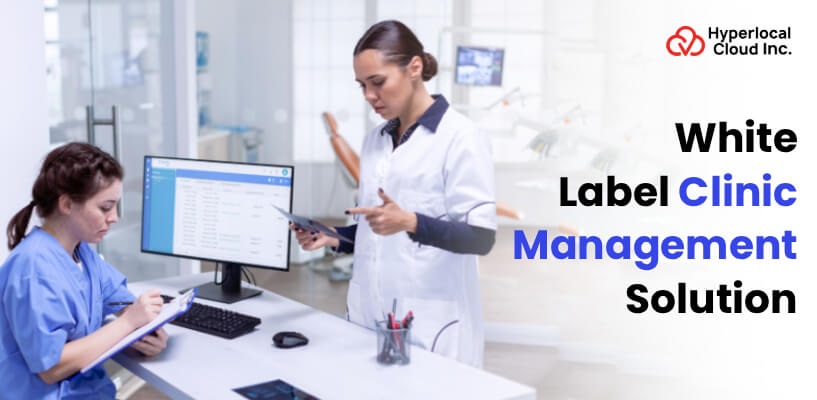
Healthcare offerings are growing rapidly, resulting in clinics, hospitals, diagnostic centers, and strong point-of-care healthcare vendors seeing an increase in patients every day. With this growth, handling everyday sanatorium operations using paper files or primary tools has emerged as very difficult and time-consuming. This is where clinic management software performs an important role.
The software programs enable clinics to handle their daily operations smoothly and efficiently. From booking appointments to dealing with patient information and billing, the whole lot may be performed in a single virtual device. This reduces manual work and allows clinics to deliver higher-quality care to patients.
In recent years, the demand for virtual healthcare answers has accelerated significantly. Clinics at the moment are looking for innovative software programs that save time, reduce mistakes, and improve the patient’s experience. Thus, businesses can start their business journey by entering the healthcare industry by developing a clinic management software.
What Is a Clinic Management Software?
A clinic management software program is a virtual platform that facilitates clinics to control everyday operations in one place. It replaces guide techniques, which include paper files, registers, and spreadsheets, with a simple and prepared software program solution.
This software usually includes features like:
- Patient registration and profile management
- Doctor and staff management
- Billing and invoicing
- Prescription and treatment records
- Reports and analytics
By the usage of hospital management software, clinics can securely store and access patient data every time. It also helps doctors and staff work more effectively by reducing repetitive tasks. Overall, it improves health facility productivity and guarantees better outcomes for affected people.
Unlock your clinic’s full potential with our White Label solution
How Does a Clinic Management Software Work?
A complete working model of the clinic management software is mentioned in an elaborate way. All you need to do is explore the information to understand the operations of the software.
1. Patient Registration & Records
Clinic management software stores patient information digitally, which includes private statistics, clinical records, prescriptions, and reviews. This allows short entry to correct patient records and removes office work.
2. Appointment Scheduling
The device helps manage physician availability and patient appointments efficiently. It prevents double bookings and sends automatic reminders to lessen no-shows.
3. Doctor & Staff Workflow
Doctors and a team of workers use dedicated dashboards to manage each day’s tasks. Doctors report diagnoses and prescriptions, at the same time as the body of workers manage to take a look at-ins, follow-ups, and administrative work smoothly.
4. Billing & Payments
The software routinely generates invoices based on the offerings provided. It helps more than one price technique and enables tuning invoices, receipts, and insurance claims.
5. Pharmacy & Inventory Management
Prescriptions are controlled digitally and linked to stock facts. The machine tracks medicine stock tiers and expiry dates and sends signals for low inventory.
6. Lab & Diagnostic Integration
Doctors can request lab exams at once through the gadget. Test consequences are uploaded to patient statistics, making them easily accessible to both medical doctors and patients.
7. Security & Access Control
The software program ensures the affected person’s statistics are protected through encryption and role-based access. Only legal users can view or edit sensitive statistics.
8. Cloud or On-Premise Operation
Cloud-based systems allow access from everywhere and offer automated updates, while on-premises systems offer full data control. Clinics can choose primarily based on their budget and facts.
Advantages of Using a Clinic Management Software
A clinic management software offers several advantages that facilitate both users and businesses. So developing software will be a smart move for businesses that are ready to boost their businesses. Let’s have a look at the advantages below.
| Key Advantages | Description |
| Better Organization | All patient records, appointments, and statistics are saved in a single place. This makes information smooth to locate and handle. |
| Time Savings | Automated tactics lessen paperwork and guide tasks. Doctors and groups of workers can have a greater consciousness of patient care instead of administrative tasks. |
| Improved Patient Experience | Online appointment reserving, brief check-ins, and quicker billing make the hospital run more smoothly for sufferers. |
| Accurate Records | Digital facts lessen errors caused by guide entries. Patient records and remedy details are usually updated. |
| Easy Reporting | Clinics can generate reports on sales, patient visits, and overall performance. This allows for higher decision-making. |
| Data Security | Modern hospital management software programs follow strict security requirements to protect affected persons. |
Why Businesses Should Invest in a White Label Clinic Management Software Solution
There are several reasons that are enough to encourage businesses to invest in white label solutions to build a clinic management software. From cost-effectiveness to fast deployment, the pre-built software is a proficient approach in all aspects. Have a look:
1. Faster Market Entry
Developing software from scratch takes significant time and money. White label solutions enable businesses to launch quickly.
2. Lower Development Costs
There is no need to hire a large development team or spend on research and testing.
3. Brand Ownership
Businesses can promote the software program under their own brand and construct relationships with clinics.
4. Scalable Business Model
As the variety of clinics grows, companies can scale their services and sales.
5. Focus on Sales and Support
Since the software issuer handles technical components, corporations can focus on advertising, income, and customer relationships.
6. Growing Market Demand
The healthcare industry continues to develop, and clinics are actively seeking virtual solutions. This creates a robust call for a white label medical software program.
The Essential Core Features of Clinic Management Software
Here are all the essential features of the clinic management software discussed below that facilitate users and medical organizations by automating their work.
1. Registration & EHR
The EHR software functions as the backbone of healthcare facilities, automating normal operations and improving clinical efficiency.
2. Appointment Scheduling
The software program gives an intuitive scheduling system that allows patients to book appointments online while permitting personnel to manage doctors’ availability.
3. Payment Management
Automated billing guarantees correct bill technology, payment monitoring, coverage handling, and tax calculations. Clinics can be given a couple of payment strategies, generate receipts instantly, and reduce economic discrepancies.
4. Doctor & Staff Management
Doctors can view schedules, affected person lists, and scientific notes, whilst administrators can securely control device access.
5. Inventory & Pharmacy Management
Clinics can monitor drug treatments, medical gadgets, and consumables in real time. Automated indicators for low stock or expiring drugs help avoid shortages and wastage.
6. Reporting & Analytics Dashboard
Detailed reports on patient visits, sales, treatments, inventory usage, and staff overall performance assist medical institution owners in making knowledgeable enterprise selections.
7. Telemedicine System
An integrated telemedicine platform allows medical doctors to talk with sufferers remotely via video calls, chat, and e-prescriptions. This is especially beneficial for follow-ups, rural healthcare, and emergency consultations.
8. AI & Machine Learning Capabilities
AI-powered analytics can expect appointment demand, identify patient conduct patterns, help in diagnosis, and advise remedy options. These insights improve efficiency and patient outcomes.
9. Patient portal & Mobile App Access
Patients can get access to their clinical statistics, lab results, prescriptions, appointment schedules, and billing information through secure online portals or mobile apps. This transparency increases acceptance as true with engagement.
10. E-Prescriptions & Lab Integration
Doctors can issue virtual prescriptions, which are robotically sent to pharmacies or patients. Integration with diagnostic labs ensures that test results are uploaded without delay into the affected person’s data.
11. Multi-Clinic & Multi-Location Management
Healthcare companies operating a couple of branches can manage all clinics from a centralized dashboard while preserving department-specific records controls.
12. Data Security
Advanced encryption, steady authentication, audit logs, and adherence to healthcare requirements ensure the confidentiality of affected person records and criminal compliance.
Looking for a customizable clinic management solution?
The Necessary Steps to Develop a Clinic Management Software
Have a look at the development steps of a clinic management software to build one for the growth and enhancement of your business value.
1. Requirement Analysis and Research
Gather all the required information about the healthcare industry so that you will get clarity about what type of business model, target audience, and functionalities you are looking for. Businesses are required to analyze their competitors to overcome hidden challenges.
2. UI/UX Design
There should be a simple user interface that makes the software even smoother and more efficient. This will help businesses attract more users in the shortest period.
3. Start Development
The development takes place typically in the form of two different approaches from which businesses are required to choose one. They can develop the software from a custom-based solution, or they can utilize a white label solution to proceed with the development.
4. Testing and Quality Assurance
Test the software to detect bugs, errors, or glitches so that all these vulnerabilities will be overcome easily before the deployment of the software.
5. Deployment
The deployment can be done either with a cloud-based or an on-premises system. For a mobile launch, businesses can opt for the Google Play Store and the Apple App Store.
6. Maintenance
It is the responsibility of businesses to maintain the software by providing regular updates and feature integration. User feedback is also a very crucial aspect in the maintenance of the software.
Tech Stacks to Build a Clinic Management Software
Get an overview of the related tech stacks that are used to build a clinic management software for the better performance of the platform. Have a look:
| Category | Tech Stack |
| Frontend Development | Technologies that include React.js, Angular, and Vue.js |
| Backend Development | Frameworks such as Node.js, Python (Django), Java, and .NET |
| Database Management | Relational and NoSQL databases, together with MySQL, PostgreSQL, and MongoDB |
| Cloud & Hosting Platforms | Cloud services, which include AWS, Microsoft Azure, and Google Cloud |
| Mobile App Development | Flutter or React Native |
| Security & Compliance Tools | Implementing SSL/TLS encryption, OAuth authentication, and role-based access control (RBAC) |
Criteria to Approach an Experienced White Label Solution Provider
Before investing in any kind of mobile app development company, make sure to consider the steps mentioned below. By following the criteria, businesses can approach an experienced and reputable white label solution provider and fulfill their development needs at an affordable price.
1. Proven Industry Experience
Choose a provider with a strong track record and demonstrated expertise in developing healthcare software, such as health center management and control solutions. Industry-specific experience ensures better compliance, functionality, and overall project quality.
2. Customization and Scalability
An experienced organization offers customization options to match branding, functions, and workflows. The answer needs to additionally scale without problems as clinics grow or expand to multiple locations.
3. Compliance and Security Standards
Ensure the issuer follows healthcare facts, safety standards, and pleasant practices. Strong protection frameworks, ordinary audits, and compliance readiness are non-negotiable.
4. Technology Stack and Integration Capabilities
Evaluate the generation used and the ability to integrate with third-party celebration systems, including payment gateways, diagnostic labs, pharmacies, or telemedicine systems.
5. White Label Support and Branding
The company must provide full white label competencies, permitting you to rebrand the software program together with your emblem, domain, and identity without visible third-party references.
6. Ongoing Support and Updates
Reliable publish-deployment aid, normal updates, and characteristic enhancements imply a mature and expert provider company.
7. Transparent Pricing
Clear pricing models, licensing terms, and no hidden fees are signs of a trustworthy partner. This enables plan budgets and holds profitability.
8. Client Reviews
Businesses should go through with the client reviews directly and even oversee the case studies to get honest technical reviews about the company from other clients.
Build recurring revenue with clinic management software
How is Clinic Management Software a Trendsetter in 2026?
Several tremendous concepts will be there in the future that make the software solution a trendsetter in 2026. Just have a look at all those amazing trends.
1. Digital-First Healthcare Model
This digital-first technique guarantees real-time statistics access, quicker decision-making, and seamless collaboration amongst healthcare professionals.
2. Expansion of Telehealth and Hybrid Care
Clinic management software is fueling the enormous adoption of hybrid care models that combine in-person visits with virtual consultations. Telemedicine modules, tracking systems, and virtual follow-up permit clinics to treat sufferers beyond geographical barriers.
3. Personalized Healthcare
By analyzing patient records, behavior patterns, and medical information, the software helps healthcare vendors pick out dangers early, suggest preventive measures, and deliver extra centered treatments, marking a shift from reactive to proactive healthcare.
4. Enhancing Patient Experience
In the future, patients expect consolation, velocity, and control over their fitness information, and health center control software applications fulfills those expectations by supplying frictionless virtual interactions.
5. Improving Operational Efficiency
The software program optimizes scheduling, inventory usage, staffing, and economic planning, allowing clinics to reduce waste, manage expenses, and scale efficiently without compromising care excellence.
List of the Use Cases of a Clinic Management Software
The platform is quite versatile and user-friendly, which is why several healthcare industries and medical organizations utilize the platform. Just have a look at the information.
1. Small and Independent Clinics
For small clinics, the software streamlines daily operations, reduces administrative effort, and complements professionalism without requiring massive infrastructure investments. It permits digital information, computerized billing, and efficient appointment management.
2. Clinics and Hospitals
The software helps clinics and hospitals to easily manage complicated scheduling, high-impact patient volumes, and move-branch collaboration.
3. Medical Practitioners
The software helps medics to access patient histories, manage consultations, and monitor treatment progress. This improves scientific accuracy and decreases administrative burden.
4. Patients and Caregivers
Patients benefit from convenient appointment reserving, digital access to fitness data, reminders, and virtual consultations. Caregivers can also track patient care more successfully, specifically for chronic conditions.
5. Diagnostic Centers and Laboratories
Diagnostic centers use the software to receive test requests, add consequences, and integrate reports at once into affected person records, allowing quicker diagnosis and treatment planning.
6. Pharmacies and Medical Stores
Pharmacies benefit from e-prescription integration, advanced stock control, and faster prescription achievement, ensuring continuity of care.
7. Healthcare Administrators and Management Teams
Administrative groups use the software to reveal operations, generate reviews, ensure compliance, and make information-driven choices that improve health center performance.
Launch your own branded clinic management system
The Strategies to Generate Income from the Clinic Management Software
Several strategies are listed below that help businesses generate exciting revenue from the software. Businesses can implement all these strategies to boost their annual income and increase productivity.
1. Subscription-Based
The most commonplace and sustainable method is a Software-as-a-Service version. Clinics pay routine monthly or annual charges based on factors such as patient count, patient volume, medical institution size, or access.
2. Tiered Pricing and Freemium Models
A tiered pricing approach enables software program companies to serve clinics of all sizes. Basic plans offer important functions at a decreased cost or without cost, even as top-class plans liberate superior abilities including AI analytics, telemedicine, and integrations.
3. Customization, Integration, and Consulting Services
Offering paid customization and consulting offerings creates extra revenue streams while increasing purchaser retention.
4. Transaction-Based and Commission Models
Revenue can be generated through commissions on teleconsultations, online appointment bookings, diagnostic services, or virtual payments. This overall performance-based model grows along with clinic utilization and patient engagement.
5. Data Analytics, Insights, and Value-Added Services
Advanced reporting, business intelligence dashboards, and operational insights can be provided as top-class accessories. Clinics are inclined to pay for actionable statistics that enable enhanced profitability, efficiency, and patient outcomes.
Approach Hyperlocal Cloud and Start Developing!
Approach Hyperlocal Cloud to enter the healthcare industry with a feature-enriched and robust clinic management software. Get our expertise to facilitate your target audience and foster your business growth. The development cost of the software that we offer is $7,000, which is quite pocket-friendly. However, with our tech experts, you will get the post-launch support, which enhances your software solution even after the development. Contact us and get a free consultation now.

Patt Cummins is an experienced content writer with over 10 years of experience creating clear and engaging content for technology-focused industries. He specializes in simplifying complex technical topics into easy-to-understand stories that educate readers, support brand communication, and help businesses effectively share their solutions.

Need Help With
Development?