
White Label Agritech Mobile App: Launch A Branded Farming App
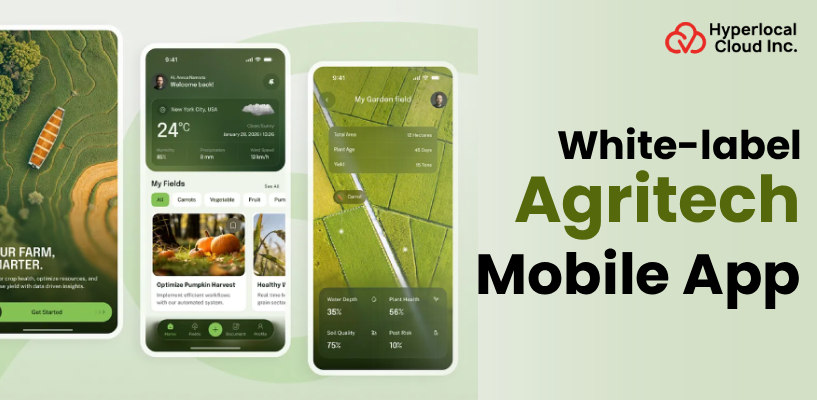
In the modern world, when everything evolves with time, agriculture is still the most essential part of human life. One thing that positively impacts this field is the introduction of digital technologies that help farmers and agribusinesses to automate their work. The approach of the agritech mobile app is simple; it enables farmers to automate all the field-related activities from their smartphones.
However, the demand for agritech mobile apps is increasing rapidly, which results in farmers now easily getting the information about weather forecasting, crop pricing, and the latest techniques for farming. Thus, by following this approach, the agritech mobile app becomes the core part of agriculture. This will result in businesses or startups that are ready to take an initiative for their new business journey, and can invest and develop their own agritech mobile apps. Looking to know how? Then stay tuned with the blog and get the up-to-date information for the same.
Understand the Exact Meaning of the Agritech Mobile App Solution
The agritech mobile app is typically designed to facilitate farmers so that they can automate farming activities with ease. In simple terms, the agritech mobile apps are a smart move for farmers, suppliers, and agribusinesses to manage the comprehensive aspects of farming. However, the application is all-in-one, which means it acts as a digital assistant for farmers from which they will get guidance, tools, and information. Thus, the evolution of digital technology in the field of agriculture is a big win, which provides productive and proficient results to businesses.
Step Into the Future of Agriculture With a White-label Mobile App
A Seamless Working Model of An Agritech Mobile App
To start operating an agritech mobile app, users and businesses are not required to have technical knowledge because the app is easy to use. That’s why here you will get a complete list of points that can be helpful for you in terms of operating the app.
1. Data Collection from Multiple Sources
The first and foremost step is data collection. The agritech apps collect data from different sources, which include weather systems, satellite imagery, farm sensors, and user input.
2. Data Processing and Analysis
The next step is processing the data, which is an in-built system. The application typically uses modern technologies in order to provide valuable insights. For instance, by analyzing the weather conditions, the app can easily predict the suitable time for harvesting the crops. However, the app can also review and analyze the soil in order to recommend the best fertilizers.
3. User Dashboard and Easy Interface
Once data processing is done, the app, however, shows the results on a dashboard, which is a primary screen where farmers can easily oversee all the required information. Moreover, the design of the app is quite simple, which makes it easy to navigate.
4. Real-Time Alerts and Notifications
The application typically offers real-time alerts that are helpful for businesses in terms of getting instant updates about essential things. For example, a slight change in weather or pest attack will be analyzed by the app, and instant notifications or alerts will be sent to the farmers so that they can take quick action.
5. Integration with Marketplaces and Services
The agritech apps are integrated with the marketplaces that permit farmers to purchase seeds, fertilizers, and essential tools directly from the app. Also, without the interference of a middleman, farmers can sell their crops to buyers.
What Are the Benefits of Investing in a White Label Agritech Mobile App Solution?
Numerous benefits exist for businesses that are looking to invest in a white label solution for the development of an agritech mobile app solution. Have a look and understand how.
1. Faster Time to Market
White label apps are often referred to as ready-to-launch apps, which clearly means the applications that take a faster time to market and are easy to release as compared to apps from the ground level.
2. Cost-Effective Development
The most common and prominent benefits of pre-built apps are that they are cost-effective. Which means, businesses will get agritech mobile apps at a pocket-friendly price compared with the development from scratch.
3. Easy Customization and Branding
An agritech mobile app solution is customizable and is quite flexible, which allows businesses to modify the app by updating the logo, color, font, and size that clearly define their business values.
4. Proven Technology and Reliability
Since white label solutions are already developed and tested, they are usually more stable and reliable. Businesses can use a system that has already been tried and improved over time. This reduces the risk of technical issues after launch.
5. Scalability for Future Growth
White label apps are scalable and can easily grow as your business grows. Which means the more your business grows, the faster the success the app will get.
6. Focus on Business Growth and Customer Engagement
By using a white label solution, businesses can focus more on marketing, customer support, and user engagement instead of spending all their time on technical development. This helps them build strong relationships with users and grow their customer base.
How Is an Agritech Mobile App a Big Win for the Digital Agriculture Ecosystem?
Here are all the relevant factors that briefly explain the statement that the agritech mobile app is a big win for the digital agriculture ecosystem. Let’s have a look:
1. Connecting Farmers with the Right Information
One of the biggest perks of the Agritech Cellular App is that it connects farmers with well-timed, useful data. In the past, farmers relied on local knowledge or word of mouth. Now, with mobile apps, they could get instant weather updates, product advice, and market prices.
2. Improving Communication Across the Ecosystem
Agritech apps help improve communication among a range of stakeholders. Farmers can connect with buyers, suppliers, and even agricultural professionals through the app. This removes the distance that usually exists between those companies.
3. Promoting Transparency in Farming Activities
Transparency is a major project in traditional agricultural structures. Many farmers now do not receive the true tariff because they are unaware of the correct market tariff. Agritech apps address this problem by providing clean, up-to-date payment reports.
4. Supporting Data-Driven Farming Practices
Agritech mobile apps inspire the use of data in agriculture. They collect and analyze records related to soil, climate, crop health, and more. This allows farmers to know what is happening on their farm and what steps need to be taken next.
5. Encouraging Financial Inclusion and Growth
Many agritech apps also offer access to financial services, including loans, coverage, and virtual payments. This is especially helpful for farmers who will not have easy access to banks.
6. Enabling Sustainable and Smart Farming
Sustainability is becoming more important in agriculture. Agritech apps help farmers on the road to responsible use of sources of water, fertilizer, and pesticides. They also help reduce waste and improve crop quality.
Compelling Features of an Agritech Mobile App Solution
Get to know about the features that make the agritech mobile apps more reliable and secure, which are listed below, so that businesses can review and integrate them.
1. User-Friendly Dashboard
The dashboard is the flagship screen of the app, where users can see all important files at a glance. It is really designed so that first-time users can download it without any problems.
2. Weather Forecast and Alerts
Weather plays a very important role in agriculture. Agritech apps provide accurate weather forecasts that help farmers plan their operations. They also often send warnings about unexpected adjustments that include asymmetric rainfall or high temperatures.
3. Crop Management Tools
The feature helps farmers to monitor the overall condition and health of the crop. Users can enter details about planting dates, soil conditions, and irrigation schedules.
4. Pest and Disease Detection
Many agritech apps include tools to be aware of pests and diseases. Farmers can add pix or describe the disturbance, and the app offers viable solutions.
5. Market Price Information
Agritech apps provide real-time updates on crop costs in specific markets. This allows farmers to decide when and where to sell their produce.
6. E-Commerce and Marketplace Integration
Some apps have built-in marketplaces for farmers to buy and sell produce. They can buy seeds, fertilizer, and equipment all at once through the app.
7. Financial Services Integration
Agritech apps often have financial tools that include credit applications, insurance options, and virtual payment systems. These capabilities make it less complicated for farmers to manage their price range.
8. Multi-Language Support
Since farmers come from different regions, language can be a barrier. Agritech apps solve this problem by offering multiple language options.
9. Notifications and Reminders
Timely reminders and information help farmers live up to their responsibilities. The app can remind users of watering schedules, fertilizer, or harvest time.
Launch a Branded Farming App and Drive Revenue Growth
Utilization of Advanced Integrations in an Agritech Mobile App Solution
Several advanced integrations are made in the use by experienced custom software development companies, which makes the app even more reliable.
1. Integration with Weather Data Systems
Agritech apps are often associated with subsistence weather fact systems. These structures provide real-time updates, often on temperature, precipitation, humidity, and wind conditions.
2. Use of Satellite and Remote Sensing Technology
Many agritech apps use satellite imagery and remote sensing technology to monitor farm conditions. This equipment aids in checking crop health, soil moisture, and land use, without a trip to the farm by man or woman.
3. Internet of Things (IoT) Integration
The Internet of Things, often called IoT, plays a big role in smart farming. IoT devices such as soil sensors, water sensors, and temperature monitors can be connected to agritech apps.
4. Artificial Intelligence and Data Analytics
Artificial intelligence and data analytics are used to make sense of large amounts of data. Agritech apps use these technologies to provide smart recommendations.
5. Integration with Payment Gateways
Agritech apps often include payment systems that enable secure transactions. Farmers can buy inputs like seeds and fertilizers or receive payments for their produce directly through the app.
6. Marketplace and Supply Chain Integration
Another important integration is with online marketplaces and supply chain systems. These connections allow farmers to sell their produce directly to buyers, retailers, or businesses.
7. Integration with Government and Advisory Services
Agritech apps can also be linked with government platforms and agricultural advisory services. This allows farmers to receive updates about new schemes, subsidies, and policies.
A Process to Build an Agritech Mobile App Solution
The development process should be clear and easy to understand so that the application can easily meet the current agriculture market standards. However, all the required steps for the development of an agritech mobile app are discussed below.
1. Understanding the Target Users and Their Needs
The first step is to understand who will use the app. This can also be farmers, landowners, or suppliers. Each organization may have unique desires and demanding circumstances. It is important for them to review the games, problems, and expectations each day. This allows you to build an app that provides real value and solves real problems.
2. Defining the Features and Goals
After understanding the users, the next step is to decide what the app will offer. This includes selecting the features and setting clear goals.
3. Designing a Simple and User-Friendly Interface
Application design should be simple and smooth to use. Many users may not be familiar with the overall time, so the interface should be clear and intuitive. The app is extra accessible through the use of easy layouts, clean icons, and clean navigation. The top layout improves user enjoyment and encourages regular use.
4. Developing the App and Integrating Features
In this step, developers start building the app and adding the selected features. They also integrate advanced technologies, including weather data systems, IoT devices, and payment gateways. At this point, businesses are required to make a selection between the two foremost development approaches, which are app development from scratch or the simple utilization of white label solutions to fulfill the development.
5. Testing and Quality Assurance
It is very important to test the app very well before you launch it. This includes checking for pests, bugs, and performance problems. Testing ensures that the app works well and provides a good experience for users. In addition, it makes it easier to identify areas that need development.
6. Launching the App in the Market
Once the app is ready, it is launched for users. This may include publishing it on app stores and promoting it through different channels. A proper launch strategy helps reach the target audience and attract users.
7. Maintenance and Continuous Improvement
The app will be updated and improved daily based on user feedback. New features can be introduced, and existing features can be improved. Continuous protection ensures that the app remains relevant and useful over the years.
Tech Stacks Used in the Development of an Agritech Mobile App
Just have a look at the tech stacks that are precisely used for the development of agritech mobile apps. Review the table and get to know it in brief.
| Category | Tech Stack |
| Frontend Technologies | React Native and Flutter |
| Backend Technologies | Node.js and Java |
| Database Systems | MySQL, PostgreSQL, and MongoDB |
| Cloud Services | Amazon Web Services (AWS), Google Cloud, and Microsoft Azure |
Unleash the Use Cases of an Agritech Mobile App Solution
The following is the list of all the practical use cases of agritech mobile apps that are the best source to provide businesses with better insight, so that they invest in the app to facilitate the agriculture market.
1. Farm Management and Planning
One principle that agritech apps use is farm monitoring. Farmers can plan their game, adjust their growth, and manage assets like water and fertilizer.
2. Weather Monitoring and Risk Management
Farmers can use the app to track climate conditions and combine them for adjustments. This can reduce the risk posed by sudden weather events.
3. Direct Buying and Selling of Produce
Agritech apps enable farmers to interact with buyers without delay. They can list their products and promote them without relying on intermediaries.
4. Access to Agricultural Advice and Training
Many farmers may not have access to expert advice. Agritech apps solve this problem by providing guidelines, videos, and tutorials for farming practices.
5. Financial Management and Support
Agritech apps can also be used to manage price ranges. Farmers can apply for loans, get coverage, and make digital payments through the app.
6. Supply Chain and Logistics Tracking
Another important use case is monitoring the movement of logistics and goods. Farmers and institutions can study how products move from farm to market.
Invest in a Turnkey Mobile App for Business Growth
Steps to Generate Revenue from an Agritech Mobile App Solution
The following are the top methods that enable businesses to generate massive revenue from the agritech mobile app solution. Review these strategies and start earning now.
1. Offering Subscription Plans
One method that is not uncommon to generate revenue is through a subscription plan. Users can pay monthly or annual rates to be entitled to access premium features.
2. Charging Commission on Transactions
If the app includes a marketplace, companies can make money by charging a small commission on each transaction. This can be done by purchasing seeds, planting supplies, or booking services.
3. In-App Advertisements
Another way to generate income is through advertisements. Agricultural companies can promote their products and services within the app.
4. Selling Value-Added Services
Agritech apps can provide multiple services for the price. This may also include expert advice, special reports, or individual breeding recommendations.
5. Partnering with Financial Institutions
Apps can interact with banks and financial service providers by offering loans, coverage, and various offers. Once they go back, they can earn fees or referral percentages.
6. Data Insights and Analytics Services
Agritech apps collect a large amount of data. This data can be analyzed and used to provide insights to businesses, researchers, or government organizations.
How much does it cost to build an Agritech Mobile App for Smart Farming?
The development cost for the agritech mobile app solution usually starts at $10,000, but it’s just a rough estimation. Because several interesting technical factors, as well as the development approach, may differ in cost. That’s why it is advised that businesses approach an experienced mobile app development company so that they can get cost-effective mobile apps with all the necessary functionalities.
However, the factors that are responsible for the rise in development costs are as follows:
- Platform choice
- Development approach
- UI/UX interface
- Team Expertise
- Team Location
- Timeline
- Third-party integrations
- AI-powered functionalities
In simple terms, the more businesses want to integrate these services into the app, the higher the development cost will be.
Wind Up!
At last, investing in an agritech mobile app and revolutionizing the agriculture market is the most prominent way for businesses that are ready to elevate their business journey. To do so, businesses are required to approach Hyperlocal Cloud, a successful mobile app development company with a positive track record of delivering projects on time. Also, we at Hyperlocal Cloud always ensure to prioritize our clients’ choice so that their business can stand out in the current market. Want to know more? Simply contact us, and get valuable insights from our experts.
FAQs (Frequently Asked Questions)

Need Help With
Development?