


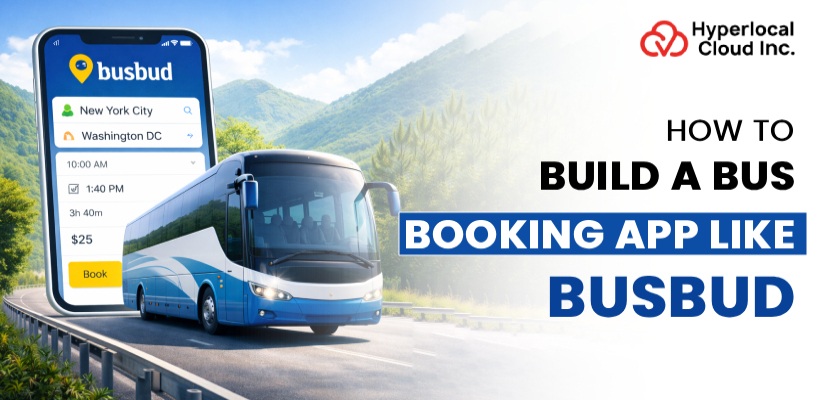
Nowadays, individuals opt to plan their journey using mobile apps in place of traveling to physical ticket counters. A bus tour is one of the most widely used modes of transportation internationally due to the fact that it is less costly, convenient, and appropriate for both quick and long trips. As cellphone adoption and internet access continue to grow, demand for online bus booking apps is increasing gradually.
The ongoing marketplace suggests a strong shift towards virtual journey solutions. Businesses are also making an investment in bus booking platforms due to the fact that they see long-term growth potential in the online tour industry.
For marketers and agencies, building a bus-booking app like Busbud can be a smart move. With the proper features and a consumer-targeted method, such an app can appeal to a massive audience and create a strong presence within the travel technology space.
What Is the Busbud App?
Busbud is a digital platform that is typically designed to facilitate users so that they can book bus tickets from their phones at an affordable price. The main goal of the application is to connect bus drivers and travelers. Thus, the platform becomes popular among users because they can book bus tickets directly from their phones, without wasting time visiting bus ticket counters. With the help of the Busbud app, users can search for buses and compare the fares in order to choose the best one. The best example for this scenario is an app like FlixBus, a popular bus booking app.
Want to Build the Next Busbud? Let’s Turn Your Idea Into a Profitable App
How Does an App Like Busbud Work?
Here you will get all the required information that lets you know how effortlessly you can utilize the bus reservation system. Get a brief lookout at the workflow of an app like Busbud.
1. Search for Routes and Travel Dates
The process begins when a consumer enters their journey information. Some apps additionally permit users to pick return dates or multiple stops. Once the info is entered, the app starts by searching for available buses that meet the user’s requirements.
2. Collecting Data from Bus Operators
The app is connected to numerous bus operators via APIs or associated dashboards. This guarantees that the data presented to users is correct and updated.
3. Showing Available Bus Options
After amassing the statistics, the app presents a listing of buses. Users can view information together with departure and arrival instances, adventure duration, price ticket charge, bus type, and facilities. Many apps additionally allow customers to clear out or sort results by fee, departure time, or bus operator to make selection less complicated.
4. Seat Selection and Booking
Once the consumer selects a bus, they are taken to the seat selection page. Here, customers can pick their favored seat based on availability. After deciding on a seat, the app requests passenger info, including name and contact records.
5. Payment Process
After entering their passenger info, customers proceed to the fee step. The app normally supports more than one charge method, including credit cards, debit cards, internet banking, and digital wallets. Once the fee is submitted, the booking is shown.
6. Ticket Confirmation and Notifications
After booking, the app sends a digital ticket to the user via email or in-app notifications. Some apps also offer live tracking or aid features.
What Are the Advantages of a Busbud-Like App?
Several advantages are offered by a bus booking app like Busbud that facilitate users as well as businesses. Have a look at the breakdown of advantages for each panel.
Advantages for Users
1. Easy and Convenient Booking
Users can book bus tickets anytime, anywhere, on their mobile phones. They do no longer need to face lengthy queues or go to physical ticket counters. Everything can be performed in a few easy steps.
2. Access to Multiple Bus Operators
Instead of checking multiple websites or workplaces, customers can view buses from more than one operator in a single app. This gives them greater alternatives and facilitates them to pick the fine bus based on fee, timing, and luxury.
3. Price Comparison
Users can easily compare prices from leading bus operators. This allows them to locate affordable tour options and plan their journeys within their price range.
4. Time-Saving Experience
The app saves significant time by displaying all available alternatives in seconds. Users can fast search, book, and receive tickets without any delays.
5. Digital Tickets and Notifications
With virtual tickets, users do not want to carry published copies. Notifications and reminders additionally assist customers in staying updated about their journey, lowering the possibility of missing a bus.
Advantages for Businesses
1. Wider Customer Reach
A bus booking app lets bus operators reach a larger audience. People from distinct cities or even international locations can book tickets without difficulty, increasing standard sales.
2. Increased Ticket Sales
Since the app is available 24/7, users can book tickets at any time. This results in greater bookings than conventional offline techniques.
3. Better Management of Operations
Bus operators can handle schedules, seat availability, and pricing more successfully through a digital device. This reduces manual labor and human mistakes.
4. Data and Insights
The app collects treasured records, such as personal behavior, famous routes, and peak tour instances. Businesses can use this information to improve services.
5. Lower Operational Costs
By using a virtual platform, corporations can reduce costs associated with ticket counters, paper tickets, and guide staff. This facilitates higher long-run earnings margins.
Explore The Lucrative Features of an App Like Busbud
A Busbud clone app offers a wide range of features that directly facilitate users by automating the process of bus booking. Here, you will get all the robust features that attract users to utilize the application.
1. User Registration and Login
The app needs to permit users to create an account easily using their email, phone number, or social media account. An easy registration process helps users get started quickly. Logged-in customers can manage bookings, keep travel information, and get access to preceding journeys.
2. Bus Search and Route Selection
This feature allows users to search for buses by entering the location, destination, and journey date. The app has to show all available routes and buses that shape the search standards. This makes it easy for users to find suitable tour alternatives.
3. Filters and Sorting Options
Users must be capable of filtering and typing buses primarily based on charge, departure time, arrival time, bus type, and journey length. These alternatives assist customers in choosing the bus that best meets their needs and interests.
4. Real-Time Seat Availability
The app should show real-time seat availability for each bus. This enables customers to see which seats are available before booking. It also prevents double bookings and improves consideration.
5. Seat Selection
Seat selection lets customers select their preferred seats without delay from the seat layout. This function is especially important for long-distance tours, where comfort is the subject.
6. Secure Payment Gateway
A bus reserving app has to guide a couple of charge strategies, together with cards, online banking, and digital wallets. A steady fee system builds trust and ensures clean transactions.
7. Booking Confirmation and E-Tickets
Once the booking is finished, customers have to acquire on-the-spot confirmation. The app ought to offer digital tickets that may be proven during boarding. This reduces the need for paper-based tickets.
8. Booking History and Ticket Management
Users have to be able to view past and upcoming trips in a single region. This feature enables users to manage their tour plans effortlessly and rebook tickets faster.
9. Customer Support
The app must include customer support options such as chat, email, or call support. Providing brief help in the course of booking or tour increases personal satisfaction and belief.
10. Admin and Operator Dashboard
For companies, the app needs to offer a dashboard that permits bus operators to handle routes, pricing, schedules, and bookings. This facilitates smooth operation and better service management.
A List of AI-Powered Integrations in a Busbud Clone App
Get a complete list of AI-powered integrations that are useful to make the application more advanced and efficient. Just have a look:
1. AI-Based Route Recommendations
AI can have a look at user conduct and tour styles to signify the nice routes. It can suggest faster or less expensive journey options based on beyond searches and bookings.
2. Dynamic Pricing System
AI can examine demand, tour seasons, and seat availability to routinely modify ticket costs. This helps organizations maximize sales while imparting competitive costs to customers.
3. Smart Search Results
AI can enhance search accuracy with the aid of knowledge-based consumer reasoning. Even if customers input incomplete or wrong statistics, the app can still display relevant consequences.
4. Personalized Travel Suggestions
AI can offer personalized suggestions consisting of favored tour times, favored routes, or endorsed bus operators. This makes the app extra consumer-friendly and attractive.
5. AI Chatbots
AI-powered chatbots can offer instant guidance to users. They can answer common questions, resolve booking troubles, and guide customers without human intervention, saving time and reducing charges.
6. Demand Prediction
AI can expect high speed for routes and top tour instances. This allows bus operators to plan extra powerful schedules and handle schedules more correctly.
7. Fraud Detection and Secure Payments
AI can assist in stumbling upon uncommon or suspicious charge patterns. This improves safety and protects each customer and agency from fraud.
8. Travel Delay Alerts
AI can analyze traffic patterns, weather conditions, and historical data to identify factors that are expected to cause delays. Users can receive alerts and updates to assist them in planning their journey extra efficiently.
Power Your Travel Brand with an AI-Driven Bus Booking App
How to Build A Bus Booking App Like Busbud?
Get detailed information on how to build an online bus booking system smartly at a pocket-friendly price with an expert mobile app development company.
1. Understand the Market and User Needs
The first step is to observe the tour marketplace and understand what customers assume from a bus reservation app. This helps in developing an app that truly solves user issues and stands out from competitors.
2. Define the App Features
Once you are done with the research part, the next step is to check on the features and functionalities. These include registration, bus search, seat choice, booking confirmation, and customer support. You have to additionally plan capabilities for bus operators, together with course management and reservation management.
3. Choose the App Type and Platform
You must determine whether to build a mobile app, a web app, or both. Many companies choose to build apps for both Android and iOS to attract extra users. Some also offer a web version for customers who opt to book from a desktop or laptop.
4. Design a Simple and User-Friendly Interface
The app’s design ought to be smooth and easy to understand. Users should be capable of searching and booking tickets without any confusion. Simple buttons, clean content, and clean navigation improve the overall user experience and encourage repeat usage.
5. Develop the App
The process of development is crucial but comes with a top-notch outcome. In the development part, front-end and back-end developers play a vital role and ensure that the right programming languages are utilized while developing an app like Busbud. To build the application, methods like a custom-based solution or a white label solution are used, which are completely different approaches for the development. However, businesses are required to select the development method according to their business needs.
6. Test the App Thoroughly
Before launching the app, it must be examined on exclusive devices and systems. Testing helps identify errors, performance problems, and glitches. Fixing these problems before launch ensures an easy user experience.
7. Launch and Maintain the App
After everything, the app can be released on app stores or internet systems. Regular updates, security patches, and feature enhancements are needed to keep the app running smoothly and meet user expectations.
The Tech Stacks to Build a Bus Booking App Like Busbud
All the advanced and the latest tech stacks are mentioned in the table that are utilized by an experienced custom app development company. Get an insight:
| Category | Tech Stacks |
| Front-End Technologies | HTML, CSS, and JavaScript frameworks like React or Angular |
| Back-End Technologies | Node.js, Python, or Java |
| Database Management | MySQL, PostgreSQL, and MongoDB |
| Payment Gateway Integration | Stripe, PayPal |
| Cloud Hosting and Storage | AWS, Google Cloud, or Azure |
Who Can Utilize a Busbud Clone App?
In this section, you will get to know about the key users who utilized the application with ease in order to book bus tickets affordably. Let’s have a look:
1. Individual Travelers
Individual travelers are the main users of a Busbud clone app. These include people who tour for recreation, education, or personal reasons. The app helps them look for bus routes, examine expenses, pick seats, and book tickets easily. It saves time and eliminates the need to go to bus stations or ticket counters.
2. Daily Commuters
People who travel each day for work can also use the app. They can quickly check bus schedules, seat availability, and ticket charges. The app allows them to plan their everyday tour more efficiently and avoid last-minute delays.
3. Bus Operators
Bus operators can use the app to list their offerings and reach extra clients. They can manage routes, schedules, seat availability, and pricing from a single dashboard.
4. Travel Agencies
Travel groups can use a Busbud clone app to provide bus reservations along with other travel options. The app enables them to expand their service offerings and supply more fees to their customers via a digital platform.
5. Tour and Travel Companies
Tour and travel corporations that arrange group journeys can use the app to book bus tickets in bulk. This simplifies journey planning and streamlines the tours.
6. Corporate Businesses
Companies that set up journeys for personnel can use the app to book and handle bus tickets. This is useful for company journeys, education packages, and office journey desires.
The Game-Changing Trends of an App Like Busbud
Look at the game-changing trends of the Busbud clone app that encourages businesses to invest in the application to get future-ready and proficient results.
1. Mobile-First Experience
Most customers select booking tickets on their mobile phones. Apps like Busbud are designed with a mobile-first approach, ensuring clean overall performance, clean navigation, and fast loading times on smartphones.
2. Contactless Booking and Payments
Contactless bills and virtual tickets have become very popular. Users can book tickets, make bills, and display e-tickets without physical touch. This improves protection and convenience.
3. Real-Time Updates and Notifications
Modern bus booking apps offer real-time updates about bus schedules, delays, and boarding information. Push notifications help users stay knowledgeable and reduce travel strain.
4. Personalized User Experience
Apps now offer personalized pointers based on personal alternatives and booking history. This enables customers to discover appropriate tour options quickly and improves their experience.
5. AI and Data-Driven Insights
Artificial Intelligence is used to analyze consumer behavior, predict demand, and improve pricing strategies. These insights help companies make better choices and enhance service finesse.
6. Integration with Multiple Travel Services
Many apps are increasing beyond bus bookings. They now offer additional travel options, including trains, car rentals, and local delivery. This provides a whole travel-planning experience for users.
7. Focus on Sustainability
There is a developing consciousness of green journey alternatives. Bus booking apps spotlight buses as a sustainable mode of shipping and sometimes offer facts on their reduced carbon emissions.
8. Improved Customer Support
Modern apps provide quicker customer service via live chat and automated systems. This facilitates customers to solve troubles fast and builds belief in the platform.
Partner with Experts to Develop a Profitable Bus Booking App Like Busbud
How to Make Money from a Bus Booking App Like Busbud?
By following revenue-generating methods, businesses can achieve high ROI from the application. Check out each step:
1. Commission from Ticket Bookings
One of the most common methods to make cash is by charging a commission on each ticket booked via the app. When users book a bus ticket, the app charges a small price to the bus operator. This technique works well because better bookings cause better profits.
2. Service Fees from Users
The app can charge users a small convenience fee at checkout. This rate is commonly lower priced and facilitates operational prices, like app protection, customer service, and payment processing.
3. Subscription Plans for Bus Operators
Bus operators can be provided subscription plans that permit them to list their offerings on the app. These plans may additionally consist of benefits that include better visibility, featured listings, and access to specific analytics. This offers a steady circulation of income for the app owner.
4. Featured Listings and Promotions
Bus operators can pay more to sell their services in the app. Featured listings appear at the top of search results or are highlighted to attract more users. This helps operators get greater bookings at the same time as generating more revenue for the platform.
5. Advertising and Brand Partnerships
The app can show advertisements from journey-related corporations along with hotels, insurance companies, or travel brands. These commercials may be displayed as banners or in promotional sections.
6. Data Insights and Business Reports
The app collects information, including journey trends and popular routes. These statistics can be shared with bus operators as paid reports, helping them make higher enterprise selections.
7. Affiliate Travel Services
The app can be used with other travel offerings, which include inns, taxis, and tour insurance providers. When customers book those services through the app, the platform earns a referral or associate price.
In Conclusion!
Approach Hyperlocal Cloud, an experienced bus ticket booking app development company. We deliver a top-notch application that comes with an appropriate ticket booking system that helps travelers to book tickets digitally. With years of expertise in mobile apps, we deliver many bus booking applications similar to RedBus or Busbud. If you are ready to give a new approach to your business to get massive growth, then get our expertise and start developing your own bus booking app like Busbud. Ready? Then contact us right now!

Patt Cummins is an experienced content writer with over 10 years of experience creating clear and engaging content for technology-focused industries. He specializes in simplifying complex technical topics into easy-to-understand stories that educate readers, support brand communication, and help businesses effectively share their solutions.

Need Help With
Development?