

Running a compliance or risk management practice without the right tools is like building a skyscraper on sand. With cyber threats becoming increasingly complicated and regulations becoming increasingly tough in all industries in the US, a patchwork approach to risk is no longer affordable to businesses.
Introduce risk management solutions, ready-to-use platforms that can be fully rebranded to allow MSPs, vCISOs, and agencies to offer enterprise-quality GRC services under their own brand. No high development expenditures. No fresh on the ground. Scalable compliance infrastructure, fully client-ready, and works right out of the box. This is why the smartest service providers are making this their competitive advantage.
What Exactly Is a Risk Management Solution?
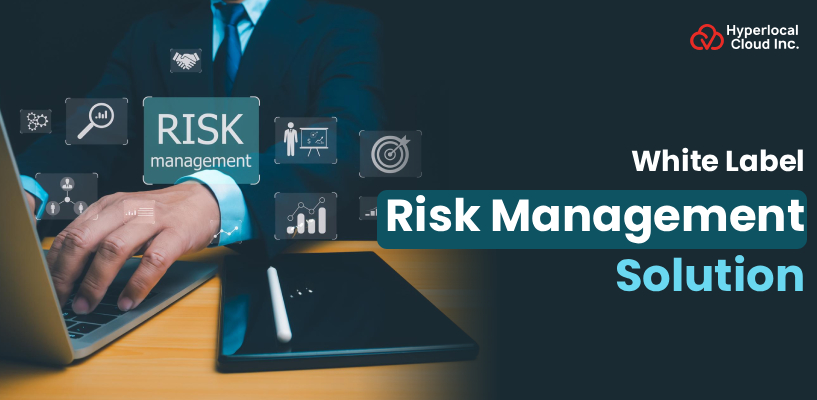
A risk management solution is an organized platform that assists companies in discovering, evaluating, tracking, and minimizing possible risks, such as those posed by suppliers, laws and regulations, security vulnerabilities, or internal operations. Imagine that it is an early warning system of your organization.
With MSPs and vCISOs, it goes a step further; a white-label solution of this allows you to provide the same powerful infrastructure to your clients, under your own business name, without having to develop any of the underlying technology.
Launch Your Own Risk Management Platform in Weeks
Working of Risk Management Solutions
The white-label risk management platforms have a well-defined, repeatable process that can aid the service providers in providing the same results in all client accounts. This is how the machinery will operate under the hood:
1. Risk Identification & Intake
The interface analyzes the environment of your customer, such as vendors, internal infrastructure, and third-party networks, and displays the possible risk variables in a centralized dashboard. There are no slips as all the things are recorded in the logs and classified automatically.
2. Risk Assessment & Scoring
All the risks identified receive a severity score according to the established frameworks, such as NIST, ISO 27001, or SOC 2. This scoring system will give you the exact location where to concentrate on first, hence no time wastage in pursuing low-priority issues.
3. Compliance Mapping
The solution will automatically align the risk posture of your client with the regulatory frameworks in their industry. Despite the fact that it can be either HIPAA in the healthcare case or CPRA in the case of California-based businesses, compliance gaps are identified on the fly.
4. Vendor & Third-Party Monitoring
The platform actively monitors all risky behavior of all vendors and third parties involved in the business of your client. When a security rating of a vendor declines or when a new vulnerability is identified, your team is the first to be notified.
5. Workflow Automation & Alerts
Automation of remediation activities, approvals, and checks of risks is all done and distributed to the appropriate stakeholders. No longer have to run people down on email – everybody is responsible within the same timeline.
6. Reporting & Client Dashboards
The platform also produces client-ready, high-quality reports under your brand and converts risk information into easy-to-understand business language. Your clients perceive expert knowledge; you appear to be the knowledgeable person in the room.
Reasons To Invest in White Label Risk Management Solutions
The white label model is more than a shortcut; it is a long-term business approach that will yield dividends in terms of revenue, reputation, and scalability. What you really receive in making the investment is as follows:
Launch Services Faster, Without the Build Cost
Developing a risk management platform may require years and hundreds of thousands of dollars to create an entire platform. White label solutions reduce that time to weeks, and allow you to begin generating revenue nearly instantly without even modifying a single line of code.
Scale Across Multiple Clients Without Chaos
Multi-tenancy architecture implies that you are able to serve dozens (or even hundreds) of client accounts out of a single location. Clients are provided with distinct environments of their own, as you have complete visibility and control over each client with just one operator perspective.
Deliver AI-Powered Insights Under Your Own Brand
White-label platforms of today are packed with AI-powered automation capable of identifying risks, raising flags, and coming up with recommendations on the fly. Your customers get state-of-the-art technology, and your company receives all the accolades.
Meet Rising Regulatory Demands Without Scrambling
Data privacy US laws: HIPAA, SOC 2, CPRA, and CMMC are changing rapidly. White-label solutions are adjusted to be in line with these changes, so you are not caught unawares by a regulatory change that your clients had no idea was coming.
Create Recurring, Predictable Revenue Streams
Risk management is not a singular interaction with a client– it is a continual service that your clients will require monthly. A white-label platform provides you with the platform to create subscription-based pricing models to generate consistent, predictable monthly revenue for your business.
Strengthen Client Retention and Stickiness
When your clients are accustomed to a branded platform that you offer them to conduct their daily compliance and risk operations, then it becomes literally hard to switch to a rival. The more the platform is interwoven in their working process, the stronger the long-term client relations get.
Core Features That Drive Real Results
White-label risk management platforms are not merely compliance solutions, but are a complete business infrastructure designed to assist service providers in providing consistent, scalable, and high-value risk services to all the customers they provide services to.
1. Centralized Risk Register
The list of the identified risks in each client account is stored, categorized and followed up on in one register. Without having to alternate between spreadsheets, emails, or isolated systems, your team can have complete visibility of the entire risk landscape.
2. Real-Time Risk Monitoring
The platform conducts continuous scans of the new threats, failures of controls, and compliance gaps within your client environments on a 24/7 basis. When there is a change, your team will immediately be notified rather than the next scheduled review period.
3. AI-Powered Risk Scoring
Risk data is analyzed and provided with a dynamic severity rating according to industry benchmarks, threat intelligence, and client-specific environment by artificial intelligence. This will eliminate guesswork in prioritization and make the most important risks a priority.
4. Automated Workflow Management
All tasks, such as risk reviews and policy approvals, vendor follow-ups, and audit preparations, are automated with definite ownership, deadlines, and escalation routes. There are no gaps between the cracks, as everyone is held accountable by default on the platform.
5. Customizable Risk Assessment Templates
Assessment templates that have been pre-created on various frameworks, such as NIST, ISO 27001, and SOC 2, can be modified to suit the unique industry, size, and regulatory needs of each client. You re-invent the wheel whenever you have a new engagement.
6. Incident Management & Response Tracking
Upon the occurrence of a risk in a real situation, the platform documents the risk, allocates response activities, and monitors the real-time resolution. Any incident has a lifecycle recorded, i.e., between discovery and closure, both a learning record and an audit artifact.
7. Integrated Threat Intelligence Feeds
The platform draws live threat intelligence sources that are trusted and directs the emerging threats to the risk environments of your clients. Your team can always be aware of what is happening in the wider threat environment and how it can impact each particular client.
8. Document & Evidence Management
The platform has the ability to store policies, procedures, audit evidence, vendor contracts, and compliance documents, and allows them to be versioned and retrieved under one location. There is no longer any need to search through shared drives when they are requested to provide documentation at the most inopportune time by one of the auditors.
9. Risk Heatmaps & Visual Analytics
Risk data is then complex and converted to user-friendly heatmaps, charts, and a visual dashboard to convey risk posture immediately. Clients and their leadership teams can see their positions without being cybersecurity and compliance experts.
10. Scheduled & On-Demand Reporting
Detailed risk and compliance reports are automatically generated on the platform, either on a regular schedule or at the request of a client. Reporting is done in a formatted and branded format, and it is ready to be presented; there is no need to assemble a manual.
11. Exception & Waiver Management
In case a control is not possible to implement in a particular period of time, a structured process will be offered by the platform to record, approve, and monitor exceptions that will have specified expiration dates. This maintains a clear and justifiable risk stance as opposed to sweeping holes under the carpet.
12. Business Continuity & Resilience Planning
Besides ordinary risk management, the platform helps with business continuity planning by linking the detected risks and recovery plans, downtime restrictions, and response playbooks. Clients do not just deal with risk; they plan to deal with risk.
13. Cross-Client Benchmarking & Insights
The operators could easily compare risk maturity, compliance score, and control effectiveness across their entire client portfolio and identify patterns and best practices anonymously. These lessons will assist you in providing smarter advice and showing demonstrable value throughout your book of business.
14. Regulatory Update Notifications
The system will be able to monitor the changes in major regulatory structures and automatically notify your staff when a new requirement or an amendment affects a compliance program of a client. You are proactive to regulatory changes without spending personnel time on handheld tracking.
15. Secure Client Portal Access
All clients will get an individual secure portal to view their risk dashboard, open action items, reports, and collaborate with your team in real-time. This transparency promotes trust and ensures that the clients are engaged in the process of self-risk management.
Make Risk Management a Profitable Service for Your Business
How Intelligent Automation Is Reshaping Risk Management Platforms
Risk management platforms no longer resemble software only, but are intelligent systems that think, learn and act on behalf of you. This is precisely how AI is lifting the heavy within these platforms today:
1. Automated Risk Detection
AI continuously analyzes the surroundings of your client and alerts them of possible danger before it becomes a real issue. It operates 24/7 in the background; your team does not need to go out chasing vulnerabilities in all accounts manually.
2. Predictive Risk Scoring
Rather than merely informing you about what has gone wrong, AI forecasts what will probably go wrong next, based on past patterns and real-time threat information. This can assist your team in being proactive and not reactive.
3. Smart Compliance Mapping
AI automatically compares controls of your client with applicable regulatory frameworks and shows precisely where the gaps exist. What took days of man-hours of manual examination is now accomplished in minutes with more precision.
4. Natural Language Report Generation
AI translates intricate risk data into simple, easy-to-read reports, which can be read by anyone, even non-technical executives, without the need to use a glossary. Your customers receive accurate summaries, and you do not waste any time manually writing summaries.
5. Anomaly Detection & Alerting
The AI engine gets to learn what normal appearance is to every client setting and instantly issues an alert when something does not match the normal setting. This identifies minute threats that the conventional rule-based systems would not detect at all.
6. Continuous Learning & Improvement
The richer the information the platform examines on your client portfolio, the more intelligent the recommendation is going to be in the long run. AI constantly enhances its risk models, and thus, the longer you use the platform, the better and sharper your service will be.
The Development Journey Behind a Risk Management Solution
Creating a white-label risk management platform is not strictly a coding project, but rather a well-thought-out procedure, balancing technical complexity and practical use. Below is the process by which a good solution is developed through the entire process:
Step 1: Discovery & Requirement Gathering
It starts with getting to know the target market – MSPs, vCISOs or compliance agencies and laying out what it is that the platform has to support in terms of features, structures and processes. This step is the right way to go to avoid expensive rebuilds in the development cycle.
Step 2: Architecture & Technology Planning
A multi-tenant, cloud-native architecture is designed by developers to be able to scale across hundreds of client accounts without performance degradation. The choice of every technology, including its database design and API, is growth and security-conscious in its initial design.
Step 3: Core Platform Development
For the platform development, you need to choose an approach from custom-based or white-label solutions. A custom-based approach is one in which the platform is developed from scratch and usually requires more time and investment. A white-label solution is one that you buy and rebrand as your own. It saves a lot of development time and investment.
Step 4: AI & Automation Integration
The machine learning risk scoring, anomaly detection, and compliance mapping models are trained and tested and directly integrated into the core workflows of the platform. It is this layer that makes a difference between a simple checklist tool and a smart and proactive risk management system.
Step 5: White Label Customization Layer
An extensible branding and configuration layer is implemented over the underlying platform in such a way that operators can use their logo, colors, domain, and custom settings without ever touching the underlying code. This is what renders the product really resellable with any brand name.
Step 6: Security, Testing & Compliance Validation
The platform itself undergoes high-intensity penetration testing, vulnerability testing and compliance audits even prior to being introduced into a client environment. Having a risk management tool that is not secure in itself is one of the worst things that you can give to a business.
Step 7: Deployment, Onboarding & Ongoing Support
When the platform is ready, an onboarding process takes operators through a structured process to get started and trained, with documentation and dedicated support. Continuous updates, additions of regulatory frameworks and feature releases are continuously being put in place to ensure the platform remains relevant and competitive.
The Business Models That Make Risk Management Platforms Profitable
Perhaps the strongest argument in favor of investing in a white-label risk management solution is that it is not only a process to minimize risk, but it also actively brings in income to your business. The following are the main methods used by service providers to make money out of them:
Monthly Subscription Licensing
You charge your clients a fixed monthly or yearly fee for the branded risk management platform, developing a predictable and constant stream of revenue for your business. The greater the number of clients that you onboard, the higher your monthly recurring revenue compounds without a commensurate rise in the operating costs.
Tiered Service Packages
Bundling platform access with varying degrees of managed service can be basic monitoring, full GRC management, or premium vCISO support, which you can use to form upsell trajectories that are naturally built to increase account value over time. Clients begin on the entry-level packages and advance as their compliance requirements evolve into more complicated ones.
Per-Assessment or Project-Based Fees
In addition to the basic subscription, you can also charge single risk assessments, vendor due diligence projects or framework-specific audits, which may need consultant time of their own. These project fee charges go hand in hand with your recurrent revenue and ensure your staff is billable on high-value projects.
Reseller Margin on Platform Licensing
The majority of white-label providers provide operators with a wholesale platform charge that gives you the option to mark up the service and make a margin as profit. The bigger the difference between what you pay and what you charge your client, the greater your unit economics on an account basis.
Compliance Training & Certification Add-Ons
Add-on services like compliance awareness training, certification preparation, or policy development are all valuable to add to the platform beyond software. Customers actively pursuing such certifications as SOC 2 or ISO 27001 are great prospects to purchase these additional services.
Increase Client Retention with Seamless, Branded Risk Solutions
The Bottom Line
The time frame to develop a high-margin, scalable compliance practice is broad now; however, it cannot remain this way indefinitely. White-label risk management solutions provide MSPs, vCISOs, and agencies with the ability to compete on an enterprise level without enterprise-level development funding. The technology is established, the market need and demand are on the increase, and the revenue model is effective.
We are not spectators of this change at Hyperlocal Cloud; we are the team that makes it. We are a top app development firm and specialize in providing white label risk management solutions which are powerful, fully branded and are, in fact, affordable by service providers at all levels of growth. You may be starting your first compliance practice or expanding an existing one; we develop the infrastructure to take you there sooner.
Ready to roll out your branded risk management platform? Contact Hyperlocal Cloud now — we can create something that your clients will use for years to come.
FAQs (Frequently Asked Questions)

Patt Cummins is an experienced content writer with over 10 years of experience creating clear and engaging content for technology-focused industries. He specializes in simplifying complex technical topics into easy-to-understand stories that educate readers, support brand communication, and help businesses effectively share their solutions.

Need Help With
Development?