

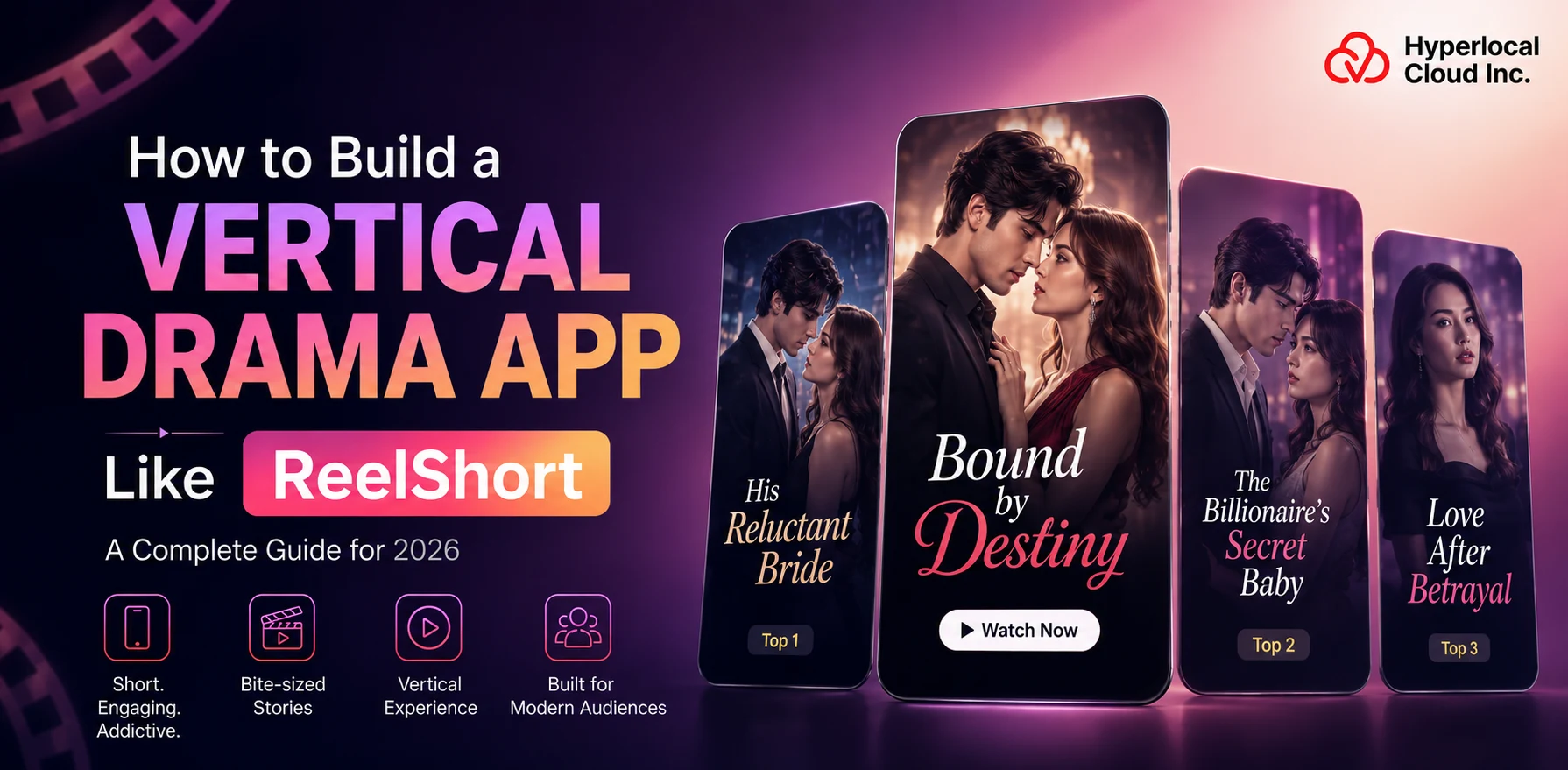
- ReelShort is a vertical drama streaming app focused on short, fast-paced TV series and movies designed mainly for smartphones and tablets. Its episodes are generally much shorter than those of traditional television shows, with many episodes lasting around a minute or two.
- The app focuses heavily on drama-driven storytelling, including romance, revenge, family conflict, billionaire stories, hidden identities, second chances, and fantasy-based plots. Its current library also includes interactive titles where viewers can help decide what happens next.
- ReelShort is part of the rapidly growing microdrama or vertical drama market. These shows are made in a vertical format so that they can be watched comfortably on a mobile phone without turning the device sideways.
- ReelShort is also expanding beyond simply offering short videos. Its current platform includes original productions, interactive dramas, and a wide range of categories, showing how vertical entertainment is developing into a more complete form of mobile storytelling.
Smartphones have made it possible to watch videos almost anywhere, whether someone is traveling, waiting for an appointment, taking a lunch break, or relaxing at home. This change has created space for a new type of entertainment known as vertical drama, microdrama, or short drama. These shows are made specifically for mobile screens. Instead of following the traditional television format, they tell a story through a series of short episodes.
Each episode is designed to move the story forward quickly and often ends with a dramatic moment that encourages viewers to watch the next episode. Some reports estimate the overall vertical drama market at $14 billion in 2026, rising to around $24 billion by 2030.
ReelShort has become one of the better-known platforms in this growing category. The service offers short vertical TV series and movies that are built around quick storytelling and strong emotional moments. Its official platform currently features categories such as romance, hidden identity, second chances, fantasy, and interactive stories.
What Is ReelShort?
ReelShort is a mobile-focused streaming app that offers short vertical dramas, TV series, and movies. Instead of presenting entertainment in the same format as traditional streaming services, ReelShort divides many of its stories into short episodes that are designed to be watched on a smartphone or tablet. The app’s main idea is simple: give viewers an engaging dramatic experience in small pieces of content. A viewer can open the app, watch a short episode, and continue with the next part without committing a large amount of time.
Build Your Reelshort-like App With Our Expert Development Team Today
Why a ReelShort-Style App Is Worth Building Today
Building a ReelShort-like app can help businesses capitalize on the growing demand for bite-sized entertainment, mobile-first storytelling, and highly engaging vertical video content.
1. Growing Consumption of Short-Form Video
Short-form video has become a regular part of everyday digital entertainment. People watch short videos while traveling, waiting for someone, taking a break from work, or relaxing at home. Platforms such as TikTok, Instagram Reels, and YouTube Shorts have helped make vertical video a familiar format for millions of users.
2. Demand for Mobile Entertainment
Smartphones have changed when and where people consume entertainment. Users can now watch shows without being at home or sitting in front of a television. A drama streaming app is designed around this behavior. Its content can be watched on a phone screen without requiring the user to turn the device sideways.
3. Lower Content-Production Requirements
Traditional television shows and large OTT productions can require significant investments. Short vertical dramas can be produced on a smaller scale. Episodes are shorter, and stories are usually designed around a limited screen format. This can make it possible to create content with fewer resources compared with many traditional television or OTT productions.
4. Episodic Content Encourages Repeat Visits
One of the strongest features of vertical drama is its episodic structure. A story can be divided into many short episodes. Each episode can introduce a new problem, reveal an important secret, or end at an exciting moment. This gives viewers a reason to return to the app and find out what happens next.
5. Multiple Monetization Opportunities
A ReelShort-like app does not have to depend on only one source of income. A well-designed platform can offer several monetization options. One common model is in-app coins or credits. Users may receive some episodes for free and then use coins to unlock additional episodes. Users can purchase more coins when they want to continue watching.
6. Global Scalability
A major benefit of a digital entertainment app is that it can reach users in different countries without requiring a physical presence in each market. Vertical dramas can also be adapted for different audiences. A business can offer subtitles, multiple language options, voice dubbing, and region-specific content to make its platform easier to use in different markets.
How Does a Vertical Drama App Like ReelShort Work?
A vertical drama app delivers episodic stories through short-form videos, personalized recommendations, and strategic cliffhangers, encouraging viewers to return frequently and continue watching.
1. User Journey
A user’s journey begins when they discover an app and decide to try it. The goal is to make the first few steps simple and comfortable.
2. Download/Register
The first step is to download the app from the relevant app store. After installation, the person can open the app and create an account. Users can register using standard options such as email, phone number, or supported social login methods.
3. Browse or Discover Dramas
After registration, the user reaches the main content area of the app. This is where the platform introduces users to its available dramas. The home screen can display popular shows, new releases, recommended titles, trending dramas, and different genres.
4. Watch a Free Episode or Preview
After discovering a play, users can start watching free episodes or previews. This step matters because it helps the audience decide whether they like the story. The first episode should therefore build interest quickly while introducing the main characters and the conflict.
5. Continue through Subsequent Episodes
Once users become interested in a drama, they can continue watching the following episodes. The app can make this process easy by displaying a clear Next Episode option after an episode ends. The next episode can also start automatically if the user enables autoplay.
6. Encounter Premium/Locked Episodes
At a certain point, the user may reach an episode that requires payment. This is where the app’s monetization system becomes part of the viewing experience.
7. Unlock Content
Users can access premium shows through a specific access method. One method is a currency-based system. Users purchase virtual coins or credits and then use coins to unlock premium episodes. This model can appeal to viewers who don’t want to commit to a monthly subscription.
8. Receive Personalized Recommendations
Once users watch several dramas, the app can start to learn more about their content preferences. Personalized recommendations can make the app more useful because users don’t have to find each new drama on their own.
9. Continue Watching and Interacting
The final stage is not really an ending. This is where the user becomes a regular part of the app’s viewing cycle. After watching one drama, the user can move to another recommended series.
Short-Form Video vs. Vertical Drama: What Sets Them Apart?
While both platforms deliver short-form content, vertical drama apps focus more heavily on serialized storytelling, character development, episodic engagement, and monetization through premium content.
| Factors | Short Video Apps | Vertical Drama App |
| Main content | Individual short videos | Connected short drama episodes |
| Story structure | Usually independent videos | Episodes follow a continuing storyline |
| Content creators | Often user-generated creators | Primarily professional studios and content creators |
| Viewing style | Scroll and discover | Watch and continue |
| Main goal | Quick entertainment and discovery | Follow and complete stories |
| Content length | Usually short and independent | Short episodes forming a larger series |
| Monetization | Ads, creator programs, subscriptions, purchases | Episode unlocks, coins, subscriptions, ads |
| User retention | Driven by endless content feeds | Driven by unfinished stories and new episodes |
| Personalization | Based on video interests and viewing behavior | Based on genres, dramas, episodes, and viewing history |
| Content discovery | Mostly feed-based | Feed, genres, search, recommendations, and series pages |
Explore the Essential Features of a ReelShort-Like App
A successful ReelShort-like app requires seamless video sharing, user profiles, personalized recommendations, secure payments, content discovery, push notifications, and efficient content management tools.
1. User Registration & Authentication
Users should be able to use options such as email, mobile numbers, or supported social login technologies to create an account. Secure authentication helps users manage their accounts, viewing history, and payment information.
2. Personalized Home Feed
Home feeds should primarily feature plays based on a person’s interests and viewing preferences. This can include popular titles, new releases, trending suggestions, and personalized recommendations.
3. Vertical Video Player
The app should provide a smooth video player primarily designed for viewing vertical videos on smartphones. Features include play/pause controls, subtitles, autoplay, and episode recommendations.
4. Short Drama / Series Library
A properly organized library is where users can discover dramas and series in a field. The content can be divided into categories that include romance, revenge, mystery, family drama, fantasy, and comedy.
5. Episode-Based Content
Every drama should definitely be divided into numbered episodes so that users can easily follow the story. The app can display watched, unwatched, free, and locked episodes to simplify navigation.
6. Search & Discovery
A search feature helps users search for dramas, actors, genres, or exact titles. In the discovery sections, you can highlight trending, known, new, and approved content.
7. Watchlist / Favorites
Users should be able to save dramas they want to watch later. A favorites or watch list section lets users save content they want to watch later without having to find it again.
8. User Engagement
Features of likes, categories, opinions, feedback, sharing, and following can encourage users to interact with the platform. These features can also provide useful feedback, mainly on how users experience content.
9. Notifications
Push notifications can alert users to new episodes, new plays, archived indicators, special promotions, and other essential updates. Notifications can also remind users to continue watching a series they haven’t completed.
10. Multi-Language Support
The app can support multiple languages through translated menus, subtitles, and language options. This makes it easier to reach a much wider audience by expanding to larger, more diverse markets.
11. Download / Offline Viewing
Offline viewing lets users download supported shows and watch them without a live internet connection. This can be especially helpful for users with limited or unreliable network access.
12. Payments & Digital Wallet
The secure payment system allows users to make coin or credit purchases, unlock premium episodes, or subscribe to paid plans. A virtual wallet can help users manage their available coins or credits in the app.
13. Admin Panel
The Admin Panel provides platform management for the business team. Administrators can manage clients, plans, shows, transactions, categories, offers, reviews, notifications, and other critical application elements.
Create a Feature-Rich ReelShort-like App Tailored to Your Audience
Next-Level Features That Can Make Your ReelShort-Like App Stand Out
Advanced features such as AI-powered recommendations, interactive storytelling, multilingual content, smart analytics, social engagement, and adaptive streaming can create stronger differentiation and retention.
1. AI-Powered Recommendations
Artificial intelligence can help the platform understand what each person might enjoy. Instead of showing users the same content, the app can use viewing behavior and preferences to provide more relevant recommendations.
2. Genre Preferences
The app allows users to choose their preferred genres, which include romance, myth, mystery, revenge, or family drama. These options can create a more relevant initial feed for new users.
3. Behavioral Personalization
The recommendation engine can examine actions such as movies watched, shows finished, dramas skipped, searches, likes, and interests on watchlists. These records can help change platform indicators as a person’s interests change.
4. AI-Assisted Content Discovery
AI can help users find dramas that match their hobbies when they can’t find the exact title they need. For example, the system can recommend dramas based on themes, characters, or story types.
5. Automated Content Tagging
AI can automatically identify useful tags for dramas and episodes, such as romance, revenge, family, mystery, or fantasy. These tags can make content easier to organize and recommend.
6. Metadata Generation
AI can generate titles, descriptions, key phrases, language abstracts, and other metadata for content. This can reduce the manual effort required to organize a large drama library.
7. Genre Classification
AI can analyze content and help assign one or more suitable genres to each play. This can improve search, filtering, recommendations, and content storage.
8. Smart Video Delivery
Smooth video playback is especially important for a vertical drama program, as users can also move quickly if episodes take too long to load or maintain buffering.
9. Adaptive Bitrate Streaming
Adaptive bitrate streaming automatically changes video in phase with a person’s internet connection and device. When the connection is slower, the app can greatly reduce buffering.
10. Predictive Preloading
Platforms expect users to know which show to watch next and preload upcoming episodes in advance. This can speed up the transition between episodes and create a smoother viewing experience.
11. Bandwidth Optimization
Bandwidth optimization lets the app deliver video successfully while using less data wherever possible. This is especially useful for users on mobile data or slower connections.
12. Gamification
Gamification lets you add small prizes and challenges for viewers to enjoy. For instance, users may want to earn points for watching goals, maintaining streaks, completing series, or taking part in selected activities.
Step-by-Step Guide to Building an App Like ReelShort
A structured development process covering planning, UI/UX design, technology selection, development, testing, deployment, and ongoing optimization helps ensure a scalable and engaging vertical drama application.
1. Define the Business Model
The first step is to decide how the app will make money. This choice will affect many parts of the product, including the pricing model, content structure, user experience, and advanced features. Businesses cannot overlook the type of revenue model for a vertical gaming program. These can be subscriptions, in-app purchases, payments to unlock episodes, advertisements, or a mix of multiple modes.
2. Conduct Market & Competitor Research
Before starting development, it’s important to understand the marketplace and review existing vertical drama and short-form entertainment apps. Research allows you to understand what users like about existing platforms and which ones may have room for growth.
3. Build an MVP
An MVP, or Minimum Viable Product, is the first working version of the app with the most important features. Instead of developing every possible feature at the beginning, you can start with the functions users need to discover and watch dramas.
4. UX/UI Design
The design of a vertical drama app should be created around mobile viewing. Users should be able to discover a drama, understand what it is about, and start watching with as few unnecessary steps as possible.
5. Backend & API Development
The backend acts as the main engine behind the application. It manages important information and connects the mobile app with databases, video services, payment systems, notifications, and other services. APIs allow the mobile application to communicate with the backend.
6. Video Infrastructure
The video infrastructure is one of the most important parts of a ReelShort-like application. Users expect the movie to start quickly and play smoothly. Constant buffering, poor video quality, or long loading times can cause users to leave the platform. The development team needs to figure out how to upload, process, store, identify, and protect video.
7. Frontend Development
The frontend is the utility users see and interact with. For a ReelShort-like app, the frontend should provide a clean, cross-screen experience, including home feeds, drama notifications, show lists, video players, searches, watch lists, profiles, payments, and settings. The development team can choose between local-device optimization and cross-platform optimization depending on the task’s needs.
8. Integrations
A vertical drama app normally depends on several external services. These integrations can reduce development work and provide access to specialized services. Test each integration carefully because problems with an external service can affect the user experience.
9. Testing
Testing should take place throughout the development process, not only at the end. The team should check the application on different smartphones, operating systems, screen sizes, and internet connections. It will also examine specific user journeys, including free viewing, premium content unlocking, subscription purchases, and account monitoring.
10. Launch the App
Once testing is complete and major issues are fixed, you can prepare the app for launch. For a mobile application, this includes preparing the required store listings, app descriptions, screenshots, privacy information, content ratings, and other required materials. The backend and video infrastructure also need to be prepared for production use.
11. Post-Launch Optimization
Launching the app is not the final step. A vertical drama platform requires continuous development, as user preferences, content development, and market positioning can be selective. Regular updates can introduce new content categories, higher engagement indicators, better payment options, new engagement features, and overall performance improvements.
The Right Technology Stack for a Vertical Drama App
Choosing the right technology stack ensures smooth video delivery, scalable infrastructure, secure transactions, responsive interfaces, and reliable performance across different devices and operating environments.
| Category | Tech Stacks | Usage |
| Mobile App | Flutter, React Native, Swift, Kotlin | Building the mobile application |
| Frontend | Flutter, React Native, SwiftUI, Jetpack Compose | Creating the user interface and mobile experience |
| Backend | Node.js, Python, Java Building | APIs and managing application logic |
| API | REST API, GraphQL | Connecting the mobile app with backend services |
| Database | PostgreSQL, MySQL | Storing users, content, payments, and other structured data |
| Cache | Redis | Improving response times and handling frequently requested data |
| Cloud | AWS, Google Cloud, Microsoft Azure | Hosting backend services and cloud infrastructure |
| Object Storage | Amazon S3, Google Cloud Storage | Storing video and other media files |
| Video Processing | FFmpeg, cloud video services | Encoding and preparing videos for streaming |
| Video Delivery | CloudFront, Cloud CDN, other CDN solutions | Delivering video content quickly to users |
| Streaming | HLS, MPEG-DASH | Delivering video in different quality levels |
| Authentication | OAuth 2.0, Firebase Authentication, Auth0 | Managing secure user login and authentication |
| Payments | Stripe, RevenueCat, App Store Billing, Google Play Billing | Managing subscriptions and in-app purchases |
| Notifications | Firebase Cloud Messaging, Apple Push Notification Service | Sending push notifications |
| Analytics | Firebase Analytics, Mixpanel, Amplitude | Understanding user behavior and app performance |
| AI/ML | TensorFlow, PyTorch, cloud AI services | Recommendations, tagging, classification, and personalization |
Key Users to Build A Short Drama App Like ReelShort
Experienced mobile app development companies, dedicated development teams, or specialized OTT technology providers can build a ReelShort-like platform based on your business goals and requirements.
1. OTT Startups
OTT startups can add short vertical dramas to their existing entertainment offerings or launch a separate mobile-first platform. This can help them reach viewers who prefer short episodes instead of traditional long-form content.
2. Media Companies
Media companies can use their existing content, production experience, and audience base to enter the vertical drama market. They can also create new short-form series specifically for mobile viewers.
3. Production Houses
Production houses already have experience in creating scripted entertainment. They can use their production capabilities to develop short drama series and distribute them directly through their own mobile application.
4. Streaming Businesses
Existing streaming businesses can introduce a vertical drama section or create a dedicated short-drama platform. This gives users another way to consume entertainment and creates additional revenue opportunities.
5. Content Creators
Content creators with an established audience can use a vertical drama app to turn their storytelling ideas into episodic content. They can build a dedicated audience instead of depending entirely on third-party social media platforms.
6. Entrepreneurs Entering the Entertainment Market
Entrepreneurs who want to enter the entertainment industry can build a vertical drama platform around a specific niche. For example, they could focus on regional-language dramas, romance stories, youth-focused content, or a particular geographic market.
Key Development Challenges Behind Vertical Drama Apps
Developers must address challenges involving content production, streaming performance, scalability, user retention, copyright protection, monetization, and personalized content delivery to achieve sustainable growth.
1. Video Delivery at Scale
Delivering many video streams to clients simultaneously requires robust infrastructure. The platform needs reliable cloud hosting, video processing, and CDN offerings that can cope with growing site audiences.
2. Buffering and Playback Quality
Consumers expect movies to start quickly and play without the usual interruptions. Poor streaming, long loading times, or buffering can quickly cause users to leave the app.
3. Content Licensing
If the platform uses third-party content, it needs the right rights and permissions to distribute it. License clauses can also cover the United States, the platform, language, and content type.
4. Piracy
Premium video content can be copied, recorded, or shared without permission. The business wants strong content security, access to monitoring, watermarking, and other measures to reduce illegal distribution.
5. User Retention
Getting users to download the app is the easiest first step. The platform wants exciting stories, generic versions, personal recommendations, and a clean experience that gives users a reason to keep visiting again.
6. Recommendation Accuracy
Weak guidelines can make it harder for users to find dramas they really like. The platform wants enough useful viewership statistics and a good recommendation system to provide relevant content.
7. App-Store Payment Policies
If the app sells digital content or subscriptions, organizations must comply with applicable app store fees and billing guidelines. These policies may affect how in-app purchases, subscriptions, and digital products are presented.
8. Localization
Expanding to new international locations requires more than translating the app interface. Businesses may want subtitles, dubbing, local pricing options, appropriate pricing, region-specific content, and an understanding of local viewing preferences.
9. High Content Demand
Vertical drama audiences can quickly devour programs, so a constant supply of a consistent supply of high-quality content is necessary. Creating a good enough drama can be a big operational and monetary undertaking.
10. Cloud/CDN Costs
Video streaming consumes vast amounts of space and bandwidth. As the number of subscribers and hours watched increase, cloud storage, video processing, and CDN fees can increase significantly.
11. Scalability
The software will manage growth in clients, movies, transactions, and visitors without performance problems. Additionally, an application that works well for a smaller target audience may need significant architectural changes as the user base grows.
12. Moderation
If the platform includes feedback, critiques, character profiles, or other interactive features, groups can have the structure to manage abuse or harmful content. Automated tools and human assessments may be required.
13. Competition
The vertical drama market is more competitive as more companies are investing in short-form scripted entertainment. A new app needs a clear reason for users to choose it, including exclusive content, a strong niche, good pricing, detailed features, or superior viewing.
Develop a Reliable Vertical Drama Platform With Scalable Technology Solutions
What’s Next for Vertical Drama App Development?
Future vertical drama platforms are likely to embrace AI personalization, interactive narratives, localized storytelling, immersive experiences, smarter monetization, and data-driven content strategies to engage audiences.
1. AI-Powered Content Recommendations
AI can analyze what users are watching, searching, saving, and sharing, and more to suggest plays that shape their viewing. This can make at-home viewing more beneficial and help users find content they’re more likely to watch.
2. AI-Assisted Localization
AI can help groups adapt plays to exclusive nations and audiences with the help of translation support, language versions, and nearby content guides. This can make global growth faster and more practical.
3. Automated Dubbing/Subtitling
AI-based tools can help create subtitles and voice versions of dramas in different languages. This can allow one drama to reach a much wider audience without requiring every version to be created manually.
4. Interactive Storytelling
Vertical drama platforms can also add more social functions, allowing users to discuss episodes, share scenes, react to moments, or watch selected content together. This makes the viewing experience more social and interactive.
5. Personalized Narratives
Monetization options can expand through episode locks, coin bundles, subscriptions, and exclusive content. These options can give users greater flexibility in how they access premium content.
6. Social Viewing
Vertical dramas can become more interactive by allowing viewers to make choices that affect parts of the story. This can make users feel more involved and give them another reason to continue watching.
7. More Sophisticated Microtransactions
Future apps may allow certain parts of a story to change based on a user’s choices or interests. This could create different viewing experiences for different users while keeping the main story structure intact.
8. Global Vertical Drama Catalogs
As vertical dramas become more popular, the platforms will likely offer larger libraries of material from specific countries and languages. This can provide a more diverse audience and help companies reach audiences in some markets.
9. AI-Driven Content Discovery
AI can help users find dramas based on themes, story ideas, characters, emotions, or viewing behavior, rather than searching for exact titles. This makes it easier to find content when users understand the type of story they want but don’t know what to look for.
10. Cross-Platform Streaming Ecosystems
Businesses can embed their content into mobile apps, websites, smartphones, social platforms, and other supported devices that users can wear while watching on specific displays.
OTT App Development vs. ReelShort-Like App Development
OTT platforms generally prioritize longer-form content and broad content libraries, while ReelShort-like apps emphasize mobile-first storytelling, rapid consumption, episodic engagement, and short-form monetization.
| Factors | OTT App Development | ReelShort-Like App Development |
| Primary content | Movies, TV shows, documentaries, sports, and other long-form content | Short vertical dramas and episodic stories |
| Typical viewing | Longer viewing sessions | Short and frequent viewing sessions |
| Video orientation | Often landscape, with support for different screens | Mainly portrait and mobile-first |
| Episode structure | Usually fewer and longer episodes | Usually many short episodes |
| Discovery | Library, categories, search, banners, recommendations | Feed, previews, trends, categories, and recommendations |
| Monetization | Subscriptions, ads, rentals, purchases | Coins, episode unlocks, subscriptions, ads, and purchases |
| Retention strategy | Large library and regular content releases | Cliffhangers, frequent episodes, recommendations, and short viewing sessions |
| Main device focus | Mobile, web, tablets, smart TVs, and other devices | Primarily smartphones and mobile devices |
| Personalization | Content recommendations and user profiles | Highly personalized feeds and drama recommendations |
| Core development focus | Multi-device streaming and content library management | Vertical video, episodic viewing, mobile UX, and content unlocking |
Common Vertical Drama App Development Mistakes to Watch For
Avoiding poor video performance, complicated navigation, weak content strategies, inadequate testing, limited personalization, and unclear monetization can significantly improve the app’s chances of long-term success.
1. Copying ReelShort’s UI Instead of Understanding its Product Mechanics
The goal shouldn’t be to copy ReelShort’s screens or visual design. Instead, understand how its content discovery, episode flow, monetization, recommendations, and user retention work, and then create an original experience for your target audience.
2. Launching without Sufficient Content
Users need enough dramas to explore when they join the platform. Launching with only a small number of titles can make the app feel empty and give users little reason to return.
3. Underestimating Video Infrastructure
Video streaming requires more infrastructure than a standard content app. Plan storage, encoding, streaming, CDN delivery, and traffic management before launch to avoid performance problems later.
4. Ignoring CDN and Transcoding Costs
Video processing and delivery can become expensive as viewing activity increases. Businesses should estimate storage, transcoding, bandwidth, and CDN costs before choosing their infrastructure.
5. Building too Many Features into the MVP
Trying to include every possible feature in the first version can increase development time and cost. Start with the features users need to discover, watch, and continue dramas, then add advanced features after launch.
6. Neglecting Content Licensing
Using movies, dramas, music, images, or other third-party content without the right permissions can create serious legal problems. Secure the required content rights and licenses before publishing content.
7. Using Weak Security
A streaming platform can contain valuable content, user accounts, and payment information. Strong authentication, secure payments, access controls, data protection, and suitable video security measures should be part of the development plan.
8. Ignoring Retention Metrics
Downloads alone do not show whether the app is successful. Track metrics such as episode completion, repeat visits, viewing time, retention, subscriptions, and premium episode purchases to understand user behavior.
9. Treating Recommendations as an Afterthought
Users may struggle to find good content when the drama library becomes large. Consider a recommendation system early, so the platform can gradually learn what different users enjoy.
10. Failing to Optimize Playback for Different Network Conditions
Not every user will have a fast or stable internet connection. Adaptive streaming, suitable video quality options, caching, and other playback improvements can help provide a smoother experience across different network conditions.
How to Choose a ReelShort App Development Company
Choose a development partner with proven OTT and video streaming expertise, strong technical capabilities, relevant portfolio experience, transparent communication, and reliable post-launch support.
1. Video Streaming Experience
Look for a development company with experience in video streaming, coding, adaptive playback, and CDN delivery. Testing in these areas can help mitigate common issues with buffering and slow video loading.
2. OTT Experience
Experience with OTT or streaming systems can be a key advantage. Such companies can better capture content libraries, subscriptions, user profiles, video delivery, content management, and streaming-related needs.
3. Mobile Development Expertise
Must have strong experience building mobile applications for platforms including professional enterprise iOS and Android. Often ask what technology they use and whether they are able to create an accessible photo-video experience.
4. Cloud Architecture Capabilities
A ReelShort-like app needs a reliable cloud infrastructure for video storage, processing, APIs, databases, and content delivery. Choose a company that can design a cloud setup that supports initial launches and future growth.
5. UI/UX Portfolio
Review the company’s previous UI/UX work, especially for content- or video-related apps. The layout needs to be cleaned up for users to find dramas, start watching, stream between shows, and access premium content.
6. Security Expertise
Ask how the development agency protects consumer funds, pricing facts, APIs, and premium video content. A good participant should be able to explain their techniques for authentication, authorization, data protection, and content protection.
7. Scalability Experience
The application may start with a small audience but could grow quickly if the content becomes popular. Choose a development company that has experience designing systems that can handle increasing users, video traffic, transactions, and content.
8. Post-Launch Support
App development does not end when the application is published. Select a company that can provide ongoing maintenance, bug fixes, performance improvements, security updates, and feature enhancements after launch.
9. QA Processes
Ask about the company’s testing process and the devices and usage scenarios it investigates. A robust QA process should cover application capabilities, video playback, payments, protection, performance, compatibility, and user flows.
10. Previous Entertainment Projects
Previous work in business, OTT, video streaming, or media can signal that the company is aware of the needs of the industry. Instead of relying on hands-on software development experience, ask for relevant case studies and examples.
Discover The Cost to Build an App Like ReelShort
A rough cost estimate for building an app like ReelShort starts at $8,000. The final cost still depends on various factors, some technical and others related to development approaches. That’s why it is advised that businesses select the development approach at the beginning to avoid any kind of hidden development costs.
Apart from this, other factors that affect development costs are app complexity and advanced UI/UX. Advanced features, third-party integration, and AI-driven technologies. However, businesses are required to hire a reliable and experienced custom software development company.
How to Monetize a Vertical Drama Streaming App
Vertical drama apps can generate revenue through subscriptions, in-app purchases, premium episodes, advertising, virtual currencies, and hybrid monetization strategies tailored to audience behavior.
1. Freemium Model
The freemium model allows users to access some content for free while keeping selected episodes or features behind a premium access option.
2. Coin-Based Model
A coin-based model allows users to purchase virtual coins or credits and use them to unlock premium episodes.
3. Subscription Model
A subscription model gives users access to premium content in exchange for a recurring payment.
4. Advertising
Advertising allows the platform to generate revenue from users without requiring every viewer to make a purchase.
5. Hybrid Monetization
A hybrid model combines two or more revenue methods. For a vertical drama app, this can be one of the most flexible approaches because different users may prefer different ways to access content.
Ready to Build Your ReelShort-like App? Start Your Project Today
Conclusion
A ReelShort-like vertical drama app can be an attractive opportunity in the growing mobile entertainment market. Short episodes, vertical video, engaging stories, personalized recommendations, and flexible payment options can create a viewing experience that fits easily into mobile users’ daily routines. However, building a successful platform requires more than developing a mobile application.

Nisha Bagga is a technical writer with more than 7 years of experience creating high-quality content for a wide range of industries. She specializes in developing clear, engaging, and well-researched technical and business content tailored to diverse audiences and industry requirements.

Need Help With
Development?