Get 30% OFF on All Development Services – Limited Time!
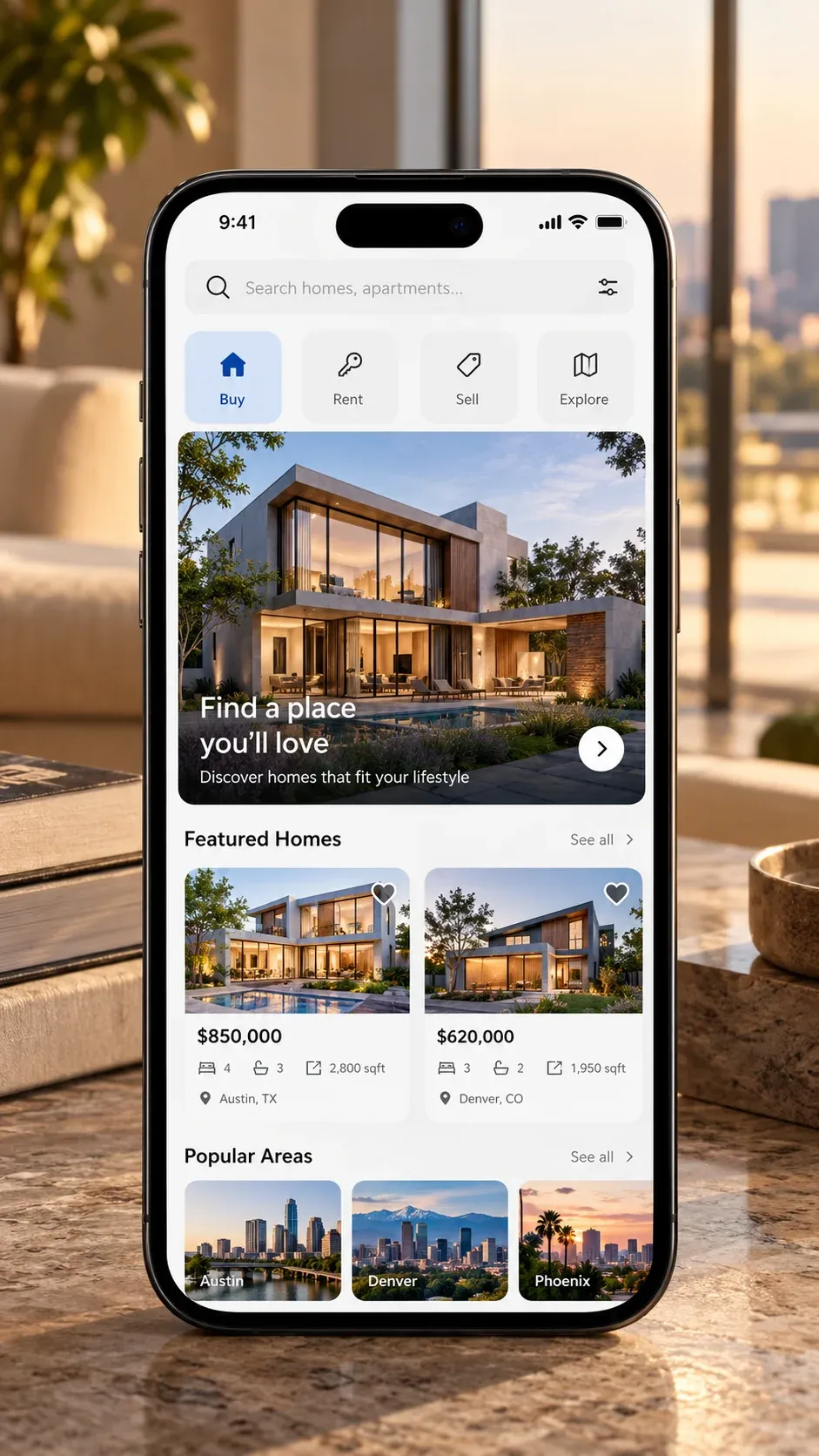
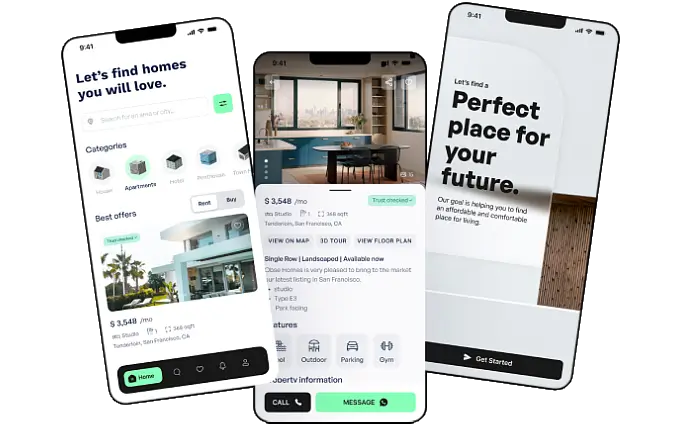
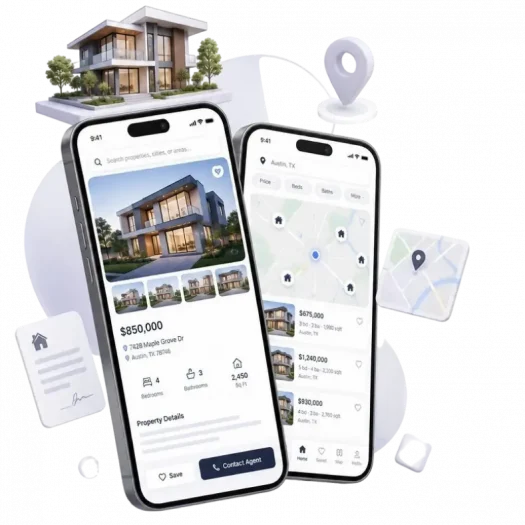
A feature-rich Zillow clone app that brings property search, listings, map-based discovery, agent profiles, saved searches, chat, and property comparisons into one platform. We provide the ready-made marketplace foundation with the core functionality already developed. You can customize its branding, features, integrations, and workflows to create a platform that fits your business without starting development from scratch.
A successful Zillow-like marketplace needs the right technology, user experience, integrations, and workflows working together. We provide a ready-made Zillow clone solution with core functionality, then customize the platform to your brand, target market, user roles, and business requirements for a smoother path to market.
A Zillow clone app is a white-label real estate marketplace solution that gives you production-ready functionality without the months of custom development. Instead of building property search, listing management, maps, agent communication, and transaction workflows from scratch, you launch with a proven foundation. Built on modern technology. Designed to scale. Ready for your market.
At its core, a Zillow clone app development platform is a two-sided marketplace. Buyers and renters arrive to search for properties. Sellers and landlords come to list. Agents find qualified leads. You manage everything in between, controlling how users interact, which features matter most, and how you monetize.
Building a real estate marketplace app like Zillow can be a strong business opportunity, as more people are turning to online platforms to search for homes, apartments, and rental properties. The global proptech market is also expected to grow significantly, with rental and housing discovery platforms projected to reach $38.4 billion by 2034.
The platform generates revenue through several services. Agents pay a fee for increased visibility in specific zip codes, and individual listings can opt for paid placement. Additional revenue comes from commissions earned by connecting buyers with local banks.

More people use digital platforms to search for properties. A centralized directory addresses common issues such as scattered listing information and inaccurate pricing by bringing local housing information together in one reliable database.

The application provides tools that agents and landlords need to manage their businesses. These include automated client tracking, detailed statistics on listing views, and direct access to potential buyers.
The platform attracts users by focusing on the needs of specific local markets. Features include detailed neighborhood maps, useful property filters, and simple virtual property tours.
A Zillow clone app connects property seekers with sellers, landlords, agents, and brokers through a structured marketplace. The process starts with registration and property discovery, then moves through listing details, shortlisting, communication, and lead management. Here’s how the typical user journey works:
Buyers, renters, sellers, landlords, and agents create accounts based on their roles. Each user gets access to the features and tools relevant to their activities on the platform.
Sellers, landlords, and agents add properties with pricing, images, videos, amenities, location details, floor plans, and other relevant information. They can update listings and manage their availability from their dashboard.
Users enter a location or use filters to narrow down available properties. Price, property type, bedrooms, bathrooms, size, amenities, and other preferences help them find suitable options faster.
Interactive maps give users another way to explore properties. They can view listings by location, move around the map, and check which properties are available in their preferred areas.
Each listing provides the information users need before making contact. The property page can display images, videos, descriptions, amenities, pricing, floor plans, nearby places, and location details.
Users can save properties they want to revisit and create saved searches for specific requirements. Property comparison tools can also help them evaluate several options side by side.
Once users find a suitable property, they can contact the relevant agent, seller, or landlord. Depending on the platform, communication can happen through chat, inquiry forms, calls, or appointment requests.
Agents and sellers receive inquiries through their dashboards and can manage leads, appointments, listings, and follow-ups. Admins oversee users, properties, payments, reports, and marketplace activity from a central panel.
A multi-sided real estate marketplace requires different functionality for each participant. The Zillow clone app development solution provides dedicated panels for buyers and tenants, sellers and landlords, agents and brokers, and administrators, with tools aligned to their respective responsibilities.
The buyer and tenant interface brings property discovery and evaluation tools into a single application. It supports search, filtering, property comparison, communication, saved searches, appointment scheduling, and other activities involved in finding a property.
Features include:
The seller and landlord panel provides the functionality required to publish and manage property listings. It also supports lead handling, enquiries, appointments, analytics, and promotional activities.
Features include:
The agent and broker panel consolidates listing, lead, and client management activities within a dedicated workspace. Professionals can manage multiple properties, communicate with customers, schedule appointments, and review listing performance.
Features include:
The admin panel provides centralized control over the marketplace and its users. Administrators can manage accounts, listings, approvals, payments, subscriptions, reviews, reports, and complaints from a single management interface.
Features include:
A modern real estate app development project doesn’t have to be limited to basic listings and filters. These features will make your marketplace smarter and more convenient.
The AI can analyze users’ search queries, saved listings, location, budget, and user activity to recommend suitable properties.
Let users describe what they are looking for in natural language. The search can interpret preferences such as location, budget, property type, size, and amenities.
Give users a visual way to explore properties by neighborhood, location, and nearby points of interest. Map-based discovery can become a central part of the search experience.
Support 360-degree views, virtual walkthroughs, and property videos so users can explore homes remotely before arranging an in-person visit.
A built-in calculator can help users estimate monthly payments based on property price, down payment, interest rate, and loan duration.
Property valuation tools can provide estimated values using available property data, market information, or third-party valuation services.
The user can interact with the AI assistant to receive answers to common property queries, improve the search process, and be directed towards relevant properties or marketplace features.
Let users compare shortlisted properties by price, size, location, features, number of bedrooms/bathrooms, and other details.
Provide users with useful information about the area, including local schools, transport, shopping centers, hospitals, and other places of interest.
Send timely updates about new listings, saved searches, inquiries, appointments, price changes, and other marketplace activity.
Support multiple currencies when the marketplace serves users across different countries or regions.
Offer localized experiences for users who speak different languages, making the marketplace easier to use across multiple markets.
A real estate marketplace can take several forms. You might focus on rentals in one city, connect buyers with commercial properties, or create a broader platform where agents, owners, and investors meet. Our real estate app development solution gives you the foundation to shape the product around the market you want to serve.

Give property owners, landlords, developers, and agents a dedicated place to publish their listings. They can add photos, pricing, amenities, location details, and other property information while potential buyers or renters search, save, compare, and enquire.

Some companies need the search functionality to do most of the work for them. In the case of developing a property search app, one could integrate location-based search, filters, map integration, saved searches, alerts, and recommendations to allow users to navigate through many listings without getting lost in the process.

The idea is simple: help people find the right property professional. Agent profiles, active listings, reviews, contact options, lead management, and appointment tools can sit under one roof, giving brokers a dedicated place to manage their work and connect with potential clients.
Renters have different needs from property buyers. A rental-focused platform can handle property availability, monthly pricing, lease details, inquiries, viewing requests, saved searches, and notifications. Landlords and property managers get their own tools to keep listings and incoming leads under control.
Bring the buyer and seller journey together in one place. Property listings, valuation tools, mortgage calculators, agent communication, inquiries, appointments, and lead management can work side by side, giving users the information they need while they move closer to a property decision.
Office spaces, retail units, warehouses, and industrial properties come with their own set of requirements. A commercial marketplace can organize listings around location, floor area, lease or sale terms, amenities, and property type, making it easier for businesses and investors to find suitable opportunities.
Property investment needs a different approach to everyday home searches. An investment-focused platform can bring property opportunities, valuations, market information, investment details, and investor inquiries into one place. Add the right tools, and the platform can bridge the gap between property owners, developers, and people looking to invest.

A real estate marketplace needs to work wherever your users prefer to search and manage properties. Our Zillow clone development solution supports mobile and web experiences, with a dedicated administrative layer keeping the entire operation under control.
Give iPhone and iPad users a native-feeling property search experience. The real estate mobile app development setup can include property discovery, map search, favorites, saved searches, chat, notifications, appointments, and other features buyers and renters use on the go.

Reach Android users with an app designed around fast property discovery and communication. Search filters, listing details, map-based browsing, saved properties, agent contact, alerts, and appointment requests can all be part of the experience.
A web marketplace gives users a larger space to browse properties, compare listings, manage accounts, and connect with agents or sellers. It can also serve as the main public-facing platform for your brand, with responsive experiences across desktop, tablet, and mobile browsers.

Someone needs to keep the marketplace running behind the scenes. The admin dashboard brings user accounts, listings, agents, approvals, payments, subscriptions, reviews, reports, and other controls into one place, giving your team a clear view of daily platform activity.
The right technology stack keeps your Zillow clone app responsive, secure, and ready for third-party integrations. We choose the stack based on your platform, features, target market, and expected usage.
Google Maps and Mapbox for location search, property markers, and nearby places.
AWS and Google Cloud for hosting, storage, infrastructure, and application scaling.
Firebase for push notifications, listing alerts, inquiries, and appointment updates.
Stripe and PayPal for subscriptions, listing fees, featured properties, and other payments.
GA4, Firebase Analytics, SSL, encryption, authentication, and access controls help monitor usage and protect platform data.
A Zillow-like real estate app creates several revenue opportunities around property visibility, professional tools, qualified leads, advertising, and partner services. The right mix depends on your market and business model. Start with the options that fit your audience, then introduce additional revenue streams as the platform grows.
Sellers, landlords, and agents pay for extra visibility when they want their properties to stand out. Featured listings receive prominent placement in search results, category pages, or other high-traffic areas.
Paid plans give agents and brokers access to higher listing limits, advanced analytics, promotional tools, and additional lead opportunities. Different tiers work well for individual agents and larger brokerages.
Charge sellers, landlords, or agencies to publish properties on the marketplace. Pricing may vary by property type, listing duration, location, or selected visibility package.
Agents and brokers pay for relevant inquiries generated through the platform. A strong matching system helps connect property seekers with professionals based on their requirements, location, and property interests.
Mortgage providers, insurance companies, moving services, contractors, interior designers, and other relevant businesses get access to an audience already interested in real estate. Advertising placements provide another revenue source alongside property-related services.
Paid bookings, transactions, or marketplace services provide an opportunity to charge a service fee. The fee structure depends on the services your platform facilitates and the market in which it operates.
Lenders and financial service providers become referral partners within the platform. Users looking for financing receive relevant options, while the business earns through agreed referral or partnership arrangements.
Property discovery often leads to other needs, including moving, inspections, repairs, insurance, and home improvement. Partnerships with these service providers create additional referral revenue while giving users useful options after finding a property.
A Zillow clone development project needs a clear path from the initial idea to the finished marketplace. We start with your requirements, then shape the user experience, develop the core functionality, connect the required APIs, and prepare the platform for launch. Each stage builds on the last, keeping development focused on your users, features, and business model.
We begin by understanding your target users, property market, business model, and competitors. From there, the requirements are mapped into features, user roles, workflows, integrations, and the scope of the first release.
The interface takes shape around the way buyers, renters, agents, sellers, and administrators use the platform. We design key screens, navigation, search experiences, listing pages, dashboards, and interaction flows before development begins.
The first release focuses on the functionality required to operate the marketplace. Based on the agreed scope, we develop property search, listings, user accounts, communication, dashboards, and other priority features.
Behind the marketplace, the backend handles users, properties, searches, listings, inquiries, payments, notifications, and other core operations. APIs then connect these functions with the web and mobile applications.
Before the application goes live, we test its functionality, usability, performance, security, and compatibility across devices. The complete user journey is reviewed as well, allowing issues to be identified and fixed before release.
Support continues after the initial launch. We can handle bug fixes, technical updates, performance improvements, integrations, and new features as your Zillow clone app evolves and your business requirements change.
The final cost of Zillow clone app development varies with the scope you choose. Platform requirements, UI/UX complexity, user panels, property APIs, maps, AI features, payment gateways, third-party integrations, and custom workflows all influence the budget. Development location and ongoing support also matter. A ready-made solution starts with the core marketplace foundation, while custom development begins from scratch.
Factor | Zillow Clone | Custom Development |
Estimated Cost | $5,000–$15,000 | $40,000–$150,000+ |
Development Time | 2-4 weeks | 3–12+ months |
Choosing the right Zillow clone development company affects how easily the product moves from an initial concept to a working marketplace. Hyperlocal Cloud combines a ready-made product foundation with the expertise to adapt it to your market, business model, and operational requirements.
Our development approach is built around marketplace workflows rather than treating the product as a standard mobile application. We consider buyer, seller, landlord, and agent interactions together so the platform works as one connected business.
A property marketplace for one city may need very different workflows from a platform serving multiple regions. We customize the solution around your target market, property categories, user requirements, and local business practices.
Clear requirements, defined deliverables, and regular project communication keep the development process easier to follow. You know what is being worked on, what is ready for review, and where changes fit into the project.
Every real estate marketplace makes money differently. Whether your model focuses on subscriptions, listing fees, featured properties, lead generation, or partner services, the platform is shaped around how you plan to generate revenue.
You get access to developers, designers, and technical specialists who work across the different parts of the product. That makes it easier to handle complex requirements without splitting the project between multiple vendors.
Your marketplace should remain your product. Your brand, business model, customized workflows, and product direction stay under your control, giving you the freedom to shape the platform as the business develops.
A Zillow clone gives you a ready-made foundation for building a real estate marketplace, while custom development lets you build the platform from scratch. The main difference is the level of customization, control, and development effort involved.
Factor | Zillow Clone | Custom Real Estate App |
Starting Point | Ready-made marketplace foundation | Built from scratch |
Customization | Flexible and customizable | Fully tailored to your needs |
Development Time | Faster to launch | Takes longer to build |
Initial Investment | Lower upfront cost | Higher upfront cost |
Branding | Adapted to your brand | Built around your brand |
Features | Pre-built core features | Features built as required |
A Zillow clone is a ready-made real estate marketplace solution with core features for property discovery, listings, agent profiles, communication, saved searches, and marketplace management. Instead of developing these components individually, you start with an established foundation and customize it around your brand and business requirements.
The development timeline comes down to what you want to change, add, or integrate. Starting with a ready-made marketplace shortens the initial development cycle because the core product is already in place. Custom interfaces, new workflows, additional platforms, and complex integrations require additional development time.
A Zillow clone development company should bring experience with marketplace products, real estate workflows, mobile and web development, APIs, and multi-role platforms. It is also worth looking at how the company handles customization, technical planning, communication, and the transition from the initial product to your final marketplace.
Yes. Real estate mobile app development can cover both major mobile platforms, plus a web marketplace and admin dashboard, if needed. The final setup depends on your audience and the way you plan to operate the marketplace.
There is no single price for Zillow clone app development. Your budget depends on the number of platforms, level of customization, user panels, integrations, and advanced functionality you need. A ready-made solution keeps the initial development effort lower, while extensive customization increases the overall investment.
Yes. Zillow like app development gives you room to shape the product around your business rather than following a fixed marketplace model. You can adjust branding, property categories, user roles, workflows, revenue options, and third-party services to match your target market.
A strong real estate marketplace app development project usually covers the main stages of property discovery and inquiry. Search and filters, map-based browsing, property listings, favorites, saved searches, agent profiles, chat, appointments, recommendations, and role-specific dashboards form the core of the marketplace.
Property discovery and listing management sit at the center of the platform. Property search app development covers location-based search, filters, maps, pricing, and property categories, while property listing app development gives sellers, landlords, and agents tools to publish and manage their properties.
Hyperlocal Cloud is a tech leader harnessing the power of state-of-the-art technologies and delivering innovative app solutions to businesses.