

Get 30% OFF on All Development Services – Limited Time!
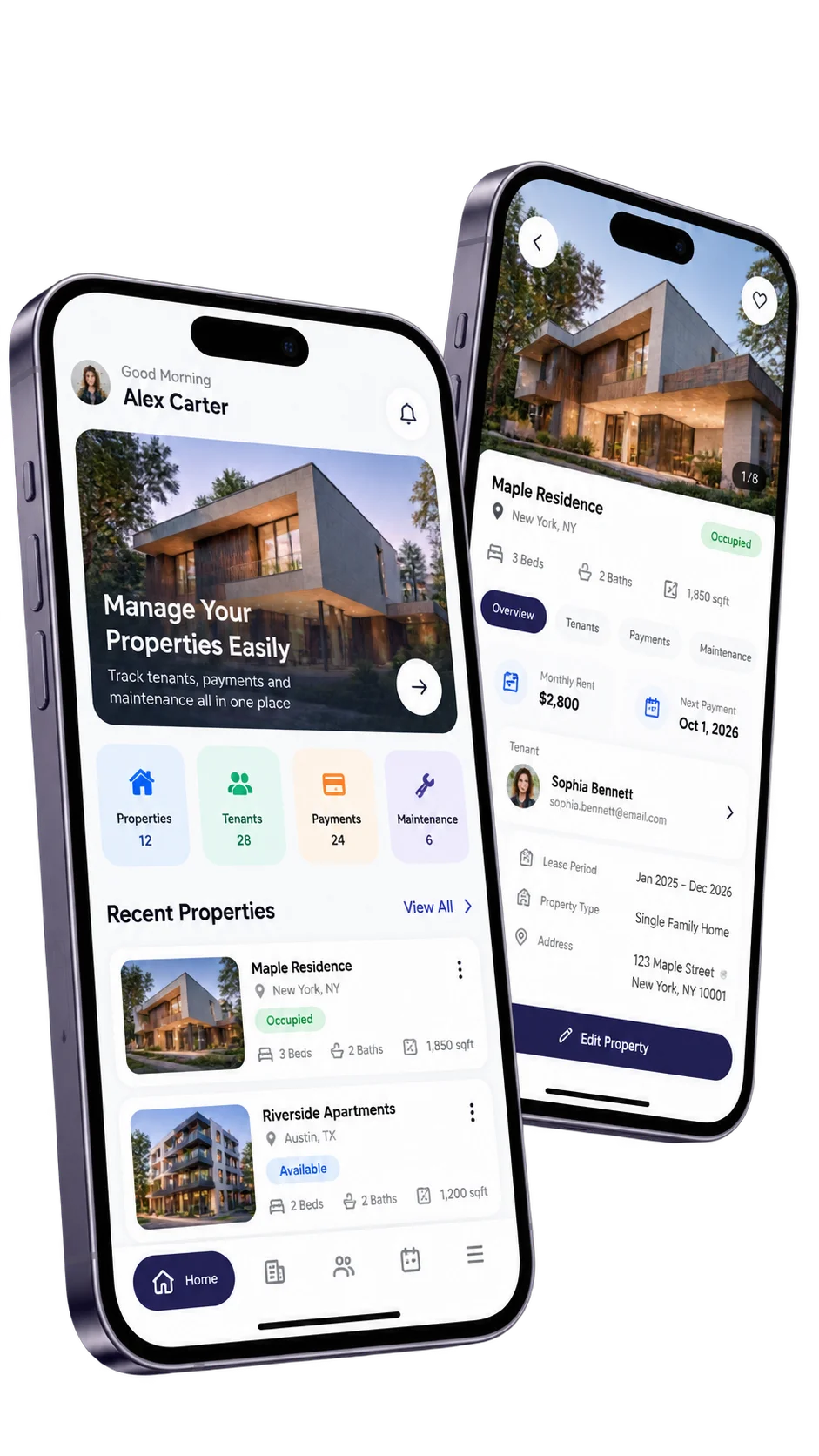
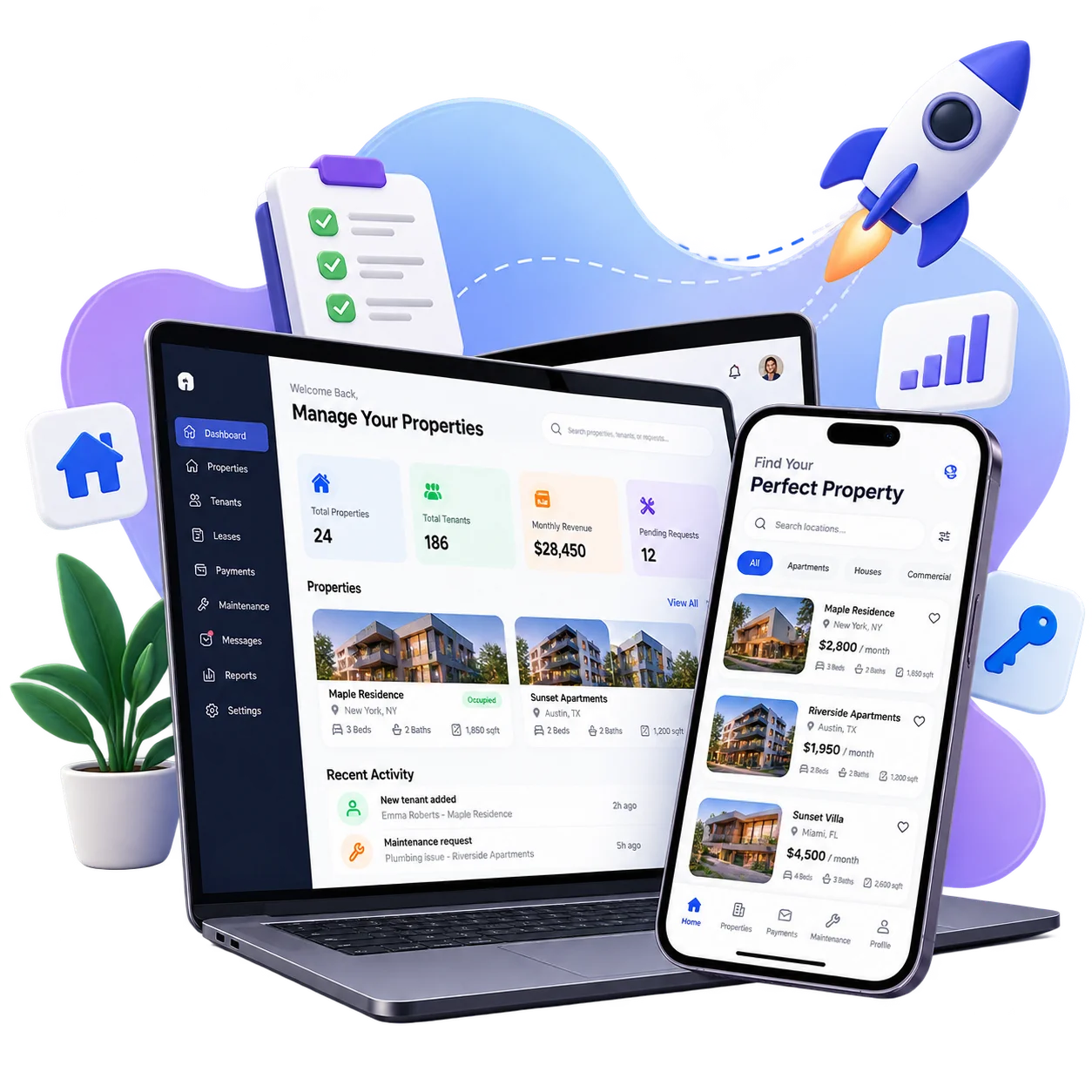
Launch a property management software designed around the needs of property managers, landlords, and rental businesses. A well-planned platform can bring property listings, tenants, leases, rent, maintenance, and reports into one place. Whether you plan to build property management software from scratch or use a ready-made solution, the right approach can help you create a system that fits your business model and target users.
We are a property management software provider with extensive experience and a strong project delivery record. Businesses can rely on our expertise to streamline their business operations and drive growth and ROI.
White label property management software is typically a ready-made platform that lets businesses launch it under their own brand name. It includes core tools for managing rental properties, tenants, leases, payments, maintenance, and daily operations. Instead of building every feature from scratch, businesses can customize the software with their logo, colors, domain, and chosen features. Property management companies, real estate businesses, and service providers can use a white label property management system to offer a branded digital solution without starting the entire development process from scratch.
Streamline property operations, automate routine tasks, centralize data, and improve team efficiency with white-label property management software tailored to your business needs.
The software lets managers add properties, units, rental details, availability, and listing information in one central system.
Property managers can store tenant profiles, lease details, communication records, and important documents for easier day-to-day management.
The platform can track rent, payment status, invoices, and transaction data while helping managers keep financial information organized.
Managers can create, store, and manage lease agreements, rental documents, notices, and other records from a single dashboard.
Tenants can submit maintenance requests, while property managers can assign tasks, monitor progress, and maintain service data.
The software can organize data into reports covering properties, income, expenses, occupancy, rent collection, and other key business activities.
The right property management software should offer features that simplify daily operations, improve tenant service, and support business growth. These features can vary based on the size and needs of your property management business.
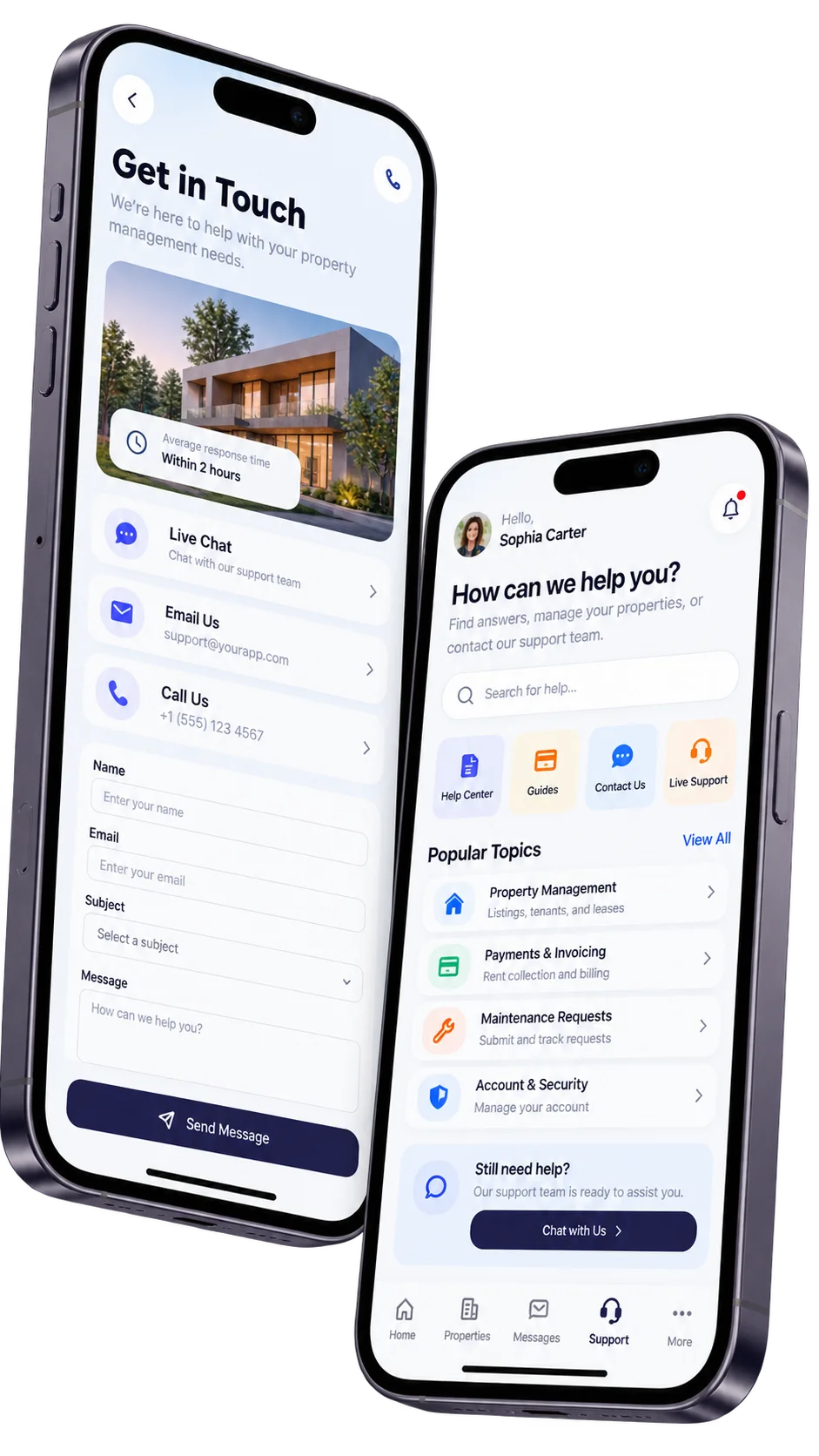
Give tenants and property owners a dedicated space to view information, submit requests, and manage tasks.
Let tenants pay rent online while managers can track payments from a central dashboard.
Support secure rent payments through ACH transfers and credit cards for greater payment flexibility.

Send alerts about new maintenance requests, updates, assigned tasks, and completed work.
Generate simple reports for rent, expenses, income, balances, and other key financial data.

Track regular charges and automate recurring bills for rent, fees, and other payments.

Allow managers, owners, tenants, and vendors to communicate through messages, emails, and notifications.

Give users access to important property and tenant information from smartphones and tablets.
Provide detailed financial reports, expense tracking, payment records, and business performance insights.

Use AI to automate routine tasks such as reminders, data handling, support requests, and workflow actions.
Connect with QuickBooks and Xero to sync financial data and reduce manual accounting work.
Set role-based access and custom rules to control what different users can view or manage.
Store leases, invoices, property records, contracts, and other documents in one organized location.

Automate relevant messages, reminders, notifications, and follow-ups based on user activity and workflows.
Manage vendor profiles, assignments, service requests, payments, and performance records from one system.
Manage property applications, applicant information, screening steps, lease processes, and related documents.

Connect the platform with third-party tools and services used for payments, accounting, marketing, operations, and more.
Manage and compare financial and operational data across multiple companies, properties, or business entities.

Connect with larger business systems to support data sharing and complex operational processes.

Provide guided onboarding support to help teams set up the platform and adopt its features.
Create workflows based on your business processes, approval steps, teams, and operational requirements.

Customize the platform with your brand identity, domain, logo, colors, and other brand elements.
Support large teams with user accounts and access controls designed for enterprise-level operations.
Offer service-level agreements that define support, uptime, response times, and other service commitments.

Configure the platform for different markets, locations, property types, and local business requirements.
Support payment processing workflows for collecting, tracking, and managing transactions at scale.

Enable API access and partner connections to extend the platform and connect with external business systems.
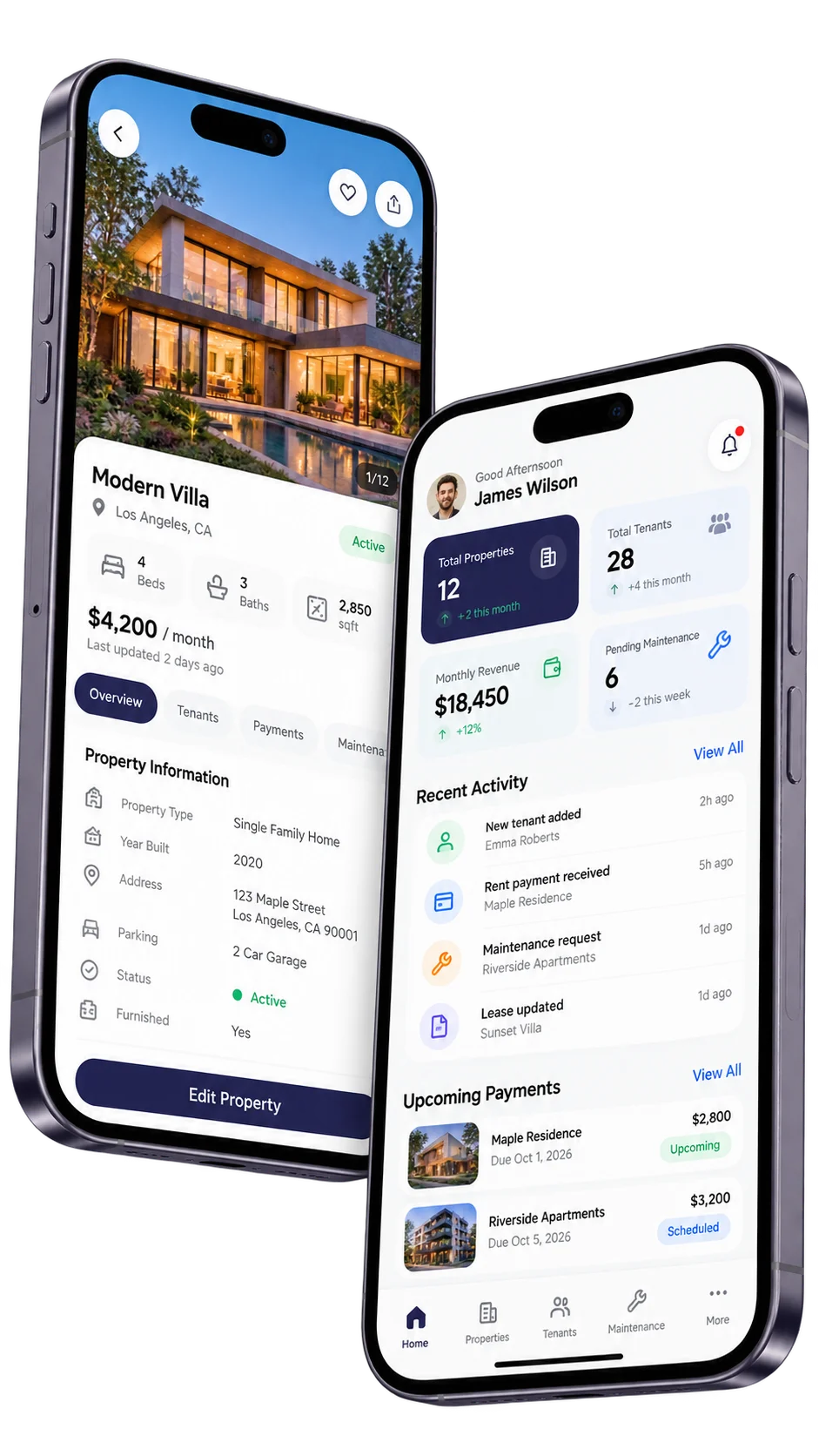
From automated workflows to centralized dashboards, our white label solution offers scalable features that help businesses deliver efficient property management services under their own brand.
Our property management platform development approach can support different property types, business models, and management needs.
Manage residential properties, tenants, rent, maintenance, leases, and property records from one platform.
Handle commercial buildings, leases, tenants, payments, maintenance, documents, and operational tasks efficiently.
Manage short-term rentals, bookings, guest communication, payments, property availability, and cleaning schedules.
Helps housing associations manage residents, dues, maintenance requests, community records, notices, and communication.
Manage rental listings, tenants, leases, rent collection, expenses, maintenance, and property-related tasks in one system.
Manage student properties, applications, leases, payments, maintenance requests, and tenant communication from a centralized platform.
Property management companies, real estate agencies, and technology providers can leverage our white label software to expand their offerings, strengthen client relationships, and drive growth.
A white label property management system can support businesses that want to offer branded property management tools to their teams, clients, or customers.
Manage properties, tenants, owners, payments, maintenance, and daily operations through a branded platform.
Add property management services to their existing offerings and manage rental operations from one system.
Manage rental properties, tenants, rent collection, maintenance, and documents without relying on multiple tools.
Track property performance, rental income, expenses, tenants, and other important investment data.
Launch property management software under their own brand without building every core feature from scratch.
Manage bookings, guests, payments, property availability, cleaning, and other short-term rental operations.
Manage commercial tenants, leases, payments, maintenance, documents, and building-related operations.
Organize maintenance tasks, service requests, vendors, property records, and facility operations in one platform.
White label property management software gives businesses a ready platform that can be branded, customized, and adapted to their property management needs.
Start using or offering a property management platform sooner without building every core feature from the ground up.
Lower the cost of development by using an existing software foundation instead of creating the complete platform from scratch.
Add your logo, colors, domain, and brand elements to offer the software as part of your own business.
Adjust features, workflows, user roles, and other platform elements to match your business requirements.
Automate tasks such as rent reminders, maintenance alerts, billing, notifications, and routine property management workflows.
Manage multiple properties, units, tenants, leases, payments, and maintenance activities from a centralized platform.
Provide tenants with convenient ways to receive updates, submit requests, make payments, and communicate with property managers.
Keep tenant details, property records, leases, payments, documents, and maintenance data organized in one system.
Connect the platform with accounting, payment, CRM, communication, and other business tools to support existing workflows.
| Comparison Factor | White Label Property Management Software | Custom Property Management Software Development |
| Development Approach | Uses a ready-made software foundation | Built from the ground up |
| Launch Time | Generally allows a faster launch | Usually requires a longer development cycle |
| Initial Cost | Often requires a lower upfront investment | Usually requires a higher initial investment |
| Customization | Customization depends on the platform and provider | Features and workflows can be designed specifically for the business |
| Branding | Supports branding with your business identity | Built entirely around your brand |
| Core Features | Common property management features are usually available | Features are developed according to business requirements |
| Scalability | Can scale based on the platform’s architecture and plan | Scalability can be planned around specific business needs |
| Integrations | Supports available or supported third-party integrations | Integrations can be developed for specific systems |
| Maintenance | Often supported by the white label property management software provider | Usually requires an ongoing development and maintenance team |
| Best For | Businesses looking to launch a branded solution faster | Businesses with highly specific software requirements |
Our property management software development services can use modern technologies to create secure, scalable, and easy-to-manage platforms.

A structured process can help businesses configure, brand, test, and launch a property management platform based on their operational needs.

Define your target users, property types, business goals, required features, integrations, and platform requirements.
Set up the core property management system, user accounts, property structures, workflows, and business settings.
Customize the interface, navigation, dashboards, forms, and user flows to create a simple experience for your users.

Add your company logo, colors, domain, fonts, and other brand elements to create a consistent branded platform.

Enable and configure features such as rent collection, tenant management, maintenance, accounting, reporting, and notifications.
Connect payment gateways, accounting software, CRM systems, communication tools, and other business applications.
Test features, user roles, integrations, payments, security, performance, and mobile responsiveness before launch.

Deploy the configured platform to the selected cloud environment and prepare it for use by your team and customers.

Provide training materials and guidance to help administrators, property managers, tenants, owners, and other users understand the platform.

Maintain the platform with updates, troubleshooting, security improvements, performance monitoring, and feature enhancements.
| Factors | Custom Development | White Label Property Management Software |
| Cost | $15,000 – $50,000+ | $5,000 – $10,000 |
| Development Time | 5 – 10 months | 4 – 8 weeks |
| Features | Built from scratch | Ready-made Features |
| Branding | Complete control | Your logo, colors, domain, and branding |
| Integrations | Requires separate development | Existing integrations may be available |
| Customization | Fully Customizable | Limited Customization |
| Maintenance | Fully managed by your team/vendor | Usually handled by the software provider |
| Scalability | Designed according to requirements | Scalable based on the platform |
A property management platform can generate revenue through flexible pricing models based on users, properties, features, and transaction activity.
Charge customers a fixed monthly fee for access to the platform and its selected features.
Offer yearly plans that provide continued platform access with a single annual payment.
Charge customers based on the number of properties or units they manage through the platform.
Set pricing according to the number of administrators, managers, owners, tenants, or other users on the platform.
Offer advanced features such as AI automation, advanced reports, custom workflows, or expanded integrations as paid add-ons.
Earn a fee from eligible transactions processed through features such as online rent collection and payment services.
Charge a one-time fee for platform configuration, branding, data migration, integrations, or onboarding services.
Create custom plans for larger businesses that need more users, properties, integrations, support, or advanced platform capabilities.
Hyperlocal Cloud provides a ready platform that businesses can brand, configure, and extend based on their property management requirements.
Start with an existing property management platform instead of building every core feature from the ground up.
Add your logo, colors, domain, and other brand elements to create a branded software experience.
Use a platform designed to support growing numbers of properties, users, transactions, and business operations.
Support different users through dedicated panels for administrators, property managers, owners, tenants, vendors, and other roles.
Connect the platform with payment gateways, accounting tools, CRMs, communication services, and other business applications.
Provide access through responsive web applications and mobile apps for convenient property management on different devices.
Get technical support for platform setup, configuration, troubleshooting, updates, and other software-related needs.
Add or modify features to align the platform with specific business workflows, user needs, and market requirements.
White label property management software is a ready-made platform that businesses can brand, customize, and offer under their own name.
Yes. You can typically add your logo, colors, domain, and other brand elements to create a branded software experience.
Yes. A white label property management system allows businesses to launch a branded platform without developing every core feature from scratch.
Yes. The platform can support online rent collection through payment gateways, ACH transfers, cards, or other supported payment methods.
Yes. An owner portal can provide access to property details, financial reports, occupancy information, maintenance updates, and other relevant data.
Yes. Payment gateway integrations can support online rent collection, invoices, recurring payments, and transaction tracking.
Yes. The platform can be configured to manage multiple properties, units, tenants, leases, payments, maintenance tasks, and related records.
Yes. Depending on the platform, custom features and workflows can be added to support specific business requirements.
Yes. The platform can be configured to support residential, commercial, multifamily, vacation rental, and other property types.
The timeline depends on platform configuration, branding, custom features, integrations, testing, and deployment requirements.
A white label platform provides core property management features that can be configured, branded, and adapted to your business needs.
The cost depends on features, customization, integrations, users, properties, and support requirements. A provider can give a quote based on your needs.
Yes. The platform can include tenant profiles, lease details, communication, payment records, documents, and other tenant management tools.
Yes. A tenant portal can allow users to make payments, submit maintenance requests, view documents, and communicate with property managers.
Yes. Property managers can receive maintenance requests, assign tasks, track progress, communicate with vendors, and maintain service records.
Yes. Property management platforms can integrate with accounting tools such as QuickBooks and Xero to help sync financial data.
The right option depends on your needs. White label software can offer a faster starting point, while custom development provides more control over unique features and workflows.
Yes. A property management solution can include mobile apps for property managers, tenants, owners, vendors, and other users.
Yes. You can use subscription plans, per-property pricing, per-user pricing, premium features, transaction fees, setup fees, or enterprise plans.
Hyperlocal Cloud is a tech leader harnessing the power of state-of-the-art technologies and delivering innovative app solutions to businesses.