

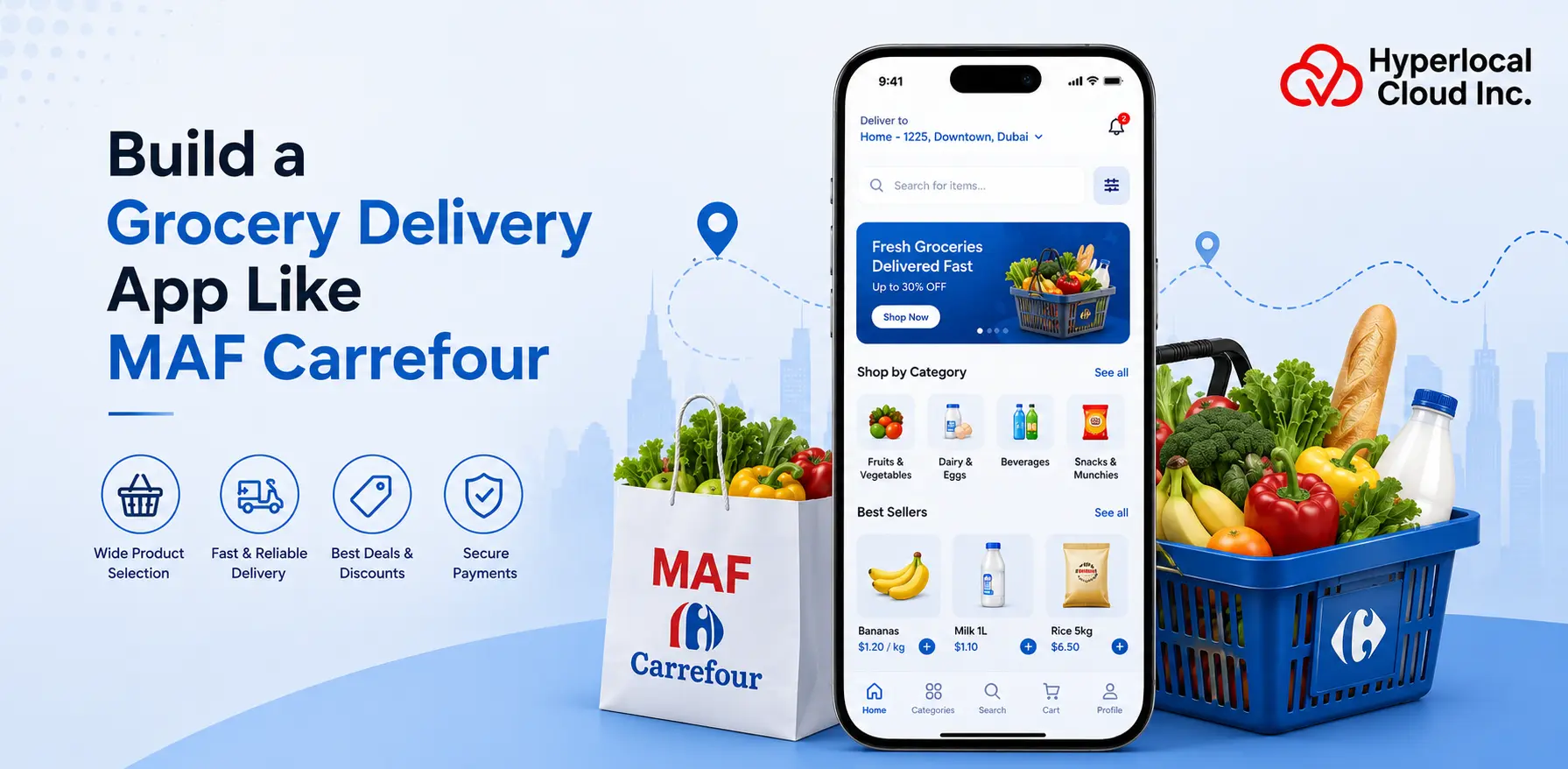
- The MAF Carrefour app brings grocery shopping, home delivery, and other everyday shopping needs together in one mobile platform.
- Customers can browse products, create shopping lists, place orders, make payments, and choose delivery options through the app.
- Majid Al Futtaim operates the app and holds exclusive rights to operate Carrefour across 12 markets in the Middle East, Africa, and Asia.
- Grocery delivery is becoming more focused on speed, convenience, digital payments, and better mobile shopping experiences.
- Carrefour has also moved further into quick grocery delivery. In Dubai, its Carrefour NOW service can deliver eligible products in around 60 minutes, available 24/7.
- The wider grocery delivery market is moving towards faster delivery, wider product choices, personalized offers, and a smooth connection between online and physical stores.
Customers are increasingly moving away from traditional offline methods of purchasing everyday groceries. This has contributed to the growth of online grocery delivery applications. This makes it easier for users to browse and buy groceries online. For this, the most popular and in-demand application is introduced to the market: MAF Carrefour. By using this application, users will get their desired grocery or household items at their doorstep quickly.
According to Statista, it has been seen that the grocery delivery market is projected to have an average revenue per user (ARPU) of around $555.52 in 2026, which is expected to show a revenue growth of 9.8% by 2027. However, the grocery delivery market is projected to show a market value of $1.04 trillion in 2026.
This means businesses that are looking to enter the grocery delivery market with a robust application can develop their own mobile app similar to MAF Carrefour with the expertise of an experienced mobile app development company.
What Is the MAF Carrefour App?
The MAF Carrefour app is a mobile shopping application operated by Majid Al Futtaim Retail for Carrefour. It lets customers shop for groceries and other products online without having to visit a Carrefour store for every purchase. Customers can use the app to search for products, add items to a shopping cart, create shopping lists, place orders, and select available delivery options. The app also includes a Carrefour store locator, loyalty benefits, and digital payment options.
Build Your Grocery Delivery App Like Maf Carrefour With Experts
How a Carrefour-Like Grocery Delivery App Works
A Carrefour-like grocery delivery app makes grocery shopping simple by allowing users to complete the entire buying process from their smartphones. From selecting products to tracking delivery, the app handles every step.
1. User Registration/Login
Users first create an account using their mobile number, email, or social login; existing users can log in to access their account, saved address, previous orders, and preferences.
2. Location and Delivery Address Selection
The app allows customers to enter the precise location or manually enter the delivery address. This makes it easier for the application to select nearby stores, available products, delivery areas, and suitable delivery locations.
3. Product Discovery
Users can browse products by category or search for specific items. Filters and sorting options help them find products by price, brand, availability, or other criteria.
4. Adding Products to Cart
Once customers find the products they need, they can add them to their cart. The cart includes selected items, quantities, prices, discounts, delivery costs, and total order cost.
5. Online Payment
Users can choose a convenient payment method, including credit card or debit card, digital wallet, or other supported payment options. Secure payment processing helps protect customers’ payment information.
6. Order Confirmation
After payment, the app confirms the order and provides important details, including order details, selected items, delivery details, estimated delivery time, and payment information.
7. Delivery Tracking
Users can track delivery status directly through the app. Show real-time updates on whether an order has been prepared, packed, or dispatched/handed over for delivery. Some apps even offer live delivery tracking.
8. Order Completion
The order is completed when the order has been delivered to the customer successfully. The app can update the status of the order and send delivery confirmations or notifications.
9. Ratings and Feedback
By placing an order, users can rate their shopping and delivery experience. They can also leave comments on product satisfaction, delivery time, packaging, or overall service. This feedback can help companies improve their app and service.
Why Invest in a Grocery Delivery App in the UAE?
The UAE has a robust virtual shopping environment, making it an attractive market for online grocery delivery apps. Here are the main reasons why organizations can consider investing in the development of grocery delivery apps within the UAE.
1. Increasing Smartphone Penetration
Smartphones are an important part of daily life within the UAE. Customers use them for chatting, shopping, payments, and various shared activities. This creates a strong opportunity for businesses to reach customers through mobile grocery apps.
2. Consumer Preference for Convenience
Customers want to save time and avoid unnecessary trips to supermarkets. The grocery delivery app allows them to order groceries whenever they need them and order groceries from their home or workplace. Features such as saved addresses, repeat orders, payment methods, and simplified checkout can make shopping even less complicated.
3. Growth of Digital Payments
Digital payments are a big part of online purchases within the UAE. Grocery apps can support card payments, mobile wallets, and other digital payment methods to provide a concise, convenient checkout experience. Convenient payment methods can also reduce cart abandonment and make it easier for customers to complete their purchases.
4. Demand for Home Delivery
A busy lifestyle increases demand for home delivery services. Customers often decide to have groceries delivered to their homes, rather than going to the store and spending time carrying their purchases. A grocery delivery app can meet this demand by offering same-day or faster delivery options, supported by enterprise-grade infrastructure.
5. Increasing Adoption of Omnichannel Retail
UAE retailers are increasingly connecting their online and offline shopping experiences. Customers may discover products through an app, visit a physical store, or order online for home delivery. A grocery delivery app can support this approach by connecting digital shopping with physical stores, store inventory, loyalty programs, promotions, and delivery services.
Business Models for a Grocery Delivery App Like MAF Carrefour
Choosing the right business model is important when developing a grocery delivery app like MAF Carrefour. It affects how the app manages products, earns revenue, works with stores, and handles deliveries. Here are some common models businesses can consider.
1. Inventory-Based Model
In this model, the company owns or manages the products listed in the app. It buys goods from suppliers, stores them in warehouses or stores, and sells them immediately to customers. A business enterprise earns sales revenue when it handles inventory, pricing, packaging, and delivery.
2. Marketplace Model
A marketplace app connects customers with grocery stores, supermarkets, or nearby stores. Sellers manage their own stock, while the app handles orders and buyer communications. The platform may earn money through commissions, listing costs, distribution fees, or advertising and marketing fees.
3. Hybrid Model
The hybrid model combines the inventory-based and marketplace models. The retailer can also sell its own products by additionally allowing other sellers or retailers to list their items on the platform. This model provides a much wider range of products and creates multiple sales streams.
4. Quick-Commerce Model
Quick commerce specializes in fast delivery of groceries and daily essentials. Orders can be filled by nearby stores, dark stores, or nearby fulfillment centers. This model appeals to customers who need products quickly, such as snacks, beverages, household items, or emergency supplies.
5. Subscription-Based Model
In this model, customers pay a simple fee to receive additional benefits, which include monthly or annual subscriptions. It can also include free or discounted delivery, exclusive discounts, special offers, or priority delivery.
Essential Features of a Carrefour-Like Grocery Delivery App
A successful grocery delivery app needs features that make shopping easy for customers and order management simple for businesses.
1. User Registration and Login
Users should be able to create accounts that use their email address, mobile number, or supported social accounts. The simple entry model makes it easy for customers to start shopping.
2. Location and Address Management
The app should allow users to detect their location or manually enter a delivery address. Users should also be able to save, add, and manage multiple addresses.
3. Product Search
An effective search feature allows customers to quickly find the products they need. Search indicators and filters can speed up product discovery.
4. Product Categories
Products can be grouped into categories such as fresh food, beverages, dairy products, personal care, and household products. Clearly defined categories make browsing easier.
5. Product Details
Each product page should have a product name, image, price, size, brand, description, and availability. This allows customers to make informed choices.
6. Shopping Cart
Users can add, delete, or edit product quantities before checkout. The cart should clearly display all taxes, delivery charges, discounts, and the total order amount.
7. Multiple Payment Options
The app should support multiple payment methods, including cards, virtual wallets, and other local payment options. A smooth and secure payment experience is critical to reducing cart abandonment.
8. Order Scheduling
Customers shall be able to choose the appropriate delivery time when payment is due. Scheduled delivery is helpful for customers who need groceries to last until a certain time.
9. Real-Time Order Tracking
Users should be able to track their orders after checkout. Status update procedures can indicate whether or not an order has been sorted, packed, shipped, or delivered.
10. Push Notifications
Push notifications can keep customers informed about order updates, order status/promotions, discounts, new items, and other important updates.
11. Offers and Discount Coupons
The app can offer sales promotions, promo codes, and seasonal promotions. These features can encourage users to place more orders.
12. Wishlist and Shopping Lists
Users can regularly add purchased items to their wish list or shopping list. This makes it less difficult to find and rearrange their favorite items.
13. Order History and Reordering
Customers can view their previous bookings and quickly reorder the same products. This is primarily useful for buying everyday goods.
14. Ratings and Reviews
Customers can rate products, delivery services, and their overall experience. Reviews can help different customers make better purchasing decisions.
15. Customer Support
With the integrated help feature, customers can get help with payments, missing quantities, delayed deliveries, refunds, or other problems. Support can be provided via chat, smartphone, or email.
Create a Feature-Rich Grocery Delivery App Tailored to Your Business
Emerging Features & Functionalities in The MAF Carrefour-Like App
Adding advanced features can make a grocery delivery app more useful and help it stand out from other apps. These features can speed up shopping while giving users a more personal experience.
1. AI-Powered Product Recommendations
AI can study consumer behavior and recommend products based on their purchasing behavior. This can help consumers discover products they want to buy.
2. Personalized Grocery Recommendations
The software can suggest grocery products primarily based on the consumer’s preferences, previous purchases, and purchasing patterns. This makes product discovery more relevant.
3. Purchase-History-Based Suggestions
The app can be used beyond ordering to inform customers about products they buy regularly. For example, it can remind customers of items that may need to be repurchased from time to time.
4. Frequently Bought Together
The app can show products that are usually bought together. For example, when a shopper chooses pasta, the app can suggest pasta sauce or cheese.
5. Smart Grocery Lists
Users can create virtual grocery lists, while the app can help prepare and update them. Clever tips can also make grocery planning faster and easier.
6. One-Tap Reorder
Users can reorder products from previous purchases with one tap. This is useful for everyday products that customers purchase frequently.
7. Voice Search
Voice search allows customers to find products by speaking into the app rather than typing. This can make product discovery faster and easier, especially when consumers are busy.
8. Weekly Grocery Orders
Users can create a weekly grocery order based on their regular purchases. The app can make it easy to review, edit, and place the order each week.
9. Monthly Essentials
Customers can create a list of products they usually need every month. The app can make these items easy to find and reorder when required.
10. Automated Replenishment
The app can remind users when frequently purchased products may need to be replenished. With user approval, selected items can also be added to a recurring order.
How to Build an App Like MAF Carrefour
Building a grocery delivery app requires proper planning, design, development, testing, and ongoing improvements. Following a step-by-step process can help reduce development issues and create a better user experience.
1. Conduct Market Research
Start by studying the UAE grocery delivery market, customers, competitors, and leading market trends. This helps identify customer preferences and potential gaps within the market.
2. Define the Business Model
Choose how the app will generate revenue for your business. Options include product revenue, commissions, delivery fees, subscriptions, advertising and marketing, or a mix of models.
3. Define the MVP
Decide which capabilities are essential for the app’s initial version. The MVP should include the core purchasing functionality, payments, order management, and delivery functions to serve the customers.
4. Create UX/UI Design
Design an easy and accessible interface for the app. Product search, cart, checkout, payment, and order tracking screens should be clean and smooth to navigate.
5. Develop the Application
Develop a customer-facing mobile app with a specific backend and admin panel. Depending on your business model, you may also need separate interfaces for delivery partners, fulfillment managers, and vendors.
6. Integrate Third-Party Services
Integrate the application with essential third-party services that include payment gateways, maps, location services, push notifications, analytics, and fleet management systems.
7. Testing & Quality Assurance
Test the app across different devices and operating systems. Review important areas that include billing, product availability, checkout, notifications, order tracking, security, and overall app performance.
8. Launch the Application
Once the app has been tested, publish it on the relevant app stores and make the service available to customers. A deliberate marketing campaign at launch can help attract users to the platform.
9. Post-Launch Optimization
After the app is launched, continue to track user feedback, overall app performance, orders, and user behavior. Regular updates and improvements can help resolve issues, add useful features, and increase buyer retention.
Technology Stack for Carrefour-Like Online Grocery App Development
The following are the tech stacks that are helpful for the secure development of a Carrefour-like grocery app. However, all experienced grocery delivery app development companies utilize these technologies to build an app that stands out.
| Category | Tech Stacks |
| Mobile App | Flutter, React Native, Swift, Kotlin |
| Frontend | React.js, Next.js |
| Backend | Node.js, Java |
| Database | PostgreSQL, MySQL, MongoDB |
| Cloud Services | AWS, Google Cloud, Microsoft Azure |
| Payment Integration | Stripe, Adyen, Checkout.com, local payment gateways |
| Maps & Location | Google Maps Platform, Mapbox |
| Push Notifications | Firebase Cloud Messaging, Apple Push Notification Service |
| AI & Machine Learning | TensorFlow, PyTorch |
| Analytics | Google Analytics, Firebase Analytics |
| DevOps | Docker, Kubernetes, GitHub Actions |
For Whom Is an App Like MAF Carrefour?
An on-demand grocery delivery app like MAF Carrefour can serve different types of grocery and retail businesses. It can help businesses build an online sales channel, manage orders, and offer home delivery.
1. Supermarket Chains
Large supermarket chains can use the app to let customers shop online while also connecting their physical stores with digital orders.
2. Local Grocery Stores
Local grocery stores can use a delivery app to reach more customers in nearby areas and offer convenient home delivery.
3. Hypermarkets
Hypermarkets can bring their large product selection online through an app. Customers can browse different categories and order products from one platform.
4. Grocery Marketplaces
Grocery marketplaces can connect customers with multiple stores and sellers. The platform can manage product listings, orders, payments, and deliveries.
5. Dark Stores
Dark stores are fulfillment locations designed mainly for online orders. A grocery app can connect these stores with customers and support fast order processing.
6. Quick-Commerce Startups
Quick-commerce startups can use grocery delivery apps to deliver groceries and everyday essentials quickly. The app can connect nearby fulfillment centers with customers.
7. Specialty Food Retailers
Specialty food businesses can use an app to sell products such as organic food, fresh produce, gourmet items, imported foods, or other niche products directly to customers.
Challenges in Building a Grocery Delivery App Like MAF Carrefour
Below are the most common challenges that should be considered by businesses at the beginning of app development. We’ve also included ways to overcome each challenge. Just have a look:
| Common Challenges | Ways to Overcome Them |
| Inventory Accuracy | Keeping online inventory synchronized with physical stores. |
| Delivery Logistics | Managing multiple orders, riders, time slots, and locations. |
| Product Substitution | Handling unavailable products without frustrating customers. |
| Perishable Goods | Maintaining quality and appropriate handling of Fruits and vegetables, Dairy, Meat, and frozen products. |
| Peak-Time Demand | Managing traffic during Weekends, Holidays, Ramadan, and promotional campaigns. |
| Customer Retention | Encouraging customers to reorder instead of switching to competitors. |
| Scalability | Preparing the infrastructure for rapid increases in orders and users. |
Future Aspects that Make Grocery Delivery App Development Worthwhile
Grocery delivery apps are becoming more advanced as customer expectations and technology continue to change. The following trends are expected to shape the future of grocery delivery.
1. AI-Powered Personalization
AI can analyze consumer choices and purchasing behavior by providing more relevant products, offers, and recommendations.
2. Predictive Grocery Recommendations
Apps can predict customer preferences based on their past purchases and purchasing patterns. This can accelerate repeat purchases.
3. Computer Vision
Computer vision can help retailers enhance product selection, shelf inspection, checkout systems, and inventory control.
4. Automated Fulfillment
Automation can speed up the selection, packing, and preparation of food orders. This can help businesses process more orders with less delay.
5. Smart Inventory Forecasting
AI-powered forecasting can look at sales data, seasonal demand, and customer behavior to anticipate inventory needs. This can help reduce stock shortages and excess inventory.
6. Autonomous Delivery Technologies
Drones, transport robots, and other autonomous technologies are likely to become more common as companies look for faster, more cost-effective, and more sustainable delivery methods.
7. Voice Commerce
Voice technology allows customers to search for products, add items to their carts, and place orders using voice commands. This can make grocery shopping extra convenient.
8. Omnichannel Shopping
In the future, grocery apps will connect online and offline purchases more seamlessly. Customers can order through the app, pick up products from the store, or access them at home with the same loyalty and purchase account.
Create a Scalable Grocery Delivery App Ready for Future Demands
Steps to Choose an Experienced Grocery Delivery App Development Company
Choosing the right development company can greatly affect the success of your grocery delivery app. Look for a team that understands both technology and the grocery retail business.
1. Experience in Grocery/Retail Applications
Choose a company that has experience building grocery, food delivery, retail, or e-commerce software. This helps to ensure that the group understands the general business need.
2. UAE/MENA Market Knowledge
The company needs to recognize the UAE and MENA markets, which include customer preferences, local pricing strategies, delivery preferences, and industry practices.
3. Strong UI/UX Capabilities
A convenient, attractive design could make shopping easier for customers. Check if the development company has a strong UI/UX layout and a portfolio of easy-to-use applications.
4. Mobile and Backend Expertise
The organization should have experience developing mobile applications and backend systems. A strong backend is essential to handle products, orders, payments, customers, and delivery.
5. Scalable Architecture
Choose a team that can work with your business to build a grocery app. The system must handle multiple customers, products, orders, and delivery points over the years.
6. Security Practices
Grocery delivery apps handle user data and price records, so security should be a priority. Ensure the company has strong data protection, secure payments, proper access controls, and regular security audits.
7. Post-Launch Support
App development doesn’t end at launch. Choose a professional company that offers ongoing protection, bug fixes and security updates, updates, integrated performance monitoring, and technical assistance.
8. Transparent Pricing
Transparent pricing should provide a statement of expected fees, scope of work, schedule, and additional costs. This makes it possible to avoid unexpected costs for the duration of the development.
9. Portfolio and Client References
Review previous projects and customer comments before making a decision. A strong portfolio can give you a better understanding of the team’s capabilities.
How Much Does It Cost to Develop an App Like MAF Carrefour?
The development of a grocery delivery app similar to MAF Carrefour starts at $8,000, which is a rough estimate. This is because the final cost depends on your business requirements and the level of advancement you are looking for in the application. That’s why it is quite important for businesses to clarify the cost breakdown with their hired custom software development companies.
Factors Affecting Development Cost
- Number of applications
- Feature complexity
- UI/UX requirements
- Technology stack
- Backend complexity
- Third-party integrations
- Number of platforms
- Real-time tracking
- AI/ML features
- Inventory/POS integrations
- Development team location
- Testing requirements
- Post-launch maintenance
Get Expert Guidance on Grocery App Development Costs and Planning
How to Monetize a MAF Carrefour-Like App?
A grocery delivery app can generate revenue through several channels. Businesses can choose one model or combine multiple models based on their target customers and business strategy.
1. Commission Fees
In the marketplace model, the app can charge grocery stores or retailers a per-order fee. The commission may be based on a fixed fee or a percentage of the order cost.
2. Subscription Plans
The app may offer monthly or yearly membership plans with benefits such as free delivery, special discounts, exclusive offers/benefits, or priority delivery. This can also generate recurring revenue.
3. Featured Product Listings
Brands and retailers pay to boost their products to specific locations within the app. Featured products can appear on the website, in search results, or in selected categories.
4. Advertising
The app can generate revenue with the help of brands, grocery stores, and product categories that offer advertising space. Brands can appear as sponsored brands or products, or through an advertising placement.
5. Brand Partnerships
A brand can be associated with food, beverage, family, and various consumer products. These partnerships can include sponsored campaigns, special offers, product launches, and co-brand promotions.
Conclusion
A grocery delivery app like MAF Carrefour can help businesses meet the growing demand for convenient online shopping. With features such as product search, digital payments, order tracking, personalized recommendations, and fast delivery, businesses can create a smooth shopping experience. With proper planning and the right development approach, a grocery delivery app can become a strong digital sales channel and help businesses build long-term customer relationships.

Patt Cummins is an experienced content writer with over 10 years of experience creating clear and engaging content for technology-focused industries. He specializes in simplifying complex technical topics into easy-to-understand stories that educate readers, support brand communication, and help businesses effectively share their solutions.

Need Help With
Development?