


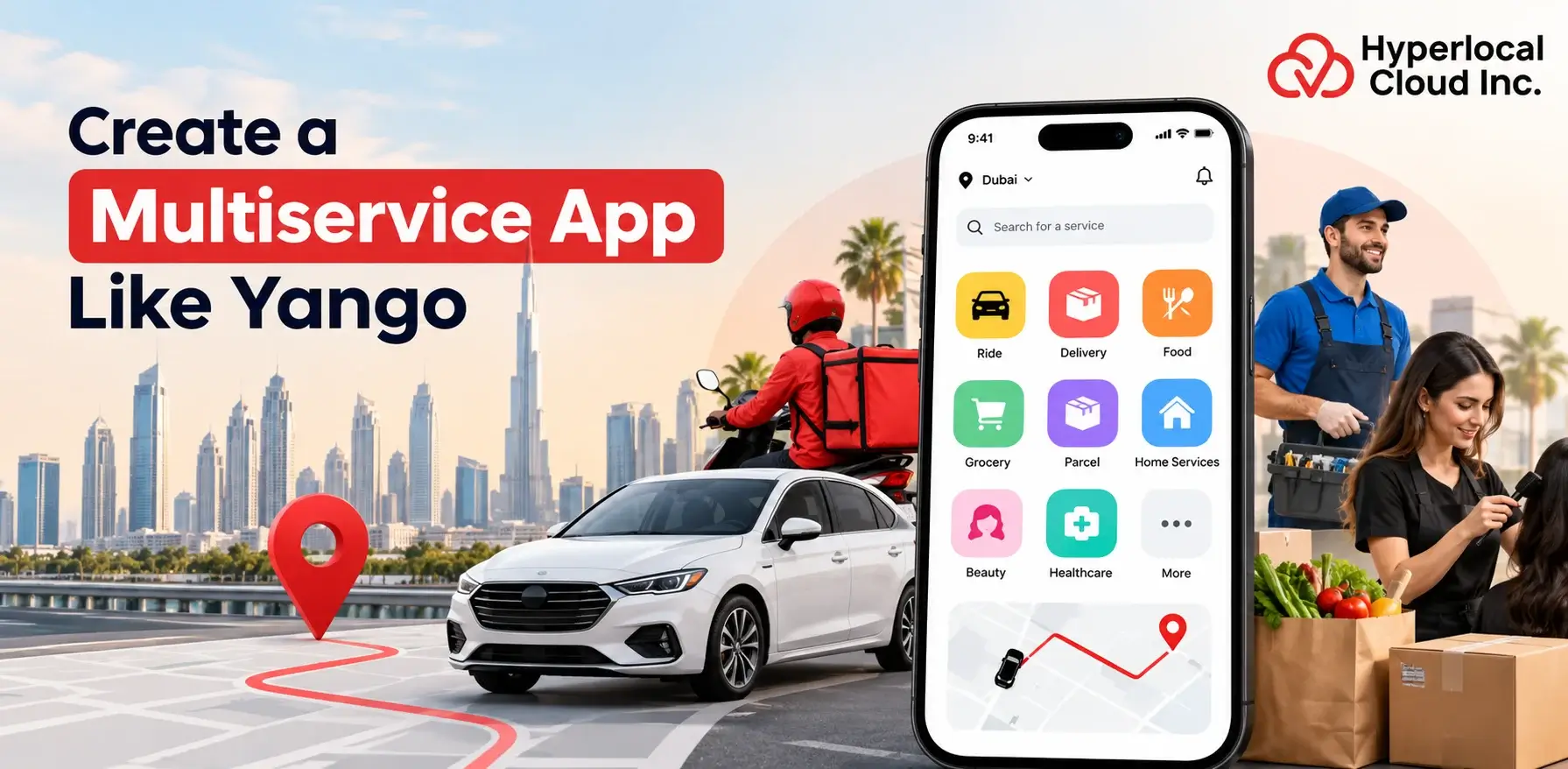
Customers have to download multiple apps in order to satisfy their everyday needs – to order a taxi, buy food, or purchase groceries. Integrating all those services into one platform may help companies improve user experience and increase app usage. Thus, Yango operates on a multi-service platform that provides access to different services through one application, depending on the location.
If you’re planning to launch an app like Yango, the goal is to create a convenient platform where users can access several services through one account. This article explores the key business decisions, features, costs, and technology involved in turning that idea into a working platform.
What Makes Yango’s Multiservice App Model Successful?
With over 50 million downloads on Google Play, Yango proves that multi-service apps are in high demand. Depending on the region, the app combines ride-hailing, food delivery, and courier services into one place.
The secret to its success is convenience. Customers love using just one app for daily tasks, and businesses love how easily it brings customers back for repeat bookings.
Launching a similar platform doesn’t require copying every feature Yango offers. Success comes from choosing the specific services a local market actually needs. A ready-made, customizable app template provides the fastest, most practical route to market under a unique brand.
Build Your Own Multiservice Platform With Ready-to-Launch Technology Today
Which Services Should Your Multiservice App Offer First?
Ten different service categories may seem promising. But all of them need providers, customer care, pricing policy, and complaints handling. It will take a while until you get your first booking.
In fact, it is reasonable to prioritize those services that target people with a common base or have a common operational base.
Ride-hailing services: Booking, comparing rides, monitoring the driver on the map. This category is quite good for organizations that have access to local drivers and a transport fleet.
Food/Groceries Delivery: Restaurants and grocery stores deliver products to clients.
Local courier services: Customers arrange local delivery/pickup for themselves or their businesses. You can use your relationships with couriers to launch this category.
Home services: Customers make an appointment with a plumber, electrician, cleaner, and others through one application. Attention needs to be paid to the verification procedure.
What Features Should a Yango Clone App Include?
Customers booking a cab, ordering groceries, or scheduling a home repair have different needs, so each service requires features suited to its workflow. For a Yango clone app, focus on making these services easy to access without complicating the customer experience. The platform also needs practical tools for providers to manage bookings and for administrators to oversee services, payments, and daily operations.
For a business planning a Yango clone app, the features should cover three areas: the customer experience, day-to-day provider operations, and the admin controls that keep everything running.
1. Features Customers Will Actually Use
- Service Discovery: Customers should be able to find rides, deliveries, and other available services without hunting through a cluttered interface.
- Booking and Ordering: The booking flow needs to suit each service, whether someone is requesting a cab, placing a grocery order, or scheduling a home repair.
- Live Tracking: For rides and deliveries, customers need to see where their driver is and when the order is expected to arrive.
- Payments: Show the fare or order total upfront and offer supported payment methods at checkout.
- Ratings and Reviews: Let customers share feedback after a completed ride, delivery, or service appointment.
- Booking History and Support: Keep previous orders easy to find and give customers a clear way to resolve cancellations, refunds, and other issues.
2. Tools for Service Providers
Drivers, merchants, delivery partners, and home-service professionals won’t all use the platform in the same way. Their dashboards should reflect the work they do.
- Registration and Verification: Collect the required details and documents before providers start accepting requests.
- Availability Settings: Let providers update their working hours, service areas, and availability.
- Request Management: Give providers a straightforward way to accept bookings, update order statuses, and manage ongoing jobs.
- Navigation and Order Details: Share pickup locations, delivery addresses, and relevant customer instructions.
- Earnings and Payouts: Show completed jobs, applicable commissions, earnings, and payout records.
3. Admin Controls for Running the Business
Once bookings start coming in, the business needs a clear view of what’s happening across its services. An admin panel brings those operations together.
- Service Management: Add or remove categories, update listings, and control which services operate in each location.
- Provider Management: Review registrations, verify documents, and manage provider accounts.
- Booking Oversight: Track active orders and step in when delays, cancellations, or disputes need attention.
- Commissions and Promotions: Set commission rates, service fees, discounts, and promotional offers.
- Business Reports: Review bookings, revenue, customer feedback, and service performance to see which categories are gaining traction.
The right feature set depends on the services included at launch. A platform focused on rides and courier deliveries needs reliable location tracking and request assignment. Add groceries, and inventory and order handling become important. Add home services, and appointment scheduling takes on a bigger role.
Start Your Multiservice App Journey With Affordable White-Label Development
How Can AI Improve a Multiservice App Like Yango?
AI can help a multiservice platform make better decisions as bookings increase and operations become harder to manage. From predicting demand to detecting suspicious transactions, the right AI applications support daily operations without adding unnecessary complexity. For businesses planning Yango clone app development, prioritize features that solve real problems and justify their cost.
AI Features to Consider for a Yango Clone App
AI-Powered Service Recommendations
With the help of customers’ preferences, booking details, and location patterns, relevant services can be recommended to them. A person booking grocery products will get some relevant offers from nearby vendors, and similarly, regular riders will get some relevant recommendations based on their travel patterns.
Prediction of Demand
With the help of an AI model, one can predict demand. Based on booking details, seasonality, and local activities, an AI model can help business owners know when demand may spike. This information helps them manage their providers’ availability and prepare for such periods.
Smart Dispatch and Route Optimization
For these services, AI can assist in matching bookings with the right providers and choosing the best routes. It may cut down on wait time, wasteful travel, and operational costs as well.
AI-based Customer Support
An AI assistant can respond to common queries like booking cancellation, payment status, disputes regarding refunds, and policy issues. However, for more complex complaints, human support is better, as they must handle those cases carefully.
Detection of Fraudulent and Irregular Activities
One can use AI to detect some irregularities in booking patterns, frequent payment failures, and other such suspicious activities. This will support investigations by the operations team and reduce the risk of blacklisting good customers based on automated decisions alone.
How to Develop an App Like Yango: From Idea to Launch
Developing a multi-service app like Yango includes identifying customer demand and deciding which services make sense for the business. All these decisions will influence the investment needed, business model, and the possibility of expansion.
Step 1. Analyze the Market and Find the Demand
Find out more about the area you are going to develop the app in. Review the existing ride-hailing platforms, food delivery services, couriers, and other local service providers. Learn about the problems they have and whether there is a sufficient number of providers in the area.
For example, the presence of a high demand for local deliveries but low access to courier services makes the market better for starting a new platform. You should identify the demand before spending any money on the platform.
Step 2. Choose the Services to Launch First
Don’t include every category in your multiservice app from the start. It is better to choose categories that share customers, locations, and some operating resources. For example, ride-hailing and parcel delivery may work well for one business if it has access to a driver pool.
Besides, consider the needs of each category. Food delivery will require partnerships with restaurants and proper order management; home services will require verification of professionals and appointment management. A focused launch will let you simplify management of the providers, save money, and learn what customers want.
Step 3. Decide on the Revenue Model for Each Category
Before the development of the app, you should find out the ways to earn money from each service. Ride-hailing may be monetized with the help of a commission fee per trip; food delivery will require commission from the merchants and a delivery fee. The pricing strategy of home services may be different from these.
Consider how the payouts to the providers, payment gateway fees, discounts, cancellations, and refunds will impact the calculation. All these details are important to calculate commissions and prices properly. An attractive revenue model should leave enough space for the expenses.
Step 4. Determine How to Build the Platform
The next step is deciding whether you are going to build the platform from scratch or use a ready-made solution. In case of custom development, the product will be fully under your control. However, it will require a bigger investment and a longer development process. A white-label multiservice app will be based on an existing platform.
If your startup or business does not have experience in developing the software, it may be a good idea to use a solution developed for a similar purpose. Before making the decision, review what modules this platform includes, what customization options it provides, how third-party integration works, and who owns the source code.
Step 5. Configure the Platform According to Your Needs
After selecting the approach for development of the platform, it is time to configure the product according to the services and locations that were chosen. This includes applying the company’s branding, setting service areas, price and commission settings, and configuring the workflows of each category.
Ride-hailing will need driver assignment and tracking of trips; grocery delivery will require product listing, inventory updates, and order management. You should also configure the payment gateways, maps, notifications, and verification of the providers. The goal here is to prepare the platform that will meet your needs rather than add some unnecessary features.
Step 6. Testing Before the Release
A good interface won’t help if users can’t place orders, book services, or pay for them. Test the full user flow: registration, choice of the service category, checkout, provider assignment, execution of the order, and refund. Test the ride, delivery, and appointment separately, as each service has its own flow.
Don’t forget to test the provider app and administrator panel. Drivers should get correct requests, merchants should be able to manage their orders, and the administrator should be able to track cancellations, delayed bookings, and payments. These bugs should be fixed before the release to avoid additional complaints from users during the first weeks.
Step 7. Onboarding of the Providers and Release of the App
It is better for your app to have reliable providers rather than any promotion campaign. Hire the drivers, restaurants, delivery and pickup partners, merchants, or local professionals depending on the launched categories. Verify them, agree on commissions and payouts, and explain how to get and manage requests.
Think about launching the app only in a particular area instead of opening it in all locations at once. It will give you the opportunity to observe the demand, provider responses, cancellations, and availability. Feedback from the first users will help you find bugs that did not appear during the internal tests.
Step 8. Analyze the Results and Expand
After you get the bookings, don’t analyze only the app downloads. Follow the number of completed transactions, repeat orders, average transaction size, cancellations, provider response times, and revenue by service categories. These metrics will help you understand if the platform attracts regular users and if your business model works.
If, for example, ride-hailing works fine, but there are no grocery orders, it means that you need more merchant coverage, different pricing, or a smaller delivery area to invest in this category. Expand into new categories and locations only when your current operation works well, and the numbers prove it.
How Much Does It Cost to Launch an App Like Yango?
The cost of launching an app like Yango depends on the development approach, service categories, and level of customization required. A white-label multiservice app typically costs up to $8,000, with a launch timeline of 2–4 weeks. Custom development requires a larger budget and a longer timeline, depending on the platform’s scope.
| Development Approach | Estimated Cost | Estimated Timeline |
| White-label multiservice app | $ 7,000–$ 8,000 | 2–4 weeks |
| Custom multiservice app | $15,000–$55,000+ | 4–9 months |
Key Factors That Influence App Development Costs
- Number of Service Categories: Adding ride-hailing, food delivery, grocery shopping, and home services requires different workflows and management features.
- Platform Requirements: Customer apps, provider apps, and an admin panel each add to the scope of development.
- Customization Requirements: Branding, booking workflows, pricing rules, and platform changes affect the final cost.
- Third-Party Integrations: Payment gateways, maps, SMS notifications, and identity verification services may involve separate setup or usage fees.
- Maintenance and Support: Hosting, updates, technical support, and ongoing improvements add to the budget after launch.
Ready to Enter the Multiservice Market? Let’s Build Your Platform
How Does a Multiservice App Like Yango Make Money?
A Yango clone app needs a revenue model that works across different service categories. Ride bookings, food orders, and home services each have different operating costs, so relying on a single income stream may limit profitability. Businesses looking to build a multiservice app like Grab, Yango, Yandex Go, or Gojek should consider combining revenue sources to create more flexibility as the platform grows.
Revenue Streams for a Yango Clone App
1. Commission on Every Booking
Charge providers a percentage of each completed booking. For example, the platform may earn a commission from every ride, food order, or home service appointment. Rates should reflect each category’s margins and operating costs.
2. Customer Service and Delivery Fees
Add a service fee or delivery charge to eligible bookings. Keep fees transparent at checkout, since unexpected charges may lead customers to abandon an order.
3. Provider Subscription Plans
Offer monthly or annual plans to service providers who want access to platform tools, booking management, or additional business features. Subscription pricing should reflect the value providers receive and avoid discouraging new partners from joining.
4. Featured Listings and Promotions
Allow restaurants, shops, and service providers to pay for better placement or promotional campaigns within relevant categories. Sponsored placements should remain clearly labeled and useful to customers.
5. Business Accounts and Bulk Bookings
Create account plans for companies that regularly book rides, deliveries, or other local services. Business accounts may generate recurring revenue through negotiated rates, consolidated billing, and higher booking volumes.
What Should the Business Consider Before Setting Prices?
Revenue depends on what remains after the platform covers its operating expenses. Provider payouts, payment processing, refunds, discounts, customer acquisition, and support all affect profitability. A high commission rate may increase income per booking but also push providers toward competing platforms.
Before launching an app like Yango, estimate the average order value, platform earnings per transaction, and cost of fulfilling each service. Track repeat bookings and provider retention alongside revenue. These figures help identify which categories deserve investment and which need changes before the business expands.
What Technology Stack Is Needed to Build an App Like Yango?
The technology stack behind a multi-service app like Yango needs to support different booking workflows, real-time updates, payments, and provider management within one platform. The right combination depends on the services offered, expected user traffic, and integrations required at launch. A practical stack should also leave room for new service categories as the business grows.
1. Frontend Development
The customer app needs a responsive interface for browsing services, placing bookings, tracking orders, and managing payments. Developers may use Flutter or React Native to build cross-platform mobile apps, while React.js works well for web interfaces and administrative dashboards.
2. Backend Development
The backend handles booking requests, user accounts, provider availability, pricing rules, notifications, and business logic. Node.js and Python are common options, with the final choice depending on the platform’s architecture, integration needs, and expected workload.
3. Database and Data Management
A multi-service platform needs reliable storage for customer profiles, service listings, bookings, transactions, and provider details. PostgreSQL suits structured transactional data, while Redis helps cache frequently accessed information to keep common operations responsive.
4. Maps and Location Services
Ride-hailing and delivery categories depend on accurate location data. Integrations such as Google Maps Platform or Mapbox support maps, geocoding, distance calculations, and route information. Availability, coverage, and usage costs should be checked for the intended launch markets.
5. Payment Gateway Integration
The platform needs a secure way to collect customer payments, calculate commissions, and manage provider payouts. Services such as Stripe or Adyen may suit different markets, depending on country coverage, supported payment methods, and marketplace payout requirements.
6. Cloud Hosting and Infrastructure
Cloud infrastructure supports application hosting, databases, file storage, monitoring, and traffic management. Providers such as AWS, Google Cloud, or Microsoft Azure offer services that businesses can scale as booking volumes increase. Infrastructure should include backups, access controls, and monitoring from the start.
7. Notifications and Communication
Push notifications, SMS, and email keep customers and providers informed about booking confirmations, status changes, cancellations, and payment updates. Tools such as Firebase Cloud Messaging support push notifications, while SMS and email providers depend on regional coverage and delivery requirements.
Why Choose Hyperlocal Cloud for Yango Clone App Development?
Launching a multiservice platform involves several decisions, from selecting the right services to preparing the business for its first customers. Businesses comparing options for the best multiservice app development company in the USA may consider Hyperlocal Cloud’s ready-made solution for launching a multiservice app under their own brand. The platform offers a practical starting point, with configurable service modules and an ownership-based model.
1. Ready-Made Multiservice Platform
Hyperlocal Cloud provides a ready-made platform that gives businesses a starting point for launching multiple services through one app. Depending on the selected configuration, the platform supports service categories such as ride-hailing and delivery, helping businesses prepare their launch without building every core feature from scratch.
2. Custom Branding and Configuration
Businesses can adapt the platform to their brand identity and operational requirements. Branding, supported service modules, pricing rules, and booking workflows help shape the app around the intended business model, with additional customization based on specific requirements.
3. Source Code Ownership
Hyperlocal Cloud follows an ownership-based model that includes source code transfer under the agreed purchase terms. This gives businesses greater control over platform management and future modifications. Before purchase, confirm the applicable usage rights, transfer terms, and any conditions attached to the source code.
4. A Shorter Route to Launch
Starting with a ready-made Yango clone app reduces the work of building core functionality from scratch. Hyperlocal Cloud’s stated delivery timeline is 2–4 weeks, depending on the selected configuration and project requirements. This gives businesses a defined starting point for planning testing, provider onboarding, and launch activities.
5. Defined Starting Budget
Hyperlocal Cloud’s ready-made multiservice solution has a starting price of $5,000–$8,000. This provides an initial budget range for businesses planning their launch. The final cost depends on the selected modules, customization requirements, and any additional integrations or services.
6. Flexibility to Expand Services
Businesses can start with a focused set of service categories and add modules as demand grows. This approach helps keep the initial launch manageable while giving the business room to respond to customer needs. The availability and scope of future additions depend on the platform’s supported modules and configuration options.
Explore Our White-Label Solution and Launch Your Multiservice Business Faster
Final Thoughts
A successful multiservice platform grows by matching the right services with customer demand and keeping daily operations manageable. Before investing, assess the available features, revenue opportunities, launch costs, and scope for future expansion. A ready-made solution offers a practical route for businesses that want to launch an app like Yango under their own brand without building every core feature from scratch. With a clear business model, suitable service mix, and reliable technology partner, the platform has a stronger foundation for sustainable growth.
If you’re considering a similar platform and have questions about the features, pricing, or launch process, feel free to contact us to discuss your business requirements and explore the available solution.
FAQs (Frequently Asked Questions)

Patt Cummins is an experienced content writer with over 10 years of experience creating clear and engaging content for technology-focused industries. He specializes in simplifying complex technical topics into easy-to-understand stories that educate readers, support brand communication, and help businesses effectively share their solutions.

Need Help With
Development?