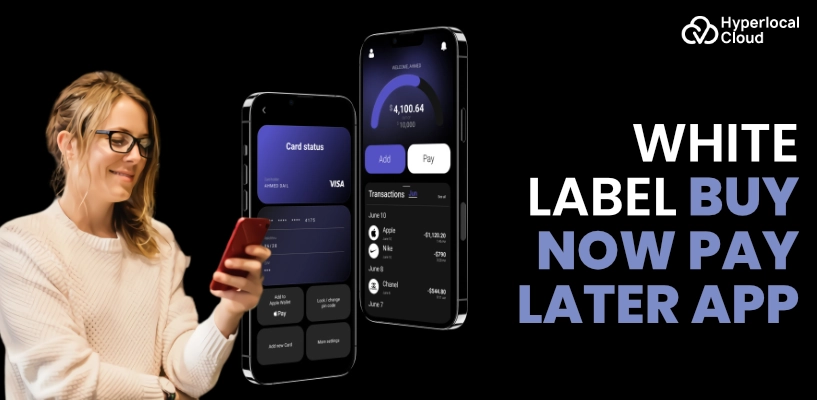
- Launch faster with a white label BNPL app solution.
- Offer flexible installment payment options.
- Integrate secure payment gateways and APIs.
- Simplify customer and merchant management.
- Explore scalable BNPL revenue models.
- Prioritize security and regulatory compliance.
- Choose the right BNPL development partner.
The growing demand for flexible payment options has created new opportunities for fintech startups, ecommerce businesses, retailers, and financial service providers. Buy Now, Pay Later (BNPL) services allow customers to purchase products or services immediately and pay for them in installments, subject to eligibility and the provider’s terms. For businesses, this payment model can improve checkout convenience, attract new customers, and create additional revenue opportunities.
A white label BNPL app solution enables businesses to launch a branded Buy Now, Pay Later platform without building every component from scratch. Depending on the provider, businesses can customize the app’s branding, configure installment plans, integrate payment systems, and manage customer and merchant operations through a centralized platform.
Instead of investing extensive time and resources in developing a fintech platform from the ground up, businesses can use white label BNPL software to accelerate implementation and focus on customer acquisition, merchant partnerships, and business growth.
Whether you are a fintech entrepreneur planning to enter the digital lending market or an established retailer looking to introduce installment payments, understanding BNPL app development can help you choose the right technology and business model.
What Is a White Label BNPL App Solution?
A white label BNPL app solution is a ready-made software platform that businesses can customize with their own brand identity and use to offer Buy Now, Pay Later services. Depending on the solution, it may include customer applications, merchant dashboards, administrative controls, payment integrations, installment management, and reporting tools.
The software provider develops and maintains the underlying technology, while the business launching the platform configures the available features according to its operational requirements and branding preferences.
For example, an ecommerce business could introduce its own BNPL service at checkout, allowing eligible customers to divide purchases into scheduled payments. A fintech startup could use a white label platform to build a dedicated installment payment service and partner with participating merchants.
How Does a Buy Now, Pay Later App Work?
A Buy Now, Pay Later app connects customers, merchants, payment systems, and financing arrangements through a coordinated digital workflow. Its purpose is to simplify the purchase process while managing payment schedules, customer eligibility, transaction records, and repayment obligations.
Here is how a typical BNPL transaction works.
1. Customer Registration and Verification
Customers create an account using the required personal and contact information. Depending on the market and provider, they may need to complete identity verification, KYC checks, or additional security steps before accessing BNPL services.
2. Eligibility and Credit Assessment
The platform evaluates whether a customer qualifies for a purchase or installment plan. Depending on the business model, this assessment may use transaction history, credit information, affordability checks, fraud indicators, and predefined eligibility rules.
3. Purchase and Installment Selection
At checkout, eligible customers choose BNPL as their payment method. They review the installment amount, payment dates, fees, and other applicable terms before confirming the transaction.
4. Transaction Authorization
The BNPL provider or relevant financing partner authorizes the transaction. The merchant receives confirmation and proceeds with the order according to its fulfillment process.
5. Repayment and Notifications
The platform tracks scheduled payments, sends reminders, records completed transactions, and communicates unsuccessful payment attempts. Customers can view their outstanding balances and repayment schedules through the app.
6. Merchant Settlement and Reconciliation
Merchants receive settlement according to their agreement with the BNPL provider. The system records transactions, refunds, fees, and settlement activity to support accurate financial reconciliation.
A well-designed BNPL platform makes these steps convenient for customers while helping businesses maintain visibility into transactions, repayment activity, and operational performance.
Build a Customer-Friendly Installment Payment Platform
Why Invest in a White Label Buy Now, Pay Later App?
Businesses exploring fintech opportunities can use a white label BNPL app to introduce installment payments without building an entire payment platform from the beginning. The benefits depend on the provider’s capabilities and the business’s operating model.
Faster Market Entry
Building a BNPL platform from scratch requires software engineering, payment integrations, security controls, testing, and operational planning. A white label platform can reduce the amount of development required by providing existing components that can be configured and branded.
Improved Customer Checkout Experience
Installment payment options allow eligible customers to spread purchases across multiple payments instead of paying the entire amount upfront. Clear payment terms and a simple checkout process can make purchasing more convenient.
Potential to Increase Merchant Conversions
Merchants may benefit when customers have additional payment options at checkout. However, the actual impact on conversion rates and order values depends on customer demand, product pricing, eligibility requirements, and the checkout experience.
Multiple Revenue Opportunities
Depending on the business model, a BNPL operator may earn merchant transaction fees, subscription revenue, or income from financing arrangements. Every revenue stream must be structured transparently and in accordance with applicable regulations.
Scalable Business Operations
A well-designed platform can support additional merchants, customers, payment methods, and geographic markets as the business grows. Actual scalability depends on system architecture, third-party integrations, risk controls, and the provider’s infrastructure.
Reduced Initial Development Effort
Using existing software can reduce the need to develop every application component independently. Businesses should still budget for customization, integrations, compliance, operational setup, and ongoing maintenance.
Essential Features of a White Label BNPL App Solution
The features included in a white label BNPL app determine how effectively the platform supports customers, merchants, administrators, and financial operations. A complete solution should provide a straightforward user experience while supporting transaction monitoring, payment management, security, and reporting.
Customer App Features
The customer application is the primary interface through which users access BNPL services, review purchases, and manage repayments.
-
User registration and secure login: Enable customers to create accounts and access the platform through secure authentication.
-
Digital identity verification: Support required identity verification and KYC workflows through suitable integrations.
-
BNPL eligibility assessment: Display applicable spending limits and available installment options based on the customer’s eligibility.
-
Flexible installment plans: Present supported payment schedules, installment amounts, fees, and due dates.
-
Repayment management: Allow customers to view outstanding balances, upcoming payments, and completed repayments.
-
Payment reminders: Send notifications about upcoming due dates, successful payments, and failed transactions.
-
Transaction history: Maintain an accessible record of purchases, repayments, refunds, and account activity.
-
Customer support: Provide access to help resources, support requests, and dispute resolution processes.
Merchant Dashboard Features
The merchant dashboard helps businesses accept BNPL payments and manage transactions through a centralized interface.
-
Merchant registration and onboarding.
-
BNPL checkout integration.
-
Transaction authorization and status tracking.
-
Settlement reports and reconciliation tools.
-
Refund and cancellation management.
-
Sales performance analytics.
-
Merchant account and user management.
-
Integration documentation and API access, where supported.
These features help merchants understand payment activity and coordinate their ecommerce or point-of-sale operations with the BNPL provider.
Admin Panel Features
The administration panel gives authorized operators visibility into platform activity and operational settings.
-
Customer and merchant account management.
-
Installment plan configuration.
-
Eligibility rules and spending limit controls.
-
Transaction monitoring and exception handling.
-
Repayment tracking and collections workflows.
-
Fraud alerts and risk review tools.
-
Settlement and financial reports.
-
Role-based access permissions and audit logs.
Administrative capabilities should support responsible oversight. Credit decisions, repayment policies, and customer account actions should follow applicable legal requirements and documented business procedures.
Advanced Features to Include in BNPL Software
Businesses that want to differentiate their platforms can consider additional capabilities beyond standard payment and installment management.
AI-Powered Risk Assessment
Machine learning and analytical models can help identify suspicious transactions, estimate repayment risk, and prioritize applications for review. These tools should be tested for accuracy, fairness, explainability, and compliance with applicable credit decision regulations.
Automated Fraud Detection
Fraud prevention systems can evaluate transaction patterns, unusual account activity, device signals, and other permitted risk indicators. Automated alerts can help operators investigate suspicious activity before it causes further losses.
Real-Time Payment Processing
Payment integrations can provide timely transaction updates, authorization responses, and repayment status changes. Processing speed and availability depend on the payment provider, banking infrastructure, and integration design.
Multi-Currency and Multi-Region Support
Businesses expanding into multiple markets may require local currencies, regional payment methods, localized interfaces, and market-specific installment rules. Availability should be configured according to local regulatory and financial requirements.
Personalized Payment Options
The platform can present suitable installment options based on customer eligibility, purchase value, and product rules. Personalization should not encourage excessive borrowing or obscure payment obligations.
Automated Collections and Reminders
Configurable reminders, failed-payment notifications, and repayment workflows can help customers stay informed about their obligations. Collections processes must comply with consumer protection and debt collection requirements.
API and Ecommerce Integrations
APIs can connect the BNPL platform with ecommerce stores, merchant systems, payment gateways, accounting software, and other financial services. This reduces manual work and helps maintain consistent transaction records.
Discuss Your BNPL Business Requirements With Our Experts
How to Build a Buy Now, Pay Later App
Building a BNPL app requires a combination of business planning, software configuration, financial integrations, security measures, and operational readiness. The following steps provide a practical roadmap for launching a BNPL app.
Step 1: Define Your BNPL Business Model
Start by deciding how the platform will operate and who will provide the financing.
Possible models include merchant-integrated BNPL, direct-to-consumer installment payments, and financing services offered through partnerships with lenders or financial institutions.
Define your target customer segment, transaction limits, installment schedules, merchant fee structure, repayment policies, and revenue model. Establishing these details early helps determine which software capabilities and financial partnerships are necessary.
Step 2: Identify Your Target Audience and Market
Choose the market and customer segment your platform will serve. Potential audiences include ecommerce shoppers, retailers, electronics merchants, healthcare providers, and businesses selling higher-value products.
Research customer payment preferences, merchant demand, competitor offerings, credit risks, and local regulatory requirements. Market selection influences supported payment methods, identity verification, financing arrangements, and product design.
Step 3: Choose a White Label BNPL Software Provider
Evaluate providers based on their existing functionality, customization capabilities, integration options, security practices, and support services.
Confirm which components are included in the solution and which require separate development or third-party services. Ask about deployment options, licensing terms, ongoing maintenance, scalability, and responsibility for upgrades.
A suitable provider should offer a clear implementation plan aligned with your business model rather than simply providing a branded interface.
Step 4: Customize the App With Your Brand Identity
Customize the customer app, merchant dashboard, and administration panel according to your brand guidelines.
This may include your logo, color palette, typography, onboarding screens, notifications, checkout interface, and customer support information. The user experience should make payment terms easy to understand and allow customers to review their obligations before accepting a plan.
Step 5: Integrate Payment Gateways and Financial APIs
Connect the platform to the relevant payment gateways, banking services, financing partners, and merchant systems.
Integrations may cover payment authorization, repayment collection, refunds, settlement, transaction notifications, and financial reconciliation.
The exact integrations depend on whether your business operates as a BNPL provider, works with a licensed lender, or facilitates transactions through an existing financial partner.
Step 6: Implement KYC, Security, and Risk Management
Set up identity verification, transaction monitoring, fraud prevention, access controls, data encryption, and secure authentication.
Determine how customer eligibility will be assessed and how credit decisions, disputes, failed payments, and overdue balances will be handled. Security and compliance requirements should be incorporated from the beginning rather than added after development.
Step 7: Test the Platform and Payment Workflows
Before launch, test the customer journey, merchant checkout, installment calculations, repayment scheduling, notifications, refunds, and settlement reports.
Perform functional, integration, security, performance, and usability testing. Include scenarios such as failed payments, duplicate requests, canceled orders, disputed transactions, and service interruptions.
Testing should confirm that financial records remain consistent across the app, payment provider, merchant dashboard, and settlement process.
Step 8: Launch, Monitor, and Optimize Your BNPL App
Launch with a defined group of merchants or customers where appropriate. Monitor transaction success rates, repayment performance, customer complaints, fraud indicators, platform availability, and merchant feedback.
Use these insights to improve onboarding, checkout usability, support processes, and operational controls. Expansion should be based on measured performance and the platform’s ability to manage risk responsibly.
White Label BNPL App vs. Custom BNPL App Development
Choosing between a white label platform($6,000)and custom development ($ 15,000 to 80,000) depends on your budget, timeline, technical requirements, and long-term strategy.
| Factor | White Label BNPL App | Custom BNPL App |
|---|---|---|
| Development approach | Configures existing software | Builds software to specific requirements |
| Time to market | Often faster | Usually requires more development time |
| Initial development effort | Generally lower | Generally higher |
| Customization | Depends on provider capabilities | Greater flexibility |
| Technical control | Shared with or limited by provider | Greater control over the architecture |
| Maintenance | Often supported by the provider under contract | Managed internally or through a development partner |
| Integrations | Uses supported connectors and APIs | Can accommodate specialized integrations |
| Best suited for | Businesses seeking faster market entry | Businesses with specialized technical needs |
A white label BNPL app solution can be a practical starting point for startups and established businesses seeking to validate their business model. Custom development may be preferable when proprietary technology or highly specialized workflows are central to the competitive strategy.
Before making a decision, review licensing terms, data ownership, source-code access, upgrade policies, service-level agreements, and exit arrangements.
Technology Stack for BNPL App Development
The technology stack depends on the platform’s existing architecture, the required integrations, anticipated transaction volumes, and the markets being served.
Frontend Technologies
Flutter and React Native can support cross-platform mobile applications, while React.js can be used to develop web interfaces for customers, merchants, and administrators.
Backend Technologies
Node.js, Python, and Java are potential backend options for application logic, transaction workflows, API services, and integrations. The final choice should reflect the team’s expertise and the platform’s performance and security requirements.
Database Technologies
PostgreSQL and MySQL can support structured customer, merchant, transaction, and repayment records. MongoDB may be useful for certain document-oriented data requirements. Data architecture should preserve financial consistency and support reliable auditing.
Cloud Infrastructure
AWS, Microsoft Azure, and Google Cloud provide infrastructure options for hosting, monitoring, backups, and scaling. Production deployments should include appropriate access controls, recovery procedures, and service monitoring.
Payment and Financial Integrations
The platform may connect with payment gateways, banking APIs, identity verification providers, credit information services, and financing partners. Availability and permitted usage vary by country and provider.
Security Technologies
Security controls may include encryption in transit and at rest, multi-factor authentication, role-based permissions, secure API authentication, audit logging, and fraud monitoring. Payment integrations should follow the relevant security standards, including PCI DSS where applicable.
How Much Does BNPL App Development Cost?
The cost of building a Buy Now, Pay Later app like Affirm depends on the software approach, included features, integration requirements, security controls, and regulatory obligations.
A white label solution may reduce the amount of software that must be built from scratch, but it does not eliminate the costs of launching and operating a financial service.
The main cost factors include:
-
Software licensing: Initial setup charges, subscription fees, or commercial licensing terms.
-
Branding and customization: Changes to application interfaces, workflows, notifications, and dashboards.
-
Payment and banking integrations: Implementation and ongoing fees for external services.
-
Identity verification and risk tools: Charges associated with verification checks, credit data, and fraud prevention.
-
Security and compliance: Technical safeguards, assessments, legal advice, and operational controls.
-
Infrastructure and maintenance: Hosting, monitoring, updates, backups, and support.
-
Business operations: Merchant acquisition, customer service, dispute handling, and repayment management.
A sensible budget should distinguish one-time implementation costs from recurring software, integration, compliance, and operational expenses. Request an itemized quote that identifies the included functionality, additional charges, and ongoing commitments.
Revenue Models for a Buy Now, Pay Later Platform
A BNPL business needs a sustainable revenue model that balances merchant value, customer affordability, financing costs, and repayment risk.
Merchant Transaction Fees
The BNPL provider may charge merchants a fee for each successfully processed transaction. The fee structure depends on the commercial agreement, transaction volume, risk allocation, and settlement arrangements.
Merchant Subscription Plans
A platform may offer subscription packages to merchants that want access to reporting tools, transaction management, integrations, or premium support. Subscription pricing should reflect the actual features and services provided.
Late Payment Fees
Some BNPL models permit late payment fees, subject to local laws and contractual terms. Any permitted charges should be disclosed clearly before customers accept a payment plan.
Financing Partnerships
A BNPL operator may partner with a lender or financial institution that provides financing and receives income under the agreed arrangement. Revenue sharing and responsibilities depend on the partnership structure and applicable regulations.
Premium Merchant Services
Additional services may include advanced analytics, customized reporting, integration support, and enhanced merchant management tools. These services can create additional business-to-business revenue opportunities.
Interest-Based Installment Products
Where legally permitted, a platform may offer interest-bearing installment products alongside interest-free plans. Pricing, repayment schedules, and applicable charges must be communicated transparently, with required affordability and credit assessments.
Important: The most appropriate revenue model depends on your target market, licensing arrangements, financing partners, and the costs associated with defaults, payment processing, and customer support.
Customize Your Own Buy Now, Pay Later Platform
Security and Regulatory Compliance for BNPL Apps
Security and compliance are fundamental to BNPL app development because the platform handles customer information, payment transactions, and potentially credit-related decisions.
Know Your Customer (KYC) and Identity Verification
Implement suitable identity verification procedures based on the applicable regulations and the responsibilities of the platform operator or financing partner.
Anti-Money Laundering Requirements
Where applicable, implement customer screening, transaction monitoring, recordkeeping, and reporting processes that meet relevant anti-money laundering obligations.
Data Privacy and Consumer Protection
Explain how customer information is collected, processed, stored, and shared. Provide clear privacy disclosures, secure data handling, and transparent payment terms.
Responsible Lending and Affordability
Use appropriate creditworthiness and affordability assessments where required. Spending limits and repayment options should be designed to reduce the risk of customers taking on unaffordable obligations.
Payment Security and Fraud Prevention
Protect payment information using secure integrations, encryption, authentication, monitoring, and access controls. Apply relevant payment security standards to the systems and activities within scope.
Market-Specific Regulations
Regulatory requirements vary by country and business model. For example, businesses entering the United States, United Kingdom, or European markets should assess applicable consumer credit, payment services, data protection, and lending requirements before launch.
A white label software provider does not automatically supply every license or regulatory authorization required to operate a BNPL service. Determine which responsibilities belong to your business, your financing partner, and your technology provider.
Industries That Can Benefit From White Label BNPL Solutions
BNPL services can support a variety of industries where customers may prefer to divide eligible purchases into scheduled payments.
Ecommerce and Retail
Online stores can offer BNPL at checkout, allowing eligible customers to select an installment plan when purchasing clothing, household goods, accessories, and other products.
Fashion and Lifestyle
Fashion retailers can introduce flexible payment options for apparel, footwear, accessories, and premium products. The checkout experience should clearly display the total amount payable and the installment schedule.
Electronics and Appliances
Merchants selling laptops, smartphones, televisions, and household appliances may use BNPL to offer customers additional payment options for higher-value purchases.
Healthcare and Dental Services
Eligible healthcare providers may explore installment payment arrangements for certain services. These models require particular attention to healthcare regulations, patient protections, and applicable financing restrictions.
Travel and Hospitality
Travel businesses may offer installment payment options for eligible bookings, subject to merchant agreements, refund policies, and local financing rules.
Education and Professional Training
Education providers can explore structured payment plans for eligible courses, certifications, and professional training programs. Payment terms should be transparent and appropriate for the services being financed.
Home Improvement and Furniture
Furniture retailers and home improvement businesses can use installment payment options for eligible purchases involving furniture, appliances, and renovation products.
The suitability of BNPL varies by industry. Businesses should assess transaction values, refund rates, repayment risks, and customer needs before introducing installment financing.
How to Choose the Right White Label BNPL App Development Company
Selecting the right technology partner can influence the platform’s implementation timeline, security, scalability, and long-term operating costs.
Consider the following factors when evaluating providers.
-
Ready-made platform capabilities: Review the existing customer app, merchant dashboard, administration panel, and installment management functionality.
-
Customization options: Confirm whether the platform supports your branding, payment workflows, and business-specific requirements.
-
Payment integrations: Evaluate compatibility with the payment gateways, banking APIs, and financing partners you intend to use.
-
Security capabilities: Ask about encryption, access controls, audit logs, fraud monitoring, and security testing.
-
Compliance support: Understand which technical compliance capabilities are included and which legal or licensing responsibilities remain with your business.
-
Scalability: Determine whether the platform can support your expected transaction volume, merchant base, and expansion plans.
-
Maintenance and support: Review service-level agreements, upgrade policies, incident response, and technical support arrangements.
-
Transparent pricing: Request a breakdown of setup, customization, licensing, integration, hosting, and ongoing support fees.
Before signing an agreement, request a product demonstration, review the implementation scope, and clarify ownership of customer data, integrations, and customized components.
Why Choose Hyperlocal Cloud for a White Label BNPL App Solution?
Businesses planning to enter the installment payments market can explore a white label solution at $6,000 from Hyperlocal Cloud to determine whether its capabilities align with their launch requirements.
A suitable BNPL platform should support a branded customer experience, merchant transaction workflows, administrative controls, and the integrations needed to connect payment services and financing partners.
When evaluating Hyperlocal Cloud’s offering, consider the following priorities:
-
Branded platform experience: Configure the available interfaces to reflect your business identity.
-
Customer and merchant workflows: Support the registration, purchase, transaction tracking, and repayment experiences required by your business model.
-
Payment integrations: Assess the availability of relevant payment gateway and third-party API integrations.
-
Administrative management: Review the tools available for customer accounts, merchant activity, transactions, and reporting.
-
Scalability planning: Evaluate the platform’s ability to accommodate additional merchants, transactions, and markets.
-
Implementation and technical support: Confirm the available customization, deployment, maintenance, and post-launch support services.
Before proceeding, confirm the exact features, commercial terms, implementation timeline, and regulatory responsibilities included in the proposed solution.
Partner With Hyperlocal Cloud to Explore Your BNPL App
Future Trends in Buy Now, Pay Later App Development
The BNPL industry continues to evolve as payment technology, consumer expectations, and financial regulation change. Businesses developing new platforms should consider emerging capabilities while prioritizing responsible payment practices.
AI-Driven Risk Assessment
Analytical models can help evaluate transaction risk, identify unusual activity, and support more efficient application reviews. Models should be monitored for bias and performance, particularly when used in credit-related decisions.
Embedded Finance
BNPL services can be integrated directly into ecommerce checkouts, merchant applications, and digital marketplaces. Embedded experiences reduce the need for customers to navigate between multiple applications.
Personalized Installment Experiences
Platforms may offer installment options based on purchase value, customer eligibility, and configured product rules. Personalization should remain transparent and must not pressure customers into taking on unnecessary debt.
Omnichannel BNPL Payments
Businesses may seek consistent BNPL experiences across websites, mobile applications, and physical stores. Achieving this requires reliable transaction synchronization and consistent repayment records.
Enhanced Fraud Prevention
Improved identity verification, transaction monitoring, and suspicious activity detection can help operators identify fraud earlier and reduce avoidable losses.
Responsible Lending and Transparency
Regulators and consumers increasingly expect clear disclosures, appropriate eligibility checks, and fair treatment of borrowers. Platforms should make repayment obligations easy to understand and support customers who encounter payment difficulties.
Conclusion
A white label BNPL app solution offers businesses a potential route to launching a Buy Now, Pay Later like Affirm service without developing every software component from scratch. With appropriate customer and merchant features, payment integrations, risk management, and operational controls, a platform can support flexible installment payment experiences across multiple industries.
The right approach depends on your target market, business model, financing arrangements, budget, and regulatory responsibilities. Before selecting a provider, evaluate its existing functionality, customization capabilities, integration options, security practices, and ongoing costs.
For businesses considering BNPL app development, a carefully planned white label implementation can help simplify the technology setup and create a foundation for future expansion. The priority should be building a reliable, transparent, and responsible payment experience that benefits both customers and merchants.
FAQs (Frequently Asked Questions)

Patt Cummins is an experienced content writer with over 10 years of experience creating clear and engaging content for technology-focused industries. He specializes in simplifying complex technical topics into easy-to-understand stories that educate readers, support brand communication, and help businesses effectively share their solutions.

Need Help With
Development?