

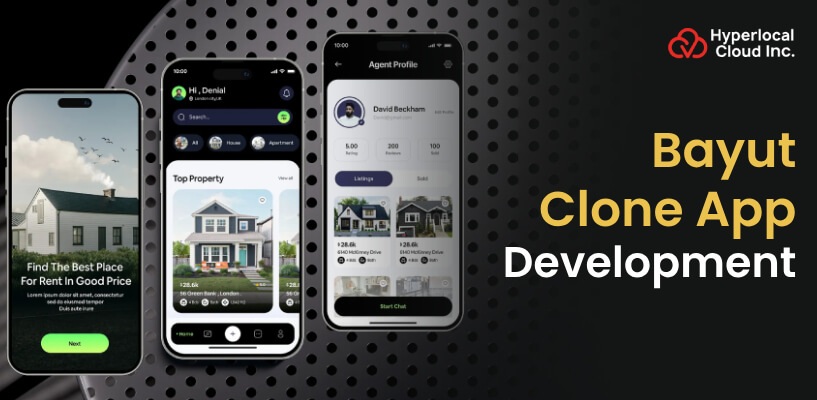
The real estate industry is increasingly adopting digital platforms to simplify property discovery, connect buyers with sellers, and help tenants find suitable rental properties. A well-designed real estate marketplace app enables users to explore property listings, compare prices, contact agents, and make informed decisions from their smartphones.
If you want to enter this growing market, a Bayut clone app provides a starting point for launching your own property marketplace. Inspired by the functionality of Bayut, a property portal serving the UAE market, this solution can help entrepreneurs, real estate agencies, and property businesses establish a digital presence under their own brand.
Hyperlocal Cloud offers a white-label real estate marketplace app solution that businesses can explore to develop a branded property listing platform. With features such as advanced property search, listing management, agent profiles, location-based discovery, and administrative controls, you can tailor the platform to your business model and target audience.
Whether you want to launch a property rental platform, a real estate marketplace, or a portal for property buyers and sellers, a Bayut-inspired solution can help you establish the foundation for your business.
What Is a Bayut Clone App?
A Bayut clone app is a real estate marketplace app solution inspired by the core functionality of the Bayut property portal. It allows entrepreneurs and real estate businesses to create a platform where property owners, brokers, agents, buyers, and tenants can interact through a centralized digital marketplace.
The platform enables users to browse residential and commercial properties, explore listing details, filter properties according to their preferences, and connect with relevant agents or property owners. Depending on business requirements, it can support property sales, long-term rentals, short-term rentals, or commercial property listings.
A typical Bayut clone app can include three main interfaces:
-
User application: Allows buyers and renters to search for properties, save listings, compare options, and contact agents.
-
Agent and property owner panel: Enables property professionals to create listings, upload images, update prices, and manage inquiries.
-
Admin dashboard: Helps the platform owner manage users, review listings, oversee subscriptions, monitor transactions, and manage platform activity.
The solution can be customized with your brand identity, preferred features, supported languages, payment integrations, and revenue models. This gives you the flexibility to create a real estate marketplace that serves your chosen geographical market and audience.
Turn Your Real Estate Idea Into Reality
Why Invest in a Real Estate Marketplace App Like Bayut?
A digital property marketplace can help real estate businesses reach more customers, organize property information, and simplify communication between property seekers and professionals. Developing a real estate marketplace app also creates opportunities to introduce new services and revenue streams.
Growing Demand for Online Property Search
Property seekers increasingly expect convenient access to property information before arranging viewings or contacting agents. An online marketplace makes it possible to explore listings, review photographs, compare prices, and shortlist properties from any location.
By launching a property listing platform, your business can provide users with a more organized property discovery experience while helping agents and property owners present their offerings to a wider audience.
Connect Buyers, Renters, Sellers, and Agents
A real estate marketplace brings different participants together in one digital environment. Buyers can discover properties for sale, tenants can search for rental homes, and agents can showcase their portfolios to interested customers.
Features such as inquiry forms, direct contact options, agent profiles, and saved listings help facilitate communication and make the property search process more convenient.
Generate Revenue Through Multiple Channels
A property marketplace can generate revenue through several business models rather than depending on a single income source. Depending on your target market, you can charge agents for subscriptions, offer premium property placements, sell advertising space, or introduce paid lead-generation packages.
A flexible revenue strategy allows you to align pricing with the needs of agents, property developers, landlords, and other business customers.
Expand Your Real Estate Business Digitally
A branded property marketplace can help traditional real estate businesses expand beyond their physical offices and existing customer networks. It provides a centralized platform for managing property information, attracting inquiries, and building a recognizable online presence.
As your business grows, you can introduce additional property categories, new locations, advanced search features, and integrations to support changing customer needs.
Key Features of a Bayut Clone App
The success of a property marketplace depends on how easily users can discover properties, evaluate listings, and connect with relevant professionals. Your Bayut clone app should include features that address the needs of property seekers, agents, property owners, and administrators.
User Registration and Profile Management
Provide a simple registration process that allows users to create accounts using supported authentication methods, such as email, phone number, or social sign-in where available.
Users should be able to manage their personal details, save favorite properties, view recent searches, and track their inquiries. Separate account types for property seekers and agents can help deliver a more relevant experience to each user group.
Advanced Property Search and Filters
Property search is one of the most important features of a real estate marketplace. Users should be able to discover properties based on their preferred location, budget, property type, size, and other requirements.
Consider including filters such as:
-
Minimum and maximum property price
-
Number of bedrooms and bathrooms
-
Apartment, villa, townhouse, or commercial property
-
Property for sale or rent
-
Furnished or unfurnished status
-
Property size and amenities
-
Verified listings and recently added properties
An effective search experience helps users narrow down thousands of listings to properties that match their requirements.
Property Listings With Images and Videos
Allow property owners and agents to create detailed listings with high-quality photographs, videos, floor plans, descriptions, pricing, and location information.
Each listing should present essential information in an easy-to-understand format. Depending on your business requirements, you can also support virtual tours, image galleries, property specifications, and clear inquiry options.
Accurate listing information helps users compare properties and decide which options are worth exploring further.
Interactive Maps and Location-Based Search
Location plays a significant role in real estate decisions. Integrating mapping services enables users to view property locations and explore nearby areas.
You can offer map-based property discovery, location autocomplete, neighborhood searches, and distance-based filtering. Additional information about nearby schools, public transport, shopping areas, and other amenities can further improve the property search experience when reliable data is available.
Property Comparison and Favorites
Users often compare several properties before deciding which ones to visit. A comparison feature can display relevant details such as price, property size, bedrooms, bathrooms, amenities, and location side by side.
A favorites feature allows users to save interesting listings and revisit them later. These tools can improve engagement and make the property discovery process more organized.
Agent and Property Owner Dashboards
Provide agents, brokers, landlords, and property developers with dedicated dashboards to manage their listings and inquiries.
The dashboard can support:
-
Creating and editing property listings
-
Uploading property images and documents
-
Updating property availability and pricing
-
Tracking inquiries and customer interactions
-
Monitoring listing performance
-
Managing subscriptions and featured listings
These capabilities help property professionals manage their activities without relying on the platform administrator for every update.
In-App Chat and Contact Options
Communication features help property seekers connect with agents and owners when they need additional information. Depending on your requirements, the platform can offer in-app messaging, inquiry forms, phone contact options, and email notifications.
You can also introduce automated responses to common questions, appointment requests, and viewing schedules. Make sure communication tools respect user privacy and provide appropriate controls over contact information.
Property Listing Verification
Trust is essential in a property marketplace. Listing moderation tools can help administrators review submitted properties, identify incomplete information, and remove misleading or duplicate listings.
You can introduce agent verification, document review, reporting mechanisms, and approval workflows. Any verification badge should reflect a clearly defined process rather than imply checks that have not been performed.
Push Notifications and Alerts
Notifications keep users informed about relevant property activity. Users can receive alerts when new listings match their saved searches, a favorite property changes price, or an agent responds to an inquiry.
Agents can receive notifications about new leads, listing approvals, subscription renewals, and account updates. Allow users to manage their notification preferences to keep communications useful and relevant.
Admin Dashboard and Analytics
The admin dashboard provides centralized control over marketplace operations. Administrators can manage users, property categories, listings, reports, subscriptions, and platform settings.
Analytics can help you monitor listing volumes, user registrations, inquiry activity, paid subscriptions, and other business performance indicators. These insights support better decisions about marketing, product improvements, and marketplace growth.
How to Build a Real Estate App Like Bayut
Building a successful property marketplace requires more than replicating a set of features. You need a clear business strategy, an appropriate technical foundation, a user-friendly experience, and a plan for attracting property listings and users.
Step 1: Define Your Business Model and Target Audience
Start by identifying the users your platform will serve. You might focus on residential property sales, rental apartments, commercial real estate, luxury properties, or a combination of categories.
Determine the geographical areas you want to cover and understand the needs of local buyers, renters, agents, and property owners. Consider local languages, currencies, regulations, and preferred communication channels.
Define your primary revenue model early. Subscription fees, featured listings, advertising, and paid leads may all be relevant, but the right combination depends on your market and customer expectations.
Step 2: Research Competitors and Market Requirements
Study established property portals and competing platforms to understand their search experiences, listing formats, agent services, and monetization strategies.
Identify gaps that your platform could address. For example, you may focus on a specific city, improve property discovery, offer specialized commercial listings, or provide more effective tools for independent agents.
Use this research to prepare a product requirements document that outlines the target audience, essential features, integrations, budget, and launch objectives.
Step 3: Select the Essential Features
Avoid adding every possible feature at the beginning. Instead, prioritize the capabilities required to launch a usable and reliable marketplace.
An initial release might include user registration, property listings, search filters, agent profiles, inquiries, favorites, and an admin dashboard.
Once the platform begins attracting users, you can introduce advanced analytics, automated recommendations, virtual tours, AI-powered search, and additional integrations based on actual customer demand.
Step 4: Choose the Right Technology Stack
The technology stack should support the expected number of users, listing volume, integrations, and future expansion.
Depending on the solution, your technology choices may include:
-
Frontend: React, Next.js, Flutter, or React Native, depending on whether you need a web platform, mobile applications, or both.
-
Backend: Node.js, Laravel, Django, or another suitable backend framework.
-
Database: PostgreSQL or MySQL for structured property and account data.
-
Cloud infrastructure: A suitable cloud hosting environment for application deployment, storage, and scaling.
-
Maps and location: Mapping APIs for geolocation, address search, and map-based discovery.
-
Notifications: Push notification and email services for user and agent updates.
These are possible technology choices, not a fixed stack. The final selection should depend on your requirements, existing systems, security needs, and development budget.
Step 5: Customize the UI/UX Design
Design the platform around the needs of property seekers and real estate professionals. Users should be able to search, filter, view property details, and contact agents without unnecessary steps.
Use clear navigation, readable property cards, optimized images, responsive layouts, and visible calls to action. Make sure the experience works consistently across mobile phones, tablets, and desktop devices.
For the agent dashboard, prioritize efficient listing management and inquiry tracking. For the administration panel, provide clear workflows for moderation, account management, and reporting.
Step 6: Integrate Payments and Third-Party Services
If your business model includes paid subscriptions, featured listings, or advertising packages, integrate suitable payment services for your target markets.
Other potential integrations include mapping services, email delivery, SMS verification, push notifications, analytics, and customer relationship management tools.
For a platform targeting the UAE, assess support for relevant local payment methods and regional requirements. Confirm provider availability, fees, documentation, and compliance requirements before implementation.
Step 7: Test, Launch, and Maintain Your Platform
Before launch, test the platform across supported devices and browsers. Validate registration, property submission, search filters, payments, notifications, and administrative workflows.
Check performance with realistic listing volumes and user activity. Review access permissions, protect sensitive information, and ensure that listing moderation and reporting processes work as intended.
After launch, monitor errors, gather user feedback, fix issues, and release improvements regularly. Ongoing maintenance helps the marketplace remain secure, usable, and adaptable as your business expands.
Launch Your Branded Property Listing App
Revenue Models for a Bayut Clone App
Choosing the right monetization strategy helps turn your property marketplace into a sustainable business. You can introduce multiple revenue streams based on the needs of agents, property owners, developers, and advertisers.
Featured Property Listing Fees
Allow agents and property owners to pay for greater visibility on selected areas of the platform. Featured properties can appear in designated promotional sections or receive enhanced placement in relevant search results.
Clearly distinguish paid placements from organic listings to maintain transparency with users.
Agent and Broker Subscription Plans
Offer monthly or annual subscription packages to agents and real estate companies. Each plan can provide different listing limits, dashboard capabilities, lead allowances, and promotional benefits.
For example, a basic package might support a limited number of property listings, while a premium package could include additional listings and advanced performance reports.
Pay-Per-Lead Model
Charge participating agents for eligible customer inquiries generated through the platform. This model can work well when leads are relevant, properly attributed, and valuable to participating businesses.
Define how a lead is counted, how duplicate inquiries are handled, and what happens when an inquiry contains invalid information.
Advertising and Sponsored Listings
Generate additional income by offering advertising placements to relevant businesses, including mortgage providers, property developers, interior designers, moving services, and home improvement companies.
Sponsored content should be clearly identified, and advertising options should not compromise the quality of organic property search results.
Premium Property Promotion Packages
Create promotional packages for developers, agencies, and landlords with multiple properties. Packages may combine featured placements, enhanced listing presentations, promotional campaigns, and performance reporting.
By offering flexible packages, you can serve individual property owners as well as larger real estate organizations.
Technology Stack for Bayut Clone App Development
The right technology foundation helps your real estate marketplace deliver reliable property searches, efficient listing management, and a consistent user experience. Technology selection should be based on the project’s functional requirements, expected traffic, integrations, and long-term maintenance plans.
Frontend Development
The frontend includes the interfaces users interact with when browsing properties, managing accounts, or handling inquiries.
React or Next.js may be suitable for a web-based marketplace, while Flutter or React Native can be considered when developing cross-platform mobile applications. The final choice should reflect your target devices, design requirements, and development strategy.
Backend Development
The backend manages business logic, authentication, property listings, user permissions, inquiries, subscriptions, and communication between the application and database.
Frameworks such as Node.js, Laravel, and Django are possible options. The architecture should support efficient search operations, secure account management, and reliable handling of listing updates.
Database and Cloud Infrastructure
A database stores information such as property details, user profiles, agent accounts, saved searches, and subscription records.
PostgreSQL or MySQL may be suitable for structured marketplace data. Cloud infrastructure can provide application hosting, image storage, backups, monitoring, and resources that can be adjusted as the platform grows.
Maps, Notifications, and Payment Integrations
Mapping APIs can support location-based search and property discovery. Notification services can deliver relevant alerts, while payment integrations can handle eligible subscription and promotional purchases.
Choose providers based on availability in your target markets, supported functionality, integration costs, privacy requirements, and applicable regulations.
Security, Performance, and Scalability
Security and performance should be considered throughout development rather than added only before launch.
Implement appropriate access controls, secure authentication, data protection measures, input validation, and regular backups. Optimize property images, database queries, caching, and search functionality to improve performance.
Monitoring tools and a clear maintenance process can help identify problems before they significantly affect users.
How Much Does Bayut Clone App Development Cost?
The cost of Bayut clone app development depends on your business model, feature requirements, customization level, and preferred development approach. You can choose a white-label real estate marketplace app solution for a cost-effective launch or invest in custom app development to build a platform tailored to your specific business needs.
White-Label Solution: Starting at $5,000
A white-label solution is a suitable option for entrepreneurs and real estate businesses looking to launch a branded property marketplace with a lower initial investment. It provides a ready-made foundation that can be customized according to your branding and business requirements.
This approach can reduce development time and effort compared with building the entire application from scratch. The final cost depends on the included features, licensing terms, integrations, and customization requirements.
Custom App Development: $40,000–$150,000+
Custom Bayut clone app development is ideal for businesses that require a unique real estate marketplace with specialized features, custom UI/UX, and tailored workflows. This approach provides greater flexibility in designing the platform around your target audience and long-term business goals.
The overall investment depends on the number of platforms, advanced property search capabilities, third-party integrations, security requirements, scalability, and ongoing maintenance needs.
Which Development Option Is Right for You?
-
Choose a white-label solution if you want to launch quickly with a lower upfront investment and customizable existing functionality.
-
Choose custom app development if you need a highly tailored platform with specialized features, unique workflows, and greater control over the product architecture.
Why Choose Hyperlocal Cloud for a Bayut Clone App?
Launching a real estate marketplace requires a solution that aligns with your business objectives, target audience, and operational needs. Hyperlocal Cloud’s Bayut clone offering is worth evaluating if you want a starting point for building a branded property platform.
Consider the following areas when assessing the solution.
Ready-Made Real Estate Marketplace Solution
Explore the available property marketplace functionality to determine whether it supports your essential launch requirements. Starting with existing components may reduce the amount of foundational development required compared with a completely custom build.
Custom Branding and Business-Specific Features
Build your own brand identity with supported customization options. Evaluate the ability to adapt the interface, property categories, user journeys, and business workflows to your intended audience.
Property Listing and Management Functionality
A marketplace needs effective tools for property discovery and listing administration. Assess the available listing creation, search, filtering, agent management, and administrative features against your business requirements.
Scalable Architecture for Business Growth
Plan for future expansion into additional locations, property categories, and customer segments. Discuss expected traffic, data volumes, integration requirements, and the infrastructure needed to support growth.
Integration and Future Enhancement Support
Evaluate the available integration options and the process for adding new functionality. Clarify which services are included, which require customization, and what ongoing technical support is available.
The right solution should provide a clear path from launch to future improvements while matching your budget and operational requirements.
Discuss Your App Development Requirements
FAQs (Frequently Asked Questions)

Patt Cummins is an experienced content writer with over 10 years of experience creating clear and engaging content for technology-focused industries. He specializes in simplifying complex technical topics into easy-to-understand stories that educate readers, support brand communication, and help businesses effectively share their solutions.

Need Help With
Development?