


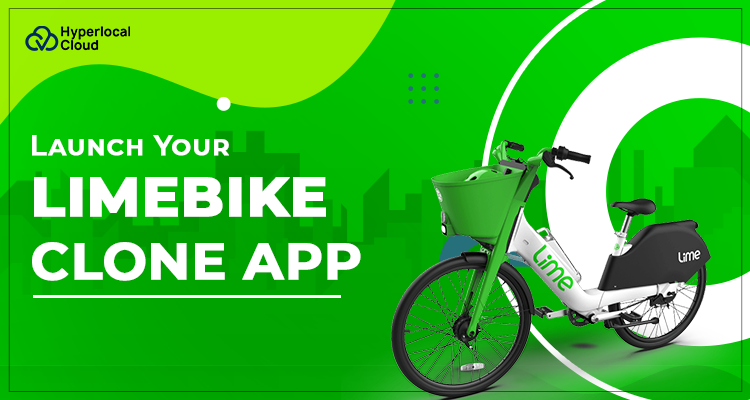
- Launch your own branded bike-sharing app with a LimeBike clone solution.
- Integrate GPS tracking, QR-code unlocking, payments, and fleet management.
- Choose a white-label or custom development approach.
- Explore flexible revenue models, including subscriptions and pay-per-minute rides.
- Plan development costs based on features, integrations, and business needs.
- Partner with Hyperlocal Cloud to build your bike-sharing platform.
The growing demand for convenient, eco-friendly urban transportation has created new opportunities for businesses to launch bike-sharing and electric scooter rental services. With a LimeBike clone app, you can introduce your own branded micromobility platform that allows users to locate nearby vehicles, unlock bikes or scooters, complete rides, and make payments directly through their smartphones.
Hyperlocal Cloud offers a white-label approach to bike-sharing app development, helping entrepreneurs, mobility startups, rental businesses, and fleet operators establish their own digital mobility services. The platform can be tailored to your business model, supported vehicle types, operational requirements, and target market.
Whether you want to launch a dockless electric bike rental service, a shared scooter network, or a combined micromobility platform, the solution can bring rider management, vehicle tracking, ride payments, and fleet operations together in one system.
What Is a LimeBike Clone App?
A LimeBike clone app is a bike-sharing software solution inspired by the user experience and operating model of shared mobility services. It enables businesses to offer on-demand access to bicycles, electric bikes, and scooters through a mobile application.
Instead of building every component from scratch, businesses can start with a white-label foundation and customize the branding, features, payment options, pricing rules, and administrative tools to match their requirements.
A typical platform consists of three core components:
-
Rider app: Allows customers to find vehicles, scan QR codes, unlock rides, track journeys, and pay for usage.
-
Fleet management system: Helps operators monitor vehicle locations, battery levels, maintenance needs, and fleet availability.
-
Admin dashboard: Provides control over users, pricing, payments, service areas, promotions, reports, and operational settings.
The exact functionality depends on the selected package, supported hardware, and customization scope. The goal is to simplify vehicle access for customers while helping operators manage daily operations efficiently.
Launch Your Own Bike Sharing App Today
How Does a Bike Sharing App Work?
A bike-sharing platform connects riders with available vehicles through a straightforward digital process.
1. Find nearby bikes or scooters
Users open the app to view available vehicles on a map. Vehicle availability, approximate location, and battery information can help them choose a suitable ride.
2. Scan and unlock the vehicle
The rider scans the vehicle’s QR code. The app communicates with the supported locking system to authorize the ride and unlock the vehicle.
3. Start and manage the ride
The system records ride activity and calculates applicable charges according to the configured pricing model. GPS and trip information can support ride monitoring.
4. Park and end the trip
Users park according to the operator’s rules. Where supported, the platform can verify parking zones or require parking photos before allowing a trip to end.
5. Complete payment and receive a receipt
The system calculates the final fare, processes payment through an integrated payment gateway, and displays ride history and transaction details.
Key Features of a LimeBike Clone App
An effective bike-sharing platform needs more than a booking interface. It must support the complete journey, from vehicle discovery and access to payments, fleet maintenance, and business administration.
Rider App Features
The rider application should make it easy for customers to find, access, and use shared vehicles.
-
User registration and login: Provide secure account creation using supported authentication methods.
-
Interactive vehicle map: Display available bikes and scooters within active service areas.
-
QR-code scanning: Let users scan vehicle-specific codes to initiate rides.
-
Ride booking and unlocking: Connect the app with compatible smart locks or vehicle controllers.
-
Real-time ride tracking: Display relevant journey information using supported GPS capabilities.
-
Fare calculation: Calculate charges using configured per-minute, fixed-duration, or subscription pricing.
-
Digital payments: Support integrated payment gateways, subject to market and provider availability.
-
Ride history: Allow customers to review previous trips, fares, and receipts.
-
Promotional offers: Enable eligible users to redeem discount codes and ride credits.
-
Customer support: Provide access to help resources and ride-related issue reporting.
Fleet Operator Features
Fleet operators need practical tools to manage their vehicles, service areas, and maintenance activities.
-
Monitor registered vehicles and their latest reported locations.
-
Review battery status when compatible vehicles provide battery telemetry.
-
Identify vehicles that need charging, repairs, or inspection.
-
Manage vehicle availability and temporarily disable vehicles.
-
Assign maintenance tasks to authorized staff.
-
Review ride activity and vehicle utilization.
-
Track reported damage, faults, and operational incidents.
These capabilities can help operators reduce manual coordination and make better decisions about fleet distribution and maintenance.
Admin Dashboard Features
The admin dashboard gives business owners a centralized view of the platform.
-
User management: Manage rider accounts, access permissions, and support cases.
-
Fleet management: Register vehicles, manage vehicle status, and organize operational records.
-
Pricing configuration: Set applicable ride rates, passes, subscriptions, and promotional rules.
-
Service-area management: Configure supported operating zones and geographic restrictions.
-
Transaction management: Review ride payments, refunds, and transaction records.
-
Analytics and reporting: Track rides, revenue, active vehicles, and usage patterns.
-
Promotional management: Create and manage eligible discounts and campaigns.
-
Staff access controls: Assign appropriate dashboard permissions to operational teams.
IoT and Smart Lock Integration
Hardware connectivity is essential when customers need to unlock and operate physical vehicles through an app.
The platform can be customized to integrate with compatible IoT devices, electronic locks, GPS trackers, and vehicle controllers. Depending on the hardware, integrations may support remote unlocking, ride-start authorization, lock-status reporting, battery telemetry, and vehicle diagnostics.
Before implementation, confirm hardware compatibility, communication protocols, connectivity requirements, and the availability of vendor APIs. These factors influence both development effort and operational reliability.
Advanced Features to Improve Fleet Operations
As your bike-sharing business grows, advanced capabilities can help you manage more vehicles, maintain service quality, and improve operational efficiency.
Geofencing and Parking Zone Management
Geofencing lets operators define geographic boundaries for service availability, permitted riding areas, and approved parking locations. The platform can use location data to identify whether a vehicle is inside a supported zone and apply configured restrictions.
Parking validation can also be enhanced with location checks, photo submissions, and ride-ending rules where the hardware and app support them.
Battery Monitoring and Charging Management
For electric bikes and scooters, battery availability directly affects fleet utilization. A compatible platform can display reported battery levels, flag vehicles that need charging, and help teams prioritize battery replacement or charging tasks.
Operators can use this information to reduce the number of unavailable vehicles and plan charging activities more effectively.
Predictive Maintenance and Vehicle Health
Maintenance tools can help identify recurring faults, overdue inspections, and vehicles requiring attention. With sufficient historical data and compatible telemetry, advanced analytics can help identify patterns associated with possible equipment failures.
A maintenance workflow may include issue reporting, task assignment, repair status, inspection records, and vehicle reactivation after servicing.
Dynamic Pricing and Ride Passes
Different customers have different travel needs. A configurable pricing engine can support per-minute fares, hourly rentals, day passes, memberships, and promotional offers.
More advanced implementations can introduce demand-based pricing or location-specific rates, subject to transparent pricing rules, local regulations, and business requirements.
Fraud Prevention and Account Security
Protecting accounts and transactions is important for a shared mobility service. Security measures may include payment verification, rate limits, suspicious-activity alerts, secure authentication, and controls against repeated unauthorized unlock attempts.
The implementation should also protect personal information and restrict access to sensitive customer and vehicle data.
Fleet Analytics and Automated Alerts
A reporting system can help managers understand vehicle utilization, popular service zones, ride duration, revenue trends, and maintenance costs. Automated alerts can notify authorized staff about low batteries, offline devices, failed unlock attempts, or overdue maintenance when the relevant data is available.
Discuss Your Bike Sharing Project with Our Experts
Benefits of White-Label Bike Sharing Software
White-label software gives businesses a starting point for launching a branded service without independently building every core application component.
Faster time to market: A ready-made software foundation can reduce the work required compared with developing an entire platform from scratch. Actual delivery time depends on integrations and customization.
Your own brand identity: Customize app names, logos, colors, user interfaces, and supported customer journeys.
Flexible business operations: Configure pricing plans, service zones, vehicle categories, and operational workflows around your business model.
Centralized fleet control: Bring vehicle information, ride records, maintenance activities, and payments into a unified management system.
Scalable architecture: Plan for additional vehicles, users, service areas, and operational requirements as the business grows, subject to infrastructure capacity and implementation design.
Lower initial development effort: Reusing a proven software foundation may reduce the need to build every standard feature from the beginning. Hardware, licensing, integrations, and customization still contribute to the total investment.
Room for future customization: Add features such as loyalty programs, corporate memberships, advanced analytics, and third-party integrations as business requirements evolve.
Business Models for an E-Bike and E-Scooter Sharing App
Choosing a suitable revenue model helps align the platform with your target customers and operating costs.
Pay-Per-Minute Rentals
Customers pay according to the duration of each ride. This model works well for short urban trips and last-mile transportation.
Hourly and Daily Rentals
Offer fixed-duration rentals for tourists, visitors, recreational riders, or customers who need a vehicle for longer journeys.
Subscription and Membership Plans
Charge recurring fees for access to selected ride benefits, discounted fares, monthly allowances, or membership-specific services.
Ride Passes and Bundled Packages
Provide packages with a fixed number of rides, prepaid minutes, or time-limited access. These options can appeal to frequent commuters and price-conscious customers.
Corporate and Campus Mobility
Partner with offices, universities, residential communities, hotels, and business parks to provide mobility services for employees, students, residents, or guests.
Tourism and Recreational Rentals
Operate bike-sharing services in parks, tourist districts, resorts, and recreational destinations where local regulations and operating conditions permit.
The best model depends on customer demand, vehicle costs, charging and maintenance expenses, insurance, payment fees, and local operating requirements.
How Much Does LimeBike Clone App Development Cost?
The cost of developing a LimeBike clone app depends on whether you choose a white-label solution or commission a custom-built platform. Other factors include the number of applications, supported vehicle types, hardware integrations, payment requirements, security measures, and expected fleet size.
White-Label Bike Sharing Solution ($5000)
A white-label solution can be a practical choice for businesses that want to launch with a defined set of core features and customize the platform to their brand.
The final quote should specify the included rider app, administrative tools, fleet functionality, integrations, deployment scope, licensing arrangements, and ongoing support.
Custom Bike Sharing App Development($25,000 to $40,000)
Custom development is appropriate when the business requires specialized workflows, proprietary functionality, extensive hardware integration, or a distinct operating model.
The scope may include custom mobile applications, backend services, fleet dashboards, IoT communication, analytics, and third-party integrations.
Factors That Affect Development Cost
-
Number of platforms, such as Android, iOS, and web.
-
Complexity of QR-based vehicle access and smart-lock integration.
-
GPS tracking, geofencing, and parking validation requirements.
-
Payment gateway and subscription integrations.
-
Fleet size and infrastructure requirements.
-
Security, compliance, and data protection requirements.
-
Custom analytics, maintenance workflows, and reporting.
-
Testing, deployment, maintenance, and ongoing support.
Request a tailored quote from Hyperlocal Cloud based on your target market, vehicle fleet, required integrations, and launch objectives. A detailed scope is more useful than relying on a generic price estimate that may exclude important hardware or operational requirements.
Technology Stack for Bike Sharing App Development
The technology stack should support secure transactions, reliable vehicle access, location-based services, and fleet operations.
Mobile application development: Android and iOS technologies provide the rider interface for registration, vehicle discovery, QR scanning, ride management, and payments.
Backend and APIs: Backend services manage user accounts, ride sessions, pricing, payments, vehicle records, and communication between the apps and connected systems.
Database: A suitable database stores user profiles, vehicle information, trip records, pricing rules, transactions, and operational data.
GPS and mapping: Mapping services support vehicle discovery, location visualization, route-related information, geofencing, and parking-zone validation.
IoT and connectivity: Supported communication protocols and hardware APIs connect the platform to electronic locks, GPS devices, battery sensors, and vehicle controllers.
Cloud infrastructure: Cloud hosting provides application deployment, data processing, monitoring, backups, and infrastructure scaling based on usage requirements.
Payment integration: Payment gateways enable supported digital payment methods, transaction processing, refunds, and subscription billing.
Security and monitoring: Authentication, access controls, encryption, audit logs, secure API design, and operational monitoring help protect the platform and its users.
The final technology choices should reflect the target market, expected usage, team capabilities, hardware compatibility, and long-term maintenance requirements.
Start Planning Your Bike Sharing App Today
Steps to Launch Your Own Bike Sharing Business
Launching a bike-sharing platform requires planning beyond software development. Follow these steps to build a solution that fits your market and operational goals.
Step 1: Research Your Target Market
Identify your target customers, potential service locations, competing mobility services, local transportation patterns, and regulatory requirements. Decide whether your business will focus on commuters, tourists, campuses, residential communities, or a combination of customer groups.
Step 2: Choose Your Fleet and Business Model
Decide whether you will operate conventional bicycles, electric bikes, e-scooters, or a mixed fleet. Select your pricing model, service areas, vehicle procurement strategy, charging arrangements, and maintenance process.
Step 3: Define the Software Requirements
List the required rider features, fleet management capabilities, admin controls, payment methods, and reporting tools. Determine which capabilities are essential for launch and which can be introduced later.
Step 4: Select a White-Label or Custom Solution
Evaluate the available software against your requirements. Check branding options, vehicle compatibility, hardware integrations, scalability, licensing terms, and support arrangements before making a decision.
Step 5: Integrate Hardware and Third-Party Services
Connect compatible smart locks, vehicle controllers, GPS devices, payment gateways, and mapping services. Test the complete ride lifecycle to ensure that vehicle access, ride records, billing, and parking rules work correctly.
Step 6: Test the Platform
Conduct functional, usability, security, payment, location, and hardware compatibility testing. Run a pilot with a limited fleet to identify operational problems before expanding the service.
Step 7: Launch and Optimize
Introduce the platform in your initial service area, monitor customer feedback, review fleet utilization, and address operational issues. Use actual ride and maintenance data to improve vehicle distribution, pricing, and service availability.
Why Choose Hyperlocal Cloud for LimeBike Clone App Development?
Choosing the right development partner can help you align your software with your fleet operations and business objectives.
When evaluating Hyperlocal Cloud’s white label solution, consider the following capabilities and requirements:
-
White-label branding: Configure the platform around your business identity.
-
Rider application: Support vehicle discovery, QR-based access, ride management, and payments according to the agreed scope.
-
Fleet management: Organize vehicle records, availability, maintenance, and operational monitoring.
-
Hardware integrations: Assess compatibility with your selected locks, trackers, and vehicle controllers.
-
Flexible business rules: Configure supported pricing models, service areas, and rental workflows.
-
Customization options: Extend the platform to address specialized requirements.
-
Deployment and support: Confirm implementation assistance, maintenance arrangements, service commitments, and third-party dependencies.
Before finalizing the project, request a demonstration, feature-by-feature scope, hardware compatibility assessment, and written quotation. These details help establish whether the solution matches your launch plans.
FAQs (Frequently Asked Questions)

Patt Cummins is an experienced content writer with over 10 years of experience creating clear and engaging content for technology-focused industries. He specializes in simplifying complex technical topics into easy-to-understand stories that educate readers, support brand communication, and help businesses effectively share their solutions.

Need Help With
Development?