

- Launch your own classified ads platform with a white-label Craigslist clone solution.
- Customize branding, categories, listings, and features to match your business needs.
- Generate revenue through paid ads, featured listings, subscriptions, and advertising.
- Simplify marketplace management with user dashboards, search tools, and admin controls.
- Partner with Hyperlocal Cloud to explore a ready-made classified marketplace solution and bring your business idea to life.
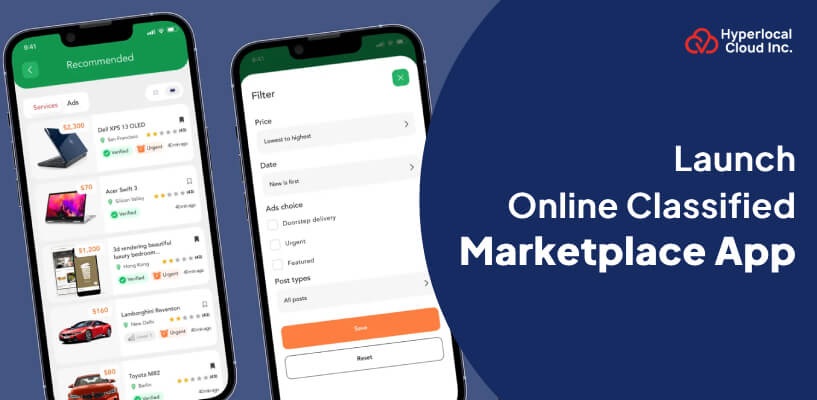
Launch your own online classified marketplace with Craigslist clone software from Hyperlocal Cloud. Create a platform where users can publish advertisements, discover local deals, promote services, explore property listings, and connect with potential buyers or sellers.
Our Craigslist clone solution provides a solution for businesses that want to enter the online classifieds market without building every component from scratch. Whether you are a startup, entrepreneur, or established company, you can explore a ready-made solution and adapt it to your target audience, business objectives, and marketplace requirements.
From local buy-and-sell listings to specialized advertising portals, a Craigslist-like platform can support different marketplace concepts. With the right features, business model, and marketing strategy, you can establish a digital destination for people looking to advertise and discover relevant offerings.
What Makes Our Craigslist Clone Different?
A classified marketplace needs to reflect the needs of its audience rather than simply reproduce the appearance of an existing website. Your platform should make advertising straightforward, help visitors find relevant listings, and provide administrators with practical tools to manage daily operations.
Hyperlocal Cloud’s Craigslist clone solution gives businesses a starting point for planning a customized classified marketplace.
Business-Focused Platform Setup
Configure your marketplace around a specific industry, geographic region, or audience. A local classifieds business may focus on community listings, while a specialized portal may concentrate on jobs, real estate, vehicles, or professional services.
Flexible Marketplace Planning
Define the categories, listing information, advertising rules, and monetization approach that support your business model. Identify any additional features required before finalizing the implementation.
Centralized Operations
A structured administration process helps you manage advertisements, user activity, categories, and reported content from a central location, subject to the capabilities of the selected solution.
Growth-Oriented Approach
Start with the functionality required for your initial launch and identify future improvements based on user feedback, listing activity, and business performance.
Before purchasing, request a demonstration to verify the included features, customization scope, support arrangements, and expected implementation timeline.
Create a Marketplace for Local Buyers and Sellers
Essential Features of a Craigslist-Like Platform
The quality of a classified marketplace depends on how easily users can publish advertisements and find relevant information. Your platform should provide an intuitive listing experience while helping administrators maintain consistent standards.
Classified Listing Creation and Management
Allow advertisers to create listings with relevant details, including titles, descriptions, images, prices, categories, and locations where applicable.
Users should be able to update listing information and manage their published advertisements. Depending on the implementation, the platform may also support expiration dates, renewals, and listing status tracking.
Smart Search and Category Filters
Help visitors find advertisements through keyword search, category selection, sorting, and relevant filters.
Depending on the marketplace’s requirements, filtering options can include price ranges, geographic areas, listing dates, product conditions, and category-specific attributes.
A clear search experience helps users narrow their choices without navigating through irrelevant listings.
Location-Based Listing Discovery
Local relevance is important when users are looking for nearby services, rental properties, used products, or employment opportunities.
A location-aware marketplace can organize advertisements by city, region, postal code, or supported geographic radius. Map-based discovery may also be considered for businesses that need a visual way to explore listings.
User Profiles and Communication
Provide registered users with a way to manage their account information, review their advertisements, and communicate with interested parties.
Depending on the selected implementation, communication options may include contact forms, in-platform messaging, email notifications, or phone contact controls.
Appropriate privacy settings should help users manage the information they share with other marketplace participants.
Listing Verification and Moderation
Give administrators tools to review advertisements and address inappropriate or suspicious content. User reporting, approval workflows, account restrictions, and moderation policies can help maintain marketplace quality.
Additional fraud-prevention measures may be considered according to the risk profile of the marketplace and the features available in the selected package.
Featured Ads and Listing Promotion
Help advertisers gain additional visibility through featured advertisements, promoted placements, or other supported promotional options.
These features can be particularly useful for businesses that publish multiple listings or want to highlight specific offerings. Clear labeling and transparent placement rules help users distinguish promotional content from standard results.
Dedicated Dashboards for Users and Administrators
A classified marketplace serves two main operational groups: people who publish advertisements and the team responsible for running the platform. Each group needs tools suited to its responsibilities.
Advertiser Dashboard
The advertiser dashboard provides access to everyday listing activities.
Key capabilities may include:
- Creating and updating advertisements.
- Managing listing images and descriptions.
- Reviewing active, pending, expired, or rejected listings.
- Tracking incoming inquiries and messages.
- Managing saved advertisements and account information.
- Renewing listings or purchasing promotional options where available.
A straightforward dashboard reduces the effort required to maintain advertisements and encourages advertisers to keep their information current.
Marketplace Administration Panel
The administration panel helps the business oversee marketplace operations and enforce its policies.
Depending on the selected package, administrative functions may include:
- Managing user accounts and permissions.
- Creating and updating listing categories.
- Reviewing and moderating advertisements.
- Investigating reported listings and suspicious activity.
- Managing paid listing plans and promotional placements.
- Monitoring available marketplace reports and activity metrics.
- Configuring platform settings and content policies.
Confirm the exact dashboard functionality with Hyperlocal Cloud before finalizing your requirements.
Classified Marketplace Business Models You Can Launch
The classified advertising model can be adapted to different industries. Selecting a clear market niche can help you define your target audience, listing categories, and promotional strategy.
Local Buy-and-Sell Marketplace
Build a platform where individuals and businesses advertise used products, electronics, furniture, appliances, and other items.
Local discovery can help users find relevant listings within their preferred areas. Your business can focus on making advertisements easy to publish and search while encouraging accurate descriptions and responsible communication.
Property and Rental Listings Portal
Create a marketplace for residential rentals, commercial properties, property sales, and related real estate advertisements.
Property-specific listing fields can include location, property type, price, bedrooms, and other relevant details. Additional filters can help prospective tenants and buyers narrow their search.
Jobs and Recruitment Platform
Develop a classified portal where employers publish vacancies and job seekers discover employment opportunities.
Listings may be organized by industry, job type, location, experience level, and other relevant criteria. Employers can be offered suitable paid advertising packages if the platform supports them.
Local Services Advertising Platform
Launch a marketplace where service providers advertise offerings such as home repairs, cleaning, tutoring, professional consulting, and other local services.
Business profiles, service-area information, contact options, and category-specific listing fields can help users evaluate available providers.
Choose the business model that aligns with your audience and validate demand before expanding into multiple categories.
Get a Customized Classified Marketplace Solution
How to Generate Revenue from Your Classified Platform
A classified marketplace can earn revenue by offering additional value to advertisers and businesses. Your monetization strategy should reflect the needs of your audience and the level of competition in your chosen market.
Paid Listings and Featured Ads
Charge advertisers to publish selected categories of advertisements or promote listings for greater visibility.
You can consider a combination of free listings and paid upgrades to attract initial users while creating opportunities for monetization.
Subscription Plans for Advertisers
Offer recurring plans to professional advertisers, recruitment agencies, property agents, or service providers who need to publish listings regularly.
Subscription packages can be differentiated by listing limits, promotional credits, profile options, or other supported benefits.
Display Advertising and Business Promotions
Generate revenue through relevant display advertising or promotional placements for businesses that want to reach your marketplace audience.
Advertising should be positioned carefully so it does not interfere with search, listing discovery, or the overall user experience.
Your choice of monetization model should also consider payment processing costs, advertiser demand, refund policies, and applicable legal requirements.
Customize Your Platform for Your Target Market
Your marketplace’s configuration should reflect the information users need and the way advertisers operate in your selected industry.
Customization may involve several areas.
Brand identity: Establish your own business name, logo, visual identity, and supported interface styling.
Listing categories: Configure categories and subcategories according to your target market.
Custom listing fields: Collect relevant information for specific advertisements, such as vehicle specifications, property details, or service descriptions.
Geographic settings: Define the regions served by the platform and consider location-specific browsing options.
Language and currency: Evaluate localization requirements when serving audiences across different regions.
Third-party integrations: Consider suitable payment gateways, maps, analytics, messaging, and email services where supported.
Additional functionality: Identify specialized workflows, reports, or integrations that are not covered by the existing solution.
Before proceeding, distinguish between configuration options included in the package and features that require additional development. This helps establish realistic costs and implementation expectations.
Technology, Integrations, and Platform Scalability
Technology decisions affect how your classified marketplace stores information, retrieves listings, handles user activity, and supports future enhancements.
The specific technology stack should be verified with Hyperlocal Cloud rather than assumed from the general requirements of a classified marketplace.
Frontend Architecture
The frontend provides the interface for browsing advertisements, publishing listings, searching categories, and managing user accounts.
Responsive layouts, clear navigation, accessible forms, and efficient listing pages are important considerations for users accessing the marketplace across different devices.
Backend and Database
The backend manages business logic, listing operations, account permissions, moderation workflows, and integrations.
The database stores information such as user profiles, advertisements, categories, and listing attributes. Database design should support reliable data handling and efficient search operations.
Search and Geographic Services
Search functionality helps visitors find relevant advertisements. Geographic services can support location filters, nearby listings, and map-based discovery where required.
The appropriate implementation depends on expected listing volume, search complexity, and the desired user experience.
Integrations and Infrastructure
Potential integrations include payment processing, email delivery, analytics, maps, and customer support services.
Hosting, monitoring, backups, and deployment practices should be planned around expected traffic, data requirements, and business continuity needs.
A scalable approach should support realistic growth without adding unnecessary technical complexity at launch.
Security and Trust Features for Classified Advertisements
Classified marketplaces connect people who may not know each other. Establishing clear rules and suitable safeguards can help reduce abuse and improve user confidence.
Account Security
Use appropriate authentication, account permissions, and verification measures. The level of verification should reflect the marketplace’s requirements and the risks associated with its listing categories.
Content Policies
Define which advertisements are allowed and explain the rules for prohibited products, misleading claims, spam, and inappropriate content.
Reporting and Review Processes
Give users a clear way to report suspicious listings. Establish procedures for reviewing complaints, removing prohibited advertisements, and restricting accounts when warranted.
Privacy and Data Handling
Use suitable access controls and secure data-handling practices. Provide clear privacy information and avoid collecting unnecessary personal information.
Payment Protection
If the marketplace supports paid listings or other transactions, select appropriate payment providers and implement clear payment, refund, and dispute policies.
Security controls should be verified against the selected product configuration. Additional safeguards may require third-party services or custom implementation.
Craigslist Clone Development Cost and Pricing Factors
The total cost of launching a Craigslist-like marketplace depends on the selected solution, customization requirements, infrastructure, and ongoing operating expenses.
A ready-made solution may reduce the need to develop standard functionality from scratch. A custom platform may require a larger initial investment when the business needs specialized features or extensive technical control.
White Label Solution– $5,000
Custom Development– $ 20,000 to $80,000
What Determines the Cost?
Included functionality: The features available in the selected package influence how much additional work is required.
Customization requirements: Changes to the interface, listing workflows, dashboards, and business rules can affect the overall budget.
Third-party integrations: Payment gateways, maps, communication services, and other integrations may introduce additional costs.
Mobile applications: Native Android or iOS applications may require separate development if they are not included.
Hosting and maintenance: Infrastructure, monitoring, backups, updates, and technical support contribute to ongoing expenses.
Licensing and ownership: Review the software license, source-code access, intellectual property terms, and permitted usage before committing.
How to Get an Accurate Estimate
Start by preparing a list of essential features, target markets, expected user activity, and required integrations.
Ask Hyperlocal Cloud to provide a breakdown of the package price, included deliverables, optional customizations, recurring expenses, and estimated implementation timeline.
A detailed proposal will help you compare available options and establish a realistic budget for your classified marketplace.
Create a Platform for Jobs, Properties, and Services
Ready-Made Solution vs. Custom Classified App Development
The right development approach depends on your budget, business model, launch priorities, and technical requirements.
Ready-Made Solution
A ready-made platform is worth considering when your requirements align with existing functionality and you want to avoid developing every standard marketplace component independently.
It can be appropriate for startups, entrepreneurs, local businesses, and organizations validating a new marketplace idea.
The main consideration is whether the included functionality, licensing terms, and customization capabilities meet your needs.
Custom Development
Custom development offers greater control over the user experience, architecture, business workflows, and specialized integrations.
It may suit businesses with complex requirements or a product strategy that depends on functionality unavailable in an existing solution.
However, custom development typically requires more detailed planning, development, testing, and budget allocation.
Which Approach Is Right for Your Business?
Choose a ready-made solution when speed, existing functionality, and controlled initial development requirements are your main priorities.
Consider custom development when your business needs extensive differentiation or functionality that cannot reasonably be achieved through configuration and available extensions.
Evaluate the total cost of ownership, implementation requirements, support arrangements, and future flexibility before deciding.
Steps to Launch Your Classified Ads Business
A successful launch requires a clear business plan, a suitable platform, reliable operations, and a strategy for attracting users.
Define Your Niche and Business Model
Identify your target audience, geographic market, listing categories, competitors, and revenue opportunities.
Starting with a specific audience can make it easier to develop relevant listings and build early marketplace activity.
Configure Your Marketplace
Select a suitable solution, establish your branding, configure listing categories, and define the user experience.
Prepare the required policies, moderation workflows, and communication options before opening the platform to the public.
Test and Deploy the Platform
Test registration, listing publication, search filters, communication, moderation, and payment workflows where applicable.
Review mobile usability, privacy controls, performance, and error handling before deployment.
Attract Advertisers and Grow Your Audience
Promote the marketplace through relevant search content, local business outreach, partnerships, social media, and targeted advertising.
Focus on attracting genuine listings and relevant visitors rather than increasing registrations without meaningful marketplace activity.
After launch, review listing quality, inquiries, returning users, and advertiser retention to identify opportunities for improvement.
Why Choose Hyperlocal Cloud for Your Craigslist Clone?
Selecting a solution provider requires evaluating both the software and the support available throughout the implementation process.
Hyperlocal Cloud offers a Craigslist clone solution for businesses exploring the classified advertising marketplace model.
A Solution for Your Marketplace
Evaluate a prebuilt solution for the core functionality required to establish a classified advertising platform.
Business-Specific Configuration
Discuss your branding, category structure, listing requirements, and customization needs to determine how the solution can fit your business model.
Clear Implementation Scope
Establish the features, deliverables, integrations, licensing conditions, and support arrangements before starting the project.
Planning for Future Requirements
Identify which additional features may be needed as your audience grows and your business model develops.
Solution Evaluation Before Purchase
Request a demonstration and clarify technical requirements, package inclusions, customization charges, and expected timelines before making a decision.
The best solution is one that aligns with your actual requirements and provides a clear understanding of the costs and responsibilities involved.
FAQs (Frequently Asked Questions)

Nisha Bagga is a technical writer with more than 7 years of experience creating high-quality content for a wide range of industries. She specializes in developing clear, engaging, and well-researched technical and business content tailored to diverse audiences and industry requirements.

Need Help With
Development?