


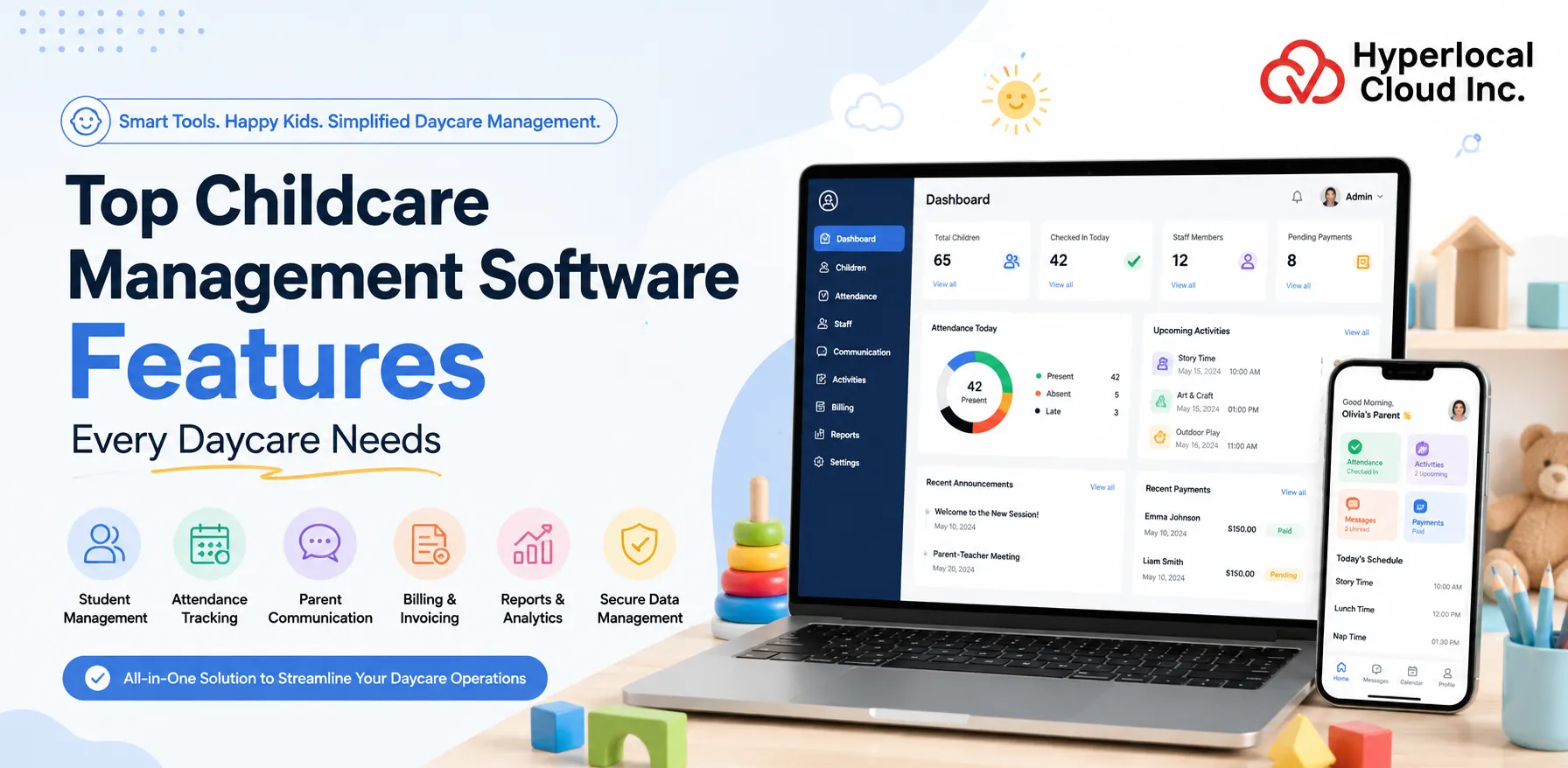
The childcare industry is becoming increasingly technology-driven as daycare centers seek smarter ways to manage daily operations and deliver better experiences for children, parents, and staff. However, many providers still face challenges with manual administration, including time-consuming paperwork, attendance tracking issues, communication gaps, billing complexities, and difficulty maintaining accurate records. These outdated processes can reduce efficiency and make it harder for daycare teams to focus on delivering quality care.
Investing in feature-rich childcare management software helps daycare centers automate routine tasks, improve parent communication, maintain compliance, and enhance child safety. A reliable solution provides a centralized platform for managing essential operations while supporting better decision-making and smoother workflows. In this article, we will explore the top 15 childcare management software features every daycare needs, from enrollment and attendance management to billing, reporting, security, and more.
Overview of Childcare Management Software
Childcare management software is a digital solution designed to help daycare centers, preschools, and childcare providers manage their daily operations more efficiently. It acts as a centralized platform where all essential childcare activities can be organized, tracked, and managed from one place. Instead of relying on multiple systems, spreadsheets, or paperwork, childcare providers can use a single platform to streamline administrative tasks, improve communication, and maintain accurate records.
This software is used by daycare owners, administrators, teachers, caregivers, and parents to simplify different aspects of childcare management. Daycare owners and administrators can manage enrollment, finances, compliance, and staff operations, while teachers and caregivers can access child information, record attendance, and update daily activities. Parents benefit from easier communication, real-time updates, and access to important information about their child’s care. A childcare management system typically manages tasks such as child records, digital attendance tracking, payment processing, parent communication, staff scheduling, and detailed reporting, helping childcare centers operate more smoothly and provide better care.
Simplify Daycare Management With Powerful Software Built for Modern Childcare Needs
Top 15 Childcare Management Software Features Every Daycare Needs
1. Online Enrollment and Registration
The enrollment process is the first step in building a relationship between a daycare and a family. Managing registrations through paper forms can be time-consuming, difficult to organize, and prone to errors. Online enrollment features in childcare management software simplify admissions by allowing parents to submit information digitally while helping staff manage applications more efficiently.
Why It Matters
- Eliminates paperwork and reduces manual data entry.
- Simplifies the admission process for parents and daycare administrators.
- Allows staff to manage applications, documents, and approvals from one platform.
Key Capabilities
- Digital Enrollment Forms: Parents can complete registration forms online without visiting the daycare or handling physical paperwork.
- Document Uploads: Families can securely upload important documents such as identification, medical records, and consent forms.
- Electronic Signatures: Allow parents to digitally sign agreements and required documents quickly.
- Automated Approval Workflows: Help administrators review applications, approve enrollments, and manage waiting lists efficiently.
Benefits
- Faster onboarding for new children and families.
- Reduced administrative workload.
- Improved accuracy of child and family information.
2. Parent Communication Portal
Strong communication between daycare providers and parents helps create trust and improves the overall childcare experience. A parent communication portal allows families to stay connected with caregivers through instant updates, messages, and important announcements. It creates a simple way for parents to stay informed about their child’s daily activities and progress.
Why It’s Essential
- Keeps parents informed and engaged with their child’s daycare experience.
- Creates a direct communication channel between parents and caregivers.
Features to Include
- Instant Messaging: Enables quick conversations between parents and daycare staff.
- Daily Activity Reports: Shares updates about meals, naps, learning activities, and routines.
- Announcements: Helps communicate important updates, events, and reminders.
- Photo and Video Sharing: Allows parents to view approved moments from their child’s day.
- Push Notifications: Sends instant alerts about important information.
Benefits
- Builds trust between parents and daycare providers.
- Improves parent satisfaction.
- Creates better transparency in childcare operations
3. Attendance Tracking
Attendance tracking is an essential part of daycare management because it directly impacts child safety and compliance. Manual attendance records can be difficult to maintain and may result in errors. Digital attendance tracking allows daycare centers to record check-ins and check-outs accurately while maintaining complete attendance history.
Importance
- Ensures accurate records of children present at the daycare.
- Supports safety procedures and regulatory requirements.
Common Features
- Digital Check-In/Check-Out: Records child arrival and departure times electronically.
- QR Code or PIN Access: Provides secure and convenient attendance management.
- Staff Verification: Ensures only authorized individuals can manage attendance.
- Attendance History: Maintains detailed records for reporting and review.
Benefits
- Reduces attendance errors.
- Saves staff time.
- Simplifies reporting and record management.
4. Billing and Payment Management
Managing daycare payments manually can be challenging and time-consuming for administrators. Billing and payment management features help childcare centers automate financial tasks, from generating invoices to tracking payments. This makes it easier for parents to pay fees on time and helps daycare owners maintain accurate financial records without spending hours on manual calculations and follow-ups.
Why Daycares Need It
- Automates invoicing and fee collection processes.
- Reduces the need for manual payment tracking.
- Helps daycare providers maintain organized financial records.
Essential Functions
- Automatic Invoice Generation: Creates accurate invoices based on childcare services, fees, and schedules.
- Multiple Payment Options: Allows parents to pay through convenient digital payment methods.
- Recurring Billing: Automates regular monthly or weekly fee collections.
- Payment Reminders: Sends alerts for upcoming or overdue payments.
- Outstanding Balance Tracking: Helps administrators monitor pending payments easily.
Benefits
- Improves cash flow management.
- Reduces missed or delayed payments.
- Saves administrative time and effort.
5. Staff Scheduling and Management
Managing daycare staff schedules requires careful planning to ensure every classroom has enough caregivers available. Staff scheduling features help administrators organize shifts, track availability, and manage employee information in one place. This reduces scheduling challenges and ensures smooth daily operations while maintaining proper staff-to-child ratios.
What It Covers
- Employee scheduling and shift planning.
- Staff availability tracking.
- Leave and attendance management.
- Employee information management.
Features
- Shift Scheduling: Helps create and manage daily, weekly, or monthly staff schedules.
- Leave Management: Allows administrators to track employee leave requests and availability.
- Staff Availability Tracking: Helps assign shifts based on employee availability.
- Workforce Management: Provides better visibility into staff responsibilities and performance.
Benefits
- Prevents scheduling conflicts.
- Ensures proper staffing levels.
- Improves workforce efficiency and organization.
6. Child Profiles and Record Management
Every child has unique needs, preferences, and health information that caregivers need to access quickly. Child profile management features store all important details in one secure location, making it easier for staff to provide personalized care. Digital records help daycare teams stay organized and ensure important information is always available when needed.
Information Stored
- Emergency contact details.
- Medical records.
- Allergy information.
- Immunization records.
- Development history.
- Authorized pickup information.
Features
- Centralized Child Profiles: Keeps all child-related information organized in one place.
- Medical Information Tracking: Helps caregivers access important health details quickly.
- Emergency Information Storage: Provides immediate access to critical contacts during emergencies.
- Pickup Authorization Management: Ensures children are released only to approved individuals.
Benefits
- Provides easy access to important child information.
- Improves caregiver efficiency.
- Enhances child safety and personalized care.
7. Learning and Curriculum Planning
Daycares focus on early childhood development, making lesson planning and activity tracking important parts of daily operations. Learning and curriculum planning features help teachers create structured activities, monitor developmental progress, and maintain records of children’s learning journeys. This allows caregivers to provide better educational experiences while keeping parents informed.
Why It Matters
- Supports children’s learning and development.
- Helps teachers plan organized educational activities.
- Tracks progress over time.
Features
- Lesson Planning: Allows teachers to create and organize daily learning plans.
- Activity Scheduling: Helps schedule educational and creative activities.
- Development Milestone Tracking: Monitors children’s growth and progress.
- Progress Reports: Creates records of learning achievements.
Benefits
- Creates an organized curriculum.
- Supports better learning outcomes.
- Makes documentation easier for teachers.
8. Health and Safety Tracking
Child health and safety are top priorities for every daycare center. Health and safety tracking features help providers maintain accurate records related to medications, incidents, allergies, and health checks. By keeping this information organized and accessible, caregivers can respond quickly to children’s needs and maintain a safer childcare environment.
Essential Functions
- Medication tracking.
- Incident reporting.
- Temperature monitoring.
- Allergy management.
- Health screening records.
Features
- Medication Logs: Records medication details, timing, and administration history.
- Incident Reports: Documents accidents, injuries, or important events.
- Health Alerts: Highlights allergies and specific health requirements.
- Health Records Management: Stores important medical information securely.
Benefits
- Improves child safety.
- Supports childcare compliance requirements.
- Maintains accurate health documentation.
9. Meal and Nutrition Management
Managing meals in a daycare requires careful planning, especially when children have allergies or dietary restrictions. Meal and nutrition management features help childcare providers organize menus, track food preferences, and maintain accurate meal records. These tools also make it easier for parents to stay informed about their child’s nutrition and daily meals.
Capabilities
- Meal planning.
- Dietary restriction management.
- Allergy tracking.
- Nutrition monitoring.
Features
- Meal Scheduling: Helps plan daily and weekly meal menus.
- Dietary Tracking: Records special dietary requirements and restrictions.
- Allergy Management: Alerts caregivers about food allergies and sensitivities.
- Nutrition Records: Maintains information about children’s eating habits.
Benefits
- Improves meal organization.
- Supports better child nutrition.
- Enhances communication with parents.
10. Reporting and Analytics
Reporting and analytics features help daycare owners understand their center’s performance and make better decisions. Instead of manually creating reports from different records, childcare management software collects important data and presents it in an organized format. These insights help providers track growth, monitor operations, and identify areas for improvement.
Valuable Reports
- Enrollment trends.
- Attendance reports.
- Financial summaries.
- Staff performance reports.
- Revenue analysis.
Features
- Enrollment Reports: Help track new registrations, available spaces, and enrollment patterns.
- Attendance Reports: Provide insights into daily attendance and child participation.
- Financial Reports: Help monitor income, expenses, and payment records.
- Staff Performance Reports: Track workforce activities and productivity.
- Revenue Analysis: Provides a clear view of financial performance.
Benefits
- Supports data-driven decision-making.
- Improves operational planning.
- Provides better financial control and visibility.
11. Calendar and Event Management
Daycare centers manage multiple schedules, including classroom activities, holidays, parent meetings, and special events. Calendar and event management features help organize important dates and keep everyone updated. A centralized calendar makes it easier for staff and parents to stay informed and avoid confusion about upcoming activities or changes.
Features
- Holiday schedules.
- Parent meetings.
- School events.
- Field trips.
- Activity reminders.
Key Capabilities
- Shared Calendar: Allows staff and parents to view important dates in one place.
- Event Scheduling: Helps administrators plan and manage daycare activities.
- Reminders and Notifications: Sends alerts about upcoming events and deadlines.
- Activity Planning: Helps teachers organize classroom schedules effectively.
Benefits
- Keeps staff and parents informed.
- Improves event planning.
- Reduces scheduling confusion.
12. Document Storage and Compliance Management
Daycare centers handle a large number of important documents, including enrollment forms, licenses, medical records, and staff certifications. Document storage and compliance management features provide a secure way to store, organize, and access these records whenever needed. This helps daycare providers stay prepared for inspections and maintain proper documentation.
Important Documents
- Enrollment forms.
- Licenses and permits.
- Staff certifications.
- Consent forms.
- Inspection records.
Features
- Digital Document Storage: Keeps important files organized and easily accessible.
- Secure Access Controls: Ensures only authorized users can view sensitive documents.
- Document Tracking: Helps monitor expiration dates and renewal requirements.
- Compliance Records: Maintains documentation needed for regulations and inspections.
Benefits
- Makes document retrieval faster.
- Supports regulatory compliance.
- Reduces paperwork and administrative effort.
13. Multi-Location Management
Daycare organizations operating multiple branches need efficient ways to manage different locations while maintaining consistent processes. Multi-location management features allow owners and administrators to monitor all centers from a single platform. This improves visibility, simplifies administration, and helps ensure that every location follows the same operational standards.
Best For
- Daycare chains.
- Franchise operators.
- Multi-campus childcare centers.
Features
- Centralized Dashboard: Provides access to information from multiple locations in one place.
- Location-Based Reporting: Helps compare performance across different centers.
- Shared Staff Management: Allows better workforce coordination between locations.
- Unified Billing: Simplifies financial management across branches.
Benefits
- Makes administration easier.
- Maintains consistent operations.
- Provides better control and oversight.
14. Mobile Accessibility
With busy schedules and changing work environments, daycare staff and parents need access to important information anytime and anywhere. Mobile accessibility allows users to manage childcare activities through smartphones or tablets. It improves convenience by providing quick access to communication tools, attendance records, payments, and daily updates.
Why Mobile Matters
- Allows parents and staff to stay connected from anywhere.
- Provides quick access to important daycare information.
Mobile Features
- Attendance updates.
- Parent messaging.
- Digital payments.
- Notifications.
- Daily activity reports.
Benefits
- Provides greater convenience for users.
- Enables faster communication.
- Improves response time and overall accessibility.
15. Security and Data Protection
Daycare centers manage sensitive information about children, families, and employees, making data security a top priority. Security and data protection features help prevent unauthorized access and keep important records safe. A secure childcare management system ensures that personal information remains protected while allowing authorized users to access the data they need.
Critical Security Features
- Role-based access controls.
- Data encryption.
- Secure cloud storage.
- Automatic backups.
- Multi-factor authentication.
- Audit logs.
Features
- Role-Based Access: Controls what information different users can view or manage.
- Data Encryption: Protects sensitive information from unauthorized access.
- Cloud Backup: Ensures important records remain safe and recoverable.
- Multi-Factor Authentication: Adds an extra layer of account security.
- Audit Logs: Track system activity for better monitoring.
Benefits
- Protects sensitive child and family information.
- Supports privacy and compliance requirements.
- Builds confidence among parents and daycare providers.
Streamline Your Daycare Workflows and Enhance Parent Engagement Effortlessly
How to Choose the Right Childcare Management Software
Choosing the right childcare management software is an important decision that can impact the efficiency and growth of a daycare center. With many solutions available, providers should evaluate their specific needs and select software that is easy to use, reliable, and capable of supporting daily operations. For daycares with unique requirements, working with experienced custom software development companies can help create solutions that are tailored to their workflows and business goals. The right platform should not only solve current challenges but also provide the flexibility to support future growth.
Ease of Use
A childcare management system should be simple for owners, administrators, teachers, and parents to use. A user-friendly interface reduces training time and helps staff quickly adopt the software. Features should be easy to find, navigate, and manage without requiring advanced technical knowledge.
Scalability
Daycare needs can change as the center grows. The software should be able to support increasing numbers of children, staff members, classrooms, and locations. Choosing a scalable solution ensures that the system continues to work effectively as the daycare expands.
Customization Options
Every daycare operates differently, so flexible customization is important. The software should allow providers to adjust settings, forms, reports, workflows, and communication options based on their specific requirements. This helps create a system that matches the daycare’s unique processes.
Customer Support
Reliable customer support is essential when implementing new software. Providers should choose a solution that offers helpful assistance, training resources, troubleshooting support, and regular updates. Good customer service ensures that any issues can be resolved quickly without affecting daily operations.
Integration Capabilities
Childcare management software should work well with other tools used by the daycare. Integration with accounting systems, payment platforms, payroll software, and other business tools helps reduce manual work and keeps information connected across different platforms.
Pricing Structure
Cost is an important factor when selecting childcare management software. Daycare providers should consider the pricing model, available features, additional fees, and long-term value. The best solution should provide the required features while fitting within the daycare’s budget.
Mobile Compatibility
Since parents and staff often need access while on the move, mobile compatibility is essential. A mobile-friendly platform allows users to manage attendance, communication, payments, and updates from smartphones or tablets, providing greater flexibility and convenience.
Security Standards
Childcare software handles sensitive information, including child records, medical details, and family data. Providers should choose software with strong security measures such as data encryption, secure storage, access controls, and regular backups to protect information and maintain parent trust.
To Whom Is Childcare Management Software For
Childcare management software is built to facilitate daycare centers or individuals. Here we have mentioned all the required key users of the software who can automate their workload with ease.
For Daycare Owners and Administrators
Childcare management software helps daycare owners manage their daily operations more efficiently. Instead of spending hours on paperwork and manual data entry, owners can automate tasks like enrollment, billing, attendance tracking, and reporting.
It also helps reduce errors by keeping all children, staff, and financial information organized in one place. For daycare owners managing multiple classrooms or locations, the software provides better visibility and control, making it easier to monitor activities, manage teams, and maintain consistent operations across all centers.
For Teachers and Caregivers
Teachers and caregivers can use childcare management software to make their daily work easier and more organized. They can quickly track attendance, update child activities, record important notes, and access essential information about each child.
By reducing paperwork, the software allows teachers to spend more time interacting with children and supporting their learning and development. Digital records also make it easier for staff members to stay updated and work together effectively.
For Parents
Parents want to stay connected and informed about their child’s day at daycare. Childcare management software helps provide real-time updates about activities, attendance, meals, announcements, and other important information.
With easy communication features, parents can quickly connect with caregivers and receive updates without waiting for calls or paper notices. This improves transparency, builds trust, and creates a better experience for both parents and daycare providers.
Future Trends in Childcare Management Software
Childcare management software continues to evolve as daycare centers look for smarter ways to improve efficiency, safety, and communication. New technologies are helping providers automate daily tasks, gain better insights, and create more connected experiences for parents and staff. As the industry moves toward more advanced digital solutions, the demand for platforms offering features similar to a childcare app like Procare is increasing. These solutions are helping daycare providers improve daily operations, enhance parent engagement, and manage childcare services more effectively. These emerging innovations are shaping the future of childcare by making operations simpler, faster, and more effective.
AI-Powered Administrative Automation
Artificial intelligence is helping childcare providers automate repetitive administrative tasks such as scheduling, data entry, reminders, and reporting. AI-powered tools can reduce manual work, improve accuracy, and allow daycare staff to spend more time focusing on children rather than managing paperwork.
Predictive Reporting and Analytics
Advanced analytics are helping daycare owners make better decisions using real-time data. Predictive reporting can identify enrollment trends, attendance patterns, financial insights, and operational challenges. These insights allow providers to plan ahead, improve resource management, and optimize daily operations.
Contactless Check-In Systems
Contactless check-in solutions are becoming more popular as daycare centers focus on safety and convenience. Features such as QR codes, mobile check-ins, and digital verification help reduce waiting times, improve security, and create a smoother drop-off and pickup experience for families.
Enhanced Parent Engagement Tools
Future childcare platforms will continue improving parent communication through advanced engagement features. Real-time updates, digital reports, personalized messages, photos, videos, and activity tracking will help parents stay more connected with their child’s daily experiences and strengthen relationships with daycare providers.
Cloud-First Infrastructure
Cloud-based childcare management software allows daycare centers to securely access information from anywhere while reducing the need for complex IT systems. Cloud infrastructure provides better flexibility, automatic updates, data backups, and easier scalability as childcare businesses grow.
Integration with Accounting and Payroll Systems
Integration with accounting and payroll platforms will help daycare centers streamline financial operations. Connecting childcare software with existing business tools can simplify employee payments, expense tracking, invoicing, and financial reporting while reducing manual calculations and administrative errors.
As technology continues to advance, childcare management software will become an even more essential tool for modern daycare centers. By adopting these innovations, providers can improve efficiency, strengthen parent relationships, enhance child safety, and create better childcare experiences.
Ready to Enhance Your Daycare Operations? Build Your Ideal Solution Today
Conclusion
Childcare management software is becoming an essential part of modern daycare operations by helping providers streamline daily tasks, improve communication, manage finances, enhance child safety, and maintain compliance. With features such as enrollment management, attendance tracking, billing, reporting, and parent communication, the right software helps daycare teams save time, reduce errors, and provide a better experience for children and families.
When choosing a childcare management solution, daycare owners should focus on their specific operational needs and long-term goals rather than selecting software based only on cost. By evaluating current challenges and choosing a platform that supports growth, daycare centers can improve efficiency, strengthen relationships with parents, and create a more organized and successful childcare environment.

Ritu Thakur is a technical writer with more than 7 years of experience creating high-quality content for a wide range of industries. She specializes in developing clear, engaging, and well-researched technical and business content tailored to diverse audiences and industry requirements.

Need Help With
Development?