


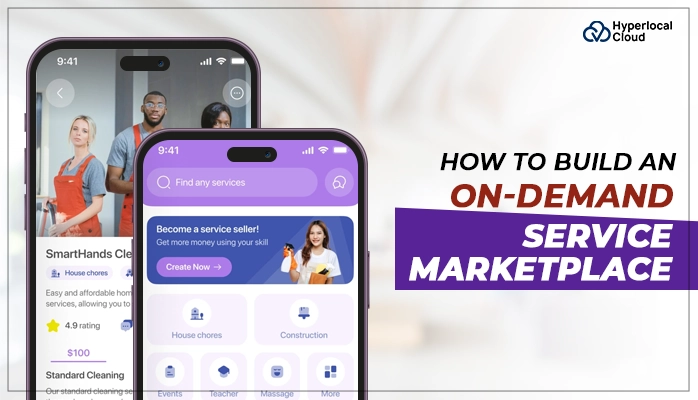
The growing demand for convenient, technology-driven services has created significant opportunities for businesses to launch on-demand service marketplaces. Customers increasingly prefer booking home repairs, beauty treatments, healthcare appointments, vehicle maintenance, cleaning, and professional services through digital platforms rather than searching for service providers manually. This shift has made on-demand service marketplace platforms an attractive business opportunity for startups, entrepreneurs, and established companies.
An on-demand service marketplace connects customers with independent service providers through a centralized digital platform. It simplifies service discovery, booking, payments, communication, and service management while helping providers reach more customers and manage their businesses efficiently.
However, launching a successful marketplace requires more than developing a mobile application. Businesses must identify the right service category, select an appropriate revenue model, understand customer expectations, build essential features, and choose scalable technology.
In this guide, we will explain how to build an on-demand service marketplace, explore its essential features, development process, monetization strategies, technology requirements, and estimated development costs. We will also discuss how ready-made white-label solutions can help businesses launch their marketplace operations more efficiently.
What Is an On-Demand Service Marketplace?
An on-demand service marketplace is a digital platform that connects customers looking for specific services with professionals or businesses offering those services. Customers can browse available services, compare providers, check pricing, schedule appointments, make payments, and track bookings through a website or mobile application.
Unlike traditional service businesses that manage customer acquisition and bookings independently, an on-demand marketplace brings multiple service providers together under one platform.
For example, a customer looking for an electrician can open a service marketplace application, enter their location, browse available electricians, compare ratings, select a suitable professional, and schedule a service appointment.
The marketplace owner manages the platform, establishes operational guidelines, collects commissions or subscription fees, and provides tools for managing transactions and customer interactions.
How an on-demand service marketplace creates value:
-
For customers: Provides convenient access to verified professionals, transparent pricing, flexible booking options, and digital payments.
-
For service providers: Helps professionals increase visibility, attract new customers, manage appointments, and generate additional income.
-
For marketplace owners: Creates business opportunities through commissions, subscriptions, advertising, service fees, and other revenue streams.
A well-designed marketplace can support multiple service categories, geographical locations, and provider types while maintaining a consistent booking experience.
Unlock New Revenue Opportunities with a Service Marketplace
Why Invest in an On-Demand Service Marketplace Business?
The on-demand service industry offers opportunities for businesses that want to simplify how customers discover and purchase local services. Digital adoption, smartphone usage, and changing consumer expectations have encouraged service providers to move their operations online.
Here are some reasons why entrepreneurs should consider investing in an on-demand service marketplace.
Growing Demand for Convenient Services
Customers increasingly value convenience and time-saving experiences. Instead of contacting several professionals individually, they prefer platforms where they can discover service providers and schedule appointments from one place.
An on-demand marketplace makes this process easier by bringing different services together in a single digital environment.
Increasing Digital Booking Preferences
Online bookings provide customers with access to service information, pricing, provider profiles, availability, and reviews. Digital booking systems also reduce manual communication and simplify appointment management.
Businesses can use these capabilities to improve customer experiences and streamline operations.
Opportunities for Multiple Service Categories
An on-demand marketplace does not need to focus on a single service category. Businesses can start with one niche and gradually introduce additional services as their customer base grows.
For example, a home services marketplace can initially offer plumbing and electrical repairs before expanding into cleaning, painting, appliance maintenance, and pest control.
Scalable Business Operations
A digital marketplace allows business owners to expand their operations across different neighborhoods, cities, and regions.
Instead of establishing physical branches for every service category, marketplace owners can onboard additional providers and manage operations through centralized administrative tools.
Multiple Revenue Opportunities
Marketplace businesses can generate revenue through different monetization strategies, including service commissions, provider subscriptions, listing charges, advertising, and booking fees.
This flexibility allows businesses to create revenue models according to their target audience and operational requirements.
Types of On-Demand Service Marketplace Platforms
Before developing a marketplace, entrepreneurs should identify which service category they want to target. Selecting a specific niche helps businesses understand their audience, provider requirements, pricing structure, and operational workflow.
The following are some popular types of on-demand service marketplaces.
Home Services Marketplace
A home services marketplace connects homeowners and tenants with professionals who provide household maintenance and repair services.
Popular categories include plumbing, electrical repairs, cleaning, painting, carpentry, appliance installation, pest control, and air-conditioning maintenance.
The platform allows customers to book professionals based on service requirements, location, availability, and ratings.
Beauty and Wellness Marketplace
A beauty and wellness marketplace connects customers with salons, beauticians, makeup artists, massage therapists, and personal care professionals.
Customers can explore service packages, compare prices, check professional profiles, and schedule appointments.
This model can support both salon-based appointments and at-home beauty services.
Healthcare Service Marketplace
Healthcare service marketplaces help customers discover healthcare professionals and book consultations or other eligible healthcare services.
Depending on the business model and applicable regulations, platforms may support doctor appointments, diagnostic services, home healthcare, physiotherapy, and teleconsultations.
Privacy, professional verification, secure information handling, and regulatory compliance are particularly important in this category.
Professional Services Marketplace
Professional service marketplaces connect customers with experts who provide specialized services.
These may include legal consultations, accounting, business consulting, graphic design, marketing, photography, writing, and technical assistance.
Customers can compare professional profiles, review portfolios, discuss requirements, and hire suitable experts.
Automotive Services Marketplace
An automotive services marketplace connects vehicle owners with mechanics, car repair workshops, roadside assistance providers, vehicle detailing professionals, and maintenance specialists.
Customers can book vehicle inspections, repairs, oil changes, tire replacements, and other maintenance services.
Pet Care Marketplace
Pet care marketplaces connect pet owners with service providers offering pet sitting, grooming, walking, boarding, training, and other animal care services.
The platform can include provider verification, appointment scheduling, pet profiles, service packages, and customer reviews.
Education and Tutoring Marketplace
Education marketplaces connect students and parents with tutors, instructors, coaches, and educational professionals.
Customers can search for tutors based on subjects, qualifications, teaching experience, availability, and pricing.
Platforms can offer online lessons, in-person sessions, recurring bookings, and educational packages.
Local Repair and Maintenance Marketplace
Repair and maintenance marketplaces connect customers with technicians who provide specialized repair services.
Examples include washing machine repairs, refrigerator maintenance, electronics repairs, computer troubleshooting, and furniture restoration.
Businesses can use location-based matching to connect customers with nearby professionals.
How Does an On-Demand Service Marketplace Work?
An on-demand service marketplace operates through coordinated interactions between customers, service providers, and administrators.
Each participant has a dedicated interface that supports their specific activities. The customer interface focuses on service discovery and booking, the provider interface manages service requests and earnings, and the admin dashboard oversees the entire marketplace.
Here is how the complete marketplace workflow operates.
Step 1: Customer Registration and Login
Customers create accounts using their email addresses, mobile numbers, or supported social login options. After registration, they can manage personal information, save addresses, and access marketplace services.
Step 2: Service Discovery and Selection
Customers browse available service categories, search for specific professionals, apply filters, and compare available service options.
Step 3: Location and Availability Selection
The marketplace identifies service availability according to the customer’s location and the provider’s service coverage. Customers can select an appropriate appointment date and time.
Step 4: Booking Confirmation
After choosing a service, customers review the booking details, pricing, and appointment information before confirming their requests.
Step 5: Service Provider Assignment
The platform assigns the request to a suitable provider based on availability, location, service category, and marketplace rules. Depending on the business model, providers may accept or reject booking requests.
Step 6: Service Delivery and Tracking
The assigned professional travels to the customer’s location or provides the service remotely. Customers can receive booking updates and track progress where supported.
Step 7: Online Payment Processing
Customers complete payments using available payment methods. The marketplace records transactions and calculates applicable commissions or service charges.
Step 8: Ratings and Reviews
After service completion, customers can rate their experiences and provide feedback. These reviews help other customers evaluate service providers and help marketplace owners monitor service quality.
This workflow creates a structured booking experience while reducing manual coordination between customers and service professionals.
Essential Features of an On-Demand Service Marketplace
Features determine how effectively a marketplace handles customer bookings, provider operations, payments, and administrative activities. A successful platform should offer dedicated functionality for all three user groups.
Customer App Features
The customer application should make it easy to discover services, compare professionals, schedule appointments, and manage bookings.
1. User Registration and Profile Management
Customers should be able to register using email, phone numbers, or social accounts. Profile management should allow them to update personal information, manage saved addresses, and view booking history.
2. Service Search and Filters
An advanced search system helps customers find services according to their requirements. Filters can include service category, price range, location, provider ratings, and availability.
3. Location-Based Service Discovery
GPS integration helps customers discover professionals operating within their geographical area. It also enables the platform to display relevant providers based on service coverage.
4. Real-Time Booking
Customers should be able to select services, choose available appointment slots, and confirm bookings without unnecessary communication.
5. Multiple Payment Options
Integrating payment gateways allows customers to pay using supported debit cards, credit cards, digital wallets, and other regional payment methods.
6. Booking History
Customers can view previous, upcoming, completed, and cancelled bookings from their accounts.
7. Ratings and Reviews
A feedback system allows customers to rate professionals, share experiences, and evaluate service quality.
8. Push Notifications
Automated notifications inform customers about booking confirmations, provider assignments, appointment reminders, payment updates, and service completion.
Service Provider App Features
The service provider application helps professionals manage their availability, receive customer requests, and monitor business performance.
1. Provider Registration and Verification
Service professionals can create accounts, submit required documents, add qualifications, and complete verification procedures.
2. Service Listing Management
Providers can add services, upload images, write descriptions, establish pricing, and update their service offerings.
3. Availability Management
Professionals can configure working hours, available appointment slots, holidays, and service schedules.
4. Booking Acceptance and Rejection
Providers can receive booking requests and accept or reject them according to their availability and business preferences.
5. GPS Navigation
Map integration helps service professionals navigate to customer locations and find suitable routes.
6. Earnings Dashboard
Providers can monitor completed bookings, earnings, commissions, pending payouts, and transaction histories.
7. Customer Communication
In-app messaging or calling functionality enables professionals to communicate with customers regarding service requirements and appointment details.
8. Performance Reports
Providers can review booking statistics, customer ratings, completed services, and earnings trends.
Admin Dashboard Features
The admin dashboard provides centralized control over marketplace activities and business operations.
1. Customer and Provider Management
Administrators can manage customer accounts, verify service professionals, update profiles, and handle account-related issues.
2. Service Category Management
The admin can create, edit, organize, and remove service categories according to marketplace requirements.
3. Booking Management
Administrators can monitor booking requests, assign providers, manage cancellations, and review service completion status.
4. Commission Management
The platform owner can establish commission percentages, service charges, and provider-specific earning rules.
5. Payment and Payout Management
Administrators can monitor transactions, process eligible provider payouts, review refunds, and maintain financial records.
6. Promotional Campaigns
The dashboard can support discount codes, promotional offers, referral campaigns, and customer loyalty programs.
7. Analytics and Reporting
Business owners can evaluate booking volumes, revenue, customer acquisition, provider performance, and popular service categories.
8. Dispute and Complaint Management
Administrators can investigate customer complaints, review booking information, manage refund requests, and resolve service-related disputes.
Build Your On-Demand Service Marketplace Today
Step-by-Step Process to Build an On-Demand Service Marketplace
Building an on-demand service marketplace requires a structured development strategy. Businesses should focus on customer needs, operational workflows, technical requirements, and long-term scalability before launching the platform.
Here are the essential steps involved in developing an on-demand service marketplace.
Step 1: Identify Your Target Market and Business Niche
Start by identifying the audience you want to serve and the service categories you plan to offer. Avoid launching with too many unrelated categories before understanding the market.
Research customer expectations, local service availability, purchasing behavior, existing competitors, and potential demand.
For example, entrepreneurs targeting residential customers might start with cleaning, plumbing, electrical repairs, and appliance maintenance.
A clearly defined niche helps businesses establish a focused marketplace and attract relevant service professionals.
Step 2: Define Your Marketplace Business Model
Determine how your marketplace will connect customers and service providers.
You can operate a commission-based marketplace, subscription-based platform, lead generation marketplace, or a hybrid business model.
Also decide whether your platform will support:
-
On-demand bookings
-
Scheduled appointments
-
Recurring service subscriptions
-
Fixed-price services
-
Custom service quotations
-
Online and offline service delivery
Your business model should determine the booking workflow, payment structure, provider onboarding process, and platform functionality.
Step 3: Research Competitors and Customer Requirements
Analyze existing marketplace platforms to understand their service categories, pricing structures, booking experiences, monetization strategies, and customer feedback.
Identify the problems customers experience when booking services and determine how your marketplace can address them.
For example, you might differentiate your platform through verified professionals, transparent pricing, faster booking confirmations, flexible scheduling, or better customer support.
Competitor research also helps identify features that are essential for your initial launch and those that can be introduced later.
Step 4: Finalize Marketplace Features and Functionality
Create a detailed feature list for the customer application, provider application, and admin dashboard.
Prioritize functionality according to business requirements.
For an initial launch, essential features may include registration, service listings, search, booking management, payments, notifications, provider profiles, and administrative controls.
Advanced features such as AI-based recommendations, automated provider matching, loyalty programs, and predictive analytics can be introduced as the marketplace grows.
Step 5: Choose the Right Technology Stack
Selecting the right technology stack influences marketplace performance, security, integration capabilities, and future scalability.
Your technology selection should consider:
-
Frontend development frameworks
-
Backend programming technologies
-
Mobile application frameworks
-
Database solutions
-
Cloud infrastructure
-
Payment gateway integrations
-
Maps and location services
-
Authentication and security tools
The selected technologies should support your expected traffic, business workflows, and expansion requirements.
Step 6: Design the UI/UX for All User Portals
An effective marketplace should provide a simple and consistent experience across all user interfaces.
The customer application should make service discovery and booking straightforward. The provider application should simplify request management and earnings tracking, while the admin dashboard should provide organized operational controls.
Focus on intuitive navigation, readable layouts, accessible design elements, and responsive interfaces.
Creating wireframes and prototypes before development helps identify usability issues early and reduces unnecessary design changes later.
Step 7: Develop Customer and Provider Applications
Once the design and technical requirements are finalized, begin developing the customer-facing and provider-facing applications.
The customer application should include service browsing, provider selection, booking, payments, and notifications.
The provider application should include registration, verification, service management, booking requests, availability, navigation, and earnings.
Both applications should communicate with the same backend infrastructure to maintain consistent booking and transaction information.
Step 8: Build the Admin Dashboard
The admin dashboard acts as the operational center of the marketplace.
It should allow business owners to manage users, service categories, providers, bookings, payments, commissions, promotional campaigns, and customer complaints.
A well-organized dashboard reduces manual administrative work and gives marketplace owners better visibility into daily operations.
Step 9: Integrate Payment Gateways and Third-Party APIs
Third-party integrations extend marketplace functionality and simplify important operations.
Common integrations include:
-
Payment gateways for secure transactions
-
Google Maps or other mapping services for location discovery
-
GPS services for provider navigation
-
SMS and email services for notifications
-
Push notification services for booking updates
-
Identity verification services for provider onboarding
-
Analytics tools for performance monitoring
Select integrations according to your target market, budget, and regulatory requirements.
Step 10: Conduct Testing and Quality Assurance
Before launch, test all marketplace components to identify functionality issues and security vulnerabilities.
Important testing activities include functional testing, usability testing, payment testing, performance testing, compatibility testing, and security testing.
Pay particular attention to booking conflicts, incorrect payment calculations, duplicate requests, cancellation workflows, and notification failures.
Testing should cover the complete customer-to-provider transaction rather than evaluating individual features in isolation.
Step 11: Launch Your Marketplace
After successful testing, deploy the platform and make it available to your target customers and service professionals.
Start by onboarding an initial group of verified providers and ensuring that sufficient service availability exists in your launch area.
Promote the platform through local SEO, social media marketing, referral campaigns, partnerships, and targeted advertising.
A focused geographical launch can help businesses evaluate marketplace demand before expanding into additional locations.
Step 12: Monitor Performance and Optimize Operations
Marketplace development does not end after launch. Continuous monitoring helps businesses understand customer behavior and identify operational problems.
Track important performance indicators such as:
-
Number of registered customers
-
Active service providers
-
Total booking requests
-
Booking conversion rate
-
Completed service percentage
-
Customer retention rate
-
Average transaction value
-
Provider acceptance rate
-
Cancellation and refund rates
-
Monthly marketplace revenue
Use these insights to improve booking workflows, optimize service categories, strengthen provider quality, and introduce additional functionality.
Best Monetization Strategies for an On-Demand Service Marketplace
A sustainable revenue model is essential for the long-term success of an on-demand service marketplace. Business owners can generate income through several monetization methods depending on the services offered, customer behavior, and provider requirements.
Commission-Based Revenue Model
The commission model allows marketplace owners to earn a percentage from every completed booking.
For example, if a customer books a service worth $100 and the marketplace charges a 15% commission, the platform earns $15 before applicable operating expenses and other adjustments.
This model is suitable for marketplaces where transactions are processed through the platform.
Subscription-Based Revenue Model
Under this model, service providers pay recurring fees to access marketplace features.
Businesses can offer monthly, quarterly, or annual subscription plans with different benefits, such as additional service listings, enhanced visibility, booking management tools, and performance analytics.
Subscription revenue provides predictable recurring income for marketplace owners.
Service Listing Fees
Marketplace owners can charge professionals a fee to list their services on the platform.
Different listing packages can provide different visibility levels, listing limits, and promotional opportunities.
This model is useful for marketplaces with a large provider network.
Lead Generation Charges
The marketplace can charge service professionals for receiving qualified customer leads.
For example, providers may purchase credits to access customer requests relevant to their service categories and geographical locations.
This approach is particularly useful when customers request quotations from multiple professionals rather than making immediate bookings.
Featured Service Listings
Service providers can pay additional fees to promote their profiles or service listings within selected marketplace sections.
Featured placements can improve visibility in relevant search results and category pages.
The platform should clearly distinguish sponsored placements from organic results.
Advertising and Promotional Revenue
Marketplace owners can generate additional income by offering advertising opportunities to relevant businesses.
For example, a home services marketplace could feature advertisements from home improvement brands, appliance retailers, or maintenance product suppliers.
Convenience and Booking Fees
The platform can charge customers a transparent convenience or booking fee for using marketplace services.
The fee structure should be communicated before payment confirmation to maintain customer trust.
A hybrid revenue model combining commissions, subscriptions, and promotional listings can help diversify income sources.
Build Your Own On-Demand Booking Platform
Technology Stack Required to Develop a Service Marketplace
The technology stack determines how the marketplace applications are developed, how information is stored, and how different services communicate.
The right combination of technologies should support reliable performance, security, and future expansion.
Frontend Development
Frontend technologies are responsible for the user interface and customer interactions.
Popular options include React.js, Next.js, Angular, and Vue.js for web applications.
These technologies help developers build responsive interfaces that work across desktop, tablet, and mobile browsers.
Backend Development
Backend technologies handle business logic, user authentication, booking operations, payment processing, and communication between applications.
Common options include Node.js, Python, PHP, Java, and their associated frameworks.
The backend should be designed to handle concurrent booking requests, maintain accurate transaction records, and support multiple user roles.
Mobile App Development
Mobile applications allow customers and service providers to access marketplace functionality through smartphones.
Development options include:
-
Flutter
-
React Native
-
Kotlin for Android
-
Swift for iOS
The appropriate option depends on development requirements, performance expectations, available resources, and the desired level of platform-specific customization.
Database Management
Databases store customer information, provider profiles, service listings, booking records, transactions, and marketplace configurations.
Common database technologies include PostgreSQL, MySQL, and MongoDB.
Database selection should consider data structure, transaction consistency, scalability, and application requirements.
Cloud Hosting and Infrastructure
Cloud infrastructure supports application hosting, data storage, computing resources, and marketplace availability.
Businesses can evaluate services such as AWS, Microsoft Azure, and Google Cloud according to their infrastructure requirements.
A suitable cloud architecture helps businesses manage changing workloads and expand infrastructure as marketplace activity increases.
Payment Gateway Integration
Payment gateways enable customers to complete transactions through supported payment methods.
Examples include Stripe, PayPal, and Razorpay, subject to regional availability and business eligibility.
Payment integration should support transaction tracking, refunds, commission calculations, and provider payouts.
Maps and GPS Integration
Mapping technologies help customers discover nearby professionals and allow service providers to navigate to customer locations.
Google Maps Platform and other mapping providers offer capabilities such as location search, geocoding, route information, and map display.
Security and Authentication
Security is essential because marketplaces process personal information, booking details, and financial transactions.
Important security measures include:
-
Secure authentication and authorization
-
Encrypted data transmission
-
Role-based access control
-
Secure payment processing
-
Input validation
-
Regular security testing
-
Backup and recovery procedures
-
Privacy and data protection compliance
The final technology stack should be selected according to the marketplace’s complexity, business model, and expected growth.
Advanced Technologies That Improve Marketplace Performance
Modern technologies can help on-demand service marketplaces improve customer experiences, automate repetitive operations, and make better business decisions.
Here are some advanced technologies businesses can consider integrating into their platforms.
Artificial Intelligence and Machine Learning
AI and machine learning can analyze customer preferences, booking histories, and marketplace activity to improve service discovery.
For example, the platform can recommend relevant services based on previous bookings, frequently searched categories, and customer interests.
AI-Powered Service Recommendations
Recommendation engines can suggest suitable service providers based on customer requirements, location, ratings, availability, and previous interactions.
These recommendations can make service discovery easier and help providers receive more relevant booking requests.
Automated Provider Matching
Automated matching systems can connect customers with suitable professionals according to service categories, geographical coverage, availability, pricing, and provider performance.
This reduces manual assignment efforts and improves booking coordination.
Predictive Analytics
Predictive analytics helps marketplace owners understand historical booking patterns and anticipate future demand.
For example, a home maintenance marketplace can analyze seasonal booking trends to identify when demand for air-conditioning repairs or heating maintenance may increase.
Real-Time GPS Tracking
GPS technology allows customers to monitor the location of assigned professionals when location tracking is enabled.
It also helps providers navigate to customer locations and enables marketplace administrators to monitor service operations.
Chatbots and Automated Customer Support
AI-powered chatbots can answer common questions, provide booking updates, explain service policies, and guide customers through basic support requests.
This helps businesses manage routine customer interactions while allowing support teams to focus on complex issues.
Cloud-Based Infrastructure
Cloud technology supports flexible computing resources, centralized data management, application hosting, and infrastructure expansion.
As the marketplace grows, cloud-based infrastructure can help businesses accommodate increased users, transactions, and operational requirements.
Challenges in Building an On-Demand Service Marketplace and Their Solutions
Developing a marketplace involves several operational and technical challenges. Businesses must address these issues to create a reliable platform that customers and service providers can use confidently.
Finding Reliable Service Providers
One of the biggest challenges is building a network of qualified professionals who can deliver consistent service quality.
Unverified providers or incomplete profiles can negatively affect customer confidence.
Solution: Introduce provider verification, document submission, profile reviews, customer ratings, and clear onboarding guidelines. Establish quality standards for each service category.
Maintaining Service Quality
Different providers may deliver different service experiences, making it difficult to maintain consistent marketplace standards.
Solution: Establish service guidelines, collect customer feedback, monitor provider performance, and implement a complaint resolution process.
Managing Cancellations and Refunds
Last-minute cancellations, missed appointments, and refund disputes can affect marketplace operations and customer satisfaction.
Solution: Introduce transparent cancellation policies, automated booking updates, refund workflows, and provider cancellation tracking.
Building Customer Trust
Customers may hesitate to book professionals they have never interacted with, particularly when services are delivered at their homes.
Solution: Display verified provider profiles, professional qualifications, service histories, ratings, transparent pricing, and customer reviews.
Handling Real-Time Bookings
Managing multiple booking requests simultaneously can create scheduling conflicts and provider availability issues.
Solution: Implement centralized booking management, real-time availability updates, appointment scheduling rules, and automated booking confirmations.
Managing Payments and Commissions
Incorrect commission calculations, delayed payouts, failed transactions, and payment disputes can create financial complications.
Solution: Integrate reliable payment gateways and implement automated commission calculations, transaction records, refund management, and payout reconciliation.
Expanding Into Multiple Locations
Expanding into new geographical areas requires additional service providers, location-based pricing, operational support, and local market knowledge.
Solution: Use a scalable marketplace architecture with configurable service areas, location-based provider discovery, and centralized administrative management.
Let’s Build Your On-Demand Service Marketplace Together
How Much Does It Cost to Build an On-Demand Service Marketplace?
The cost of developing an on-demand service marketplace depends on the platform’s functionality, number of applications, design requirements, technology stack, integrations, and development approach.
Businesses generally have two primary options: custom marketplace development and ready-made white-label marketplace software.
Custom On-Demand Service Marketplace Development Cost
Custom development involves building the marketplace according to specific business requirements.
The development budget depends on the following components:
UI/UX Design Costs: Expenses associated with designing customer applications, provider interfaces, administrative dashboards, and responsive web experiences.
Mobile Application Development: Costs for developing Android and iOS applications, including customer and service provider functionality.
Backend Development: Expenses for building booking workflows, user management, service listings, payment operations, and marketplace business logic.
Admin Dashboard Development: Costs associated with administrative controls, provider management, reporting, commission configuration, and platform monitoring.
Third-Party Integrations: Expenses related to payment gateways, mapping services, SMS notifications, email services, and other external integrations.
Testing and Quality Assurance: Costs associated with functional testing, security testing, performance optimization, and application compatibility.
Maintenance and Infrastructure: Ongoing expenses for hosting, technical support, software updates, security improvements, and infrastructure management.
Custom development budgets can vary significantly depending on the complexity and scope of the project. Businesses should obtain a requirement-based quotation instead of relying on a single fixed industry estimate.
White-Label On-Demand Service Marketplace Software Cost ($7,000)
White-label marketplace software provides businesses with an existing platform that can be customized and branded according to their requirements.
Instead of developing every component from scratch, entrepreneurs can use an existing solution to establish their marketplace.
The solution may include:
-
Customer application
-
Service provider application
-
Admin dashboard
-
Service category management
-
Booking management
-
Payment integration
-
Provider management
-
Commission management
-
Notification functionality
The actual cost depends on the provider, included features, licensing terms, customization, deployment arrangements, and support requirements.
Why Choose Hyperlocal Cloud to Build Your On-Demand Service Marketplace?
Launching an on-demand service marketplace requires a platform that can manage customer interactions, provider operations, bookings, payments, and administrative activities.
Hyperlocal Cloud provides marketplace software solutions designed to help entrepreneurs and businesses establish digital service platforms.
Instead of developing every marketplace component independently, businesses can explore a white-label solution that can be configured according to their branding and operational requirements.
Here are some important capabilities to consider when choosing Hyperlocal Cloud for your marketplace project.
Ready-to-Launch Marketplace Solution
A ready-made marketplace solution can help businesses reduce the effort involved in developing common marketplace functionality from scratch.
This approach allows entrepreneurs to focus more on provider onboarding, customer acquisition, and business operations.
Customer, Provider, and Admin Portals
A complete marketplace requires dedicated interfaces for different user groups.
Customer-facing functionality supports service discovery and booking, while provider functionality supports service management and appointment handling. The admin dashboard helps business owners manage overall marketplace operations.
Customizable Features
Businesses can configure marketplace functionality according to their service categories, booking workflows, branding requirements, and monetization strategies, subject to the solution’s customization capabilities.
Integrated Booking and Payment Management
Booking and payment functionality helps businesses coordinate customer requests and service provider transactions.
Features such as booking status management, transaction records, commission settings, and payment tracking support centralized marketplace operations.
Scalable Architecture
As the marketplace grows, businesses may need to introduce additional service categories, onboard more professionals, and expand into new geographical locations.
A suitable technical architecture can support these changing business requirements.
Technical Support and Assistance
Technical assistance is important during configuration, deployment, and ongoing marketplace operations.
Businesses should evaluate the provider’s support scope, response arrangements, maintenance terms, and upgrade policies before selecting a solution.
Build your own on-demand service marketplace with Hyperlocal Cloud and establish a digital platform that connects customers with service professionals.
FAQs (Frequently Asked Questions)

Patt Cummins is an experienced content writer with over 10 years of experience creating clear and engaging content for technology-focused industries. He specializes in simplifying complex technical topics into easy-to-understand stories that educate readers, support brand communication, and help businesses effectively share their solutions.

Need Help With
Development?