

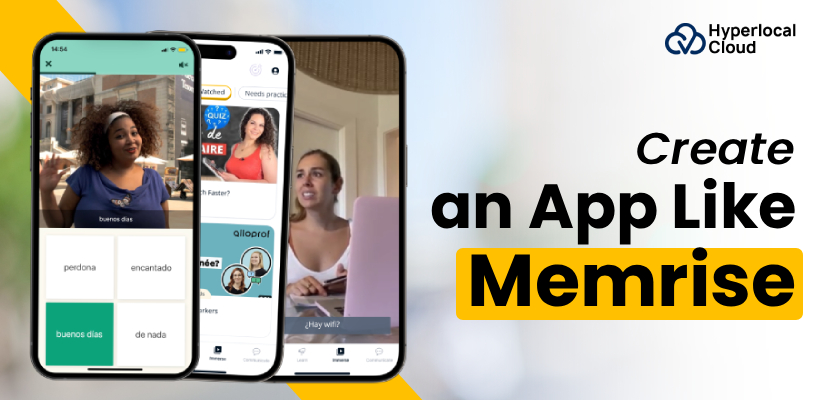
The world of language learning has experienced a complete transformation because people now prefer to learn languages through mobile-first interactive applications. This became popular with the introduction of smartphones and digital technology. The Memrise clone app uses gamified elements to make learning fun through its combination of quizzes, videos, and a reward system.
The global language learning app market is expected to reach around USD 2.6 billion in 2025 and grow to about USD 7.1 billion by 2034, with a strong annual growth rate of 18.3%.
For businesses exploring EdTech opportunities, the idea to Create An App Like Memrise is becoming a practical move as demand for AI-powered learning solutions continues to grow. This blog will provide an overview of working, development processes, expenditure requirements, and revenue potential associated with creating a language learning application.
What is the Memrise app?
Memrise operates as a language learning platform that users can access through its mobile application and website. The platform enables users to study more than 30 languages through its user-friendly learning methods, which include flashcards, spaced repetition, and native speaker short video content. The program teaches users practical conversation skills, which they can use in their everyday interactions instead of requiring them to memorize extensive grammar rules.
The learning process becomes more interesting through interactive quizzes, AI-based chatbot practice, and “Learn with Locals” videos. Memrise provides businesses with a modern digital education solution that enhances user interaction and student interest through its simple and interactive design.
Build Scalable AI-powered Language Learning Applications Today
The Working Model Behind a Language Learning Platform
A Memrise clone app follows a simple but smart flow. The system studies human learning patterns and their learning achievements. All system components operate together to maintain user engagement while improving their memory retention.
1. Course-Based Learning Structure
The app starts with clear courses. Each course is split into small lessons, and learners do not face too much at once. They move step by step, where one level unlocks the next. This keeps learning smooth and also gives users a sense of progress.
2. Spaced Repetition System
The app shows words again at the right time, not too soon or not too late. If a user forgets a word, it comes back faster. If they remember it, the gap grows. This helps the brain hold information for longer. It also cuts down wasted effort.
3. Flashcard-Based Learning
An app like Memrise integrated with simple flashcards. A word appears first, then the meaning or answer. Users tap, think, and respond. It feels quick and builds strong recall over time.
4. Adaptive Learning Algorithm
Under the ALA (Adaptive Learning Algorithm) model, the app watches how users perform. It learns what they find easy and spots what they struggle with. Lessons can be adjusted accordingly, meaning no two students have to follow the same learning path.
5. Gamification & Engagement
When a learner can earn points while learning, it feels like a game. They keep streaks and complete small challenges. This builds a habit; people come back daily without feeling forced.
6. Multi-Format Practice
The app does not rely on one method. Users read, listen, type, and sometimes speak. This mix and match of learning methods builds real skills, not just memory. It prepares users for real life and genuine conversations.
7. Continuous Review Cycle
Learning requires multiple lessons before you master the language. Old words come back in daily reviews. New content and old content run together. This loop keeps knowledge fresh and active.
Key Benefits of a Memrise-Like App for Users and Businesses
A platform like Memrise offers clear value for both users and businesses. It keeps learning simple while also creating strong growth opportunities.
For Users
For users, apps like Memrise make learning simple and flexible. They can study anytime, track their progress, and build strong language skills at their own pace without feeling overwhelmed.
1. Easy and Engaging Learning Experience:
The app offers users its basic features from the beginning. The lessons provide short interactive content for users to learn. Users maintain their engagement because the system uses quizzes, short videos, and small rewards. This approach to learning creates a daily routine for learners to learn new languages.
2. Real-Life Language Skills:
Users learn from actual persons, like how they speak. The app studies the spoken interactions between humans and machines rather than studying just grammatical rules. The solution supports users in their various travel, work, and everyday activities. The students developed better understanding skills and confidence to handle real-life situations.
3. Better Memory Retention:
The application displays words at appropriate moments & enables users to maintain their memories for extended periods. The platform reinforces vocabulary gradually through spaced repetition. This way, the process of learning new words becomes easy because they will remain in the user’s memory forever.
4. Flexible Learning Anytime:
Users can learn whenever they want. The program does not have a specific learning schedule. A quick session during a break is enough. The flexible schedule system allows people to maintain their learning routine with greater ease.
For Businesses
Language-learning apps are opening up strong opportunities for digital education companies. Many startups now choose to Create An App Like Memrise because it allows them to quickly enter the global learning market without heavy infrastructure.
1. Scalable Digital Learning Model:
Once the app is built, it can reach users across the world. There is no need for a physical setup. This keeps costs lower and growth faster.
2. High User Engagement:
Gamified features keep users coming back. Daily streaks, progress tracking, and quick lessons increase usage time. Higher engagement often leads to better conversions.
3. Personalized Learning Experience:
The app adjusts based on user behavior. It focuses on weak areas and skips what users already know. This improves satisfaction and keeps users loyal.
4. Strong Market Demand:
People who want to learn languages have increased because they need these skills for their jobs and their travel activities. The increasing demand for the AI-powered language learning platform gives the opportunity to develop the business operations, which will provide companies with consistent revenue growth.
Essential Features Covering All Panels in a Memrise Clone App
A modern language education platform requires smart features across every panel to improve engagement, learning, and platform management.
Learner panel
1. Structured Lessons
The lesson material is divided into several short topics, which the student must master. The first level of the program teaches one particular topic while the second level introduces another.
2. Real-Life Scenario Content
The lesson content is built around real situations. For example, ordering food or asking for directions. The program helps users learn essential skills that they will need in real-life situations.
3. Flashcard-Based Learning
Words and phrases are shown like quick cards. One side of the card presents a question while the other side provides an answer. The method helps learners to study material more efficiently, and also helps them remember information over time.
4. Audio & Video Support
Users hear native speakers and watch short clips. This builds better pronunciation and listening skills. It also adds a human touch to the learning process.
5. Interactive Exercises
Users do more than just read. They type answers, choose options, and listen carefully. These small actions keep them active. Learning feels less boring and more like practice.
6. AI-Powered Guidance
The app tracks user performance in the background. It suggests what to learn next. It also helps in weak areas without manual effort. This makes learning feel easier.
7. Progress Tracking
Users can see how much they have learned. Streaks, levels, and stats show daily effort. This builds consistency. It also gives users a reason to come back.
Teacher panel
1. Course Creation & Management
Teachers can create entire courses through their own work, from basic to complex. Each lesson can focus on a real-life topic. The structure of the course enables learners to progress through the material while gaining practical skills for actual situations.
2. Content Customization
Teachers can adjust how content is shown. They can add images, audio, and simple examples. They can also control difficulty levels. This helps match the content with different types of learners.
3. Student Progress Tracking
Teachers use the system to monitor student progress through their learning methods. They can track completed lessons, weak areas, and daily activity. The system enables teachers to identify students who need additional assistance.
4. Community-Based Content Sharing
Teachers can share their courses with others. They can also explore content created by other educators. This saves time and brings more variety into learning.
5. Group Management
Teachers create groups that they can use to organize their classes and their batches of students. They can assign specific lessons to each group. The system maintains a learning organization that facilitates the management of educational tasks.
6. Performance Analytics
The panel shows simple reports like the accuracy rate and learning speed. Teachers can quickly spot trends. This helps them improve content and teaching methods.
7. Review & Practice Control
Teachers can control how often students revise topics. They can focus more on weak areas. This improves memory and learning results over time.
Admin panel
1. User Management
Admins can view and manage all users from a single dashboard. They can check user activity and track progress while handling issues that appear. They can block or remove inactive or suspicious accounts when necessary.
2. Course & Content Management
The system enables admins to develop, modify, and arrange educational courses through their administrative privileges. The system establishes ongoing updates for educational content, which ensures that materials remain relevant and updated. The system enables rapid expansion for new languages and new subjects.
3. AI & Learning Control
Administrators who manage the application system have authority over its AI functions. The system enables operators to modify chatbot interactions while they establish content difficulty and design educational pathways.
4. Analytics & Reporting
The panel shows clear data on user behavior and app performance. The system allows admins to monitor three activities, which include active users, course completion rates, and drop-off rates. The insights provide support for business decision-making while also helping in app development over time.
5. Gamification Management
The admins control all aspects of the rewards system, which includes points, badges, and streak points. They establish rules that determine how users can earn rewards, and they modify these rules according to user engagement patterns. The system keeps users engaged because it offers daily reasons that bring users back to the platform.
6. Subscription & Payment Management
Admins have the ability to handle everything related to pricing plans, subscription management, and payment processing. The system enables them to establish new pricing plans and provide discounts while monitoring their financial earnings.
7. Multi-language & Localization Control
Admins can manage multiple languages within the app. They can modify translations together with regional content while creating an authentic user experience for different countries. The solution enables businesses to expand internationally while maintaining operational clarity.
Create Modern Language Apps With Gamified Learning Experiences
Advanced AI Integrations for Smarter Language Learning Apps like Memrise
AI-powered features are transforming language learning apps by making lessons more personalized, interactive, and effective for every user.
1. AI Chatbot for Conversations
People can learn to speak new languages in real-life situations through practice. The chatbot provides immediate responses to user inquiries. The system enables users to interact with it as their travel guide, work partner, or personal friend. This feature helps people develop their speaking abilities.
2. Personalized Learning Engine
Every user learns at a different pace. The AI system monitors their correct answers and their incorrect responses. The system uses this information to modify its educational materials. This approach leads to better outcomes while reducing the time needed for work.
3. Speech Recognition & Pronunciation Feedback
Users speak into the app. AI checks how they sound. The system identifies errors in their speech and provides improved pronunciation options. The experience of using this service gives users the sense of having a dedicated personal trainer available at all times.
4. Smart Content Recommendation
The app suggests what to learn next. Not random content. It looks at user progress, goals, and activity. Then it shows the most useful lessons. This keeps the learning path clear and focused.
5. AI-Based Spaced Repetition Optimization
Basic revision is not enough. AI decides the best time to review each word. Not too early, not too late. This improves memory without wasting effort. Users remember more with fewer repetitions.
6. Automated Content Creation
AI is able to produce new lessons in a matter of minutes. With it, the app can generate example sentences, some multiple-choice questions, or short dialogues. This helps businesses scale fast. You don’t need large content teams for every update.
7. Sentiment & Engagement Analysis
An AI system studies user behavior in such a way that it can monitor when a user is either feeling bored or stuck. Afterwards, the application acts accordingly. It may suggest easier lessons or change the flow. This reduces drop-offs and improves retention.
Complete Development Roadmap for Building the Memrise-Like App
From planning and UI design to AI integration and deployment, every development stage plays a vital role in building a successful language learning app.
1. Market Research & Planning
Start with clarity. Know who your users are: students, job seekers, or global teams. Study the apps already available in the market. See what they do well and where they fail. Define your core features early; For example, short lessons, video-based learning, and AI chat. This step saves time later and reduces costly changes.
2. UI/UX Design
Keep the design simple; users should not feel lost. The learning flow must feel natural. One lesson should smoothly lead to the next. Use clean screens, clear buttons, and short actions. Good design keeps users coming back daily.
3. Development Approach
This is a key business decision. You can either build a fully custom app from scratch. This gives full control but takes more time and budget. Or you can go for a white-label solution, which is faster to launch and costs less.
4. Frontend Development
The users interact with the app through its visible elements. The system provides lesson screens together with quizzes and progress tracking features. The app needs to deliver a fast and smooth user experience. The slightest delay in operation will cause users to leave the site.
5. Backend Development
The system maintains user information while monitoring their development and controlling app material. The app needs a dependable backend system that will enable it to operate continuously without any system failures.
6. AI & Feature Integration
AI is now a core part of learning apps. Add features like chat practice, smart reviews, and speech feedback of the learner. These features make learning feel personal. They also increase user engagement and time spent on the app.
7. Testing & Quality Assurance
Do not rush this step. Test the app on different devices. Check for bugs, slow screens, and broken flows. Fix issues before you launch the app. A smooth app builds trust from day one.
8. Launch of the App
Launch the app on all platforms, including the App Store and the Play Store. The team will collect initial user feedback while observing user behavior with the application. The information provides an authentic understanding of how the app is performing.
9. Maintenance & Updates
The work continues even after the launch of an app. New content needs to be added continuously. User behavior assessment is necessary to initiate the development of new product features. The team needs to resolve app defect quickly. The app should maintain its active status through regular updates, which demonstrate its reliability to users.
A Complete Tech Stack Used for Creating Language Learning Apps Like Memrise
A well-structured tech stack helps build scalable, AI-powered language learning apps that deliver smooth performance and better user engagement.
| Layer / Area | Tech Stack Used (Simple & Relevant) |
| Frontend (Mobile App) | Flutter, React Native, Swift (iOS), Kotlin (Android) |
| Backend Development | Node.js, Python (Django / Flask) |
| Database | PostgreSQL, MongoDB |
| Cloud Hosting | AWS, Google Cloud Platform |
| AI & Personalization | TensorFlow, OpenAI APIs, Scikit-learn |
| Speech Recognition | Google Speech-to-Text API, Azure Speech Services |
| Video & Audio Integration | Cloudinary |
| Real-time Chat / AI Tutor | WebSockets, Firebase, OpenAI API |
| Push Notifications | Firebase Cloud Messaging |
| Analytics & Tracking | Google Analytics, Mixpanel |
Bring Your Next Edtech Innovation to Market Faster
Where a Memrise-Like App Fits in Real Business Scenarios?
From schools and EdTech platforms to corporate training and travel businesses, language learning apps are creating real-world business value.
Schools & Coaching Institutes
A Memrise-like app functions as a dedicated educational tool that supports classroom activities. Teachers can assign short lessons for daily practice. Students revise vocabulary in small steps, not long sessions. This method helps students remember information better before their upcoming tests. Coaching centers can monitor which students are active while identifying those who need assistance. The system decreases the requirements for additional worksheets and manual evaluation tests.
EdTech & Online Learning Platforms
This subscription-based learning model serves as an ideal solution for EdTech companies. The companies are providing language courses. Users return every day because of the combination of short lessons and quizzes. The system enables access for international users as well as for local users.
Corporate Employee Training
Companies use such apps to train teams for real communication. International clients require different sales approaches, which sales teams learn to implement. Apps like Memrise help teams handle queries more effectively across different languages. The training program offers flexible learning options. Employees learn during short breaks instead of long sessions. The process saves time while increasing work productivity.
Travel & Hospitality Industry
Hotels, airlines, and travel agencies need staff who can talk to global customers. A Memrise-like app helps staff learn basic phrases quickly. The system teaches users essential communication skills through small language learning sessions. The process creates better guest experiences while establishing trust in the brand.
Migration & Test Preparation
People moving abroad need practical language skills, not just theory. The apps enable users to practice their skills through authentic conversation simulations and their IELTS and TOEFL exam preparation. Daily practice improves confidence. Test performance and interview success can both increase because of this.
Emerging Trends Transforming Memrise-Like Learning Platforms
Emerging technologies and changing learner behavior are reshaping how Memrise-like apps deliver interactive and engaging education.
1. AI-Powered Language Tutor (MemBot & AI Buddies)
The system now includes AI language tutors as one of its essential functions. Users have the ability to engage in live conversations, and they can also ask questions and participate in practice sessions. The system enables users to learn independently without requiring assistance from a human tutor during their initial learning period.
2. Real-Life Scenario-Based Learning
Lessons are built around real situations, for example, people learn from travel, office talk, or daily conversations. Users learn what they actually need. This makes the app more useful, not just informative. It also increases course completion rates.
3. “Learn with Locals” Video Content
Short videos with native speakers are now common. Users hear real accents and natural speech. This builds better listening skills. It also adds a human touch, which keeps users engaged for longer sessions.
4. Strong Shift to Conversational Learning
The focus has now moved from grammar to speaking; users want to talk frequently in English, not just read. Apps now push more speaking and listening tasks. This aligns with real-world needs, especially for jobs and travel.
5. Gamification + Microlearning Model
Learning has been divided into small steps. The duration of each lesson is only a few minutes. The system maintains user engagement through its points system, streaks, & rewards. The model enables users to study their material throughout the day while following their fixed daily routines.
6. New “My Activities” Progress Tracking
The system provides users with complete access to their study patterns. Users can see their study materials, frequency, and areas of academic weakness. This helps them take more responsibility for their learning.
Common Challenges in Developing a Language Learning App Like Memrise
Language learning apps face multiple development challenges, including AI integration, performance optimization, and interactive content management.
1. Building Strong Learning Content
The quality of the learning application depends on the lessons included. The unnatural sounding of the language or machine-like examples quickly draws user attention. One should provide precise translations, voice recordings, and examples used in a natural context.
2. Keeping Users Interested Every Day
Most individuals download various learning applications with much enthusiasm. They stop using them within a week or two. This generally occurs once lessons begin to seem monotonous. Various factors, including setting short daily targets and sending timely reminders, make all the difference. Even little details, such as completing a lesson fast, can make a big impact.
3. Making Learning Match Each User
Not every learner starts at the same level. One user may know basic words. Another may already understand full sentences. Your app has to notice that early. If beginners get hard lessons, they leave. If advanced users keep seeing easy exercises, they lose interest. This is where smart lesson flow becomes very important.
4. Building an App That Stays Fast
At first, a few hundred users may not cause problems. But when thousands join at the same time, things change quickly. Audio can load slowly. Lessons may freeze. Progress may fail to sync. These are the issues that hurt trust. A strong backend matters from the beginning, not after users start complaining.
5. Choosing the Right Way to Earn
This will be more difficult than it appears. If most of the lessons are locked, then people remove the app altogether. When everything is available for free, then success may not lead to profit. What would make more sense is allowing the user to gain some benefit through learning. Later, they can unlock more lessons via a subscription.
6. Standing Out in a Crowded Market
There is a very large number of users for apps such as Duolingo. Hence, having the exact same functionality is useless in drawing people towards your application. You need things that will set your app apart from all others. It can be more pronunciation practice, language localization, or classroom-oriented courses.
How Memrise Clone App Generate Revenue?
A Memrise clone app can generate revenue through subscriptions, in-app purchases, advertisements, and premium learning features.
Subscription Plans
Apps like Memrise generate their primary revenue through subscription plans. Users pay monthly or yearly fees to access full lessons, AI chat practice, and offline learning. The business model allows users to experience total product value without advertisements, while companies receive consistent revenue streams.
In-App Purchases
The app provides users with the ability to purchase additional educational materials through in-app purchases. The system functions effectively because users have the option to purchase only the specific course they require.
Advertisements
Show short video or banner ads between lessons for free users. Keep them limited so they don’t interrupt learning. You can also offer small rewards for watching ads, which helps earn from non-paying users while keeping the app free.
Certification & Test Fees
Many language learning apps charge users for skill tests and certificates. These certificates show proof of language ability and can help in jobs or studies. Users are willing to pay for this because it adds real-world value. The platform receives trust and credibility through this process.
Affiliate & Partnerships
Apps can earn money through partnerships with education platforms, travel services, or job portals. The company earns commissions when users register for promoted services, which they display throughout their app. The model succeeds because it provides users with authentic learning experiences that create real-world value.
Freemium “Gateway” Content
Most users start their experience with freemium content. The availability of free basic lessons enables educational institutions to reach more students. Users who recognize value in the product will proceed to purchase its premium upgrades. The system creates an effective sales process that transforms free users into paid subscribers.
How Much Does It Cost to Build a Memrise Clone App?
Developing an app identical to Memrise starts at about $8,000. This usually covers a basic version. You get simple features like user login, flashcards, and basic lessons. But the cost does not stay fixed. It can go much higher. Depending on what you wish to include in the app. The cost will increase if you use smart technologies like voice assistance, an AI learning module, or game-style prizes.
Enter the Booming Global Language Learning Market Confidently
Final Takeaway
Building a Memrise clone app gives businesses a strong chance to enter the growing language learning market. The app utilizes AI tools, quizzes, and real-life resources to make learning fun and easy to learn. The need for digital educational resources has grown steadily, which means there is a chance to come up with new ways to teach.
If you are planning to Launch A language learning app like Memrise, partner with Hyperlocal Cloud for end-to-end development support and build a scalable product that drives real user growth.
FAQs (Frequently Asked Questions)

Patt Cummins is an experienced content writer with over 10 years of experience creating clear and engaging content for technology-focused industries. He specializes in simplifying complex technical topics into easy-to-understand stories that educate readers, support brand communication, and help businesses effectively share their solutions.

Need Help With
Development?