


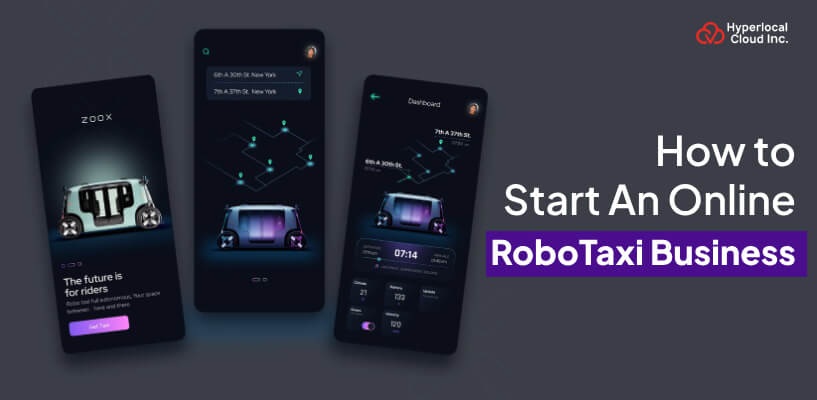
- Choose the right RoboTaxi business model and understand your target market and regulations.
- Build a scalable RoboTaxi app with booking, GPS tracking, payments, fleet management, and safety features.
- Plan costs and revenue streams including development, vehicles, operations, subscriptions, and ride fares.
- Leverage AI and smart fleet technology to improve vehicle management, routing, and customer experience.
- Start with a controlled launch and scale your RoboTaxi platform as demand and operations grow.
The transportation industry is moving toward autonomous mobility, creating new opportunities for entrepreneurs, mobility companies, and technology providers. Robotaxis combine self-driving vehicles with digital ride-hailing platforms to offer passengers an on-demand transportation experience without a traditional human driver.
If you are planning to enter this market, understanding how to start a robotaxi business requires more than developing a mobile application. You need to consider your business model, autonomous vehicle technology, software infrastructure, fleet operations, safety systems, regulations, customer experience, and revenue strategy.
A robotaxi platform typically connects passengers with autonomous vehicles through a mobile application. Users can select a pickup and destination, request a ride, track the vehicle, unlock or start the ride where supported, make payments, and receive customer support through digital channels. Commercial autonomous ride-hailing services such as Waymo demonstrate this app-to-vehicle journey in practice.
This guide explains the key steps involved in launching a robotaxi venture, including robotaxi app development, robotaxi app features, business models, revenue opportunities, development costs, technology requirements, and the process of building a scalable platform.
What Is a Robotaxi Business?
A robotaxi business provides on-demand transportation through autonomous or highly automated vehicles that can operate without a human driver in defined operating conditions.
Unlike conventional taxi or ride-hailing companies, the robotaxi model combines:
- Autonomous vehicles
- Ride-hailing applications
- Fleet management software
- GPS and mapping
- Vehicle connectivity
- Artificial intelligence
- Remote assistance
- Digital payments
- Customer support
- Safety and monitoring systems
- Data and analytics
The software platform acts as the connection between passengers, vehicles, fleet operators, and business administrators.
The exact level of autonomy and operating requirements depend on the vehicle technology and jurisdiction. For example, fully autonomous commercial services are already operating in selected markets, while regulatory requirements continue to evolve across different regions.
Build a Custom RoboTaxi Application Designed for Your Target Market and Business Model
How Does a Robotaxi Business Work?
Understanding how does a robotaxi business work is important before investing in the technology.
A typical robotaxi journey works as follows:
1. Passenger Opens the App
The passenger creates an account or signs into the robotaxi application.
2. Passenger Enters the Destination
The user enters a pickup location and destination. The platform calculates available routes and identifies suitable vehicles.
3. The Platform Assigns a Vehicle
The dispatch system identifies an available autonomous vehicle based on factors such as location, availability, route, battery status, vehicle capacity, and operational restrictions.
4. The Vehicle Travels to the Pickup Location
The autonomous vehicle navigates toward the designated pickup point within its approved operating environment.
5. Passenger Identifies and Enters the Vehicle
The application can provide vehicle identification and pickup instructions. Depending on the implementation, the passenger may unlock the vehicle through the app.
6. The Autonomous System Handles the Journey
The vehicle’s autonomous-driving system processes information from its sensors and software to navigate the route.
7. The Passenger Monitors the Ride
The application or in-vehicle interface can display route information, ride status, estimated arrival time, and support options.
8. The Passenger Reaches the Destination
The vehicle stops at the designated drop-off location, and the passenger exits.
9. Payment Is Processed
The platform charges the passenger through the selected payment method and generates the trip record.
10. Data Is Sent to the Fleet Platform
Trip, vehicle, operational, and performance data can be analyzed to improve fleet utilization, customer experience, maintenance, and future operations.
Waymo’s current passenger experience similarly involves requesting a vehicle through its app, receiving pickup information, unlocking the vehicle, starting the ride, and accessing support during the trip.
Why Start a Robotaxi Business?
The growing interest in autonomous transportation is creating opportunities across ride-hailing, fleet management, mobility infrastructure, and transportation technology.
A robotaxi venture can potentially offer:
Reduced Dependence on Human Drivers
The autonomous operating model can reduce the need for a conventional driver workforce within approved operating conditions.
24/7 Transportation Availability
Autonomous fleets can potentially operate for extended periods, subject to charging, maintenance, operating restrictions, and local regulations.
Digital Customer Experience
Passengers can request, track, manage, and pay for rides through a mobile platform.
Fleet-Based Scalability
Once the software infrastructure and operating model are established, businesses can expand their fleet and service zones.
Multiple Revenue Opportunities
Beyond individual rides, operators can explore subscriptions, business transportation, airport services, partnerships, and other mobility offerings.
The robotaxi market is also attracting significant investment and commercial experimentation. A 2026 industry report estimates strong growth in the global robotaxi market, although market forecasts vary considerably by methodology and assumptions.
Robotaxi Business Models
Before starting development, determine how your business will operate.
Fleet-Owned Robotaxi Model
The company owns or leases autonomous vehicles and operates the complete transportation service.
Revenue comes primarily from passenger trips and other mobility services.
Robotaxi Platform Model
The company develops the software platform while vehicle owners or fleet operators provide the vehicles.
The technology provider can generate revenue through software licensing, platform fees, transaction fees, or partnerships.
Partnership Model
A robotaxi operator can partner with:
- Autonomous vehicle companies
- Automotive manufacturers
- Fleet operators
- Ride-hailing companies
- Technology providers
- Charging infrastructure companies
- Transportation organizations
This model can distribute technology, fleet, and operational responsibilities between multiple parties.
Robotaxi Business Revenue Model
A well-designed robotaxi business revenue model should not depend entirely on individual ride fares.
Potential revenue streams include:
Ride Charges
Passengers pay according to distance, time, service type, or a combination of pricing factors.
Dynamic Pricing
Prices can vary according to demand, availability, service areas, time, and other business rules.
Subscription Plans
Businesses can offer monthly or annual plans with benefits such as discounted rides, priority booking, or membership benefits.
Corporate Transportation
Companies can use robotaxi services for employee transportation, business travel, or scheduled mobility programs.
Airport Transportation
Dedicated airport routes can become another potential revenue channel.
Premium Services
Operators can offer premium vehicles, larger vehicles, priority services, or specialized transportation.
Fleet Partnerships
Technology providers can generate revenue by licensing software to fleet operators or mobility companies.
Advertising and Partnerships
Subject to applicable laws and privacy requirements, businesses may explore advertising, brand partnerships, and location-based commercial opportunities.
The most suitable revenue model depends on the target market, operating costs, vehicle ownership structure, regulations, and customer demand.
How to Start a Robotaxi Business
If you want to know how to start a robotaxi business, follow a structured approach rather than beginning with app development alone.
1. Choose Your Target Market
Start by identifying the location where you want to operate.
Study:
- Population density
- Transportation demand
- Existing ride-hailing services
- Airport and business districts
- Road infrastructure
- Autonomous vehicle regulations
- Charging infrastructure
- Potential operating zones
A smaller controlled operating area can be easier to manage during an initial pilot.
2. Define Your Business Model
Decide whether you will:
- Own the fleet
- Lease vehicles
- Partner with fleet operators
- License your software
- Launch a white-label platform
- Build a complete vertically integrated operation
Your choice will influence technology requirements, capital requirements, partnerships, and operational responsibilities.
3. Research Autonomous Vehicle Regulations
Regulation should be addressed before commercial deployment.
Requirements can differ significantly by country, state, city, and operating model. Businesses may need to consider vehicle approvals, testing permissions, insurance, safety requirements, transportation licenses, data protection, cybersecurity, and commercial operating permits.
For example, U.S. autonomous-vehicle policy continues to evolve, with federal and state-level requirements affecting commercial deployment.
4. Select the Autonomous Vehicle Technology
Determine whether you will develop your own autonomous-driving technology or work with an existing autonomous vehicle technology provider.
Potential technology components include:
- Cameras
- LiDAR
- Radar
- GPS/GNSS
- High-definition maps
- AI models
- Perception systems
- Localization
- Planning systems
- Vehicle control
- Vehicle-to-cloud connectivity
The software platform should be designed to integrate with the selected vehicle and autonomous-driving ecosystem.
5. Plan the Robotaxi Software Platform
The next step is planning your digital infrastructure.
A typical platform may include:
Passenger App + Fleet Management + Dispatch Engine + Admin Panel + Payment System + Mapping + Vehicle Connectivity + Analytics + Support
This architecture allows the business to manage passenger requests while monitoring the fleet and operational performance.
6. Start Robotaxi App Development
The passenger-facing application should provide a simple and reliable booking experience.
During robotaxi app development, focus on:
- Registration
- Location detection
- Destination selection
- Vehicle booking
- Fare estimates
- Ride tracking
- Digital payments
- Trip history
- Notifications
- Support
- Safety controls
The exact functionality should depend on the operating model and autonomous vehicle capabilities.
7. Develop Fleet Management Software
Fleet management is one of the most important components of a robotaxi platform.
The system can help operators monitor:
- Vehicle location
- Battery level
- Vehicle availability
- Vehicle health
- Maintenance schedules
- Active trips
- Charging status
- Service zones
- Incidents
- Fleet utilization
8. Build Remote Assistance Capabilities
Autonomous transportation operations can require human support for situations that fall outside normal operating conditions.
Depending on the system architecture and regulatory requirements, remote operations may support passenger assistance, operational monitoring, incident management, and escalation workflows.
9. Integrate Payments
Provide secure payment options such as:
- Credit/debit cards
- Digital wallets
- Mobile payments
- In-app payments
- Corporate billing
- Promotional credits
The platform should automatically calculate and process the trip fare.
10. Conduct Testing
Before commercial launch, conduct extensive software, vehicle, operational, and safety testing.
Testing may include:
- App testing
- Payment testing
- GPS testing
- Dispatch testing
- Vehicle integration testing
- Connectivity testing
- Emergency workflows
- Remote assistance
- Cybersecurity
- User acceptance testing
11. Launch a Controlled Pilot
Rather than immediately launching across an entire city, consider beginning with a defined service area that matches the vehicle’s approved operating capabilities.
Track:
- Ride completion
- Wait times
- Fleet utilization
- Customer satisfaction
- Vehicle availability
- Charging efficiency
- Support requests
- Operational incidents
12. Expand the Business
Once the initial operating model is validated, the company can expand its fleet, service zones, partnerships, and customer base.
Launch a Scalable Online RoboTaxi Business With Advanced Mobility Technology
Key Features of a Robotaxi App
The right robotaxi app features depend on the business model, vehicle technology, and regulatory environment.
Passenger Features
- User registration
- Profile management
- GPS location
- Destination search
- Ride booking
- Scheduled rides
- Real-time tracking
- Fare estimation
- Digital payments
- Ride history
- Digital receipts
- Push notifications
- Multiple payment methods
- Promo codes
- Ratings and feedback
- Customer support
- Emergency assistance
- Accessibility options
Fleet Management Features
- Real-time fleet tracking
- Vehicle availability
- Battery monitoring
- Charging management
- Vehicle health monitoring
- Maintenance scheduling
- Service-zone management
- Trip monitoring
- Fleet utilization reports
- Incident management
Admin Features
- Dashboard
- User management
- Fleet management
- Booking management
- Pricing management
- Payment management
- Promotions
- Analytics
- Reports
- Role-based access
- Customer support
- Content management
Advanced Features
Depending on the platform, advanced functionality may include:
- AI-based demand forecasting
- Predictive maintenance
- Automated fleet allocation
- Dynamic pricing
- Route optimization
- Geofencing
- Remote assistance
- Vehicle telemetry
- Charging optimization
- Fraud detection
- Advanced analytics
Technology Stack for a Robotaxi Platform
A robotaxi software ecosystem can use different technologies depending on the project’s architecture.
Mobile Application
- Flutter
- React Native
- Swift
- Kotlin
Frontend
- React
- Next.js
- TypeScript
Backend
- Node.js
- Python
- Java
- Go
Database
- PostgreSQL
- MySQL
- MongoDB
- Redis
Maps and Location
- Google Maps Platform
- Mapbox
- GPS/GNSS
- Geofencing
Cloud Infrastructure
- AWS
- Microsoft Azure
- Google Cloud
AI and Analytics
- Machine learning
- Predictive analytics
- Computer vision
- Demand forecasting
- Route optimization
The autonomous-driving stack itself is a separate engineering domain and may require specialized hardware, vehicle integration, perception systems, mapping, localization, planning, and control technologies.
How Much Does It Cost to Build a Robotaxi App?
The cost to build a robotaxi app depends heavily on whether you are developing only the mobility software or also building and integrating the autonomous vehicle technology.
A basic ride-hailing application is considerably different from a complete autonomous mobility platform.
Major cost factors include:
- Number of platforms
- UI/UX complexity
- Passenger application
- Admin dashboard
- Fleet management system
- Dispatch engine
- Payment integration
- GPS and mapping
- Vehicle integrations
- Remote assistance
- AI functionality
- Analytics
- Security
- Cloud infrastructure
- Third-party APIs
- Testing
- Maintenance
A white-label platform generally involves a different cost structure from fully custom development.
White-Label Robotaxi Platform
A white-label solution can provide pre-built core functionality that is customized for your brand, market, workflows, and integrations.
This can be suitable for businesses that want to enter the market without developing every software component from the beginning.
Custom Robotaxi Software
Custom development provides greater control over:
- Architecture
- Features
- User experience
- Integrations
- Business logic
- Fleet management
- Analytics
- Scalability
However, development requirements and costs can be significantly higher.
Challenges of Starting a Robotaxi Business
Although the opportunity is significant, entrepreneurs should understand the challenges.
Regulatory Complexity
Autonomous vehicle regulations vary between jurisdictions and can change as governments develop new frameworks.
High Technology Requirements
Autonomous driving requires sophisticated hardware and software beyond conventional taxi applications.
Fleet Management
Vehicle availability, charging, maintenance, and operational monitoring must be coordinated continuously.
Safety
Safety should be treated as a core product and operational requirement rather than an additional feature.
Customer Trust
Passengers need confidence in the vehicle, application, support system, and overall service.
Infrastructure
Charging facilities, connectivity, service centers, and operating zones can influence scalability.
Integration Complexity
The ride-hailing platform must work with vehicle systems, maps, payment providers, cloud infrastructure, and potentially autonomous-driving technology.
Build and Launch a Fully Customized RoboTaxi Business Platform
Key KPIs for a Robotaxi Business
After launch, monitor measurable business and operational indicators.
Important KPIs include:
- Number of rides
- Completed rides
- Ride cancellation rate
- Average wait time
- Fleet utilization
- Revenue per vehicle
- Revenue per ride
- Customer acquisition cost
- Customer retention
- Average trip value
- Vehicle downtime
- Charging efficiency
- Support requests
- Customer satisfaction
These metrics can help operators identify operational bottlenecks and determine where software, fleet, or customer experience improvements are needed.
Future of the Robotaxi Business
The robotaxi industry is evolving as autonomous-driving technology, mobility software, vehicle connectivity, and regulations develop.
Commercial services are already operating in selected locations, while companies are exploring new markets and operating models. Waymo currently provides autonomous ride-hailing in multiple U.S. markets, and other companies are progressing toward commercial deployments.
The future of robotaxi businesses will likely depend on more than autonomous driving alone. Successful platforms will need to combine:
- Reliable autonomous mobility
- Convenient passenger applications
- Efficient fleet operations
- Strong safety processes
- Scalable cloud infrastructure
- Intelligent dispatch
- Effective charging and maintenance
- Regulatory compliance
- Strong customer support
Entrepreneurs entering this market should therefore approach robotaxi development as a combination of mobility technology, vehicle operations, software engineering, and transportation services.
Why Choose Hyperlocal Cloud for Robotaxi App Development?
Hyperlocal Cloud can help businesses develop customizable mobility software for emerging transportation models.
A robotaxi platform can be designed around your:
- Business model
- Brand identity
- Target market
- Service area
- Pricing model
- Payment methods
- Fleet structure
- Vehicle integrations
- Passenger requirements
- Administrative workflows
Whether you need a white-label platform or custom robotaxi app development, the solution can be structured around the software and operational requirements of your business.
FAQs (Frequently Asked Questions)

Patt Cummins is an experienced content writer with over 10 years of experience creating clear and engaging content for technology-focused industries. He specializes in simplifying complex technical topics into easy-to-understand stories that educate readers, support brand communication, and help businesses effectively share their solutions.

Need Help With
Development?