

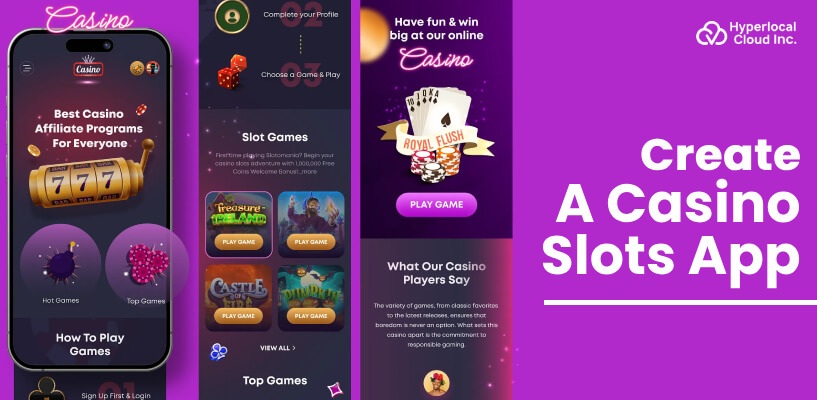
- Unique Game Concept: Create an original slots app inspired by Jackpot World.
- Essential Features: Include virtual coins, slot games, rewards, and leaderboards.
- Right Technology: Choose scalable game engines, backend systems, and cloud infrastructure.
- Secure Development: Prioritize privacy, fair gameplay, and legal compliance.
- Long-Term Growth: Focus on regular updates and player engagement.
- Expert Partnership: Collaborate with Hyperlocal Cloud to bring your casino slots app idea to life.
The mobile gaming industry offers opportunities for businesses that want to build engaging entertainment experiences around slot machines, virtual coins, daily rewards, tournaments, and social interaction. Social casino games combine casino-inspired gameplay with progression systems, colorful graphics, and community features that encourage players to return.
Jackpot World is an example of a casino-style mobile game built around virtual currency, slot-machine experiences, and bonus-driven gameplay. Businesses looking to develop a similar product can use this model as inspiration while creating original game mechanics, branding, themes, and player experiences.
Creating a casino slots app like Jackpot World involves more than developing spinning reels. It requires a well-defined business model, game design, mathematics, backend infrastructure, secure virtual-currency management, mobile development, analytics, and ongoing content updates.
The overall investment depends on the number of games, complexity of animations, multiplayer capabilities, platform requirements, and whether the business chooses custom development or a white-label solution.
This guide explains how to create a casino slots app like Jackpot World, which features to prioritize, how to choose the right technology stack, what development may cost, and how to prepare the product for launch.
What Is Jackpot World and How Does It Work?
Jackpot World is a casino-style mobile entertainment game that uses slot-machine gameplay and virtual rewards to create an engaging player experience. Its format combines familiar reel-spinning mechanics with colorful themes, bonus opportunities, progression, and other retention features.
Businesses planning a similar app should first understand the underlying gameplay systems rather than simply reproducing the visual design.
Virtual Coins and Slot Gameplay
Virtual coins can serve as the primary in-game currency. Players use them to participate in spins, unlock certain game experiences, and progress through the application.
The app must maintain an accurate currency balance and display the outcome of each game clearly. A reliable backend should validate transactions, prevent duplicate deductions, and ensure that rewards are credited correctly.
For a social casino product, virtual coins should have clearly defined terms. The business must determine whether coins are non-purchasable, purchasable, or earned through gameplay and whether they can be transferred or redeemed. These details affect product classification and legal review.
Slot Themes and Game Variety
Different slot themes help make the experience more engaging. A product might include adventure, mythology, fantasy, classic fruit-machine, or seasonal themes.
Each game can feature its own reel layout, symbols, sound effects, bonus rounds, animations, and visual identity. Original themes can also help the platform establish a recognizable brand.
Rewards and Progression
Daily bonuses, missions, achievements, level progression, and limited-time events give players reasons to explore different parts of the app.
These features should be designed around transparent rules and balanced gameplay rather than misleading reward claims or pressure to spend.
Social Casino Games vs. Real-Money Gambling
A social casino app typically provides entertainment through virtual currency that cannot be redeemed for cash or valuable prizes. A real-money gambling product involves materially different mechanics and may require licensing, jurisdictional restrictions, identity checks, and additional controls.
Businesses should establish the intended model before development begins. Product classification depends on the actual gameplay, payment arrangements, prizes, and applicable jurisdiction—not simply on whether the app calls its currency virtual coins.
Discuss Your Casino Game Development Requirements
Why Develop a Casino Slots App Like Jackpot World?
A casino-style entertainment app can offer businesses several ways to develop a distinctive mobile gaming product. However, its commercial potential depends on player acquisition, game quality, retention, operating costs, and compliance.
Build an Engaging Entertainment Experience
Slot games are based on straightforward interactions that can be enhanced through sound, animation, themes, and bonus mechanics. A well-designed interface can make the game accessible to new users while giving returning players new experiences to explore.
Develop Multiple Revenue Opportunities
A social casino business may generate revenue through optional virtual-item purchases, subscriptions, or appropriately implemented advertising. Each model requires careful consideration of user experience, platform rules, and payment policies.
Revenue is not guaranteed. Businesses should validate demand and measure acquisition costs, player retention, purchase conversion, and lifetime value before scaling their investment.
Create a Recognizable Gaming Brand
A new platform can differentiate itself through original characters, visual themes, unique slot mechanics, seasonal events, and community activities.
Rather than copying another application’s name, artwork, source code, or distinctive interface, businesses should develop their own intellectual property and brand identity.
Expand Across Supported Platforms
Depending on the product scope, a casino-style game may launch on iOS, Android, or the web. A shared backend and carefully selected game technology can reduce duplicated work while preserving platform-specific performance and user experience.
Essential Features of a Jackpot World-Style Casino Slots App
Feature planning is one of the most important stages of casino slots app development. A minimum viable product should prioritize reliable gameplay and a smooth user experience before introducing complex tournaments, social systems, or advanced personalization.
Player Registration and Guest Access
A simple onboarding process helps users begin playing without unnecessary friction. Depending on the product, registration can support email, supported social sign-in methods, or guest accounts.
Account recovery, device migration, privacy settings, and secure authentication should be considered from the beginning. If guest progress is supported, the system should explain how that progress can be preserved when a player creates an account.
Multiple Slot Themes and Reel Mechanics
A slots app can offer different games with unique symbols, reel configurations, paylines or ways-to-win systems, bonus rounds, and animations.
Each game should have clearly documented rules. The game engine must process outcomes consistently and communicate the result to the player without ambiguity.
Businesses should start with a manageable collection of polished games rather than launching many repetitive or unfinished experiences.
Virtual Currency Management
Virtual currency is a central system in many social casino products. The app should maintain accurate balances, purchase records, reward histories, and transaction statuses.
Important capabilities include:
- Secure credit and debit processing.
- Server-side balance validation.
- Transaction identifiers and duplicate-request protection.
- Purchase restoration where applicable.
- Clear virtual-currency terms.
- Audit logs and transaction reconciliation.
The backend should remain the authoritative source for balances instead of relying exclusively on values stored on the player’s device.
Daily Rewards, Missions, and Progression
Daily rewards, missions, achievements, and player levels can add structure to the experience. For example, a mission might invite a player to explore a new game or complete a non-purchase-based activity.
Reward schedules and eligibility rules should be transparent. Progression should remain enjoyable without requiring users to make purchases to access ordinary gameplay.
Tournaments, Leaderboards, and Social Features
Leaderboards can create friendly competition by displaying eligible player scores, achievements, or event rankings. Tournaments may introduce time-limited challenges with clearly explained participation and scoring rules.
Social features can include friend lists, profile customization, clubs, and in-game communication where appropriate. These features require moderation, abuse reporting, privacy controls, and safeguards against automated score manipulation.
VIP Loyalty Programs and Player Profiles
Player profiles can display achievements, selected avatars, game history, and progression. Optional loyalty programs can recognize engagement through cosmetic items, access to special themes, or other clearly described benefits.
Businesses should avoid misleading VIP claims, exploitative spending incentives, or reward mechanics that encourage harmful behavior.
In-App Purchases and Payment Handling
If the business sells virtual items, payment processing must follow the applicable Apple App Store, Google Play, and other distribution-platform policies.
The app should disclose what a purchase includes, its price, and any relevant limitations. Payment confirmations, failed transactions, refunds, and purchase restoration should be handled reliably.
Purchasable virtual currency must not be represented as cash or as a guaranteed route to financial returns.
Push Notifications and Live Events
Push notifications can inform players about new game themes, optional events, or account-related updates. Players should be able to manage notification preferences.
Live events allow the business to introduce seasonal content without rebuilding the entire app. Event schedules, reward conditions, and expiration rules should be communicated clearly.
Admin Dashboard and Analytics
An administration dashboard allows authorized staff to manage game content, configure events, review reports, and monitor platform performance.
Useful dashboard capabilities include:
- Game and theme management.
- Virtual-currency transaction monitoring.
- User support and account management.
- Event scheduling and configuration.
- Fraud and abuse alerts.
- Revenue and engagement reporting.
- Role-based administrative access.
Sensitive administrative actions should be logged and restricted according to staff responsibilities.
Responsible Gaming and Player Controls
Responsible design is important even when a product uses non-redeemable virtual coins. Useful controls can include spending visibility, optional play reminders, notification preferences, purchase confirmations, and account restrictions.
Businesses should also consider age suitability, clear purchase disclosures, privacy controls, and mechanisms for reporting problematic behavior.
Advanced Features That Can Differentiate Your Slots App
After the core game is stable, additional capabilities can improve product differentiation and operational efficiency.
Personalized Game Recommendations
Recommendation systems can suggest games based on a player’s selected interests and voluntary engagement patterns. They should be transparent, privacy-conscious, and configurable.
Personalization should not target users based on signs of financial vulnerability or encourage excessive spending.
Live Events and Seasonal Content
A live-operations system can support seasonal themes, limited-time challenges, new slot releases, and community events. Content should be planned so that updates can be delivered without disrupting core gameplay.
Anti-Fraud and Account Security
Fraud prevention can include suspicious transaction detection, rate limits, device-integrity checks where appropriate, account protection, and monitoring for automated activity.
Security controls should be proportionate to the product and must respect applicable privacy requirements.
Multilingual Support and Localization
Localization goes beyond translating buttons. It includes adapting instructions, date and number formats, support content, accessibility considerations, and promotional material to the target market.
Legal terms and purchase disclosures should be reviewed for each supported jurisdiction.
Accessibility and Performance Optimization
Readable text, accessible controls, clear contrast, adjustable audio, and support for different screen sizes improve usability.
Performance optimization should cover loading times, memory consumption, battery usage, animation smoothness, and behavior on supported devices.
Build Your Next Mobile Gaming Product with Hyperlocal Cloud
How to Create a Casino Slots App Like Jackpot World: Step-by-Step
A structured development process reduces uncertainty, clarifies responsibilities, and helps businesses control scope.
Step 1. Define the Business Model and Product Scope
Start by deciding whether the product will be a social casino game using non-redeemable virtual coins or a real-money gambling platform.
Document the target audience, supported regions, platforms, gameplay loops, monetization approach, and launch goals. Establish what the first release must include and which capabilities can be introduced later.
This step is essential because the business model influences payment integration, security, legal review, testing, and operating expenses.
Step 2. Research Competitors and Target Audiences
Study existing casino-style games to understand onboarding, game variety, progression, accessibility, and player feedback.
Look for opportunities to improve the experience rather than copying another product. Research should identify the intended audience, competitive advantages, likely acquisition channels, and the features that matter most to potential players.
Step 3. Create the Game Design Document
A game design document describes how the product should work. It typically includes the game rules, screen flows, symbols, reel behavior, bonus rounds, currency rules, reward schedules, user profiles, and administrative tools.
It should also document the mathematical model for each game, expected behavior, and testing criteria. This gives designers, developers, and QA specialists a shared reference.
Step 4. Design the UI/UX and Slot-Game Experience
Designers create wireframes and interactive prototypes before full development begins.
Key screens may include onboarding, the game lobby, individual slot games, the virtual-currency wallet, rewards, player profiles, purchase flows, and settings.
The interface should make game rules, balances, and purchase details easy to understand. Usability testing can identify confusing navigation and accessibility issues before they become expensive to fix.
Step 5. Choose the Development Approach and Technology Stack
The technology stack should reflect the target platforms, game complexity, team expertise, performance requirements, and long-term maintenance needs.
Businesses can choose custom development for greater control or evaluate a white-label solution for faster deployment. The decision should account for source-code access, customization, recurring fees, intellectual-property rights, and the ability to scale.
Step 6. Develop the Game Engine and Backend
The client handles visual rendering, animations, input, and presentation. Backend services manage accounts, progression, virtual currency, configuration, transactions, analytics, and other shared data.
For games where outcomes affect balances or purchases, critical state changes should be validated by trusted server-side systems. The architecture should also support logging, monitoring, recovery, and protection against duplicate requests.
Step 7. Integrate Virtual Currency and Monetization
Implement currency rules, reward distribution, purchase handling, and transaction history.
Every transaction should have a defined state and an auditable record. The system must handle timeouts, retries, interrupted payments, and duplicate callbacks without crediting the same purchase multiple times.
Monetization should be designed around clear prices, accurate descriptions, and optional purchases that do not mislead players.
Step 8. Implement Security and Compliance Controls
Security should cover authentication, authorization, data encryption, secure API communication, administrative access, and protection of sensitive information.
Compliance requirements depend on the target market and product mechanics. Obtain qualified legal advice before introducing cash prizes, redeemable balances, wagering, or other features that could change the product’s legal classification.
Step 9. Test Gameplay, Fairness, and Performance
Testing should cover functional behavior, gameplay rules, transaction accuracy, device compatibility, network interruptions, accessibility, and security.
For games that use random outcomes, the implementation should follow a documented and appropriately tested random-number-generation design. Where relevant, independent technical testing or certification may be required by the applicable jurisdiction or distribution model.
QA should also verify that rewards are credited correctly, virtual-currency balances remain consistent, and players receive clear feedback when something goes wrong.
Step 10. Launch, Monitor, and Improve the App
Prepare store listings, privacy disclosures, customer-support workflows, analytics, and operational monitoring before launch.
After release, measure stability, loading performance, player retention, crash rates, support requests, purchase-related errors, and acquisition performance.
Use those findings to prioritize improvements. Regular game updates, careful experimentation, and reliable support are important for maintaining a sustainable product.
Technology Stack for Casino Slots App Development
There is no single technology stack suitable for every slots app. The right combination depends on whether the product prioritizes 2D gameplay, complex 3D visuals, cross-platform delivery, real-time social features, or web accessibility.
Game Engines and Rendering Technologies
Unity is a common option for cross-platform 2D and 3D game development. Unreal Engine can be appropriate for products that need sophisticated 3D rendering. Lightweight web technologies or other specialized engines may suit simpler browser-based games.
The selection should consider animation requirements, performance, licensing costs, developer availability, and the ease of delivering updates.
Frontend and Mobile Development
A game engine can provide a shared gameplay layer across supported devices. Native iOS and Android components may still be needed for platform-specific integrations, notifications, purchases, and system features.
The frontend should be tested on the actual device range expected at launch, especially lower-powered devices if they are part of the target audience.
Backend, APIs, and Databases
Backend services manage player accounts, game configurations, progression, currency transactions, events, and reporting.
Possible technologies include Node.js, Java, C#, or other suitable server-side platforms. PostgreSQL or another transactional relational database may support account and transaction records, while Redis or similar systems can help with caching and short-lived state.
The architecture should be chosen according to consistency, security, operational complexity, and expected traffic—not simply technology popularity.
Cloud Hosting and Content Delivery
Cloud infrastructure can support application APIs, databases, background jobs, analytics pipelines, and monitoring. A content delivery network can distribute game assets and other static files efficiently.
Capacity planning should account for traffic spikes during major updates or live events. Backups, recovery testing, access controls, and cost monitoring should be part of the deployment plan.
Analytics, Monitoring, and Security Tools
Analytics can measure onboarding completion, feature adoption, session behavior, and technical performance. Error monitoring helps teams identify crashes and backend failures.
Security tooling can support access reviews, audit logging, vulnerability testing, and suspicious-activity detection. Collect only the data necessary for legitimate purposes and apply suitable retention and access policies.
Casino Slots App Development Cost
The cost to create a casino slots app like Jackpot World depends on its feature scope, number of original games, design complexity, team composition, backend requirements, and operational model.
The following figures are illustrative planning estimates in US dollars, not vendor quotations or verified market averages.
Custom Development Cost
Basic social casino slots app: $20,000–$40,000
A basic product may include a polished lobby, one or a few slot games, guest or account access, virtual coins, basic rewards, a simple backend, and essential analytics.
Mid-level casino slots app: $40,000–$120,000
A mid-level product may include multiple original games, player profiles, daily rewards, progression, in-app purchases, an administration dashboard, enhanced analytics, and more extensive QA.
Advanced casino slots platform: $120,000–$300,000+
An advanced platform may include a larger game library, complex animation, tournaments, social features, sophisticated live operations, additional platform support, advanced analytics, and a more comprehensive backend.
These ranges describe potential software-development scopes. They do not automatically include gambling licenses, independent certification, third-party game-content licenses, major marketing campaigns, or all post-launch operating costs.
White-Label Solution Cost: $15,000
A white-label casino slots app starting at $15,000 offers a cost-effective way to launch a branded gaming platform using existing software. Depending on the package, it may include customizable UI/UX, slot games, player profiles, virtual coins, basic admin tools, and standard integrations.
This approach can reduce development time and initial effort compared with building everything from scratch. However, additional customization, hosting, third-party licenses, and maintenance may incur extra costs.
Best for: Businesses looking to launch a branded slots gaming app with a predefined feature set and a faster development process.
Factors That Affect Development Cost
Number of slot games: Each original game can require separate artwork, animations, configuration, sound design, mathematics, and QA.
Visual complexity: Advanced effects, 3D assets, custom transitions, and highly detailed interfaces require additional design and engineering effort.
Backend architecture: Currency management, account systems, analytics, live events, and administrative controls increase backend scope.
Platform coverage: Supporting iOS, Android, and web may require additional engineering, integrations, and device testing.
Security and testing: Transaction reliability, account protection, performance testing, and independent game testing can add meaningful cost.
Content and maintenance: New themes, events, compatibility updates, hosting, support, and security patches create recurring expenses after launch.
Ongoing Maintenance and Operating Expenses
A development budget should distinguish the initial build from recurring costs. Ongoing expenses may include cloud hosting, analytics, customer support, content production, bug fixes, platform updates, security reviews, and third-party licenses.
The business should also reserve a contingency for unexpected technical work. A useful budget is one that covers the full first year of operation rather than just the initial launch.
Monetization Models for a Social Casino Slots App
A social casino app should have a transparent monetization strategy that aligns with its entertainment purpose and the rules of its distribution platforms.
Virtual Coin Packs
A product may sell optional virtual coin packs where permitted by platform policies. Prices, quantities, and purchase terms should be clearly disclosed.
Virtual currency should not be presented as cash or as an investment. If coins cannot be redeemed, that limitation should be communicated clearly.
Advertising and Rewarded Ads
Advertising may provide revenue through eligible placements. Rewarded ads can allow users to choose to watch an advertisement in exchange for a disclosed in-game benefit.
Frequency caps and careful placement help avoid disrupting gameplay. Advertising integrations must comply with privacy, consent, age-related, and platform requirements.
Subscription and VIP Memberships
Subscriptions may offer cosmetic benefits, additional customization, or other clearly described entertainment features.
Businesses should disclose recurring charges, renewal terms, cancellation methods, and subscription benefits. VIP systems should not pressure players to spend excessively.
Ethical Monetization and Transparent Policies
Avoid deceptive purchase prompts, false scarcity, hidden conditions, and misleading claims about winning. Give players clear information about game rules and purchase mechanics.
If a proposed feature includes wagering, cash prizes, or redeemable currency, do not treat it as an ordinary social casino monetization feature. It requires a separate legal, technical, and operational assessment.
Legal, Privacy, and Responsible Gaming Considerations
Legal review should begin during product planning, not after development. The relevant requirements depend on the game’s mechanics, payment flows, rewards, distribution channels, and the markets where it will be offered.
Social Casino vs. Real-Money Classification
A social casino game generally focuses on entertainment using virtual currency that cannot be redeemed for cash or valuable prizes. A real-money gambling product can trigger additional licensing and regulatory obligations.
The distinction cannot be established by marketing language alone. Paid entry, wagering, cash prizes, transferable balances, and redemption mechanisms may affect the analysis.
Obtain qualified legal advice for the intended jurisdictions before finalizing the product model.
App-Store and Payment-Provider Policies
Review current Apple App Store and Google Play policies for simulated gambling, in-app purchases, age ratings, advertising, and relevant regional restrictions.
Payment providers may also restrict certain gambling-related activities. Confirm eligibility and requirements before selecting a provider or building payment flows.
Privacy and Data Protection
The app should explain what personal information it collects, why it is collected, how it is used, and how users can exercise applicable privacy rights.
Implement appropriate data security, retention controls, access restrictions, and deletion workflows. Requirements can vary depending on the users and jurisdictions involved.
Market-Specific Legal Review
Different markets may apply different rules to simulated gambling, gambling advertising, prizes, consumer protection, and age suitability. A feature allowed in one region may be restricted in another.
Maintain a documented review process for each target market and update it when regulations or platform policies change.
Responsible Gaming and Player Controls
Use clear purchase disclosures, optional play reminders, spending visibility, accessible support information, and sensible notification controls.
The goal is to deliver entertainment transparently and responsibly rather than exploiting player behavior.
Build Your Own Casino Slots App Like Jackpot World
Custom Casino Slots App vs. White-Label Solution
Choosing between custom development and a white-label solution affects launch timing, flexibility, ownership, and long-term operating costs.
Custom Casino Slots App Development
Custom development is suitable when the business requires distinctive gameplay, original art, specialized backend logic, deeper analytics, or greater control over the product roadmap.
Advantages can include:
- Greater control over features and user experience.
- Original game mechanics and branding.
- More flexibility in architecture and integrations.
- The ability to prioritize proprietary capabilities.
Potential drawbacks include higher initial costs, a longer development timeline, and greater responsibility for maintenance.
White-Label Casino Slots App Solution
A white-label solution uses an existing platform that can be branded or configured for a business. Depending on the provider, it may include ready-made games, user management, virtual-currency systems, and administration tools.
Potential benefits include faster implementation and reduced need to build every component from scratch.
Before signing a contract, confirm customization limits, source-code access, ownership rights, supported platforms, third-party licenses, hosting arrangements, data portability, service-level commitments, and recurring fees.
Which Approach Should You Choose?
Choose custom development if product differentiation and long-term technical control are priorities and the budget supports a longer build.
Consider white-label development if the existing product genuinely meets your needs and the licensing and customization terms are acceptable.
Compare the full cost of ownership rather than relying solely on the initial quote.
Challenges in Developing a Casino Slots App and How to Address Them
Game Balancing and Perceived Fairness
Game outcomes should follow documented rules and a correctly implemented random-number-generation approach where randomness is required. The team should test payout calculations, bonus conditions, and displayed results.
Where the business model or jurisdiction requires independent testing, plan for it in the schedule and budget.
Player Retention Without Manipulative Design
Fresh content, optional events, meaningful progression, and good performance can support engagement.
Avoid misleading reward messaging or mechanics designed to encourage uncontrolled spending. Evaluate retention alongside player satisfaction, support requests, and responsible-use indicators.
Security, Fraud, and Account Abuse
Common threats include account takeover, automated play, unauthorized currency changes, duplicate transaction requests, and abuse of promotional rewards.
Use server-side validation, secure authentication, rate limiting, monitoring, audit logs, and incident-response procedures appropriate to the product.
Platform Compatibility and Performance
Devices differ in processing power, memory, screen dimensions, and operating-system behavior. Test across the intended device range and optimize assets, animation, network requests, and loading sequences.
Content Updates and Live Operations
A successful live game requires ongoing maintenance, event scheduling, content production, and operational monitoring.
Build administrative tools and a release process that allow updates to be deployed safely, with clear rollback procedures when a release introduces unexpected issues.
How to Choose the Right Casino Game Development Company
Selecting a development partner can influence product quality, cost control, delivery time, and the long-term maintainability of the application.
Review Relevant Gaming Experience
Ask for examples of mobile games, game engines, backend systems, virtual-currency implementations, and live-operations projects. Confirm what the company actually built and what was supplied by third parties.
Evaluate Technical Expertise
The team should understand gameplay systems, client-server architecture, secure transaction processing, performance optimization, QA, and post-launch monitoring.
Ask how the team will test game logic, protect currency balances, handle failed transactions, and maintain the platform.
Demand Transparent Scope and Pricing
A proposal should specify deliverables, exclusions, assumptions, milestones, acceptance criteria, payment terms, and ongoing charges.
Confirm who owns the source code, artwork, and other intellectual property. Review third-party licenses and the arrangements for future maintenance or migration.
Assess Post-Launch Support
Clarify response times, bug-fix commitments, operating-system updates, infrastructure monitoring, security maintenance, and the cost of future enhancements.
A reliable partner should explain risks and limitations rather than promising guaranteed rankings, revenue, or player acquisition.
Why Choose Hyperlocal Cloud for Casino Slots App Development?
Businesses planning a casino-style mobile gaming product need a development partner that understands their product requirements, technical constraints, budget, and launch objectives.
Hyperlocal Cloud can be considered as a potential development partner for businesses evaluating custom software development. The right engagement should begin with a clear assessment of the required game mechanics, target platforms, backend architecture, monetization model, and compliance requirements.
Product Scope and Technical Planning
Start by defining the minimum viable product, the initial game library, account features, currency rules, analytics, and administrative requirements. A documented scope makes estimates easier to evaluate and helps prevent unnecessary complexity in the first release.
Customization and Platform Requirements
Discuss whether the project needs original gameplay, branded interfaces, custom integrations, or a configurable existing solution. Confirm which capabilities are available, which require new development, and which depend on third-party providers.
Quality Assurance and Ongoing Support
Ask how the proposed team will test game logic, transaction accuracy, device compatibility, security, and performance. Define the post-launch support arrangements before development begins.
Plan Your Casino Slots App Project
If you are planning a social casino slots app inspired by Jackpot World, request a project assessment that covers features, technology, estimated timeline, budget, and the intended markets.
Conclusion: Build Your Own Jackpot World-Style Slots App
Creating a casino slots app like Jackpot World requires a combination of engaging game design, reliable technology, transparent virtual-currency systems, careful testing, and a sustainable operating plan.
The best starting point is to define the intended product model, identify the essential features, establish a realistic budget, and choose a technology approach that supports future growth. Custom development may suit businesses that need original gameplay and greater control, while a suitable white-label platform may help accelerate implementation.
Legal review, privacy, security, and responsible design should remain part of the project from planning through launch.
With a clear scope and the right technical approach, businesses can build an original casino-style entertainment experience designed around usability, reliability, and long-term maintainability.
FAQs (Frequently Asked Questions)

Patt Cummins is an experienced content writer with over 10 years of experience creating clear and engaging content for technology-focused industries. He specializes in simplifying complex technical topics into easy-to-understand stories that educate readers, support brand communication, and help businesses effectively share their solutions.

Need Help With
Development?