- Launch your own branded caregiver matching platform with a white-label solution.
- Connect families with suitable caregivers through smart matching technology.
- Simplify caregiver discovery, bookings, scheduling, and payments.
- Generate revenue through commissions, subscriptions, and premium listings.
- Improve trust with caregiver verification and secure data management.
- Scale your caregiving business with customizable features and technology.
The demand for professional caregiving services is increasing as more families look for reliable, qualified, and experienced caregivers to support their loved ones. Whether someone needs elderly care, post-surgery assistance, disability support, or specialized nursing services, finding the right caregiver can be challenging. Traditional caregiver search methods often involve lengthy processes, limited choices, and difficulties verifying professional qualifications.
Digital technology is transforming how people discover and hire caregivers. A white label caregiver matching platform provides businesses with an opportunity to launch their own branded digital marketplace where families can connect with suitable caregivers through a streamlined online experience.
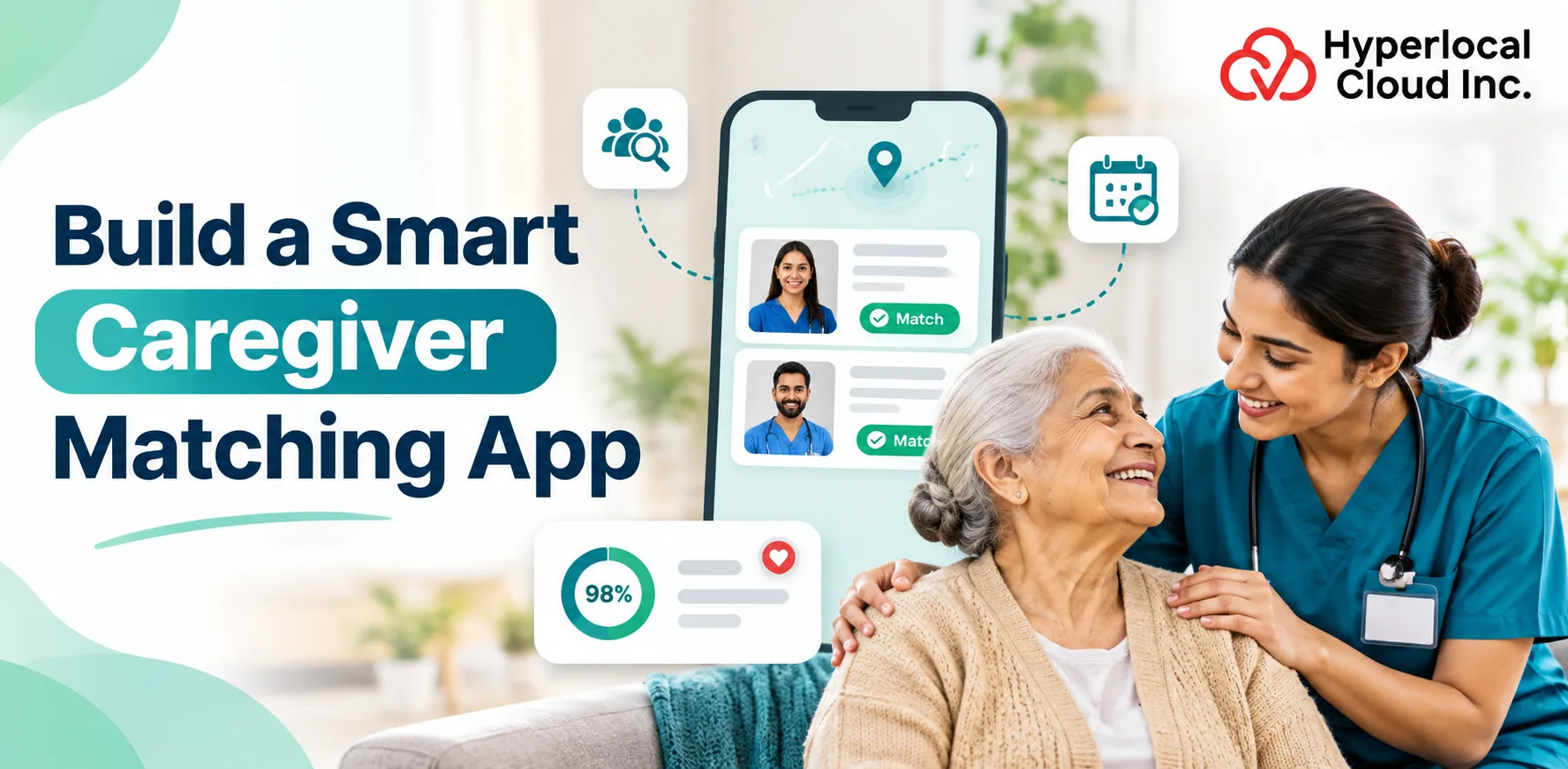
With features such as intelligent caregiver recommendations, advanced search filters, profile verification, appointment scheduling, and secure payments, a caregiver matching platform simplifies the process for both care seekers and professionals.
For entrepreneurs, healthcare startups, and home care agencies, investing in caregiver matching software can open new business opportunities while addressing the growing demand for accessible care services. Instead of developing an application entirely from scratch, businesses can leverage a white-label solution to establish their brand and enter the market faster.
What Is a White Label Caregiver Matching Platform?
A white label caregiver matching platform is a ready-made digital solution that businesses can customize with their own brand name, logo, colors, and business requirements. It connects individuals and families searching for caregiving assistance with caregivers offering professional or personal care services.
The platform functions as a digital marketplace where caregivers can register, create professional profiles, list their services, manage availability, and receive booking requests. Similarly, families can search for caregivers, compare profiles, review qualifications, and request services based on their specific requirements.
Unlike a traditional caregiver directory that primarily displays contact information, a modern caregiver matching platform offers complete service management capabilities. It can automate caregiver discovery, facilitate communication, manage bookings, and support payment processing.
How does it benefit businesses?
-
Launch a branded caregiver marketplace without building every component from scratch.
-
Connect caregivers and care seekers through a centralized platform.
-
Automate caregiver discovery and booking management.
-
Offer multiple caregiving categories through one application.
-
Generate revenue through subscriptions, commissions, and premium listings.
-
Expand services into different cities and geographical markets.
A white-label approach is particularly useful for entrepreneurs who want to establish a caregiver search platform without managing the entire software development process independently.
Build the Future of Digital Care Matching!
How Does a Caregiver Matching Platform Work?
A caregiver matching platform operates through a structured workflow that connects care seekers with professionals based on their requirements, preferences, location, and availability.
The objective is to make caregiver discovery more convenient while helping caregivers find suitable service opportunities.
Step 1: User Registration and Profile Creation
Families and individuals create accounts by providing basic information, contact details, and relevant preferences. Caregivers also register and submit their professional information, experience, certifications, and service categories.
Step 2: Care Requirements Submission
Care seekers enter their requirements, including the type of assistance needed, preferred schedule, location, budget, and any specialized care requirements.
Step 3: Caregiver Profile Verification
The platform’s administrative team reviews caregiver information, credentials, identity documents, and other required verification details before approving profiles.
Step 4: Smart Caregiver Discovery
The matching system evaluates the submitted requirements and recommends caregivers who meet the relevant criteria. Users can also browse available profiles using search filters.
Step 5: Communication and Selection
Families can review caregiver profiles, compare experience, communicate with potential candidates, and select a suitable professional.
Step 6: Booking and Appointment Scheduling
Once a caregiver is selected, users can submit booking requests, confirm schedules, and manage appointments through the application.
Step 7: Payments and Feedback
The platform can facilitate payments through integrated payment gateways. After completing the service, users can provide ratings and reviews to help maintain service quality.
This workflow creates a centralized environment where families can find care assistance and caregivers can manage their professional opportunities more efficiently.
Essential Features of a Smart Caregiver Matching App
The functionality of a caregiver matching application directly influences user experience, operational efficiency, and business growth. A successful platform should offer separate interfaces for care seekers, caregivers, and administrators.
A. Care Seeker Panel
The care seeker panel allows families and individuals to discover caregivers and manage their service requirements.
1. Easy Registration and Login
Users should be able to create accounts using their email addresses, phone numbers, or supported social login options. A simple registration process reduces onboarding difficulties.
2. Care Requirement Submission
Families can submit detailed information about the assistance they need, including care categories, preferred schedules, location, and budget.
3. Advanced Caregiver Search
Search functionality helps users discover caregivers according to location, specialization, experience, availability, and other relevant preferences.
4. Smart Caregiver Recommendations
The platform recommends suitable caregivers based on user requirements and matching criteria, reducing the time spent browsing profiles.
5. Caregiver Profiles and Verification Details
Users can explore caregiver profiles containing professional backgrounds, qualifications, experience, service descriptions, and verification status.
6. In-App Chat and Communication
Integrated messaging allows families and caregivers to discuss care requirements, availability, schedules, and service expectations.
7. Booking and Appointment Scheduling
Users can request appointments, check availability, confirm bookings, and manage upcoming or previous appointments.
8. Reviews and Ratings
After service completion, users can share feedback and rate their experience, helping other families make informed decisions.
9. Secure Online Payments
Payment gateway integration enables convenient transactions and provides a structured way to manage booking payments.
B. Caregiver Panel
The caregiver panel helps professionals manage their profiles, receive service requests, and organize their schedules.
1. Caregiver Registration and Profile Creation
Caregivers can register and provide their personal details, professional experience, qualifications, and service preferences.
2. Experience and Qualification Management
Professionals can upload relevant certifications, licenses where applicable, and supporting documents for administrative review.
3. Availability Management
Caregivers can update their working hours, available days, preferred schedules, and service locations.
4. Service Area Selection
Caregivers can define the geographical areas where they are willing to provide services.
5. Booking Requests and Notifications
The application sends notifications about new booking requests, appointment changes, cancellations, and other important updates.
6. Earnings and Payment Tracking
Caregivers can view completed bookings, payment history, pending amounts, and earnings summaries.
7. Client Communication
Integrated communication tools allow caregivers to discuss service expectations and appointment details with clients.
8. Reviews and Ratings
Caregivers can monitor client feedback and use it to improve their service quality and professional reputation.
C. Admin Panel
The admin panel provides centralized control over marketplace operations, users, caregivers, and financial activities.
1. User and Caregiver Management
Administrators can manage registered users, caregiver accounts, profile information, and account permissions.
2. Profile Verification and Approval
The admin team can review submitted documents, approve caregiver profiles, request additional information, and manage verification status.
3. Matching and Booking Management
Administrators can monitor matching activity, booking requests, appointment status, and service completion.
4. Commission and Revenue Management
The platform can support commission configuration, subscription management, and revenue monitoring.
5. Payment Monitoring
Administrators can track transactions, payment status, refunds, and applicable platform fees.
6. Dispute and Complaint Management
A dedicated management system helps administrators handle user complaints, booking disagreements, and service-related issues.
7. Analytics and Performance Reports
Dashboard reports provide insights into user registrations, caregiver activity, bookings, revenue, and marketplace performance.
8. Content and Notification Management
Administrators can manage platform content, announcements, promotional notifications, and important user communications.
Smart Matching Technology: How to Connect the Right Caregiver with the Right Client
A smart matching system is one of the most important components of a modern caregiver matching platform. It helps families identify suitable caregivers without manually reviewing hundreds of profiles.
Instead of relying only on basic search functionality, businesses can implement intelligent matching algorithms that evaluate multiple factors before recommending potential caregivers.
Here are the major factors that influence caregiver matching.
1. AI-Powered Caregiver Recommendations
Artificial intelligence can analyze care seeker preferences and caregiver profiles to generate relevant recommendations. The system can consider service requirements, professional experience, qualifications, and other matching parameters.
2. Matching Based on Care Requirements
Different individuals require different levels of assistance. The matching system should consider whether someone needs companionship, personal assistance, nursing support, or specialized care.
3. Location-Based Caregiver Discovery
Geolocation technology helps families discover caregivers who operate within their preferred service areas. Location-based filtering can also reduce unnecessary travel for caregivers.
4. Availability and Scheduling Compatibility
The application can compare requested appointment schedules with caregiver availability to recommend professionals who can accommodate the required timings.
5. Budget and Pricing Preferences
Users can filter caregivers according to their expected budgets and available service rates, helping them identify options that align with their financial preferences.
6. Language and Personal Preferences
Communication plays an important role in caregiving. The platform can consider preferred languages, cultural preferences, and other relevant requirements when suggesting caregivers.
7. Experience and Qualification-Based Filtering
Care seekers can prioritize professionals according to relevant experience, certifications, training, and specialized capabilities.
The matching algorithm should be designed to support human decision-making rather than automatically determine whether someone is suitable for a sensitive care arrangement. Families should be able to review recommendations and make the final selection.
Launch a Feature-Rich Caregiver Matching Application!
Different Types of Care Services You Can Offer Through the Platform
A caregiver matching marketplace can support multiple service categories, allowing businesses to serve different customer segments through one digital platform.
Selecting the right service categories also helps entrepreneurs identify their target audience and position their marketplace effectively.
Elderly Care Services
Elderly care connects senior citizens with caregivers who can assist with everyday activities, personal routines, mobility, and general companionship. Families can search for professionals who understand the requirements of older adults.
Senior Companion Care
Companion care focuses on providing emotional support, social interaction, conversation, and assistance with everyday activities. It is suitable for seniors who need regular companionship.
Personal Care Assistance
Personal care services include assistance with bathing, dressing, grooming, mobility, and other daily activities, depending on the caregiver’s qualifications and permitted scope of practice.
Disability Support Services
The platform can connect individuals with caregivers experienced in supporting people with physical, developmental, or other disabilities. Service requirements can be customized according to individual needs.
Post-Surgery Care
Individuals recovering from surgery may require temporary assistance with daily routines, mobility, and recovery-related support. The platform can help families discover appropriately qualified care professionals.
Dementia and Alzheimer’s Care
Specialized caregivers can provide support to individuals experiencing memory-related conditions. Families can search for professionals with relevant training and experience.
Pediatric and Childcare Services
Businesses can introduce childcare and pediatric support categories for families looking for qualified professionals to assist with children’s care requirements.
Nursing and Specialized Care
Platforms can connect families with licensed nursing professionals for services that require specific medical qualifications and authorization.
Live-In and Hourly Caregiving
Businesses can provide flexible caregiving arrangements, including hourly assistance, scheduled visits, overnight support, and live-in care, depending on local regulations and service availability.
Offering multiple categories allows entrepreneurs to develop a comprehensive care matching platform that addresses different requirements within the caregiving industry.
Business Models for a Caregiver Matching Platform
Choosing an appropriate business model is essential when launching a caregiver matching marketplace. The revenue strategy should provide value to caregivers and families while supporting the platform’s long-term operational costs.
Here are some business models entrepreneurs can consider.
1. Commission-Based Model
The platform charges a predefined commission on every successfully completed booking. For example, if a caregiver receives a booking worth $100 and the platform charges a 10% commission, the business earns $10.
2. Subscription-Based Model
Caregivers or home care agencies can purchase monthly or annual subscription plans to access premium marketplace features. Different packages can offer additional visibility, booking management, and profile management capabilities.
3. Featured Listings Model
Caregivers can pay additional fees to promote their profiles within relevant search results. Featured placement should be clearly identified as sponsored visibility rather than an endorsement of professional suitability.
4. Lead Generation Model
The platform can generate qualified service inquiries and charge participating caregivers or agencies for accessing eligible leads.
5. Agency Partnership Model
Entrepreneurs can collaborate with home care agencies and other service providers. Agencies can use the platform to manage their profiles, receive inquiries, and connect with potential clients.
6. Freemium Model
The platform can provide basic registration and search functionality at no cost while offering premium features through paid subscriptions.
A business can also combine multiple revenue models. For example, it may offer free caregiver registration, paid agency subscriptions, and booking commissions to create diversified revenue streams.
How Does a Caregiver Matching Platform Generate Revenue?
A caregiver matching platform can generate revenue through different activities across its marketplace ecosystem.
Understanding these revenue opportunities helps entrepreneurs create a sustainable business strategy.
| Revenue source | How it works |
|---|---|
| Booking commissions | Earn a percentage from completed bookings. |
| Premium memberships | Charge caregivers for advanced account features. |
| Agency subscriptions | Offer paid packages to home care agencies. |
| Featured promotions | Charge for additional profile visibility. |
| Lead generation | Monetize qualified service inquiries. |
| Verification services | Charge for optional, legally permitted verification services. |
| Platform service fees | Apply transparent service charges to eligible transactions. |
For example, consider a marketplace that receives 500 completed bookings per month with an average booking value of $100.
If the platform charges a 10% commission, its monthly commission revenue would be:
500* $100*10%= $5,000
Businesses should establish transparent pricing policies and clearly communicate all applicable fees to caregivers and care seekers.
Caregiver Matching Platform Development: Build from Scratch vs. White Label Solution
Businesses planning to enter the digital caregiving industry generally have two development approaches: custom software development and white-label platform adoption.
Both approaches have advantages, but the right choice depends on business requirements, available resources, technical capabilities, and launch timelines.
Custom Caregiver Matching Platform Development
Custom development involves building software according to specific business requirements.
Its main characteristics include:
-
Complete control over application architecture.
-
Custom user journeys and marketplace workflows.
-
Flexibility to develop specialized features.
-
Greater control over integrations and infrastructure.
-
Higher initial development requirements.
-
Longer development and testing cycles.
This approach may be appropriate for businesses with highly specialized workflows, substantial development budgets, and dedicated technical teams.
White Label Caregiver Matching Platform ($8,000)
A white-label solution provides an existing software foundation that can be customized and launched under a business’s own brand.
Its main advantages include:
-
Faster implementation compared with building every component from scratch.
-
Reduced initial development effort.
-
Custom branding with business-specific identity.
-
Ready-made caregiver and customer workflows.
-
Access to essential marketplace functionality.
-
Opportunities to expand through additional features and integrations.
Which Development Approach Should You Choose?
A white-label solution is a practical option for entrepreneurs who want to validate their caregiver marketplace concept and establish an online presence without undertaking an entirely custom development project.
Custom development may be more appropriate when the business requires extensive technical customization or unique infrastructure.
Before selecting a solution, evaluate the source code and customization rights, scalability, data ownership, security practices, third-party integrations, maintenance arrangements, and ongoing costs. White-label functionality and ownership rights vary between providers.
Transform Caregiver Discovery With Smart Technology
How to Launch Your Own Caregiver Matching Platform
Launching a caregiver matching marketplace requires more than selecting software. Businesses need a clear strategy covering customer acquisition, caregiver onboarding, service operations, and platform management.
Follow these steps to establish your own branded platform.
Step 1: Identify Your Target Audience and Business Niche
Start by defining the customers you want to serve. You may focus on elderly care, disability support, home nursing, post-surgery assistance, or a combination of caregiving services.
Understanding your audience helps you develop relevant features and marketing strategies.
Step 2: Research the Caregiver Marketplace
Study existing caregiving platforms, customer expectations, service pricing, and market opportunities. Identify gaps that your business can address.
Step 3: Select Your Business and Revenue Model
Decide whether you will generate revenue through commissions, subscriptions, premium listings, or agency partnerships.
Your pricing strategy should be competitive and financially sustainable.
Step 4: Choose a White Label Caregiver Matching Solution
Evaluate available platforms according to functionality, customization options, security, scalability, and technical support.
Step 5: Customize the Platform With Your Branding
Add your business logo, application name, colors, domain, and other branding elements to establish a consistent digital identity.
Step 6: Configure Caregiver Registration and Verification
Establish onboarding procedures for caregivers, including identity checks, qualification reviews, references, and applicable background screening.
Step 7: Set Up Payments and Booking Workflows
Integrate supported payment gateways and configure booking confirmations, cancellation policies, refunds, and service charges.
Step 8: Test Platform Functionality and Security
Conduct testing across registration, profile management, search, matching, messaging, scheduling, payments, and administrative operations.
Step 9: Launch Your Caregiver Matching Application
Release your platform after completing the necessary technical, operational, and compliance checks. Begin with a manageable service area to evaluate performance.
Step 10: Promote the Platform and Onboard Caregivers
Use SEO, social media, local advertising, referral programs, and partnerships to attract caregivers and care seekers.
A successful launch requires balancing both sides of the marketplace. Families need enough qualified caregivers to choose from, while caregivers need meaningful service opportunities.
Technology Stack Required for Caregiver Matching Software
The technology stack determines how efficiently a caregiver matching application operates, handles user information, and supports business expansion.
A suitable technology architecture should prioritize performance, security, scalability, and integration flexibility.
1. Frontend Development Technologies
Frontend technologies are responsible for the user-facing interfaces of the platform.
Common options include:
-
React.js for web applications.
-
Next.js for modern web experiences.
-
Flutter for cross-platform mobile applications.
-
React Native for mobile app development.
2. Backend Development Frameworks
The backend manages business logic, user accounts, caregiver profiles, matching operations, bookings, and transactions.
Popular options include:
-
Node.js.
-
Python with Django or FastAPI.
-
Laravel.
-
Java with Spring Boot.
3. Database Management Systems
A database stores and organizes information such as user profiles, caregiver details, bookings, payments, and platform records.
Possible technologies include PostgreSQL, MySQL, and MongoDB.
4. Cloud Hosting and Infrastructure
Cloud infrastructure supports application deployment, data storage, performance monitoring, and scalability.
Businesses can evaluate services such as AWS, Microsoft Azure, and Google Cloud according to their infrastructure requirements.
5. AI and Matching Algorithms
Matching technology can analyze caregiver qualifications, location, service requirements, schedules, and user preferences to generate relevant recommendations.
6. Payment Gateway Integration
Payment integrations allow users to complete eligible transactions through supported payment methods. Payment providers should support the platform’s countries, business model, and marketplace payout requirements.
7. Maps and Geolocation APIs
Mapping services help users discover nearby caregivers, estimate distances, and identify service coverage areas.
8. Data Encryption and Security Technologies
Encryption, secure authentication, access controls, and monitoring mechanisms help protect sensitive platform information.
The final technology stack should be selected according to the expected number of users, integrations, geographical coverage, and long-term product roadmap.
Security, Privacy, and Compliance Considerations
Caregiver matching platforms handle sensitive personal information, making security and privacy important considerations throughout development and daily operations.
Businesses must establish appropriate safeguards to protect care seekers, caregivers, and their information.
Protect Personal and Sensitive Information
Collect only the information necessary to provide the service. Establish clear data retention policies and explain how personal information is used.
Secure Caregiver Identity Verification
Implement appropriate identity verification procedures to reduce the risk of fraudulent profiles and unauthorized platform access.
Background Screening and Credential Validation
Where legally permitted, businesses should establish processes for checking professional credentials, references, licenses, and background information.
Role-Based Access Control
Different users should have access only to the information and functionality required for their roles. Administrators should also have controlled permissions.
Encrypted Communication and Transactions
Use secure communication protocols and appropriate encryption practices to protect information exchanged through the platform.
Data Privacy and Consent Management
Clearly communicate privacy policies, obtain necessary consent, and provide appropriate mechanisms for users to exercise their data rights.
Applicable Healthcare and Privacy Regulations
Regulatory obligations depend on the platform’s location, business activities, and relationships with healthcare providers.
For example, US businesses should assess whether HIPAA applies to their operations and whether they act as a covered entity or business associate. Other markets may have separate privacy, healthcare, employment, and professional licensing requirements.
A compliance strategy should be established before launching services rather than added after the platform begins collecting sensitive information.
Challenges in Running a Caregiver Matching Marketplace and How to Overcome Them
Operating a caregiver matching marketplace involves challenges related to trust, service quality, availability, and customer satisfaction.
Understanding these issues early helps businesses establish better operational processes.
1. Finding Qualified and Reliable Caregivers
A marketplace needs an adequate supply of qualified professionals.
Solution: Introduce structured onboarding, credential checks, reference verification, and ongoing profile reviews.
2. Building Trust Between Families and Caregivers
Families want confidence in the professionals they select, especially when arranging care for vulnerable individuals.
Solution: Provide transparent profiles, verified credentials, clear service descriptions, and accessible customer support.
3. Managing Last-Minute Cancellations
Unexpected cancellations can disrupt care arrangements and create inconvenience for families.
Solution: Establish cancellation policies, automated notifications, replacement workflows, and appointment confirmation mechanisms.
4. Maintaining Caregiver Availability
Caregivers may have changing schedules, making it difficult to maintain accurate availability information.
Solution: Provide convenient calendar management and automated availability updates.
5. Ensuring Consistent Service Quality
Service experiences can vary between professionals and locations.
Solution: Implement feedback systems, service standards, complaint management, and periodic performance reviews.
6. Handling Disputes and Payment Issues
Booking disagreements, refunds, and payment delays can affect customer confidence.
Solution: Establish transparent payment policies, transaction records, dispute resolution procedures, and clear communication channels.
7. Expanding Into Multiple Locations
Entering new geographical markets introduces operational and regulatory complexities.
Solution: Research local requirements, onboard regional caregivers, and configure location-specific service categories and pricing.
Launch Your Own Caregiver Matching Platform Today
How to Scale Your Caregiver Matching Business
After establishing your marketplace, the next objective is to increase user acquisition, improve service availability, and expand revenue opportunities.
Here are some practical strategies to scale your caregiver matching business.
Expand Into New Geographical Markets
Begin with a focused service area and gradually enter new cities or regions. Before expansion, evaluate caregiver availability, demand, local regulations, and operating costs.
Partner With Home Care Agencies and Healthcare Organizations
Strategic partnerships can help businesses access professional caregivers, increase service coverage, and attract new customers.
Introduce Specialized Caregiving Categories
Expand your marketplace with additional services such as senior companionship, disability assistance, childcare, and specialized nursing.
Improve Matching Through Data-Driven Insights
Analyze search activity, booking patterns, caregiver availability, and customer feedback to improve recommendation relevance.
Build Caregiver Loyalty Programs
Offer incentives, professional development opportunities, and premium marketplace benefits to encourage caregiver retention.
Use Local SEO and Digital Marketing
Optimize location-specific landing pages and service descriptions to attract people searching for caregivers in their areas. Use relevant educational content, paid campaigns, and referral marketing to increase visibility.
Introduce Multilingual Support
Multilingual interfaces can make the platform more accessible to customers and caregivers across different geographical markets.
Scaling should focus on maintaining service quality alongside growth. Increasing registrations without sufficient caregiver verification, customer support, and operational capacity can negatively affect marketplace trust.
Why Choose a White Label Caregiver Matching Platform for Your Business?
Launching a caregiver marketplace requires reliable technology, an efficient onboarding process, and features that support both caregivers and care seekers.
A white-label caregiver matching platform offers businesses an opportunity to enter this market using an existing software foundation while maintaining their own brand identity.
Here are the key reasons to consider this approach.
1. Launch Under Your Own Brand
Businesses can introduce their own caregiver matching application with customized branding, including logos, colors, application names, and domain identity.
2. Reduce Development Complexity
Instead of developing every component independently, entrepreneurs can use an existing platform foundation and focus on business operations, customer acquisition, and marketplace growth.
3. Access Essential Marketplace Features
A ready-made solution can include caregiver registration, profile management, advanced search, booking management, payment processing, and administrative controls.
4. Customize Business Workflows
Businesses can adapt available features according to their target audience, service categories, pricing structure, and operational requirements.
5. Connect Caregivers and Care Seekers Efficiently
Centralized search, matching, and communication capabilities help users discover relevant caregivers and manage service requests.
6. Support Business Expansion
A scalable platform can help businesses expand their service categories, onboard additional caregivers, and enter new geographical markets as demand increases.
7. Focus on Business Growth
With the software foundation in place, entrepreneurs can dedicate more resources to building partnerships, attracting customers, improving services, and developing their marketplace.
Choosing the right white-label provider is important. Businesses should evaluate customization flexibility, software ownership terms, integration capabilities, ongoing maintenance, and technical support before making a decision.
Future Trends in Caregiver Matching Platform Development
The caregiving industry continues to evolve as digital platforms introduce new technologies to improve accessibility, service coordination, and caregiver discovery.
Businesses planning to enter this market should consider emerging trends that could influence the next generation of care matching applications.
AI-Driven Caregiver Recommendations
AI-based recommendation systems can help analyze user requirements, caregiver qualifications, availability, and preferences to identify relevant matches.
Predictive Scheduling and Availability Management
Predictive analytics can help businesses understand booking patterns and anticipate periods of higher caregiver demand.
Telehealth and Virtual Consultations
Integration with virtual consultation tools can help families communicate with relevant healthcare professionals when appropriate. These services should be clearly distinguished from caregiving services.
Wearable Device Integration
Where appropriate and with user consent, wearable devices can provide information such as activity levels and other wellness indicators to support care coordination.
Automated Customer Support
AI-powered chatbots can answer common questions, assist with account navigation, and provide booking-related information.
Advanced Identity and Credential Verification
Digital verification systems can streamline identity and professional credential checks while helping platforms maintain accurate caregiver profiles.
Personalized Care Experiences
Platforms can offer more relevant search experiences based on individual preferences, service requirements, and previous interactions.
Businesses should adopt these technologies according to genuine customer needs, privacy requirements, and operational value rather than adding features simply because they are emerging trends.
Conclusion: Build Your Own Smart Caregiver Matching App
The growing need for accessible and reliable caregiving services is creating opportunities for entrepreneurs, healthcare startups, and home care agencies to establish digital care marketplaces.
A white label caregiver matching platform provides a practical foundation for connecting families with caregivers through a centralized application. Features such as intelligent matching, advanced search, caregiver verification, appointment scheduling, communication tools, and payment integration can simplify marketplace operations.
For businesses, the opportunity extends beyond building an application. It involves developing a trusted ecosystem where caregivers can discover service opportunities and families can find suitable care assistance.
By selecting the right software solution, establishing an effective business model, prioritizing security, and implementing a focused marketing strategy, entrepreneurs can build a scalable caregiver matching business.
Whether you want to launch an elderly care marketplace, a home care platform, or a comprehensive caregiver search application, investing in the right technology can help turn your business idea into a digital service marketplace.
FAQs (Frequently Asked Questions)


Need Help With
Development?