

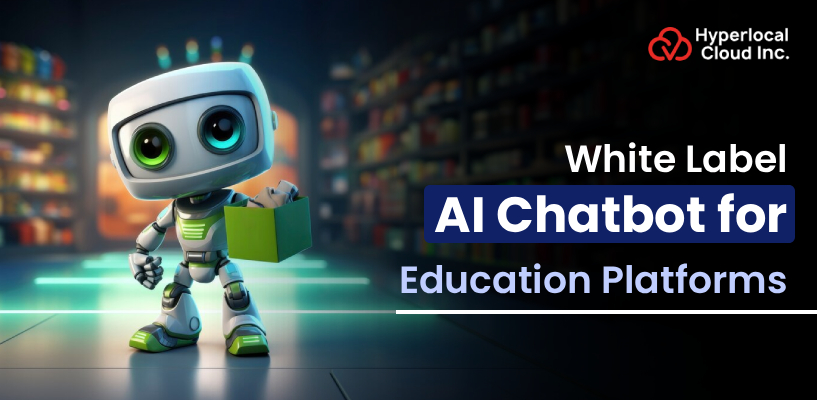
In recent years, the generation has been converting the manner in which education works globally. One of the most critical trends in this space is the usage of AI chatbots in education platforms. These smart tools are designed to engage students, teachers, and administrators in an easy, beneficial way, just like a human assistant would do.
The popularity of online learning platforms has elevated unexpectedly, especially following international events along with the pandemic, which pushed faculties and universities to move to digital structures. Overall, AI chatbots are no longer just an optional function. They have become a necessary part of digital schooling platforms, assisting establishments in delivering better learning experiences in an easy way.
What is an AI Chatbot for Education Platforms?
An AI chatbot for education platforms is a software application that makes use of artificial intelligence to speak with users, in particular college students and educators, via textual content or voice. It is designed to apprehend questions, offer solutions, and assist with exclusive instructional and administrative responsibilities.
These chatbots are typically integrated into websites, mobile apps, or learning management systems used by colleges, faculties, and online education providers. Once delivered, they act as a digital assistant that can manually guide customers through one-of-a-kind strategies and provide instant assistance.
Transform your education platform with AI
A Complete Working Mechanism of an AI Chatbot for Education Platforms
Numerous steps are included in the working process of the application, which help users to operate the app with ease. A step-by-step guideline is discussed below that lets you know exactly how you can operate AI-driven chatbots for education platforms.
1. Understanding the User’s Question
The first step in how a chatbot works is to understand the consumer’s query. When a pupil sorts a message like, “When is my project due?” The chatbot reads and analyzes the sentence. Even if the scholar writes the same question in a distinctive manner, including “What is the closing date for my task?”The chatbot can still understand what the person wants to realize.
2. Processing the Information
In this case, the chatbot connects the query to the appropriate statistics. This manner occurs very quickly, often within a few seconds, which is why chatbots are known for providing instantaneous responses.
3. Generating a Response
After finding the right data, the chatbot prepares an answer. The purpose is to make the response clean and useful. Some superior chatbots can also offer extra help, consisting of reminding the pupil a day before the deadline or linking to the product page.
4. Learning from Interactions
One of the most essential functions of an AI chatbot is its potential to research over the years. Every time customers engage with it, the chatbot collects records of questions and responses. This gaining knowledge of technique makes the chatbot smarter over the years.
5. Integration with Education Platforms
AI chatbots are generally connected to learning management systems, websites, or mobile apps. This integration allows them to get access to crucial information, which includes pupil records, path materials, schedules, and announcements.
6. Providing Support Anytime
Unlike human help groups, AI chatbots are available 24/7. Students can ask questions at any time, whether or not it’s miles early in the morning or overdue at night. This 24/7 availability is particularly beneficial for online beginners who may be based in exceptional time zones or have flexible schedules.
Advantages of Building an AI-Powered Chatbot for Education Platforms
There are so many advantages of an AI-driven chatbot for education platforms, from which you will get to know about the most essential ones that facilitate both users and businesses. Just review the information to understand how beneficial AI chatbots are to the EdTech industry.
Advantages for Users (Students and Educators)
1. Quick and Easy Help Anytime
One of the most important perks for users is that assistance is usually available. Students no longer should look forward to instructors or guide a team of workers to reply.
2. Simple Access to Learning Materials
Students frequently struggle to discover the right take a look at fabric on a platform. Sometimes there are too many sections, links, or folders.
3. Personalized Learning Support
Every student learns at a different pace. Some might also recognize subjects quickly, while others may also need extra time. This makes learning extra comfortable and effective.
4. Better Engagement and Interaction
Traditional gaining knowledge can now and again experience dull or one-sided. Chatbots make it more interactive. Students can ask questions, get responses, and actually gain knowledge from conversations. This makes them more concerned and inquisitive about their studies.
5. Helpful Reminders and Updates
It is simple for students to neglect cut-off dates, training, or checks. AI chatbots can send reminders for assignments, upcoming tests, or essential announcements. This enables students to live prepared and manage their time more effectively.
6. Support for Different Languages
In many areas, college students communicate in one-of-a-kind languages. AI-powered language learning chatbots can guide more than one language, making it simpler for college students to communicate. This ensures that more customers can access training without language becoming a barrier.
7. Reduced Stress and Better Confidence
When college students get brief solutions and non-stop support, they feel extra confident in their studying adventure.
Advantages for Businesses (Educational Institutions and Platforms)
1. Reduced Operational Workload
Educational systems regularly receive repeated queries. These include questions about admissions, charges, schedules, and path info.
2. Cost Savings
Hiring and retaining a large aid team can be costly. With AI chatbots, many duties are automated, which reduces the need for an additional workforce. This helps groups store money while still offering amazing help.
3. Ability to Handle Large User Base
AI chatbots can cope with thousands of conversations simultaneously without slowing down. This makes them a scalable solution for agencies that want to grow without exceeding boundaries.
4. Consistent and Accurate Information
When multiple staff members manage queries, responses may also fluctuate every now and then. AI chatbots provide consistent answers primarily based on the records they are trained on. This guarantees that every user obtains the correct statistics.
5. Improved User Satisfaction
When college students get short responses and easy aid, they’re happier with the platform. Happy customers are more likely to use the platform and suggest it to others. This enables groups to build a robust reputation.
6. Data Collection and Insights
AI chatbots can gather useful statistics from personal interactions. For example, they could track common questions, consumer behavior, and learning patterns.
7. 24/7 Customer Support Without Extra Effort
Providing round-the-clock help with the human workforce can be hard and high-priced. AI chatbots remedy this trouble by presenting 24/7 help without any additional effort. This ensures that customers are always supported, no matter the time.
Know the Perks to Invest in a White Label Solution
Businesses that invest in a white label AI chatbot for education platforms will get a wide number of perks. Like, from a budget-friendly development cost to an easy deployment, businesses will get this and many more perks by investing in a white label solution. Just have a look:
1. Faster Launch Without Starting from Zero
Building an AI chatbot from the beginning takes quite a lot of time, effort, and technical capabilities. It may also take months, or even longer, to create, test, and launch a complete solution.
2. Cost-Effective Development
A white label solution reduces costs. Since the main system has already been developed, businesses do not need to invest heavily in building everything from scratch.
3. Easy Customization and Branding
Even though the solution is pre-constructed, it no longer suggests it’s fixed or constrained. White label chatbots may be customized to shape the brand identification of the education platform. This consists of adding trademarks, colorations, tone of verbal exchange, and particular capabilities.
4. Proven and Tested Technology
White label solutions are usually developed and tested by experienced providers. They have already been used in different scenarios and improved over time. This means businesses get a reliable and stable product. There is less risk of errors or failures compared to building a completely new system.
5. Ongoing Support and Updates
Most white label providers provide everyday updates and technical help. This could be very beneficial, given that technology keeps evolving. With ordinary updates, the chatbot stays up to date and continues to carry out properly.
Build your own AI tutor under your brand
Understand Some Emerging Features of AI Chatbots for Education Platforms
All the relevant features that make the application robust and efficient are listed below, so businesses can integrate them to enhance their performance. Let’s review the foremost features that can even provide a user-friendly experience to your target users.
1. Voice-Based Interaction
Earlier, chatbots frequently worked via text. Now, many chatbots are also supporting voice interplay. This feature is in particular beneficial for more youthful students or customers who select speaking over typing.
2. Multilingual Support
Education structures often have users from exclusive areas and language backgrounds. Modern AI chatbots can understand and reply in more than one language. This helps break down language barriers and makes education more accessible to a much wider audience.
3. Personalized Learning Recommendations
AI chatbots are becoming more advanced in know-how person behavior. They can sing a pupil’s progress, strengths, and weaknesses. Based on these facts, the chatbot can suggest training, practice exercises, or observe substances.
4. Emotional Understanding and Smart Responses
Some advanced chatbots at the moment are designed to understand simple emotions based on how users interact. This makes the interaction feel more human and keeps college students stimulated.
5. Integration with Learning Tools and Platforms
AI chatbots are now being incorporated with numerous tools, including studying management structures, video platforms, and evaluation tools. This degree of integration makes the chatbot a critical part of the mastering.
6. Real-Time Analytics and Reporting
Modern chatbots can provide designated insights into consumer activity. They can understand how college students interact, what questions they ask, and where they face problems. These facts could be very beneficial for educators and businesses.
7. AI-Powered Tutoring Support
Some chatbots can now provide basic tutoring. They can explain easy standards, solve fundamental issues, and guide college students step-by-step. While they’ll not replace instructors, they act as a beneficial help system.
8. Proactive Communication
Earlier, chatbots only answered when users asked questions. Now, they can also begin conversations. For example, they can remind college students about cut-off dates, endorse new publications, or check on their progress.
9. Improved Security and Data Privacy
With extra facts getting used, protection has come to be very critical. Modern AI chatbots encompass better safety features to protect consumer records. This builds confidence and ensures that sensitive facts are handled accurately.
A Process to Build an AI Chatbot for Education Platforms with a White Label Solution
Many experienced white label AI app solution providers often follow the development approach that we have mentioned below. Go through the steps and start elevating your business with a cutting-edge, ready-made AI chatbot solution for education platforms.
1. Understand Your Platform Requirements
Before choosing any solution, it’s critical to really recognize what you want. For instance, a few systems may want a chatbot in most cases to reply to queries, even as others can also need advanced features along with tutoring or customized gaining knowledge of. Having clean desires will assist you in picking out the right white label solution and avoiding confusion later.
2. Choose the Right White Label Provider
Once your requirements are clear, the next step is choosing a dependable white label chatbot provider. It is likewise helpful to check if the company gives support and regular updates. This ensures your chatbot stays updated and works smoothly over the years.
3. Customize the Chatbot According to Your Brand
After selecting the provider, you could begin customizing the chatbot. Customization facilitates creating a steady person experience. They experience like they’re interacting with your platform, not a third-party tool.
4. Add Knowledge and Training Data
A chatbot is as exact as the data it has. In this step, you need to provide the chatbot with the proper records. Some white label solutions also permit you to add files or connect with databases. This helps the chatbot give accurate and helpful solutions.
5. Integrate with Your Education Platform
The next step is to integrate the chatbot with your website, mobile app, or management system. Most white label solution providers offer easy integration options together with APIs or plugins, making this step simpler even for non-technical teams.
6. Test the Chatbot Before Launch
Testing is a completely vital step. Before making the chatbot live, test its performance under distinct situations. Try asking one-of-a-kind styles of questions and see if the solutions are correct and clean. This allows you to identify and fix any troubles early.
7. Launch the Chatbot on Your Platform
Once testing is complete, you can launch the chatbot. Make sure users are aware of it. You can:
- Add a chatbot icon on your platform
- Announce it through emails or notifications
- Provide simple instructions on how to use it
A smooth launch helps users start using the chatbot confidently.
8. Monitor, Improve, and Update Regularly
The development process does not stop after release. Based on these statistics, you may replace the chatbot and improve its responses. Regular updates make sure that the chatbot stays useful and relevant.
Tech Stacks for the Development of an AI Chatbot for Education Platforms
For the development of an AI chatbot for the EdTech industry, experienced custom software development companies may utilize the tech stacks mentioned in the table. Businesses can review and should integrate all these technologies into the app for better performance.
| Category | Tech Stacks |
| Frontend Technologies (User Interface) | HTML, CSS, JavaScript, React, and Angular |
| Backend Technologies (Server and Logic) | Node.js, Python, Java |
| Natural Language Processing (NLP) | Dialogflow, Rasa, spaCy |
| Database Management Systems | MySQL, MongoDB, PostgreSQL |
| Cloud Services and Hosting | AWS, Google Cloud, Microsoft Azure |
Explore Who Can Utilize AI Chatbots for Education Platforms
Here is the detailed overview of the key users of the application. Below you will get a list that lets you know that different niches from the EdTech industry can easily utilize the application with ease because the application is fully-functional and versatile.
1. Schools and Higher Education Institutions
Schools, colleges, and universities are the most common customers of AI chatbots in education. Chatbots also help new students understand the admissions process and guide them step by step. This improves the general learning and administrative experience.
2. EdTech Companies
EdTech systems provide online publications, certifications, and skill-based total schooling. They also help increase user engagement by making learning extra interactive and personalized.
3. Corporate Training and Learning
Many companies use schooling structures to teach their personnel. This makes corporate training extra bendy and less difficult to control, in particular for large teams.
4. Healthcare and Medical Training
The healthcare industry calls for continuous getting to know and staying updated. They can offer quick access to materials, suggestions, and educational modules, making mastering more accessible.
5. Banking and Financial Services
Banks and financial establishments also use education systems to teach employees and customers. This guarantees better information sharing and progressive provider excellence.
6. Government and Public Sector
Government agencies often run educational programs for citizens and personnel. This improves accessibility and ensures that information reaches a bigger target audience.
7. Coaching Institutes
Platforms that prepare students for checks, consisting of aggressive assessments or certifications, can leverage AI chatbots efficiently. This makes guidance more established and interactive.
8. E-Learning Marketplaces
Online marketplaces that offer guides from unique instructors can also benefit. This improves user satisfaction and platform usability.
A List of The Trending Aspects of an AI Chatbot for Education Platforms
As everyone knows, the demand for AI is at its peak, so businesses are looking to automate their growth with an AI-powered app. So, here are the most trending aspects of an AI-driven chatbot for education platforms that help businesses streamline their operations.
1. Hyper-Personalized Learning Experience
Modern chatbots are getting more focused on personalization. This helps college students study in ways that help their wishes and pace.
2. Conversational Learning
Instead of traditional analyzing, students can now study through conversations. This makes studying experience more herbal and much less disturbing.
3. Integration with Video and Interactive Content
Chatbots at the moment are being related to video classes and interactive tools. This creates an extra complete mastering experience.
4. AI-Based Career Guidance
Some chatbots at the moment are helping college students pick career paths. This is specifically useful for students who’re unsure about their destiny course.
5. Real-Time Doubt Solving
Students no longer need to wait for teachers to solve their doubts. This improves studying speed and self-assurance.
6. Gamification in Learning
Gamification is turning into a famous trend. This makes studying more enjoyable and motivating.
7. Voice and Multimodal Interaction
Chatbots are no longer constrained to text. This makes the chatbot more flexible and consumer-friendly.
8. Data-Driven Insights for Improvement
AI chatbots accumulate beneficial statistics about consumer behavior. It allows continuous development based on actual usage.
9. Proactive Engagement
Chatbots are becoming extra proactive as opposed to simply looking ahead to consumers. This keeps customers engaged and knowledgeable.
Start offering 24/7 academic support with your own AI chatbot
Most Reliable Strategies to Generate Income from An AI Chatbot for Education Platforms
Many strategies exist to help businesses generate income from the application. Review the information below in order to boost your earnings and overall ROI.
1. Subscription-Based Model
One of the most unusual approaches to earn money is through subscriptions. Premium functions might also encompass superior tutoring, customized mastering, or detailed insights. This version provides regular earnings and encourages long-term user engagement.
2. Paid Courses and Recommendations
AI chatbots can recommend courses based on a person’s behavior and conduct. When a user indicates a hobby in a subject, the chatbot can endorse a paid route. This increases the chances of conversion.
3. In-App Purchases
Education platforms can offer additional content through the chatbot. Users can purchase these directly through chatbot interactions.
4. Lead Generation for Educational Services
Chatbots can acquire personal facts and understand their desires. Businesses can earn through generating and selling certified leads.
5. Advertising and Sponsored Content
Platforms can also use chatbots to expose relevant advertisements or sponsored publications. However, it’s far more important to hold commercials relevant and no longer disturb the studying experience.
6. Corporate Training Solutions
Education platforms can offer chatbot-based training solutions to companies. This creates a strong B2B revenue stream.
7. Certification and Testing Fees
Chatbots can guide users through certification packages and exams. The chatbot can control the entire system, from registration to result sharing.
Final Summary!
Developing an AI chatbot for education platforms is a smart and innovative initiative that businesses or startups can take to foster their business. However, to do this, businesses are required to reach out to an experienced AI app development company for cutting-edge mobile app solutions. Hyperlocal Cloud is one of the most reliable mobile app development companies from which you will get your dream application into real life with all the latest technologies. Ready to dive into the EdTech market with a top-notch app? If so, contact us to obtain all the necessary details.

Patt Cummins is an experienced content writer with over 10 years of experience creating clear and engaging content for technology-focused industries. He specializes in simplifying complex technical topics into easy-to-understand stories that educate readers, support brand communication, and help businesses effectively share their solutions.

Need Help With
Development?