


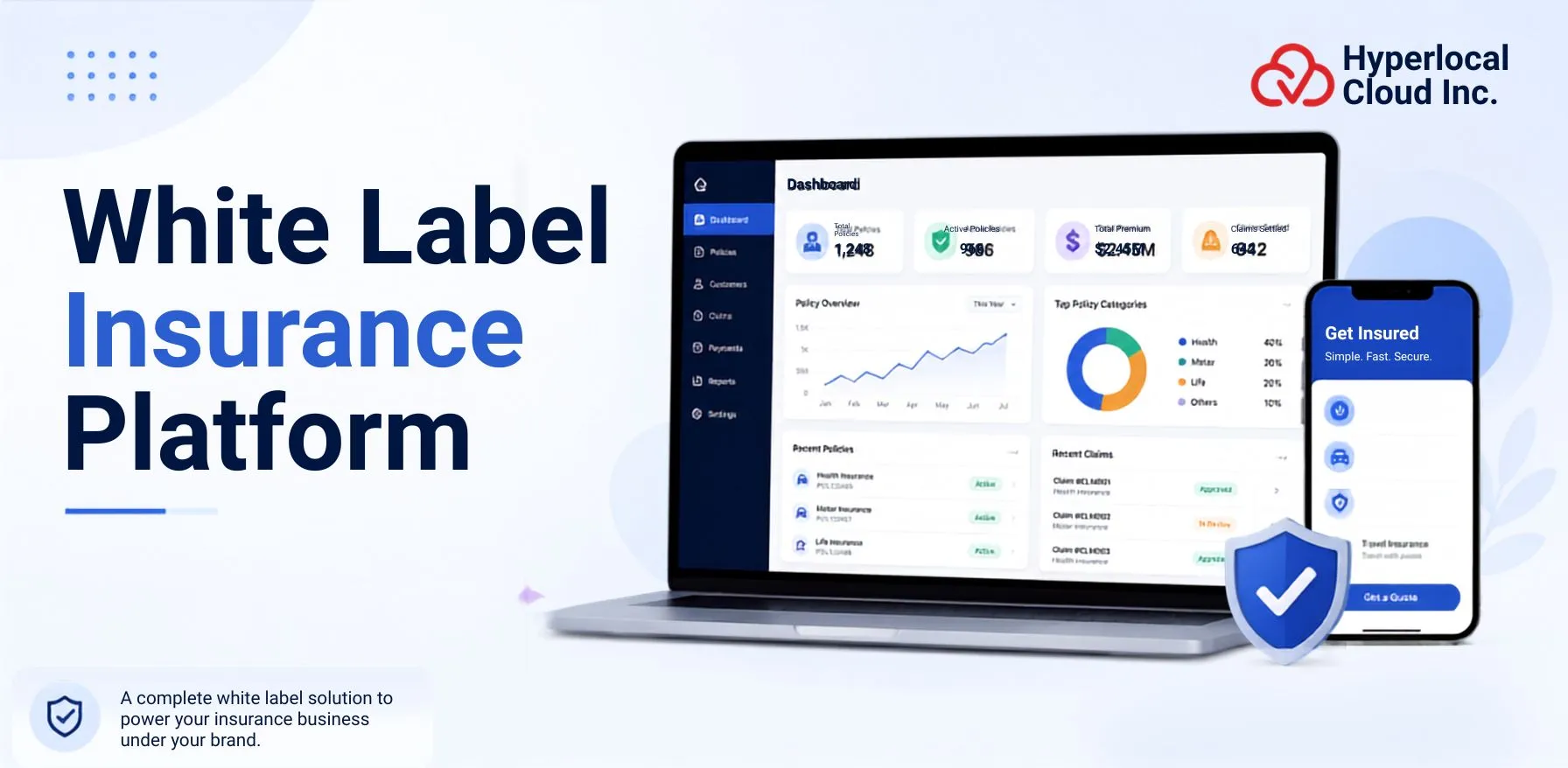
- Launch digital insurance services faster than traditional development approaches.
- Reduce upfront technology investment and operational costs.
- Offer insurance products under their own brand identity.
- Connect with insurers, payment providers, and third-party services through integrations.
- Customize customer journeys, workflows, and product experiences.
- Scale insurance offerings without rebuilding technology from scratch.
Customer expectations in the insurance industry are changing rapidly. Today’s customers want faster, simpler, and more personalized digital experiences, from getting instant quotes and purchasing policies to managing claims online. This shift toward digital-first insurance has encouraged businesses to rethink traditional models and explore smarter ways to deliver insurance services.
However, building a complete insurance platform from the ground up can be complex, time-consuming, and expensive. Companies need advanced technology, secure infrastructure, integrations, and ongoing maintenance to create a seamless customer experience. A white label insurance platform helps businesses overcome these challenges by providing a ready-made foundation that can be customized and launched under their own brand.
With the right technology partner, businesses can launch their own digital platform faster, reduce development efforts, and create scalable insurance solutions that meet modern customer expectations.
What Is a White Label Insurance Platform?
A white-label insurance platform, also known as white-label insurance management software, is a technology solution that enables businesses to offer insurance products under their own brand without building the entire system in-house.
In simple terms, it is a ready-to-use insurance technology infrastructure that businesses can customize, brand, and adapt based on their specific goals. The platform provider manages the underlying technology, while the business controls the customer-facing experience.
For example, a financial company may want to add insurance services to its existing offerings. Instead of hiring a large development team and spending years creating an insurance system, the company can use a white label solution, customize the user interface, connect relevant insurance products, and launch its branded insurance service.
The biggest advantage of this approach is flexibility. Businesses are not limited to a standard product. They can adjust the platform’s design, workflows, customer journey, product options, and integrations according to their market requirements.
A modern insurance platform typically includes essential capabilities such as:
- Customer registration and account management
- Insurance product management
- Digital quotation and application processes
- Payment processing
- Policy administration
- Claims management
- Reporting and analytics tools
- Integration capabilities with external services
This allows businesses to create a complete digital insurance experience while reducing the complexity of technology development.
Instead of focusing on building infrastructure, companies can focus on understanding their customers, creating better insurance products, and growing their business.
Launch Your Own Branded Insurance Platform
How a White Label Insurance Platform Works
A white label insurance platform simplifies the process of creating and launching digital insurance services. While the exact process varies depending on business goals and technology providers, the overall journey usually involves several key steps.
1. Selecting Insurance Products and Services
The first step is determining what insurance products the business wants to offer.
Different organizations may have different objectives. A startup may focus on a specific insurance category, while a financial company may want to provide multiple insurance options alongside existing services.
Businesses can evaluate factors such as:
- Target customer segments
- Market demand
- Available insurance partnerships
- Revenue opportunities
- Customer needs
The platform can then be configured to support the selected insurance products.
2. Configuring the Platform According to Business Requirements
Once products are selected, the platform can be customized based on business objectives.
This includes configuring:
- User journeys
- Insurance workflows
- Product rules
- Customer dashboards
- Administrative features
- Branding elements
The goal is to create an experience that matches the company’s operational model and customer expectations.
For example, a company offering travel insurance may design a simple purchase journey focused on quick policy selection, while a business offering commercial insurance may require more detailed applications and documentation workflows.
3. Connecting With Insurers, Payment Providers, and Other Services
Digital insurance platforms rely on integrations to deliver smooth experiences.
Through an insurance API platform, businesses can connect different systems and services, allowing information to move automatically between platforms.
Common integrations include:
- Insurance providers
- Payment gateways
- Identity verification services
- Customer relationship management systems
- Claims processing platforms
These connections improve efficiency, reduce manual work, and create faster customer experiences.
4. Launching and Continuously Improving the Platform
After configuration and testing, businesses can launch their branded insurance solution.
However, launching is only the beginning. Successful digital insurance platforms continuously improve based on customer behavior, market trends, and performance insights.
Businesses can use analytics and feedback to optimize:
- Customer journeys
- Product offerings
- Conversion rates
- Claims experiences
- Operational processes
A scalable platform allows organizations to adapt as customer expectations and business requirements evolve.
White Label Insurance Platform vs Custom Insurance Software
When businesses decide to build a digital insurance solution, one of the biggest decisions is whether to use a white label platform or develop custom software.
Both approaches have benefits, but they serve different business needs.
| Feature | White Label Insurance Platform | Custom Insurance Development |
| Launch Timeline | Weeks to months | 12–24 months or longer |
| Cost & Investment | Lower initial investment | Higher development investment |
| Infrastructure & Technology | Ready-built platform infrastructure | Built from scratch |
| Integrations & Compliance | Pre-built APIs, connectors, and compliance support | Must be developed and managed internally |
| Maintenance & Updates | Managed with continuous platform improvements | Requires internal maintenance and roadmap planning |
| Scalability | Designed for expansion | Depends on architecture and future development |
| Customization | Branding, workflows, products, and integrations can be tailored | Full control over every technical detail |
Not Sure Which Insurance Platform Model Fits Your Business?
Essential Features of a Modern Insurance Platform
A successful digital insurance platform needs more than just basic policy management capabilities. Modern customers expect fast, convenient, and transparent experiences, while businesses need powerful tools to manage operations efficiently.
A well-designed insurance platform combines customer-focused features with business management capabilities, allowing companies to deliver better services while improving internal processes.
Easy Account Creation
A simple onboarding process is one of the most important parts of a digital insurance experience. Customers should be able to create accounts quickly, verify their details, and access insurance services without unnecessary steps.
Modern platforms simplify registration through digital forms, automated verification, and user-friendly interfaces. A smooth onboarding experience helps reduce customer drop-offs and improves engagement from the beginning.
Insurance Product Browsing
Customers want the ability to explore available insurance products before making a decision. A digital platform allows businesses to present different policies, coverage options, pricing details, and benefits clearly and understandably.
With better product visibility, customers can compare options and choose solutions that match their requirements.
Digital Quotes and Applications
Traditional insurance processes often involve lengthy paperwork and manual communication. Digital insurance platforms simplify this experience by allowing customers to request quotes and submit applications online.
Automated quote generation helps customers receive faster responses while enabling businesses to process applications more efficiently.
Online Payments
Secure and convenient payment options are essential for modern insurance services. Customers expect the ability to complete transactions digitally through their preferred payment methods.
A reliable insurance platform can integrate payment solutions to support:
- Premium payments
- Policy renewals
- Automated billing
- Transaction tracking
This improves convenience while reducing manual payment processing.
Policy Management
Customers should have complete visibility into their insurance policies. Digital policy management features allow users to access policy documents, review coverage details, update information, and manage renewals from a single platform.
This creates greater transparency and builds customer trust.
Claims Tracking
Claims are one of the most important moments in the insurance customer journey. A digital claims tracking system allows customers to submit claims, monitor progress, upload documents, and receive updates online.
Faster and more transparent claims management can significantly improve customer satisfaction.
Business Management Features
While customer-facing tools improve user experience, businesses also need powerful management capabilities to operate efficiently.
Dashboard and Reporting Tools
A centralized dashboard provides businesses with real-time visibility into important activities such as policies sold, customer engagement, revenue performance, and claims status.
Reporting tools help organizations identify trends, measure performance, and make informed decisions.
Customer and Policy Administration
Managing large volumes of customers and policies manually can become challenging as businesses grow. A digital insurance platform simplifies administration by organizing customer information, policy records, and service activities in one place.
This improves operational efficiency and reduces administrative workload.
Product Configuration
Insurance businesses often need flexibility when creating or modifying products. Product configuration tools allow companies to adjust coverage options, pricing structures, eligibility rules, and policy settings based on market requirements.
This enables businesses to introduce new offerings faster and respond to changing customer needs.
Analytics and Performance Insights
Data plays an important role in improving digital insurance services. Analytics tools help businesses understand customer behavior, identify growth opportunities, and optimize platform performance.
Insights from customer interactions can help companies improve:
- Product recommendations
- Marketing strategies
- Customer retention
- Operational efficiency
Technology Stack Behind a White Label Insurance Platform
A scalable white label insurance platform is built on a modern technology foundation that supports security, integrations, automation, and high performance. The technology stack may vary depending on business requirements, but it generally includes:
Frontend Technologies: Power customer-facing interfaces such as insurance portals, mobile apps, and dashboards. They help deliver smooth navigation, responsive designs, and user-friendly experiences across different devices and platforms.
Backend frameworks: They handle core insurance operations, including policy workflows, customer management, product configuration, and business rules. They provide the foundation required for reliable platform performance and automation.
Cloud infrastructure: Enables flexible hosting, scalability, and high availability for insurance platforms. It supports growing customer demand, secure data management, application performance, and reliable operations across multiple environments.
Database systems: Manage critical insurance information, including customer profiles, policies, payments, claims, and transaction records. They ensure efficient data storage, retrieval, security, and reporting capabilities.
API architecture: Enables seamless connections between insurance platforms and external services such as insurers, payment providers, KYC systems, and CRM tools, supporting automation and real-time data exchange.
Security solutions: Protect sensitive insurance information through authentication, encryption, access controls, and monitoring. They help businesses maintain customer trust while supporting secure digital insurance operations.
A well-designed technology stack allows businesses to customize their insurance platform, support multiple integrations, and scale operations as their customer base grows.
Development Process of an Insurance Platform Using a White Label Solution
Building an insurance platform with a white label solution is faster than developing a completely custom system because the core technology infrastructure is already available. Businesses can customize the platform, integrate required services, and launch their branded insurance solution based on their specific requirements.
The development process usually involves the following stages:
1. Requirement Analysis and Platform Planning
The process begins by understanding the business model, target customers, insurance products, and operational requirements.
Key areas include:
- Types of insurance products to be offered
- Customer journey and purchasing flow
- Required integrations with insurers and service providers
- Admin and reporting requirements
- Compliance and security needs
This helps define how the platform should be configured and customized.
2. Platform Customization and Branding
Once requirements are finalized, the white label platform is customized to match the business identity and workflows.
Customization may include:
- Branding and user interface design
- Insurance product configuration
- Customer onboarding flow
- Policy management workflows
- Dashboard and reporting features
This allows businesses to provide an insurance experience under their own brand without building the entire technology stack.
3. API Integration and System Configuration
Insurance platforms depend on multiple connected systems to operate efficiently. During development, required APIs and third-party services are integrated into the platform.
Common integrations include:
- Insurance providers
- Payment gateways
- Identity verification services
- CRM systems
- Claims management platforms
These integrations enable automated processes such as policy issuance, payments, verification, and claims updates.
4. Testing and Deployment
Before launch, the platform is tested to ensure that all features and integrations work correctly.
Testing covers:
- Customer journeys
- Policy workflows
- Payments
- Data security
- Platform performance
After successful testing, the platform is deployed and made available to customers under the business’s brand.
5. Continuous Enhancement and Scaling
After launch, businesses can continue improving the platform by adding new products, integrations, and features based on customer needs.
A flexible white label insurance management software allows companies to scale their insurance offerings without rebuilding their technology infrastructure.
Start Building Your Insurance Platform Without Starting From Scratch
Why Use a White Label Approach for Insurance Platform Development?
A white label approach helps businesses reduce development time, lower technology costs, and launch insurance services faster while maintaining control over their brand experience.
It is especially useful for insurance startups, fintech companies, brokers, and enterprises that want to enter the digital insurance market without investing in a complete platform build from scratch.
This version is around 40–50% shorter, sounds more like a real company blog, and keeps the buyer intent intact. It also avoids competing with your later sections about features, benefits, and choosing a technology partner.
Who Can Benefit From a White Label Insurance Platform?
The demand for digital insurance services is growing across industries, creating opportunities for different types of businesses to enter the insurance market. A white label insurance platform provides the flexibility and technology foundation needed by organizations that want to offer insurance products without building an entire system from scratch.
From startups to established enterprises, businesses can use these platforms to create new digital experiences, expand their services, and generate additional revenue opportunities.
Insurance Startups Looking to Enter the Market
Launching an insurance startup requires more than just a strong business idea. Startups need reliable technology, customer management tools, integrations, and operational capabilities to compete effectively.
A white label approach allows new businesses to enter the market faster by providing access to ready-built insurance infrastructure. Startups can focus on product strategy, customer acquisition, and market positioning instead of spending years developing complex technology.
This enables smaller companies to compete with larger players by offering modern, customer-focused digital insurance experiences.
Brokers and Agencies Expanding Their Digital Presence
Traditional insurance brokers and agencies are increasingly adopting digital channels to meet changing customer expectations.
A digital insurance platform helps brokers and agencies move beyond traditional processes by offering customers:
- Online policy discovery
- Digital applications
- Faster communication
- Self-service policy management
- Online claims support
By creating their own branded digital experience, brokers can strengthen customer relationships and improve operational efficiency.
Financial Companies Offering Additional Services
Banks, fintech companies, and other financial organizations often look for ways to expand their service offerings.
Adding insurance products can help these businesses create more value for existing customers while opening new revenue streams.
A white label insurance solution allows financial companies to integrate insurance services into their existing ecosystem without developing separate technology infrastructure.
For example, a financial platform can provide customers with insurance options alongside banking, payment, or investment services, creating a more complete digital experience.
Businesses Exploring Embedded Insurance Opportunities
Embedded insurance is becoming an important trend as businesses look for ways to offer protection within existing customer journeys.
Companies in industries such as travel, automotive, e-commerce, and financial services can integrate insurance options directly into their platforms.
For example:
- A travel company can offer travel protection during booking
- An automotive platform can provide vehicle coverage options
- An e-commerce business can include product protection plans
White label technology makes it easier for businesses to introduce these embedded insurance experiences without developing complex insurance systems internally.
Enterprises Creating New Revenue Streams
Large organizations are constantly exploring new ways to increase customer value and diversify revenue.
A white label platform allows enterprises to launch new insurance services while maintaining control over their brand experience.
With scalable technology, enterprises can:
- Introduce new insurance products
- Reach new customer segments
- Improve customer engagement
- Create additional revenue channels
This makes digital insurance a strategic opportunity for companies across multiple industries.
What to Look for When Choosing an Insurance Technology Partner
Selecting the right technology partner is an important decision because the platform will support the business’s long-term digital insurance strategy.
A reliable partner should provide more than just software. They should offer a flexible, secure, and scalable foundation that can adapt as business requirements change.
Platform Flexibility
Every business has different goals and customer requirements. A strong technology partner should provide customization options that allow businesses to modify workflows, branding, products, and user experiences.
Flexibility ensures that the platform can grow alongside the business.
Security and Compliance Capabilities
Insurance platforms handle sensitive customer information, making security a critical priority.
Businesses should look for technology partners that focus on:
- Data protection
- Secure transactions
- Access controls
- Compliance support
- Reliable infrastructure
A secure platform helps protect customer trust and supports responsible digital insurance operations.
Integration Support
Insurance ecosystems depend on multiple connected services. A technology partner should provide strong integration capabilities to connect with insurers, payment providers, verification services, and other systems.
Effective integrations improve automation and create smoother customer experiences.
Scalability
As businesses grow, their technology needs will also change. The chosen platform should be capable of supporting increasing customers, new products, additional integrations, and expanding operations.
Scalable technology ensures that businesses can continue growing without replacing their entire system.
User Experience
A successful digital insurance platform should be easy for both customers and business teams to use.
The platform should provide:
- Simple navigation
- Smooth customer journeys
- Mobile-friendly experiences
- Efficient administrative tools
A strong user experience improves customer satisfaction and operational efficiency.
Ability to Adapt as Business Needs Change
The insurance industry continues to evolve. Customer expectations, regulations, and technology trends are constantly changing.
Businesses should choose a technology partner that can support future growth through continuous improvements, feature updates, and innovation.
The right partner helps companies remain competitive in an increasingly digital insurance landscape.
Launch Your Insurance Platform Without the Complexity
The Future of Digital Insurance Platforms
The insurance industry is moving toward a more connected, personalized, and technology-driven future. As customer expectations continue to evolve, businesses need digital solutions that can deliver faster services, greater convenience, and more relevant insurance experiences.
A modern white label insurance platform enables companies to adapt to these changes by providing the flexibility needed to launch, manage, and scale digital insurance products efficiently.
Increasing Demand for Personalized Insurance Experiences
Customers today expect services that are designed around their specific needs. Generic insurance offerings are gradually being replaced by personalized experiences that consider customer preferences, behavior, lifestyle, and risk profiles.
Digital platforms make personalization easier by using customer data and analytics to provide more relevant recommendations and services.
Businesses can create personalized experiences through:
- Customized insurance product suggestions
- Flexible coverage options
- Targeted customer communication
- Faster service delivery
By understanding customer needs better, insurance providers can improve engagement and build stronger long-term relationships.
Growth of Embedded Insurance Models
Embedded insurance is becoming one of the fastest-growing opportunities in digital insurance. Instead of requiring customers to purchase insurance separately, embedded models integrate coverage directly into existing customer journeys.
This approach creates a more convenient experience because customers can access relevant insurance products at the right moment.
Industries adopting embedded insurance opportunities include:
- Travel platforms offering travel protection
- Automotive businesses providing vehicle coverage
- E-commerce companies offering product protection
- Financial platforms integrating insurance services
A flexible digital platform allows businesses to launch these experiences more efficiently by connecting insurance products with existing customer ecosystems.
Greater Use of Automation and Artificial Intelligence
Automation and artificial intelligence are transforming how insurance businesses operate. From customer support to claims processing, advanced technologies are helping organizations improve speed, accuracy, and efficiency.
AI-powered capabilities can support areas such as:
- Automated customer assistance
- Faster claims assessment
- Risk analysis
- Fraud detection
- Personalized recommendations
Automation reduces manual effort and allows businesses to provide faster services while improving operational performance.
As technology continues to develop, insurance platforms will increasingly use intelligent systems to create smoother and more efficient customer experiences.
More Seamless Digital Customer Journeys
The future of insurance will focus on removing friction from every stage of the customer journey.
Customers will expect simple digital experiences where they can:
- Discover insurance products
- Compare coverage options
- Purchase policies
- Make payments
- Manage documents
- Track claims
A connected digital ecosystem makes these processes faster and more convenient.
Businesses that invest in scalable digital insurance solutions will be better positioned to meet changing customer expectations and compete in the evolving insurance market.
Final Thoughts
The insurance industry is rapidly moving toward digital-first experiences, and businesses need flexible technology solutions to meet changing customer expectations. A white label insurance platform enables companies to launch their own branded insurance solutions faster, reduce development complexity, and deliver seamless digital experiences without building an entire system from the ground up.
With features such as automation, API integrations, policy management, and customizable workflows, businesses can create scalable insurance platforms that support long-term growth. Whether you are a startup, financial company, broker, or enterprise, choosing the right technology approach can help you launch your own digital platform and explore new opportunities in the evolving insurance market.
By partnering with the right insurance technology provider, businesses can build innovative insurance solutions, improve customer engagement, and stay competitive in a digital-first world.

Nisha Bagga is a technical writer with more than 7 years of experience creating high-quality content for a wide range of industries. She specializes in developing clear, engaging, and well-researched technical and business content tailored to diverse audiences and industry requirements.

Need Help With
Development?