


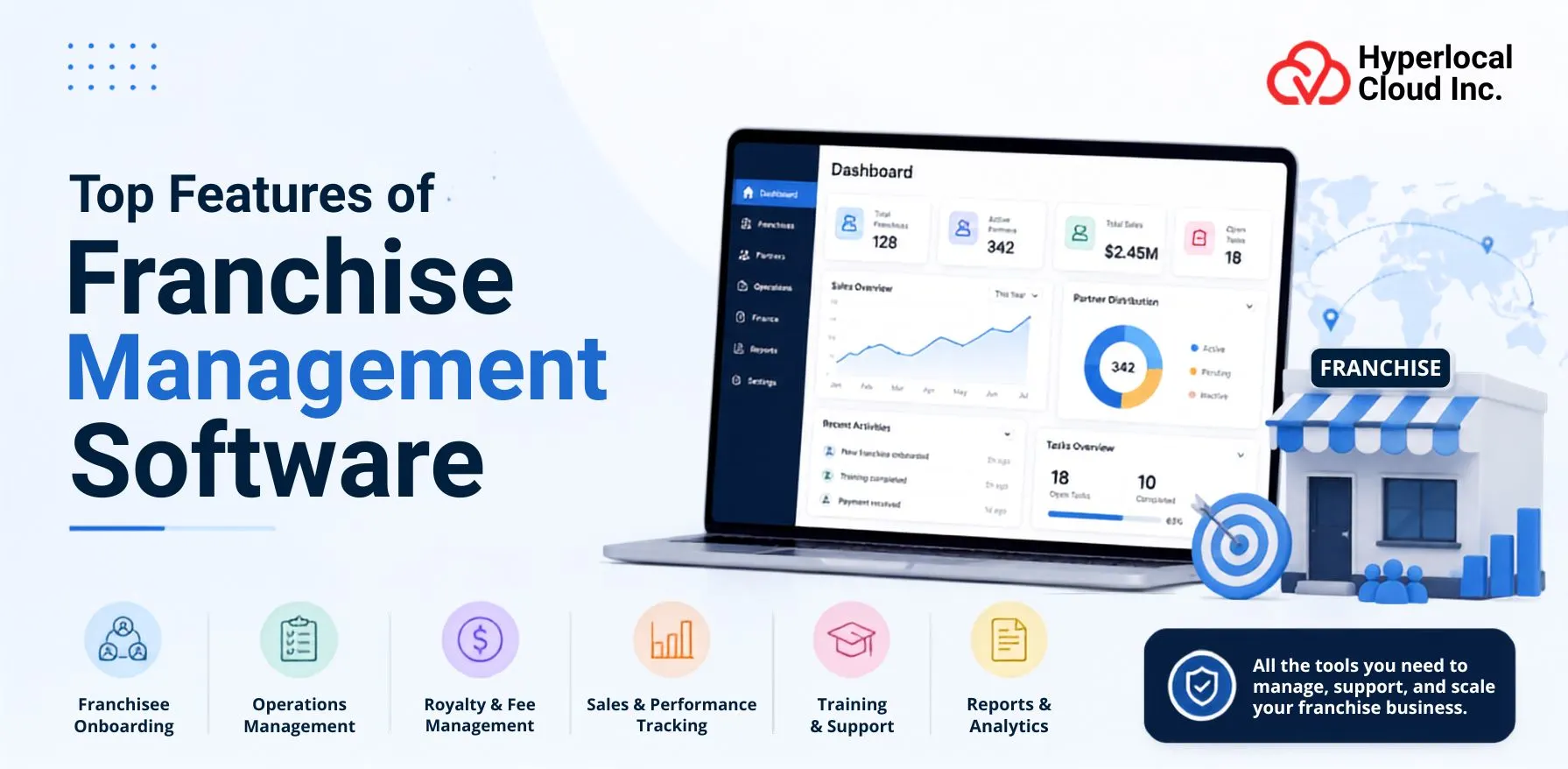
Managing a franchise network involves much more than overseeing individual business locations. As a franchise grows, so does the complexity of its day-to-day operations. Franchisors must maintain brand consistency, monitor business performance across multiple locations, ensure compliance with operational standards, and foster seamless collaboration with franchisees. Handling these responsibilities manually or through disconnected systems can quickly become inefficient, making it difficult to maintain visibility and control as the business expands.
The growing adoption of digital technologies has transformed how franchise businesses operate. Today’s organizations require real-time access to business data, automated workflows, centralized communication, and actionable insights to stay competitive. Traditional management methods, such as spreadsheets, emails, and standalone software applications, often fail to support the increasing operational demands of expanding franchise networks. Digital transformation enables franchisors to streamline operations, improve decision-making, and deliver a consistent customer experience across every location.
This is where Franchise Management Software plays a vital role. By centralizing core business processes into a single platform, it helps franchise businesses automate routine tasks, monitor performance, improve communication, and manage multiple locations efficiently. Whether a franchise operates a handful of outlets or hundreds of locations, investing in the right software, including White Label Franchise Management Software options, provides the scalability, transparency, and operational control needed to support sustainable business growth.
Why Franchise Businesses Need Modern Management Solutions
Managing a franchise network comes with unique operational challenges that can impact efficiency, consistency, and growth. As businesses expand across multiple locations, traditional management methods often become difficult to scale.
Common Operational Challenges in Franchise Businesses
As franchise networks expand, businesses face several operational challenges that can affect consistency, efficiency, communication, and overall performance.
1. Maintaining Brand Consistency
One of the biggest responsibilities of franchisors is ensuring every outlet follows standardized operating procedures, branding guidelines, and customer service practices. Without centralized oversight, inconsistencies can negatively affect customer trust and brand reputation.
2. Managing Multiple Locations Efficiently
Tracking the performance of dozens or even hundreds of outlets manually is nearly impossible. Each location has different staffing requirements, inventory levels, financial performance, and customer demands. Managing these variables without centralized software often leads to delays and operational inefficiencies.
3. Communication Gaps Between Franchisors and Franchisees
Franchise systems depend heavily on effective communication. Important updates, promotional campaigns, policy changes, and operational instructions need to reach every franchisee quickly. Traditional communication methods often result in missed messages and inconsistent execution.
4. Manual Reporting and Administrative Tasks
Collecting sales reports, monitoring KPIs, processing approvals, generating invoices, and preparing financial reports manually consume valuable time. Administrative workloads increase significantly as franchise networks grow.
5. Compliance and Operational Monitoring
Franchisors must ensure every location complies with operational standards, legal regulations, health and safety requirements, and internal policies. Manual audits often become inconsistent and difficult to manage at scale.
Transform Your Franchise Operations with Smarter Software Today
How Franchise Automation Software Improves Operational Efficiency
Franchise automation software eliminates repetitive manual tasks by automating approvals, reporting, workflow management, compliance tracking, employee scheduling, and communication.
Instead of spending time on administrative work, business owners and managers can focus on strategic growth initiatives. Automation also reduces human errors, accelerates decision-making, and improves transparency across the franchise network.
Key Features Every Franchise Management Software Should Have
Choosing the right software requires understanding which features deliver the greatest operational value. The following capabilities form the foundation of an effective franchise management platform.
Centralized Dashboard
A centralized dashboard provides a complete overview of franchise operations through a single platform. It helps franchisors, managers, and franchisees monitor performance, track important activities, and make faster decisions using real-time data. Instead of managing information from multiple systems, users can access critical insights from one place.
Key dashboard capabilities include:
- Real-time monitoring of franchise locations
- Sales and revenue tracking
- Operational performance insights
- Approval and workflow status updates
- Compliance notifications
- Inventory overview
- Employee performance tracking
- Role-based access control
Multi-Location Management
Managing multiple outlets becomes easier with Multi-location management software, which allows businesses to control and monitor all franchise locations from a single platform. It improves visibility, ensures operational consistency, and helps franchisors compare performance across different branches. Businesses can identify successful locations, resolve issues quickly, and maintain standardized processes across the entire network.
Key multi-location management capabilities include:
- Centralized outlet management
- Branch-wise performance comparison
- Regional reporting and analytics
- Location-specific dashboards
- Standardized operational procedures
- Multi-region support
- Performance benchmarking
- Franchise location tracking
Automated Workflow Management
Automated workflow management helps franchises reduce manual tasks by streamlining approvals, assignments, and daily operations. It ensures that processes are completed consistently across locations while improving accountability and efficiency. By automating repetitive activities, franchise teams can save time and focus on business growth.
Key workflow management capabilities include:
- Automated task assignments
- Approval process automation
- Escalation management
- Reminder notifications
- Digital checklists
- Document approvals
- Incident tracking
- Workflow standardization
Franchisee Communication Tools
Strong communication between franchisors and franchisees is essential for maintaining operational alignment. Integrated communication tools create a centralized platform where teams can share updates, documents, announcements, and important business information. This reduces communication gaps and ensures every franchise location stays informed.
Key communication capabilities include:
- Internal messaging
- Company announcements
- Document sharing
- Team collaboration tools
- Training updates
- Policy notifications
- Discussion forums
- Event management support
Reporting and Business Analytics
Reporting and analytics tools help franchise businesses convert operational data into valuable insights. With accurate reports and performance dashboards, franchisors can monitor growth, identify challenges, and make data-driven decisions. These tools improve visibility into sales, financial performance, and location efficiency.
Key analytics capabilities include:
- Sales performance dashboards
- Revenue analysis
- KPI monitoring
- Franchise performance reports
- Customer insights
- Regional comparisons
- Custom report generation
- Data-driven decision support
Compliance and Audit Management
Compliance and audit management features help franchises maintain consistent standards across all locations. Digital tools simplify inspections, track compliance activities, and ensure franchisees follow brand guidelines and operational requirements. These features reduce risks and improve accountability.
Key compliance management capabilities include:
- Digital inspection checklists
- Audit scheduling
- Compliance score tracking
- Corrective action management
- Documentation management
- Photo-based verification
- Automated reminders
- Compliance reporting
CRM and Customer Management
A CRM system helps franchises build stronger customer relationships by organizing customer information and tracking interactions. It enables businesses to understand customer behavior, improve engagement, and provide personalized experiences across multiple locations.
Key CRM capabilities include:
- Customer database management
- Lead tracking
- Customer interaction history
- Service record management
- Customer feedback tracking
- Loyalty program support
- Marketing campaign management
- Customer engagement monitoring
Inventory and Supply Chain Management
Inventory and supply chain management features help franchises maintain accurate stock levels and improve purchasing efficiency. These tools provide real-time visibility into inventory movement, supplier relationships, and product availability, helping businesses reduce waste and avoid shortages.
Key inventory management capabilities include:
- Real-time inventory tracking
- Vendor management
- Purchase order management
- Stock alerts
- Warehouse management
- Product transfer tracking
- Supply chain monitoring
- Inventory reporting
Financial and Royalty Management
Financial management features simplify complex franchise accounting processes by automating payments, royalty calculations, and financial reporting. These tools improve accuracy, reduce administrative work, and provide better financial visibility between franchisors and franchisees.
Key financial management capabilities include:
- Automated royalty calculations
- Billing automation
- Invoice generation
- Expense tracking
- Budget monitoring
- Payment reconciliation
- Financial reporting
- Revenue tracking
Employee and Training Management
Employee management tools help franchises maintain consistent workforce standards by simplifying hiring, training, scheduling, and performance monitoring. Digital training systems ensure employees across different locations receive the same knowledge and follow brand guidelines.
Key employee management capabilities include:
- Staff scheduling
- Attendance tracking
- Digital onboarding
- Training modules
- Certification management
- Performance tracking
- Employee records management
- Learning progress monitoring
Mobile Accessibility
Mobile accessibility allows franchise owners and managers to manage operations while on the move. A mobile-friendly platform provides quick access to important information, approvals, and updates, improving responsiveness and operational control.
Key mobile capabilities include:
- Mobile dashboards
- Remote approvals
- Push notifications
- Task management
- Field inspection support
- Mobile reporting
- Real-time updates
- Access from anywhere
Security and Data Protection
Security features protect sensitive franchise information, including financial data, customer details, and operational records. A secure Franchise Management Software platform ensures authorized access while maintaining data privacy and compliance standards.
Key security capabilities include:
- Role-based user permissions
- Data encryption
- Multi-factor authentication
- Secure cloud storage
- Automated backups
- Activity monitoring
- Audit logs
- Regulatory compliance support
Third-Party Integrations
Third-party integrations allow franchise software to connect with existing business systems and create a unified operational environment. These integrations improve data accuracy, eliminate repetitive tasks, and enhance overall efficiency.
Key integration capabilities include:
- POS system integration
- Accounting software integration
- CRM platform integration
- Payment gateway connectivity
- HR and payroll integration
- Marketing automation tools
- Business intelligence platforms
- API-based integrations
Seamless integrations eliminate duplicate data entry while improving overall operational efficiency.
Simplify Franchise Management with Advanced Technology Solutions
AI-Driven Technologies Transforming Franchise Management
Artificial Intelligence is reshaping how franchises operate by enabling smarter decision-making, predictive analytics, and advanced automation.
AI-Powered Business Analytics and Predictive Reporting
AI analyzes historical business data to identify trends, forecast revenue, predict sales performance, and recommend business improvements before problems arise.
Intelligent Workflow Automation
Machine learning algorithms automatically route approvals, prioritize tasks, assign responsibilities, and optimize operational workflows based on business rules and historical patterns.
Demand Forecasting and Inventory Optimization
AI predicts customer demand using seasonal trends, historical sales, local events, and purchasing behavior.
Benefits include:
- Reduced stock shortages
- Lower inventory costs
- Better procurement planning
- Improved product availability
Common Challenges in Franchise Management and How to Overcome Them
Even with a successful business model, franchise operations present unique challenges. The right technology helps organizations address these issues efficiently.
Maintaining Operational Consistency
Maintaining consistency across multiple locations requires:
- Standardized workflows
- Digital SOPs
- Automated compliance monitoring
- Centralized documentation
These tools ensure every franchise follows the same operational standards.
Managing Multiple Locations Efficiently
Growing franchise networks benefit from:
- Centralized dashboards
- Real-time operational visibility
- Performance benchmarking
- Location-specific analytics
Managers can quickly identify issues and optimize performance across the network.
Communication Gaps Between Teams
Communication challenges can be minimized using:
- Integrated messaging platforms
- Centralized document management
- Instant notifications
- Shared operational updates
These features improve collaboration and ensure every franchise location stays informed.
Manual Administrative Processes
Administrative efficiency improves through:
- Workflow automation
- Automated reporting
- Digital approvals
- Electronic documentation
Automation significantly reduces repetitive work while increasing productivity.
Data Security and Compliance
Protecting business information requires:
- Role-based access controls
- Data encryption
- Regular security audits
- Cloud-based backups
These practices safeguard sensitive operational and financial data.
Scaling Franchise Operations
As businesses expand, technology must scale accordingly.
Scalable software should provide:
- Cloud infrastructure
- Flexible API integrations
- Modular architecture
- Support for increasing users and locations
This ensures the system continues performing efficiently during rapid growth.
Streamline Operations and Grow Your Franchise Network
How Scalable Franchise Management Software Supports Business Expansion
Franchise businesses rarely remain static. Expansion into new cities, regions, and international markets requires technology capable of supporting long-term growth.
Scalable Franchise Management Software enables businesses to:
- Launch new franchise locations quickly
- Support increasing user volumes
- Handle larger operational datasets
- Maintain consistent workflows across expanding networks
- Add new business modules without replacing existing systems
Cloud-based infrastructure plays a vital role in scalability by providing flexible computing resources that grow alongside business needs. Whether adding new franchisees, expanding product offerings, or entering new markets, cloud technology allows businesses to scale without major infrastructure investments.
Customization also becomes increasingly important during expansion. Every franchise network evolves differently, making configurable workflows, customizable dashboards, and adaptable reporting essential for long-term operational efficiency.
Investing in scalable technology today helps organizations avoid costly software replacements in the future while supporting sustainable business growth.
Choosing the Right Software Development Partner
Selecting the right technology partner is just as important as choosing the software itself. While off-the-shelf solutions may address common operational needs, many growing franchise businesses require tailored platforms such as White Label Franchise Management Software that align with their unique processes, brand standards, and long-term goals.
This is where experienced Custom software development companies provide significant value by building solutions designed specifically for franchise operations.
When evaluating a development partner, consider the following factors:
Experience in Franchise Technology
Look for companies with proven expertise in developing franchise-focused platforms. Experience with franchise operations ensures they understand common challenges such as royalty management, compliance monitoring, multi-location reporting, and franchisee collaboration.
Industry-Specific Expertise
A development partner familiar with your industry can design workflows, dashboards, and integrations that match your operational requirements, reducing implementation time and improving user adoption.
Customization Capabilities
Every franchise operates differently. The ideal partner should be able to customize features, user interfaces, reporting modules, approval workflows, and business logic to fit your organization rather than forcing you to adapt to rigid software.
Integration Experience
Franchise systems often need to connect with existing POS platforms, accounting software, CRM systems, HR tools, payment gateways, and inventory management solutions. A capable partner should have experience delivering seamless integrations that create a unified technology ecosystem.
Ongoing Support and Maintenance
Technology requires continuous improvement. Choose a partner that offers regular updates, performance monitoring, bug fixes, feature enhancements, and responsive technical support to keep your platform reliable as your business evolves.
Security Best Practices
Data security should be built into every stage of software development. Ensure your technology partner follows secure coding standards, implements encryption, supports role-based access controls, performs regular security testing, and complies with relevant data protection regulations.
A trusted development partner can help you build a scalable, secure, and future-ready franchise management solution that supports operational excellence and long-term business growth.
Discover Smarter Ways to Manage Your Franchise Business
Final Thoughts
Franchise management has become increasingly complex as businesses expand across multiple locations and markets. A modern Franchise Management Software solution helps organizations overcome operational challenges by bringing essential processes such as communication, reporting, compliance, inventory management, financial tracking, and employee management into a single platform. By improving visibility and reducing manual efforts, these systems allow franchisors and franchisees to work more efficiently while maintaining consistent business standards across locations.
With the continued advancement of automation, artificial intelligence, and scalable cloud technologies, franchise businesses can better prepare for future growth and changing market demands. Features such as predictive analytics, automated workflows, and Multi-location management software capabilities are helping organizations make informed decisions and improve operational performance. Selecting the right technology solution based on business requirements, scalability goals, and customization needs enables franchises to build a strong foundation for long-term efficiency and expansion.
FAQs (Frequently Asked Questions)

Nisha Bagga is a technical writer with more than 7 years of experience creating high-quality content for a wide range of industries. She specializes in developing clear, engaging, and well-researched technical and business content tailored to diverse audiences and industry requirements.

Need Help With
Development?