

























Get 30% OFF on All Development Services – Limited Time!
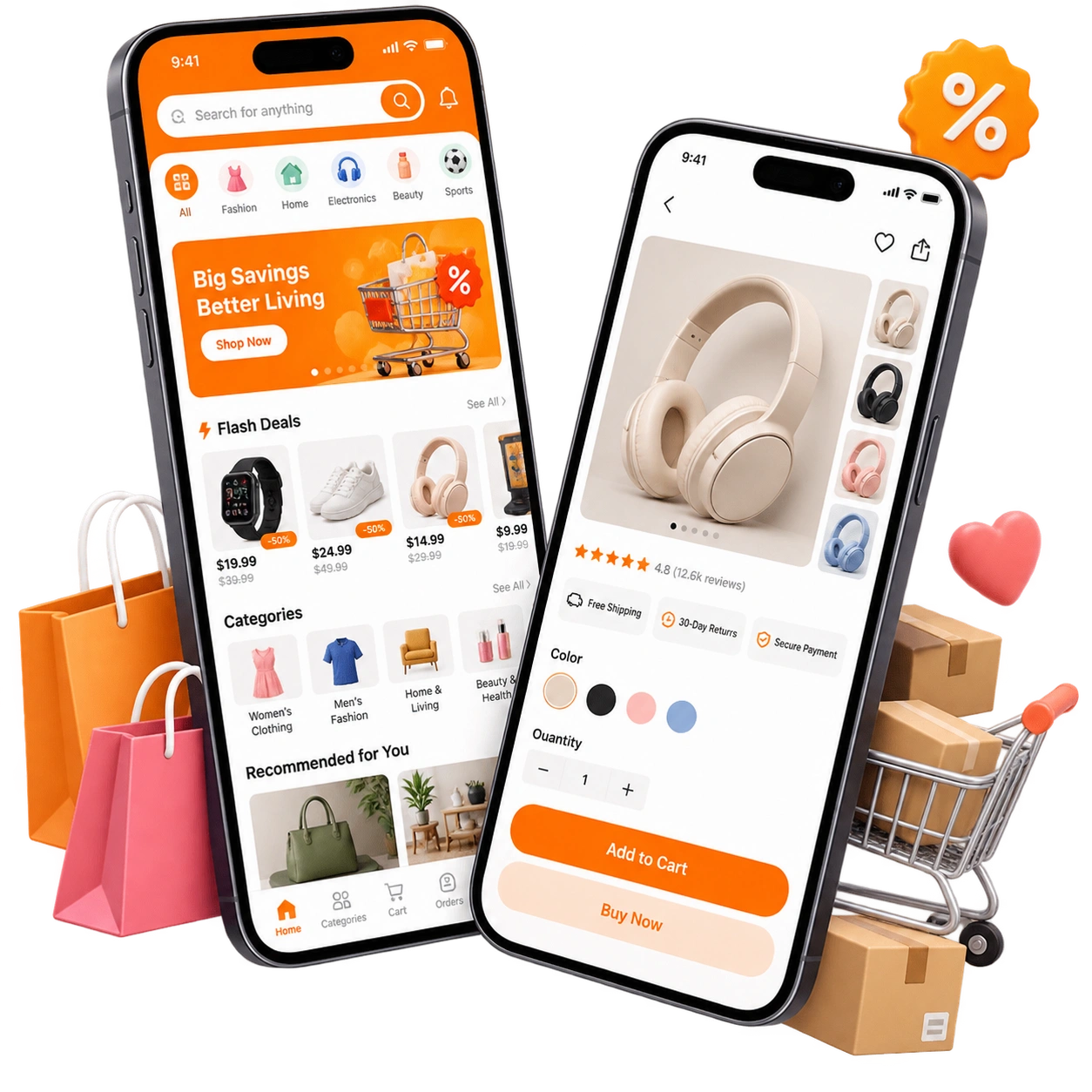
Launch a feature-rich eCommerce marketplace like Temu with a customizable Temu clone app. Hyperlocal Cloud builds scalable multi-vendor marketplace platforms with vendor onboarding, product catalogue management, secure payments, order management, real-time tracking, and third-party integrations—designed to handle high traffic and large-scale online shopping operations.
A Temu clone app is a customizable multi-vendor eCommerce marketplace that connects sellers with customers through a centralized platform. It typically includes seller onboarding, product listings, search, cart and checkout, payments, order management, delivery tracking, and reviews.
Unlike a basic online store, it provides dedicated tools for customers, sellers, and administrators. Businesses can customize the platform with their own branding, monetization model, promotions, payment gateways, logistics integrations, and marketplace features.
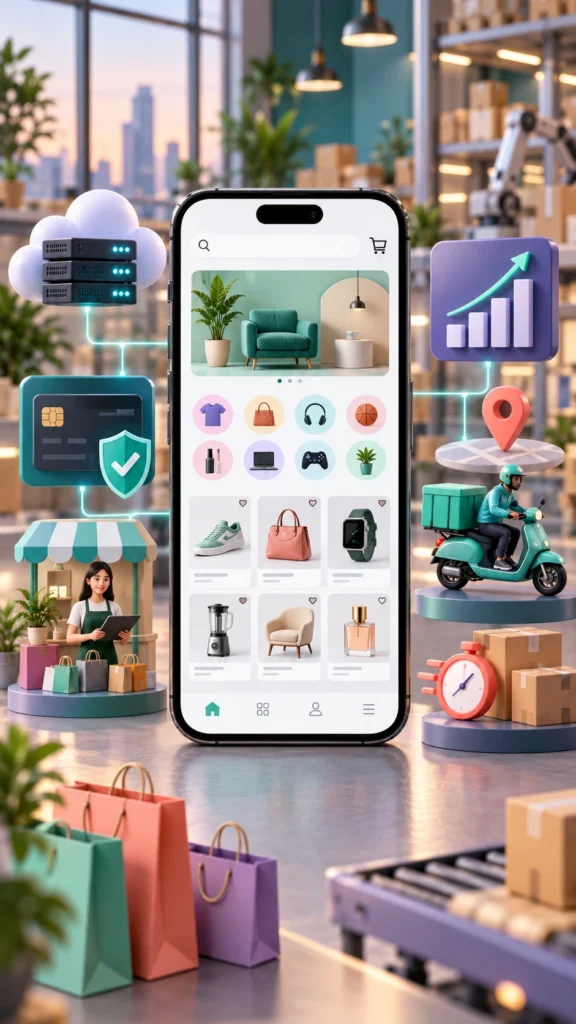
A Temu-like marketplace connects customers, sellers, payment providers, and logistics partners through a centralized digital platform. The marketplace manages the complete buying journey—from seller registration and product discovery to payment, fulfillment, delivery, and customer reviews.
Users can register/log in with their personal information or simply connect with the app by their social accounts.
Once users are logged in, they can find the closest laundry service providers and select their preferred method.
Both users and laundry service providers can share their locations with each other to facilitate further order processing.
With this feature, a notification is sent to the user about the stages your laundry is undergoing, from the picking process to delivery.
The consumer is able to easily make a payment directly through the app via multiple payment options.
Consumers are given a chance to evaluate service quality by recommending on the rating scale whether the work performed is good or bad.
Our Temu clone app development process focuses on building a scalable marketplace around your business model, target audience, and operational requirements—not simply replicating features. From planning and UI/UX design to development, testing, deployment, and scaling, each stage is structured to create a reliable multi-vendor eCommerce platform.
We define your target market, marketplace model, monetization strategy, user roles, core requirements, and technical scope. This creates a clear development roadmap before development begins.
We design intuitive experiences for customers, sellers, and administrators. Wireframes and prototypes are created to establish smooth navigation, product discovery, checkout, and marketplace management workflows.
Our developers build the core marketplace using a scalable architecture. This includes customer-facing applications, backend systems, databases, authentication, product management, cart, checkout, orders, and other required functionality.
We develop a dedicated seller panel where vendors can manage products, inventory, pricing, orders, promotions, earnings, and customer interactions from one dashboard.
We integrate essential third-party services such as payment gateways, maps, shipping and logistics APIs, notifications, analytics, and other business-specific tools.
The platform undergoes functional, usability, performance, security, compatibility, and API testing. We identify and resolve issues before deployment to ensure a reliable user experience.
Once testing is complete, we deploy the marketplace to the required production environments. We also provide ongoing maintenance, updates, monitoring, bug fixes, and technical improvements.
After launch, we analyze platform performance and business requirements to support continuous improvement. New features, integrations, infrastructure upgrades, and optimization can be introduced as your Temu-like marketplace grows.
A successful Temu-like marketplace requires more than a shopping interface. It needs a complete ecosystem connecting customers, sellers, and administrators. The following features can help create a scalable multi-vendor eCommerce platform with smooth product discovery, purchasing, selling, order fulfillment, and marketplace management.
Advanced features can help a Temu-like marketplace deliver more personalized shopping experiences, improve seller performance, and increase customer engagement. Depending on your business model and target market, you can add:
Use customer behavior, purchase history, and browsing patterns to recommend relevant products and improve conversions.
Create customized product feeds based on each customer's interests, preferences, searches, and previous interactions.
Allow sellers or administrators to adjust prices based on demand, inventory, competition, promotions, and other predefined rules.
Create time-limited offers, countdown campaigns, limited-stock deals, and promotional events to encourage faster purchasing decisions.
Add rewards, challenges, spin-to-win campaigns, points, badges, and other interactive elements to increase customer engagement.
Allow customers to invite friends and earn rewards, discounts, credits, or other incentives for successful referrals.
Reward repeat customers with points, exclusive offers, membership benefits, and personalized discounts.
Enable product sharing, social feeds, creator-led promotions, user-generated content, and social shopping experiences.
Improve product discovery with AI-assisted search, autocomplete, smart filters, typo correction, and relevant search results.
Allow customers to customize eligible products, select variants, add preferences, or personalize orders before checkout.
Use automated rules and risk signals to identify suspicious accounts, transactions, payment activity, and unusual marketplace behavior.
Synchronize inventory levels across sellers and sales channels to reduce overselling and provide accurate product availability.
Advanced features can help a Temu-like marketplace deliver more personalized shopping experiences, improve seller performance, and increase customer engagement. Depending on your business model and target market, you can add:
Faster Order Processing
Seller Onboarding Growth
Products Managed
Platform Availability
Orders Processed
Active Vendors Supported
Faster Inventory Synchronization
Real Time Order
Faster Vendor Onboarding
Faster Order Processing
Products Managed
Faster Product Discovery
Higher Order Efficiency
Vendor Management Capacity
Improved Inventory Management
Platform Availability
Building a scalable Temu clone requires a reliable technology stack to manage product listings, real-time inventory, secure payments, and personalized shopping. The right combination of frontend, backend, databases, and cloud services ensures a fast, secure, and seamless eCommerce experience.
Flutter / React Native
React / Next.js
Node.js / Python
PostgreSQL / MongoDB
REST / GraphQL
AWS / Google Cloud
Elasticsearch / OpenSearch
Redis
Firebase
Stripe / regional payment gateways
GA4 / custom analytics
A Temu-like marketplace can use multiple revenue streams instead of relying on a single source of income. The right monetization model depends on your target market, seller base, product categories, and overall marketplace strategy.
Charge sellers a percentage of each completed order. This is one of the most common marketplace monetization models and allows platform revenue to grow with seller sales.
Charge sellers a fixed fee to list products on the marketplace. You can offer free listings initially and introduce paid plans for higher-volume sellers.
Allow sellers to pay for greater visibility in selected categories, search results, or promotional sections.
Offer sellers paid product placements that appear prominently when customers search or browse relevant products.
Generate additional revenue by offering advertising opportunities across the marketplace, including banners, promotional placements, and targeted campaigns.
Create monthly or annual plans for sellers that provide benefits such as advanced analytics, increased product listings, promotional tools, or reduced commission rates.
Apply a small platform or processing fee to transactions, depending on your payment structure and business model.
Generate revenue through value-added services such as logistics support, fulfillment, premium analytics, marketing tools, product promotion, and other seller-focused solutions.
The cost to develop a Temu clone app varies based on your marketplace's features, platforms, design, and level of customization. A simple MVP requires less investment than a fully customized multi-vendor marketplace with advanced functionality and integrations.

iOS, Android, web, or cross-platform development can change the overall project scope.

Advanced shopping features, personalization, animations, and custom user experiences require additional development effort.

Seller dashboards, inventory, order management, commissions, analytics, and advanced admin controls add to the development scope.

Payment gateways, logistics APIs, maps, notifications, analytics, and other third-party integrations can affect the overall cost.

Frontend, backend, database, cloud infrastructure, and other technology choices influence development resources.

A fully customized Temu-like marketplace generally requires more investment than a ready-made solution with limited modifications.

Developer rates and team costs vary depending on the location and expertise of the development team.

Maintenance, security updates, bug fixes, performance optimization, and new feature development should also be considered in the long-term budget.
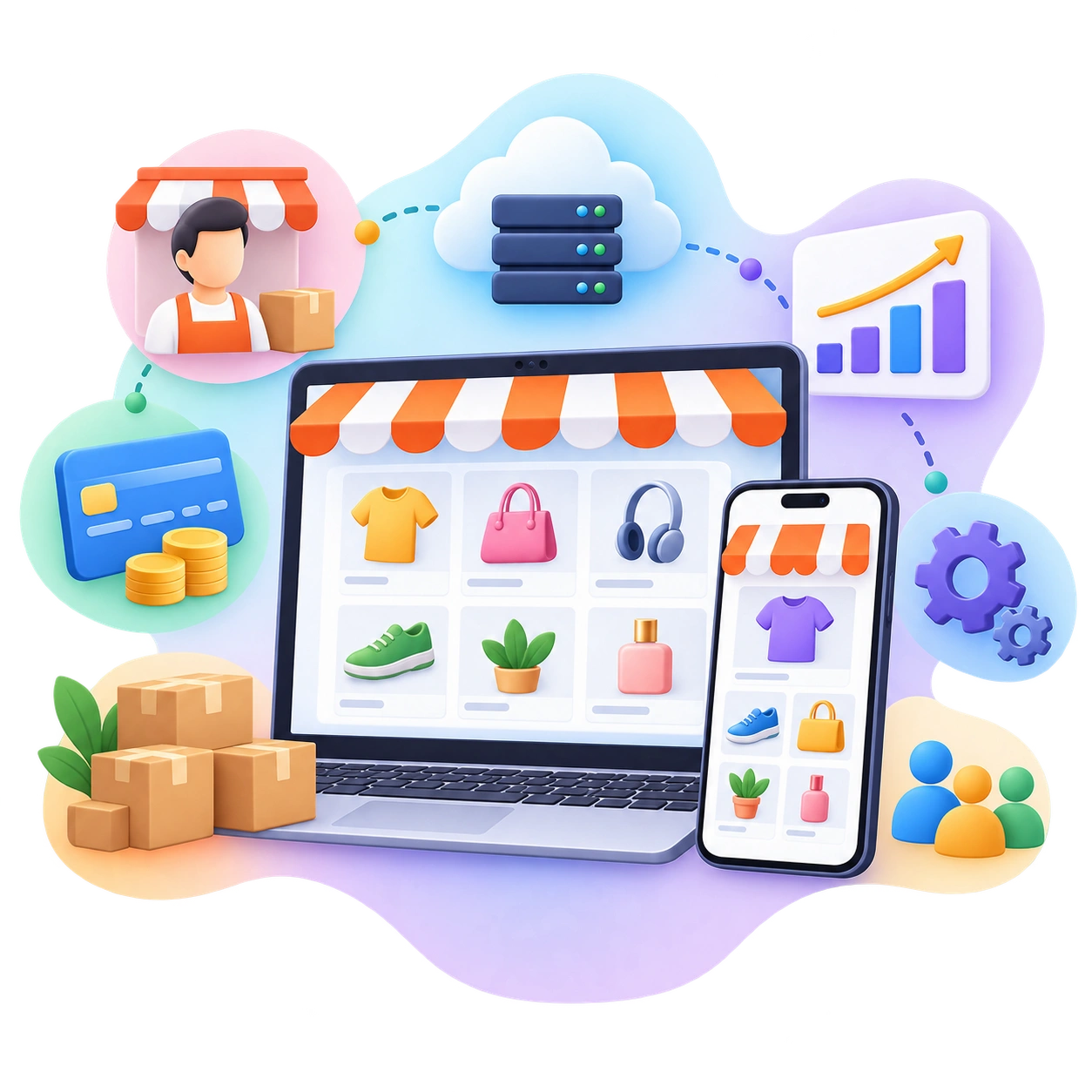
The cost to develop a Temu clone app varies based on your marketplace's features, platforms, design, and level of customization. A simple MVP requires less investment than a fully customized multi-vendor marketplace with advanced functionality and integrations.
| Factor | Custom Development | Ready-Made Solution |
|---|---|---|
| Development Approach | Built specifically around your business model and requirements | Pre-built solution that can be launched quickly |
| Time to Market | Requires more development time | Faster launch with core marketplace features already available |
| Customization | Highly flexible and tailored | Can be customized based on the available modules and integrations |
| Initial Investment | Generally higher due to custom development | More budget-friendly starting point |
| Core Features | Features are developed according to your requirements | Essential marketplace features are already built in |
| Scalability | Designed around your long-term growth strategy | Can provide a practical foundation for launching and validating your marketplace |
| Updates & Enhancements | Fully controlled by your development team | Can be enhanced with additional features as your business grows |
| Best For | Businesses needing a highly differentiated marketplace | Startups and businesses looking for a faster, cost-effective launch |
A Temu-like marketplace can use multiple revenue streams instead of relying on a single source of income. The right monetization model depends on your target market, seller base, product categories, and overall marketplace strategy.
Faster deployment because core marketplace functionality is already available. The timeline mainly depends on branding, customization, integrations, testing, and deployment requirements.
A focused MVP with essential marketplace features generally requires less development time than a full-scale platform.
A highly customized marketplace with advanced features, multiple integrations, sophisticated admin controls, and scalable architecture requires a longer development cycle.
Build your Temu-like marketplace with an experienced development team that can handle everything from architecture and design to deployment and ongoing support.
Build multi-vendor marketplaces around your business model and target audience.
Customize features, workflows, branding, and functionality to match your requirements.
Develop a robust backend designed to support growing users, products, and transactions.
Create powerful vendor panels and admin dashboards for marketplace management.
Connect payments, logistics, maps, notifications, analytics, and other third-party services.
Design intuitive shopping experiences focused on discovery, engagement, and conversions.
Test functionality, performance, compatibility, APIs, and security before launch.
Handle deployment, maintenance, updates, optimization, and ongoing platform scaling.
Hyperlocal Cloud is a tech leader harnessing the power of state-of-the-art technologies and delivering innovative app solutions to businesses.