


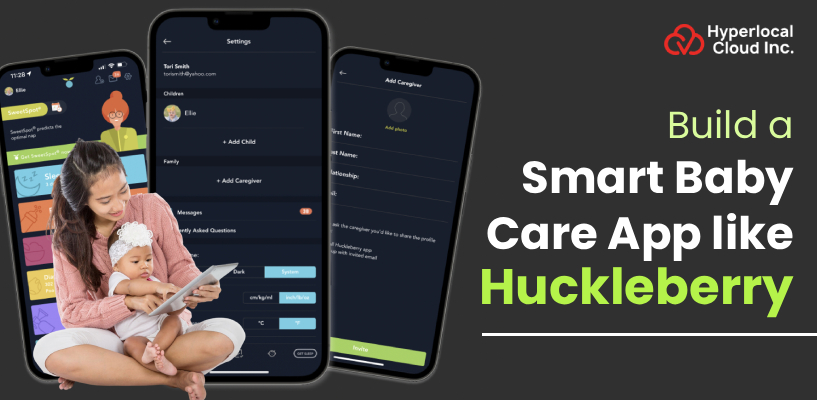
The parenting app market is going through a gradual shift in recent times. Modern parents are looking for digital solutions to manage the demands of raising their newborns. The market size of global parenting apps is expected to be USD $1.28 billion in 2026. The market size will be USD 6.8 billion with an annual growth rate of 20.37% by 2035. Baby tracker apps are a major reason for this growth with a total share of 44% in the global parenting app market.
Parents rely on digital trackers daily to create feeding schedules, monitor sleep cycles and track their infant’s health. The baby tracker app uses data to offer helpful advice. It tracks sleep and feeding to provide custom sleep schedules based on the baby’s age and sleep patterns. Building a Huckleberry clone app leads to revenue growth and offers personalized insights to engage users and expand reach.
What is Huckleberry and Its Working Model?
Huckleberry is a smart baby care assistant that uses data to help parents establish healthy routines. It doesn’t just record what happened. The app analyzes that data to tell parents what to do next. This proactive approach is what makes the app stand out from a basic timer.
This is the working model of Huckleberry app:
Easy Tracking
Parents log daily events such as sleep start or end times, breastfeeding duration, bottle amounts and diaper changes with one-tap controls.
Learning Patterns
The app uses an algorithm to look at the data records and find the baby’s natural biological rhythms.
Predictive Scheduling
This feature predicts the next optimal time to sleep to prevent the baby from becoming overtired.
Expert Consulting
The app provides custom sleep plans for premium users. Real pediatric sleep experts create these plans by reviewing the child’s data.
Health and Growth Tracking
It includes tools to monitor physical growth like weight or height and medication schedules. The app syncs this data across multiple caregivers’ devices instantly.
Transform Your App Idea Into a Data-driven Parenting Solution
Top Baby Tracking Apps like Huckleberry
| Top Baby Tracking Apps | Downloads | Store Ratings | Launch Year | Platform Availability |
|
5M+ | 4.9 / 5 | 2017 | iOS, Android |
|
10M+ | 4.8 / 5 | 2013 | iOS, Android |
| 10M+ | 4.9 / 5 | 2011 | iOS, Android, Web | |
| 1M+ | 4.9 / 5 | 2019 | iOS, Android, Apple Watch | |
|
3M+ | 4.8 / 5 | 2012 | iOS, Android |
|
2.5M+ | 4.7 / 5 | 2016 | iOS, Android |
|
5M+ | 4.7 / 5 | 2014 | iOS, Android |
Why is it a Smart Move to Invest in a Smart Baby Care App like Huckleberry?
Building a baby care app like Huckleberry solves parenting challenges while creating a high-value asset for business. Here is how it can be beneficial for users and businesses:
Advantages for Users
The app allows tracking of the baby’s sleep, feeding and diaper changes and provides advice to manage sleep.
1. Better Sleep Schedules
The app learns a baby’s patterns to suggest the best time for naps. This prevents over-tiredness and makes bedtime smoother for the family.
2. Streamlined Daily Logs
It replaces messy paper notes. Parents can track feedings and diaper changes with a few taps so that the baby stays healthy and hydrated.
3. Data for Doctors
Parents can show clear charts during check-ups instead of trying to remember details. This helps pediatricians make faster and more accurate health decisions.
4. Syncing the Care Team
Nannies, grandparents, and parents all see the same data in real-time. This eliminates the need for constant “status update” texts throughout the day.
5. Trusted Advice
Users get access to vetted tips from sleep coaches and doctors, saving them from the stress of conflicting advice found on social media.
6. Health and Milestone Tracking
The app keeps everything on schedule from growth charts to vaccine reminders. It also acts as a digital scrapbook for first steps and words.
Advantages for Businesses
For an app owner, the parenting market offers unique advantages, specifically regarding how long customers stay active and how they spend.
1. Predictable Revenue
Subscription models for premium features like custom sleep plans create a steady, month-over-month income stream.
2. Deep User Loyalty
Once a family logs months of their child’s history, they are very unlikely to leave.
The stored milestones and growth data encourage daily use. This leads to a loyal user base.
3. Smart Product Evolution
You can start with a newborn tracker and later on add tools for toddlers or school-aged kids. This supports business growth over the long run.
4. Strategic Partnerships
A targeted user base of active parents is highly valuable to partners. You can partner with brands in the baby food, clothing or toy industries for additional revenue.
5. Insights
The app provides data about which features are used most. This helps the business understand what parents really need. This information allows for the creation of high-quality products and services in the future.
6. Brand Authority
The app provides helpful and accurate sleep advice. It makes your business a trusted name in the digital parenting market. This makes it much easier to cross-sell other family services or health products later.
7. Premium Service Upselling
The app offers one-on-one sessions with sleep experts or nutritionists for an extra fee. This turns a simple tool into a full-service parenting marketplace.
How AI Transforms Huckleberry Clone App Development?
Integrating AI into a baby care app acts like a useful virtual parenting tool. For a Huckleberry-style app, AI takes the raw data parents log like nap times and bottle amounts and turns it into actual answers. AI offers clear advice to parents at the right moment.
Here is how AI plays a crucial role in Huckleberry clone app development:
1. Predicting the Perfect Sleep Time
AI analyzes the baby’s past sleep patterns to suggest the ideal sleep time. It alerts the parent right before the baby gets overtired, which reduces bedtime struggles. Developing this with AI means the app gets smarter every day as it learns the baby’s specific habits.
2. Spotting Health Trends Early
Huckleberry Clone finds patterns by going through logs for feedings, diaper changes and sleep. The system can pinpoint unusual changes like a sudden drop in appetite or a shift in bathroom habits. This allows the app to give parents to check in with their doctor, making the app a health tool.
3. Smart and Personalized Advice
AI-powered baby tracking app like Huckleberry provides personalized tips based on the baby’s actual behavior. AI suggests specific sleep training techniques or adjust schedule if the data shows the baby is waking up frequently at night. The app provides custom guidance within the user’s budget.
4. Effortless Logging with Voice and Images
AI allows for hands-free logging through voice commands. It can also use computer vision to scan a diaper or a plate of food to automatically record the details. This makes the app much easier to use when a parent is busy or tired.
5. Managing the Care Team Automatically
Things get confusing when multiple people are looking after a baby. AI sends smart notifications to the nanny or partner based on what happened earlier in the day. It can remind that if the baby had a short nap this morning, so he might need an earlier lunch.
6. Scaling for Business Growth
AI makes it easier for the app owner to manage growing users. AI chatbots can handle basic questions about sleep or nutrition instantly. The system can automatically group users into segments for better marketing. This allows the business to offer personalized service at a much lower cost.
Launch a Baby Care App Designed for Real-world Parenting Needs
Core Features Integrated into a Huckleberry Clone App
Building a successful baby tracking platform requires focusing on how information can solve daily parenting challenges. The development team must prioritize features that turn raw numbers into clear guidance to create a competitive Huckleberry clone. The following core elements ensure the app provides value to its users while maintaining a high standard of care coordination.
1. Sleep Logging
Users can write down when a baby falls asleep and wakes up. This helps them see patterns over time.
2. Feeding History
This feature helps users track when a baby had a meal. They can keep records of nursing, bottle feeding or solids which shows when the last meal happened.
Diaper Changes
Recording of dirty diapers is helpful when users talk to doctors about their baby’s health.
Growth Tracking
Users can add their baby’s weight, height and head size. This helps them see how their baby is growing on a chart.
Multiple Caregivers
The app shares information across phones to keep partners and nannies updated instantly.
Medical Reminders
The app sends alerts to help users remember medicine doses and doctor visits.
Visual Reports
It shows charts and graphs that turn logs into a story of the baby’s growth and trends.
The SweetSpot Guide
This tool helps users find the time for their baby’s next nap. It prevents the baby from getting overtired.
Custom Sleep Plans
The app analyzes the baby’s data to provide personalized sleep plans from experts.
Daily Insights
The app gives tips to users based on the baby’s age and milestones.
Advanced Data Analysis
This feature shows averages and deeper trends along with basic logs that aren’t available in free versions.
Voice & Text Logging
Enable logging of events using voice commands or text messages without the use of hands.
Milestone Recording
This feature tracks milestones like a baby’s smile or rolling over in one place.
Expert Chat Access
Some plans offer 24/7 expert help for answering parenting questions anytime.
Steps to Build a Baby Tracking App like Huckleberry
Building a successful baby tracking app requires a focus on solving challenges that parents face while managing a newborn’s schedule. The goal is to follow a clear plan to create a reliable baby tracking app for user trust.
1. Planning and Research
- Know Your Niche
Find a specific audience like parents of twins or premature babies and focus on this niche. - Keep a Track of Competitors
Study leading apps to identify what users value most and where improvement can be made. Use these insights to create an efficient, user-focused product that addresses market gaps.
2. Simple and Practical Design
- One-Tap Logging
Make sure buttons for feeding or sleeping are big and easy to hit without looking too closely. - Clear Interface and Fast Performance
Make sure the interface is clear for easy reading in a dark room. The app should open instantly so a parent can log a diaper change and get back to what they were doing.
3. Essential Tracking Tools
- Instant Syncing
If a dad logs a nap on his phone, it should show up immediately on the mom’s phone so everyone is on the same page. - Clear Daily Summaries and Offline mode
The app shows a simple tally of the day like total sleep time or ounces fed at a quick glance. Make sure parents can still log data even when they don’t have a stable internet connection.
4. Helpful Insights and Advice
- Schedule suggestions
Offer flexible routine ideas based on the baby’s age and their actual sleep habits from the previous few days. - Trends and expert tips
Show parents if their baby is starting to sleep longer stretches or eating more during the day. Include a library of helpful articles on issues like teething or nap strikes.
5. Privacy and Security
Keeping data safe is the most important part of building trust for handling personal family information.
- Strong protection
Use modern security standards to make sure that only the family and invited caregivers can see the baby’s logs. - Clear privacy rules and reliable backups
Tell parents exactly how their data is used. The app keeps the data stored safely in the cloud even if a parent loses their phone.
6. Ways to Earn and Grow
- Mix Free and Premium Perks
Keep basic tracking free for everyone, but offer deeper insights like custom sleep schedules as a paid upgrade. - Offer Family-Sharing Plans and Integrate a Secure Shop
Allow one subscription to cover multiple children or multiple caregivers, making the app a better value for growing families. Suggest useful products like thermometers at the right time based on the baby’s age.
7. Reaching New Users
- Team up with experts
Work with trusted pediatricians or sleep coaches who can tell their followers why your app is a great choice. - Build a space for chat and add localized content
Create groups where parents with babies of the same age can share tips and support each other. Tailor your content and advice to fit the specific language, time zone and culture of families.
8. Make Updates
- Analyze User Behavior
Use data to see which features parents use mostly and focus on making those features better. - Regular Technical Updates
Run regular check-ups on the app to make sure it stays quick and works perfectly with the latest phone updates.
Turn Your Idea Into a Reliable Digital Assistant for Modern Families
How Much is the Huckleberry clone App Development Cost?
The Huckleberry clone app development cost typically ranges from $7,000 to $20,000, with final pricing heavily influenced by factors such as UI/UX complexity, platform requirements (iOS/Android), and integrated features like real-time tracking.
Additionally, development costs are affected by the chosen approach: white label babysitting app solution offer a budget-friendly, pre-built framework for a faster market entry and launch. Customized app development with unique functionalities also impacts the budget and timeline for project delivery.
Conclusion
Hyperlocal Cloud specializes in developing robust, scalable and secure Huckleberry clone apps designed to help your business dominate the market. Our expert team delivers high-performance solutions tailored to your specific needs, ensuring a swift and effective market entry. Contact Hyperlocal Cloud today to get a personalized quote and start building your app.
FAQs (Frequently Asked Questions)

Patt Cummins is an experienced content writer with over 10 years of experience creating clear and engaging content for technology-focused industries. He specializes in simplifying complex technical topics into easy-to-understand stories that educate readers, support brand communication, and help businesses effectively share their solutions.

Need Help With
Development?