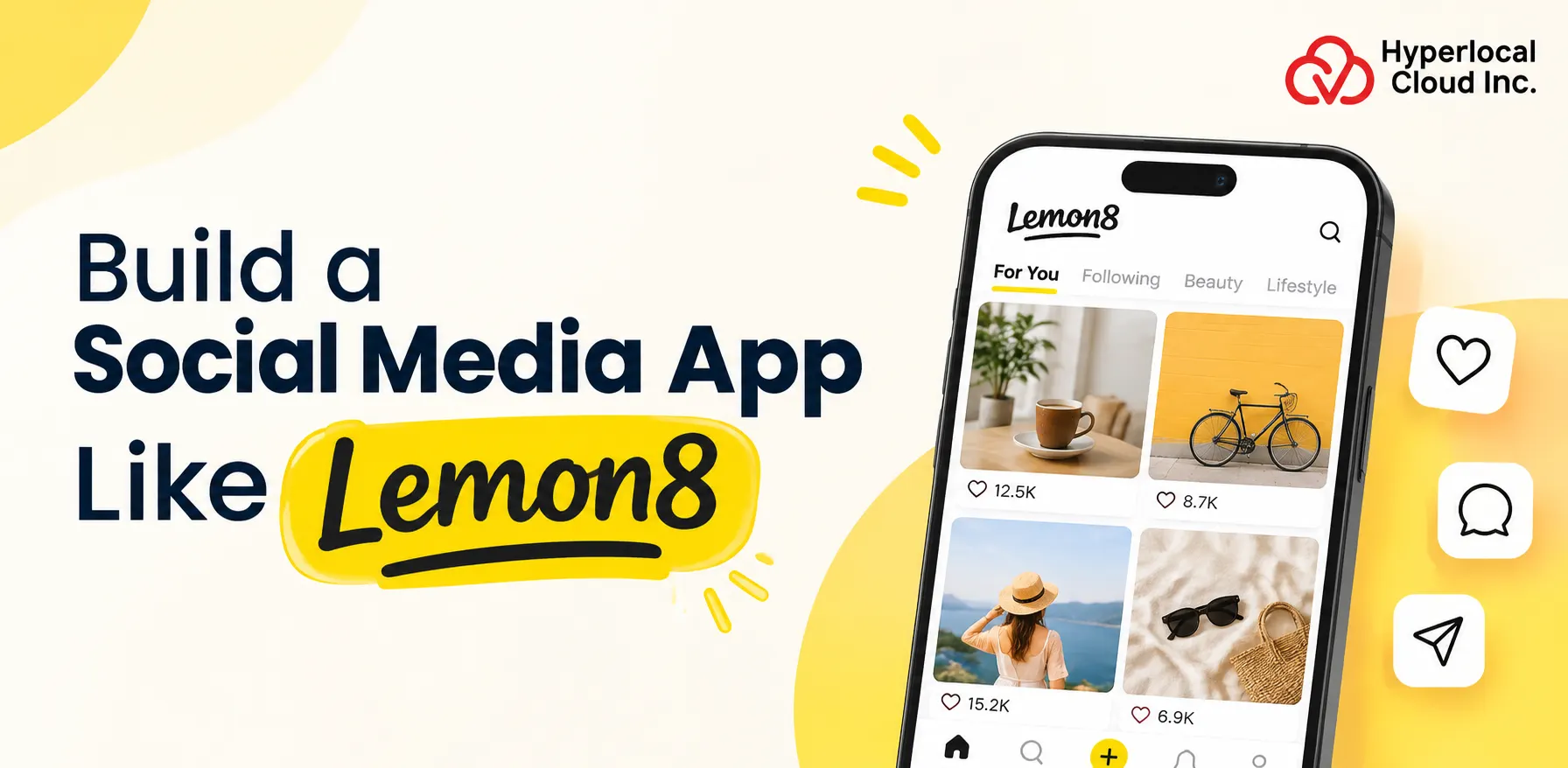
Visual content has become an important part of how people discover products, explore lifestyle ideas, and connect with communities online. From fashion inspiration and travel recommendations to beauty tutorials and food photography, users increasingly prefer platforms that combine engaging visuals with useful information. This shift has created opportunities for businesses to develop social networking applications centered on content discovery and creator communities.
Lemon8 is an example of this approach. It brings together photo sharing, short-form videos, lifestyle recommendations, and social interactions in one application. Its content-focused experience gives users a space to publish creative posts while discovering ideas from other creators.
For entrepreneurs and startups, building a similar platform can be an opportunity to enter the social media market with a focused audience and a distinct content strategy. However, developing an application with user profiles, media uploads, personalized feeds, engagement tools, and content moderation requires careful planning and technical investment.
A white-label Lemon8 solution offers another route to market. Instead of building every component from the ground up, businesses can start with a ready-made social media application and customize its branding, features, and functionality to match their business model. This approach can help reduce development complexity and accelerate the launch process.
What Is Lemon8 and How Does It Work?
Lemon8 is a content-sharing social media platform designed around lifestyle inspiration and visual storytelling. Users can publish photographs, videos, recommendations, and informative posts across categories such as fashion, beauty, travel, food, wellness, and home decor.
Unlike platforms that primarily emphasize short updates or entertainment videos, Lemon8 combines visual discovery with more detailed content. Creators can share multi-image posts, add descriptions, organize information, and present recommendations in a visually appealing format.
The platform generally works through a combination of content publishing, personalized discovery, and community engagement. Users create accounts, select or explore interests, follow creators, and interact with content through likes, comments, saves, and sharing options.
A typical user journey involves the following activities:
- Account Creation: Users register and create profiles to establish their presence on the platform.
- Content Discovery: They browse personalized feeds, trending posts, and topic-based categories.
- Content Publishing: Creators upload photographs and videos with captions, hashtags, and other relevant information.
- Community Engagement: Users follow accounts, comment on posts, save useful content, and interact with creators.
- Personalized Recommendations: The platform uses user interests and engagement patterns to recommend relevant content.
For businesses planning to enter this market, these functionalities provide a useful starting point for defining the scope of a similar application.
Launch Your Lemon8-Like Social Media App With a Ready-Made Solution
Why Invest in Building a Social Media App Like Lemon8?
The social media market offers opportunities beyond creating another general-purpose networking platform. Businesses can focus on specific interests, communities, and content formats to establish a recognizable identity. A platform inspired by Lemon8 can combine visual communication with practical information, creating value for both content creators and everyday users.
Here are some reasons entrepreneurs may consider investing in this business model.
1. Growing Demand for Visual Content
People use social media to discover new products, explore destinations, learn about trends, and find inspiration. Visual content makes these experiences easier to understand and more engaging.
A platform focused on high-quality images, short videos, and informative posts can attract users who prefer discovering ideas through visual storytelling. Businesses can further narrow their audience by focusing on categories such as fashion, travel, fitness, beauty, or interior design.
2. Opportunities in Niche Communities
Competing directly with established social media platforms can be challenging for new businesses. A niche-focused application provides an alternative by targeting a specific audience with relevant content and community features.
For example, entrepreneurs could build a platform dedicated to sustainable fashion, travel photography, home improvement, or fitness communities. This positioning can help the application attract users with shared interests and encourage more meaningful engagement.
3. Creator and Influencer Economy
Content creators play an important role in attracting audiences and maintaining activity on social platforms. A Lemon8-like application can provide creators with tools to publish content, build followers, and collaborate with brands.
Businesses can introduce creator-focused features such as performance analytics, sponsored content opportunities, and premium publishing options. These functionalities can help establish a platform that supports both audience engagement and creator monetization.
4. Multiple Revenue Opportunities
A social networking application can generate revenue through advertising, subscriptions, sponsored posts, affiliate partnerships, and brand promotions.
The business can begin with a simple revenue model and introduce additional monetization options as its audience grows. This flexibility allows entrepreneurs to experiment with different revenue streams without depending on a single source of income.
5. Potential for Long-Term Scalability
A successful social networking application can expand its audience, introduce new content categories, and support additional creator tools over time.
Businesses can initially focus on a specific market or geographical region before expanding into other segments. With suitable infrastructure and performance management, the platform can accommodate increasing users, content uploads, and engagement activities.
Essential Features to Include in a Social Media App Like Lemon8
The features of a social networking application directly influence how users interact with content, communicate with creators, and discover new communities. A Lemon8-inspired platform should provide more than basic photo-sharing functionality. It needs an organized content experience, convenient publishing tools, personalized recommendations, and reliable community management.
The following features can help businesses develop a platform that meets user expectations.
1. User Registration and Profile Management
User registration is the first interaction people have with a social networking application. The process should be simple enough to encourage new users to join while providing the necessary account security.
Users should be able to register through email addresses, phone numbers, or supported social login options. Once registered, they can create profiles containing profile photographs, biographies, interests, and other relevant information.
Profile management should also allow users to update personal details, manage privacy preferences, and view their published content. Providing clear account settings gives users better control over their presence on the platform.
2. Personalized Content Feed
A personalized feed helps users discover posts that match their interests rather than browsing through unrelated content. This feature can improve content consumption and encourage users to spend more time exploring the application.
The feed can display posts from followed creators, trending topics, and recommended content based on user activity. Recommendation systems can consider factors such as likes, saved posts, viewing history, followed categories, and previous interactions.
Businesses should also provide a balanced content distribution system so that new creators have opportunities to reach relevant audiences instead of relying entirely on established accounts.
3. Photo and Video Sharing
Photo and video publishing should be among the central functionalities of a Lemon8-like application. Users need convenient tools to upload visual content and present their ideas in an organized format.
The application should support multiple images, short-form videos, captions, hashtags, and relevant category tags. Creators should also be able to edit their posts before publishing and make changes when necessary.
Media uploads should be optimized for different devices and network conditions. This helps maintain a smooth browsing experience while reducing unnecessary loading delays.
4. Content Discovery and Search
Content discovery allows users to find posts, creators, and topics beyond the accounts they already follow. An effective discovery experience can help new users understand the platform and encourage existing users to explore additional categories.
Businesses can introduce keyword-based search, hashtag discovery, trending topics, and category filters. For example, users interested in travel could explore destination guides, photography collections, and recommendations shared by other travelers.
Search results should be organized in a way that makes relevant content easy to find. The platform can also recommend related topics to encourage further exploration.
5. Likes, Comments, and Content Sharing
Social interactions help transform a content-sharing application into an active community. Users should be able to express their opinions, respond to creators, and share useful posts with others.
The application can include likes, comments, replies, bookmarks, and sharing options. Comment controls should allow creators to manage discussions and report inappropriate interactions.
A bookmarking feature is particularly useful for platforms focused on recommendations and lifestyle inspiration because users may want to revisit travel guides, recipes, fashion ideas, or product suggestions later.
6. Follow and Creator Community
Following functionality allows users to build personalized networks around their interests. When someone follows a creator, their latest posts can appear in the user’s feed, making it easier to stay connected with relevant accounts.
The application should provide follower and following lists, profile recommendations, and options to manage connections. Businesses can also introduce creator categories to help users discover accounts based on their expertise or content style.
These features can encourage creators to develop a consistent presence and build communities around their published content.
7. In-App Messaging and Notifications
Direct messaging provides users with a way to communicate privately without leaving the application. They can share posts, discuss recommendations, and interact with other community members.
Notifications should keep users informed about relevant activities, including new followers, comments, likes, messages, and creator updates. However, notification preferences should remain customizable so users can control which alerts they receive.
Businesses should also consider spam prevention, message reporting, and privacy controls when implementing communication features.
8. Content Creation and Editing Tools
Publishing tools can make the application more attractive to creators who want to produce polished and informative content. Basic editing capabilities allow users to improve their images and videos before sharing them.
Useful tools include image filters, cropping, brightness adjustments, text overlays, video trimming, and reusable templates. Businesses can also introduce category-specific templates for content such as beauty tutorials, travel guides, product reviews, and recipes.
A straightforward publishing interface can reduce the effort required to create content and encourage users to contribute regularly.
9. Admin Dashboard
An admin dashboard is essential for managing the platform’s users, content, and overall operations. It gives business owners centralized control over important application activities.
The dashboard should provide user management, content moderation, category management, reported-content handling, and platform analytics. Administrators should also be able to manage account restrictions, review complaints, and monitor suspicious activities.
Reporting tools can help business owners understand user engagement, content performance, account growth, and platform activity. These insights are useful when making decisions about future improvements.
Build Your Own Lemon8-Inspired App Without Starting From Scratch
Advanced Features to Make Your Lemon8-Like App Stand Out
Basic social networking functionalities can establish the foundation of an application, but advanced capabilities can create additional value for users and creators. Businesses should select these features according to their target audience, available investment, and long-term product strategy.
1. AI-Powered Content Recommendations
Artificial intelligence can help personalize content discovery by analyzing user interests, browsing patterns, and engagement activities. Instead of showing identical posts to everyone, the application can recommend content based on individual preferences.
For example, users who frequently interact with fitness content may receive more workout guides, healthy recipes, and wellness recommendations. Recommendation models should also consider content quality and user feedback to avoid repeatedly displaying similar posts.
2. AI-Based Image and Video Enhancement
AI-powered editing tools can help creators improve the quality of their published content. Features such as background removal, automatic image enhancement, smart cropping, and visual effects can make content creation more convenient.
Businesses can introduce these capabilities as built-in editing tools or integrate suitable third-party services. The selection should depend on processing costs, performance requirements, and the type of content users are expected to publish.
Businesses planning to place greater emphasis on short-form video publishing can also explore a white-label TikTok-like app solution.
3. Influencer and Creator Analytics
Creators need information about how their content performs and how their audiences interact with their profiles. An analytics dashboard can provide insights into post reach, engagement rates, follower growth, and content performance.
These insights can help creators understand which topics attract attention and plan their publishing strategies accordingly. Businesses can also use creator analytics to support brand partnerships and sponsored campaigns.
4. Brand Collaboration and Sponsored Posts
Brand collaboration features can connect businesses with creators who have audiences relevant to their products and services. Companies can publish campaign opportunities, identify suitable creators, and manage promotional activities through the platform.
The application can provide sponsored post labels, campaign tracking, creator profiles, and collaboration management tools. Clear disclosure requirements are important to maintain transparency between creators, brands, and users.
5. Shopping Integration and Product Tagging
A social commerce feature can connect visual content with product discovery. Creators may tag products in their posts, allowing interested users to explore product information and visit the relevant shopping pages.
For example, a fashion creator could publish an outfit collection and attach product links to individual items. Similarly, food creators could share kitchen equipment recommendations.
This functionality can create opportunities for affiliate commissions, brand partnerships, and integrated shopping experiences.
6. Advanced Content Moderation
User-generated content requires ongoing monitoring to maintain a safe and useful community. Advanced moderation features can help identify spam, inappropriate images, harmful comments, and suspicious activities.
Businesses can combine automated content detection with human moderation and user reporting tools. This approach is particularly important as the application expands and the volume of published content increases.
How Does a Social Media App Like Lemon8 Make Money?
A social networking application needs a sustainable revenue model to support infrastructure, marketing, maintenance, and future development. Businesses can combine different monetization methods depending on their audience size, engagement levels, and platform positioning.
Here are some revenue models worth considering.
1. In-App Advertising
Advertising is one of the common monetization methods used by social media platforms. Businesses can display sponsored placements within content feeds, discovery sections, and other suitable areas of the application.
Advertisers may target audiences based on permitted demographic information, interests, and engagement patterns. However, advertisements should be relevant and appropriately placed so that they do not interrupt the content discovery experience.
2. Sponsored Posts
Sponsored posts allow brands to collaborate with creators to promote products, services, or campaigns. The platform can charge brands for campaign access, promotional placements, or collaboration management.
For example, a beauty brand may partner with skincare creators to introduce a new product collection. The platform can facilitate these partnerships through creator discovery, campaign tools, and sponsored content labels.
3. Premium Subscriptions
Businesses can introduce paid membership plans that provide additional features beyond the standard user experience. Depending on the audience, premium benefits could include advanced editing tools, exclusive content, enhanced analytics, and an ad-free browsing experience.
Subscription pricing should reflect the actual value users receive. Offering different membership levels can help businesses serve casual users as well as professional creators.
4. Affiliate Marketing
Affiliate marketing allows platforms and creators to earn commissions when users purchase products through tracked links. A Lemon8-like application can integrate affiliate links into product recommendations, tutorials, and lifestyle posts.
For example, a creator publishing a home decoration guide could include affiliate links to recommended furniture and accessories. The platform may receive a commission when qualifying purchases occur.
5. Creator Monetization
Businesses can introduce monetization tools that allow eligible creators to earn revenue directly through the platform. Options may include paid subscriptions, exclusive posts, digital content, or other premium creator offerings.
The platform can generate revenue through transaction fees or a percentage of eligible creator earnings. Transparent payment policies and creator eligibility requirements should be established before introducing these features.
6. Brand Partnerships
Brand partnerships provide opportunities to generate revenue through long-term promotional relationships. Businesses can offer branded content campaigns, featured collections, business profiles, and promotional placements.
This model can become more valuable as the platform develops a clearly defined audience and attracts creators with established communities.
How to Build a Social Media App Like Lemon8?
Developing a social networking application requires more than selecting features and designing screens. Businesses need to understand their audience, define the platform’s positioning, choose an appropriate development approach, and plan how the application will operate after launch.
The following steps provide a practical development roadmap.
Step 1: Identify Your Target Audience and Niche
Start by defining the users your application intends to serve. A general-purpose social networking platform may require significant marketing resources to compete with established applications, so identifying a specific audience can provide a more focused starting point.
Consider whether the application will target fashion enthusiasts, beauty creators, travel communities, fitness audiences, or lifestyle bloggers. Understanding their content preferences and existing platform frustrations can help determine which features deserve priority.
You should also consider the geographical market, expected user demographics, and potential opportunities for community growth.
Step 2: Conduct Market and Competitor Research
Research existing social media applications to understand their features, business models, user experiences, and market positioning. Lemon8 can serve as a reference, but businesses should also examine other content-sharing platforms to identify different approaches to content discovery and engagement.
Pay attention to how competing applications handle creator profiles, recommendations, content publishing, advertising, and moderation. User reviews can provide additional insights into common complaints and missing functionalities.
The purpose of this research is not to reproduce every feature of an existing application. It is to identify opportunities to deliver a more relevant experience to your intended audience.
Step 3: Define Core Features and Monetization Models
Once the target market is clear, prepare a feature list based on the actual needs of your users. Prioritize essential capabilities such as registration, profiles, content publishing, discovery, engagement, and administration.
Advanced functionalities such as AI recommendations, creator analytics, and shopping integration can be introduced according to your budget and business objectives.
At this stage, decide how the platform will generate revenue. Choosing a monetization strategy early can influence decisions about payment integrations, creator tools, advertising placements, and account types.
Step 4: Choose Between Custom Development and White-Label Solutions
Businesses generally have two development approaches to consider.
Custom development involves creating the application from the ground up. It provides greater control over the architecture, user experience, features, and integrations. However, it also requires more development resources, technical planning, testing, and investment.
White-label development uses an existing application framework that businesses can customize with their own branding and requirements. Entrepreneurs can also explore white-label apps for sale when evaluating ready-made development options.
The right approach depends on your business goals, launch timeline, budget, and customization requirements. Startups looking to validate their business models may find a white-label solution more practical, while businesses with highly specialized requirements may prefer custom development.
Step 5: Select the Technology Stack
The technology stack determines how the application is developed, how data is managed, and how the platform handles user activity.
For a social networking platform, businesses need technologies that support media uploads, real-time interactions, content recommendations, notifications, and scalable infrastructure.
The selection should consider application performance, security, development expertise, third-party integrations, and future expansion. A suitable technology stack also makes it easier to maintain the application as its user base grows.
Step 6: Customize the UI/UX Design
The user interface should make content discovery and publishing convenient. Users should be able to navigate between feeds, profiles, categories, and search sections without unnecessary complexity.
Focus on a visually appealing layout, consistent design elements, readable typography, and intuitive navigation. The content feed should give sufficient space to photographs and videos while keeping important interaction options accessible.
Businesses choosing a white-label application should ensure that branding, colors, logos, layouts, and other design elements can be customized according to their identity.
Step 7: Integrate Essential Features and Functionalities
After finalizing the design, the development team can configure and integrate the required functionalities. This includes user authentication, content uploads, social interactions, search, notifications, and administrative controls.
Additional integrations may be required for cloud storage, analytics, payment processing, and AI-powered recommendations. Each component should work reliably with the rest of the application to avoid performance issues.
Businesses should also establish privacy controls, data protection measures, and content moderation policies during development rather than treating them as post-launch additions.
Step 8: Test the Application
Testing helps identify issues that could affect the application’s functionality, performance, and security. A social media platform should be tested across supported devices, operating systems, and network conditions.
The testing process should cover account creation, media uploads, feed loading, search, messaging, notifications, and payment functionality where applicable.
Load testing is also important because the application may experience increased activity when a post becomes popular, or a marketing campaign attracts new users. Addressing performance problems before launch can help provide a more reliable user experience.
Step 9: Launch and Promote Your Social Media App
Once testing is complete, prepare the application for release through the relevant distribution channels. Businesses should create a launch strategy that explains the platform’s purpose and gives potential users a reason to join.
Creator partnerships, influencer campaigns, referral programs, and social media marketing can help generate early awareness. Encouraging a small group of creators to publish content before the public launch can also make the platform more engaging for its first users.
After launch, monitor user feedback, engagement metrics, technical performance, and retention. These insights can guide future updates and help the business improve its platform over time.
Develop a Feature-Rich Social Networking App Within Your Budget
Technology Stack Required to Develop an App Like Lemon8
Choosing the right technology stack is important for building a reliable social networking platform. Since the application needs to handle large volumes of images, videos, user interactions, and personalized recommendations, businesses should prioritize technologies that support performance, security, and scalability.
The following table highlights some technologies that can be considered during development.
| Technology Layer | Recommended Technologies | Purpose |
| Frontend Development | Flutter, React Native | Develop cross-platform mobile applications |
| Native Development | Swift, Kotlin | Build platform-specific iOS and Android applications |
| Backend Development | Node.js, Python, Laravel | Handle application logic, APIs, and user requests |
| Database | PostgreSQL, MongoDB | Store user profiles, posts, and application data |
| Cloud Infrastructure | AWS, Google Cloud | Host application services and manage infrastructure |
| Media Storage | Amazon S3, Cloudinary | Store and deliver images and videos |
| AI and Recommendations | Python, TensorFlow | Support personalized recommendations and intelligent features |
| Push Notifications | Firebase Cloud Messaging | Deliver notifications and activity updates |
| Payment Integration | Stripe, PayPal | Process subscriptions and other payments |
| Analytics | Firebase Analytics, Mixpanel | Track user engagement and application performance |
The final technology selection depends on the application’s requirements and development approach. Businesses using a white-label solution should also evaluate the existing technology architecture, available integrations, source code access, and customization capabilities before making a decision.
How Much Does It Cost to Build a Social Media App Like Lemon8?
The cost depends on the development approach, features, and customization requirements.
-
White-Label Solution ($8,000): Includes core features that businesses can customize with their branding and requirements, helping them launch faster.
-
Custom Development ($20,000–$50,000+): Offers greater flexibility to build unique features, designs, AI recommendations, and advanced content-sharing capabilities.
Additional expenses may include hosting, maintenance, media storage, and third-party integrations.
Why Choose a White-Label Lemon8 Solution?
Building a social networking platform from scratch can involve considerable technical planning, development resources, and time. For entrepreneurs who want to enter the market without managing the entire development process independently, a white-label solution provides a practical starting point.
A ready-made application includes core functionalities that can be customized according to the business’s requirements. Businesses can also explore options to buy apps from developers rather than building every component independently.
Here are some advantages of choosing a white-label social media application.
1. Faster Time to Market
Developing an application from the beginning requires multiple stages, including requirement analysis, design, development, integration, and testing. A white-label solution can simplify this process because essential functionalities are already available.
Businesses can configure the existing application, customize its appearance, and prepare it for launch without building every feature independently. This can help entrepreneurs enter the market sooner and begin validating their business ideas.
2. Lower Initial Development Investment
Custom development requires resources for designing and implementing individual application components. A white-label solution can reduce some of these initial expenses by providing an existing foundation.
Businesses can allocate more of their investment toward customization, marketing, creator acquisition, and customer support. This can be particularly useful for startups that want to manage their initial spending carefully.
3. Ready-Made Social Networking Features
A white-label application can include essential functionalities such as user registration, profiles, photo sharing, content feeds, likes, comments, and notifications.
Having these capabilities available from the beginning reduces the need to develop each feature separately. Businesses can review the existing functionality and identify which additional capabilities are required for their target audience.
4. Customizable Branding and Design
A white-label solution allows businesses to establish their own brand identity rather than launching under an existing platform’s branding.
Depending on the solution, customization options can include logos, color schemes, application names, user interface elements, and other visual components. This helps businesses create a recognizable platform that reflects their market positioning.
5. Flexible Monetization Options
Businesses can implement different revenue models according to their target audience and commercial objectives. These may include advertisements, sponsored content, subscriptions, affiliate marketing, and creator monetization.
A suitable white-label solution should support the required monetization integrations or provide the flexibility to add them as the business expands.
6. Scalable Business Opportunities
A social networking platform needs to accommodate growing numbers of users, content uploads, and interactions. Businesses should select a solution that supports infrastructure expansion and additional functionality as their requirements change.
With suitable technical support, entrepreneurs can introduce new content categories, advanced creator tools, and additional monetization features without changing their entire business model.
Partner With Experts to Build Your Next Social Media Platform
Launch Your Social Media Business with Hyperlocal Cloud’s White-Label Lemon8 Solution
Launching a content-sharing platform requires a combination of suitable technology, engaging features, and a clear business strategy. However, developing all these components independently can make the initial launch more complicated for startups and entrepreneurs.
Hyperlocal Cloud offers ready-made and customizable app development solutions that help businesses establish their own digital platforms. With a white-label Lemon8 solution, entrepreneurs can explore the opportunity to launch a visual content-sharing application without starting the entire development process from scratch.
The solution can be tailored to support the requirements of a social networking business, including user profiles, content publishing, media sharing, social interactions, and administrative management. Businesses can also discuss additional customization requirements to align the application with their intended audience and monetization strategy.
Whether you want to establish a lifestyle inspiration community, a creator-focused networking platform, or a niche content-sharing application, selecting the right development foundation can simplify the launch process.
FAQs (Frequently Asked Questions)

Nisha Bagga is a technical writer with more than 7 years of experience creating high-quality content for a wide range of industries. She specializes in developing clear, engaging, and well-researched technical and business content tailored to diverse audiences and industry requirements.

Need Help With
Development?