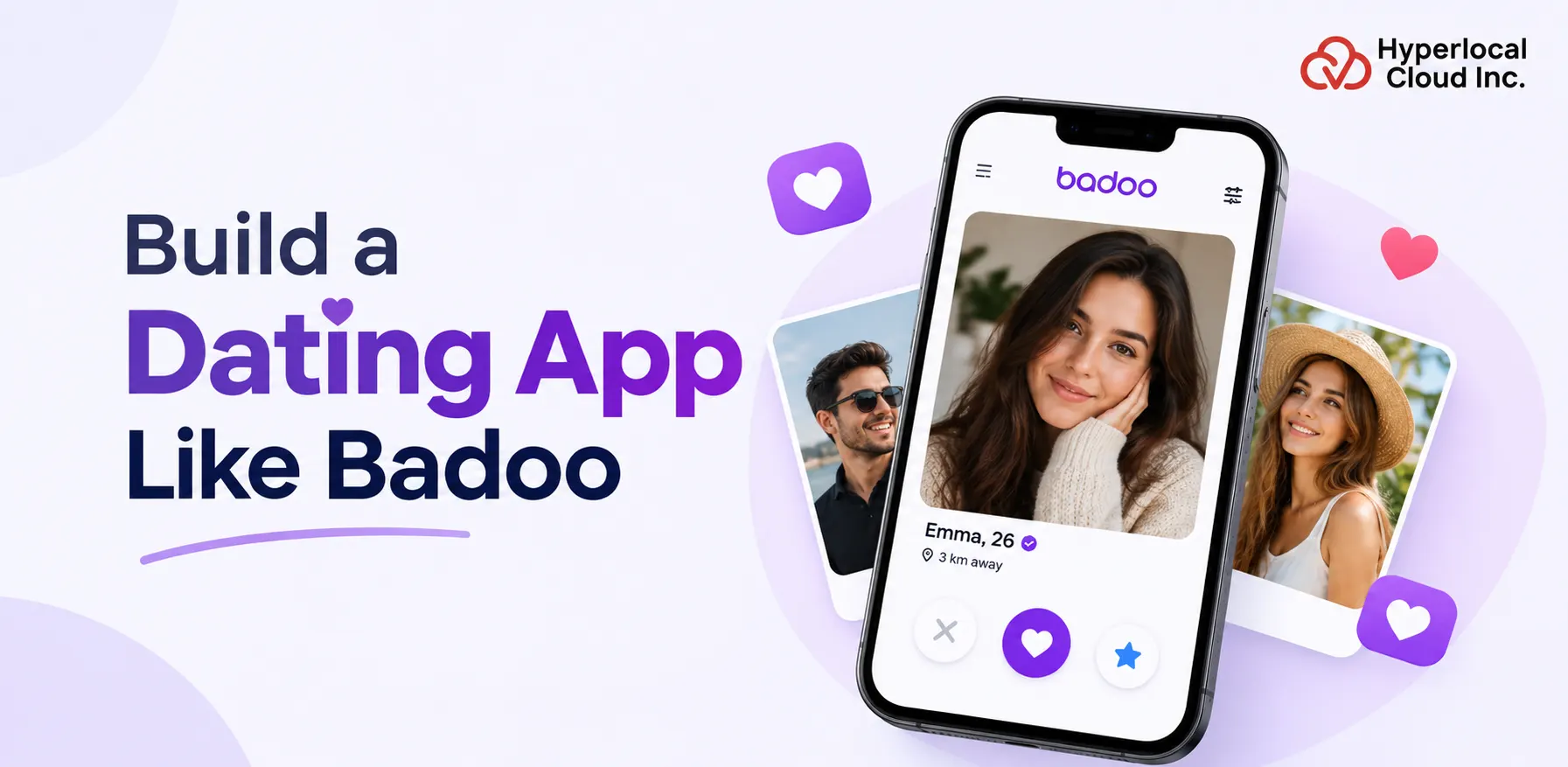
- Building a dating app like Badoo allows businesses to enter the online dating market with matching, messaging, and location-based discovery features.
- A white-label Badoo app can reduce initial development effort and help businesses launch faster with their own branding.
- Essential features include user profiles, search filters, real-time chat, profile verification, subscription management, and admin controls.
- Revenue opportunities include premium memberships, profile boosts, in-app purchases, and advertising.
- Development costs depend on customization, integrations, platform requirements, security, and scalability.
- Choosing the right dating app development company requires evaluating technical expertise, software ownership, customization options, and ongoing support.
- A successful dating platform needs strong privacy protection, effective moderation, and a user-friendly experience to build trust and retain users.
Online dating platforms have created business opportunities for entrepreneurs, startups, and established companies looking to enter the digital matchmaking market. Building a dating app like Badoo provides a starting point for businesses that want to offer location-based discovery, profile matching, and real-time communication to a specific audience or broader user base.
The main decision is whether to launch with a ready-made white-label solution or invest in custom dating app development. A white-label Badoo app can help businesses enter the market with less initial development work, while custom development offers greater flexibility for unique features and user experiences. The right choice depends on your budget, launch timeline, target audience, and long-term growth plans.
What Is a Badoo Clone App?
A Badoo clone app is a dating application inspired by Badoo’s core functionality, including user profiles, location-based discovery, swipe-based matching, and real-time messaging. It allows users to discover potential matches, express interest, and connect with people based on their preferences. Businesses can use a ready-made or white-label solution to launch a similar platform with their own branding, target audience, and business model.
As per Grand View Research, the global online dating market was valued at USD 12.1 billion in 2025 and is projected to reach USD 13.0 billion in 2026 and USD 21.4 billion by 2033, growing at a CAGR of 7.4%. This growth presents opportunities for businesses looking to build a dating app like Badoo.
Launch Your Own Badoo-Like Dating App With Our Ready-to-Launch Solution Today
Why Build a Dating App Like Badoo?
Badoo is a well-known dating and social discovery platform that helps users find people, explore profiles, and communicate with potential matches. Its combination of profile browsing, location-based discovery, and messaging provides a useful reference for businesses planning their own dating applications.
Building a similar platform allows entrepreneurs to start with a familiar concept while developing a distinct product for their intended audience.
Growing Opportunities in Online Dating
Dating apps can serve different markets, including people seeking long-term relationships, casual dating, interest-based connections, and location-specific communities. Businesses can target a broad audience or focus on an underserved segment where existing platforms may not fully address user preferences.
For example, an entrepreneur could develop a dating app for a particular city, a shared-interest community, or people with similar lifestyle preferences. A focused audience can help establish a recognizable brand and make marketing efforts more relevant.
A Familiar User Experience
Users generally expect dating apps to offer straightforward registration, clear profile information, convenient discovery, and easy communication. A Badoo-inspired experience gives businesses a starting point for organizing these interactions.
A familiar interface can reduce the learning curve, but the platform still needs a distinct identity and a reason for users to choose it over competing applications.
Multiple Revenue Opportunities
Dating platforms can generate revenue through premium memberships, profile boosts, additional discovery features, and advertising. Businesses can introduce free core functionality while charging for optional features that provide additional value.
The right monetization strategy depends on the target audience and user behavior. A platform should establish trust and deliver a useful experience before introducing too many paid restrictions.
Room for Future Expansion
A scalable dating platform can begin with essential matching and communication features and expand as the user base grows. Additional capabilities might include video calls, advanced recommendations, identity verification, and more detailed discovery preferences.
This approach helps businesses prioritize the features needed for launch while keeping future product development in mind.
Ready-to-Launch Dating App vs. Custom Development
A ready-to-launch dating app is a pre-built software solution with core features such as user registration, profile creation, matching, messaging, notifications, and an admin dashboard. Businesses can customize the available features and branding to launch their own dating platform without building every component from scratch.
A white-label Badoo app follows this approach by allowing entrepreneurs, startups, and established businesses to introduce a branded dating platform using existing software. Depending on the provider, customization may include the app name, logo, interface, matching preferences, subscription plans, and third-party integrations. This approach can reduce initial development effort, allowing businesses to focus on marketing, user acquisition, and community growth.
Custom dating app development is an alternative for businesses that require specialized matching algorithms, unique user experiences, or greater control over the application’s architecture. Although custom development generally requires more time and investment, it can provide greater flexibility for long-term product differentiation.
White-Label Dating App vs. Custom Development
| Comparison Factor | White-Label Dating App | Custom Development |
| Development approach | Uses pre-developed software | Built around specific business requirements |
| Initial cost | Generally lower | Generally higher |
| Launch timeline | Often a few weeks, depending on customization | Usually several months |
| Branding | Custom branding within supported options | Greater design flexibility |
| Feature customization | Depends on the provider and software | More extensive customization |
| Integrations | Limited to supported options or additional development | Can be designed around specific integrations |
| Scalability | Depends on architecture and provider capabilities | Architecture can be tailored to projected needs |
| Maintenance | May be handled by the provider or shared | Requires a maintenance agreement or internal team |
| Best suited for | Startups and businesses seeking a faster launch | Businesses with specialized requirements |
How to Evaluate a White-Label Dating App Provider
Before choosing a white-label solution, businesses should evaluate more than its initial price. Use the following checklist to compare vendors and understand what you will receive.
Core features: Confirm that registration, profiles, matching, messaging, notifications, and administration are included.
Customization options: Check whether you can modify branding, user journeys, discovery settings, subscription plans, and other important features.
Platform compatibility: Verify support for Android, iOS, and web platforms according to your launch requirements.
Source code and ownership: Clarify source-code access, software licensing, intellectual property rights, and restrictions on future migration.
Security and privacy: Ask about data protection, authentication, access controls, account deletion, and moderation capabilities.
Integrations and scalability: Confirm compatibility with payment gateways, location services, analytics tools, and future infrastructure requirements.
Pricing transparency: Request a breakdown of setup fees, customization charges, hosting, licensing, third-party services, and recurring costs.
Maintenance and support: Establish who handles bug fixes, software updates, technical issues, backups, and post-launch assistance.
Delivery timeline: Get a written schedule covering customization, testing, deployment, and any app store submission support.
The right choice depends on your launch priorities and future product plans. A white-label solution may be appropriate when existing features meet most requirements, while custom development is worth considering when specialized functionality or greater technical control is essential. Compare the total cost of ownership, not just the upfront development fee, before making a decision.
Essential Features of a Badoo-Like Dating App
A dating application needs to support the complete user journey, from creating a profile to discovering potential matches and communicating safely. The following features provide a foundation for a Badoo-inspired platform.
For Users
1. User Registration and Profile Creation
Users should be able to register through email, phone numbers, or supported social sign-in options. They can create profiles with photos, personal interests, short biographies, and dating preferences to help others understand their personalities.
2. Location-Based Discovery
Location-based discovery helps users find potential matches within their preferred geographical area. Distance filters and location preferences make browsing more relevant, while privacy controls help protect users’ precise location information.
3. Swipe-Based Matching
Users can browse profiles and express interest by liking or passing on them. When two users express mutual interest, the application can create a match and allow them to start a conversation.
4. Real-Time Chat and Notifications
In-app messaging allows matched users to communicate through text messages and, where supported, photos, voice messages, or video calls. Push notifications can alert users about new matches and messages, with settings to manage notification preferences.
5. Advanced Search and Filters
Users can refine profile discovery using preferences such as age range, distance, interests, and language. Premium filters can also be offered as optional paid features, depending on the platform’s monetization model.
6. Profile Verification and Safety Controls
Verification options can help users establish profile credibility. Blocking, reporting, privacy settings, and controls over profile visibility allow users to manage unwanted interactions and report suspicious accounts.
7. Premium Membership and In-App Purchases
Users can upgrade to paid memberships or purchase optional features such as profile boosts and enhanced discovery options. Clear pricing and accessible subscription management help maintain a transparent user experience.
For Admin
1. User and Profile Management
Administrators can view user accounts, manage profile information where authorized, and handle account-related requests. They can also suspend or restrict accounts that violate platform policies.
2. Profile Verification and Content Moderation
The admin panel should support the review of reported profiles, suspicious activity, and inappropriate content. Moderators can investigate reports and take action according to established community guidelines.
3. Matchmaking and Platform Configuration
Administrators can manage supported discovery settings, profile categories, and platform rules. Depending on the software, they may also configure matching preferences and other settings that influence how users discover profiles.
4. Subscription and Payment Management
Administrators can monitor membership plans, transaction records, payment statuses, and subscription-related issues. Integration with a payment provider can support payment processing, while refunds and disputes should follow the applicable policies and provider capabilities.
5. Reports and Analytics
Analytics tools can help administrators monitor registrations, active users, profile completion, matches, conversations, and subscription conversions. These insights support decisions about marketing, retention, and future feature improvements.
6. Notifications and Communication Management
Administrators can configure system notifications, announcements, and service updates. Targeted communications can inform users about platform changes, while notification preferences and applicable consent requirements should be respected.
7. Security and Access Control
Role-based permissions help restrict sensitive administrative functions to authorized personnel. Access logs, secure authentication, backups, and monitoring can further support platform security and operational reliability.
Create Your Own Dating Platform With Powerful Features and Flexible Customization
How to Build an App Like Badoo: Step-by-Step Process
Launching a dating app requires a combination of product planning, software configuration or development, testing, and marketing. Following a structured process helps businesses prioritize essential features and avoid unnecessary development work.
Step 1: Define Your Target Audience and Business Model
Start by identifying the audience the platform will serve. Consider the intended age group, geographical market, relationship preferences, and interests of potential users.
Research existing dating applications to understand their features, pricing models, onboarding experiences, and common user complaints. This research can reveal opportunities to serve a specific community more effectively.
Next, define the business model. Decide whether the platform will rely on subscriptions, optional purchases, advertising, or a combination of revenue streams. These decisions influence the features and payment infrastructure needed for launch.
Step 2: Select the Right Development Approach
Evaluate ready-made, white-label, and custom development options against your budget, timeline, and product requirements.
If a pre-built solution covers the majority of your requirements, customization may be sufficient for the initial release. If the concept depends on specialized matching logic or functionality unavailable in existing software, custom development may be more appropriate.
Prepare a prioritized feature list that separates launch requirements from features that can be introduced later. This keeps the initial scope manageable and makes it easier to compare development proposals.
Step 3: Customize the UI/UX and Branding
Develop a brand identity that distinguishes the application from competing services. This includes the app name, logo, colors, typography, tone of voice, and visual style.
The interface should make registration, profile completion, discovery, and messaging easy to understand. Users should be able to find important settings and safety controls without navigating through unnecessary screens.
Pay particular attention to mobile usability, accessibility, loading times, and onboarding. A simple, consistent experience can help users understand the platform and complete the actions needed to start connecting.
Step 4: Integrate Core Features and Third-Party Services
Configure or develop the essential application features, including registration, profiles, matching, messaging, notifications, and administration.
Additional services may include payment processing, mapping, email delivery, analytics, and identity verification. The choice of provider should depend on supported countries, pricing, technical compatibility, privacy requirements, and business needs.
For custom development, the technology stack may include native or cross-platform mobile frameworks, a backend service, a database, cloud infrastructure, and APIs for external services. A ready-made solution may already include many of these components, so businesses should first determine what is available.
Step 5: Test Security, Performance, and Usability
Testing should cover the entire user journey, including account creation, profile updates, discovery, matching, messaging, payments, reporting, and account deletion.
Compatibility testing helps confirm that the application works across supported devices and operating-system versions. Performance testing can reveal bottlenecks that may appear when many users browse profiles or send messages simultaneously.
Security testing should examine authentication, access controls, API permissions, data storage, and privacy settings. Businesses should also test moderation workflows, abuse reporting, and recovery procedures before making the platform publicly available.
Step 6: Launch and Optimize
Before launch, prepare app store listings, screenshots, descriptions, privacy disclosures, support channels, and marketing materials. Confirm that the application meets the applicable platform policies and legal requirements.
A limited launch can help businesses gather feedback from an initial group of users before expanding to a larger market. This can reveal onboarding problems, incomplete profiles, matching issues, and performance concerns.
After launch, monitor registrations, active users, match rates, conversation activity, retention, and paid conversions. Use these insights to improve the product and prioritize future releases based on actual user behavior.
Dating App Monetization Strategies
A dating app can combine free access with optional paid features to generate revenue while maintaining a useful experience for its community. The best model depends on the target audience, competitive landscape, and value offered by premium functionality.
Freemium Access
The freemium model provides essential features at no cost and offers additional capabilities through paid upgrades. Free users might be able to create profiles, discover other members, and communicate within defined limits.
This approach reduces the barrier to joining and can help the platform build an initial user base. The free experience should remain valuable enough to encourage continued participation.
Premium Subscriptions
Subscription plans can provide benefits such as advanced discovery filters, additional visibility, expanded profile controls, or other enhanced features. Businesses can offer monthly and longer-term plans, depending on their audience and pricing strategy.
The platform should clearly explain what each membership includes. Transparent pricing and straightforward cancellation procedures help maintain user trust.
In-App Purchases and Profile Boosts
Users may be willing to purchase temporary profile boosts, additional discovery options, or other optional features that increase convenience or visibility.
These purchases can supplement subscription revenue without requiring every user to commit to a recurring payment. Businesses should monitor whether paid visibility features affect the quality and fairness of discovery results.
Advertising and Sponsored Placements
Advertising can generate revenue from free users through suitable in-app placements. Businesses may also explore sponsored content or partnerships that align with the platform’s audience.
Ad frequency and placement require careful consideration because intrusive advertising can interrupt conversations and reduce engagement. Advertising practices should also respect privacy rules and applicable app store policies.
Balancing Revenue and User Experience
Monetization should support the platform rather than make users feel that every meaningful interaction requires payment. Businesses should test pricing, monitor conversion rates, and collect feedback to understand which paid features provide genuine value.
A sustainable model balances revenue with trust, user safety, and the ability to build meaningful connections.
Start Your Dating Business Faster With Our White-Label App Solution
How Much Does It Cost to Build a Dating App Like Badoo?
The cost of developing a dating app like Badoo depends on the development approach, feature requirements, customization level, supported platforms, and scalability needs. A white-label solution generally requires less initial development work, while a fully custom application involves more design, engineering, and testing.
For planning purposes, a white-label dating app can start at approximately $8,000, depending on the provider and included functionality. A custom Badoo-style application may cost considerably more because the team must design and develop the required features, backend systems, integrations, and administrative tools.
Estimated Cost and Timeline
| Development Approach | Estimated Cost | Estimated Timeline |
| White-Label Badoo App | Starting at $8,000 | Approximately 1–3 weeks |
| Custom Badoo App Development | 25,000–80,000+ | Approximately 3–6 months or longer |
Factors That Affect Development Costs
Feature complexity: A platform with registration, profiles, matching, and messaging will generally require less work than one with video calls, sophisticated recommendations, advanced verification, and extensive analytics.
Customization requirements: A white-label solution that needs only branding changes may be less expensive than one requiring significant modifications to its matching logic, interface, or backend.
Platform coverage: Developing for Android and iOS, alongside a separate web application, can increase design, testing, and maintenance requirements.
Third-party integrations: Payment providers, mapping services, verification tools, messaging infrastructure, and analytics platforms may introduce setup fees or recurring usage charges.
Security and scalability: You may need additional investment for security assessments, infrastructure optimization, monitoring, and systems designed to support a growing user base.
Ongoing maintenance: Businesses should budget for bug fixes, operating-system updates, hosting, technical support, feature improvements, and compliance-related changes after launch.
Challenges to Consider Before Launching
Launching a dating platform involves business and operational challenges beyond software development. Addressing these areas early can help businesses establish a safer and more sustainable service.
Building Trust and Maintaining User Safety
Users need confidence that the platform takes harassment, impersonation, and unwanted contact seriously. Verification options, clear community guidelines, reporting tools, blocking features, and timely moderation can help create a safer environment.
Safety measures should be treated as ongoing operational responsibilities rather than features that are completed once and forgotten.
Attracting and Retaining Users
Dating platforms depend on having enough relevant and active users for discovery to feel worthwhile. A new application may struggle if its audience is too small or spread across too many geographical areas.
Businesses can address this challenge by starting with a defined market, building partnerships, and investing in targeted acquisition campaigns. Improving profile completion and encouraging meaningful interactions can also support retention.
Protecting User Data and Meeting Privacy Requirements
Dating applications may process sensitive personal information, location data, photos, and private conversations. Businesses must understand the privacy and data-protection requirements that apply to their markets.
Depending on the jurisdiction and processing activities, this may involve requirements under laws such as the GDPR or applicable U.S. state privacy laws. Appropriate consent, access controls, data minimization, retention policies, and deletion procedures should be incorporated into the platform.
Managing Fake Profiles and Spam
Fake accounts, fraudulent messages, and automated activity can damage user confidence. Businesses should consider rate limits, account verification, suspicious-activity monitoring, and effective reporting workflows.
Moderation processes need to support both automated detection and human review. The appropriate balance depends on the size of the platform and the risks associated with its audience.
Maintaining Performance as the Platform Grows
As registrations and messaging activity increase, the application may require improvements to its infrastructure, database queries, media delivery, and monitoring systems.
A ready-made solution should be evaluated for its actual capacity and upgrade options rather than assumed to be scalable by default. Custom-built systems also require performance testing and ongoing optimization as usage patterns change.
How to Choose the Right Dating App Development Company
Choosing a suitable dating app development company affects the quality of the software, launch timeline, customization options, and ongoing operating costs. Businesses should evaluate prospective providers against their technical requirements and commercial goals rather than relying on price alone.
Experience in Dating and Social Networking Applications
Look for a company with relevant experience in mobile applications, user profiles, matching systems, real-time communication, and administrative dashboards. Ask to review examples of similar projects and clarify which features the company implemented.
A relevant portfolio can help demonstrate practical experience, but it is also important to understand the technical scope and responsibilities involved in each project.
Availability of Ready-to-Launch Solutions
If a faster launch is the priority, confirm whether the company offers ready-made or white-label dating software. Review the included functionality and identify which features require additional development.
Ask whether the solution supports your intended platforms, target regions, payment options, and languages. These details help establish whether the existing software is suitable for your business.
Customization and Technical Scalability
The provider should explain which parts of the application can be customized and how additional functionality can be introduced later. Ask about API access, third-party integrations, hosting options, expected performance, and the process for handling increased usage.
It is also important to clarify whether you will receive source-code access and what rights you have to the customized software.
Security, Maintenance, and Support
Ask how the company handles authentication, sensitive data, access controls, vulnerability fixes, and application updates. Understand who is responsible for hosting, backups, monitoring, incident response, and maintenance after launch.
For a dating platform, also discuss how the software supports user reporting, blocking, profile moderation, and account deletion.
Transparent Pricing and Project Timelines
Request a written proposal that separates the initial cost from recurring fees and optional enhancements. The proposal should identify the included features, deliverables, milestones, testing responsibilities, and post-launch support arrangements.
Be cautious of estimates that do not clearly define the project scope or make unrealistic promises about launch dates.
Ready to Enter the Dating Market? Let’s Build Your App Together
Final Thoughts
Building a dating app like Badoo offers entrepreneurs an opportunity to enter the online dating market with features such as location-based matching, profile discovery, real-time messaging, and premium memberships. A successful platform also needs strong privacy controls, effective moderation, and a user-friendly experience to build trust and encourage long-term engagement.
Choosing between a white-label Badoo app and custom development depends on your budget, launch timeline, customization needs, and long-term business goals. A ready-to-launch solution can help reduce initial development effort, while custom development offers greater flexibility for unique features and specialized user experiences.
If you plan to build an app like Badoo, Hyperlocal Cloud can help you explore suitable dating app development solutions based on your requirements. Evaluate the essential features, monetization model, scalability, and ongoing support before selecting the right approach for your business.
FAQs (Frequently Asked Questions)

Patt Cummins is an experienced content writer with over 10 years of experience creating clear and engaging content for technology-focused industries. He specializes in simplifying complex technical topics into easy-to-understand stories that educate readers, support brand communication, and help businesses effectively share their solutions.

Need Help With
Development?