

The resale economy is currently undergoing fast expansion. The current statistics suggest that the global classifieds marketplace is projected to grow from USD 33.81 billion in 2026 to approximately USD 48.06 billion by 2034. The reason behind this is that people are choosing sustainable shopping, and entrepreneurs are racing to capture this market trend or demand.
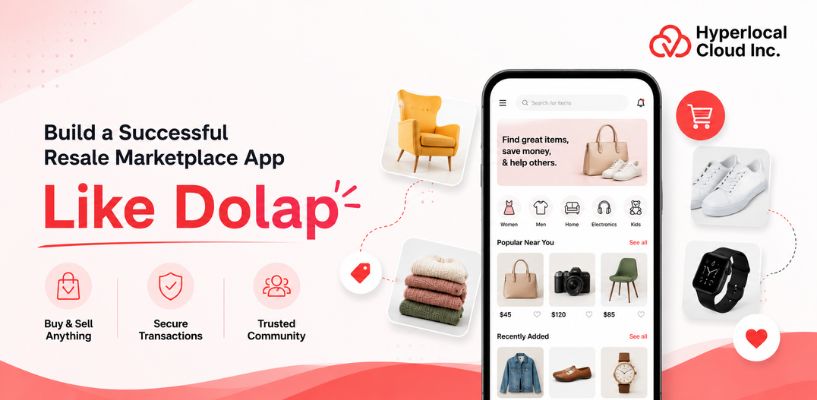
The Turkish peer-to-peer fashion marketplace Dolap has demonstrated that a dedicated resale platform can achieve significant success. The platform establishes a secure and straightforward secondhand marketplace that enables users to buy and sell used clothing, accessories, and various other items.
The most effective method for businesses to access this market opportunity involves developing a Dolap Clone App. A Dolap Clone brings together a proven business model with your unique business ideas. This blog provides a complete guide to every stage of Dolap Clone App Development, starting from initial ideas until the final product introduction.
What is a Dolap Clone App?
A Dolap Clone App functions as a market-ready or customized marketplace solution that successfully duplicates the main features of Dolap, Turkey’s leading resale app.
The platform provides users with a secure and easy-to-use platform that enables them to list items for sale and purchase that involve used clothing, shoes, bags, and accessories. The clone model allows businesses to skip the lengthy ideation phase and start with a proven blueprint.
The goal is not just to copy Dolap but to build upon it. A Dolap Clone provides the essential elements for your business. It includes marketplace operations, user journey mapping, payment processing systems, and seller management tools. You can adapt these to meet the requirements of your intended audience.
In some cases, businesses may begin with a single vendor marketplace approach to maintain better control over inventory and user experience, and later expand into a full peer-to-peer resale ecosystem like Dolap. This phased strategy helps reduce initial complexity while validating the business model.
A Dolap Clone App functions as an efficient solution for creating a competitive resale marketplace that contains multiple features. It enables users to start their business without building everything from the beginning.
Create an App Like Dolap for Easy Buying and Selling
How Does an App Like Dolap Actually Work?
Understanding the working model helps you plan development more effectively. The following explanation demonstrates how a Dolap Clone system functions through its step-by-step process.
Step 1: User Registration & Onboarding
Users can create accounts through email, phone number registration, or social media login, which includes Google and Apple. Users can complete a fast profile setup process, which enables them to select their role as either buyer, seller, or both.
Step 2: Product Listing
Sellers need to upload photos of their items together with their descriptions while they establish their product price and select an appropriate product category.
Step 3: Discovery & Search
Buyers browse through various product categories while using advanced search filters that include size, brand, price range, and condition. They receive personalized product suggestions that match their previous viewing and purchasing activities.
Step 4: Purchase & Payment
After a buyer selects an item they want to buy, they go to the secure checkout process. The payment gateways process all payments. The funds stay in escrow until the delivery process receives confirmation.
Step 5: Shipping & Delivery
The seller ships the item to the buyer. Many platforms provide their users with built-in logistic services that operate through partnerships with courier API systems. Buyers track their shipments as they progress through the delivery process.
Step 6: Confirmation & Ratings
The buyer confirms delivery after he/she receives the order. The buyer and the seller evaluate the transaction through their respective ratings. The seller receives positive reviews, which establish his credibility and trustworthiness.
Step 7: Admin Oversight
There is backend monitoring by the platform administrator of all transactions, managing conflicts, reviewing commissions, and enforcing policy.
How a Dolap Clone App Benefits Users and Businesses?
For Users (Buyers & Sellers)
- Affordable fashion with unique choices: The store offers a diverse selection of used designer and unique items at discounted prices that customers can buy. Stylish fashion will become more accessible because of this app.
- Earn from unused items: Unwanted clothes or any other items can be made into cash. It’s an easy way to clean up and make some extra money.
- Supports sustainable living: Both buyers and sellers create a circular economy system through their actions. The system decreases waste production while it encourages people to adopt environmentally sustainable practices.
- Easy and engaging experience: The app will get more attention with interactive and social features like product images, likes, and following sellers.
- Safe and secure payments: Integrated payment systems help ensure easy, secure transactions between all parties.
For Businesses
- Proven and reliable model: A Dolap-like app operates on an existing model that is already running successfully. This approach decreases potential dangers while providing faster insights into user patterns.
- Faster launch at lower cost: A clone app provides both time savings and cost reductions when compared to developing a new application from scratch. This enables you to launch your business operations faster while maintaining your ability to compete in the marketplace.
- Flexible and scalable: You can begin with a pre-existing framework, which you can modify to meet your branding needs and audience requirements. The app will expand its capabilities to match your business development needs.
- Multiple revenue opportunities: Businesses typically monetize themselves by taking commissions, charging transaction fees, advertising, or with premium seller features.
- Lower operational burden: The peer-to-peer marketplace model eliminates inventory management requirements because it operates as a decentralized platform. It helps in cost savings through its dual benefits of reduced storage needs and efficient logistics operations.
Pro Tip: If you want to launch an online marketplace app, then going with the idea to create a Dolap clone gives you a head start while still allowing 100% branding and feature customization.
Core Features Behind a High-Performing App Like Dolap
User/Buyer Panel Features
- Personalized Feed: The home screen adapts to each user. The system presents items according to the user’s browsing history, their saved preferences, and their previous purchases, which creates a personalized feed for every buyer.
- Advanced Search & Filtering: Filters function as a solution when customers understand their exact purchasing requirements. Users can reach relevant selected products by using filters.
- Bidding & Negotiation System: The system enables buyers to propose price offers that they can negotiate with sellers, resulting in increased buyer-seller contact that boosts their chances of making successful transactions.
- Secure Payment Options: The app supports credit cards, debit cards, and digital wallets while it provides secure payment processing, which protects both parties from potential transaction hazards.
- In-App Messaging: Buyers can ask sellers about sizing, condition, or shipping directly inside the app; there’s no need to share personal contact details. The platform maintains all conversations that users can trace.
Seller Panel Features
- Easy Listing Creator: Sellers can photograph items directly in the app, and after that, they need to create a title, description, and set their price. The process requires no complicated forms and no unnecessary steps.
- Order Management Dashboard: The system displays all incoming orders, current bidding activities, and active contract discussions from a single location. Sellers always know where things stand without hunting across multiple screens.
- Shipping & Logistics Management: Integrated logistics tools generate shipping codes and let sellers track dispatched items from within the app, removing the need to coordinate with couriers manually.
- Product Editing: Sellers can update pricing or descriptions anytime in seconds. Keeping listings accurate and current is part of running a healthy storefront on your platform.
Admin Panel Features
- User Management: Admins have the ability to check user accounts while marking any accounts that seem suspicious, and they can take necessary actions. The tools provide access to investigate and handle situations involving both new sellers and reported buyers.
- Product Moderation: Every marketplace encounters the problem of false product descriptions, deceptive product images, and restricted merchandise at some point. The system provides your team with the authority to assess flagged material and delete content that does not comply with platform requirements.
- Transaction Monitoring: Admins have the ability to monitor payment transactions while detecting irregularities, and they can resolve conflicts before they become serious issues.
- Review & Rating Management: Genuine feedback builds seller reputation over time. The admins have the ability to control review content by removing fake entries while they work to maintain accurate user rating displays, which show actual user experiences.
AI-Powered Features That Take Your Dolap Clone to the Next Level
Artificial intelligence has become essential for all current marketplace apps because it enhances user satisfaction while making their platforms work better. The Dolap Clone App will achieve its most significant impact through these artificial intelligence systems.
1. Personalization Engine
The system creates a personal homepage feed through AI, which analyzes user activities by examining their web browsing patterns, previous buying behavior, and their saved products.
2. Smart Search
Natural language processing (NLP) systems enable users to conduct searches through their spoken language requests. Users can type conversational phrases like ‘red top under 500’ and get precise results. The platform includes a strong visual search feature, which allows users to search by uploading images.
3. Fraud Detection
Machine learning models use transaction pattern detection to identify fake listings, payment fraud, account spoofing, and policy violations, which they need to investigate before users experience any problems.
4. Recommendation Engine
The application utilizes filtering and item similarity models to display ‘You may also like’ and ‘Similar items’ sections, which help users discover products while spending more time on the app.
5. AI Chatbots
Conversational AI handles common buyer and seller queries 24/7. This includes order status checks, return policy guidance, listing tips, and escalation to human agents when needed.
6. Dynamic Pricing Suggestions
Artificial intelligence uses comparable listings and market demand, together with item conditions, to determine the best pricing solution for sellers. This feature increases both listing success rates and seller satisfaction.
Build an AI-Powered App Like Dolap Delivering Smarter Shopping Experiences
Steps To Build An App Like Dolap
Understanding the How to Build an Online Resale Marketplace process and each step involved in the Dolap clone app development is the next move.
1. Market Research & Feature Planning
Begin with an analysis of existing resale applications such as Dolap. Pay attention to how the users purchase, sell, and communicate with each other. Identify those aspects that work well for them and those that they criticize. This will give you an idea of the features that must be included in your app.
2. UI/UX Design
Develop an uncomplicated app interface. It should be intuitive from the very first use. Users should be able to post their products with ease. Uploading pictures and setting prices should not cause problems for them. Browsing capabilities are important too.
3. App Development (Frontend + Backend)
Here comes the actual development process. Frontend development involves all the visuals that the users will be exposed to. The backend deals with data storage, user handling, and transactions. There are essential features that you will require such as user account management, product upload, messaging system, notification system, and payment processing.
4. Payment & Security Integration
Payment security is vital. The users have to feel secure enough to transact on the site. Include payment gateways that the user can trust. Escrow services can be included to make sure that the payment is released only when the buyer receives the product.
5. Testing & Bug Fixing
Testing is important before you launch the application. The tests should involve all major aspects of the app including payment processes, chat functionalities, notification services, and uploading products to the marketplace.
6. Launch of an App
After testing is complete, launch your app on various platforms such as the Google Play Store and Apple App Store. Ensure that your application complies with all the regulations. This will facilitate the success of your app launch.
7. Post-Launch Support & Updates
This is not the end of work. Monitor the behavior of your users. Fix the problems that users arise. Introduce new features according to feedback. For instance, you can introduce seller rating, AI-powered pricing recommendations, or enhanced product recommendations.
Tech Stack for Developing An App Like Dolap
Choosing the right technology stack ensures your platform is scalable, fast, and maintainable. Here is a recommended tech stack for your Dolap Clone:
| Layer | Technology | Description |
| Frontend | React Native / Flutter | Cross-platform frameworks are used to build fast and responsive mobile apps for both iOS and Android. |
| Backend | Node.js / Django | Robust backend technologies to handle business logic, APIs, and server-side operations efficiently. |
| Database | MongoDB / PostgreSQL | Scalable databases to manage user data, product listings, transactions, and app content. |
| Cloud & Hosting | AWS / Google Cloud | Reliable cloud infrastructure for hosting, storage, and seamless scalability. |
| Payment Integration | Stripe / PayPal | Secure payment gateways to enable smooth transactions within the app. |
| Authentication | Firebase Auth / OAuth | Ensures secure user login, signup, and identity management. |
| Real-Time Features | Socket.io / Firebase Realtime DB | Enables live chat, notifications, and instant updates. |
| Search & Filters | Elasticsearch | Advanced search functionality with filters for better product discovery. |
| Notifications | Firebase Cloud Messaging | Sends push notifications for updates, offers, and user engagement. |
| Admin Panel | React.js / Angular | Web-based dashboard to manage users, listings, and app operations efficiently. |
Powerful Use Cases That Make a Dolap Clone App a Smart Investment
Startups Entering the Resale Market
A Dolap Clone serves as an ideal solution for startups that want to quickly establish their presence in the marketplace. The system delivers a tested framework that enables organizations to decrease operational risks while achieving faster business development.
Established Resale Businesses Going Digital
The Dolap Clone enables physical thrift stores and regional resale businesses to achieve digital transformation while expanding their customer reach and providing customers with a unified mobile shopping experience.
Fashion-Focused Marketplaces
The Dolap model serves as an ideal solution for entrepreneurs who develop niche fashion resale platforms that focus on vintage clothing, luxury consignment, and sustainable fashion.
Niche Category Marketplaces
The Dolap model extends its applications beyond fashion. The system operates effectively for second-hand electronics, books, home goods, children’s items, sports gear, and various other products.
University & Community Resale Platforms
The Dolap Clone format discovers new potential through its application to local resale applications, which serve student communities, housing societies, and corporate campuses.
Emerging Trends in Resale App Development You Should Know
Social Commerce Integration
The shopping experience now includes social media features which allow users to follow sellers and share listings on Instagram, TikTok, and access creator storefronts. The system achieves organic growth and boosts user interaction through this method.
AI-Powered Style Recommendations
AI styling tools now provide complete outfit recommendations based on available clothing listings. They analyze user fashion choices and forecast upcoming fashion trends before these trends reach their highest popularity. The new system creates a customized shopping experience for users who visit the app.
Sustainability as a Core Value
Eco-conscious consumers demand platforms that display their sustainability practices. The standard features now include carbon footprint trackers and donation options, together with ‘second life’ storytelling.
Advanced AR and Virtual Try-Ons:
Augmented Reality (AR) enables users to see products in real-world settings, which helps them experience vintage clothing on themselves and furniture arrangements in their own homes. This technology leads to decreased product returns while enhancing customers’ assurance in their buying decisions.
Mobile-First, App-Centric Design
Mobile devices account for more than 80% of resale marketplace traffic. The platforms that focus on mobile user experience, quick loading times, and gesture-based navigation; this lead to higher customer retention rates.
Technical Efficiency
The developers implement cross-platform frameworks because these frameworks allow them to develop high-quality apps. These apps operate on both iOS and Android platforms while reducing their development time by almost 40%.
Start Your Fashion Resale Platform and Grow in the Digital Market
Challenges & Considerations in Dolap Clone App Development
Competition
The resale market experiences rapid expansion, which creates new competition challenges in the industry. Platforms such as Poshmark, Vinted, and Depop already possess considerable advantages over their competitors. The most effective way to compete against these large companies is to select a particular market segment or geographic area that they have not yet developed.
Logistics & Shipping
Peer-to-peer shipping operations become difficult to manage. The system needs reliable courier API connections together with prepaid shipping labels and specific delivery timeframes to prevent conflicts from arising.
Trust & Safety
Building user trust presents the greatest challenge and serves as the most essential requirement for success. The system demands that sellers undergo verification processes while implementing buyer protection and maintaining an operational dispute resolution mechanism.
Scalability
Your system requirements will increase as your user base continues to expand. Invest in a cloud-native microservices architecture that provides horizontal scalability without requiring extensive system modifications.
Counterfeit & Quality Control
The problem of fake or misrepresented listings continues to exist as an ongoing problem. The combination of AI image analysis, community reporting, and manual examination by staff members will maintain high standards for listing quality.
Explore Few Top-Rated Classified Apps
We provide high-quality classified mobile apps that are almost similar to the Dolap clone app. Here are some of the most popular choices businesses can consider for development.
| Classified Apps | Description |
| Craigslist | The Craigslist clone app allows users to create and view local classified advertisements which display available job positions, service offerings, housing options, and saleable items. |
| Dubizzle | A Dubizzle clone app serves as a platform that enables users to buy and sell products within their local area. The application functions as a marketplace for users to trade both real estate and vehicles while also seeking employment opportunities. |
| Letgo | The Letgo clone app provides users with a basic platform that enables them to effortlessly list their items while searching for and buying second-hand products in their local area. |
| OfferUp | The OfferUp clone app creates an easy-to-use marketplace that allows users to buy and sell products within their local area while using chat-based communication for transactions. |
| OpenSooq | The OpenSooq clone app enables users to buy and sell products through its platform, which supports multiple categories, including employment opportunities, automobiles, real estate properties, and service delivery. |
Monetization Strategies for a Successful App Like Dolap
Your platform can generate revenue through multiple streams simultaneously:
- Commission per Sale: This profit typically derives from charging a (5%–20% or similar rate) fee for each successful transaction conducted by the marketplace.
- Featured & Promoted Listings: Sellers pay to boost their listings to the top of search results or category pages. The advertisement-based revenue system grows automatically with the increasing number of sellers.
- Seller Subscription Plans: Develop multi-tiered plans based on a subscription plan that can give out profits, such as unlimited postings, low commission rates, analytics, or priority support.
- Buyer Premium Membership: Get an early glimpse at new arrivals in the market, special price benefits, and the convenience of shipping without extra charges with paid buyer membership, not to mention special discounts too.
- In-App Advertising: You can create income streams by displaying specific advertisements from external product brands to your website visitors. The platform allows you to embed sponsored content directly into user feeds, which will improve both visibility and user interaction.
- Authentication & Verification Services: Charge for the authenticating fee of high-value items (designer bags, luxury watches, limited edition sneakers).
What is the Cost to Develop an App Like Dolap? Key Factors Explained
Building a Dolap clone app typically starts at around $7,000, but the final number can differ as per the features you choose to have in the app. Several moving parts influence how much you’ll actually spend- and understanding them upfront helps you plan your budget. All custom software development companies will tell you the same thing: the cost of a marketplace app depends heavily on your feature set, your tech stack, and how polished you want the final product to be. Here’s a breakdown of the key factors that can push that number up or down:
- App Complexity & Feature Set: The development time for your project increases when you include additional features that require real-time chat, AI-based recommendations, advanced filtering, and multiple currency handling. A basic MVP with core buy/sell functionality will cost far less than a fully loaded platform with social elements.
- UI/UX Design Requirements: The user experience of an app is determined by its interactive and easy-to-navigate design. The design provides clear pathways for users to move through the app while accessing its various features. But to create such an app it requires more effort and cost in the development process.
- Platform Choice (iOS, Android, or Both): The initial expenses of launching on one platform are lower than starting operations through multiple platforms. Your investment costs will rise when you choose between cross-platform solutions and creating dedicated native applications for both iOS and Android platforms.
- Third-Party Integrations: The testing process requires establishing connections between payment gateways, shipping APIs, identity verification tools, and push notification services. The process of integrating new systems into existing systems results in unanticipated development costs and licensing expenses, which organizations must recognize during their initial project planning.
How does a Dolap Clone App Stand Out in the Resale Marketplace?
- Personalized Shopping Experience: The Dolap Clone platform displays products according to user preferences, which it learns through its AI system. The application becomes more intelligent for users who continue to use it because their usage generates more relevant content to them.
- Built-In Trust at Every Step: Buyers worry about getting scammed. Sellers worry about fake inquiries. A Dolap Clone addresses both by building trust directly into the platform through seller verification, secure escrow payments, buyer protection policies, and a transparent review system that reflects real experiences.
- Smooth Selling, Not a Second Job: Most resale apps make listing feel like work. A Dolap Clone removes that friction. Sellers can photograph an item, set a price, and go live in minutes. Shipping labels are generated automatically. Payments land in their account without chasing anyone. The easier it is to sell, the more inventory your platform attracts.
- Negotiation That Actually Closes Deals: The fixed price method for selling used items proves to be an ineffective approach for selling second-hand goods. The platform enables users to interact through its built-in bidding and offer system, which allows buyers to submit offers while sellers can choose to respond to those offers.
Launch Your Marketplace Idea With an App Like Dolap
Conclusion
The resale economy has evolved into a permanent change that reshapes consumer shopping behavior. Consumers increasingly prefer affordable, sustainable products instead of fast fashion items. The situation presents a significant business opportunity that entrepreneurs can access through the development of appropriate platforms.
Businesses that choose to Create An App Like Dolap are entering a market with proven demand, a scalable model, and clear monetization from day one. Dolap Clone App Development offers a direct path to a high-growth marketplace business. Reach out to us at Hyperlocal Cloud today, and let’s build your Dolap clone app together.
The market is waiting. The technology is ready. The only thing left is the decision to start.

Patt Cummins is an experienced content writer with over 10 years of experience creating clear and engaging content for technology-focused industries. He specializes in simplifying complex technical topics into easy-to-understand stories that educate readers, support brand communication, and help businesses effectively share their solutions.

Need Help With
Development?