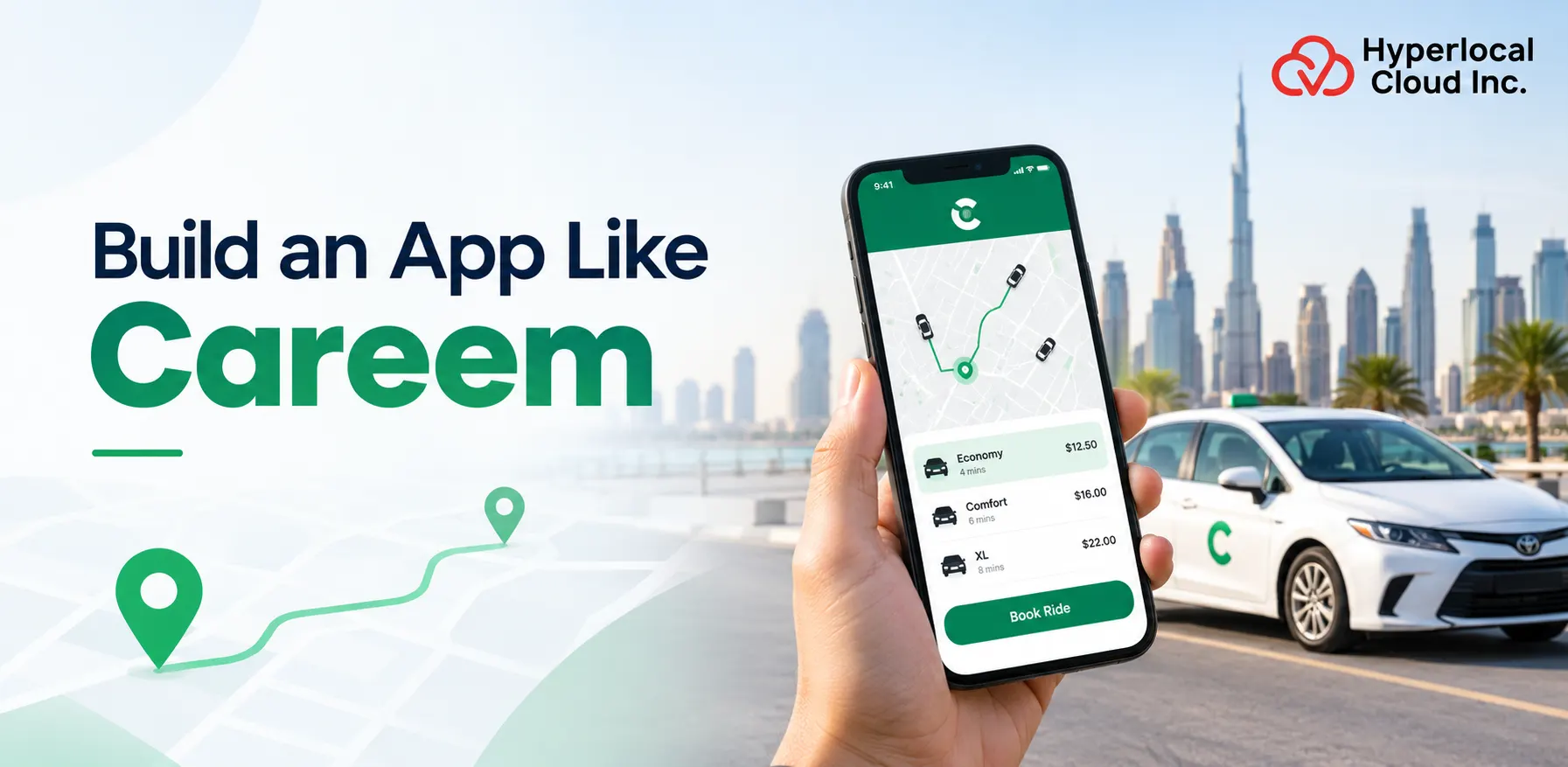
Launching a ride-hailing business requires more than connecting passengers with drivers. Businesses need a reliable platform to manage bookings, track rides, process payments, coordinate drivers, and maintain service quality. Building every feature from scratch can also increase development time and require significant technical resources.
A White Label Ride-Hailing App provides a practical starting point for businesses that want to enter the ride-hailing market with their own brand. It includes the core functionality needed to manage a ride-hailing service, with customization options for business requirements, local markets, and operational models.
What Is a White Label Ride-Hailing App?
A white label ride-hailing app is a ready-made ride-hailing software solution inspired by the functionality of platforms like Careem. Businesses can customize the branding, configure key features, and launch their own service without building every component from scratch.
The platform typically includes separate interfaces for passengers, drivers, and administrators. These interfaces work together to support ride bookings, driver allocation, fare calculations, payments, trip tracking, and business management. Depending on the solution, businesses can also configure service areas, vehicle categories, payment methods, and commission structures.
Build Your Own Branded Ride-Hailing Platform With Flexible Customization Options
Why Choose a White Label Ride-Hailing App for Your Business?
Developing a ride-hailing platform from scratch can involve extensive planning, design, development, testing, and maintenance. A white-label solution can reduce the amount of initial development work by providing an existing foundation that businesses can adapt to their requirements.
Faster Time to Market
A ready-made platform can help businesses move through the initial launch process more efficiently than building every feature independently. Instead of starting with an empty development project, teams can focus on configuration, testing, driver onboarding, and local market preparation.
Your Own Brand Identity
Businesses can customize the application with their brand name, logo, colors, and other supported interface elements. This allows the service to establish its own identity rather than operating under another company’s brand.
Lower Initial Development Effort
Using an existing software foundation can reduce the need to build common ride-hailing features from scratch. The overall investment still depends on licensing, customization, integrations, infrastructure, and ongoing support requirements.
Features for Different User Roles
A ride-hailing platform needs to support passengers, drivers, and administrators. A white-label solution brings these functions together so each group can complete its tasks through a dedicated interface.
Room for Business Growth
As demand increases, businesses may need additional service areas, vehicle categories, payment options, or operational tools. A scalable solution can make it easier to expand, provided the underlying architecture and selected package support those requirements.
Essential Features of a Careem-Like App
A successful ride-hailing platform needs more than a booking screen. Its features should help passengers book rides conveniently, allow drivers to manage trips efficiently, and give administrators the tools to oversee operations.
Passenger App Features
The passenger app is the primary interface customers use to request rides, follow drivers, make payments, and review their trips.
User Registration and Profile Management: Passengers can create accounts, manage their personal details, and access their booking history.
Location and Destination Search: GPS and map integration help users select pickup points, enter destinations, and identify suitable routes.
Ride Booking: Customers can request rides by selecting pickup and drop-off locations, choosing available ride categories, and confirming their bookings.
Fare Estimates: The application can display estimated fares before booking, based on configured pricing rules and supported distance or time calculations.
Real-Time Ride Tracking: Passengers can follow the driver’s location and view relevant trip updates after a booking is accepted.
Multiple Payment Options: Depending on the integrations available, customers may pay using cards, digital wallets, cash, or other supported payment methods.
Ratings and Reviews: Passengers can rate their experience and provide feedback after completing a ride.
Ride History and Notifications: Customers can review previous trips and receive updates about booking confirmations, driver arrivals, and trip status.
Driver App Features
The driver app helps drivers receive ride requests, manage availability, navigate to destinations, and track their earnings.
Driver Registration and Verification: Drivers can submit required details and documents for review before being approved to provide services.
Availability Management: Drivers can switch between online and offline status according to their working schedule.
Ride Request Management: Drivers can review incoming requests and accept or reject them according to the platform’s rules.
Navigation Support: Map and navigation integrations help drivers reach pickup points and follow routes to destinations.
Trip Management: Drivers can view passenger and trip details, update ride status, and complete assigned journeys.
Earnings Dashboard: Drivers can review completed trips, earnings, commissions, and other available financial information.
Notifications: Alerts help drivers stay informed about new requests, cancellations, and relevant trip changes.
Admin Panel Features
The admin panel provides the operational controls required to manage users, drivers, bookings, payments, and service performance.
Passenger and Driver Management: Administrators can review accounts, manage driver approvals, and respond to account-related issues.
Ride and Booking Management: The panel provides visibility into bookings, trip statuses, cancellations, and operational activity.
Fare and Commission Configuration: Businesses can configure supported pricing rules, platform commissions, and applicable service charges.
Service Area Management: Administrators can manage operating zones and configure service availability according to the platform’s capabilities.
Payment and Transaction Monitoring: Financial tools help track transactions, payment statuses, refunds, and driver payouts where supported.
Reports and Analytics: Business reports can help operators understand booking volumes, revenue, cancellations, driver activity, and customer trends.
Promotions and Discounts: Where available, administrators can configure promotional campaigns and discounts to support customer acquisition.
Explore Features and Find the Right Solution for Your Business
How Does a Careem-Like Ride-Hailing App Work?
A ride-hailing platform connects passengers who need transportation with drivers who can fulfill their requests. The process usually follows a series of steps.
Passenger Requests a Ride: The passenger enters the pickup and destination details, selects a ride category, and reviews the estimated fare.
The Platform Finds a Driver: The system identifies eligible nearby drivers based on supported matching rules, location, availability, and other configured conditions.
The Driver Accepts the Request: The selected driver receives the booking details and confirms the trip.
The Passenger Tracks the Driver: The passenger receives driver and vehicle information and can follow the driver’s approach through the app.
The Trip Begins: The driver picks up the passenger and starts the journey.
The Ride Is Completed: The platform calculates the final fare according to the configured pricing model and trip details.
Payment and Feedback Are Processed: The passenger completes payment through a supported method and can rate the driver or submit feedback.
Administrators can monitor bookings, review transactions, manage accounts, and use operational reports to improve service delivery.
Customization Options for a White Label Ride-Hailing App
Every ride-hailing business operates in a different market. Before launching, businesses should determine which parts of the platform need to be customized and which standard features meet their requirements.
Branding and Interface Customization
Businesses can configure supported branding elements, including the application name, logo, colors, and selected interface components. A consistent brand experience helps customers recognize the service across passenger and driver touchpoints.
Fare Rules and Commission Structure
The platform may support different pricing configurations, such as base fares, distance-based charges, time-based charges, minimum fares, cancellation fees, and driver commissions. Available options depend on the software package and its configuration capabilities.
Vehicle Categories and Ride Types
Businesses may offer different vehicle categories based on local demand. These could include economy rides, premium cars, larger vehicles, or other transportation options supported by the platform.
Payment Gateway Integration
Payment requirements vary by country and customer preference. Businesses should confirm that their preferred payment providers, currencies, settlement processes, and refund requirements are supported before committing to a solution.
Maps, Notifications, and Third-Party Services
Map services, push notifications, SMS providers, and other integrations can support booking and communication workflows. Integration availability and additional costs should be checked during the planning stage.
Languages and Operating Regions
Businesses serving multilingual audiences may require localized interfaces, currency settings, and regional configurations. They should also confirm whether the platform can support the intended operating zones and expansion plans.
Plan Your Ride-Hailing Startup With the Right Features and Budget
How to Start a Ride-Hailing Business With a White-Label Solution
Choosing software is one part of launching a ride-hailing business. A sustainable operation also depends on local demand, driver availability, pricing, safety procedures, and customer support.
1. Research Your Target Market
Identify the customers you want to serve and the transportation problems your service will address. Research local competitors, common travel routes, customer expectations, driver availability, and potential gaps in existing services.
2. Select a Business Model
Decide how the platform will generate revenue. Options may include commissions on completed rides, service fees, corporate transportation agreements, or premium ride offerings. The right model depends on local market conditions and operating costs.
3. Define Your Service Requirements
Determine your initial service area, vehicle categories, user roles, payment methods, pricing rules, and administrative needs. Clear requirements make it easier to evaluate whether a ready-made platform is suitable.
Businesses planning a more customized platform can also review this guide on creating a rideshare app to understand the broader planning and development process.
4. Choose and Configure the Software
Evaluate available solutions based on features, customization options, scalability, security, integrations, and licensing terms. Configure the selected platform to match your brand and operating model.
5. Test the Complete Booking Process
Test registration, ride requests, driver matching, trip tracking, fare calculations, payments, cancellations, and notifications. Testing with different devices and realistic booking scenarios can help identify issues before launch.
6. Onboard Drivers and Prepare Operations
Create a process for driver registration, document verification, training, and support. Establish procedures for customer complaints, cancellations, refunds, incidents, and service quality monitoring.
7. Launch in a Defined Service Area
Starting with a manageable geographic area can help businesses evaluate demand, driver availability, and customer satisfaction. Use operational data and customer feedback to determine when and where to expand.
White-Label Careem App vs. Custom Ride-Hailing App Development
Both approaches can support a ride-hailing business, but they differ in development effort, flexibility, and initial planning requirements.
| Factor | White-Label Solution | Custom Development |
| Initial development | Uses an existing software foundation | Builds the platform around defined requirements |
| Time to launch | Can be shorter, depending on customization and testing | Usually requires a broader development cycle |
| Customization | Depends on available configuration options and source-code access | Can support more tailored functionality |
| Initial investment | May reduce the amount of development required | Depends on scope, complexity, and technology choices |
| Maintenance | Depends on the provider’s support and licensing terms | Managed through the selected development and maintenance arrangement |
| Best suited for | Businesses seeking a quicker starting point | Businesses with specialized workflows or extensive technical requirements |
A white-label solution may suit businesses that want to validate demand and launch with established ride-hailing functionality. Custom development may be more appropriate when the business requires unique workflows, advanced integrations, or greater control over the product architecture.
The right choice depends on the business strategy, available budget, launch timeline, and long-term product requirements.
How Much Does a White-Label Careem App Cost?
The cost of launching a Careem-like ride-hailing app depends on the development approach, required features, customization, and third-party integrations.
| Cost Factor | White-Label Careem App | Custom Ride-Hailing App |
| Estimated cost | Starts at $5,000 | 30,000–70,000+ |
| Development approach | Uses a ready-made solution | Built from the ground up |
| Time to market | 2- 3 weeks | 6- 8 months |
| Customization | Based on available features and options | Tailored to specific business requirements |
| Best suited for | Startups and businesses seeking a quicker launch | Businesses needing specialized features and greater flexibility |
A white-label solution reduces initial development effort by providing existing passenger, driver, and admin functionality. Additional costs may apply for branding, integrations, deployment, licensing, and ongoing maintenance.
Custom development offers greater control over the app’s design, features, workflows, and architecture. The final cost depends on platform requirements, technical complexity, integrations, and the development team’s rates.
Businesses should compare both options based on their budget, launch timeline, and long-term goals before choosing the most suitable approach.
How to Choose a White Label Ride-Hailing App Provider
The software provider can influence the launch process, future customization options, and long-term maintenance of your platform. Businesses should evaluate both the product and the terms under which it is supplied.
Feature Coverage: Confirm that the passenger app, driver app, and admin panel include the functions required for your business model.
Customization Flexibility: Ask which elements can be configured and whether additional features require separate development work.
Security and Privacy: Review account security, access controls, data handling practices, and the provider’s approach to protecting sensitive information.
Scalability: Check whether the platform can accommodate expected growth in bookings, drivers, users, and operating regions.
Integration Support: Confirm compatibility with the payment gateways, maps, notifications, and other services required in your target market.
Licensing and Ownership: Understand the licensing model, source-code availability, usage rights, restrictions, and any recurring fees.
Technical Support: Clarify how maintenance, bug fixes, updates, and technical assistance are handled after deployment.
If your business requires extensive customization or a platform built around more specific operational needs, exploring ride-sharing app development services can help you assess a broader range of development options.
Challenges to Consider Before Launching
A ready-made platform can simplify the software side of a ride-hailing business, but it does not remove the operational challenges involved in running the service.
Driver Acquisition and Retention: A ride-hailing service needs enough active drivers to meet customer demand. Recruitment, verification, fair earnings, and reliable support can influence driver participation.
Competition in Local Markets: Established transportation services may already have strong brand recognition and driver networks. A new business needs a clear value proposition, such as better local coverage, a focused customer segment, or specialized ride options.
Safety and Compliance: Businesses must review applicable transportation regulations, driver eligibility requirements, insurance obligations, data protection rules, and payment requirements in their operating regions.
Service Reliability: Poor driver availability, inaccurate fare estimates, booking failures, and payment issues can damage customer trust. Monitoring platform performance and responding quickly to problems are important after launch.
Customer Support: Clear processes for complaints, cancellations, refunds, lost items, and safety-related reports help businesses manage customer expectations.
Expansion Planning: Entering new locations may require additional drivers, localized payment methods, regulatory checks, and changes to operational processes. Expansion should be based on demand and the platform’s technical capabilities.
Turn Your Transportation Business Idea Into a Scalable Ride-Hailing Platform
Conclusion
A white label ride-hailing app can provide a practical foundation for businesses planning to enter the ride-hailing market without developing every core component independently. The right solution should support passenger bookings, driver operations, administrative management, and the customization required for your target market.
Before making a decision, compare feature coverage, licensing terms, integration options, security, scalability, and long-term costs. A clear business plan combined with thorough testing, reliable driver onboarding, and responsive customer support can help establish a stronger foundation for your ride-hailing service.
FAQs (Frequently Asked Questions)

Nisha Bagga is a technical writer with more than 7 years of experience creating high-quality content for a wide range of industries. She specializes in developing clear, engaging, and well-researched technical and business content tailored to diverse audiences and industry requirements.

Need Help With
Development?