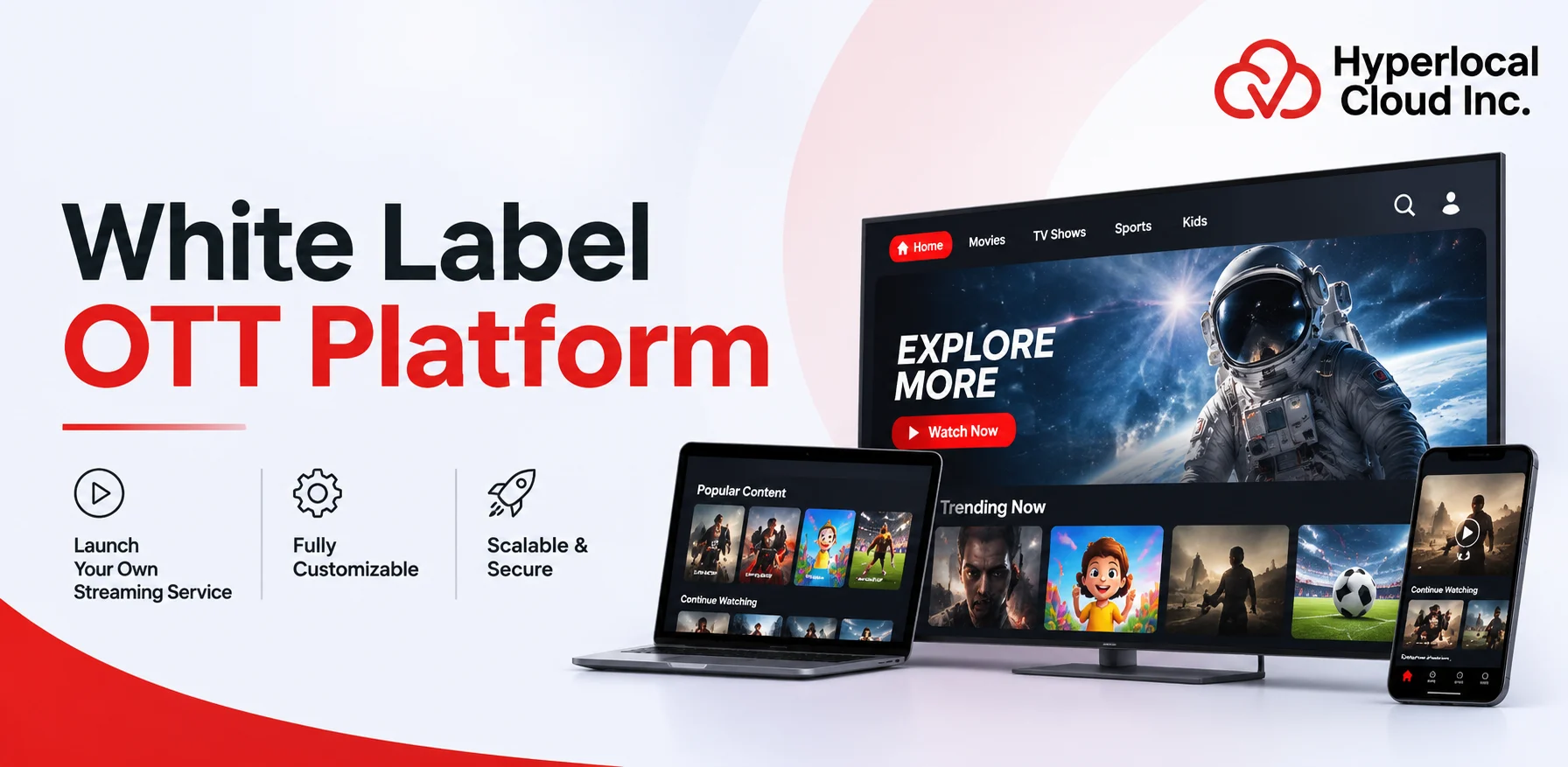
- An OTT solution lets businesses deliver video content directly to viewers over the internet, without relying on traditional cable or satellite services.
- The growing demand for online streaming, on-demand videos, and live content is creating new opportunities for businesses in the OTT market.
- A white-label OTT solution helps businesses launch their own streaming platform under their brand name without building everything from scratch.
- OTT platforms use a simple working process that includes content uploading, video processing, content delivery, and streaming across different devices.
- With features like subscription plans, payment options, and user management, OTT solutions make it easier for businesses to manage and grow their streaming services.
The recent scenario of the digital entertainment and media industry is experiencing a massive transformation. Unlike traditional ways of watching a movie via television or conventional broadcasting, it has changed completely with internet-based content distribution. The evolution of OTT platforms, or Over-The-Top solutions, has shifted offline content onto digital platforms.
This results in normal video streaming becoming a part of the digital ecosystem that allows businesses or startups to initiate their own OTT platform. Some reports from Statista state that the revenue of the OTT video market is projected worldwide to reach US$366.68 billion in 2026 and is projected to reach US$539.17 billion by 2031, at a CAGR of 8% from 2026 to 2031.
Thus, if businesses are looking to expand their business by stepping into the digital entertainment world, then they can simply choose a white-label OTT solution, which can be cost-effective and allow them to stand out in the market faster.
Understand White Label OTT Solution
A white label OTT solution is a video streaming platform that allows businesses to deliver movies, web series, live events, and other video content directly to viewers over the internet. Unlike traditional television services, OTT platforms let users watch content anytime, anywhere, on their preferred devices.
Here are some important features of a white label OTT solution:
- Custom Branding
- Content Management
- Multiple Monetization Models
- Multi-Device Compatibility
- Secure Video Streaming
- Analytics and Reporting
Launch Your Branded OTT Platform Today and Transform Streaming Experiences
Working Mechanism of an OTT Platform
The following are the primary steps that help users to operate the OTT platform with ease. All these steps are a good source of providing a seamless experience to users.
1. Content Upload
Content owners upload their videos, movies, web series, or live-streaming content to the OTT platform through its content management system.
2. Video Encoding and Transcoding
The platform converts the uploaded videos into different formats and resolutions so viewers can stream them smoothly on different devices and internet speeds.
3. Content Storage
Once processed, the videos are stored on cloud servers or dedicated storage systems, making them available whenever viewers want to access them.
4. Content Delivery
A Content Delivery Network (CDN) distributes video content through servers in different regions, reducing buffering and improving streaming quality.
5. User Access and Authentication
Viewers sign up or log in to access available content based on their subscription plans and account permissions.
6. Video Streaming
When a viewer selects a video, the platform delivers it over the internet and adjusts streaming quality based on available network speed.
7. Payment and Monetization
The platform manages subscriptions, advertisements, and pay-per-view transactions to help businesses generate revenue from their content.
8. Analytics and Performance Tracking
The platform collects data about viewer activity, watch time, popular content, and revenue to help businesses understand audience preferences and improve their services.
Top Reasons Behind Opting for a White Label Solution for OTT Platform Development
Here are all the top reasons behind investing in a white label solution for OTT platform development. Let’s have a look:
1. Faster Time to Market
Businesses can launch their OTT platforms quickly without spending months on development and testing.
2. Cost-Effective Development
A ready-made solution reduces the need for large development teams and high initial investments.
3. Custom Branding
Businesses can add their own logo, themes, and brand elements to create a unique identity.
4. Easy Platform Management
Built-in tools make it easier to manage video content, users, subscriptions, and payments.
5. Scalability
A white label solution allows businesses to expand their platform, add new features, and reach more viewers as they grow.
White Label Solution vs. Custom-Built
Businesses will get the two development approaches from which they can choose the one that fits best with their business needs. A white label solution can be used for the development of an OTT platform that is quick to launch in the market and less costly. On the other hand, a custom-built OTT platform takes longer to market and is more expensive. To get a complete insight into both approaches, you are required to review the table below.
| Comparison Factors | White Label OTT Solution | Custom-Built OTT Platform |
| Development Time | Offers a ready-made platform that can be customized and launched quickly | Takes more time as the platform is developed from scratch |
| Development Cost | $7,000 | $20,000+ |
| Customization | Allows businesses to customize branding, design, and selected platform features | Provides greater freedom to build features based on specific business needs |
| Technical Expertise | Requires less technical knowledge as the provider manages the core platform infrastructure | Requires skilled developers and technical teams to build and manage the platform |
| Platform Ownership | Businesses use a provider’s platform under an agreed licensing or service model | Businesses have greater control over the platform’s source code and development, depending on the agreement |
| Maintenance and Updates | The provider generally handles platform maintenance, updates, and technical support | Businesses manage updates, maintenance, and technical issues |
| Scalability | Offers built-in options to support growing audiences and content libraries, depending on the provider | Can be scaled according to business requirements through further development |
| Time to Market | Helps businesses enter the streaming market faster with ready-to-use features | Takes longer to launch due to the complete development process |
Turn Your Video Content Into Revenue With Powerful OTT Solutions
Why Businesses Are Looking for an OTT Platform
The evolving era of OTT platforms encourages businesses to invest in OTT platforms so that they can drive their business growth with a strong user base. To learn more, have a look at the steps below.
1. Growing Demand for Online Content
More viewers prefer watching movies, shows, and other video content online rather than depending on traditional television.
2. Wider Audience Reach
OTT platforms help businesses connect with viewers across different locations without geographical limitations.
3. Multiple Revenue Opportunities
Businesses can earn through subscriptions, advertisements, pay-per-view content, and rental plans.
4. Better Viewer Experience
Features like personalized recommendations, watchlists, and on-demand access help improve user engagement.
5. Business Growth Opportunities
OTT platforms let businesses build their own streaming brand and create long-term relationships with viewers.
Emerging Features of a Readymade OTT Platform
A complete list of features of an OTT platform is mentioned below. Businesses can integrate all these features into the platform to attract a wide range of users.
1. AI-Powered Recommendations
This feature suggests relevant videos based on users’ viewing habits, interests, and preferences.
2. Multi-Device Streaming
It lets viewers access content on smartphones, tablets, desktops, and smart TVs.
3. Advanced Video Analytics
Businesses can track viewer activity, watch time, content popularity, and revenue to understand platform performance.
4. Live Streaming Support
It helps businesses broadcast live events, sports matches, webinars, and other real-time content.
5. Cloud-Based Infrastructure
Cloud technology supports flexible storage, smooth content delivery, and better platform performance as the audience grows.
6. Advanced Content Security
Features like DRM, encryption, and access controls help protect premium video content from unauthorized use.
7. Multiple Payment Integrations
Integrating different payment gateways lets viewers easily purchase subscriptions or access paid content.
8. Offline Download Support
This feature allows users to download selected videos and watch them later without an active internet connection.
How Artificial Intelligence Enhances the OTT Platform
Nowadays, the utilization of Artificial Intelligence has been increasing to make the software solution more advanced, so that it helps businesses to stand out in the current competitive digital streaming landscape. Here, you will get to know how AI-powered features will enhance the OTT platform.
1. Personalized Content Recommendations
AI-driven personalization helps viewers to discover their desired movies and shows. This will make the platform even more engaging for viewers.
2. Smart Content Search
The feature of smart content search utilizes AI to suggest content to viewers based on related keywords, voice search, and suggestions.
3. Improved User Engagement
AI helps detect user behavior in order to recommend relevant content to them, which helps them stay on the platform.
4. Automated Content Tagging
AI helps businesses to automate large amounts of content libraries by identifying video categories, particular scenes, and keywords.
5. Content Security
AI can help detect unusual account activity, suspicious access, and possible content misuse to improve platform security.
Roadmap for Implementation and Deployment of a White Label OTT Platform
From implementation to deployment of a white label OTT platform, each required step is listed below so that businesses can get a robust and future-ready solution.
1. Identify Business Goals
Businesses are required to identify their goals by analyzing their target audience, content type, and revenue models in order to choose the right OTT platform to invest in.
2. Choose the Right OTT Solution Provider
In the second step, businesses must connect with an experienced white label solution provider where they can get a complete solution with customization and core features.
3. Customize Your OTT Platform
This step will allow businesses to customize their own OTT platform by implementing their brand logo, name, and colors to build a strong business identity.
4. Integrate Essential Features
The platform will be integrated with all the required features, which include content management, user management, and multi-device streaming.
5. Upload and Organize Content
Add your movies, web series, live videos, or other content, and organize it into clear categories for easy access.
6. Test the Platform
Now, this is the step where the development team will test the platform by monitoring its streaming quality, navigation, security, etc., in terms of identifying and resolving errors.
7. Launch Your OTT Platform
Once testing is complete, make your platform available to viewers through your website, mobile applications, and supported smart TV devices.
8. Monitor and Improve Performance
Track user activity, content performance, and revenue to understand what works and improve as your platform grows.
Tech Stacks Used to Build an OTT Platform
To make an Over-The-Top platform robust and smooth, it is essential to use valid and required technology stacks. Below, in the table, we have listed the most common and relevant ones that help businesses build an advanced platform.
| Category | Tech Stacks |
| Frontend Development | React.js, Angular, Vue.js |
| Backend Development | Node.js, Java, PHP |
| Mobile App Development | Flutter, React Native, Kotlin, Swift |
| Database Management | MySQL, PostgreSQL, MongoDB |
| Cloud Hosting | AWS, Google Cloud, Microsoft Azure |
| Video Encoding | FFmpeg, AWS Elemental MediaConvert |
| Content Delivery Network (CDN) | Cloudflare, Amazon CloudFront, Akamai |
| Video Streaming Protocols | HLS, MPEG-DASH |
| Payment Integration | Stripe, PayPal, Razorpay |
| Security and DRM | Widevine, FairPlay, PlayReady |
Choose the Right OTT Solution and Accelerate Your Business Growth
For Whom is the White Label OTT Solution?
A white label OTT solution suits businesses and content owners who want to launch their own streaming platform without managing the full development process. It offers ready-made tools, flexible branding options, and monetization features that make it useful for different industries.
1. Media and Entertainment Companies
These businesses can launch their own streaming services to distribute movies, web series, documentaries, and other entertainment content.
2. Content Creators and Influencers
Independent creators can build their own branded platforms to share exclusive videos and earn revenue directly from their audience.
3. Educational Institutions
Schools, colleges, and online learning providers can use OTT platforms to deliver recorded lectures, live classes, and educational programs.
4. Sports Organizations
Sports clubs and event organizers can stream live matches, training sessions, interviews, and exclusive sports content.
5. Fitness and Wellness Businesses
Gyms, fitness coaches, and wellness brands can offer workout videos, yoga sessions, and online training programs.
6. Religious Organizations
Churches, temples, and other religious groups can stream spiritual programs, live prayers, and religious events to reach followers across different locations.
7. Corporate Businesses
Companies can use OTT platforms to share employee training videos, product demonstrations, webinars, and internal communication content.
What Makes an OTT Platform Trend-Setting in 2027
In the upcoming years, OTT platforms are going to offer multiple new functionalities that will make the platforms in demand in 2027. All the trend-setting factors are mentioned below that help businesses to grow in the evolving streaming market.
1. AI-Powered Personalization
AI-driven recommendations help viewers to browse content that is based on their past viewing history or preferences.
2. Interactive Streaming
Interactive streaming typically includes features like quizzes, real-time reactions, and chats, which make the platform even more engaging.
3. Multi-Device Compatibility
The platform supports multi-device compatibility, which allows viewers to switch between phones, laptops, smart TVs, and tablets. Thus, it maintains consistency for users.
4. Flexible Monetization Models
The platform supports various monetization models so that businesses can easily generate revenue to boost their business ROI.
5. AI-Based Content Management
AI tools can help automate video tagging, content categorization, subtitles, and other tasks, making platform management easier.
Advanced Integration in the OTT Platform
Advanced integrations help OTT platforms improve performance, simplify daily operations, and offer a better viewing experience. For detailed insights on the same, review the pointers below.
1. Payment Gateway Integration
Payment gateway integration allows viewers to buy subscriptions, rent videos, and make safe transactions. The most common and relevant types of payment gateways are Stripe, PayPal, and Razorpay.
2. CRM Integration
CRM tools help businesses to automate viewer data and user activities in order to build better relationships with their target audience.
3. Analytics Integration
The primary tool for analytics is Google Analytics, which helps businesses to track website traffic, viewer behavior, and user engagement.
4. CDN Integration
CDN is helpful in delivering video content via servers in multiple regions without buffering, which improves streaming speed.
5. Social Media Integration
Connecting OTT platforms with social media channels allows viewers to share content, discover new videos, and engage with the brand.
6. AI Integration
AI-powered tools help businesses offer personalized content recommendations, automate content tagging, and understand viewer preferences.
7. DRM Integration
Digital Rights Management helps protect premium video content from unauthorized access, copying, and distribution.
8. Cloud Storage Integration
Cloud storage services provide flexible space to store large video libraries and make content easier to manage and access.
How Much Does It Cost for a White Label OTT Platform?
To get their own OTT platform, businesses are required to know the exact cost. The initial cost for a white label OTT platform starts at $7,000, which can increase further depending on various types of factors. However, before starting implementation, businesses should connect with an experienced app development company that provides an exact cost estimate.
The factors that are the biggest reasons behind the cost fluctuation are mentioned below. Let’s have a look together.
- Team Size
- Development Timeline
- Team Location
- UI/UX Design
- Advanced Integrations
- Advanced Functionalities
- AI-Driven Features
- Platform Complexity
Ways to Monetize Your Own Pre-Built OTT Platform
There are multiple ways that help businesses to generate revenue from the OTT platform. Want to know how? Then you are required to review and implement the following steps mentioned below.
| Revenue Models | Description |
| Subscription Video on Demand (SVOD) | Businesses can charge viewers a monthly, quarterly, or yearly subscription fee |
| Advertising Video on Demand (AVOD) | This model lets businesses offer free video content while earning revenue by displaying ads |
| Transactional Video on Demand (TVOD) | Viewers can pay separately to rent or purchase specific movies, shows, or videos |
| Hybrid Monetization Model | Businesses can combine subscription plans, advertisements, and pay-per-view options to reach different audience groups and create multiple revenue streams. |
| Pay-Per-View (PPV) | This model allows viewers to pay a one-time fee to access special content |
| Freemium Model | Businesses can offer selected content for free while charging users for premium videos and advanced platform features. |
| Sponsored Content | OTT businesses can partner with brands to feature sponsored videos |
| In-App Purchases | OTT platforms can offer additional paid content, exclusive video collections, or special viewing packages to generate extra revenue. |
Take Your Streaming Business Forward With an Advanced OTT Solution
Bottom Line!
To get a white-label OTT solution for startups or well-established companies, you are required to approach an experienced OTT platform development company. A feature-rich OTT platform is in demand, where viewers can easily watch their favorite movies or content at any location through their preferred devices. Top mobile app development companies like Hyperlocal Cloud help businesses build their own identity in the growing digital market with an advanced OTT platform. To learn more in detail, businesses can take a first free consultation.
FAQs (Frequently Asked Questions)

Patt Cummins is an experienced content writer with over 10 years of experience creating clear and engaging content for technology-focused industries. He specializes in simplifying complex technical topics into easy-to-understand stories that educate readers, support brand communication, and help businesses effectively share their solutions.

Need Help With
Development?