


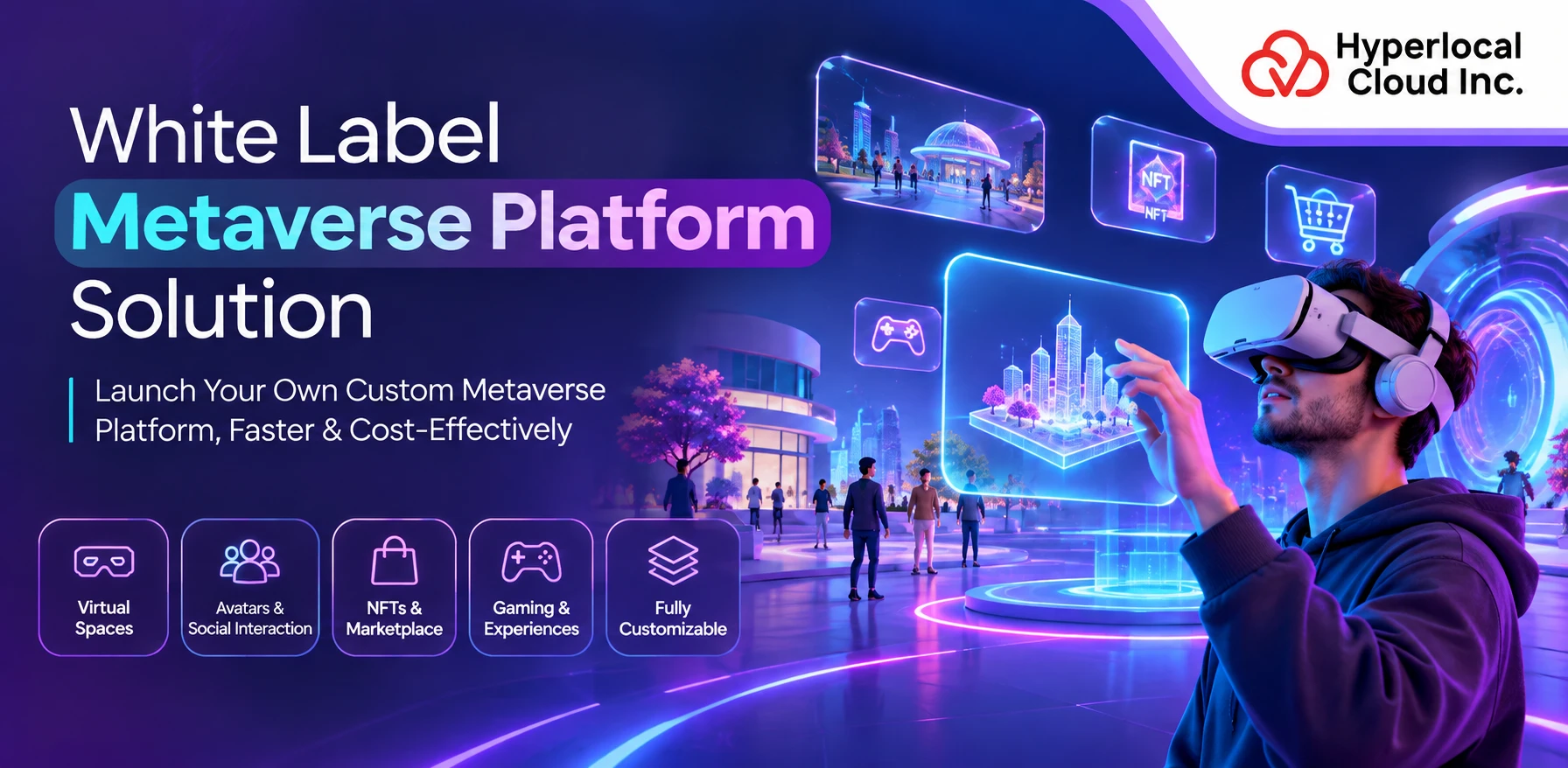
The metaverse is creating new opportunities for businesses to build immersive digital experiences, connect with customers, and introduce innovative revenue models. From virtual shopping and gaming to digital real estate and online education, businesses are exploring ways to establish their presence in interconnected virtual environments.
A white label metaverse platform offers a faster way to enter this growing digital ecosystem without developing every component from scratch. Businesses can leverage an existing technology solution, customize its branding, integrate relevant features, and launch their own metaverse platform.
Whether you want to build a virtual marketplace, gaming environment, social networking platform, or enterprise collaboration space, white label metaverse development provides a flexible foundation for your business idea.
In this guide, we explore how white label metaverse platforms work, their essential features, development benefits, monetization opportunities, technologies, and estimated development costs.
What Is a White Label Metaverse Platform?
A white label metaverse platform is a pre-developed virtual environment solution that businesses can customize and launch under their own brand identity. It provides the foundational technology and functionalities required to create interactive 3D digital spaces where users can communicate, explore virtual environments, attend events, purchase digital products, and participate in different activities.
Instead of investing time and resources in building an entire metaverse ecosystem from the beginning, businesses can use a ready-made solution and customize its functionality according to their requirements.
For example, an entrepreneur can launch a branded virtual shopping platform where customers explore 3D stores, interact with virtual products, and complete purchases without developing the entire infrastructure independently.
Launch Your Own Metaverse Platform Today
How Does a White Label Metaverse Platform Work?
A white label metaverse platform combines multiple technologies and functionalities to create an interactive digital environment. Its working process generally involves the following components:
1. Virtual Environment Creation: The platform provides 3D spaces such as virtual stores, meeting rooms, gaming environments, and event venues. Businesses can customize these spaces based on their industry requirements.
2. User Registration and Avatar Creation: Users create accounts and develop personalized avatars to represent themselves within the virtual environment.
3. Real-Time Communication: Integrated communication tools allow participants to exchange messages, interact through voice, and collaborate with other users.
4. Digital Asset Management: The platform manages virtual products, collectibles, NFTs, and other digital assets supported by its ecosystem.
5. Virtual Transactions: Payment gateways and digital wallets allow users to purchase products, access premium experiences, and complete supported transactions.
6. Administration and Monitoring: Administrators manage users, monitor activities, moderate content, analyze platform performance, and control business operations.
White Label Metaverse Platform vs. Custom Metaverse Development
Businesses can enter the metaverse through white label solutions or custom development. The right approach depends on the project requirements, available budget, desired customization, and business objectives.
| Comparison Factors | White Label Solution | Custom Development |
|---|---|---|
| Development Time | Generally faster | Usually longer |
| Initial Investment | Often lower | Generally higher |
| Customization | Based on available architecture and scope | Greater flexibility |
| Infrastructure | Existing foundation | Built according to requirements |
| Features | Existing and customizable features | Developed from scratch |
| Maintenance | Depends on the provider agreement | Managed through the development team |
| Scalability | Depends on architecture | Designed around project needs |
White Label Solution: This approach is suitable for startups and businesses that want to launch a branded metaverse solution using an existing technological foundation. It reduces initial development complexity and allows businesses to focus on customization and market entry.
Custom Metaverse Development: Custom development is appropriate for businesses with highly specific requirements, complex virtual environments, or unique functionalities that cannot be supported by an existing solution.
Key Benefits of White Label Metaverse Platform
A white label metaverse solution provides businesses with an opportunity to establish their virtual presence while reducing the effort required to build a complete digital ecosystem.
1. Faster Time to Market
A ready-made development foundation helps businesses reduce the time required for initial development. Instead of building every component independently, companies can customize existing functionalities and prepare their platform for launch.
2. Reduced Development Costs
White label solutions can reduce development expenses by utilizing existing components and infrastructure. Businesses can allocate more resources toward marketing, customer acquisition, and platform improvements.
3. Complete Brand Customization
Businesses can personalize the platform with their own logo, brand colors, visual elements, and user interface. This creates a consistent brand experience across virtual environments.
4. Flexible Business Models
A metaverse platform can support different business models, including subscriptions, virtual product sales, advertising, event tickets, and digital asset transactions.
5. Enhanced Customer Engagement
Interactive 3D environments, avatars, virtual events, and real-time communication encourage users to participate in more engaging digital experiences.
6. Multiple Revenue Opportunities
Businesses can introduce several monetization methods through digital products, virtual property, premium memberships, and marketplace transactions.
7. Scalable Business Infrastructure
A properly designed platform can support additional users, virtual spaces, and functionalities as business requirements grow. Scalability depends on the underlying architecture and infrastructure.
8. Simplified Platform Management
Integrated administration tools help businesses manage users, content, transactions, virtual environments, and platform activities from a centralized dashboard.
Essential Features of a White Label Metaverse Platform
A successful metaverse platform requires features that make virtual interactions convenient, engaging, and secure. Dividing these functionalities into user, admin, and advanced features helps businesses understand the platform’s requirements.
User Panel Features
1. User Registration and Login
Users can create accounts and securely access the metaverse platform through email, phone number, or supported social login options.
2. 3D Avatar Customization
Users can create personalized digital avatars by selecting facial features, clothing, accessories, hairstyles, and other appearance options.
3. Virtual World Exploration
Participants can navigate different virtual locations, explore interactive environments, visit digital stores, and discover platform activities.
4. Real-Time Chat and Communication
Integrated messaging and voice communication allow users to connect with other participants and communicate within virtual spaces.
5. Virtual Events and Meetings
Users can attend conferences, exhibitions, workshops, entertainment events, and social gatherings through interactive virtual environments.
6. Digital Wallet Integration
Digital wallets allow users to manage supported payment methods, view transaction histories, and purchase virtual products or services.
7. NFT Collection and Trading
Where blockchain and NFT functionality is supported, users can collect, purchase, sell, and manage digital collectibles through integrated marketplace features.
8. Social Networking
Users can connect with other participants, create communities, share experiences, and build relationships within the virtual ecosystem.
Admin Panel Features
1. User Management
Administrators can manage user accounts, monitor registrations, update account information, and control platform access.
2. Virtual Environment Management
The admin panel allows businesses to create, update, organize, and manage different virtual spaces and interactive environments.
3. Content Moderation
Administrators can review user-generated content, manage reported activities, and enforce community guidelines to maintain a safe environment.
4. Payment and Transaction Management
Businesses can monitor transactions, manage payment activities, review payment records, and handle supported refunds.
5. Analytics and Reporting
Integrated analytics provide insights into user engagement, platform traffic, transaction activity, and business performance.
6. NFT and Digital Asset Management
Administrators can manage supported digital assets, marketplace listings, collections, and related transactions.
7. Revenue Management
The dashboard helps businesses monitor subscriptions, sales, commissions, advertising revenue, and other monetization activities.
8. Security and Access Control
Role-based permissions, authentication, and administrative controls help protect sensitive platform operations.
Advanced Features
-
AI-Powered Virtual Assistants: Provide automated assistance, answer user questions, and guide participants through virtual environments.
-
AR/VR Integration: Support immersive experiences through compatible augmented and virtual reality devices.
-
Blockchain Integration: Enable supported decentralized transactions, digital ownership, and blockchain-based applications.
-
Smart Contracts: Automate specific agreements and transactions using predefined blockchain conditions.
-
3D Virtual Spaces: Create interactive environments for shopping, entertainment, education, and collaboration.
-
Cross-Platform Compatibility: Allow users to access supported experiences through web browsers, desktops, and mobile devices.
Build a Branded Virtual World With Hyperlocal Cloud
Technologies Used in White Label Metaverse Platform Development
A metaverse platform combines different technologies to create interactive, immersive, and scalable virtual experiences. Selecting the right technology stack depends on the platform’s functionality, target audience, and business objectives.
1. Artificial Intelligence (AI)
Artificial intelligence helps create intelligent virtual assistants, automated customer support, personalized recommendations, and interactive non-player characters (NPCs). AI can also analyze user behavior to improve engagement and deliver customized virtual experiences.
2. Virtual Reality (VR)
Virtual reality creates immersive digital environments that users can explore through compatible VR headsets. Businesses can use VR to develop virtual showrooms, training environments, gaming experiences, and interactive events.
3. Augmented Reality (AR)
Augmented reality combines digital elements with real-world surroundings. It allows users to interact with virtual products, digital objects, and interactive content through compatible smartphones, tablets, and AR devices.
4. Blockchain Technology
Blockchain supports decentralized applications, digital asset ownership, transparent transactions, and token-based ecosystems. Businesses can integrate blockchain to facilitate NFT marketplaces, digital collectibles, and supported cryptocurrency transactions.
5. Internet of Things (IoT)
IoT connects physical devices and sensors with digital environments. For example, businesses can use IoT integration to connect smart devices with virtual simulations, monitor equipment, and develop interactive digital experiences.
6. Cloud Computing
Cloud computing provides the infrastructure required to store data, manage virtual environments, process user requests, and support platform accessibility. Cloud-based infrastructure also helps businesses scale resources according to user demand.
7. 3D Modeling and Rendering
3D modeling and rendering technologies help developers create realistic virtual environments, digital products, avatars, buildings, and interactive objects. These technologies contribute to the overall visual quality of the metaverse experience.
8. Spatial and Edge Computing
Spatial computing enables digital systems to understand and interact with three-dimensional environments. Edge computing processes selected data closer to users and devices, helping reduce latency for supported real-time applications.
Different Types of Metaverse Platforms You Can Launch
The metaverse offers opportunities across multiple industries. Businesses can develop specialized virtual environments based on their target audience, operational requirements, and monetization strategies.
1. Gaming Metaverse Platform
A gaming metaverse allows players to explore virtual worlds, participate in multiplayer activities, customize avatars, and interact with other gaming communities. Businesses can introduce virtual gaming assets, memberships, tournaments, and in-game purchases.
2. Social Metaverse Platform
A social metaverse provides virtual spaces where users can communicate, create communities, attend events, and interact through personalized avatars. Features such as voice chat, messaging, virtual meeting rooms, and social activities can improve user engagement.
3. Real Estate Metaverse Platform
Real estate businesses can create virtual property environments where potential buyers explore buildings, view property layouts, and attend virtual property demonstrations. Virtual property marketplaces can also support digital asset transactions where applicable.
4. Educational Metaverse Platform
Educational institutions can use metaverse technology to create interactive classrooms, virtual laboratories, digital libraries, and collaborative learning environments. Students can participate in virtual lessons and explore educational simulations.
5. Virtual Shopping Metaverse Platform
Retailers can create virtual shopping environments where customers explore digital stores, view 3D product models, interact with virtual assistants, and discover products. Integration with ecommerce systems can support product purchases.
6. Corporate Metaverse Platform
Businesses can establish virtual offices, meeting rooms, employee training environments, and collaboration spaces. Employees can participate in virtual meetings and training sessions without being physically present at the same location.
7. Entertainment Metaverse Platform
Entertainment companies can develop virtual concert venues, movie experiences, interactive exhibitions, and digital event spaces. Users can attend events, communicate with other participants, and purchase premium access.
8. Healthcare Metaverse Platform
Healthcare organizations can explore virtual training, medical education, patient engagement, and immersive healthcare simulations. Any clinical application requires appropriate medical validation, privacy safeguards, and regulatory compliance.
How to Make Money With a Metaverse Platform?
Launching a metaverse platform creates opportunities to generate revenue through digital products, premium services, virtual experiences, and business partnerships. Selecting the right monetization strategy depends on the platform’s audience and industry.
1. Virtual Land and Property Sales
Businesses can create virtual property marketplaces where users purchase or lease digital spaces. These properties can be used for virtual stores, entertainment venues, exhibitions, and other activities.
2. NFT Marketplace Commissions
If the platform supports NFTs, businesses can charge transaction fees or commissions on eligible digital asset sales. Marketplace operators can generate revenue whenever users complete supported transactions.
3. Subscription-Based Revenue
Businesses can offer monthly or yearly subscriptions that provide access to premium virtual environments, exclusive features, additional storage, or enhanced user experiences.
4. Virtual Event Ticket Sales
Metaverse businesses can organize virtual concerts, conferences, exhibitions, workshops, and entertainment events. Users can purchase tickets to access exclusive sessions and experiences.
5. In-App Purchases
Users can purchase virtual clothing, avatar accessories, digital decorations, premium tools, and other platform-specific products. These purchases create additional monetization opportunities.
6. Advertising and Brand Partnerships
Businesses can collaborate with brands to display sponsored virtual products, promotional banners, branded environments, and interactive advertising experiences.
7. Premium Virtual Experiences
Platforms can charge users for accessing exclusive virtual locations, private events, specialized activities, and customized experiences.
8. Digital Asset Trading Fees
A metaverse marketplace can generate revenue by charging transaction or listing fees for supported digital asset exchanges. Businesses should establish clear ownership, payment, and compliance policies before introducing these services.
Connect With Our Metaverse Development Experts
Metaverse Platform Development Process
Developing a successful metaverse platform requires proper planning, technology selection, customization, and testing. A structured development process helps businesses turn their ideas into functional virtual experiences.
Step 1. Market Research and Business Planning
The first step is identifying your target audience, business objectives, competitors, and potential revenue opportunities. Developers and business stakeholders define the platform’s purpose and establish its functional requirements.
Step 2. Platform Selection and Requirement Analysis
Choose the appropriate white label metaverse solution based on your business model. Evaluate existing functionalities, supported devices, customization capabilities, integrations, and scalability requirements.
Step 3. UI/UX Design and Virtual World Planning
Design the platform’s interface, navigation, avatar experience, and virtual environments. The objective is to create an intuitive user experience that makes exploring and interacting with the metaverse convenient.
Step 4. Platform Customization
Customize the existing solution according to your brand identity and business requirements. This may include logos, themes, virtual locations, avatars, user dashboards, and industry-specific functionalities.
Step 5. Feature and Technology Integration
Integrate the required technologies and features, including AR/VR capabilities, AI-powered tools, blockchain functionality, payment gateways, communication systems, and digital asset management.
Step 6. Testing and Quality Assurance
Conduct functional, performance, compatibility, usability, and security testing. Developers identify and resolve technical issues to ensure the platform operates reliably across supported devices.
Step 7. Deployment and Launch
After successful testing, deploy the platform to the selected infrastructure and make it accessible to users. Configure analytics, administrative access, security settings, and operational processes.
Step 8. Maintenance and Upgrades
Monitor platform performance, resolve technical issues, improve existing features, and introduce updates based on user feedback. Regular maintenance helps maintain platform stability and support future business growth.
How Much Does White Label Metaverse Platform Cost?
The cost of developing a metaverse platform depends on its features, customization requirements, technology integrations, infrastructure, and overall project complexity.
A basic platform with essential virtual environments and user interaction capabilities will generally require a different investment than an advanced ecosystem with AR/VR functionality, blockchain integration, NFT marketplaces, and complex 3D environments.
Factors Affecting Development Costs
1. Platform Customization Requirements
The level of branding, interface changes, virtual environment customization, and specialized functionality directly influences the overall development investment.
2. Features and Functionalities
Basic user registration, avatar creation, and virtual navigation require different development resources than advanced social networking, virtual commerce, and multiplayer functionality.
3. AR/VR Integration
Supporting immersive experiences through VR headsets and AR-compatible devices can increase development costs because of additional compatibility, testing, and optimization requirements.
4. Blockchain and NFT Integration
Blockchain networks, smart contracts, digital wallets, NFT marketplaces, and token management can add complexity to the development process.
5. 3D Design and Virtual Environment Development
The number of virtual spaces, quality of 3D assets, avatar customization options, and rendering requirements influence project costs.
6. Infrastructure and Cloud Hosting
Server resources, bandwidth, storage, content delivery, and real-time communication infrastructure contribute to ongoing operational expenses.
7. Maintenance and Technical Support
Regular upgrades, security improvements, bug fixes, and infrastructure monitoring should also be included in the overall project budget.
How to Optimize Your Development Budget?
-
Start with essential platform functionalities.
-
Select a white label solution that supports your business requirements.
-
Prioritize features according to user demand.
-
Integrate advanced technologies when they provide clear business value.
-
Plan infrastructure according to expected user activity.
-
Introduce additional features through future development phases.
The best approach is to request a project-specific quotation after defining your platform requirements. This helps establish a realistic budget and development timeline.
Challenges in Metaverse Platform Development and Their Solutions
Although metaverse technology offers several business opportunities, developing and managing a virtual ecosystem also involves technical and operational challenges.
1. Data Privacy and Security
Metaverse platforms may process personal information, communication data, payment details, and user-generated content.
Solution: Implement encryption, secure authentication, access controls, privacy policies, and regular security assessments to protect user information.
2. High Infrastructure Requirements
Interactive 3D environments and real-time communication can require significant computing resources, storage, and bandwidth.
Solution: Use scalable cloud infrastructure, efficient asset delivery, performance optimization, and appropriate resource management.
3. User Adoption and Engagement
Users may find unfamiliar virtual environments difficult to navigate, which can affect platform adoption.
Solution: Develop intuitive interfaces, simple onboarding processes, interactive tutorials, and engaging experiences that encourage users to return.
4. Cross-Platform Compatibility
Different devices have varying hardware capabilities, screen sizes, and performance limitations.
Solution: Optimize the platform for supported browsers, desktops, mobile devices, and compatible AR/VR hardware.
5. Scalability and Performance
Increasing user activity can create challenges related to server capacity, latency, and virtual environment performance.
Solution: Use scalable architecture, load balancing, efficient data processing, and performance monitoring.
6. Digital Asset Security
Platforms that support NFTs, digital wallets, and blockchain transactions must protect users against unauthorized access and fraudulent activities.
Solution: Introduce secure wallet integrations, smart contract audits where applicable, transaction monitoring, and clear digital asset ownership policies.
Turn Your Metaverse Business Idea Into Reality
Industries That Can Benefit From Metaverse Solutions
Metaverse technology can support businesses across different industries by creating interactive digital environments, improving customer experiences, and introducing new service delivery models.
1. Gaming and Entertainment
Gaming companies can develop interactive virtual worlds where players participate in multiplayer games, attend virtual events, customize avatars, and purchase digital gaming assets.
2. Real Estate
Real estate businesses can offer virtual property tours, 3D building demonstrations, digital property showcases, and interactive property exhibitions.
3. Retail and Ecommerce
Retailers can establish virtual shopping stores where customers explore products, view 3D demonstrations, and interact with virtual shopping assistants before purchasing.
4. Education and E-Learning
Educational institutions can create virtual classrooms, interactive laboratories, training simulations, and collaborative learning environments for students.
5. Healthcare
Healthcare organizations can use immersive environments for medical training, healthcare simulations, patient education, and professional collaboration.
6. Tourism and Hospitality
Travel companies can develop virtual destination experiences, hotel tours, digital travel exhibitions, and interactive destination showcases to attract potential customers.
7. Banking and Finance
Financial institutions can explore virtual customer service environments, interactive financial education, and immersive banking experiences with appropriate security and regulatory controls.
8. Corporate Training
Organizations can establish virtual training rooms where employees participate in interactive workshops, onboarding sessions, professional development programs, and collaborative activities.
Why Choose Hyperlocal Cloud for Metaverse Platform Development?
Choosing the right development partner is important when launching a branded metaverse platform. Businesses need a technology partner that understands their requirements and can deliver a solution aligned with their business objectives.
Hyperlocal Cloud offers metaverse platform development services to help entrepreneurs and businesses establish their presence in virtual environments.
Here are some reasons to consider Hyperlocal Cloud for your metaverse development project.
1. Ready-to-Deploy Metaverse Solutions
Get started with an existing metaverse development foundation instead of building every component from scratch. This approach can simplify initial development and accelerate the platform launch process.
2. Custom Branding and Personalization
Customize your platform with your business logo, brand colors, virtual environments, avatars, and user interface elements to establish a unique digital identity.
3. Advanced Technology Integration
Integrate technologies such as artificial intelligence, blockchain, AR, VR, and 3D rendering according to your platform requirements and business model.
4. Experienced Development Team
Work with a development team that understands different business requirements and can help transform your metaverse concept into a functional digital solution.
5. Scalable Platform Architecture
Develop a platform architecture that can accommodate additional functionalities, virtual environments, and increasing user activity as your business expands.
6. End-to-End Development Support
Get assistance throughout the development journey, from requirement analysis and platform customization to testing, deployment, and technical improvements.
7. Post-Launch Maintenance and Assistance
Receive ongoing technical support to address issues, improve platform performance, maintain security, and introduce new functionalities when required.
Take the next step toward building your virtual business ecosystem. Contact Hyperlocal Cloud today and turn your metaverse business idea into reality.
FAQs (Frequently Asked Questions)

Nisha Bagga is a technical writer with more than 7 years of experience creating high-quality content for a wide range of industries. She specializes in developing clear, engaging, and well-researched technical and business content tailored to diverse audiences and industry requirements.

Need Help With
Development?