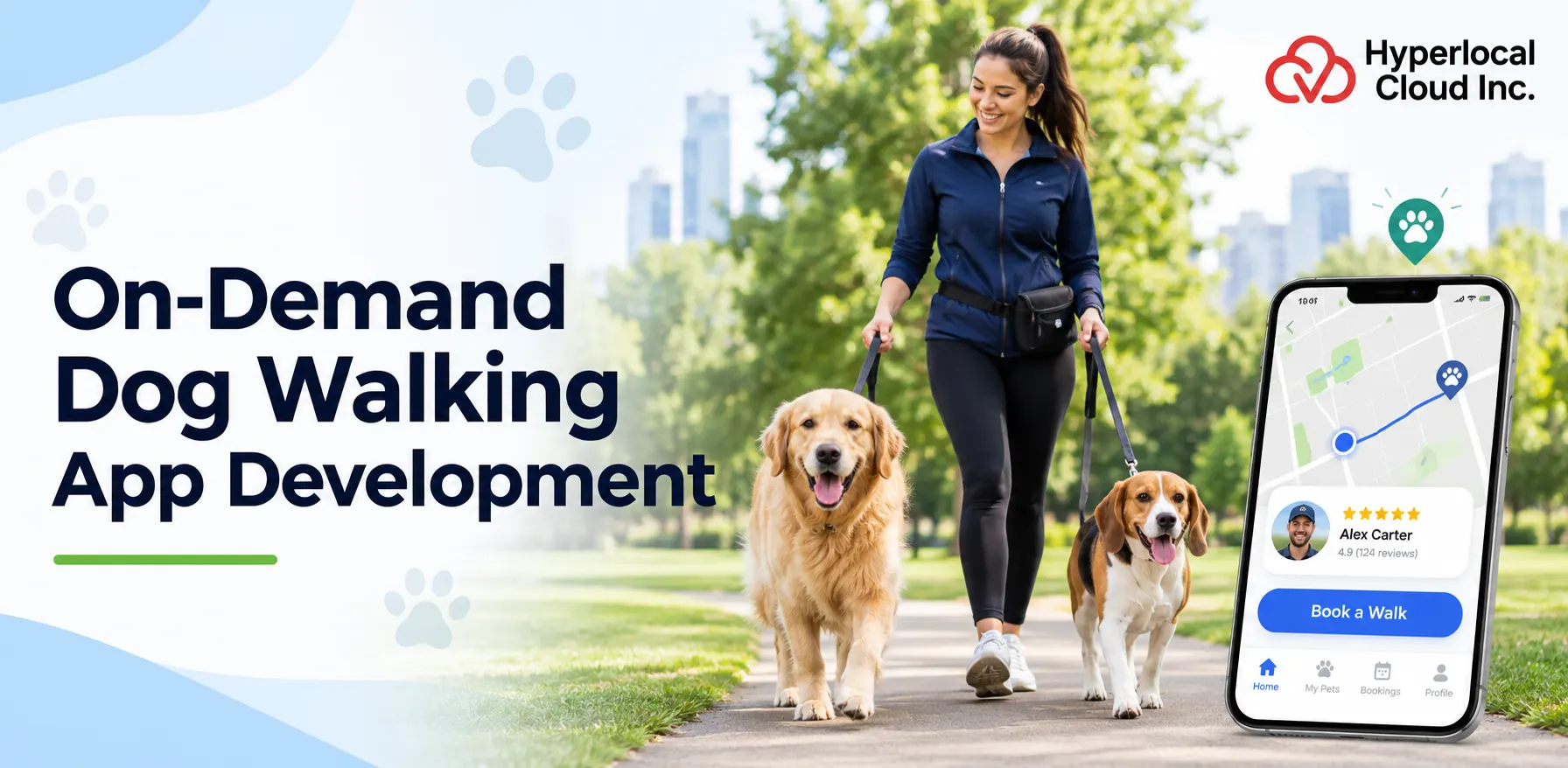
The pet care industry has created significant business opportunities for entrepreneurs, particularly in services that make everyday pet ownership more convenient. Dog walking is one such service where technology can connect pet owners with professional walkers, allowing customers to find, schedule, and manage walking services through a single application.
The Uber business model offers a practical approach to building this type of platform. By applying its location-based booking system to pet care, businesses can develop an application where customers find nearby dog walkers, compare profiles, schedule appointments, track walking sessions, and make secure payments.
The market opportunity is supported by growing pet ownership and spending. According to the American Pet Products Association (APPA), U.S. pet industry expenditures reached $158 billion in 2025, highlighting the continued demand for pet-related products and services. Source: APPA 2026 State of the Industry Report.
For entrepreneurs and investors, on-demand dog walking app development offers an opportunity to build a service marketplace with multiple revenue streams, including booking commissions, subscriptions, and premium services. This guide explores the essential features, business models, development process, technology stack, and costs involved in building a dog walking app like Uber.
What Is an On-Demand Dog Walking App Like Uber?
An on-demand dog walking app is a digital platform that connects pet owners with dog walkers who offer scheduled or immediate walking services. Customers can use the application to find available professionals in their area, review their profiles, select suitable time slots, and book services according to their requirements.
The concept follows the location-based service model popularized by Uber. Instead of connecting passengers with drivers, the platform connects pet owners with dog walkers. Both sides have dedicated interfaces to manage bookings, communicate, track activities, and handle payments.
A typical dog walking platform consists of three major components:
- Pet Owner Application: Allows customers to create pet profiles, search for walkers, schedule appointments, make payments, and monitor walking sessions.
- Dog Walker Application: Enables service providers to register, manage their availability, accept booking requests, navigate to customer locations, and track earnings.
- Admin Panel: Gives business owners control over users, service providers, bookings, commissions, payments, and platform operations.
Unlike traditional dog walking services that depend on phone calls and manual scheduling, an app-based solution automates several operational activities. Businesses can also expand their services by including pet sitting, grooming appointments, pet transportation, and other related offerings.
For startups, the model provides an opportunity to establish a local service marketplace and gradually expand into multiple locations.
Build Your Dog Walking App Today With Our Expert Development Team
How Does an Uber-Like Dog Walking App Work?
Understanding the user journey is important before starting development. The platform should make booking a dog walking service straightforward while ensuring that walkers can manage requests without unnecessary complications.
Here is how a typical booking process works:
Step 1: User Registration and Pet Profile Creation
Pet owners create accounts using their email addresses, phone numbers, or social login options. They can add information about their dogs, including breed, age, size, health requirements, walking preferences, and behavioral characteristics.
Step 2: Search for Nearby Dog Walkers
The application uses location services to identify available dog walkers within a selected service area. Customers can browse providers based on distance, ratings, experience, availability, and service charges.
Step 3: Select a Walker and Schedule a Booking
Customers review walker profiles and choose a professional according to their requirements. They can request an immediate walk or schedule a service for a specific date and time.
Step 4: Booking Confirmation
The selected walker receives a booking notification and can accept or decline the request. Once accepted, the pet owner receives confirmation with the service details.
Step 5: Start the Walking Session
The dog walker reaches the customer’s location and starts the session through the application. GPS tracking can record the walking route and provide activity updates to the pet owner.
Step 6: Complete Payment
After the service is completed, the customer pays through the integrated payment gateway. The platform calculates its commission and updates the walker’s earnings.
Step 7: Ratings and Reviews
Pet owners can rate the service and share feedback about their experience. These reviews help other customers evaluate service providers and help businesses maintain service quality.
This workflow provides a structured experience for customers and service providers while allowing the business to manage transactions through a centralized platform.
Key Features of an On-Demand Dog Walking App
Features determine how customers interact with the platform and how efficiently service providers manage their work. During dog walking app development, businesses should consider the requirements of all three user groups instead of focusing exclusively on the customer-facing application.
Pet Owner App Features
The pet owner application should provide convenient access to dog walkers and make booking management simple.
User Registration and Login
Customers should be able to create accounts using email, phone number, or social authentication. Secure login and account management help protect personal information.
Pet Profile Management
Pet owners can create individual profiles for their dogs and provide important information such as breed, age, size, medical requirements, behavior, and walking preferences. This helps walkers understand each pet before accepting a booking.
Location-Based Dog Walker Search
GPS integration helps customers discover nearby dog walkers based on their current location. Search filters can include availability, distance, ratings, experience, and pricing.
Walker Profiles and Ratings
Customers should be able to review a walker’s experience, qualifications, service history, customer feedback, and profile information before making a booking.
Instant Booking and Scheduling
The booking feature should support immediate requests as well as advance scheduling. Customers can select walking duration, preferred time slots, and additional instructions.
Real-Time GPS Tracking
GPS tracking allows customers to follow their dog’s walking route while the service is in progress. It also provides greater transparency and reassurance during the session.
In-App Chat and Calling
Communication tools allow customers and walkers to discuss pickup instructions, pet behavior, special requirements, and other booking-related details.
Secure Payment Gateway
Multiple payment methods make transactions convenient. The application should support payment processing, invoices, refunds, and transaction records.
Booking History
Customers can access previous and upcoming bookings, review completed services, and repeat their preferred walking schedules.
Push Notifications
Notifications keep customers informed about booking confirmations, walker arrivals, session updates, payment status, and upcoming appointments.
Dog Walker App Features
The dog walker application should help service providers manage their availability, respond to requests, and monitor their earnings.
Walker Registration and Verification: Allows service providers to register and submit identity documents, experience details, and other verification information.
Profile Management: Enables walkers to update their qualifications, experience, service areas, photographs, and pricing.
Availability Management: Allows walkers to define their working hours, available dates, and preferred service locations.
Booking Request Management: Provides options to accept, reject, or manage incoming customer requests.
GPS Navigation: Helps walkers locate customer pickup points and navigate walking routes.
Walk Tracking: Records the duration and route of an active walking session.
Earnings Dashboard: Displays completed bookings, commissions, pending payments, and total earnings.
Payout Management: Allows eligible walkers to track payment settlements and withdrawal requests.
Customer Communication: Supports communication with pet owners before and during appointments.
Ratings and Reviews: Gives walkers access to customer feedback and service ratings.
Admin Panel Features
The admin dashboard gives business owners control over platform operations. It should provide centralized access to important business activities.
| Feature | Purpose |
| User Management | Manage customer accounts and profiles |
| Walker Management | Review, verify, and manage walkers |
| Booking Management | Monitor active, upcoming, and completed bookings |
| Commission Management | Configure platform commission rates |
| Payment Management | Track transactions, refunds, and payouts |
| Service Area Management | Define locations where services are available |
| Promotion Management | Create discounts, offers, and referral campaigns |
| Dispute Management | Handle customer complaints and service issues |
| Analytics and Reports | Monitor bookings, revenue, and platform performance |
An effective admin panel reduces manual work and gives business owners better visibility into marketplace operations.
Advanced Features to Make Your Dog Walking App Stand Out
Basic booking and tracking functionalities are necessary for launching a platform. However, businesses looking to differentiate their services can introduce advanced features that improve convenience, personalization, and customer retention.
AI-Based Dog Walker Recommendations: AI algorithms can analyze customer preferences, pet requirements, walker experience, location, and previous bookings to recommend suitable service providers.
Smart Scheduling and Automated Matching: Automated matching can identify walkers whose availability, location, and experience align with a customer’s booking requirements.
Live Walk Reports: Walkers can share information about walking duration, distance covered, breaks, and completed activities. Customers can access these reports after the session.
Photo and Video Sharing: Service providers can upload photographs and short videos during or after a walk, giving pet owners additional visibility into the service.
Emergency Assistance and SOS: An emergency feature can help walkers quickly contact designated customer contacts or platform support if an unexpected situation occurs.
Subscription and Membership Plans: Businesses can introduce recurring plans for customers who book dog walking services regularly. Different packages can include weekly or monthly walking sessions.
Multiple Pet Booking: Customers with multiple dogs can request services for more than one pet through a single booking, subject to walker capacity.
Route Optimization: Route planning can help walkers identify suitable paths and manage scheduled appointments more efficiently.
Loyalty and Referral Programs: Reward points, referral credits, and discounts can encourage repeat bookings and customer recommendations.
These features should be introduced according to the target audience and operational requirements. Adding every advanced functionality during the initial launch may increase development costs without providing immediate business value.
Business Models for an On-Demand Dog Walking App
Choosing the right business model is an important decision for entrepreneurs planning to enter the pet care industry. It determines how the platform generates revenue, attracts service providers, and retains customers.
An Uber-like dog walking platform can support multiple revenue models depending on its target market and service structure.
1. Commission-Based Model
The platform charges a percentage of every completed dog walking booking. For example, if a customer pays $25 for a walking session and the platform charges a 20% commission, the business earns $5 while the remaining $20 goes to the walker before any applicable adjustments.
This model is suitable for marketplaces that connect independent dog walkers with pet owners.
2. Subscription-Based Model
Businesses can introduce monthly or annual membership plans for customers and service providers. Pet owners may receive discounted bookings, priority scheduling, or additional services, while walkers can access premium platform features through paid memberships.
3. Freemium Model
The platform offers basic functionalities without charge and introduces paid upgrades for additional benefits. For example, customers can access standard bookings for free while premium members receive priority matching, exclusive offers, or advanced scheduling options.
4. Featured Listing Model
Dog walkers can pay to promote their profiles within search results. Featured placement helps service providers gain greater visibility, while the platform earns additional revenue from promotional listings.
5. Service Fee Model
The business can charge customers a separate convenience or platform fee for every booking. This amount is added to the service price and displayed during checkout.
6. Corporate Partnership Model
Businesses can partner with pet stores, veterinary clinics, pet insurance providers, and residential communities. These partnerships can generate referral income and introduce the platform to new customer groups.
Entrepreneurs can combine multiple revenue models to diversify income. However, pricing should remain transparent so that additional charges do not discourage customers or service providers.
Turn Your Dog Walking Business Idea Into a Profitable Venture
How Does a Dog Walking App Make Money?
Apart from selecting a business model, entrepreneurs should understand the different revenue opportunities available within the platform.
A dog walking application can generate income through the following channels:
- Booking Commissions: Earn a percentage from every completed walking appointment.
- Premium Subscriptions: Offer paid memberships with exclusive benefits for customers or walkers.
- Cancellation Charges: Collect applicable fees when customers or service providers cancel bookings outside the permitted cancellation period.
- Featured Walker Listings: Charge service providers for promotional placement within the application.
- Additional Pet Care Services: Generate revenue by offering pet sitting, grooming, transportation, and other related services.
- Business Partnerships: Earn referral fees through collaborations with pet care businesses and service providers.
- In-App Advertising: Allow relevant pet brands and businesses to promote their products or services.
For example, consider a platform that processes 2,000 monthly bookings with an average order value of $25 and a 20% commission.
| Business Metric | Example |
| Monthly Bookings | 2,000 |
| Average Booking Value | $25 |
| Total Booking Value | $50,000 |
| Platform Commission | 20% |
| Monthly Commission Revenue | $10,000 |
Illustrative calculation, not a guaranteed revenue projection. It excludes payment processing, refunds, operating expenses, taxes, and other costs.
This example demonstrates how booking volume and commission rates influence marketplace revenue. Actual profitability depends on customer acquisition costs, walker availability, repeat bookings, and the expenses involved in operating the platform.
Step-by-Step Process to Develop an On-Demand Dog Walking App Like Uber
Building a dog walking platform requires a planned development approach. Businesses should identify their operational requirements before investing in design and development.
The following steps explain how to approach the process.
Step 1: Conduct Market Research
Start by understanding the target audience, local demand, existing competitors, and customer expectations. Research helps identify which services customers are willing to pay for and where existing platforms have service gaps.
Analyze competing pet care applications to understand their booking processes, pricing structures, features, and customer reviews. Pay attention to complaints related to walker availability, cancellations, pricing transparency, and pet safety.
This research will help define the platform’s positioning and identify opportunities to offer a better customer experience.
Step 2: Define Your Business Model
Once the market research is complete, decide how the business will operate and generate revenue.
Determine whether the platform will work with independent walkers, registered pet care businesses, or an in-house team. You should also establish service charges, commission percentages, cancellation policies, and payment settlement procedures.
A clearly defined business model helps establish the operational requirements for development.
Step 3: Finalize App Requirements
Prepare a list of functionalities required for customers, dog walkers, and administrators.
For the initial launch, prioritize essential capabilities such as registration, pet profiles, walker search, booking management, GPS tracking, payment processing, and notifications.
You should also define important operational rules, including walker verification, booking acceptance, service completion, refunds, and customer complaints.
Step 4: Choose the Right Technology Stack
Technology selection influences application performance, security, maintenance, and scalability.
Businesses should choose technologies according to their development budget, platform requirements, integration needs, and expected user volume.
For example, cross-platform frameworks can help launch applications on Android and iOS while reducing the need to maintain completely separate codebases.
Step 5: Design the UI/UX
The application should provide a simple experience for both pet owners and walkers.
Focus on clear navigation, accessible booking options, readable service information, and straightforward payment processes. The most important actions, such as finding a walker or accepting a booking, should be easy to locate.
Before development begins, create wireframes and interactive prototypes to evaluate the user journey.
Step 6: Develop the MVP
An MVP, or Minimum Viable Product, includes the essential features needed to launch and validate the business idea.
Instead of building a large application with numerous advanced features, start with the core booking workflow.
An initial MVP may include:
- Customer registration and pet profiles
- Walker registration and verification
- Location-based walker search
- Booking and scheduling
- Basic GPS tracking
- Payment integration
- Ratings and reviews
- Admin dashboard
Once the platform starts receiving customer feedback, businesses can prioritize additional features based on actual usage.
Step 7: Integrate Third-Party Services
Several external services are required to support the application’s functionality.
These may include mapping APIs for location services, payment gateways for transactions, notification services for booking updates, and communication tools for customer-walker interactions.
Each integration should be tested to ensure that information is transferred securely and that the overall booking experience remains consistent.
Step 8: Test and Launch
Before making the application available to customers, conduct thorough testing.
Functional testing checks whether all features work as expected. Performance testing evaluates how the application behaves under different workloads, while security testing helps identify vulnerabilities.
Businesses should also test real-world booking scenarios, including cancellations, payment failures, location inaccuracies, and emergencies.
After resolving major issues, the application can be deployed to the relevant app stores.
Step 9: Maintain and Scale
Launching the application is only the beginning of the business journey. Regular maintenance is necessary to address technical issues, improve performance, and maintain compatibility with operating system updates.
As the user base grows, businesses can expand service areas, onboard additional walkers, introduce new pet care services, and implement advanced features.
Continuous monitoring of booking completion rates, customer retention, walker availability, and revenue can help guide future improvements.
Technology Stack Required for Dog Walking App Development
Selecting an appropriate technology stack is essential for building a reliable and scalable platform. The technology requirements may vary depending on whether the business chooses native applications, cross-platform development, or a web-based solution.
Here is an example of a technology stack that can support an Uber-like dog walking platform.
| Development Component | Recommended Technologies |
| iOS Development | Swift |
| Android Development | Kotlin |
| Cross-Platform Development | Flutter, React Native |
| Frontend Development | React.js, Next.js |
| Backend Development | Node.js, NestJS, Python |
| Database | PostgreSQL, MongoDB |
| Cloud Infrastructure | AWS, Google Cloud |
| Maps and GPS | Google Maps API, Mapbox |
| Payment Integration | Stripe, Razorpay |
| Push Notifications | Firebase Cloud Messaging |
| Real-Time Communication | WebSockets, WebRTC |
| Analytics | Firebase Analytics, Google Analytics |
The final technology selection should consider the application’s complexity, expected traffic, development resources, and long-term maintenance requirements.
For example, PostgreSQL can manage structured information such as users, bookings, payments, and service records. WebSockets can support real-time updates, while mapping services provide location and navigation capabilities.
Cloud infrastructure also allows businesses to adjust computing resources as the number of customers and service providers increases.
How Much Does It Cost to Develop an On-Demand Dog Walking App Like Uber?
The cost of developing a dog walking application depends on its features, design complexity, technology stack, number of platforms, and development team’s location.
A basic application with registration, walker profiles, booking management, and payment integration requires fewer development resources than a comprehensive marketplace with real-time tracking, automated matching, AI recommendations, and advanced analytics.
For planning purposes, businesses can consider the following indicative development budgets:
| App Type | Estimated Development Cost |
| Basic Dog Walking App MVP | $10,000–$20,000 |
| Mid-Level Dog Walking Platform | $20,000–$40,000 |
| Advanced Uber-Like Dog Walking App | $40,000–$80,000+ |
These are indicative planning estimates, not fixed development quotations. Actual costs depend on scope, integrations, team rates, and project requirements.
Factors That Influence Dog Walking App Development Cost
1. Number of Applications
A complete marketplace generally requires separate interfaces for pet owners, dog walkers, and administrators. Building native iOS and Android applications can require additional development resources compared with a shared cross-platform codebase.
2. Feature Complexity
Basic booking and account management features are relatively straightforward. Advanced functionalities such as real-time GPS tracking, automated matching, route optimization, and AI-powered recommendations require additional development and testing.
3. UI/UX Design
The number of screens, design customization, animations, and user experience requirements influence the overall budget. A more customized interface generally requires additional design and development work.
4. Third-Party Integrations
Mapping services, payment gateways, communication tools, and notification systems may involve integration costs and ongoing usage charges.
5. Backend Infrastructure
The backend manages user accounts, booking requests, service availability, payments, and application data. Its complexity increases as the platform supports more users and business operations.
6. Development Team Location and Expertise
Development rates vary according to geographical location, technical expertise, and project complexity. The engagement model and team composition can also influence the final quotation.
How Can Businesses Reduce Development Costs?
Entrepreneurs can control initial investment by focusing on essential features and avoiding unnecessary customization during the first development phase.
Another option is to consider a ready-made or white-label solution. These platforms provide pre-developed functionalities that can be customized according to business requirements.
This approach can reduce development time and initial investment compared with building an entire application from scratch. Businesses should still evaluate customization flexibility, scalability, security, source-code ownership, and ongoing support before selecting a solution.
Start Your Pet Care Marketplace With a Feature-Rich Mobile Application
Challenges in Dog Walking App Development and Their Solutions
Building a dog walking marketplace involves several operational and technical challenges. Businesses must address these issues to maintain customer confidence, provide reliable services, and establish long-term relationships with service providers.
Here are some common challenges and practical ways to manage them.
| Challenges | Possible Solutions |
| Walker Verification | Implement identity verification, background checks, and profile approval procedures. |
| Customer Trust | Introduce verified profiles, ratings, reviews, and transparent service information. |
| Real-Time Tracking | Integrate reliable GPS and location APIs to monitor walking sessions. |
| Booking Cancellations | Establish cancellation policies and automated booking notifications. |
| Payment Security | Use trusted payment gateways and secure transaction processing. |
| Walker Availability | Implement availability management and automated booking matching. |
| Pet Safety | Provide emergency assistance, detailed pet profiles, and customer contact information. |
| Service Quality | Monitor customer feedback and introduce performance evaluation systems. |
Why Is Walker Verification Important?
Trust is particularly important in pet care services because customers are allowing another person to handle their pets. Businesses should establish a verification process before allowing service providers to accept bookings.
Depending on the operating location, this process may include identity checks, references, experience verification, and legally permissible background screening.
The platform should also establish clear procedures for reporting incidents, resolving disputes, and handling emergencies. These measures help businesses create a more accountable service environment.
Marketing Strategies to Grow Your Dog Walking App
Developing an application does not automatically guarantee customers or bookings. Businesses need a marketing strategy that attracts pet owners, encourages dog walkers to join, and builds awareness within their target locations.
For a location-based marketplace, marketing should focus on establishing demand and service availability in specific areas before expanding into new markets.
Here are some strategies businesses can consider.
1. Local SEO and Google Business Profile
Optimize the business website for location-based searches such as dog walking services in a particular city or neighborhood. Create relevant landing pages that explain available services, pricing, and booking procedures.
A well-maintained Google Business Profile can also help eligible local businesses improve their visibility in local search results.
2. Social Media Marketing
Platforms such as Instagram, Facebook, and TikTok can help businesses connect with pet owners. Share dog-walking videos, pet care tips, customer experiences, and promotional content to build an active community.
3. Referral and Rewards Programs
Encourage existing customers to invite friends and family through referral incentives. Businesses can offer booking credits or discounts to customers who successfully refer new users.
4. Partnerships With Veterinary Clinics
Collaborate with veterinary clinics, pet grooming centers, pet supply stores, and animal care organizations. These partnerships can introduce the application to people who already use pet-related services.
5. Influencer Collaborations
Work with pet influencers and local content creators to demonstrate how the application works. Real-world booking demonstrations can help potential customers understand the platform’s benefits.
6. First-Time Booking Discounts
Introductory discounts can encourage customers to try the service. Businesses can also offer promotional packages for recurring walking sessions.
7. Local Community Engagement
Participate in pet events, dog parks, adoption programs, and community activities. Building relationships with local pet owners can help establish trust and generate early bookings.
8. Paid Search and Social Campaigns
Run targeted advertising campaigns to reach people searching for dog walking services. Campaigns can focus on specific locations, customer interests, and relevant service requirements.
An important consideration is to maintain a balance between customer acquisition and walker onboarding. Marketing heavily to pet owners without sufficient service provider availability can result in poor booking experiences.
Ready-Made vs. Custom Dog Walking App Development
Entrepreneurs planning to launch an on-demand dog walking platform generally have two development options: building a custom application or choosing a ready-made solution.
Both approaches can support a dog walking business, but they differ in terms of investment, development time, customization, and technical flexibility.
| Comparison Factors | Custom Development | Ready-Made Solution |
| Initial Investment | Generally higher | Generally lower |
| Development Time | Longer | Shorter |
| Customization | Extensive | Depends on solution |
| Feature Availability | Developed according to requirements | Pre-built features available |
| Scalability | Designed around business requirements | Depends on architecture |
| Maintenance | Requires ongoing development support | Depends on provider agreement |
| Flexibility | Greater control over functionality | Limited by existing framework |
Custom Dog Walking App Development
Custom development involves building the application according to specific business requirements. Entrepreneurs can define the user experience, booking workflows, payment structure, and platform functionality.
This approach is suitable for businesses with unique operational requirements or plans to introduce specialized features.
However, custom development generally requires a higher initial investment and a longer development timeline.
Ready-Made Dog Walking App Development
A ready-made solution provides pre-developed functionalities that businesses can customize and deploy according to their requirements.
Instead of developing every feature from the beginning, entrepreneurs can start with an existing platform that supports essential booking and marketplace operations.
This approach can be suitable for startups, agencies, and established pet care businesses that want to enter the market without investing in a completely new application.
Future Trends in On-Demand Dog Walking App Development
The pet care industry continues to adopt digital solutions that improve convenience and provide more personalized services. Businesses developing new platforms should consider emerging technologies that can improve service delivery and customer engagement.
Some trends that may influence the future of pet care app development include:
1. AI-Powered Pet Care Recommendations
Artificial intelligence can analyze pet profiles, customer preferences, and previous booking information to recommend suitable services and walkers.
For example, the application could suggest walkers with experience handling specific dog breeds or pets with particular walking requirements.
2. Predictive Booking and Scheduling
Predictive systems can analyze previous booking patterns to suggest suitable walking schedules. This can help customers manage recurring appointments and help service providers plan their availability.
3. Wearable Pet Tracking Integration
Smart collars and wearable devices can provide additional information about a dog’s location and activity. Integrating supported devices with a dog walking app could give pet owners access to more detailed activity information.
4. Smart Pet Health Monitoring
Connected pet devices may provide information about activity levels, movement patterns, and other health-related indicators. Businesses can explore integrations that help owners monitor their pets while maintaining appropriate data privacy.
5. Automated Walker Matching
Advanced matching systems can evaluate location, availability, experience, customer preferences, and pet requirements to recommend suitable walkers.
This can improve the booking experience and reduce the time customers spend searching for service providers.
6. Personalized Pet Care Experiences
Applications can use customer preferences and booking history to recommend relevant services, recurring schedules, and personalized offers.
7. Expansion Into Complete Pet Care Ecosystems
Dog walking platforms can gradually expand beyond their initial service offerings. Businesses may introduce pet sitting, grooming, transportation, training, and other services through the same application.
This creates opportunities to generate revenue from multiple pet care categories while offering customers a more comprehensive platform.
For entrepreneurs, these trends represent potential areas for future investment. However, new technologies should solve actual customer problems rather than being introduced simply to make an application more complex.
Why Choose the Right Dog Walking App Development Company?
Selecting the right development partner is an important part of building a successful dog walking platform. The development team should understand marketplace operations, location-based services, payment processing, and the specific requirements of pet care businesses.
Before selecting a development company, consider the following factors:
Industry Experience: Review the company’s experience in developing on-demand applications, service marketplaces, and booking platforms.
Technical Expertise: Evaluate its knowledge of mobile development, backend architecture, GPS integration, and cloud infrastructure.
Customization Capabilities: Ensure the team can adapt the application according to your business model and operational requirements.
Security Practices: Check how the company handles user data, payment information, authentication, and application security.
Scalability: Discuss how the platform can support additional users, service providers, and geographical locations.
Post-Launch Support: Confirm the availability of maintenance, updates, troubleshooting, and technical assistance.
A reliable development partner should also help evaluate the MVP scope, recommend suitable technologies, and identify features that can be introduced in later development phases.
Businesses should compare project proposals based on technical capabilities and long-term value rather than selecting a provider solely on the basis of its initial quotation.
Bring Your Dog Walking App Idea to Life With Experts
Conclusion
The growing demand for convenient pet care services has created opportunities for entrepreneurs interested in building digital service marketplaces. An Uber-like dog walking platform can connect pet owners with local service providers while simplifying booking, scheduling, tracking, and payment management.
However, launching a sustainable business requires more than developing a feature-rich application. Entrepreneurs must identify their target audience, choose an appropriate revenue model, establish reliable service provider verification, and build an effective customer acquisition strategy.
Whether you choose custom development or a ready-made solution, the focus should remain on creating a convenient, trustworthy, and scalable platform.
Working with an experienced dog walking app development company can help translate your business requirements into a functional application. With the right development approach and a clear market strategy, businesses can establish a strong foundation in the growing digital pet care industry.
FAQs (Frequently Asked Questions)

Patt Cummins is an experienced content writer with over 10 years of experience creating clear and engaging content for technology-focused industries. He specializes in simplifying complex technical topics into easy-to-understand stories that educate readers, support brand communication, and help businesses effectively share their solutions.

Need Help With
Development?