
Must-Have Features to Include in a TradeZella-Like Trading App
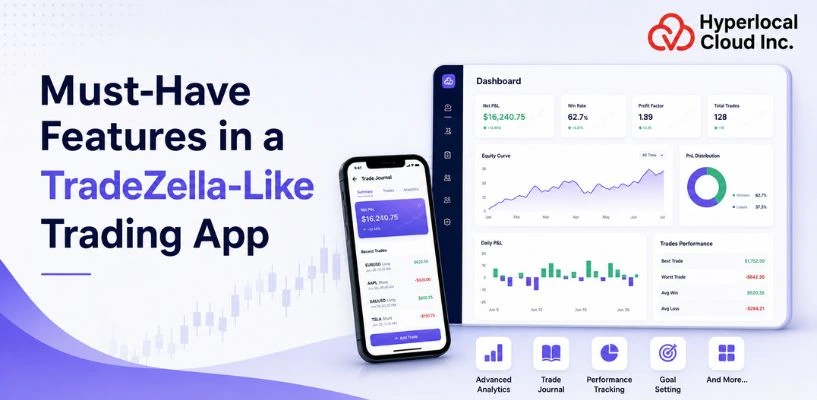
The growing demand for data-driven trading tools has transformed how traders analyze performance, manage risk, and refine their strategies. Traditional spreadsheets and manual trade logs are being replaced by advanced trading journal platforms that provide real-time insights, automated tracking, and detailed performance analytics. As a result, businesses are increasingly exploring opportunities to build an app like TradeZella that helps traders make smarter, data-backed decisions while improving user engagement and retention.
For businesses investing in fintech app development, understanding the right features in a TradeZella-like app is essential to creating a competitive product. Modern trade journaling apps go beyond recording trades; they offer broker integrations, portfolio tracking, risk management tools, and personalized analytics that deliver measurable value to users. In this blog, we’ll break down the essential features required to build a scalable, user-centric trading application that drives engagement and recurring revenue.
Understanding the TradeZella Business Model
TradeZella has positioned itself as more than just a trade journaling app by creating a comprehensive platform focused on trader performance improvement. Its business model revolves around helping users track, analyze, and optimize their trading activities through data-driven insights. By combining automated trade imports, advanced analytics, and performance tracking capabilities, the platform delivers continuous value that encourages long-term user engagement and subscription-based revenue growth.
Start Building Your Feature-Rich Trading Journal Platform Today
What Makes TradeZella Popular Among Traders?
One of the primary reasons behind TradeZella’s popularity is its ability to automate trade tracking. Instead of manually entering trades, users can connect their brokerage accounts and automatically sync transaction data, saving time and reducing errors. This streamlined experience makes it easier for traders to focus on analyzing performance rather than managing records.
The platform also provides detailed performance analytics that help traders identify strengths, weaknesses, and profitable patterns. Metrics such as win rate, average profit and loss, risk-to-reward ratio, and strategy effectiveness enable users to make more informed decisions. Additionally, built-in risk management insights allow traders to monitor drawdowns, assess risk exposure, and maintain disciplined trading practices.
Another key differentiator is multi-broker integration. Supporting multiple brokers and trading platforms enables users to consolidate their trading activities into a single dashboard, creating a seamless experience for active traders who manage accounts across different exchanges and markets.
Market Opportunity for Trading Analytics Platforms
The demand for trading analytics platforms continues to accelerate as global financial markets become increasingly digitized and retail participation reaches record levels. The global online trading platform market was valued at approximately USD 10.9 billion in 2025 and is projected to reach nearly USD 19.9 billion by 2033, growing at a CAGR of around 7.9% (Source) . This steady expansion reflects a broader shift toward mobile-first investing, AI-driven decision-making, and cloud-based financial infrastructure.
In addition, the industry is witnessing massive user adoption at scale. More than 200 million+ registered trading accounts globally now actively use digital brokerage platforms, with mobile trading accounting for over 70% of total retail trading activity in key markets (Source). Platforms like Robinhood, eToro, and regional fintech apps in India and Asia are driving this surge, fueled by younger investors entering the markets for the first time and demanding simplified, insight-driven trading experiences.
Core Features Every TradeZella-Like Trading App Needs
1. Automated Trade Import and Broker Integration
Automated trade import is one of the most essential features in a TradeZella-like app, ensuring seamless data collection from various trading sources. API-based broker integrations allow users to automatically sync trades from their brokerage accounts without manual intervention. For traders using different platforms, CSV trade import functionality provides additional flexibility and convenience. Real-time synchronization keeps trading records accurate and up to date, while support for multiple brokers and exchanges enables users to manage all their trading activities from a single platform.
2. Advanced Trading Journal
An advanced trading journal enables users to record and analyze their trading activities in greater detail. Features such as trade notes, annotations, screenshot attachments, and trade tagging help traders capture the reasoning behind each decision and review it later. Categorization options make it easier to organize trades based on specific criteria, while strategy-based organization allows users to evaluate the effectiveness of different trading approaches over time.
3. Comprehensive Performance Analytics Dashboard
A comprehensive analytics dashboard plays a crucial role in helping traders understand their overall performance. Key functionalities include win rate analysis, profit and loss tracking, risk-to-reward calculations, expectancy metrics, and equity curve visualization. By presenting trading data in an easy-to-understand format, the dashboard enables users to identify strengths, uncover weaknesses, and make informed adjustments to their strategies.
4. Portfolio Tracking and Management
Portfolio tracking and management features provide users with a complete overview of their investments and trading accounts. Multi-account portfolio views allow traders to monitor assets across different platforms, while asset allocation tracking helps assess diversification. Portfolio growth monitoring and historical performance reports offer valuable insights into long-term investment trends and overall financial progress.
5. Risk Management Tools
Risk management tools are essential for helping traders protect capital and maintain consistent performance. Features such as drawdown tracking, position sizing calculators, risk exposure analysis, and daily or monthly risk monitoring provide users with greater control over their trading activities. These capabilities encourage disciplined decision-making and help traders avoid unnecessary losses.
6. AI-Powered Trading Insights
AI-powered trading insights can elevate the user experience by delivering intelligent recommendations and deeper performance analysis. Features such as behavioral pattern recognition, trade quality scoring, personalized improvement suggestions, and predictive performance analytics help traders identify opportunities for growth and optimize their decision-making processes using advanced technology.
7. Custom Reporting and Data Visualization
Custom reporting and data visualization features allow traders to analyze information in ways that align with their individual preferences and objectives. Interactive charts, customizable KPIs, exportable reports, and performance benchmarking tools make it easier to interpret complex trading data and generate meaningful insights for continuous improvement.
8. Strategy Performance Tracking
Strategy performance tracking helps users measure the effectiveness of different trading methods and approaches. Through strategy-level analytics, side-by-side comparisons, and identification of top-performing setups, traders can determine which strategies generate the best results and make data-driven adjustments to improve future performance.
9. Goal Setting and Progress Monitoring
Goal-setting and progress-monitoring features help traders stay focused on achieving specific financial and performance objectives. By setting profit targets, defining risk limits, tracking consistency metrics, and monitoring achievements through dedicated dashboards, users can maintain accountability and measure progress over time.
10. Community and Collaboration Features
Community and collaboration features create opportunities for traders to connect, learn, and grow together. Trading communities, shared journals, mentorship programs, and team performance tracking encourage knowledge sharing and collaboration. These social elements can enhance user engagement while fostering a stronger sense of belonging within the platform.
Partner With a Fintech App Development Team to Build Your Trading Platform
Mobile-First Experience Requirements
Today’s traders expect instant access to their trading data, regardless of where they are or which device they’re using. That’s why a mobile-first experience has become a key requirement when building a TradeZella-like app. Whether users are reviewing performance or analyzing strategies, platforms built through modern fintech app development approaches must prioritize seamless accessibility and real-time synchronization across devices to ensure continuous engagement.
Cross-Platform Accessibility
A successful trading journal platform should provide a consistent experience across all devices. Supporting both iOS and Android ensures traders can access their accounts from their preferred smartphones or tablets. At the same time, a responsive web dashboard allows users to dive deeper into analytics and reporting from their desktops without sacrificing usability. Cloud synchronization ties everything together by automatically updating trade records, journal entries, and performance metrics across devices, ensuring users always have access to the latest information.
Real-Time Notifications
Timely updates can significantly improve the user experience and help traders stay on top of their performance. Real-time notifications keep users informed about important events without requiring them to constantly monitor the platform. Trade performance alerts can highlight significant gains or losses, while risk threshold warnings notify users when they are approaching predefined risk limits. Goal achievement updates add another layer of engagement by celebrating milestones such as reaching profit targets or maintaining trading consistency, encouraging users to stay active and committed to their trading goals.
Security and Compliance Considerations
As trading platforms handle highly sensitive financial and personal data, security and compliance are non-negotiable pillars in the development of any TradeZella-like application. A robust security framework not only protects user information but also builds trust, which is critical for long-term platform adoption and scalability in the fintech ecosystem.
Data Protection Features
Strong data protection mechanisms form the foundation of a secure trading journal platform. End-to-end encryption ensures that all user data—whether in transit or at rest—remains inaccessible to unauthorized parties. Secure API integrations are essential when connecting with brokers and third-party services, minimizing vulnerabilities during data exchange. Multi-factor authentication adds an additional layer of security by requiring users to verify their identity through multiple steps, significantly reducing the risk of unauthorized access. Role-based access controls further enhance security in enterprise or team-based environments by restricting data visibility and permissions based on user roles.
Regulatory Readiness
Beyond technical security, regulatory compliance plays a critical role in ensuring platform legitimacy and scalability. Audit logs provide a transparent record of all system activities, enabling traceability and accountability for every user action. Data retention policies define how long user information is stored and ensure alignment with legal and operational requirements. Privacy compliance requirements, such as adherence to global data protection standards, help ensure that the platform meets jurisdictional regulations and builds confidence among enterprise clients and institutional users.
Start Your Fintech Journey by Creating a Smart, Scalable Trading Platform Today
Monetization Features to Consider
For any app like TradeZella, a well-defined monetization strategy is essential to ensure sustainable growth and long-term profitability. In the competitive fintech landscape, platforms must combine flexible pricing models with high-value premium features that cater to both individual traders and enterprise clients.
Subscription Management
A robust subscription management system forms the backbone of recurring revenue. Supporting a freemium model allows users to explore basic features before committing financially, improving acquisition rates. Tiered pricing plans enable businesses to segment users based on needs—ranging from beginner traders to advanced professionals. Additionally, trial management features help onboard new users by offering limited-time access to premium capabilities, increasing conversion potential while reducing friction in the decision-making process.
Premium Analytics Modules
Premium features act as key revenue drivers in trading journal platforms. Advanced reporting tools provide deeper insights into trading performance, enabling users to analyze data more effectively. AI-driven insights further enhance value by delivering personalized recommendations, behavioral analysis, and predictive performance metrics. Professional trader tools, such as advanced risk modeling and strategy optimization features, position the platform as a high-value solution for serious traders seeking competitive advantages.
Enterprise Offerings
To expand beyond individual users, enterprise-focused features are critical. White-label solutions allow businesses to rebrand the platform and integrate it into their own ecosystems. Team accounts support collaborative trading environments where performance can be tracked across multiple users or departments. Custom integrations ensure the platform can connect with proprietary systems, broker networks, and enterprise tools, making it suitable for institutional-grade deployment.
Technology Stack Considerations
Building a TradeZella-like app requires a robust and scalable technology stack capable of handling large volumes of financial data, real-time updates, and complex analytics. The right architectural decisions directly impact platform performance, user experience, and long-term scalability.
Backend Requirements
The backend infrastructure must be designed for scalability and high availability to support growing user bases and increasing trade data loads. Scalable cloud infrastructure ensures the platform can dynamically handle traffic spikes and data-intensive operations without performance degradation. A high-performance analytics engine is essential for processing large datasets, generating insights, and delivering performance metrics efficiently. Additionally, real-time data processing capabilities enable instant trade updates, live portfolio tracking, and up-to-date performance dashboards, which are critical for active traders relying on timely information.
Frontend Requirements
The frontend layer plays a key role in delivering a seamless and intuitive user experience. Interactive dashboards allow users to visualize trading performance, risk metrics, and portfolio data in a clear and actionable format. Fast chart rendering is crucial for displaying real-time market and performance data without lag, especially for advanced users analyzing multiple datasets simultaneously. An intuitive user experience ensures that both beginner and professional traders can easily navigate the platform, access key features, and derive value without a steep learning curve.
Third-Party Integrations
Integrations significantly enhance the functionality and reach of a trading journal platform. Broker APIs enable automated trade imports and real-time synchronization with trading accounts. Market data providers supply accurate and up-to-date pricing information essential for performance analysis and decision-making. Payment gateways support seamless subscription billing and monetization workflows. Additionally, CRM systems help businesses manage user relationships, track engagement, and optimize customer retention strategies.
Develop Your Tradezella-like App With Expert Fintech Development Professionals
Conclusion
A TradeZella-like trading application brings together a wide range of essential and advanced capabilities, including automated trade imports, trading journals, performance analytics, risk management tools, AI-driven insights, and community features. These elements collectively transform a basic trade logging tool into a comprehensive trading performance platform designed to help users analyze and improve their strategies effectively.
The success of such platforms depends on maintaining a strong balance between usability, analytics depth, and security. While advanced features deliver powerful insights, the overall experience must remain intuitive and accessible for traders across all skill levels. At the same time, robust security and compliance frameworks are critical to building trust and ensuring long-term platform reliability.
As the demand for data-driven decision-making continues to grow in the fintech space, feature-rich trading analytics platforms represent a significant business opportunity. With the right approach to investment app development, companies investing in fintech app development and collaborating with a skilled app development company can build scalable solutions that enhance user engagement, support better trading outcomes, and generate consistent recurring revenue.

Patt Cummins is an experienced content writer with over 10 years of experience creating clear and engaging content for technology-focused industries. He specializes in simplifying complex technical topics into easy-to-understand stories that educate readers, support brand communication, and help businesses effectively share their solutions.

Need Help With
Development?