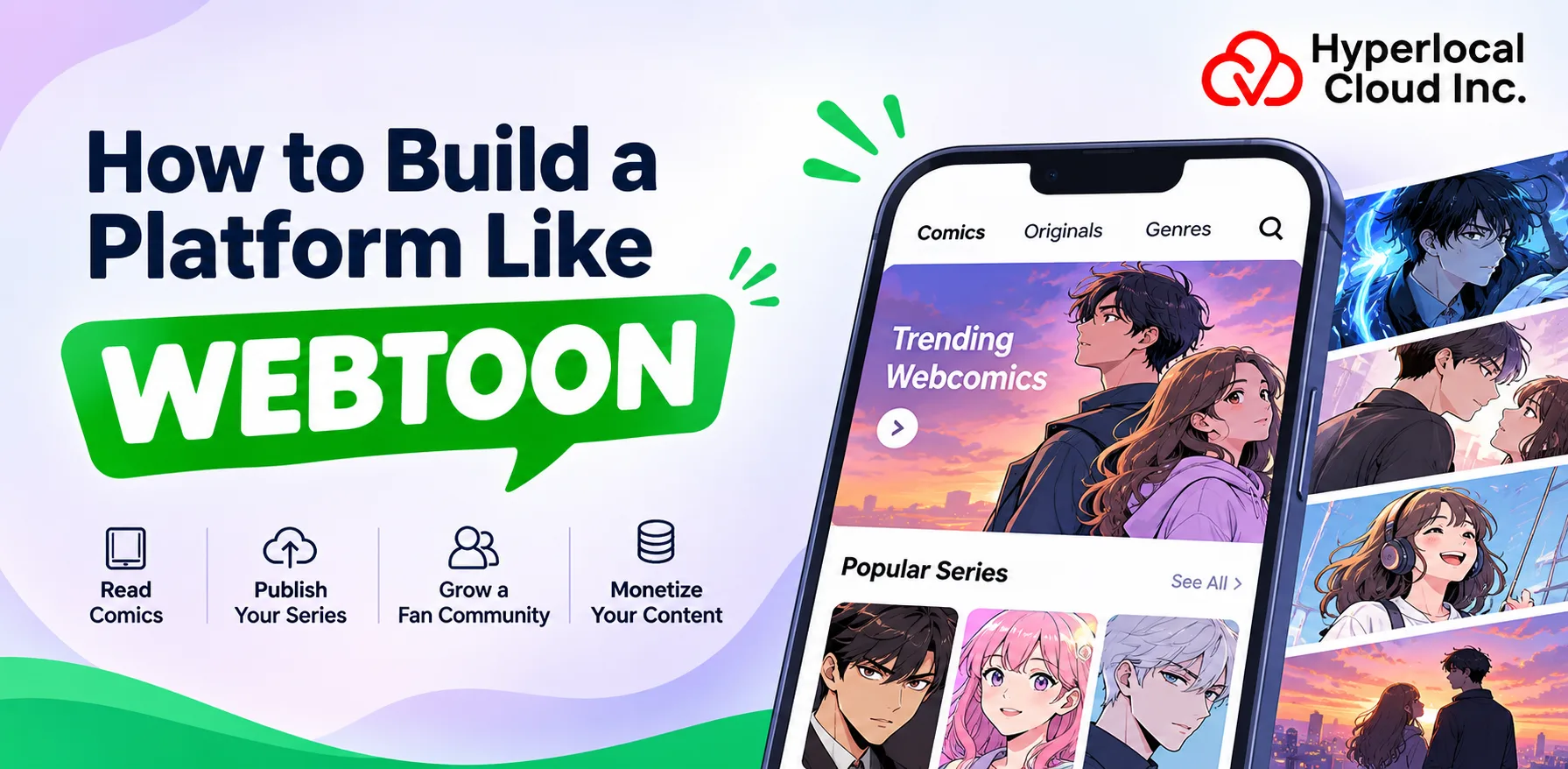
The popularity of digital comics and webtoons has created new opportunities for businesses, entrepreneurs, and content creators to connect with readers worldwide. With the increasing consumption of mobile-first entertainment, platforms like WEBTOON have transformed how people discover, read, publish, and monetize comic content.
Unlike traditional comic book platforms, modern webtoon applications provide vertical scrolling experiences, personalized recommendations, creator communities, interactive storytelling, and premium content subscriptions. These capabilities make digital comic platforms attractive for businesses looking to enter the online entertainment industry.
If you are planning to launch your own digital comics platform, understanding how to build a platform like WEBTOON is an important first step. You need to consider the right features, technology stack, development approach, monetization strategies, and overall investment.
In this guide, we will explain the complete WEBTOON-like app development process, including essential features for readers, creators, and administrators, estimated development costs, and strategies to build a scalable digital comics platform.
What Is WEBTOON, and How Does It Work?
WEBTOON is a digital comics platform that allows readers to explore webcomics across different genres while giving independent artists and professional creators opportunities to publish their stories online.
The platform offers a mobile-friendly reading experience where users can browse comics, follow creators, read episodes, interact with other readers, and access premium content. Its vertical-scrolling format makes comics convenient to read on smartphones without navigating traditional page-by-page layouts.
WEBTOON also provides opportunities for creators to build audiences and generate revenue through eligible monetization programs and premium content offerings.
How does the WEBTOON business model work?
The platform operates through an ecosystem involving three primary participants:
-
Readers: Discover comics, follow creators, read episodes, purchase premium content, and engage with communities.
-
Creators: Upload original comics, publish episodes, build audiences, and monetize their content.
-
Platform administrators: Manage users, creators, content, payments, subscriptions, promotions, and platform performance.
A WEBTOON-like application brings these participants together through a centralized digital entertainment ecosystem.
Ready to Build Your Own Comic Reading Platform?
Why Invest in Building a WEBTOON-Like Platform?
Digital comics offer businesses an opportunity to develop an entertainment platform around original storytelling, independent publishing, and mobile content consumption.
Here are some important reasons to consider investing in WEBTOON app development.
Growing Demand for Digital Comics
Readers increasingly consume entertainment through smartphones, tablets, and other connected devices. Digital comics offer convenient access to stories without purchasing or carrying physical books.
A dedicated comic reading platform can serve audiences interested in manga, romance, fantasy, action, horror, science fiction, and other storytelling genres.
Businesses can capitalize on this demand by offering an accessible platform with engaging content and a smooth reading experience.
Global Audience Reach
Unlike traditional publishing, digital comics platforms can distribute content to readers across different geographical locations.
By integrating multiple languages, regional content categories, and international payment methods, businesses can attract a diverse audience.
A multilingual platform also helps creators reach readers beyond their local markets.
Multiple Revenue Opportunities
A WEBTOON-like application can generate revenue through different monetization channels, including:
-
Monthly and annual subscriptions.
-
Premium episodes and chapters.
-
In-app purchases and virtual coins.
-
Advertising placements.
-
Creator membership programs.
-
Content licensing and merchandise.
Combining multiple revenue streams can help establish a sustainable business model.
Opportunities for Independent Creators
Many independent comic artists and writers need digital platforms to showcase their work and connect with audiences.
A webtoon application can provide creators with publishing tools, audience analytics, engagement features, and monetization opportunities.
This creates a mutually beneficial environment where creators produce content and readers discover new stories.
Increasing Mobile Content Consumption
Smartphones have changed how people consume entertainment. A mobile-first comic reading application allows users to access stories during their daily routines.
Features such as vertical scrolling, reading history, bookmarks, personalized recommendations, and offline access can improve the overall reading experience.
How Does a WEBTOON-Like App Work?
A WEBTOON-like platform operates through a structured workflow that connects readers, creators, and administrators.
Understanding this workflow helps businesses define the functionality required before beginning development.
Step 1: User Registration and Profile Creation
Readers register using their email addresses, phone numbers, or supported social login options. After registration, they can create profiles and select their preferred comic genres.
Step 2: Comic Discovery and Recommendations
The application displays trending comics, popular stories, newly released episodes, and personalized recommendations based on reading preferences.
Step 3: Browsing Genres and Categories
Users explore different categories, such as romance, fantasy, action, comedy, drama, thriller, and adventure, to discover relevant content.
Step 4: Reading Episodes and Chapters
Readers open their selected comics and enjoy a vertical-scrolling reading interface. They can navigate between episodes, adjust reading preferences, and continue where they left off.
Step 5: Purchasing Premium Episodes
Users can unlock selected episodes through virtual coins, one-time purchases, or subscription plans, depending on the platform’s monetization model.
Step 6: Following Favorite Creators
Readers follow their preferred creators to receive updates about new episodes, announcements, and upcoming releases.
Step 7: Publishing and Managing Comic Content
Creators upload comic artwork, organize episodes, add descriptions, and schedule releases through their dedicated dashboard.
Step 8: Notifications and Updates
The application sends notifications about new episodes, creator announcements, promotional offers, and relevant platform activities.
Essential Features to Include in a WEBTOON-Like App
A successful digital comics platform requires dedicated functionality for readers, creators, and administrators. Each panel should provide tools that simplify content discovery, publishing, engagement, and management.
User Panel Features
The user panel focuses on delivering a convenient and engaging comic reading experience.
1. Easy Registration and Login
Allow users to create accounts through email, phone numbers, or social media authentication. A simple onboarding process reduces registration friction and helps readers start exploring content quickly.
2. Personalized User Profiles
Users can create profiles containing their personal information, reading preferences, favorite genres, followed creators, and reading activity.
This feature helps the platform provide a personalized experience.
3. Comic Discovery and Search
An advanced search feature enables readers to find comics using titles, creator names, keywords, and genres. Search filters can further improve content discovery.
4. Genre-Based Categories
Organize comics into categories such as romance, action, fantasy, horror, comedy, and science fiction. This makes it easier for readers to explore content based on their interests.
5. Advanced Reading Interface
Provide a mobile-friendly vertical-scrolling reader with smooth image transitions, optimized loading, and adjustable reading settings.
This is one of the most important features of a WEBTOON-like application.
6. Bookmark and Favorites
Allow readers to save their favorite comics and episodes for quick access. Users can maintain personalized reading lists without searching for the same content repeatedly.
7. Reading History
Maintain a record of previously viewed comics and episodes. Readers can resume their stories from the last reading position.
8. Offline Reading
Allow users to download eligible episodes and access them without an internet connection. Download restrictions can be configured according to subscription and content licensing policies.
9. Ratings and Reviews
Readers can rate comics and share feedback. Ratings and reviews help other users evaluate content and discover popular stories.
10. Comments and Community Interaction
Enable readers to comment on episodes, respond to other users, and participate in discussions. Community engagement can help increase reader retention.
11. Push Notifications
Send alerts about new episodes, followed creators, subscription renewals, and personalized content recommendations.
12. Multi-Language Support
Support multiple languages to reach international audiences. Language preferences can also be used to filter available comics and recommendations.
13. Premium Subscription
Offer paid subscription packages that provide access to exclusive content, premium reading experiences, and other membership benefits.
14. In-App Purchases
Integrate secure in-app purchases so users can buy virtual coins or unlock individual premium episodes.
Creator Panel Features
The creator panel provides independent artists, writers, and publishers with the tools required to manage and monetize their content.
1. Creator Registration and Profiles
Allow creators to register, create professional profiles, and introduce their work. Profiles can include biographies, social links, published comics, and audience information.
2. Comic Upload and Publishing
Provide an upload interface where creators can submit comic artwork, titles, descriptions, thumbnails, and other relevant content.
Support appropriate image formats and upload validation.
3. Episode and Chapter Management
Creators can organize comics into episodes and chapters, edit existing content, and manage publication details.
4. Content Scheduling
Allow creators to schedule episodes for future publication. Scheduled releases help maintain consistent publishing calendars.
5. Creator Dashboard
Provide a centralized dashboard displaying published comics, draft episodes, audience engagement, and account activity.
6. Performance Analytics
Display useful statistics, including episode views, reader engagement, subscriber growth, and content performance.
7. Revenue Tracking
Allow creators to monitor eligible earnings from subscriptions, premium episodes, and other monetization programs.
8. Audience Engagement
Give creators tools to interact with readers through comments, announcements, and content updates.
9. Copyright and Content Management
Provide reporting mechanisms, ownership verification, content moderation workflows, and copyright-related controls to help protect original work.
Admin Panel Features
The admin panel allows platform owners to manage operations, monitor activities, and maintain content quality.
1. User Management
Administrators can view user profiles, manage accounts, handle reported users, and configure account permissions.
2. Creator Management
Manage creator registrations, verify eligible accounts, review applications, and monitor creator activities.
3. Comic and Episode Management
Administrators can review, approve, reject, update, or remove comic content according to platform policies.
4. Content Moderation
Provide moderation tools to review inappropriate content, manage complaints, and enforce community guidelines.
5. Subscription Management
Manage membership plans, pricing, subscription status, renewals, and cancellation requests.
6. Payment and Commission Management
Monitor transactions, creator revenue shares, platform commissions, refunds, and payment records.
7. Analytics and Reporting
Generate reports about user registrations, active readers, popular comics, subscription revenue, and platform performance.
8. Promotional Campaign Management
Create promotional campaigns, discounts, featured comic placements, and marketing announcements.
9. Notification Management
Send targeted notifications to users and creators about updates, offers, new releases, and platform announcements.
10. CMS Management
Manage homepage banners, informational pages, FAQs, featured categories, promotional content, and other website elements.
Build an Engaging Platform for Digital Comic Readers
Advanced Features to Make Your WEBTOON-Like Platform Stand Out
Basic comic reading and publishing functionality helps launch the platform, but advanced capabilities can create a competitive advantage. Consider integrating the following features to improve personalization, content accessibility, and user engagement.
1. AI-Powered Comic Recommendations
Integrate artificial intelligence to analyze reading history, favorite genres, user interactions, and content preferences. The recommendation engine can suggest comics that match individual interests.
This helps readers discover relevant stories and encourages them to spend more time on the platform.
2. AI-Assisted Comic Translation
Integrate AI translation capabilities to convert comic descriptions, dialogue, and other text into different languages. This can help creators reach international audiences.
Include human review and editing workflows to maintain translation accuracy and preserve storytelling context.
3. Personalized Reading Experience
Allow users to customize their reading experience through adjustable reading settings, personalized recommendations, saved reading lists, and preferred content categories.
A personalized interface makes the platform more convenient and engaging.
4. Smart Content Moderation
Use AI-assisted moderation tools to identify potentially inappropriate images, comments, spam, and policy violations.
Administrators can review flagged content before taking action, helping maintain a safer community.
5. Advanced Analytics and Insights
Provide detailed analytics to platform owners and creators. Track reader engagement, episode completion, popular genres, retention, and revenue performance.
These insights help creators improve their content strategies and administrators make informed business decisions.
6. Social Sharing and Community Building
Enable users to share comic titles, episodes, creator profiles, and reading lists across social media platforms.
Community features such as discussions, reactions, and creator announcements can encourage organic engagement.
7. Adaptive Image Loading
Implement optimized image delivery, lazy loading, caching, and content delivery networks (CDNs) to ensure comic episodes load smoothly.
This is particularly important because digital comic platforms often contain large numbers of high-resolution images.
8. Interactive Storytelling Features
Introduce interactive storytelling options such as reader polls, branching story choices, special episode interactions, and multimedia elements.
These capabilities can create more immersive experiences and help differentiate your platform from conventional comic reading applications.
Step-by-Step Process to Build a Platform Like WEBTOON
Building a digital comics application requires a structured development approach. From market research and feature planning to deployment and maintenance, each stage contributes to the platform’s long-term performance.
Here are the major steps involved in WEBTOON-like app development.
Step 1: Conduct Market Research and Competitor Analysis
Start by researching the digital comics industry and understanding how existing platforms operate.
Analyze competitors to identify their content strategies, reader engagement models, publishing workflows, and monetization methods.
Consider studying platforms such as WEBTOON, Tapas, and Manta.
Focus on identifying market gaps, including underserved genres, regional content preferences, creator requirements, and subscription opportunities.
Key activities include:
-
Analyze competing comic reading applications.
-
Identify target audiences and reader preferences.
-
Research popular comic genres.
-
Evaluate existing monetization strategies.
-
Identify opportunities for product differentiation.
Step 2: Identify Your Target Audience and Business Model
Define the audience you want to serve before deciding on the platform’s functionality.
Your target users may include comic readers, independent artists, professional publishers, writers, and digital entertainment enthusiasts.
Next, select a business model that supports your revenue objectives.
For example, you can launch a freemium application where readers access selected comics for free and pay to unlock premium episodes.
You can also introduce subscription plans, advertising, virtual coins, and creator memberships.
A clearly defined business model helps determine the features, payment integrations, and revenue-sharing structure required during development.
Step 3: Define Core Features and Platform Requirements
Once you understand your target audience, prepare a detailed list of application requirements.
Divide the requirements into three primary panels:
-
Reader panel for discovering and consuming comics.
-
Creator panel for uploading, publishing, and monetizing content.
-
Admin panel for managing users, content, payments, and platform operations.
Prioritize essential features for the minimum viable product (MVP). Advanced capabilities can be introduced in subsequent development phases.
This approach helps control initial development costs while allowing the platform to expand as its audience grows.
Step 4: Choose the Right Technology Stack
Select technologies based on your performance requirements, development budget, scalability expectations, and target platforms.
Your technology stack should support high-resolution comic images, user authentication, content management, payment processing, and real-time notifications.
Consider technologies such as Flutter, React Native, Node.js, PostgreSQL, MongoDB, and cloud infrastructure.
The right technology choices provide a foundation for future upgrades and increased user traffic.
Step 5: Create UI/UX Designs and Prototypes
Design a user-friendly interface that makes comic discovery and reading simple.
Focus on creating an intuitive homepage, organized categories, visually appealing comic listings, and a smooth vertical-scrolling reader.
The creator dashboard should make uploading and publishing content straightforward, while the admin panel should provide easy access to management tools.
Develop wireframes and interactive prototypes before moving into full-scale development.
Step 6: Develop the Frontend and Backend
The frontend handles the application’s visible elements, including navigation, comic listings, user profiles, and reading interfaces.
The backend manages application logic, user authentication, databases, content uploads, subscriptions, payments, and other essential operations.
Develop APIs to connect the reader, creator, and admin interfaces with the backend infrastructure.
Ensure that the architecture supports efficient image delivery and reliable content management.
Step 7: Integrate Payment Gateways and Monetization
Integrate secure payment solutions to support subscriptions, premium episodes, virtual coins, and other paid services.
Depending on the target market and distribution platform, select appropriate payment gateways and comply with applicable app-store billing requirements.
Also establish creator commission rules, refund policies, subscription terms, and transaction reporting mechanisms.
Step 8: Implement Security and Content Management
Protect user information, creator accounts, payment records, and copyrighted content.
Implement appropriate security measures, including:
-
Secure authentication and authorization.
-
Encryption of sensitive information.
-
Role-based access control.
-
Secure payment processing.
-
Content reporting and moderation.
-
Copyright complaint management.
-
Regular security monitoring.
A reliable content management system also helps administrators organize comics, approve submissions, and maintain publishing standards.
Step 9: Test the Application
Conduct comprehensive testing before releasing the platform.
Check application functionality, image loading speed, payment workflows, account registration, content uploads, and reading experiences.
Perform testing across different devices, screen sizes, operating systems, and network conditions.
Important testing activities include functional testing, usability testing, security testing, performance testing, and compatibility testing.
Fix identified issues before launching the application publicly.
Step 10: Launch and Maintain Your Platform
Once testing is complete, deploy the application to the selected platforms.
Prepare an initial content library, onboard creators, configure payment systems, and establish customer support processes.
After launch, monitor application performance, reader engagement, technical issues, and user feedback.
Release regular updates to introduce new features, improve performance, strengthen security, and support business growth.
Technology Stack Required to Develop a WEBTOON-Like App
Selecting the right technology stack is essential for building a scalable and reliable digital comics platform.
Since the application handles images, user-generated content, payments, and potentially large traffic volumes, every technology component should support performance and future expansion.
Here are some recommended technologies:
| Development Component | Recommended Technologies |
|---|---|
| Android Development | Kotlin, Flutter |
| iOS Development | Swift, Flutter |
| Frontend Development | React.js, Next.js |
| Backend Development | Node.js, Python, Laravel |
| Database | PostgreSQL, MongoDB |
| Cloud Hosting | AWS, Google Cloud |
| Image Storage | Amazon S3, Cloudinary |
| Payment Integration | Stripe, PayPal |
| Push Notifications | Firebase Cloud Messaging |
| Analytics | Firebase Analytics, Mixpanel |
| Content Delivery | CloudFront, Cloudflare |
| API Development | REST API, GraphQL |
How do these technologies support your platform?
-
Frontend technologies: Create responsive interfaces for readers, creators, and administrators.
-
Backend technologies: Handle application logic, authentication, content management, and transactions.
-
Database technologies: Store user profiles, comic details, episodes, subscriptions, and engagement records.
-
Cloud infrastructure: Provides scalable computing resources and reliable application hosting.
-
Image storage and CDN: Deliver comic artwork efficiently to readers across different geographical locations.
-
Payment integrations: Support secure transactions, premium purchases, and subscription management.
-
Analytics tools: Help monitor user behavior, application performance, and business growth.
The final technology selection should depend on your project requirements rather than simply choosing the most popular technologies.
Launch a WEBTOON-Like App with Advanced Features
How Much Does It Cost to Build a Platform Like WEBTOON?
The cost to build a platform like WEBTOON depends on its functionality, design complexity, technology stack, development team, and scalability requirements.
A basic digital comics application with user registration, comic browsing, and reading functionality requires a different investment than an advanced platform with creator dashboards, AI recommendations, subscription management, and multilingual capabilities.
Estimated WEBTOON Clone App Development Cost
Here is an indicative development budget based on different project requirements.
| Platform Type | Estimated Development Cost |
|---|---|
| Basic MVP | $10,000–$20,000 |
| Mid-Level Platform | $20,000–$45,000 |
| Advanced Platform | $45,000–$90,000+ |
These estimates are illustrative and can vary depending on the development location, team structure, customization requirements, and third-party integrations.
Factors Affecting WEBTOON Clone App Development Cost
1. Number of Platforms
Developing applications for Android, iOS, and web requires different development efforts. Supporting multiple platforms can increase the overall project budget.
2. UI/UX Complexity
A simple reading interface requires less design work than an advanced application with personalized dashboards, interactive elements, and customized reading experiences.
3. Feature Requirements
Features such as AI recommendations, offline reading, virtual coins, advanced analytics, and creator monetization increase development complexity.
4. Backend Architecture
The backend must handle user accounts, comic uploads, image delivery, subscriptions, and transactions. More complex backend requirements can increase development costs.
5. Third-Party Integrations
Payment gateways, analytics platforms, notification services, translation APIs, and other external integrations can affect the development budget.
6. Security Requirements
Authentication, encryption, copyright management, access controls, and payment security require additional development and testing efforts.
7. Cloud Infrastructure
Hosting, image storage, bandwidth, CDN usage, and database services contribute to ongoing operational expenses.
8. Maintenance and Support
Regular updates, bug fixes, infrastructure monitoring, and feature enhancements should be included in the long-term project budget.
How to Reduce the Cost of WEBTOON-Like App Development
Businesses can manage their initial investment through a phased development approach.
-
Start with an MVP containing essential reader, creator, and admin features.
-
Use cross-platform development where appropriate.
-
Prioritize essential integrations.
-
Choose scalable cloud infrastructure.
-
Introduce advanced AI capabilities in later phases.
-
Consider white-label solutions to reduce development time and initial engineering effort.
This strategy allows businesses to validate their ideas before investing in a more sophisticated digital comics ecosystem.
Monetization Strategies for a WEBTOON-Like Platform
A well-planned monetization strategy helps transform a digital comics application into a sustainable business. Instead of depending on a single revenue source, platform owners can introduce multiple earning opportunities for the business and content creators.
Here are some effective monetization strategies to consider.
1. Freemium Content Model
Offer selected comics and episodes for free while keeping exclusive stories or premium episodes behind a paid access model.
This approach allows new users to explore the platform before deciding whether to purchase premium content.
Business benefit: Attracts a wider audience while creating opportunities to convert free readers into paying customers.
2. Paid Episodes and Chapters
Allow readers to purchase individual episodes or chapters instead of subscribing to the entire platform.
Users can unlock selected content through direct payments or virtual coins.
Business benefit: Generates revenue from readers who prefer purchasing specific stories rather than committing to recurring subscriptions.
3. Monthly and Annual Subscriptions
Introduce different subscription packages that provide access to premium comics, exclusive episodes, and additional reading benefits.
You can offer monthly, quarterly, and annual membership plans based on your target audience.
Business benefit: Creates recurring revenue and encourages long-term user retention.
4. In-App Purchases and Virtual Coins
Introduce a virtual currency system that allows readers to purchase coins and use them to unlock premium episodes.
For example, users can purchase coin packages containing different quantities and spend them on eligible comic content.
Business benefit: Encourages repeat purchases and provides flexibility in how readers access premium stories.
5. Advertising Revenue
Display advertisements in selected areas of the application, such as homepage banners, promotional placements, or eligible reading-related screens.
You can also explore rewarded advertising, where users receive specific benefits after completing an advertisement.
Business benefit: Generates revenue from free users without requiring every reader to purchase a subscription.
6. Creator Revenue Sharing
Develop a revenue-sharing model that distributes eligible earnings between the platform and creators.
Revenue can be generated through premium episodes, subscriptions, and other creator monetization programs.
Business benefit: Attracts talented creators by providing opportunities to earn from their original work.
7. Premium Creator Memberships
Offer paid membership options for creators who want access to additional publishing tools, enhanced analytics, promotional opportunities, or advanced account features.
Business benefit: Creates another revenue stream while providing additional value to professional publishers and established artists.
8. Licensing and Merchandise
Collaborate with popular creators to license successful comic properties for merchandise, printed editions, adaptations, and other commercial opportunities.
Products can include posters, clothing, collectibles, and special comic editions.
Business benefit: Extends the business beyond digital reading and creates opportunities to monetize popular intellectual properties.
Challenges in Developing a Digital Comics Platform and Their Solutions
Building a digital comics platform involves several technical and operational challenges. Understanding these challenges early helps businesses prepare effective solutions.
1. Managing Large Volumes of Comic Content
Digital comic applications can contain thousands of episodes and high-resolution images. Managing these files efficiently becomes difficult as the content library grows.
Solution: Implement cloud-based storage, structured content management, image optimization, and CDN integration. These technologies help organize comic assets and deliver them efficiently.
2. Protecting Creator Copyrights
Unauthorized distribution and copying of comic artwork can affect creators and platform credibility.
Solution: Introduce copyright reporting systems, ownership verification, access controls, watermarking where appropriate, and clear content licensing policies.
3. Maintaining Reader Engagement
Readers may stop using an application if they cannot discover interesting content or receive regular updates.
Solution: Introduce personalized recommendations, reading reminders, creator notifications, interactive communities, and regularly updated content categories.
4. Managing High Traffic
A popular comic release can generate significant traffic within a short period. Poor infrastructure can result in slow loading or application downtime.
Solution: Use scalable cloud infrastructure, load balancing, caching, optimized databases, and CDNs to support growing traffic volumes.
5. Ensuring Smooth Image Loading
Comic reading applications depend heavily on visual content. Slow-loading images can negatively affect the reading experience.
Solution: Implement lazy loading, responsive image formats, compression, caching, and geographically distributed content delivery.
6. Building a Sustainable Creator Ecosystem
Attracting creators is only the first step. Platforms must also provide reasons for them to continue publishing content.
Solution: Offer transparent monetization policies, creator analytics, publishing tools, audience engagement features, and reliable revenue reporting.
Build Your Own Digital Comics Platform Today
How to Choose the Right WEBTOON App Development Company?
Selecting the right development partner is an important decision when building a digital comics application.
A development company should understand the requirements of content-based platforms, including user management, creator dashboards, image delivery, subscriptions, and scalable infrastructure.
Consider the following factors before making your decision.
1. Experience in Entertainment App Development
Look for a development partner with experience in building content-driven applications, digital publishing platforms, or subscription-based products.
Relevant experience can help reduce technical challenges during development.
2. Expertise in Scalable Backend Architecture
Your application should support increasing numbers of readers, creators, comic uploads, and transactions.
Evaluate the company’s experience with cloud infrastructure, databases, APIs, and performance optimization.
3. UI/UX Design Capabilities
A digital comics platform needs an attractive interface and a comfortable reading experience.
Check the company’s design portfolio to understand its ability to create user-friendly mobile and web applications.
4. Third-Party API Integration Experience
The development team should have experience integrating payment gateways, analytics tools, notification services, cloud storage, and other external APIs.
5. Security and Content Protection Expertise
Evaluate the company’s approach to account security, payment protection, content moderation, copyright management, and data privacy.
6. Post-Launch Support
Application development does not end at deployment. Choose a partner that can provide ongoing maintenance, technical support, bug fixes, and future upgrades.
7. Customization and Scalability
Your platform should support your business requirements rather than forcing you into a fixed feature structure.
Choose a development company that can customize the application and expand its capabilities as your business grows.
Why Choose Hyperlocal Cloud for WEBTOON Clone App Development?
Launching a digital comics platform requires the right combination of technology, user experience, content management, and business functionality.
Hyperlocal Cloud can help businesses explore custom and white-label application development approaches for launching their own digital platforms.
Whether you are a startup planning to enter the digital entertainment industry or an established business expanding into online content publishing, the development approach should align with your operational requirements and growth objectives.
What can your WEBTOON-like platform include?
-
Custom Platform Development: Develop a digital comics application according to your business model, branding, and functional requirements.
-
Reader Dashboard: Provide comic discovery, personalized recommendations, bookmarks, reading history, and premium content access.
-
Creator Dashboard: Enable creators to upload comics, manage episodes, track performance, and monitor eligible earnings.
-
Admin Dashboard: Manage users, creators, content approvals, subscriptions, payments, and promotional activities.
-
Payment Gateway Integration: Support premium episodes, virtual coins, subscriptions, and other payment options.
-
Custom UI/UX Design: Create a responsive and user-friendly reading interface.
-
Scalable Architecture: Build the application with infrastructure that can accommodate future feature expansion and increasing traffic.
-
Ongoing Technical Support: Maintain and improve the application after deployment.
Ready to launch your own digital comics platform?
Build a WEBTOON-like application with the right combination of reader engagement, creator tools, and monetization features.
Future Trends in Digital Comics and Webtoon App Development
The digital comics industry continues to evolve with advancements in artificial intelligence, mobile technology, content personalization, and interactive storytelling.
Businesses planning to launch a webtoon application should consider the following trends when developing their platforms.
1. AI-Powered Comic Creation
Artificial intelligence tools are increasingly being explored for character development, storyboarding, artwork assistance, and content production.
Integrating AI-assisted creative tools can help creators streamline certain parts of their publishing workflow while retaining control over their original work.
2. AI-Based Personalized Recommendations
Recommendation engines can analyze reader preferences, engagement patterns, and content interactions to suggest relevant comics.
More sophisticated personalization can improve content discovery and reader retention.
3. Interactive and Animated Comics
Digital comics can move beyond static images through animation, sound effects, interactive elements, and branching story experiences.
These features can create more immersive storytelling opportunities.
4. Globalization Through AI Translation
AI-assisted translation can help creators make their stories accessible to international readers.
Combined with human editing and localization, this technology can support multilingual content distribution.
5. Creator Economy and Independent Publishing
Independent artists and writers are gaining more opportunities to publish their work directly to digital audiences.
Future platforms can strengthen creator ecosystems through transparent revenue-sharing models, audience analytics, promotional tools, and publishing support.
6. Immersive Digital Storytelling
Emerging technologies such as augmented reality (AR) and other interactive media experiences may introduce new ways to consume digital stories.
Businesses can explore these capabilities as optional enhancements when there is a clear audience demand.
Conclusion
Building a platform like WEBTOON presents an opportunity to enter the growing digital entertainment and online publishing industry. With the right combination of reader-focused features, creator publishing tools, advanced content management, and flexible monetization strategies, businesses can establish their own digital comics ecosystem.
However, successful WEBTOON-like app development requires more than creating a comic reading interface. It involves building a scalable infrastructure, delivering a smooth reading experience, protecting creator content, and maintaining an engaging community.
Whether you choose custom development or a white-label solution, start by identifying your target audience, defining your business model, and prioritizing essential features.
Ready to turn your digital comics platform idea into reality? Partner with Hyperlocal Cloud to explore customized WEBTOON clone app development solutions and launch your own branded comic reading platform.
FAQs (Frequently Asked Questions)

Nisha Bagga is a technical writer with more than 7 years of experience creating high-quality content for a wide range of industries. She specializes in developing clear, engaging, and well-researched technical and business content tailored to diverse audiences and industry requirements.

Need Help With
Development?