

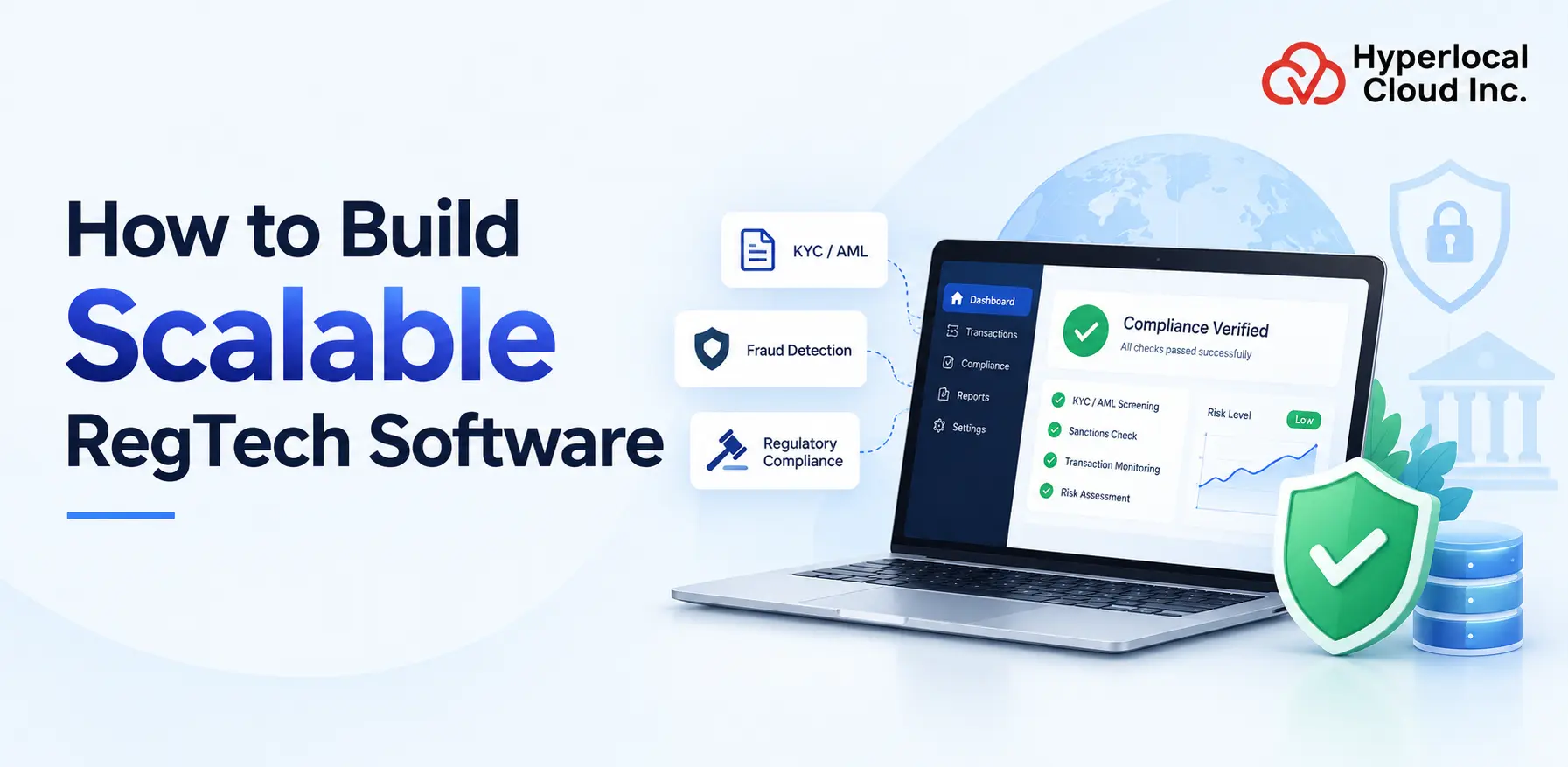
- RegTech software helps businesses manage regulatory and compliance requirements more efficiently and automatically.
- Banks, financial institutions, insurance companies, fintech firms, and other businesses under strict regulations use it widely.
- RegTech can help companies with tasks such as regulatory reporting, risk monitoring, customer verification, fraud detection, and compliance management.
- The market is shifting from manual compliance work to automated, continuous monitoring.
- Artificial intelligence (AI) and machine learning are becoming important parts of RegTech software. These technologies can help businesses review large amounts of data, identify unusual activity, and reduce manual work.
- The RegTech market is expected to continue growing as companies face more regulatory requirements and seek faster, more reliable ways to manage compliance.
- RegTech is also expanding beyond traditional banking and financial services, with growing use across industries that have strict regulatory and reporting requirements.
Businesses today have to follow a growing number of rules and regulations. These rules can relate to customer information, financial transactions, data security, fraud prevention, reporting, risk management, and many other areas. Keeping track of all these requirements can be difficult, especially for large businesses that operate across different countries and regions.
This is where RegTech software comes in. RegTech software development enables businesses to build digital solutions that help them manage regulatory and compliance activities. One main reason is the growing need for businesses to manage compliance faster and more efficiently. Research from Grand View Research indicates that the global market for RegTech software was valued at $24.3 billion in 2025 and is projected to reach $29.3 billion in 2026, and is expected to reach 112.1 billion by 2033, at a CAGR of 21.1% from 2026 to 2033.
What Is RegTech Software?
RegTech software is technology designed to help businesses manage regulatory requirements, compliance activities, and risk-related tasks. However, the term RegTech stands for “regulatory” and “technology.” In simple terms, RegTech software helps a company understand, track, and follow the rules that apply to its business. That’s the reasoning behind the rapid demand for the software among businesses seeking to automate their regulatory compliance.
Build Scalable RegTech Software With Our Expert Development Services Today
Key Benefits of RegTech for Compliance Automation
RegTech simplifies compliance through automation, real-time monitoring, and improved accuracy, helping organizations reduce costs, minimize risks, and respond efficiently to evolving regulatory requirements.
1. Faster Compliance Workflows
RegTech software can help businesses complete compliance tasks faster. Many compliance processes involve several steps, such as collecting information, checking documents, reviewing data, approving cases, and creating reports.
2. Reduced Manual Effort
Compliance teams often spend a lot of time on repetitive activities. These may include entering information, checking documents, reviewing transactions, updating records, and preparing reports.
3. Lower Compliance Costs
Managing compliance can be expensive, especially for businesses with large customer bases or those operating in several markets. Companies may need large compliance teams to handle routine checks, reporting, monitoring, and record-keeping.
4. Improved Accuracy
Manual compliance processes can lead to mistakes. Employees may enter incorrect information, miss a required check, use outdated data, or overlook an important alert, especially when they are dealing with large amounts of information.
5. Real-Time Risk Monitoring
Traditional compliance checks may happen at specific points in time. RegTech software can allow businesses to monitor certain risks continuously or at much shorter intervals.
6. Centralized Compliance Data
Businesses often store compliance information across multiple systems, databases, spreadsheets, and documents. This can make it difficult for compliance teams to find the information they need.
7. Automated Regulatory Reporting
Regulatory reporting can be one of the more time-consuming parts of compliance. Businesses may need to collect information from different departments, check the data, prepare reports, and submit them to regulatory authorities in the required format.
A Differentiation Between RegTech & Traditional Compliance Systems
Understanding these differences helps businesses evaluate efficiency, scalability, accuracy, and adaptability when choosing between conventional compliance methods and modern RegTech solutions.
| Key Areas | RegTech Software | Traditional Compliance Systems |
| Compliance Workflows | Automates many routine steps and moves cases through defined workflows | Often depends on manual tasks, emails, spreadsheets, and separate processes |
| Manual Effort | Reduces repetitive data entry, checks, monitoring, and reporting work | Requires employees to handle a larger share of routine activities |
| Processing Speed | Can process large amounts of information quickly | Processing can take longer when information has to be reviewed manually |
| Accuracy | Uses predefined rules and automated checks to reduce common manual errors | More dependent on human input, which can increase the risk of mistakes |
| Risk Monitoring | Can support continuous or near-real-time monitoring | Often relies more on scheduled or periodic reviews |
| Customer Onboarding | Can automate identity checks, document reviews, and risk screening | Often requires several manual checks and document reviews |
| Investigations | Helps bring relevant information and alerts together for faster review | Investigators may need to search across multiple systems and documents |
| Compliance Data | Can centralize compliance information in one platform | Data may be spread across spreadsheets, databases, documents, and other systems |
| Regulatory Reporting | Can automate data collection, checks, and parts of report preparation | Reports may require significant manual data collection and preparation |
| Audit Readiness | Creates digital records and audit trails that can be easier to access | Records may be stored in multiple locations and require more manual searching |
| Regulatory Changes | Can help teams update rules and workflows more quickly | Changes may require manual updates across different processes and documents |
| Scalability | Can handle increasing volumes of customers, transactions, and compliance activities more efficiently | Increasing business volume may require additional staff and manual processes |
| Integration | Can connect with other business and compliance systems through integrations | Systems may operate separately, making data sharing more difficult |
| Cost Management | Can reduce long-term manual workload and improve the use of compliance resources | Higher dependence on manual work can increase operational costs as the business grows |
| Market Expansion | Can support different compliance rules and workflows for different markets | Managing separate country-specific requirements can require more manual work |
| Decision Support | Provides compliance teams with centralized data, alerts, and risk information | Teams may need to collect information from multiple sources before making decisions |
List of the Emerging Features of Scalable RegTech Software
A scalable RegTech platform combines automation, data integration, analytics, security, and flexible architecture to support growing compliance demands without compromising performance or reliability.
1. KYC and Customer Onboarding
Know Your Customer (KYC) is an important part of compliance, especially for banks, fintech companies, insurance providers, and other financial businesses. KYC processes help businesses understand who their customers are before providing services.
2. AML Compliance and Transaction Monitoring
Anti-Money Laundering (AML) compliance is another major area where RegTech software is used. Businesses need to identify activity that could indicate money laundering, fraud, or other financial crime.
3. Sanctions and PEP Screening
Businesses often need to check customers and other relevant parties against sanctions lists and politically exposed person (PEP) information. A scalable screening system should process large customer lists and provide updated screening results as relevant information changes.
4. Risk Scoring Engine
Not every customer or transaction carries the same level of risk. A risk scoring engine helps businesses assign a risk level based on different factors. A good risk scoring engine should also let businesses adjust rules as their risk requirements change.
5. Compliance Case Management
Compliance teams need a structured way to manage alerts, investigations, customer reviews, and other compliance cases. A case management feature lets employees create, assign, track, and close cases in one system. It can also store notes, documents, decisions, and other investigation-related information.
6. Regulatory Reporting
Businesses may need to submit different reports to regulatory authorities. Preparing these reports can become difficult when information is spread across multiple systems. A scalable reporting feature should support different reporting requirements and allow businesses to update reporting rules when regulations change.
7. Compliance Dashboard and Analytics
Compliance teams need a clear view of what is happening across their compliance operations. A dashboard can bring important information together and display it in an easy-to-understand format.
Role of AI and Machine Learning in RegTech
Artificial intelligence (AI) and machine learning are becoming increasingly important in RegTech. The following are the foremost factors on which both technologies work.
1. AI-Powered Risk Detection
AI can help businesses identify unusual behavior and possible risks by analyzing large amounts of data. This helps compliance teams identify potential risks earlier.
2. Natural Language Processing
Natural Language Processing (NLP) is a form of AI that allows software to work with human language. In RegTech, NLP can help analyze large amounts of text from sources such as regulatory documents, legal updates, company policies, news reports, and other compliance-related information.
3. Intelligent Alert Prioritization
Compliance systems can generate many alerts. The system can rank or group alerts so that compliance professionals can focus first on cases that may require more urgent attention.
4. Explainable AI for Compliance
Explainable AI helps explain how an AI-supported decision or risk assessment was reached. This matters because compliance teams may need to explain why a customer received a particular risk score or why an alert was created.
RegTech Integration Services: Systems and APIs to Connect
RegTech software becomes more useful when it can connect with the other systems a business already uses. Here you will learn about all the required APIs.
1. Identity Verification Providers
Identity verification is an important part of customer onboarding and KYC processes. RegTech software may need to connect with external identity verification providers to confirm that a customer is who they claim to be.
2. Banking and Financial APIs
Financial businesses work with large amounts of transaction and account information. RegTech software may need access to this information to monitor transactions, identify unusual activity, assess risks, and support compliance reporting.
3. AML and Sanctions Data Providers
RegTech platforms often need access to external information for anti-money laundering checks and sanctions screening. AML and sanctions data providers maintain information that businesses can use to screen customers, companies, and other relevant parties.
4. CRM and Enterprise Systems
Customer Relationship Management (CRM) systems and enterprise applications contain important information about customers and business activities. Connecting RegTech software with CRM and enterprise systems lets compliance teams access relevant information without switching between multiple applications.
5. API and Webhook Architecture
A strong API and webhook architecture is important for building a RegTech platform that can connect with different systems. APIs are useful when one system needs to request or send information to another system.
Financial Compliance Software Development: Special Considerations
Developing financial compliance software differs from developing many other types of business software. Financial institutions and fintech companies handle sensitive information, large transaction volumes, and processes closely tied to regulatory requirements.
1. High Transaction Volumes
Financial businesses can process thousands or even millions of transactions. A compliance system must handle this volume without slowing down or becoming unreliable. This is especially important for transaction monitoring. The system may need to review every transaction against different rules and risk conditions.
2. Real-Time Processing
Some financial activities require compliance checks to happen very quickly. Businesses may need to screen a customer, review a transaction, or identify a possible risk before allowing an activity to continue.
3. Financial Data Security
Financial compliance software handles highly sensitive information. This can include customer identity information, account details, transaction records, business information, and compliance investigation data.
4. AML Requirements
Anti-Money Laundering requirements are a major consideration for financial compliance software. The system may need to support customer risk assessment, transaction monitoring, suspicious activity detection, alert management, investigation workflows, and record-keeping.
5. KYC Requirements
Know Your Customer processes help businesses understand and verify their customers. KYC software may need to collect customer information, verify identities, perform screening checks, assess risk, and maintain records.
6. Fraud Risks
Fraud can create significant financial and compliance risks. Financial compliance software should therefore consider how it will identify suspicious behavior and potential fraud. The system can use rules, risk scores, transaction patterns, and other signals to identify activity that may require attention.
7. Regulatory Reporting
Financial institutions may have to submit different types of reports to regulatory authorities. Required information, format, and submission schedules can vary by business and location. Compliance software should therefore be designed to collect the required data and prepare it for reporting.
8. Auditability
Financial compliance systems need to provide a clear record of important activities. Businesses may need to show who performed a particular action, when it happened, what information was reviewed, and what decision was made.
9. Availability and Resilience
Financial compliance systems may need to operate continuously. If a compliance platform becomes unavailable, it could affect customer onboarding, transaction monitoring, screening, reporting, or other important activities.
Step-by-Step RegTech Software Development Process
A structured development approach ensures RegTech solutions align with regulatory requirements, business objectives, user needs, security standards, and long-term scalability from the beginning.
1. Discovery and Requirement Analysis
The first step is to understand what the RegTech software needs to achieve. Before development starts, the business, compliance, and technology teams should discuss the problems the software needs to solve. This stage involves understanding the company’s compliance processes, the regulations it needs to follow, the types of customers it serves, and the systems it already uses.
2. Regulatory and Risk Mapping
RegTech software needs to be closely connected to the regulatory requirements it is designed to support. For this reason, the next step is to map the relevant rules, risks, and compliance activities. The team should identify which regulations apply to the business and which compliance processes the software must support.
3. UX/UI and Workflow Design
Once the team understands the requirements, it can design how users will interact with the software. UX and UI are both important because compliance professionals may use the platform for several hours each day. The design should make important information easy to find. For example, users should be able to quickly see open alerts, customer risk levels, pending investigations, and tasks that require their attention.
4. Architecture Design
Architecture design focuses on how the different parts of the RegTech software will work together. The development team needs to decide how data will move through the system, where information will be stored, how different services will communicate, and how the platform will handle increasing workloads.
5. MVP Development
MVP stands for Minimum Viable Product. It is the first working version of the software that contains the most important features needed to solve the main business problem. Instead of developing every possible feature at once, the team focuses on the core functions. Building an MVP allows the business to test the idea with real users and collect feedback before investing in a larger version of the platform.
6. API and Third-Party Integration
RegTech software often needs information from external services. These can include identity verification providers, sanctions data providers, banking systems, payment platforms, CRM systems, and other business applications. APIs allow the RegTech platform to communicate with these systems and exchange information automatically.
7. AI/ML Implementation
Add AI and machine learning when they clearly benefit the compliance process. Possible uses include risk detection, fraud monitoring, alert prioritization, customer risk scoring, document analysis, and regulatory information processing. However, add AI only when it clearly benefits the compliance process. The team should first identify a specific problem that AI can help solve.
8. Testing
Testing is critical to RegTech software development. A compliance platform must work correctly because errors can affect customers, transactions, reports, and regulatory processes. The testing process should cover different parts of the system. This can include testing individual features, complete workflows, APIs, security controls, system performance, and user permissions.
9. Deployment
Once the software has been tested and approved, it can be deployed for actual use. Deployment should be planned carefully, especially when introducing the software into an existing financial system.
10. Continuous Improvement
RegTech software should not be treated as a product that is complete once deployed. Compliance requirements, business needs, technologies, and risks can all change over time. The software should therefore be reviewed and improved regularly. Continuous improvement helps the RegTech platform remain useful as the business and regulatory environment evolve.
Turn Your Regtech Software Idea Into a Scalable Solution Today
Technology Stack for RegTech Software Development
To provide businesses with reliable, advanced RegTech software, experienced custom software development companies typically use the tech stacks listed below so businesses can automate compliance requirements with ease.
| Category | Tech Stack |
| Frontend | React, Angular, Vue.js |
| Backend | Java, Node.js, .NET |
| Database | PostgreSQL, MySQL, Microsoft SQL Server |
| Database | MongoDB, DynamoDB |
| Data Processing | Apache Kafka, Apache Spark |
| AI/ML | TensorFlow, PyTorch, scikit-learn |
| API Layer | REST APIs, GraphQL |
| Authentication | OAuth 2.0, OpenID Connect, SSO |
| Cloud Infrastructure | AWS, Microsoft Azure, Google Cloud |
Explanation of The Common Use Cases of RegTech Software
RegTech software can support many parts of compliance and risk management. Some companies may use it mainly for customer verification, while others may use it for transaction monitoring, fraud detection, regulatory reporting, or a combination of these activities.
1 AML Monitoring
Anti-Money Laundering (AML) monitoring is one of the most common uses of RegTech software. RegTech software can help monitor customer activity and transactions based on predefined rules and risk indicators.
2. KYC/KYB
These processes help businesses verify customers and business entities before starting or continuing a relationship. RegTech software can automate several parts of KYC and KYB. Automating these checks can speed onboarding and help ensure the same basic process is followed for each customer.
3. Transaction Monitoring
Transaction monitoring involves reviewing financial transactions to identify activity that may require further investigation. RegTech software can monitor transactions automatically and compare them with predefined rules, customer risk information, and expected activity patterns.
4. Fraud Detection
Fraud can affect banks, fintech companies, payment providers, online businesses, and many other organizations. RegTech software can help identify activity that may indicate fraud. The software can look at different signals, such as transaction behavior, customer activity, account information, and unusual changes in normal patterns.
5. Sanctions Screening
Sanctions screening helps businesses identify customers, companies, or other parties that may appear on sanctions lists or other restricted-party lists. RegTech software can automate screening during customer onboarding and may also support ongoing screening.
6. Regulatory Reporting
Regulated businesses often have to submit reports to government agencies and other regulatory bodies. RegTech software can help automate parts of the reporting process. This can reduce the amount of time compliance teams spend collecting data manually.
7. Risk Assessment
Businesses need to understand the risk level associated with customers, transactions, products, and business activities. RegTech software can help automate risk assessment by collecting information from different sources and applying predefined risk rules.
8. Compliance Audits
Compliance audits help businesses check whether their processes are working as expected and whether they are meeting relevant requirements. RegTech software can support audits by maintaining records of compliance activities.
Common Mistakes to Avoid While Developing A RegTech Compliance Software
Avoiding common development and implementation mistakes helps organizations build reliable RegTech solutions, maintain regulatory alignment, protect sensitive data, and achieve sustainable compliance outcomes.
1. Hard-Coding Regulatory Rules
Avoid building regulatory rules directly into fixed parts of the software. Rules should be easy to update when regulations change.
2. Treating Compliance as a One-Time Implementation
Compliance needs to be managed continuously because regulations, risks, and business activities can change over time.
3. Ignoring Data Quality
Poor or outdated data can lead to incorrect risk scores, alerts, and compliance decisions. Make sure data is accurate, complete, and regularly reviewed.
4. Building without an Integration Strategy
RegTech software often needs to connect with banks, identity providers, data services, and internal systems. Plan these integrations before development begins.
5. Using AI Before Establishing Reliable Data
AI depends on good-quality data to produce useful results. Build strong data collection and management processes before adding advanced AI features.
6. Neglecting Explainability
Compliance teams need to understand why a system created an alert or assigned a risk score. Avoid using AI systems that provide results without enough explanation.
7. Underestimating Security Requirements
RegTech platforms handle sensitive financial and customer information. Strong security controls should be built in from the start.
8. Failing to Design for Regulatory Updates
Regulations can change frequently, so the software should allow rules, workflows, and reporting requirements to be updated without major redevelopment.
9. Creating Overly Complex Workflows
Complex workflows can slow compliance and make work harder for employees. Keep processes clear while still supporting the required checks and controls.
10. Ignoring Scalability During Architecture Planning
A system that works for a small business may struggle as customer and transaction volumes increase. Design the platform to handle future growth from the start.
11. Insufficient Audit Logging
The system should record important actions, decisions, and changes. Without proper audit logs, it can be difficult to review past activity or respond to audits.
Future Trends in RegTech Software Development
Emerging technologies such as AI, machine learning, blockchain, and advanced analytics are expected to make compliance more predictive, intelligent, automated, and adaptable.
1. AI-Assisted Compliance Investigations
AI is expected to help compliance teams review alerts, summarize case information, find relevant patterns, and identify information that may need further investigation.
2. Real-Time Compliance Monitoring
RegTech platforms are moving toward continuous monitoring, allowing businesses to identify potential compliance risks closer to the time they occur.
3. Graph-Based Risk Analysis
Graph technology can show relationships between customers, companies, accounts, transactions, and other entities. This can help compliance teams spot hidden connections and unusual networks.
4. Continuous KYC
Instead of checking customer information only during onboarding, businesses are increasingly looking at ways to monitor customer information and risk on an ongoing basis.
5. Privacy-Enhancing Technologies
Privacy-focused technologies can help businesses use and analyze data while reducing unnecessary exposure of sensitive customer information.
6. Automated Regulatory Intelligence
RegTech tools are expected to improve at identifying regulatory changes, pinpointing relevant requirements, and helping businesses understand which processes may need updating.
7. Explainable AI
As AI becomes more common in compliance, businesses will place greater importance on systems that can clearly explain why a particular alert, risk score, or recommendation was produced.
8. Cloud-Native Compliance Platforms
Cloud-native RegTech platforms can provide greater flexibility and make it easier to scale systems, add services, manage updates, and support businesses operating across different locations.
9. Increased API-Based Regulatory Ecosystems
More compliance systems are expected to connect through APIs, creating faster data sharing between RegTech platforms, financial institutions, data providers, and other regulatory technology services.
Stay Ahead With Innovative RegTech Software Development Solutions
Common Challenges in RegTech Software Development
RegTech software development can help businesses automate many compliance activities, but building the right solution can also involve several challenges. These challenges can affect development time, software performance, data security, and the platform’s ability to respond to changing regulations.
| Common Challenges | How to Overcome Them |
| Changing Regulations | Build flexible rules and workflow systems that can be updated without changing the entire application. Regularly review regulatory changes and update the platform when needed. |
| Complex Compliance Requirements | Map compliance processes before development and break complex requirements into clear, manageable workflows. Involve compliance professionals throughout the development process. |
| Poor Data Quality | Establish clear data standards, validate data, and regularly check the quality of information the platform uses. |
| Data Security Risks | Use strong access controls, encryption, secure authentication, regular security testing, and continuous system monitoring. |
| Third-Party Integrations | Create a clear integration strategy and use reliable APIs. Include proper error handling and monitoring so failed connections do not disrupt important compliance processes. |
| High Transaction Volumes | Use a scalable architecture and test the platform with high data and transaction volumes before wider deployment. |
| False Alerts | Review compliance rules regularly and use risk-based monitoring, data analysis, and suitable AI or machine learning methods to improve alert quality. |
| AI Reliability | Use reliable data, test AI models regularly, monitor their performance, and keep human review in important compliance decisions. |
| Lack of Explainability | Use explainable AI methods and maintain clear records of the information and rules that contributed to important results. |
| Scalability Problems | Plan for future growth during architecture planning, and use technologies that let the platform scale as demand increases. |
| Difficult User Experience | Involve actual users during UX design and testing. Keep dashboards, workflows, alerts, and case management screens simple and easy to understand. |
| Insufficient Testing | Perform functional, security, performance, integration, and user testing before deployment. Continue testing after major updates. |
| Poor Audit Trails | Record important user actions, decisions, changes, alerts, investigations, and system events in a secure and accessible audit trail. |
How to Choose a RegTech Software Development Partner
Choosing the right development partner matters because RegTech software requires both strong technical skills and a solid understanding of compliance requirements. The following factors can help businesses evaluate potential development partners.
1. Previous Compliance Projects
Look for a partner with experience building compliance software or working on projects involving KYC, AML, transaction monitoring, risk management, or regulatory reporting.
2. Security Practices
Check how the development partner protects sensitive information and manages access, encryption, testing, monitoring, and other security controls throughout the software lifecycle.
3. Development Methodology
Understand how the partner manages development, testing, feedback, and releases. A clear, flexible development process makes it easier to adjust the product as requirements change.
4. Regulatory-Domain Expertise
Choose a team that understands the compliance environment relevant to your business and can work effectively with compliance professionals, legal teams, and other subject experts.
5. Integration Capabilities
Make sure the partner has experience connecting software with identity verification providers, financial systems, AML and sanctions data providers, CRMs, APIs, and other third-party services.
6. Post-deployment Support
RegTech software needs regular updates, maintenance, security improvements, and changes when regulations or business requirements evolve. Confirm what support the partner provides after deployment.
7. Scalability Approach
Ask how the partner plans to support increasing customers, transactions, users, data, and new markets. The architecture should be designed for future growth, not only current requirements.
8. Documentation and Knowledge Transfer
Good documentation helps internal teams understand how the system works and how to maintain it. The partner should also provide suitable training and knowledge transfer before and after deployment.
Know About The Cost To Build RegTech Software
The estimated cost to build RegTech software starts at $15,000, which can further increase depending on factors such as software complexity and third-party integration. AI/ML integrations, advanced features, timeline, team experience, team size, and development approach. All these factors highly affect the development cost that businesses should know before partnering with an AI software development company.
Get a Customized RegTech Software Development Cost Estimate for Your Project
Wrapping Up
RegTech software can help businesses manage compliance activities faster, more efficiently, and with more automation. It can support important processes such as KYC, AML monitoring, transaction monitoring, sanctions screening, risk assessment, fraud detection, and regulatory reporting. Thus, as regulatory requirements continue to transform, businesses are likely to shift towards reliable software that helps them comply and reduce manual work.

Patt Cummins is an experienced content writer with over 10 years of experience creating clear and engaging content for technology-focused industries. He specializes in simplifying complex technical topics into easy-to-understand stories that educate readers, support brand communication, and help businesses effectively share their solutions.

Need Help With
Development?