


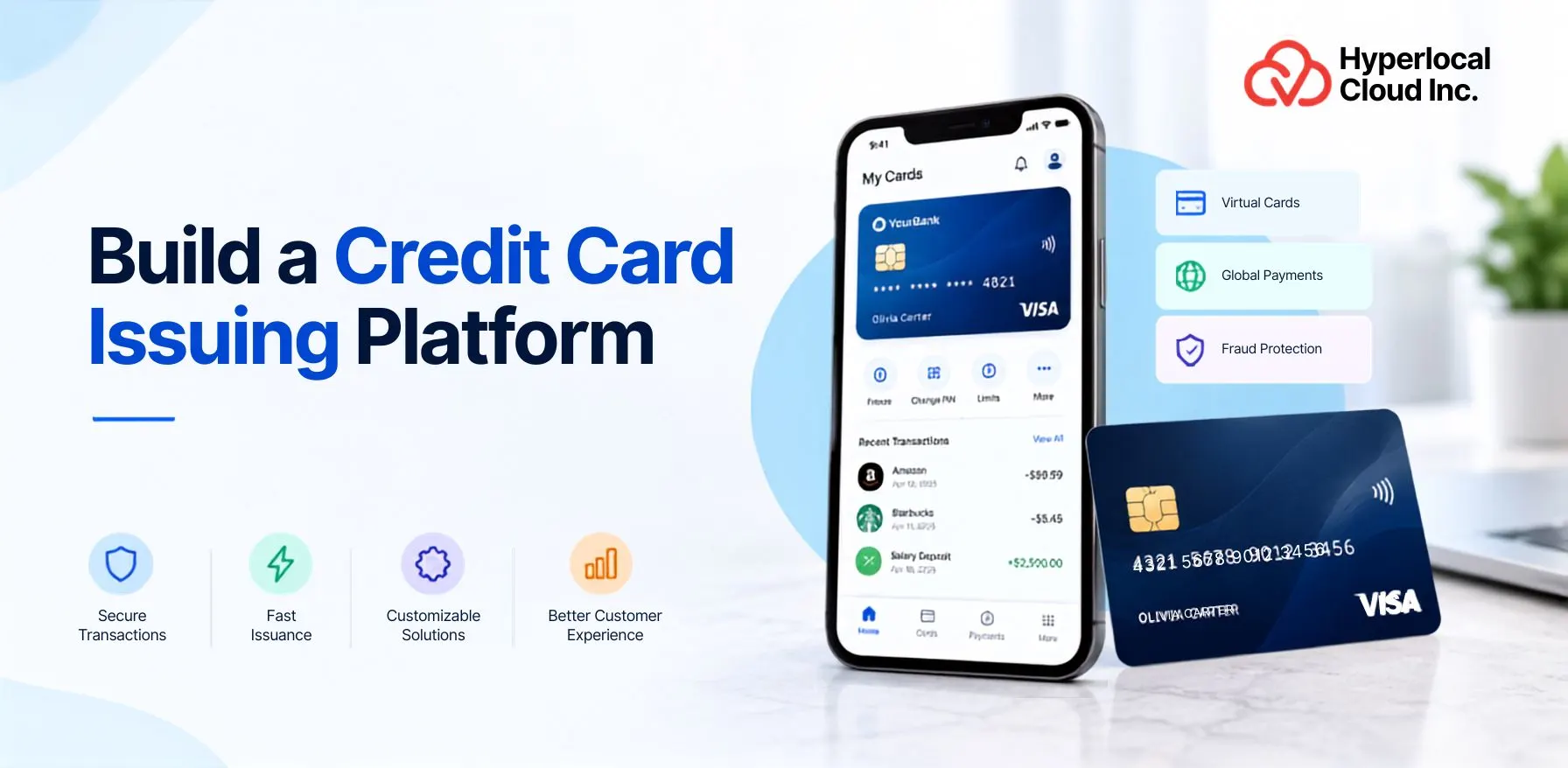
Launching a card program has become more streamlined than it was in the past. Businesses can now work with established issuing and processing providers, use ready-made infrastructure, and connect financial services through APIs. However, building and launching a card program still involves regulatory requirements, technical complexities, partner dependencies, and operational challenges.
That makes careful planning essential before development begins. In this guide, we explore the essential strategies behind how to build a credit card issuing platform. We cover the key stages involved, from choosing the right issuing model and financial partners to designing the platform, developing core workflows, testing the system, and preparing for launch.
Is Launching a Credit Card Issuing Platform Worth It?
The decision to launch a credit card issuing platform pays off for the right reasons. New revenue streams open up through interchange and program fees. Retention improves once the card sits inside your product, not somewhere else. Embedding financial services this way turns a feature into part of the platform itself. But that upside comes with real costs. Regulatory requirements, infrastructure spend, and compliance work continue well past launch. Weigh both sides before committing capital to a build path.
Build Your Credit Card Issuing Platform With Experienced Fintech Experts Today
Types of Businesses That Launch Credit Card Issuing Products
Credit card issuing has expanded beyond traditional financial institutions. Businesses with an established customer base or a strong financial use case can launch card products by working with issuers, processors, and other infrastructure providers.
Fintechs and Lending Platforms
Fintechs, digital lenders, and neobanks can add credit cards to their existing financial products. A lending platform, for example, may use a card to extend an existing credit relationship, while a fintech can combine cards with payments, accounts, or financial management tools.
Retailers and Consumer Brands
Retailers can use store-branded cards to connect spending with loyalty benefits, discounts, and rewards. Consumer brands can also launch co-branded cards with financial institutions, giving customers a payment product built around an existing brand relationship.
Technology and Platform Companies
Technology businesses may introduce cards for specific use cases such as business expenses, subscriptions, employee spending, or embedded finance. Platforms serving freelancers or gig workers can also use card products to simplify access to funds and everyday spending.
Banks and Credit Unions
Banks and credit unions remain established participants in card issuing. Their existing lending infrastructure, customer relationships, and regulatory capabilities provide a foundation for developing and managing credit card products.
Benefits of Launching a Credit Card Issuing Product
Launching a credit card product can connect payments, credit, and customer engagement within the same ecosystem. The benefits depend on the business model, card platform, and issuing arrangement.
Greater Product Control
Businesses can design the card around their customers rather than relying on a separate financial product. Businesses can align credit limits, rewards, spending controls, repayment options, digital cards, and other features with the wider product experience.
Stronger Customer Engagement
A card creates another regular touchpoint with customers. Transaction activity can also provide insights into spending behavior, preferences, and product usage, helping businesses improve offers and customer experiences.
New Revenue Opportunities
Depending on the structure, businesses may generate revenue through interchange economics, program or annual fees, and interest earned on outstanding credit balances. The actual economics vary by market and issuing arrangement.
Better Customer Experience
Customers can manage applications, cards, transactions, payments, statements, and rewards within a connected digital experience. That reduces the need to move between unrelated financial services.
Partnership and Expansion Opportunities
A card platform can support co-branded partnerships and new customer segments. Retailers, fintechs, travel businesses, and technology platforms can build products around shared audiences and specific spending needs.
Must-Have Features of a Credit Card Issuing Platform
A credit card platform is only as good as what customers can actually do with it. Credit card issuing platform development has to account for real-world card use, not just approvals and balances. Skip a core feature, and support tickets pile up fast.
Real-Time Authorization
Every transaction needs a quick approval or decline decision, checked against card status, available credit, spending rules, transaction amount, and risk signals before the response returns. Authorization can also work with payment tokens, which protect sensitive card details during supported payment flows instead of exposing the raw card number. Issuer-processors like Marqeta built their platform around authorization speed for exactly this reason, since a few hundred milliseconds of delay shows up as a declined purchase at checkout.
Spend Controls and Limits
Customers or admins set boundaries on how a card can be used, by category, merchant, or dollar amount. This matters most for business cards, where a company needs to cap what an employee can spend without micromanaging every purchase. Corporate card platforms like Ramp and Brex lean heavily on this feature, letting admins set per-card limits that update instantly.
Virtual Card Issuance
A usable card number is generated the moment an account is approved, with support for instant issuance, freezing, expiration controls, and separate virtual numbers for specific spending needs, useful for subscriptions, employee expenses, or one-off online purchases. Stripe Issuing and Apple Card both work this way, issuing a usable virtual number at approval while the physical card ships later.
Fraud Detection and Dispute Management
Fraud controls use transaction rules, velocity checks, risk scores, device signals, and unusual spending patterns to flag activity for review. Dispute management covers what happens next, tracking, investigation, evidence collection, and resolution, so a reported transaction doesn’t disappear into a disconnected support queue. Mastercard’s fraud scoring and Visa’s Advanced Authorization work on this same real-time model.
Rewards Engine
Points, cashback, or tiered perks apply automatically as transactions post, no manual calculation or delayed crediting. This often differentiates one card product from another once core functionality is table stakes. Chase Ultimate Rewards and Amex Membership Rewards are the reference points most customers already compare a new card program against.
APIs and SDKs for Integration
The platform exchanges data with issuer processors, KYC providers, credit bureaus, fraud systems, payment services, accounting platforms, and notification tools. A strong API layer exposes functions like card creation, status updates, and transaction data, while webhooks push real-time event updates to connected applications. Marqeta and Highnote both expose this as core to their offering, not an add-on.
Admin and Program Management Dashboard
Internal teams manage accounts, card status, transactions, spending rules, disputes, fraud alerts, rewards, and reporting from one place, with role-based access control restricting sensitive actions to the employees who need them. Brex and Ramp’s admin consoles are built around exactly this kind of centralized visibility.
Every product doesn’t need every feature at launch. A consumer card leans on rewards and virtual card issuance. A business card leans harder on admin oversight and spend controls. Start with the core seven, then expand as the program grows and customer needs become clearer.
Start Building Your Secure, Scalable Credit Card Platform Today
How to Build a Credit Card Issuing Platform: Step-by-Step
Building a credit card issuing platform involves several connected development stages. The work starts with defining the card product and selecting the right financial infrastructure, then moves into architecture, application development, integrations, testing, and deployment. If you plan to build a credit card issuing platform, each stage must connect logically to the next so the final product supports secure transactions, reliable account management, and a smooth customer experience.
1. Define the Credit Card Product
Start by defining what the card product will offer and who it will serve. Identify the target customers, card type, credit model, eligibility criteria, credit limits, fees, interest, billing cycle, repayment structure, rewards, and physical or virtual card requirements. These decisions establish the business rules and functional requirements for the platform.
2. Map the Issuing Ecosystem and Choose Partners
A credit card platform depends on several external relationships. Identify the sponsor bank or issuer, issuer-processor, card network, KYC provider, credit bureau, fraud and risk providers, payment services, and other infrastructure partners your program may require.
Compare providers based on supported markets, APIs, compliance requirements, pricing, scalability, and the capabilities your product needs. These choices will directly affect the platform architecture and development scope.
3. Establish Compliance and Operating Requirements
Define the regulatory and operational requirements before development gets too far. Map the processes for customer identification, AML screening, credit decisions, fraud monitoring, card data security, disclosures, disputes, reporting, payments, and reconciliation.
Also determine which responsibilities belong to your business, sponsor bank, processor, and other partners. This gives the development team clear requirements for the workflows and controls the platform needs to support.
4. Choose the Issuing Model and Design the Platform
Decide how much of the technology you want to build yourself and how much you want to source from established providers.
A white-label fintech solution can help businesses launch quickly by using an existing card infrastructure and customizing the customer experience. A ready-made platform provides a broader set of prebuilt issuing and account-management capabilities, reducing development time while offering less control over the underlying system. A custom build gives businesses greater control over the core software, workflows, and customer experience but requires more development effort, infrastructure, and ongoing maintenance.
Pro tip: Most businesses choose the white-label model because it offers a faster, more cost-effective way to launch a credit card product without building the entire issuing infrastructure from scratch.
5. Build the Customer-Facing Experience
Develop the application customers will use to apply for, manage, and use their cards. The experience may include account registration, identity verification, credit applications, approval status, card activation, virtual cards, card controls, balances, transactions, statements, repayments, rewards, notifications, and customer support.
The frontend should connect cleanly with the backend so card status, account information, transactions, and other customer data remain synchronized.
6. Develop Credit, Account, and Transaction Workflows
Build the financial workflows that support the ongoing credit relationship. This includes credit limits, account balances, authorizations, declines, reversals, fees, interest, billing cycles, statements, repayments, and account status changes.
The ledger should maintain an accurate record of financial activity across these workflows. This supports reliable balances, reconciliation, billing, reporting, and financial operations as transaction volume grows.
7. Build the Admin and Operations Layer
Internal teams need their own tools to operate the card program. Build an admin layer for customer accounts, card status, verification reviews, transactions, disputes, payments, reporting, support, and operational workflows.
Role-based access controls should restrict sensitive information and actions according to each team’s responsibilities. Audit logs can also provide a record of important administrative activity.
8. Test, Certify, and Prepare for Launch
Test the complete card lifecycle across normal transactions and failure scenarios. Cover card issuance, activation, authorizations, declines, reversals, payments, billing, API failures, security controls, reconciliation, mobile applications, and performance.
At the same time, complete the testing, certification, compliance reviews, and other launch requirements defined by your issuing partners and card network.
9. Launch, Monitor, and Scale
Move the platform into production through a controlled rollout. Monitor application performance, APIs, transaction flows, infrastructure, errors, and security events closely during the initial launch.
The development work continues after launch. New card products, integrations, regulatory requirements, risk controls, and customer needs can require ongoing platform updates and improvements.
Compliance and Regulatory Requirements for Credit Card Issuing Platforms
A card program cannot treat compliance as a final checklist. It affects how customers are onboarded, how card data is handled, how transactions are monitored, and who can access sensitive information. These decisions need to be part of credit card issuing platform development from the start.
PCI DSS and Cardholder Data Security
Card data needs careful handling at every stage. PCI DSS (Payment Card Industry Data Security Standard) provides security requirements for organizations that store, process, or transmit payment card information.
That means the platform needs appropriate controls for encryption, authentication, access permissions, vulnerability management, logging, and data protection. Tokenization can also reduce the amount of sensitive card information exposed to the application, depending on how the card program is designed.
KYC and AML Controls
A new customer cannot simply sign up and start using a credit card. The program needs a process to verify identity and assess financial crime risk.
For U.S. programs, this can involve Customer Identification Program (CIP) requirements alongside Bank Secrecy Act and AML obligations. A platform may connect with services for identity verification, sanctions screening, customer risk scoring, transaction monitoring, and suspicious activity detection. The issuer and its partners decide how to divide these responsibilities.
Card Network Requirements
Visa and Mastercard bring another layer of requirements to the project. Their rules cover areas such as card issuance, transaction processing, security, disputes, and program operations.
This matters during technical planning. The software has to support the workflows and data requirements expected by the selected network and issuing partners. Visa, for example, describes a card program as involving participants such as a banking relationship, issuer processor, and program manager.
Sponsor Bank and Issuer Requirements
A fintech does not necessarily become the regulated issuer itself. Many programs work with a sponsor bank or BIN sponsor that provides access to the card network and takes on defined regulatory and financial responsibilities.
That partnership influences the software you build. The platform may need to accommodate the bank’s onboarding process, compliance checks, reporting requirements, transaction controls, and audit processes. These requirements should be understood before the architecture is finalized.
Regional Regulatory Variation
Launching in one market does not create a universal compliance model. A U.S. credit card product may need to address Regulation Z, credit disclosures, and federal consumer protection rules, while a program serving customers elsewhere will face a different set of obligations.
The practical approach is to define the target markets before development gets too far. Then map the requirements to the relevant platform workflows. Issuing partners, compliance teams, and legal advisors should review that framework before the product goes live.
Create a Powerful Credit Card Issuing Platform Tailored to Business
Credit Card Issuing Platform Development Timeline
As discussed above, the timeline follows directly from the build path chosen earlier. A white-label platform can go live in 4 to 12 weeks, since most of the infrastructure is already built and configured rather than developed from scratch. An API-first build typically takes 3 to 6 months, a modular build runs 6 to 12 months, and a full custom build takes 12 to 18 months or longer.
Two stages tend to run longer than teams expect, regardless of path:
Network certification (4 to 8 weeks)
Visa and Mastercard both require certification testing before a program can go live. This step depends on their review queues, not just how ready the platform is, and can add weeks even to an otherwise fast build.
Sponsor bank compliance review (4 to 10 weeks)
For platforms operating under a sponsor bank rather than their own license, the bank reviews compliance controls and risk management before approving launch. This review runs in parallel with development when planned early, but becomes a bottleneck when compliance work starts late.
Building in time for both of these, rather than treating them as a final checkbox, is what keeps a launch date realistic.
Choosing a Credit Card Issuing Platform Development Company
The right software development company can shorten every stage covered so far: build path selection, architecture, compliance, and certification. The wrong one turns each of those into a longer, costlier problem.
Fintech and card issuing portfolio
Look for a company that’s actually built card programs before, not just financial software in general. Card issuing has specific technical and regulatory demands that general fintech experience doesn’t automatically cover.
Card network certification experience
A development partner who’s already taken platforms through Visa or Mastercard certification knows the process, the common delays, and what reviewers actually check. That experience shortens a stage that otherwise catches first-time issuers off guard.
Compliance and security expertise
PCI DSS, KYC/AML, and sponsor bank requirements need to be built into the platform from the start, not bolted on before launch. A partner without this expertise on the team usually means compliance gaps discovered late, when they’re expensive to fix.
Post-launch support model
Compliance work, network mandate updates, and platform maintenance continue well past launch. Ask how the company supports a platform after go-live, not just how they build it, since a program without ongoing support tends to fall behind on updates it can’t afford to skip.
Hyperlocal Cloud brings this combination together for businesses building a card issuing platform: fintech development experience across compliance-heavy verticals and the technical depth to carry a program from architecture through launch and beyond. As a credit card issuing platform development company, Hyperlocal Cloud can support the build itself and the ongoing work that keeps a program compliant and current after launch.
Credit Card Issuing Platform Development Cost
Credit card issuing platform development costs can range from tens of thousands of dollars for a focused MVP to several hundred thousand dollars for a large, customized platform. The final budget depends on the development approach, product scope, integrations, security requirements, and target markets.
A white-label solution can reduce the initial software investment, while a custom build gives the business greater control over its workflows, user experience, and future expansion.
Estimated Development Cost
| Platform Approach | Estimated Development Cost | Typical Use Case |
| White-label customization | $30,000–$80,000 | Fast launch with branded features |
| Custom MVP | $60,000–$120,000 | New card product with core functionality |
| Full-featured custom platform | $120,000–$250,000+ | Growing fintech or card program |
| Enterprise-grade platform | $250,000–$500,000+ | Large-scale, highly customized programs |
These figures cover software development. BIN sponsorship, issuer processing, card networks, KYC providers, fraud tools, certifications, cloud infrastructure, and ongoing operations cost extra.
What Influences Credit Card Issuing Platform Development Cost?
Five factors usually have the biggest effect on the budget:
- Platform approach: White-label, API-first, and custom development require different levels of engineering effort. A fully custom platform will generally need a larger development budget.
- Applications and workflows: Building web, iOS, and Android apps increases the scope. Customer onboarding, card management, payments, statements, and rewards add further development work.
- Third-party integrations: Connecting issuer processors, KYC providers, credit bureaus, fraud systems, payment services, and accounting tools requires API development, testing, authentication, and monitoring.
- Security and compliance: Encryption, authentication, access controls, audit logs, tokenization, data protection, and PCI DSS requirements add technical work and testing.
- Custom business logic: Credit rules, corporate spending controls, approval workflows, rewards programs, and multiple card products can significantly increase development effort.
How to Control the Initial Budget
A focused MVP can keep the credit card issuing platform development cost manageable. Start with customer onboarding, card applications, card management, transactions, payments, spending controls, core risk features, and essential integrations.
Using established issuing APIs or a white-label platform can also reduce the financial software the team needs to build from scratch. The team can then focus on the branded experience and product-specific functionality.
Common Challenges When Building a Credit Card Issuing Platform
Building a card platform involves several moving parts. A problem in one area can quickly affect the rest of the product, especially when third-party financial services are involved. Here are a few challenges worth addressing early in credit card issuing platform development:
- Choosing the wrong issuing partner: Compare processor capabilities, APIs, supported markets, compliance support, pricing, and scalability before committing to a provider.
- Building before defining the card product: Credit limits, approval rules, rewards, repayment options, and customer types should be decided before development starts. Otherwise, core workflows may need expensive changes later.
- Underestimating integration work: An API connection involves authentication, data mapping, error handling, webhooks, testing, and monitoring. Give each critical integration enough development time.
- Treating security as a later task: Security controls need to be part of the architecture from day one. Build authentication, access controls, encryption, audit logging, and data protection into the platform early.
- Trying to launch everything at once: A focused MVP is easier to test and improve. Start with the workflows customers need to apply, receive, manage, and use their cards, then expand based on actual product needs.
How to Overcome These Development Challenges
A clear development plan helps address these issues before they turn into costly rework. An experienced fintech development partner like Hyperlocal Cloud can help with product planning, platform architecture, financial service integrations, and the customer and admin workflows needed for the card program.
The team can start with a focused MVP, test the critical card flows, and expand the platform as the product gains traction. This keeps the development process focused while leaving room for new card products, integrations, and markets. If you are planning a card product of your own, contact our experts about building a platform around your business requirements.
Talk to Our Experts About Building Your Credit Card Platform
Final Thoughts
A successful card program comes down to making the right decisions before development gets underway. The technology should support the product you want to offer today while leaving enough room for growth tomorrow. Whether you choose a white-label solution, an API-led approach, or a custom build, the right development partner can make the process easier to manage. If you still want to know more about how to build a credit card issuing platform, Hyperlocal Cloud can help turn your concept into a scalable fintech product built around your goals.
FAQs (Frequently Asked Questions)

Patt Cummins is an experienced content writer with over 10 years of experience creating clear and engaging content for technology-focused industries. He specializes in simplifying complex technical topics into easy-to-understand stories that educate readers, support brand communication, and help businesses effectively share their solutions.

Need Help With
Development?