


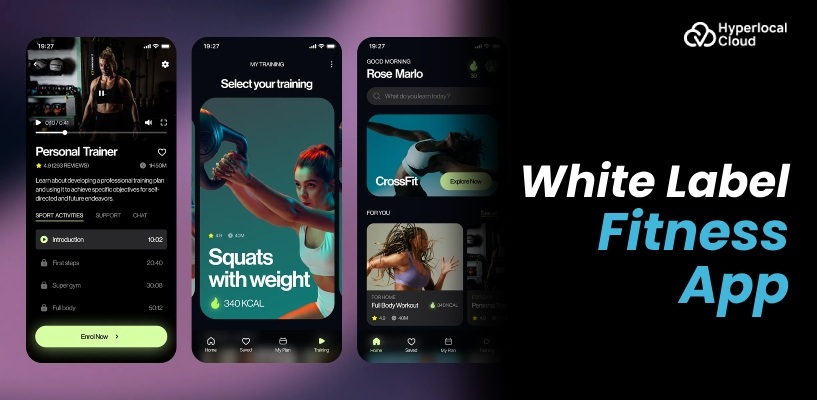
The fitness industry is increasingly embracing digital platforms that help users access workouts, track their progress, and connect with fitness professionals. From personal trainers and gyms to fitness startups and wellness businesses, companies are exploring mobile apps to expand their services and reach more customers.
A white-label fitness app provides a practical way to enter this market with a branded digital platform. Instead of developing every feature from scratch, businesses can use an existing fitness app solution, customize its branding and functionality, and launch it under their own name.
Whether you want to offer online personal training, workout subscriptions, virtual fitness classes, or gym membership management, a white-label fitness app can help you establish a digital presence and create new revenue opportunities.
This guide explains how white-label fitness apps work, their essential features, business models, development costs, and the steps involved in launching your own branded fitness application.
What Is a White Label Fitness App?
A white-label fitness app is a pre-developed or reusable fitness software solution that businesses can customize with their own brand identity, selected features, and business requirements.
It allows fitness businesses to offer a mobile application without building the entire technology infrastructure from the beginning. Depending on the solution, businesses may be able to customize the app’s logo, colors, user interface, workout programs, subscription plans, and administrative settings.
For example, a personal training company can launch a branded fitness app where customers purchase workout plans, follow exercise videos, monitor their progress, and communicate with trainers.
What Does White Label Mean in Fitness App Development?
In fitness app development, white labeling means using an existing software foundation to create an application that represents your own business.
The underlying technology may be shared across multiple businesses, while branding, selected features, and business configurations can be customized.
However, the level of customization depends on the provider. Some solutions offer only branding and configuration options, while others support additional integrations, feature modifications, and custom development.
How Is a White Label Fitness App Different From a Generic Fitness App?
A generic fitness app is usually designed for direct use by individual consumers. A white-label fitness app solution enables a business to offer a fitness application under its own brand.
For example, a consumer may download a general workout app to follow exercise routines. A gym owner, on the other hand, may use a white-label solution to create an app for gym members, personal trainers, and fitness administrators.
The business can establish its own identity, manage its customer relationships, and potentially generate revenue through memberships, training programs, and other services.
Turn Your Fitness Business Idea Into a Branded App
How Does a Fitness App Work?
A fitness app connects users with digital fitness services through a mobile or web-based platform. Its workflow depends on the type of application, but most fitness apps follow a similar process.
User registration: Customers create accounts using their email address, phone number, or supported sign-in options.
Fitness profile setup: Users provide relevant information, such as fitness goals, preferred activities, experience level, and workout preferences.
Workout discovery: The app displays suitable workout programs, exercise videos, training plans, or fitness classes.
Booking or subscription: Users purchase a membership, subscribe to a fitness plan, or book a session with a trainer.
Workout tracking: The application records completed activities, workout history, and supported fitness metrics.
Progress monitoring: Users review their performance through progress reports, activity summaries, and goal-tracking tools.
Ongoing engagement: Notifications, reminders, trainer communication, and personalized recommendations encourage continued participation.
In a white-label fitness app, the business generally manages its services through an administrative dashboard. Depending on the platform, administrators can manage users, trainers, workout content, payments, subscriptions, and business settings.
The exact workflow varies according to the app’s features and business model.
Benefits of Launching a Fitness App With a White Label Solution
Launching a branded fitness app can help businesses extend their services beyond physical locations and create more convenient ways for customers to engage with their fitness offerings.
Faster Time to Market
Using an existing software foundation can reduce the time required to build core fitness functionality compared with developing an entire application from scratch.
Businesses can focus on configuring the platform, preparing fitness content, testing the user experience, and launching their services.
The actual launch timeline depends on customization requirements, integrations, testing, and app store approval.
Lower Initial Development Effort
A white-label solution can reduce the amount of initial engineering work required because essential components may already be available.
Businesses may not need to build common features such as registration, workout libraries, subscription management, and administrative dashboards from the ground up.
However, the total investment depends on licensing fees, customization, integrations, and ongoing maintenance.
Build Your Own Fitness Brand
A branded fitness app allows businesses to create a digital experience that reflects their identity.
Custom logos, colors, content, subscription plans, and user experiences can help establish a consistent brand across websites, mobile applications, and fitness services.
Reach Customers Beyond Physical Locations
Traditional gyms and fitness studios generally serve customers within a particular geographic area. A digital fitness application can make selected services available to users in other locations.
For example, a personal trainer can provide recorded workouts, virtual coaching, and digital training plans to customers who cannot attend in-person sessions.
Create Recurring Revenue Opportunities
Fitness businesses can introduce subscription-based memberships, premium workout plans, paid training sessions, and other digital services.
Recurring payment models can help businesses establish predictable billing cycles, although revenue depends on customer acquisition, retention, pricing, and operating costs.
Improve Customer Engagement
Features such as workout reminders, progress tracking, achievement badges, and trainer communication can encourage users to remain active on the platform.
A well-designed app can also help businesses understand which services customers use and identify opportunities to improve their fitness offerings.
Essential Features of a White Label Fitness App
The features of a white-label fitness app should reflect the needs of its target audience and business model. A gym membership application may require different functionality from an online personal training platform.
User Registration and Profile Management
Users should be able to create accounts, manage personal information, set fitness goals, and update their preferences.
Profile settings should also allow users to manage privacy preferences and control relevant account information.
Workout Library and Exercise Videos
A workout library enables users to browse exercises and training programs based on their goals, experience, and available equipment.
Useful capabilities include:
- Exercise descriptions and video demonstrations.
- Workout categories and difficulty levels.
- Training plans for different fitness goals.
- Search and filtering options.
- Saved workouts and workout history.
Personalized Workout Plans
Personalized workout plans help users follow structured exercise routines based on their preferences and fitness objectives.
Depending on the platform, plans can be created by trainers, selected from predefined programs, or generated using supported personalization features.
Any automated recommendations should be appropriate to the app’s intended use and clearly communicate their limitations.
Fitness Progress Tracking
Progress tracking allows users to monitor their activities and review changes over time.
Depending on the application, this may include completed workouts, exercise duration, activity levels, personal records, and user-entered measurements.
Integrations with supported wearable devices can provide additional fitness data.
Trainer and Coach Management
For businesses offering personal training, trainer management features can help users discover coaches, view profiles, book sessions, and communicate with fitness professionals.
Administrators may also need tools to manage trainer availability, schedules, services, and customer assignments.
Membership and Subscription Management
A fitness app can support different membership plans, recurring subscriptions, free trials, and premium content access.
The platform should make pricing, renewal terms, cancellation procedures, and payment status clear to users.
Online Class Booking
Fitness studios and instructors can use class-booking features to manage virtual or in-person sessions.
Useful functionality includes class schedules, available seats, booking confirmations, cancellations, and reminders.
Payment Gateway Integration
Payment integration allows users to purchase memberships, workout programs, training sessions, and other services.
The available payment methods depend on the selected payment provider, target market, and applicable app store requirements.
Push Notifications and Reminders
Notifications can remind users about scheduled workouts, upcoming classes, subscription renewals, or messages from trainers.
Businesses should provide appropriate notification preferences and avoid excessive messaging.
Admin Dashboard
An administrative dashboard gives the business centralized control over its fitness platform.
Depending on the solution, administrators may be able to:
- Manage users and trainers.
- Upload and organize workout content.
- Configure memberships and subscription plans.
- Review payments and transactions.
- Manage bookings and schedules.
- View engagement and business reports.
- Configure branding and supported app settings.
Security and Privacy Controls
Fitness applications may process personal information and sensitive health-related data. Appropriate safeguards should include secure authentication, access controls, encrypted data transmission, and responsible data handling.
Businesses should also review applicable privacy laws, data retention requirements, and third-party integration practices before launching.
Revenue Models of a White Label Fitness App
A white-label fitness app can support several revenue models. Businesses can select one or combine multiple models according to their services and customers.
Subscription-Based Memberships
Users pay a recurring fee to access workout programs, fitness classes, premium features, or other digital services.
For example, a business could offer monthly and annual membership plans with different levels of access.
Pay-Per-Workout or Training Sessions
Customers pay for individual workout programs, personal training sessions, or specialized fitness classes.
This model can work for businesses that want to offer flexible purchasing options without requiring every customer to subscribe.
Freemium Model
A freemium app offers basic features for free while charging for premium content or advanced functionality.
For example, users might access a limited workout library for free and purchase a premium plan to unlock additional training programs.
Corporate Wellness Programs
Businesses can offer fitness memberships and wellness services to corporate customers.
Revenue may come from employer-funded subscriptions, employee participation plans, or customized corporate fitness packages.
Personal Training Packages
Fitness professionals can sell training packages that combine workout plans, coaching sessions, progress reviews, and ongoing support.
This model can help trainers provide digital services alongside their existing in-person business.
In-App Advertising and Partnerships
Some fitness apps generate revenue through advertising or partnerships with relevant fitness brands.
Businesses should consider user experience, privacy, and disclosure requirements before introducing sponsored content or advertisements.
Discuss Your Fitness App Requirements With Our Experts
Who Can Benefit From a White Label Fitness App?
A white-label fitness app can support different types of businesses looking to expand their digital fitness services.
Gym and Fitness Studio Owners
Gym owners can use a branded app to manage memberships, publish workout content, communicate with members, and offer online fitness programs.
Personal Trainers and Fitness Coaches
Independent trainers can provide workout plans, coaching sessions, progress tracking, and digital training packages through their own branded platform.
Fitness Startups and Entrepreneurs
Entrepreneurs can use a white-label solution to test a fitness business concept, establish a digital brand, and introduce services without developing every software component independently.
Yoga and Wellness Businesses
Yoga studios and wellness providers can offer class bookings, recorded sessions, membership plans, and digital wellness programs.
Sports and Athletic Training Organizations
Sports academies and athletic training businesses can use fitness applications to distribute training programs, organize sessions, and monitor selected performance metrics.
Corporate Wellness Providers
Corporate wellness businesses can provide employees with access to fitness programs, challenges, virtual classes, and activity-based engagement initiatives.
How to Launch Your Own Fitness App
Launching a branded fitness app requires more than selecting software and adding a logo. Businesses should define their target audience, prepare their services, configure the platform, and establish an ongoing operating plan.
Step 1: Define Your Fitness Business Model
Start by identifying the services you want to offer and the customers you want to reach.
For example, your business may focus on gym memberships, online personal training, workout subscriptions, fitness classes, or corporate wellness.
Your business model will influence the required features, pricing strategy, and platform configuration.
Step 2: Research Your Target Audience
Understand the needs, preferences, and challenges of your potential customers.
Consider their fitness goals, preferred devices, payment preferences, and expectations from a fitness application.
This research can help you determine which features are essential for your initial launch.
Step 3: Choose a White Label Fitness App Solution
Evaluate available solutions based on functionality, customization options, supported platforms, scalability, security, and pricing.
Ask providers whether their solutions support your specific business model and whether additional integrations or development work will be required.
Step 4: Customize Your App Branding
Configure the application to reflect your business identity.
This may include your logo, brand colors, app name, content, subscription plans, and selected interface elements.
Review how the branding appears across registration screens, workout pages, payment flows, and other important user journeys.
Step 5: Configure Essential Features
Select the features needed for your initial launch.
A personal training app may prioritize trainer profiles, workout plans, booking, and communication. A gym app may focus on memberships, class schedules, and member management.
Launching with a clearly defined feature set can make testing and ongoing improvements more manageable.
Step 6: Add Fitness Content and Services
Prepare the workout videos, training plans, fitness classes, and other content your users will access.
Ensure that the content is accurate, appropriately licensed, accessible, and suitable for its intended audience.
If you offer professional coaching, establish how trainers will create content and communicate with customers.
Step 7: Integrate Payments and Third-Party Services
Configure payment processing, notifications, analytics, and any required external integrations.
Confirm that each integration supports your target market and business requirements.
For health or wearable integrations, review the permissions, data-sharing practices, and technical limitations involved.
Step 8: Test the Application
Test the app across supported devices and operating systems.
Check registration, login, payments, subscriptions, bookings, notifications, content playback, and administrative functions.
Also review accessibility, performance, privacy controls, and error handling.
Step 9: Launch and Promote Your App
Prepare your app store listings, website, marketing materials, and customer support process.
Promote the application through your existing customer base, social media, email marketing, partnerships, and relevant fitness communities.
Make sure users understand how to register, access services, and contact support.
Step 10: Monitor Performance and Improve
After launch, monitor user engagement, subscription activity, customer feedback, technical issues, and business performance.
Use these insights to improve the user experience, introduce relevant features, and refine your fitness services over time.
White-Label Fitness App vs. Custom Fitness App Development
White-label and custom fitness app development offer different approaches to launching a branded fitness application. The appropriate choice depends on the business’s budget, technical requirements, timeline, and long-term product strategy.
| Comparison factor | White Label fitness app | Custom fitness app |
| Development approach | Uses an existing software foundation | Built around specific business requirements |
| Branding | Branding and selected interface customization | Branding and interface designed for the project |
| Features | Uses available features with supported customization | Features can be designed around specific needs |
| Initial development effort | Often lower when existing features meet requirements | Usually higher because more components must be developed |
| Launch timeline | Can be shorter, depending on configuration and testing | Often longer, depending on scope and complexity |
| Flexibility | Depends on provider capabilities | Greater control over product architecture and functionality |
| Maintenance | May be shared with or managed by the provider | Managed by the business or its development partner |
| Suitable for | Businesses seeking an established fitness app foundation | Businesses requiring specialized functionality or greater technical control |
A white-label solution may be appropriate when the business’s requirements closely match the available platform. Custom development may be more suitable when the product requires specialized workflows, unique integrations, or functionality that the existing solution cannot support.
Some businesses also choose a hybrid approach, starting with a white-label foundation and adding custom functionality as their needs evolve.
Get a Customized Fitness App Solution for Your Business
Challenges in Launching a Branded Fitness App and How to Address Them
Launching a fitness application involves operational, technical, and customer engagement challenges. Planning for these challenges can help businesses establish a more sustainable platform.
Selecting the Right Features
Adding too many features at launch can increase complexity and make the user experience harder to manage.
How to address it: Identify the essential customer journeys and prioritize features that directly support your business model. Introduce additional functionality based on user feedback and measurable business needs.
Maintaining User Engagement
Users may lose motivation if the app does not provide useful content, relevant reminders, or a convenient workout experience.
How to address it: Offer structured fitness programs, progress tracking, appropriate reminders, and regular content updates. Make it easy for users to find workouts that match their goals and preferences.
Choosing a Scalable Platform
A platform that supports a small user base may require additional infrastructure or configuration as the business grows.
How to address it: Ask providers about their supported user capacity, performance testing, infrastructure, data management, and scaling process. Understand whether increased usage affects pricing.
Protecting User Data
Fitness apps may collect personal profiles, activity records, and other sensitive information.
How to address it: Review security controls, privacy policies, access permissions, data retention practices, and third-party integrations. Collect only the information needed to provide the service and comply with applicable regulations.
Managing Content Quality
Outdated or poorly organized workout content can reduce customer satisfaction and create safety concerns.
How to address it: Establish a content review process, organize workouts by appropriate categories, and work with qualified fitness professionals where relevant.
Understanding Ongoing Costs
The initial setup fee may not represent the total cost of operating a fitness application.
How to address it: Review recurring software fees, hosting, payment processing, maintenance, content production, customer support, marketing, and any additional development costs before committing to a solution.
Standing Out in the Fitness Market
A branded application does not automatically attract users or generate revenue.
How to address it: Develop a clear value proposition, identify a specific audience, offer useful fitness services, and build a customer acquisition and retention strategy around your brand.
How Much Does It Cost to Launch a Branded Fitness App?
The cost of launching a branded fitness app depends on the selected white-label solution, customization requirements, feature set, integrations, and ongoing operating expenses.
There is no single fixed price that applies to every fitness business. A basic branded application with standard functionality will generally require a different investment from a platform offering advanced personalization, wearable integrations, live classes, or complex business management features.
Factors That Affect Fitness App Launch Costs
1. White-label licensing or setup fees
Providers may charge an initial setup fee, recurring license fee, subscription, or a combination of these. Businesses should clarify exactly what is included in the quoted price.
2. Customization requirements
Branding, interface changes, custom workflows, and additional functionality can increase the total investment.
3. Feature complexity
Features such as live streaming, advanced analytics, wearable integrations, and personalized workout recommendations may require additional development or third-party services.
4. Platform compatibility
Launching on iOS, Android, and the web may involve different configuration, testing, and maintenance requirements.
5. Third-party integrations
Payment gateways, analytics tools, video services, and external fitness platforms may involve setup charges or recurring fees.
6. Maintenance and support
Ongoing expenses can include software updates, technical support, infrastructure, security improvements, and compatibility testing.
7. Marketing and customer acquisition
Businesses should also budget for app promotion, customer support, fitness content creation, and customer retention activities.
White-Label Fitness App Cost vs. Custom Development Cost
White-label solutions can reduce initial development effort when existing functionality meets the business’s requirements. Custom development may require a larger initial investment because the software is built around specific needs.
However, the total cost of ownership depends on more than the development approach. Licensing terms, customization expenses, recurring fees, maintenance, and future feature requirements should all be considered.
Before selecting a provider, request a detailed quotation covering initial setup, included features, additional development, recurring charges, support, and ownership rights.
How to Choose the Right White Label Fitness App Solution
Selecting a suitable white-label fitness app solution requires evaluating both the software and the provider’s ability to support your business.
Evaluate the Available Features
Check whether the platform supports your core requirements, including workout management, subscriptions, trainer profiles, bookings, payments, and administrative controls.
Request a demonstration of the actual user and administrator workflows rather than relying only on a feature list.
Review Customization Options
Confirm which elements can be customized, such as branding, interface components, business rules, content, and subscription settings.
Ask whether additional functionality can be introduced later and whether the provider charges separately for modifications.
Check Supported Platforms
Determine whether the solution supports the mobile and web platforms your customers use.
Review device compatibility, performance, accessibility, and the process for publishing and updating the application.
Understand Pricing and Licensing
Ask for a complete breakdown of setup fees, recurring charges, customization costs, support fees, and third-party expenses.
Also clarify who owns the branding, customer data, app store accounts, and any custom-developed components.
Assess Security and Privacy
Review authentication, encryption, access controls, data handling, backup procedures, and applicable privacy compliance requirements.
Ask how security updates are managed and what happens to customer data if you change providers.
Review Integration Capabilities
Check whether the platform supports the payment gateways, wearable devices, analytics tools, and other services required by your business.
Confirm whether integrations are included or require separate development.
Evaluate Support and Maintenance
Understand the provider’s support channels, response times, maintenance arrangements, and update process.
A clear support agreement can help you plan for technical issues and ongoing operations.
Request a Demo or Trial
Before making a decision, test the platform using realistic business scenarios.
Evaluate the registration process, workout experience, payment flow, administrative dashboard, and available customization options.
A practical demonstration can help you identify limitations that may not be apparent from marketing materials.
Launch Your Own Fitness App With a White Label Solution
Why Choose Hyperlocal Cloud to Launch Your Branded Fitness App?
When evaluating a white-label fitness app provider, businesses should look for a solution that aligns with their branding, business model, technical requirements, and growth plans.
Hyperlocal Cloud can be considered as part of your evaluation process for launching a branded fitness application. Before selecting a solution, discuss your requirements with its team and confirm the available functionality, customization options, pricing, and ongoing support.
Here are the key areas to evaluate when considering Hyperlocal Cloud for your fitness app project.
Fitness App Customization
Discuss how the solution can be configured to reflect your business identity, including your app branding, fitness content, membership plans, and user experience.
Confirm which customization options are included in the proposed solution and which may require additional work.
Features Aligned With Your Business Model
Whether you operate a gym, personal training business, fitness studio, or online wellness service, your application should support the services you intend to offer.
Ask the Hyperlocal Cloud team to demonstrate how the proposed solution can accommodate your required workflows and business operations.
Launch Planning and Technical Support
A successful launch involves configuration, testing, app store preparation, and ongoing maintenance.
Clarify the support available during each stage, including the expected project timeline, responsibilities, and post-launch assistance.
Transparent Pricing
Request a detailed proposal that explains the initial investment, recurring fees, customization charges, third-party costs, and maintenance arrangements.
Understanding the complete cost structure can help you assess whether the solution fits your business budget.
Room for Future Growth
Your fitness business may introduce new services, expand to additional markets, or require more advanced functionality over time.
Discuss the platform’s scalability, integration options, and process for adding features as your requirements evolve.
Ready to explore a branded fitness app for your business? Contact Hyperlocal Cloud to discuss your fitness app requirements, review the available solution, and request a customized proposal.
FAQs (Frequently Asked Questions)

Ritu Thakur is a technical writer with more than 7 years of experience creating high-quality content for a wide range of industries. She specializes in developing clear, engaging, and well-researched technical and business content tailored to diverse audiences and industry requirements.

Need Help With
Development?