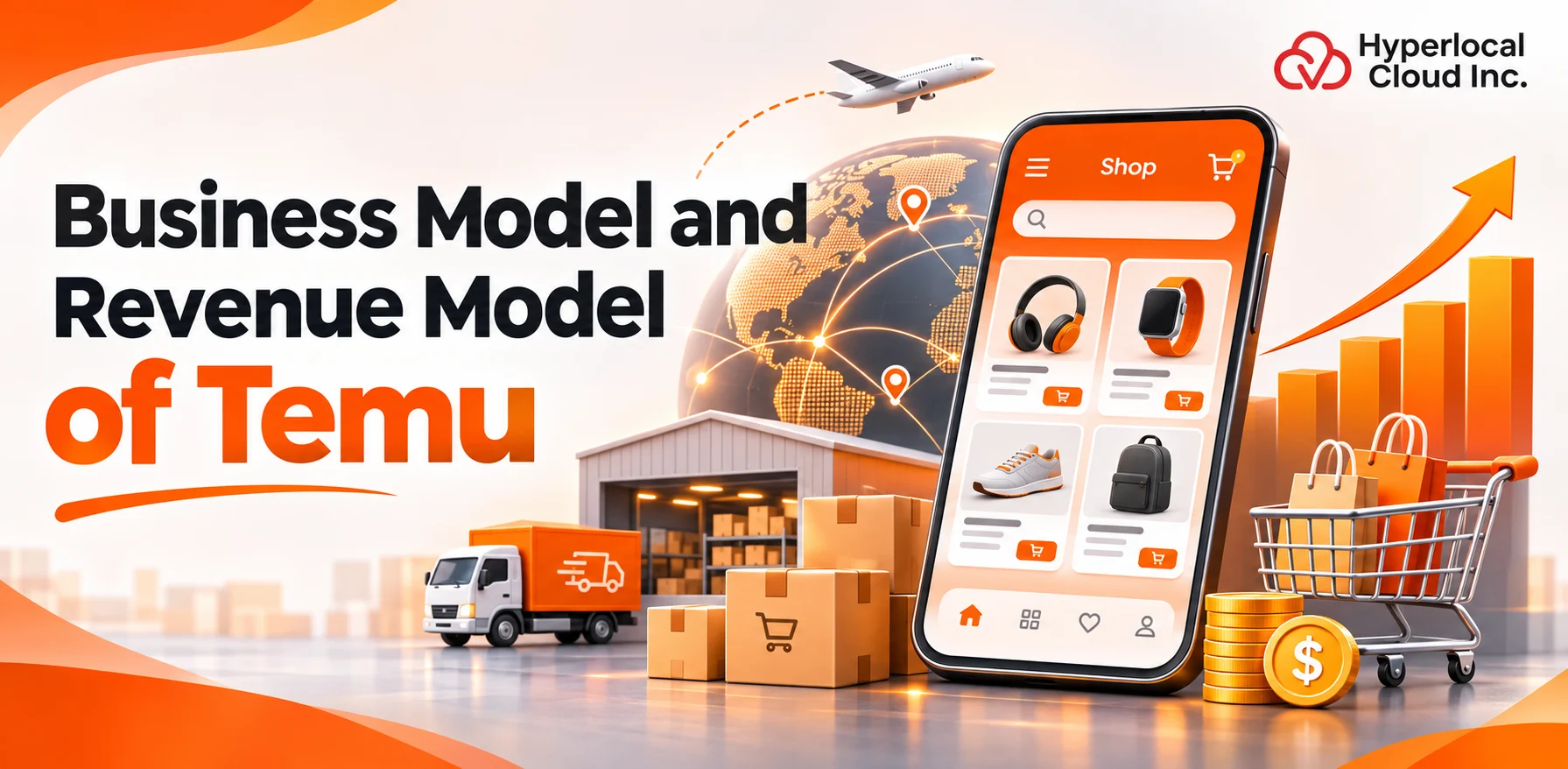
Temu has become one of the most recognizable names in the global eCommerce industry by offering customers access to a wide range of affordable products across categories such as fashion, electronics, home accessories, beauty, toys, and lifestyle. Its shopping experience combines competitive pricing, personalized product recommendations, promotional campaigns, and a large network of merchants and suppliers.
Behind this shopping experience is a marketplace-driven business strategy that connects consumers with businesses and manufacturers while managing important parts of the online shopping journey. Temu’s approach focuses on making products accessible at competitive prices, increasing customer engagement, and expanding its presence across international markets.
Understanding the business model and revenue model of Temu provides valuable insights into how modern eCommerce marketplaces operate, attract customers, manage sellers, and generate revenue. It also offers useful lessons for entrepreneurs planning to establish their own online marketplace.
In this blog, we will explore how Temu works, its business operations, major revenue streams, pricing strategy, supply chain, marketing approach, and the factors contributing to its growth. We will also explain how entrepreneurs can build an eCommerce marketplace inspired by Temu’s business model.
What Is Temu? An Overview of the eCommerce Marketplace
Temu is an online shopping marketplace that allows customers to discover and purchase products across multiple categories. It was launched in September 2022 by PDD Holdings, the multinational commerce group also associated with Pinduoduo, a major Chinese eCommerce platform.
The platform initially gained attention through its affordable product offerings and aggressive customer acquisition campaigns. It subsequently expanded into numerous international markets, positioning itself as a competitor in the global online shopping industry.
Unlike traditional retailers that primarily sell products from their own inventory, Temu operates through a marketplace-oriented ecosystem involving merchants, manufacturers, suppliers, logistics partners, and consumers.
Its business approach emphasizes product affordability, a broad selection, and a shopping experience designed to encourage frequent customer engagement.
When Was Temu Founded?
Temu was launched in September 2022 in the United States. Its introduction represented PDD Holdings’ expansion into international eCommerce markets.
The platform entered the market with a focus on affordable products and a wide selection of merchandise. Its early marketing campaigns, discounts, referral incentives, and promotional activities helped introduce the brand to a large audience.
Following its initial launch, Temu expanded into additional countries and continued developing its marketplace infrastructure.
Who Owns Temu?
Temu is owned by PDD Holdings, a multinational commerce group.
PDD Holdings operates an eCommerce ecosystem that includes Pinduoduo and Temu. The group provides technology, marketplace infrastructure, and commercial capabilities supporting its platforms.
This relationship is important when analyzing Temu’s financial performance because publicly reported financial information from PDD Holdings generally covers the group’s operations rather than Temu as a standalone business.
How Does the Temu Shopping Platform Work?
Temu provides a digital marketplace where customers can browse products, compare prices, place orders, and receive deliveries.
Its operating process involves several participants:
-
Customers: Browse products, purchase merchandise, make payments, and review their shopping experiences.
-
Merchants: Offer products, manage listings, and participate in marketplace transactions.
-
Manufacturers and suppliers: Provide products and support merchandise sourcing.
-
Logistics partners: Help transport products and manage delivery operations.
-
Temu: Provides the marketplace technology, customer-facing shopping experience, promotional infrastructure, and platform-related services.
This ecosystem enables Temu to offer a broad product catalog without depending entirely on owning and managing traditional retail inventory.
Temu’s Global Market Presence
Temu initially entered the United States before expanding into other international markets. Its international growth strategy has focused on reaching consumers who are interested in affordable online shopping.
The platform’s expansion demonstrates how digital marketplaces can use technology, merchant networks, marketing campaigns, and logistics partnerships to enter new markets.
However, operating internationally also requires businesses to manage different tax systems, consumer protection requirements, import regulations, product standards, and shipping arrangements.
Key Features That Make Temu Popular
Several features contribute to Temu’s shopping experience:
-
Extensive product categories.
-
Competitive product pricing.
-
Personalized product recommendations.
-
Promotional discounts and offers.
-
Customer reviews and product ratings.
-
Order tracking and delivery updates.
-
Multiple payment options.
-
Product discovery through personalized shopping feeds.
-
Customer support and return-related services.
Together, these capabilities help create an accessible shopping experience while supporting customer engagement.
Start Your Own Multi-Vendor Shopping Platform Without Building Everything From Scratch
What Is the Business Model of Temu?
The Temu business model is based on an online marketplace ecosystem that connects consumers with merchants and suppliers. It combines elements of multi-vendor eCommerce, cross-border commerce, merchant services, and technology-driven retail operations.
Rather than operating exclusively as a conventional retailer, Temu provides a digital platform where products can be discovered, marketed, purchased, and delivered through an interconnected commercial network.
Its business model focuses on three important objectives: offering affordable products, creating an efficient merchant ecosystem, and increasing transaction activity through customer engagement.
Multi-Vendor Marketplace Business Model
Temu follows a marketplace-oriented business model in which multiple merchants can participate in selling products through a common digital platform.
This approach allows the marketplace to provide a broad product selection across different categories.
For example, a customer visiting Temu may find clothing from one merchant, home accessories from another, and electronic accessories from a different supplier.
The platform brings these products together through a centralized shopping experience.
The multi-vendor marketplace model offers several advantages:
-
A wider product selection.
-
Opportunities for different merchants to reach customers.
-
Increased product discovery.
-
Greater marketplace variety.
-
Opportunities to increase transaction volume.
-
Reduced dependence on a single product category.
This model is particularly useful for eCommerce businesses that want to expand their product offerings without establishing a traditional retail operation for every category.
Direct-to-Consumer and Merchant-Based Selling
Temu’s marketplace ecosystem emphasizes connections between manufacturers, suppliers, merchants, and consumers.
By developing relationships with suppliers and merchants, the platform can provide customers with products from a broad network of businesses.
Its model has also evolved over time, with different seller arrangements and fulfillment approaches across markets.
Merchant-based selling gives businesses access to a larger customer base while allowing consumers to discover products from multiple suppliers in one place.
The exact commercial arrangements between Temu and individual merchants can vary, so it is important not to assume that every product follows an identical direct-to-consumer arrangement.
Connecting Manufacturers, Sellers, and Buyers
One of the important elements of Temu’s business model is its ability to connect different participants within the eCommerce supply chain.
The platform creates an environment in which:
-
Manufacturers can supply products.
-
Merchants can offer merchandise to customers.
-
Consumers can discover and purchase products.
-
Logistics providers can support transportation and delivery.
-
Technology systems can coordinate marketplace activities.
This structure reduces the need for buyers to independently identify manufacturers, negotiate with suppliers, and manage international purchasing arrangements.
Instead, customers can complete their shopping activities through one digital interface.
Low-Cost Product Sourcing Strategy
Temu emphasizes competitive pricing through its sourcing and marketplace strategy.
Its relationship with manufacturers and suppliers, particularly within established production networks, helps support a broad selection of affordable products.
Other factors contributing to its pricing approach include:
-
Competitive supplier relationships.
-
Efficient product sourcing.
-
Merchant competition.
-
Supply chain coordination.
-
Product demand analysis.
-
High-volume marketplace operations.
However, low prices are not explained by sourcing alone. Marketing incentives, logistics expenses, merchant arrangements, and platform subsidies can also influence the final economics of individual transactions.
Cross-Border eCommerce Business Model
Temu has developed an international marketplace strategy that allows it to serve customers across multiple countries.
Cross-border eCommerce involves selling products across national boundaries, requiring coordination between merchants, payment systems, customs procedures, shipping providers, and local delivery networks.
This model gives businesses access to international customers without necessarily establishing a physical retail presence in every market.
For Temu, international operations create opportunities to expand its customer base and product selection while introducing additional regulatory and logistical responsibilities.
How Temu Creates Value for Buyers and Sellers
Temu’s business model creates value for different participants in its marketplace.
For buyers:
-
Access to a broad range of products.
-
Competitive shopping prices.
-
Convenient online purchasing.
-
Product discovery and recommendations.
-
Promotional offers.
For sellers:
-
Access to international customers.
-
Digital product distribution.
-
Marketplace visibility.
-
Opportunities to increase sales.
-
Technology-supported commerce operations.
For the platform:
-
Higher marketplace activity.
-
Greater product variety.
-
Opportunities to generate service revenue.
-
More customer engagement.
-
Expansion of the merchant ecosystem.
This value exchange is central to the operation of a successful online marketplace.
How Does Temu Work? Understanding Its Business Operations
Temu operates through a technology-driven marketplace that coordinates product discovery, merchant participation, customer transactions, and order fulfillment. Its platform simplifies the shopping process by bringing different activities together in one digital environment.
Understanding its operational workflow helps entrepreneurs identify the technology and business processes required to develop a similar marketplace.
Seller Registration and Product Listing
The process begins when merchants join the marketplace and provide the necessary business and product information.
Depending on the seller program and market, merchants may need to complete verification, submit business documentation, and follow product listing requirements.
Once approved, sellers can provide product details such as:
-
Product name and description.
-
Product images and specifications.
-
Available variations and sizes.
-
Product pricing.
-
Inventory information.
-
Shipping and fulfillment details.
The marketplace provides the digital infrastructure required to organize and display product listings.
Product Discovery and Customer Shopping
Customers visit the Temu website or mobile application to explore available merchandise.
They can browse categories, search for specific products, review product information, and discover personalized recommendations.
The platform uses product categorization and recommendation technology to make product discovery easier.
A convenient browsing experience encourages customers to explore additional products and potentially purchase multiple items.
Order Placement and Payment Processing
After selecting products, customers add them to their shopping carts and proceed to checkout.
The platform supports the purchasing process by providing:
-
Shopping cart management.
-
Order summaries.
-
Delivery information.
-
Payment processing.
-
Order confirmation.
-
Purchase history.
Payment processing systems help authorize transactions and coordinate the financial side of online purchases.
Order Fulfillment and Shipping
Once an order is placed, fulfillment activities begin according to the applicable merchant and logistics arrangement.
Temu works with logistics and fulfillment partners to support product movement from suppliers and merchants to customers.
Depending on the fulfillment model, activities can include product preparation, packaging, international transportation, customs processing, and local delivery.
Delivery, Returns, and Customer Support
The customer experience does not end when an order is shipped.
Delivery updates, customer support, refund processes, and return-related services help manage the post-purchase experience.
A reliable support system is important for maintaining customer confidence, resolving order issues, and encouraging repeat purchases.
What Is the Revenue Model of Temu?
The Temu revenue model is primarily built around merchant-facing marketplace services. These include transaction services and online marketing services, along with other related services.
Unlike a conventional retailer that depends mainly on the difference between product purchase and selling prices, Temu’s marketplace-oriented approach generates revenue by providing commercial and technology services to participating merchants.
PDD Holdings’ 2025 annual report identifies two primary revenue categories across its platforms: online marketing services and others, and transaction services. These figures are consolidated group figures and should not be interpreted as Temu’s standalone revenue.
Transaction Service Fees
Transaction services are an important part of the platform’s monetization strategy.
When customers purchase products through the marketplace, the platform provides services that support completed transactions.
These services may include transaction processing, order coordination, fulfillment-related support, and other merchant-facing services.
Temu earns fees from merchants for completed sales and associated transaction services.
The transaction-based approach creates a relationship between marketplace activity and revenue generation. As merchant sales and transaction volumes increase, the opportunity to generate transaction service revenue can also grow.
However, the exact fee arrangements may differ according to merchant agreements, product categories, and operational models.
Online Marketing and Advertising Services
Online marketing is another major revenue category within PDD Holdings’ business model.
Temu provides merchants with opportunities to improve product visibility and reach potential customers through platform-based marketing services.
These services can include:
-
Sponsored product placements.
-
Promoted product listings.
-
Search result visibility.
-
Advertising based on impressions.
-
Advertising based on clicks.
-
Display marketing placements.
For example, a merchant selling home accessories may want its products to appear more prominently when customers search for related items.
The merchant can use available marketing services to increase product exposure and attract potential buyers.
According to PDD Holdings’ annual report, merchant marketing services include charges based on impressions or clicks, as well as display advertising services that may be priced at fixed rates.
Merchant Value-Added Services
Another important aspect of the marketplace ecosystem is the range of services that help merchants operate and grow their businesses.
These can include fulfillment support, merchant services, marketplace tools, and other operational capabilities.
For sellers, such services can help simplify business operations and improve their ability to reach customers.
For the platform, merchant service fees create opportunities to monetize its infrastructure beyond the basic shopping experience.
The availability and pricing of individual services depend on the merchant’s arrangement with the platform.
Marketplace Transaction Volume
Transaction volume is an important growth driver for an eCommerce marketplace.
When more customers purchase products, merchants receive additional sales opportunities. Increased merchant participation can also improve product variety and marketplace competitiveness.
This creates a potential growth cycle:
-
More merchants join the marketplace.
-
Product selection increases.
-
More customers discover the platform.
-
Customer transactions increase.
-
Merchants gain additional sales opportunities.
-
The platform can generate more service revenue.
This model allows marketplaces to benefit from network effects and operating efficiencies as their ecosystems expand.
Understanding PDD Holdings’ Reported Revenue
For a clearer understanding of the financial structure, consider PDD Holdings’ reported fiscal year 2025 revenue.
PDD Holdings – FY 2025 revenue
Consolidated revenue across PDD Holdings’ platforms, not Temu alone.
-
-
Online marketing services and others
-
Transaction services
-
These figures demonstrate the importance of merchant marketing and transaction-related services in PDD Holdings’ overall monetization strategy.
For business owners, the key lesson is that an eCommerce marketplace can generate income through multiple service categories rather than depending exclusively on product sales.
Launch Your Own Temu-Like Shopping App With Advanced Marketplace Features
How Does Temu Make Money by Selling Products at Low Prices?
One of the most recognizable aspects of Temu is its competitive product pricing. Customers can find products across different categories at prices that may be lower than those offered by traditional retail businesses.
This pricing approach is supported by a combination of supplier relationships, merchant competition, supply chain coordination, and marketplace operations.
Direct Manufacturer Connections
Connecting manufacturers and suppliers with international customers is an important part of Temu’s marketplace strategy.
By supporting relationships with production businesses and merchants, the platform can help make a broad range of products available to consumers.
Reducing unnecessary intermediaries can potentially lower some distribution costs and improve pricing competitiveness.
It also gives manufacturers and merchants access to a wider customer base.
Bulk Purchasing and Supply Chain Efficiencies
Large-scale purchasing and coordinated supply chains can help businesses improve operational efficiency.
When suppliers produce and distribute products at scale, they may benefit from better production planning, purchasing efficiency, and transportation arrangements.
Marketplace operators can also use demand information to understand product trends and coordinate supply more effectively.
These efficiencies can contribute to competitive product pricing.
Reduced Intermediary Costs
Traditional retail supply chains can involve several intermediaries between manufacturers and customers.
Each participant may add operational expenses, handling costs, and profit margins.
Marketplace-oriented models can simplify certain parts of this process by connecting suppliers, merchants, and customers through digital infrastructure.
However, removing intermediaries does not eliminate all distribution costs. Transportation, customs, warehousing, payment processing, and customer service still require investment.
Competitive Seller Pricing
When multiple merchants offer similar products, customers can compare different listings and prices.
This competition encourages sellers to improve their pricing, product presentation, and overall value propositions.
For marketplace operators, a competitive merchant ecosystem can increase product variety and customer engagement.
High-Volume Sales Strategy
Temu’s pricing approach also emphasizes customer acquisition and transaction growth.
Lower-priced products and promotional campaigns can attract customers who are looking for affordable purchases.
Higher customer engagement can create more opportunities for merchant transactions and platform service revenue.
However, high sales volume does not automatically guarantee profitability. Businesses must balance discounts, marketing expenditure, shipping expenses, payment costs, and other operating expenses.
Temu’s Customer Acquisition and Marketing Strategy
Customer acquisition is an important component of Temu’s growth strategy. The platform uses promotional campaigns, personalized shopping experiences, referral activities, and digital marketing to attract customers.
Its marketing approach focuses on increasing brand visibility while encouraging customers to explore products and return to the platform.
Social Media Marketing
Social media platforms allow eCommerce businesses to reach potential customers through different content formats.
Temu has used digital advertising and social media campaigns to increase brand recognition and attract shoppers.
Video advertisements, promotional content, product demonstrations, and influencer collaborations can introduce products to new audiences.
This approach is useful because social platforms allow businesses to target customers based on interests, shopping behavior, and demographics.
Referral and Reward Programs
Referral programs encourage existing customers to introduce new users to a platform.
An eCommerce business can provide promotional rewards, discounts, or other incentives when customers invite friends or complete eligible activities.
These campaigns can support customer acquisition by using existing customer networks.
However, reward programs must be carefully structured to maintain sustainable acquisition costs.
Gamification and Interactive Shopping
Gamification uses game-like elements to make digital shopping more engaging.
Examples include:
-
Reward-based activities.
-
Promotional challenges.
-
Interactive shopping campaigns.
-
Time-sensitive offers.
-
Progress-based incentives.
-
Daily engagement activities.
These features can encourage users to spend more time exploring the application.
Gamification can also create additional opportunities for product discovery and repeat engagement.
Discounts and Promotional Campaigns
Discounts and promotional offers are common tools in the eCommerce industry.
Temu uses price-focused promotions to attract customers who are interested in affordable products.
Promotional strategies may include:
-
Limited-time offers.
-
Seasonal discounts.
-
Product deals.
-
New-user promotions.
-
Special shopping campaigns.
-
Bundle-related offers.
Businesses should monitor promotional performance to ensure that increased sales justify the discounts provided.
Influencer Marketing and Brand Awareness
Influencer marketing helps eCommerce platforms introduce their products and services through content creators.
Influencers can demonstrate products, share shopping experiences, and communicate promotional offers to their audiences.
This strategy can be particularly useful for reaching niche customer segments and generating product interest.
Customer Retention Strategies
Acquiring customers is only one part of marketplace growth. Retaining existing users is equally important.
Temu’s customer engagement approach includes personalized recommendations, product discovery, promotional campaigns, and convenient shopping features.
An effective retention strategy can improve repeat purchase frequency and customer lifetime value.
For any marketplace, maintaining trust through product quality, reliable delivery, transparent pricing, and effective customer support is equally important.
Temu’s Supply Chain and Logistics Business Model
A successful international eCommerce marketplace requires an efficient supply chain and logistics network.
Temu’s business operations involve manufacturers, merchants, sourcing networks, logistics providers, and fulfillment partners that support product movement across different markets.
Its supply chain strategy helps coordinate product availability, order processing, international transportation, and customer delivery.
Manufacturer and Supplier Partnerships
Supplier relationships help marketplaces maintain a wide product catalog.
Temu’s ecosystem connects merchants with manufacturing and sourcing capabilities, helping participating businesses reach customers in different markets.
Strong supplier relationships can also support product variety, pricing competitiveness, and supply availability.
Cross-Border Shipping Operations
Cross-border shipping is essential when products are purchased from merchants located in different countries.
The process can involve:
-
Shipment preparation.
-
Export documentation.
-
International transportation.
-
Customs clearance.
-
Import processing.
-
Local delivery.
An efficient cross-border shipping arrangement helps reduce delivery complications and improves order visibility.
Third-Party Logistics Partnerships
International marketplaces frequently work with external logistics providers to support transportation and fulfillment.
These partners can provide warehousing, shipment handling, transportation, parcel tracking, and delivery-related services.
Working with logistics partners allows a marketplace to access established delivery infrastructure without independently owning every transportation facility.
Inventory and Order Management
Inventory management helps merchants and marketplaces maintain accurate information about available products.
An effective inventory management system can track:
-
Product availability.
-
Stock levels.
-
Product variations.
-
Incoming orders.
-
Order status.
-
Returns and cancellations.
Order management software also helps coordinate activities between merchants, customers, and logistics partners.
Last-Mile Delivery and Fulfillment
The final stage of delivery involves transporting products from local distribution points to customers.
This is known as last-mile delivery.
For international marketplaces, last-mile delivery can involve partnerships with regional courier companies and local delivery providers.
Reliable delivery tracking, shipment updates, and customer support are important for maintaining a positive shopping experience.
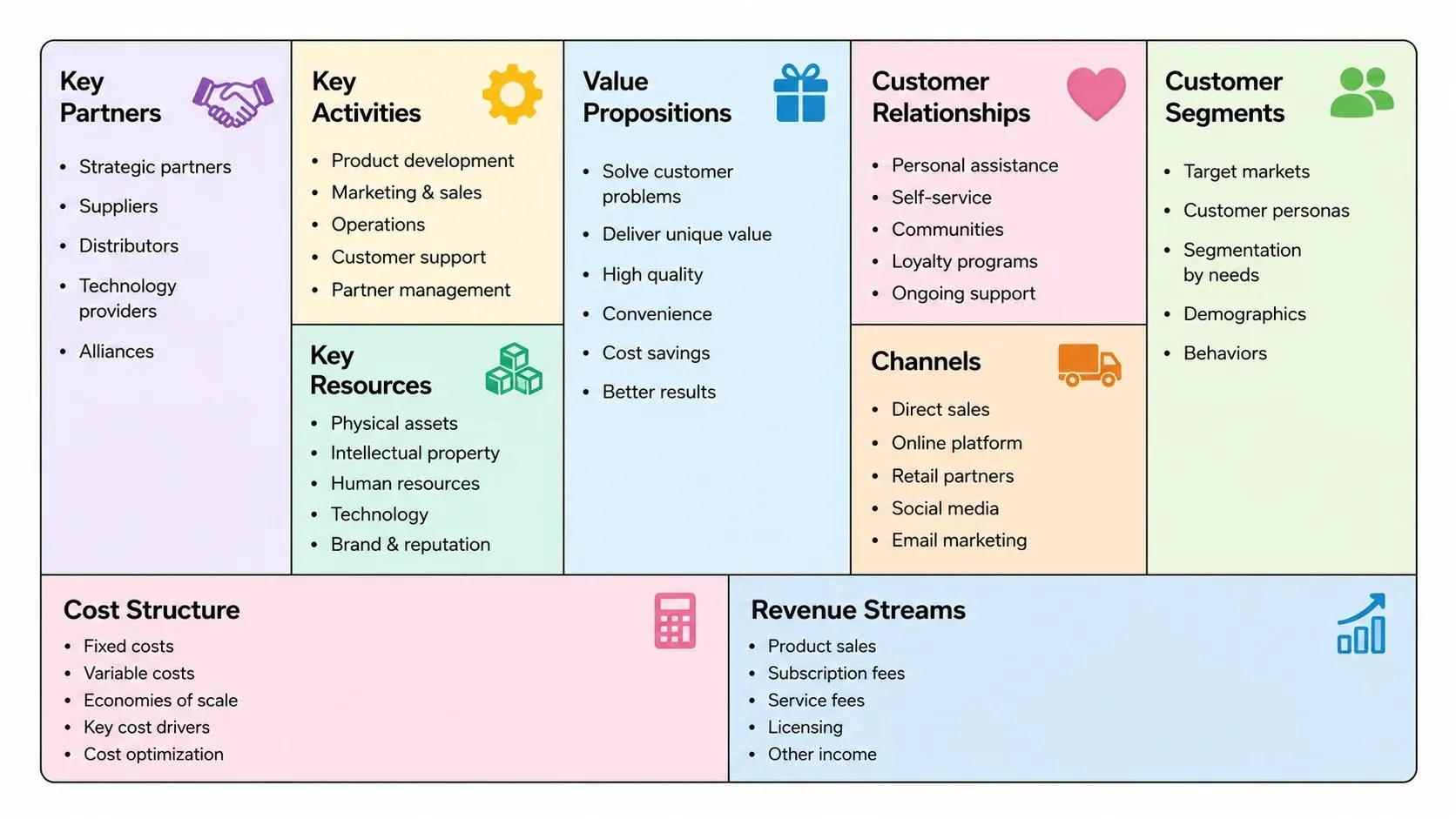
Temu’s Business Model Canvas
The Business Model Canvas is a strategic framework that helps businesses understand how an organization creates, delivers, and captures value.
Temu’s business model can be analyzed through nine important components.
1. Customer Segments
Temu serves customers looking for affordable products across multiple shopping categories.
Its broader marketplace ecosystem also serves merchants, manufacturers, suppliers, and other business participants.
2. Value Propositions
Its primary value propositions include:
-
Competitive product pricing.
-
Broad product selection.
-
Convenient online shopping.
-
Product discovery.
-
Promotional offers.
-
Access to international customers for merchants.
3. Channels
Temu uses digital channels to connect with customers.
These include:
-
Mobile applications.
-
Official website.
-
Search and discovery features.
-
Social media platforms.
-
Digital advertising.
-
Promotional campaigns.
4. Customer Relationships
The platform develops customer relationships through personalized shopping experiences, promotional activities, product recommendations, customer support, and post-purchase services.
5. Revenue Streams
Temu’s platform monetization is associated with merchant-facing services, including:
-
Transaction services.
-
Online marketing services.
-
Advertising-related services.
-
Other merchant services.
6. Key Resources
Important resources include:
-
Marketplace technology.
-
Mobile applications.
-
Merchant networks.
-
Customer relationships.
-
Product catalog infrastructure.
-
Data and analytics capabilities.
-
Logistics and fulfillment partnerships.
7. Key Activities
Major activities supporting the marketplace include:
-
Marketplace management.
-
Merchant onboarding.
-
Product discovery.
-
Technology development.
-
Marketing and customer acquisition.
-
Transaction coordination.
-
Logistics and fulfillment support.
-
Customer service.
8. Key Partnerships
Temu’s ecosystem relies on different business partners, including:
-
Manufacturers.
-
Merchants.
-
Suppliers.
-
Logistics companies.
-
Payment service providers.
-
Technology providers.
-
Marketing partners.
9. Cost Structure
Major operating costs can include:
-
Technology infrastructure.
-
Employee and operational expenses.
-
Sales and marketing.
-
Payment processing.
-
Fulfillment services.
-
Merchant support.
-
Customer service.
-
Platform maintenance.
The Business Model Canvas provides entrepreneurs with a practical framework for understanding how a large-scale marketplace operates and identifying the components required to launch a similar business.
Turn Your Marketplace Business Idea Into a Powerful eCommerce Platform.
Temu vs Amazon vs AliExpress: Business Model Comparison
The global eCommerce industry includes several large marketplaces with different operational approaches.
Temu, Amazon, and AliExpress all connect customers with online merchandise, but their business models, pricing strategies, seller ecosystems, and fulfillment operations differ.
Temu
Focuses on affordable merchandise, merchant connections, and cross-border marketplace operations.
Amazon
Combines first-party retail, third-party marketplace selling, fulfillment services, and subscription offerings.
AliExpress
Provides an international marketplace connecting consumers with independent sellers and businesses.
Key Business Model Differences
| Comparison factor | Temu | Amazon | AliExpress |
| Business model | Marketplace-led | Retail and marketplace | Marketplace-led |
| Pricing approach | Value-focused | Varies by category | Competitive pricing |
| Seller ecosystem | Merchant network | Brands and third-party sellers | Independent sellers |
| Product selection | Broad categories | Extensive categories | Broad categories |
| Fulfillment | Logistics partners and merchant services | FBA and other fulfillment options | Seller and logistics networks |
| Customer acquisition | Promotions and digital marketing | Brand, advertising, subscriptions | Digital marketing and promotions |
| Market focus | International expansion | Global retail markets | International cross-border commerce |
Which Business Model Is Better for Entrepreneurs?
The right business model depends on the entrepreneur’s target audience, investment capacity, product category, and operational requirements.
A Temu-inspired marketplace may be suitable for businesses that want to focus on affordable products and a broad merchant ecosystem.
An Amazon-inspired marketplace may be appropriate for entrepreneurs planning to combine first-party retail with third-party seller services.
An AliExpress-inspired model can be relevant for businesses interested in international seller connections and cross-border commerce.
The important lesson is to select a model that aligns with your market demand and business capabilities instead of simply copying another platform.
What Makes Temu’s Business Model Successful?
Temu’s business model demonstrates how a marketplace can combine competitive pricing, merchant participation, digital marketing, and customer engagement to build a large shopping ecosystem.
Several factors contribute to its business strategy.
Competitive Product Pricing
Affordable pricing is one of the most visible elements of Temu’s positioning.
Competitive supplier relationships, merchant participation, and supply chain coordination help support its value-focused shopping experience.
Large Merchant Ecosystem
A diverse merchant network allows the marketplace to offer products across multiple categories.
More merchant participation can improve product availability and provide customers with additional shopping choices.
Wide Product Selection
Product variety encourages customers to explore different categories from one platform.
This can increase product discovery and create opportunities for additional transactions.
Data-Driven Product Recommendations
Personalized recommendations can help customers discover products based on their browsing and shopping activities.
Recommendation systems can improve product relevance and help merchants reach interested buyers.
Customer Engagement Strategies
Promotions, interactive shopping experiences, discounts, and digital campaigns encourage users to engage with the platform.
Customer engagement is particularly important for marketplaces competing for attention in a crowded eCommerce environment.
Cross-Border Marketplace Operations
International marketplace operations allow businesses to reach customers outside their domestic markets.
Temu’s global expansion demonstrates the potential of digital platforms to connect suppliers and consumers across geographical boundaries.
Economies of Scale
As marketplace activity grows, businesses may benefit from improved infrastructure utilization, stronger supplier relationships, and more efficient operations.
PDD Holdings has specifically described how a wider selection of merchandise can attract more buyers, which can attract more merchants and strengthen the platform ecosystem.
Challenges and Risks in Temu’s Business Model
Although Temu’s marketplace strategy offers significant growth opportunities, operating an international eCommerce platform also involves several challenges.
Entrepreneurs planning a similar business should understand these risks before investing in marketplace development.
International Regulations and Compliance
Different countries have different regulations related to product safety, consumer protection, taxation, data privacy, advertising, and imports.
An international marketplace must ensure that its merchants and operations follow applicable local laws.
Regulatory changes can also influence shipping arrangements, product availability, and operating expenses.
Shipping Delays and Logistics Challenges
Cross-border shipping involves multiple transportation and customs processes.
Delays, shipment tracking issues, customs clearance problems, and last-mile delivery challenges can affect customer satisfaction.
Businesses need reliable logistics partners and effective order management systems to manage these issues.
Product Quality and Customer Trust
Customers expect products to match their descriptions, images, and specifications.
Poor product quality, inaccurate listings, and inconsistent seller performance can damage marketplace credibility.
Businesses should introduce product monitoring, seller verification, customer reviews, and complaint management processes.
Competition From Established Marketplaces
The global eCommerce market includes established companies with strong brand recognition, logistics infrastructure, and customer relationships.
A new marketplace must differentiate itself through pricing, product selection, customer experience, or specialized market positioning.
Customer Acquisition Expenses
Attracting customers through advertising and promotional campaigns can become expensive.
Businesses must monitor acquisition costs, conversion rates, repeat purchases, and customer lifetime value to maintain sustainable growth.
Cross-Border Trade and Tariff Changes
International commerce depends on trade regulations, import duties, customs procedures, and country-specific policies.
Changes in these areas can affect product prices, delivery times, and marketplace operations.
A sustainable business model must account for these external risks when planning international expansion.
How to Build an eCommerce Marketplace Like Temu?
Building an eCommerce marketplace like Temu requires more than creating a shopping application. Entrepreneurs need a complete digital ecosystem that connects buyers, sellers, administrators, payment systems, and logistics partners.
The development process should focus on creating a scalable platform with essential marketplace functionalities and a business model that supports long-term growth.
Here are the important steps involved in building a similar marketplace.
Identify Your Target Market and Business Niche
Start by identifying the customers you want to serve and the product categories you want to offer.
Instead of launching with every possible category, businesses can initially focus on specific segments such as:
-
Fashion and apparel.
-
Electronics and accessories.
-
Beauty and personal care.
-
Home and kitchen products.
-
Toys and lifestyle products.
-
Sports and fitness accessories.
Understanding customer preferences helps entrepreneurs select the right marketplace positioning and pricing strategy.
Choose the Right Multi-Vendor Marketplace Business Model
Select a business model based on how your platform will connect sellers and customers.
Some common marketplace models include:
B2C marketplace: Businesses sell products directly to consumers through the platform.
B2B marketplace: Businesses sell products or services to other businesses.
C2C marketplace: Individual customers can sell products to other customers.
Multi-vendor marketplace: Multiple merchants can register, list products, and sell through a centralized platform.
A Temu-inspired marketplace can use a multi-vendor structure supported by cross-border commerce capabilities.
Select Essential eCommerce Marketplace Features
Features play an important role in creating a smooth marketplace experience.
A successful platform should include dedicated functionality for customers, merchants, and administrators.
Customer app features:
-
User registration and login.
-
Product search and filters.
-
Product categories.
-
Product details and reviews.
-
Wishlist management.
-
Shopping cart.
-
Secure checkout.
-
Multiple payment options.
-
Order tracking.
-
Notifications.
-
Return and refund requests.
Seller panel features:
-
Seller registration.
-
Merchant verification.
-
Product listing management.
-
Inventory management.
-
Pricing management.
-
Order management.
-
Sales reports.
-
Promotional campaign management.
-
Customer communication.
-
Revenue and transaction reports.
Admin dashboard features:
-
User management.
-
Seller management.
-
Product approval.
-
Category management.
-
Commission configuration.
-
Order monitoring.
-
Payment management.
-
Promotional management.
-
Analytics and reporting.
-
Customer support management.
Integrate Multiple Payment Gateways
A marketplace should provide secure and convenient payment options.
Depending on the target market, businesses can integrate credit cards, debit cards, digital wallets, bank transfers, and other supported payment methods.
Payment infrastructure should also support transaction reconciliation, refunds, payment notifications, and seller settlements.
Develop Seller and Customer Applications
A multi-vendor marketplace generally requires different interfaces for different users.
The customer application focuses on product discovery and purchasing, while the seller application or dashboard supports merchant activities.
The admin dashboard provides centralized control over marketplace operations.
These components should work together through a secure backend infrastructure.
Implement Logistics and Order Management
Order management and delivery capabilities are essential for marketplace operations.
Businesses should integrate systems that support order processing, inventory updates, shipment tracking, delivery status, and returns.
Depending on the business model, they can work with third-party logistics providers or develop partnerships with local delivery companies.
Choose a White Label eCommerce app Solution
Developing a complete app from scratch can require substantial investment, development time, and technical resources.
A white-label eCommerce app solution offers an alternative for entrepreneurs who want to launch a platform using an existing technology foundation.
With a white-label solution, businesses can start with prebuilt app functionality and customize the platform according to their branding, target audience, and operational requirements.
It can help reduce development complexity and accelerate the launch process.
For entrepreneurs interested in launching a Temu-inspired marketplace, a white-label solution can provide a practical starting point.
Ready to Build an eCommerce Marketplace Like Temu?
How Much Does It Cost to Build an App Like Temu?
The cost of developing an application like Temu depends on its functionality, technology stack, design requirements, integrations, and operational complexity.
A basic marketplace with customer and seller functionality will generally require less investment than an international platform with advanced recommendation systems, extensive logistics integrations, and large-scale infrastructure.
Here are the major factors influencing development costs.
UI/UX Design
The design process includes creating customer interfaces, product pages, shopping experiences, seller dashboards, and administrative screens.
A user-friendly design helps improve navigation and purchasing convenience.
Buyer Application Development
The buyer application requires product discovery, search, filters, shopping cart, checkout, payment integration, order tracking, and account management.
Seller Application Development
The seller application needs functionality for product listings, inventory, pricing, order management, and sales reporting.
Admin Dashboard Development
The admin dashboard provides centralized marketplace management.
It helps administrators manage customers, merchants, products, transactions, categories, promotions, and platform activities.
Payment Gateway Integration
Payment integration allows customers to complete purchases securely and helps the marketplace coordinate financial transactions.
Logistics Integration
Shipping and logistics integrations support order fulfillment, delivery tracking, and shipment management.
Backend Infrastructure
Backend development includes databases, APIs, cloud infrastructure, security, and server-side business logic.
The infrastructure should be designed to handle increasing users, products, and transactions.
Testing and Maintenance
Testing helps identify functionality issues, security vulnerabilities, and performance problems before launch.
Ongoing maintenance ensures that the marketplace remains secure, stable, and compatible with changing technology requirements.
What Is the Best Development Approach?
Entrepreneurs can choose between custom development and a white-label marketplace solution.
-
Custom development: Suitable for businesses requiring highly specific functionality, unique workflows, and complete control over the technology architecture.
-
White-label solution ($8,000): Suitable for businesses looking for a faster launch using an existing marketplace solution with branding and customization options.
The right choice depends on your budget, launch timeline, business requirements, and long-term expansion strategy.
Final Thoughts on Temu’s Business and Revenue Model
Temu’s business model demonstrates how an online marketplace can combine merchant relationships, competitive product pricing, transaction services, online marketing, and international logistics to build a large eCommerce ecosystem.
Its approach highlights the importance of creating value for both buyers and sellers. Customers benefit from product variety and competitive prices, while merchants gain access to digital marketplace infrastructure and potential international customers.
The revenue model is equally important. Rather than relying exclusively on product sales, the platform monetizes merchant-facing services, including transaction services and online marketing.
For entrepreneurs, Temu offers several useful lessons in marketplace development, customer acquisition, supply chain management, and platform monetization.
If you are planning to enter the eCommerce industry, developing a multi-vendor marketplace inspired by Temu can be an opportunity to establish your own digital commerce business. With the right technology, business strategy, and revenue model, you can create a scalable marketplace that connects merchants with customers and supports long-term business growth.


Need Help With
Development?