


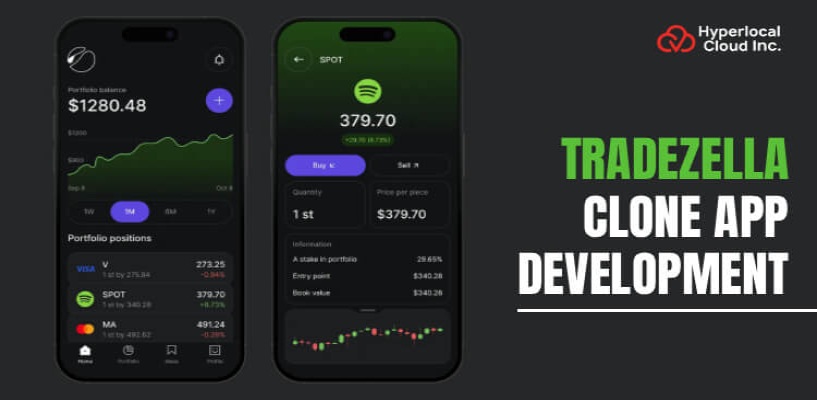
Trading has evolved significantly with the rise of digital platforms, algorithmic tools, real-time market data, and advanced analytics. Traders no longer need to depend on notebooks or spreadsheets to record and evaluate their trades. Modern trading journal software can automatically collect trading data, analyze performance, identify patterns, monitor risk, and provide actionable insights.
Platforms inspired by TradeZella demonstrate how a modern trading journal can combine automated trade imports, performance analytics, strategy tracking, trade replay, risk analysis, and behavioral insights in one platform. This has created an opportunity for fintech entrepreneurs, trading communities, brokers, and software companies to build their own trading journal platforms.
A TradeZella clone app can provide the foundation for launching a customized trading analytics platform while allowing businesses to add their own branding, features, monetization model, broker integrations, and AI capabilities.
This guide explains how to build a trading journal app like TradeZella, including its features, user panels, technology stack, development process, AI capabilities, monetization options, security requirements, and estimated development cost.
What Is a Trading Journal App?
A trading journal app is a digital platform that allows traders to record, organize, analyze, and review their trading activity.
Traditional trading journals often require traders to manually enter information such as:
- Entry price
- Exit price
- Trade size
- Profit or loss
- Trading strategy
- Market conditions
- Risk level
- Trading notes
- Emotional state
Modern trading journal software automates much of this process by connecting with brokers, exchanges, and trading platforms.
Once trades are imported, the system can generate detailed analytics covering win rate, profit and loss, drawdown, risk-reward ratios, strategy performance, trading patterns, and other metrics.
An advanced trading journal can also use AI to identify recurring trading behaviors and provide personalized performance insights.
What Is TradeZella?
TradeZella is a trading journal and performance analytics platform designed to help traders track and analyze their trading activity.
The concept combines trade journaling with automated data collection and advanced analytics. Instead of simply storing trade records, a platform like TradeZella helps traders understand what is working, where mistakes are occurring, and how their strategies are performing.
A TradeZella-like platform can include capabilities such as:
- Automated trade imports
- Trading dashboards
- Performance analytics
- Strategy tracking
- Trade tagging
- Risk analysis
- Trade replay
- Performance reports
- Trading psychology tracking
- Broker integrations
- Multi-asset support
- AI-powered insights
Businesses can use the TradeZella model as inspiration to develop a customized trading journal platform designed for a particular market, trader segment, or asset class.
Launch a Feature-Rich Trading Journal Platform
Why Build a Trading Journal App Like TradeZella?
The growing availability of financial APIs and cloud technologies has made it easier to build sophisticated trading analytics products.
Growing Demand for Trading Analytics
Traders increasingly want detailed information about their performance instead of relying only on account balances or basic broker reports.
A dedicated analytics platform can turn raw trading data into meaningful performance insights.
Increasing Adoption of Automated Journaling
Manual trade recording can be time-consuming and prone to errors. Automated trade imports allow traders to synchronize their transactions and reduce repetitive data entry.
Demand for AI-Powered Trading Insights
AI can analyze large volumes of historical trading information and identify patterns that may be difficult to recognize manually.
AI capabilities can include:
- Performance summaries
- Pattern recognition
- Risk alerts
- Behavioral analysis
- Strategy recommendations
- Trading habit analysis
Opportunity for Fintech Startups
Trading journal software can become a standalone fintech product or an additional service for brokers, trading communities, prop firms, and financial education companies.
Subscription-Based Revenue Potential
Trading journal platforms can use recurring subscription plans based on features, usage, number of trades, analytics depth, or user type.
How Does a Trading Journal App Work?
A modern trading journal platform generally follows this workflow:
User Registration → Broker Integration → Trade Import → Data Processing → Performance Analytics → Strategy Analysis → Trade Review → AI Insights → Performance Improvement
After registering, users connect supported trading accounts or upload their trading history.
The platform processes the data and organizes individual trades into a centralized journal.
Users can then access dashboards showing their performance across different periods, strategies, assets, and trading sessions.
The system can further analyze the data to identify patterns, calculate risk metrics, and generate reports.
An AI-powered version can analyze these results and provide personalized observations about the trader’s behavior and performance.
Key Features of a Trading Journal App Like TradeZella
Discover the must-have features of a TradeZella-like trading app to build a powerful and user-friendly trading journal platform.
Automated Trade Import
Automated trade importing eliminates the need to manually enter every transaction.
The platform can synchronize trading information through supported broker or exchange APIs and automatically populate the user’s journal.
Broker & Exchange Integration
Broker integration is one of the most important components of a trading journal platform.
Depending on the target market, integrations can support:
- Stock brokers
- Forex brokers
- Crypto exchanges
- Futures platforms
- Options platforms
- Prop trading firms
Trade Logging
Users should be able to view complete trade records, including:
- Entry and exit
- Position size
- Profit and loss
- Trade duration
- Asset
- Strategy
- Notes
- Tags
- Risk information
Performance Analytics
A trading analytics dashboard can provide detailed performance measurements such as:
- Total profit
- Total loss
- Win rate
- Average winning trade
- Average losing trade
- Profit factor
- Drawdown
- Risk-reward ratio
- Return percentage
Trading Strategy Tracking
Traders can assign strategies to individual trades and evaluate how each strategy performs.
For example, users could compare:
- Breakout strategy
- Momentum strategy
- Scalping strategy
- Swing strategy
- Trend-following strategy
This allows traders to identify which strategies produce the strongest results.
Risk Management
Risk management features can help traders understand their exposure and identify potentially problematic trading behavior.
The platform can monitor:
- Position size
- Risk per trade
- Daily loss
- Maximum drawdown
- Risk-reward ratio
- Concentration
- Overtrading
Trade Replay
Trade replay allows traders to review historical market situations and understand how individual decisions were made.
This feature can be particularly useful for strategy evaluation and educational purposes.
Trading Psychology Tracking
Trading performance is not determined only by strategy.
A journal can allow users to record emotional conditions such as:
- Confidence
- Fear
- Stress
- Patience
- Discipline
- Revenge trading
- FOMO
The platform can correlate these records with trading results.
Custom Trading Dashboard
Users should be able to customize their dashboards according to their trading style.
Widgets can display:
- P&L
- Win rate
- Drawdown
- Strategy performance
- Daily performance
- Monthly performance
- Asset performance
- Trading patterns
P&L Tracking
The platform should provide real-time or synchronized profit-and-loss calculations across individual trades and portfolios.
Win Rate & Drawdown Analysis
Users can evaluate their historical performance through visual charts and detailed statistics.
Advanced Trading Reports
Traders can generate reports based on:
- Date
- Asset
- Strategy
- Account
- Trading session
- Profitability
- Risk
- Trade type
Multi-Asset Support
A scalable trading journal can support multiple asset classes from a single account.
These may include:
- Stocks
- Forex
- Crypto
- Futures
- Options
- CFDs
Goal & Milestone Tracking
Users can establish trading goals and monitor their progress.
For example:
- Monthly profit target
- Maximum daily loss
- Win-rate target
- Number of trades
- Strategy consistency
Notifications & Alerts
The platform can send notifications related to performance, risk limits, account activity, and journal updates.
Build a Trading Journal With Automated Trade Imports
AI Features You Can Add to a TradeZella-Like App
AI can transform a conventional trading journal into an intelligent performance analysis platform.
AI-Powered Trade Analysis
AI can analyze historical trades and summarize performance in simple language.
For example, the system could identify that a trader performs better during particular market sessions or with specific strategies.
Trading Pattern Detection
Machine learning algorithms can identify recurring patterns across thousands of trades.
These patterns can involve:
- Entry timing
- Exit timing
- Asset selection
- Position size
- Trading session
- Strategy
- Profitability
Strategy Performance Recommendations
AI can compare strategies and highlight which approaches have historically produced better results for the user.
Risk Detection
AI models can identify potentially risky behavior such as increasing position sizes after losses or repeatedly trading outside predefined rules.
Behavioral Analysis
The system can analyze trading behavior and identify patterns associated with emotional or inconsistent decision-making.
Personalized Trading Insights
Instead of providing the same dashboard to every user, AI can personalize insights according to individual trading history.
Automated Performance Summaries
At the end of a trading day or week, AI can generate a summary containing:
- Best trades
- Worst trades
- Most profitable strategies
- Risk observations
- Behavioral patterns
-
Areas for improvement
User Panels Required for a Trading Journal Platform
A complete trading journal platform can include multiple interfaces.
Trader/User Panel
The trader panel can include:
- Registration and login
- Trading dashboard
- Trade journal
- Broker connections
- Analytics
- Strategy management
- Trade replay
- Performance reports
- Risk management
- Psychology tracking
- Goals
- Notifications
- Profile settings
Admin Panel
The admin dashboard can manage:
- Users
- Broker integrations
- Subscriptions
- Payments
- Plans
- Reports
- Analytics
- Notifications
- Content
- Security
- Platform configuration
Mentor/Coach Panel
A dedicated coach panel can help trading mentors monitor their clients.
Features can include:
- Trader performance monitoring
- Shared journals
- Performance reports
- Strategy reviews
- Feedback
- Progress tracking
- Client management
- Redis
AI & Machine Learning
AI capabilities can be developed using:
- Python
- TensorFlow
- PyTorch
- Machine learning frameworks
- Large language model APIs
Cloud Infrastructure
Cloud platforms can provide scalable infrastructure through:
- AWS
- Microsoft Azure
- Google Cloud
APIs & Integrations
A trading journal platform may require:
- Broker APIs
- Exchange APIs
- Market data APIs
- Payment APIs
- Notification APIs
- Authentication services
analysis, performance summaries, pattern recognition, and personalized insights.
9. Perform Testing
Test the platform for:
- Data accuracy
- API reliability
- Security
- Performance
- Cross-platform compatibility
- Payment processing
10. Implement Security & Compliance
Financial applications require strong data protection, authentication, authorization, encryption, and appropriate regulatory considerations.
11. Deploy the Platform
Deploy the application on scalable cloud infrastructure and configure monitoring, backups, and performance systems.
12. Maintain and Upgrade
Regular updates can introduce new broker integrations, analytics, AI capabilities, asset classes, and security improvements.
How to Monetize a Trading Journal Platform?
Monthly Subscription
Offer different monthly plans based on features and usage.
Annual Subscription
Provide discounted annual packages to increase customer retention.
Freemium Model
Allow users to access basic journaling features for free while charging for advanced analytics.
Premium Analytics
Advanced performance reports, strategy analytics, and advanced dashboards can be offered as premium features.
AI Add-On
AI-powered insights can be offered as a separate paid feature or included in premium plans.
Mentor/Coach Plans
Create specialized plans for trading coaches managing multiple clients.
Enterprise Licensing
Brokers, prop firms, financial education companies, and trading communities can license a customized version of the platform.
TradeZella Clone vs Traditional Trading Spreadsheet
A spreadsheet can be useful for basic record keeping, but it requires significant manual effort.
A modern trading journal platform can automate data collection and provide advanced analytics.
A trading journal app can offer:
- Automated trade imports
- Broker synchronization
- Real-time dashboards
- Advanced analytics
- Strategy tracking
- Risk analysis
- Trade replay
- AI insights
- Automated reports
This makes dedicated trading journal software more scalable for active traders.
TradeZella Clone vs Traditional Trading Journal
Traditional journals generally focus on recording trades.
A TradeZella-like platform can go further by analyzing the information.
A basic journal may answer:
“What trades did I make?”
Advanced trading analytics can answer:
“Why did I make those trades, which strategies worked, where did I lose money, and what patterns exist in my performance?”
This difference makes analytics one of the most important components of modern trading journal software.
Discuss Your Trading Journal App Development Idea Today
Security Features for Trading Journal Software
Trading platforms handle sensitive financial and account information, making security essential.
Important security capabilities include:
Data Encryption
Sensitive information should be encrypted during transmission and storage.
Secure Authentication
Implement secure authentication mechanisms such as multi-factor authentication.
API Security
Broker and exchange connections should use secure authentication and authorization mechanisms.
Role-Based Access
Different users should have access only to the information and features relevant to their roles.
Secure Broker Connections
Broker credentials and tokens should be handled securely.
Payment Security
Payment processing should rely on trusted payment infrastructure.
Data Backups
Regular backups can help protect against data loss.
Audit Logs
Administrators can use audit logs to monitor important account and system activities.
Privacy Controls
Users should have appropriate controls over their personal and trading information.
Benefits of Developing a TradeZella Clone
Faster Time to Market
Starting with a ready-made foundation can reduce the time required to develop common trading journal functionality.
Customizable Features
Businesses can customize the platform according to their target market.
Scalable Architecture
The platform can be designed to support growing numbers of traders, trades, and integrations.
Multiple Revenue Opportunities
Subscription plans, premium analytics, AI features, and enterprise licensing can create multiple revenue streams.
AI Integration
AI capabilities can transform the platform from a simple journal into an intelligent trading analytics solution.
Multi-Asset Support
A scalable platform can support different asset classes and trading styles.
Brand Ownership
Businesses can launch the platform under their own brand and control the product roadmap.
Who Can Use a TradeZella-Like Trading Journal Platform?
A trading journal platform can serve a wide range of users.
Individual Traders
Retail traders can use the platform to track and analyze their performance.
Forex Traders
Forex traders can evaluate currency pairs, strategies, sessions, and risk.
Stock Traders
Stock traders can analyze equity trades and portfolio performance.
Crypto Traders
Crypto traders can track trades across supported exchanges and assets.
Futures Traders
Futures traders can monitor contracts, strategies, and risk exposure.
Options Traders
Options traders can organize and analyze complex trading activity.
Prop Traders
Proprietary traders can use advanced analytics to monitor consistency and performance.
Trading Coaches
Coaches can review client journals and provide personalized feedback.
Brokers
Brokers can offer trading analytics as an additional customer service.
Fintech Startups
Startups can launch specialized trading analytics products for specific markets.
Trading Communities
Communities can provide journaling and performance analytics to members.
Develop Your Trading Journal MVP With Expert Support
Future Trends in Trading Journal Software
Trading journal platforms are likely to become increasingly intelligent and automated.
AI-Powered Trading Analysis
AI will increasingly be used to transform raw trade data into understandable insights.
Predictive Analytics
Advanced models can help identify historical patterns and risk signals.
Automated Trade Reviews
Instead of manually reviewing every trade, users can receive automated summaries.
Voice-Powered Journaling
Voice interfaces can allow traders to record notes immediately after executing a trade.
Advanced Behavioral Analytics
Platforms can analyze behavioral patterns alongside financial performance.
Real-Time Risk Monitoring
Trading journals can evolve toward continuous monitoring rather than post-trade analysis.
Personalized AI Trading Coaches
AI assistants can provide personalized performance feedback based on historical journal data.
Cross-Platform Synchronization
Traders will increasingly expect their data to remain synchronized across web and mobile applications.
Advanced Backtesting
Combining journaling with backtesting can allow users to compare actual performance with historical strategy results.
Community-Driven Trading Analytics
Future platforms may incorporate social features that allow traders to share strategies, insights, challenges, and performance milestones.
Conclusion
Building a trading journal app like TradeZella can provide businesses with an opportunity to enter the growing market for trading analytics and financial technology solutions.
A successful platform should go beyond basic trade recording. Automated imports, broker integrations, performance analytics, strategy tracking, risk management, trade replay, behavioral insights, and AI-powered analysis can create a comprehensive experience for modern traders.
Businesses can also differentiate their product by focusing on a specific audience, such as forex traders, crypto traders, futures traders, prop traders, trading coaches, or financial institutions.
With a scalable architecture, secure infrastructure, intelligent analytics, and a well-designed monetization strategy, a TradeZella-inspired platform can evolve into a powerful trading performance ecosystem.
If you are planning to launch your own TradeZella clone app, starting with an MVP and gradually adding advanced analytics, AI capabilities, broker integrations, and enterprise features can provide a practical path toward building a scalable trading journal business.
FAQs (Frequently Asked Questions)

Patt Cummins is an experienced content writer with over 10 years of experience creating clear and engaging content for technology-focused industries. He specializes in simplifying complex technical topics into easy-to-understand stories that educate readers, support brand communication, and help businesses effectively share their solutions.

Need Help With
Development?