How To Build an Ecommerce App Like Jumia
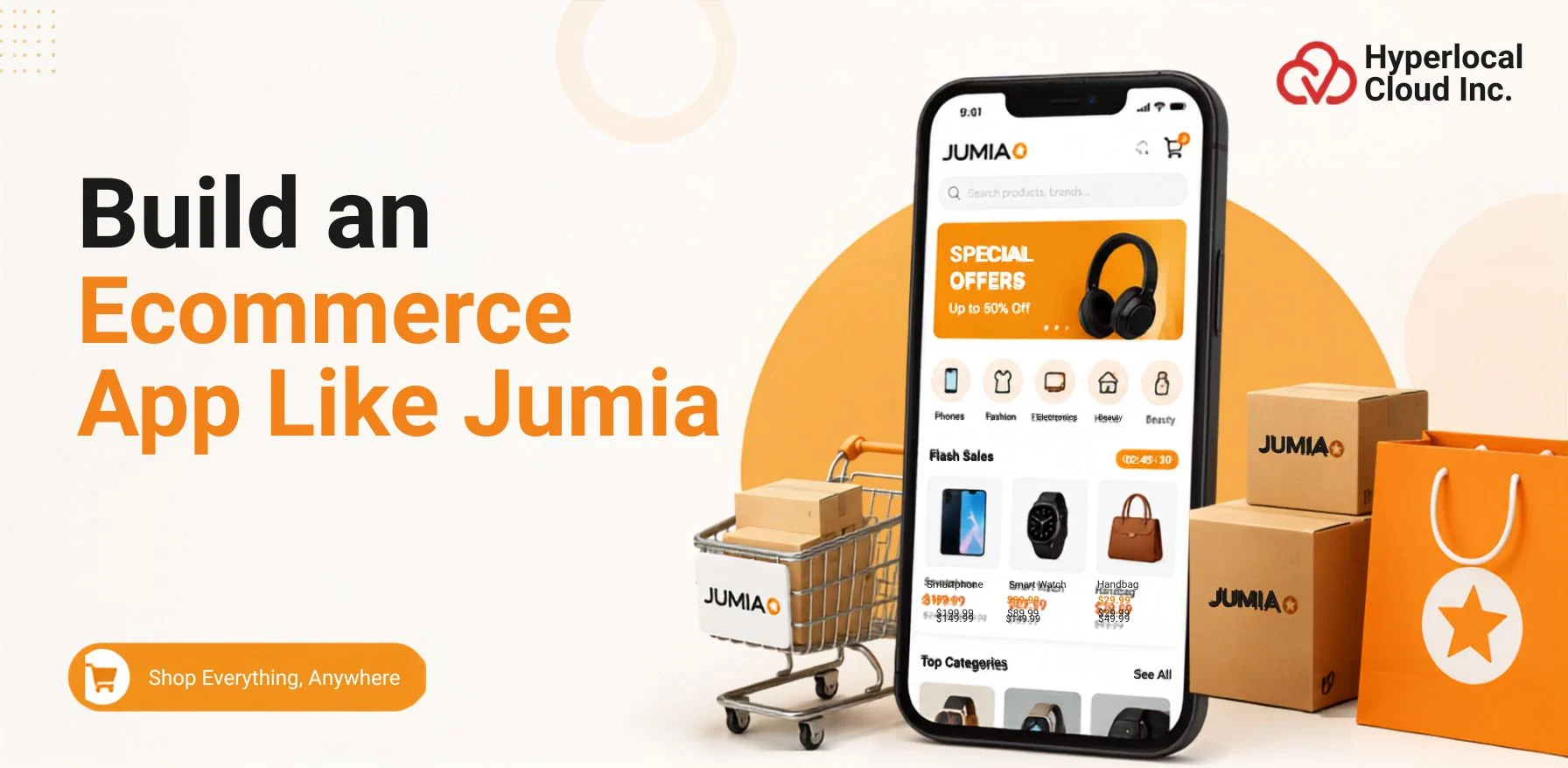
- Jumia is a major e-commerce marketplace that connects consumers with sellers across several African countries.
- The platform offers a wide range of products, including fashion, smartphones, electronics, beauty products, home items, and other everyday essentials.
- Jumia operates as a marketplace, meaning customers can buy products from many different sellers through one platform.
- Jumia also supports the shopping experience through its logistics network, pickup stations, and delivery services.
- As of 2026, Jumia is active in eight African countries and has more than 6.5 million products available on its platform. The company reported more than 900 million website visits in 2025 and around 70,000 active sellers.
- The African e-commerce market continues to have strong growth potential because of increasing internet use, smartphone adoption, digital awareness, and the growing interest in online shopping.
- Jumia is focusing on making online shopping easier and more accessible, including expanding its reach beyond major cities and improving its delivery network.
The eCommerce industry has dealt with an immense change in how users have changed their way of shopping, completely relying on online shopping. Unlike traditional methods of shopping, they start shopping online, where they can browse items, shop, and pay within the app and get the item at their doorstep. A big name in this is the Jumia application, a well-known name in the African eCommerce market that completely transforms the eCommerce industry.
Reports from Fortune Business Insight suggest that the global market value of eCommerce applications was valued at $11.25 billion in 2025, which is expected to grow to around $13.10 billion in 2026 and can reach around $44.32 billion by 2034, with a CAGR of 16.46%.
Thus, if businesses want to start a business with a revolutionary idea, then they can build an app like Jumia and start elevating the retail market with robust and advanced technologies. For this, review the blog post and understand all the valuable information related to app development.
What is the Jumia App?
The Jumia App is a mobile shopping platform that allows consumers to browse and purchase products online. It gives users access to a wide range of products from different sellers through one marketplace. The app is designed to make online shopping more convenient. Instead of visiting several physical stores to find a product, users can search across categories, compare options, view product details, place an order, and arrange delivery through the platform.
Launch a Scalable Jumia-like Ecommerce App Designed for Your Business
How Does a Jumia-Like Ecommerce Marketplace Work?
A Jumia-like app connects customers, vendors, payment systems, and delivery services within one ecosystem. Understanding this workflow helps businesses create a smooth shopping experience while ensuring efficient order processing, secure transactions, and reliable fulfillment.
1. Product Discovery
The shopping journey usually starts when a customer looks for a product. A Jumia-like app should make it easy for users to find what they need without spending too much time searching.
2. Seller Management
A Jumia-like marketplace needs a separate system for managing sellers because many businesses and individual vendors may use the same platform.
3. Payments
Once customers select their products, they need a simple, secure way to pay for their orders.
4. Order Fulfillment
After a customer completes the payment, the order moves into the fulfillment stage. This is where the marketplace ensures the ordered product is prepared and sent to the customer.
5. Delivery Tracking
Once an order has been handed over for delivery, customers usually want to know where their package is and when they can expect it.
6. Reviews and Ratings
After receiving a product, customers can share their experience through reviews and ratings.
Why Invest in Building an Ecommerce App Like Jumia?
Building an ecommerce app like Jumia can help businesses reach wider audiences, simplify online shopping, and create multiple revenue opportunities. A scalable marketplace model also enables brands to onboard vendors and expand product offerings efficiently.
1. Growing Demand for Mobile-First Shopping
Smartphones have become an important part of everyday shopping. This has increased the importance of mobile-friendly shopping experiences. A dedicated e-commerce app lets businesses stay connected with customers and make shopping available wherever users have internet access.
2. Scalable Business Model
One of the biggest reasons to build an app like Jumia is the marketplace business model. In a traditional online store, the business usually needs to purchase, store, manage, and sell its own products. A marketplace works differently. It allows multiple sellers to list and sell their products through the same platform.
3. Multiple Revenue Streams
A marketplace app can generate revenue through several channels instead of relying on a single source. One common approach is to charge sellers a commission on successful sales. Businesses can also explore revenue from seller subscriptions, featured product listings, advertising, delivery services, and other value-added features.
4. Potential Revenue Streams
A marketplace app can generate revenue in several ways instead of relying on a single source. One common approach is to charge sellers a commission on successful sales.
5. Ability to Expand
An e-commerce marketplace can be designed with future growth in mind. Once the platform has a strong customer and seller base in one market, the business may expand into new cities, regions, product categories, or even countries.
Key Elements Every Ecommerce Marketplace App Needs
A successful ecommerce marketplace requires essential components such as user accounts, product catalogs, search, shopping carts, secure payments, order management, vendor dashboards, and delivery tracking. Together, these elements create a dependable marketplace experience.
Customer App
1. Registration and Login
Allows customers to create an account and securely log in using their preferred sign-in method.
2. User Profile
Lets customers manage their personal details, saved addresses, contact information, and account preferences.
3. Product Search and Filters
Helps customers quickly find products by using search, price, brand, rating, size, color, and other filters.
4. Product Categories
Organizes products into clear categories so customers can easily browse the items they need.
5. Product Details
Shows important product information such as images, descriptions, prices, available options, seller details, and reviews.
6. Wishlist
Allows customers to save products they like and return to them later before making a purchase.
7. Shopping Cart
Lets customers add multiple products to one place, review their selections, and change quantities before checkout.
8. Checkout
Provides a simple process for customers to confirm their address, review the order, select delivery options, and complete the purchase.
9. Multiple Payment Options
Gives customers different ways to pay, such as cards, digital wallets, bank transfers, or other supported payment methods.
10. Order History
Lets customers view their past and current orders, along with key purchase details.
11. Order Tracking
Lets customers check the current status and delivery progress of their orders.
12. Ratings and Reviews
Allows customers to rate products and sellers and share their experience with other shoppers.
13. Notifications
Sends useful updates about orders, payments, deliveries, offers, discounts, and other account activities.
14. Customer Support
Gives customers access to help through chat, support tickets, FAQs, or other available support channels.
Seller/Vendor App or Dashboard
1. Vendor Registration and Verification
Allows sellers to register their businesses and submit the required information for platform verification.
2. Seller Profile/Store Management
Lets vendors create and manage their online store profile, business details, branding, and store information.
3. Product Management
Allows sellers to add, edit, remove, and organize their products with images, descriptions, prices, and other details.
4. Inventory Management
Helps sellers monitor product stock and update availability when items are added, sold, or restocked.
5. Pricing and Discounts
Allows vendors to set product prices and create discounts or special offers for customers.
6. Order Management
Lets sellers view, confirm, prepare, update, and manage customer orders from one dashboard.
7. Sales Analytics
Provides sellers with useful information about sales, orders, popular products, and overall store performance.
8. Earnings and Commission Tracking
Helps vendors view their earnings, marketplace commissions, deductions, and available balances.
9. Promotions
Allows sellers to create or participate in promotional campaigns to increase product visibility and sales.
10. Customer Communication
Gives sellers a way to respond to customer questions and provide information about their products or orders.
11. Withdrawal/Payment Management
Allows sellers to manage their payment details and request withdrawals of their available earnings.
Admin Panel
1. User Management
Allows administrators to manage customer accounts, review user activity, and take action when required.
2. Vendor Management
Helps admins approve, monitor, suspend, or manage vendors and their marketplace activities.
3. Product/Category Management
Allows admins to manage product listings, categories, product information, and marketplace organization.
4. Order Management
Gives administrators an overview of orders so they can monitor, update, and resolve order-related issues.
5. Commission Configuration
Allows the platform owner to set and manage the commission rates charged to sellers.
6. Payment Management
Helps admins monitor transactions, payment records, refunds, settlements, and other payment activities.
7. Delivery/Logistics Management
Allows administrators to manage delivery operations, logistics partners, shipping activities, and delivery-related issues.
8. Coupons and Promotions
Lets admins create, manage, schedule, and monitor coupons, discounts, and marketplace-wide promotional campaigns.
9. Content Management
Allows administrators to update banners, product information, pages, announcements, and other content shown on the platform.
10. Reports and Analytics
Provides reports about users, vendors, sales, orders, revenue, products, and other important marketplace activities.
11. Reviews and Dispute Management
Helps admins review customer complaints, handle disputes, and manage inappropriate or disputed reviews.
12. Notifications and Platform Settings
Allows administrators to manage system notifications and control important marketplace settings from one place.
Logistics/Delivery Management
1. Delivery Partner Management
Allows the platform to add, verify, monitor, and manage delivery partners or logistics companies.
2. Order Assignment
Helps assign orders to suitable delivery partners based on factors such as location, availability, and delivery requirements.
3. Pickup and Delivery Status
Keeps customers, sellers, and admins updated about important pickup and delivery stages.
4. Real-Time Tracking
Allows customers and administrators to follow the location and progress of an active delivery where live tracking is supported.
5. Delivery Zones
Helps the platform define the areas where delivery services are available and manage different delivery regions.
6. Shipping Fee Calculation
Calculates delivery charges based on factors such as distance, location, package size, weight, and selected delivery option.
7. Returns and Reverse Logistics
Manages product returns by coordinating pickup from customers and sending returned items back to sellers or the required location.
Advanced Features That Elevate a Jumia-Like Marketplace App
Advanced features can make your ecommerce marketplace more engaging and competitive. Personalized recommendations, AI-powered search, real-time tracking, multiple payment options, loyalty programs, chat support, and analytics can improve customer satisfaction and operational efficiency.
1. AI-Powered Product Recommendations
AI-powered product recommendations can help customers discover products that match their interests and shopping habits.
2. AI-Assisted Search
A large marketplace can contain thousands or even millions of products, so customers need a search system that can understand what they are looking for.
3. Geolocation-Based Offers
Geolocation-based features can help a marketplace show offers and products based on the customer’s location.
4. Social Commerce Capabilities
Social commerce combines online shopping with social interaction. It allows customers to discover and engage with products through content, communities, and social features.
Make Your Jumia-like Marketplace Smarter, Faster, and More Competitive
How to Build an App Like Jumia: A Step-by-Step Development Roadmap
Developing a Jumia-like ecommerce platform requires careful planning, market research, feature selection, UI/UX design, development, testing, deployment, and continuous optimization. Following a structured process helps reduce risks and build a scalable marketplace.
1. Define Your Business Model
The first step is to decide how your marketplace will work and make money. You’ll need to decide on your target customers, which vendors you’ll onboard, what products will be available, and which locations you want to serve. The pure enterprise version gives the improvement team a greater understanding of what the app is supposed to help with.
2. Conduct Market and Competitor Research
Before you start improving, look at the market where you want to launch your app. Review existing e-commerce platforms and understand what they offer customers and merchants. Explore their product range, prices, pricing options, shipping offers, vendor equipment, customer support, and buying experience basics.
3. Define MVP Scope
The minimum viable product is the first powered model in your market with the most essential capabilities. Now, you don’t always have to build every overarching function from scratch. Starting with a targeted version allows you to publish faster and learn how customers and vendors react to the platform.
4. Design the UX/UI
The next step is to design how the market will look and function. UX layout focuses on how customers can complete a hassle-free process that includes finding products, adding items to the cart, placing an order, or managing a seller account. UI design focuses on visual elements, along with colors, layouts, buttons, images, icons, and various elements on the interface.
5. Choose the Development Approach
Next, determine how the market will develop. One option is to build the platform from the ground up with a custom development team. Another option is to use ready-made market software or pre-built solutions and personalize it to your company’s preferences.
6. Develop the Marketplace
Once construction plans and layouts are complete, repairs can begin. The development team can start by creating a backend that manages customers, vendors, products, inventory, orders, invoices, commissions, and other marketplace operations.
7. Integrate Payments and Logistics
Payment and shipping are important parts of an e-commerce marketplace. The platform can help with payment methods commonly used by your target customers. Logistics Integration: We can monitor order delivery, shipping challenges, delivery prices, tracking, and returns.
8. Test the Application
The test must be closely monitored before marketing to the general public. The development team will review key features, including registration, login, product search, cart, checkout, payment, order processing, notifications, vendor tools, and shipment tracking.
9. Launch the MVP
Once the tests are completed, the first version of the market can be launched. It may be advantageous to start with a limited market rather than trying to serve a large area right away. This allows the firm to know customer behavior, supplier performance, delivery demand conditions, and technical problems on a small scale.
10. Maintain and Scale
Starting the market is most effective. Regular maintenance is desirable to keep the platform stable and easy to use. The development team must reproduce bugs, update security features, and adapt based on user feedback to improve overall performance.
Technology Stack for Jumia-Like Ecommerce App Development
Choosing the right technology stack directly impacts an ecommerce app’s performance, scalability, security, and maintainability. Businesses should select suitable frontend, backend, database, cloud, payment, and third-party technologies according to marketplace requirements.
| Category | Tech Stacks | Usage |
| Mobile App | Flutter, React Native, Swift, Kotlin | Used to build the customer and seller mobile applications for different devices. |
| Frontend | React.js, Next.js, Vue.js | Used to build web interfaces such as the seller dashboard and admin panel. |
| Backend | Node.js, Java, PHP | Handles business logic, users, products, orders, payments, and other marketplace operations. |
| Database | PostgreSQL, MySQL, MongoDB | Stores information such as users, products, orders, inventory, and transactions. |
| Cloud Infrastructure | AWS, Google Cloud, Microsoft Azure | Provides servers, storage, databases, and other resources needed to run the marketplace. |
| Search | Elasticsearch, OpenSearch | Helps users search through a large number of products quickly and accurately. |
| Payment Integration | Stripe, PayPal, or Razorpay | Allows customers to make payments through supported payment methods. |
| Maps and Location | Google Maps Platform, Mapbox | Supports location-based features, address selection, delivery routes, and tracking. |
| Notifications | Firebase Cloud Messaging, Apple Push Notification Service | Sends order updates, promotional messages, payment alerts, and other notifications. |
| Analytics | Google Analytics, Firebase Analytics, Mixpanel | Helps understand customer behavior, app usage, sales activity, and other important data. |
| Security | SSL/TLS, OAuth 2.0, secure authentication | Helps protect customer accounts, seller information, payment data, and marketplace activity. |
Key Challenges to Address in Online Marketplace App Development
Online marketplace development involves challenges such as managing multiple vendors, ensuring payment security, maintaining performance, preventing fraud, coordinating deliveries, and delivering consistent user experiences. Addressing these challenges early supports long-term marketplace growth.
1. Vendor Acquisition and Retention
Attracting good vendors is one of the first challenges for a new marketplace. Sellers need a reason to join your platform when they may already be selling through other channels. The marketplace needs to offer useful seller tools, fair fees, good customer reach, and simple store management.
2. Product Catalog Quality
A marketplace can have thousands of products from different sellers, making product quality and information difficult to control. The platform should have clear product listing rules and quality checks to keep the catalog accurate, useful, and easy for customers to understand.
3. Inventory Synchronization
Keeping product stock information accurate can be difficult when sellers also sell through physical stores or other online platforms. An inventory system should update stock levels as products are added, sold, returned, or restocked. Where needed, it can also connect with the seller’s existing inventory system.
4. Payment Failures
Customers may sometimes face failed or delayed payments because of network problems, payment gateway issues, incorrect payment details, or other technical problems. Providing several trusted payment methods and clear payment status messages can help reduce checkout issues.
5. Fraud Prevention
Online marketplaces can face different types of fraud, including fake accounts, stolen payment details, false orders, fake products, and suspicious seller activity. Regular monitoring is important because fraud methods can change over time.
6. Returns and Refunds
Returns and refunds can become complicated when many sellers are involved. The platform needs clear rules that explain when a customer can return a product, who is responsible for the return, how the product will be checked, and when the customer will receive a refund.
7. Delivery Reliability
Customers expect their orders to arrive safely and within the promised time. Delayed, damaged, or lost packages can quickly affect customer satisfaction. The platform should also provide regular updates so customers know what is happening with their order.
8. Marketplace Trust
Trust is one of the most important factors in an online marketplace. Building trust takes time, so the marketplace needs to maintain these standards as the number of sellers and customers increases.
9. Customer Support
Customers may need help with many different issues, such as payments, missing products, delayed deliveries, returns, refunds, or incorrect orders. A marketplace should provide simple ways for customers to contact support and explain their problems.
10. Scalability During Peak Traffic
E-commerce platforms may experience sudden increases in traffic during festivals, sales campaigns, holidays, or special promotional events. If the platform cannot handle the extra traffic, pages may load slowly, payments may fail, or the app may become unavailable. The technology infrastructure should therefore be designed to handle increasing numbers of users, products, orders, and transactions.
11. Data and Privacy Protection
An e-commerce marketplace handles important information such as customer names, addresses, contact details, order records, seller information, and payment-related data. This information needs to be protected from unauthorized access and other security risks.
Solve Complex Marketplace Challenges With Scalable Technology and Expert Support
How to Make Your Jumia-Like App Stand Out in a Competitive Market
To stand out in a competitive e-commerce market, focus on unique value propositions, faster delivery, personalized experiences, competitive pricing, excellent support, and seamless usability. Continuous innovation can also strengthen customer loyalty and marketplace visibility.
1. Focus on a Specific Niche or Market
Instead of promoting all product types from the start, focus on a specific product category, buyer segment, or region.
2. Offer Faster Delivery
Delivery speed is a big motivation for customers to choose one marketplace over any other. You can increase shipping speed by using movers with reliable logistics partners, neighborhood fulfillment facilities with pick-up points, or moving known goods towards customers.
3. Improve Product Discovery
Customers need to find the products they want without spending too much time searching. A good search engine, profitable filters, clear categories, product tips, and personalized advice could simplify product discovery.
4. Introduce Localized Payment Options
In certain markets, customers may also prefer specific payment methods. A marketer should understand the pricing habits of their target customers and help them with strategies they may be comfortable using.
5. Build Stronger Customer Support
Good customer service can help a brand build stronger relationships with its customers. Customers should be able to get help after they have questions about products, payment, ordering, delivery, returns or refunds.
6. Offer Loyalty Rewards
Loyalty packages can encourage customers to return after the initial purchase. You can evaluate customer value by factors such as discounts, free shipping, special offers, early access to sales, or other benefits.
7. Use Personalization
Every customer has unique buying habits and interests. Personalization can help the market provide a more relevant experience for each individual.
8. Develop a Strong Trust and Review System
Customers often check locations and ratings before purchasing products online. A strong evaluation tool can help them learn from reviews from previous buyers.
Common Mistakes to Avoid When Developing a Jumia-Like Marketplace
Avoiding common development mistakes can save time, money, and resources. Businesses should prevent feature overload, weak security, poor user experience, inadequate testing, unclear vendor policies, and insufficient scalability planning during development.
1. Trying to Replicate Every Feature at Launch
One common mistake is trying to copy every feature of a large marketplace from the very beginning. It is better to start with an MVP that includes the most important features needed for customers and sellers.
2. Ignoring Vendor Experience
A marketplace cannot grow without active and reliable sellers. However, some businesses focus heavily on the customer experience and give less attention to the vendor side of the platform. A good seller experience can help attract more vendors and encourage existing sellers to continue using the platform.
3. Underestimating Logistics
Delivery is one of the most important parts of an e-commerce marketplace, but it is sometimes treated as a secondary feature during development. Therefore, plan delivery operations early and choose reliable logistics partners or build a suitable delivery system based on the target market.
4. Neglecting Security
An e-commerce marketplace handles sensitive customer and seller information. Ignoring security during development can expose the platform to data leaks, account attacks, payment fraud, and other risks.
5. Failing to Validate the Business Model
A technically strong marketplace can still fail if there is not enough demand for the business idea. Starting with market research, a small test, or an MVP can help confirm whether customers and vendors are willing to use the platform.
6. Not Planning for Scalability
A marketplace may start with a small number of customers and sellers, but the platform should still be designed for future growth. Planning for scalability early can prevent major technical changes when the marketplace becomes successful.
7. Launching without Analytics
Launching an app without analytics makes it difficult to understand what customers and sellers are actually doing on the platform. Adding analytics from the beginning allows the business to make decisions based on actual user behavior instead of assumptions.
How to Choose the Right Partner for Jumia Clone App Development
The right development partner should understand ecommerce, marketplace architecture, security, integrations, and scalability. Evaluate their portfolio, technical expertise, communication process, development methodology, post-launch support, and ability to align solutions with your business objectives.
1. Ecommerce Marketplace Experience
Look for a development partner that has experience building e-commerce marketplaces, especially platforms where multiple sellers operate under one system.
2. Portfolio and Case Studies
Review the company’s portfolio before making a decision. A portfolio shows the types of applications the team has developed, while case studies provide more detail on the problems they solved and the results they achieved.
3. Security Practices
Security should be an important part of your evaluation because an e-commerce marketplace handles customer accounts, seller information, transactions, and other sensitive data.
4. Post-Launch Support
The development work doesn’t end when the marketplace launches. After launch, you may need help fixing bugs, improving performance, updating integrations, adding new features, and responding to technical issues.
5. Scalability Expertise
Your development partner should understand how to build a marketplace that can grow as the number of users, sellers, products, and orders increases.
6. Transparent Pricing
Cost is an important part of choosing a development partner, but the lowest quote is not always the best choice. Ask for a clear breakdown of development costs and understand what is included in the project.
How Much Does It Cost to Build an App Like Jumia?
The cost to develop a marketplace app like Jumia starts at $8,000, which is not the final cost. Because it can vary based on various factors that affect the cost. Below, you will find the cost-influencing aspects that become the major reasons behind the rise in the development cost.
Break the cost into major variables:
- App complexity
- Number of platforms
- Customer/vendor/admin applications
- UI/UX requirements
- Third-party integrations
- Payment and logistics integrations
- Advanced features
- Development team location
- Maintenance and infrastructure
However, businesses must clarify the actual cost breakdown with the custom software app development company so that they can finalize their budget accordingly and build an app that can foster their business success.
Estimate Your Marketplace Development Budget With Our Expert Guidance Today
Discover the Timeline to Build an App Like Jumia
The time needed to build an e-commerce marketplace like Jumia can vary depending on the features, number of platforms, level of customization, integrations, and overall project scope.
| Category | Timeline |
| Business Analysis | The business analysis stage usually takes about 1–3 weeks, depending on the marketplace’s complexity. |
| UX/UI Design | UX/UI design can take around 3–6 weeks for a marketplace MVP, although the exact time depends on the number of screens and platforms involved. |
| MVP Development | MVP development is usually the largest stage and can take around 8–16 weeks or more, depending on the project scope. |
| Testing | Testing can take around 2–4 weeks for an MVP and may happen alongside development as well as after the main features are completed. |
| Deployment | Deployment can take around 1–2 weeks, depending on the platforms and services involved. |
| Post-Launch Enhancements | Post-launch development is an ongoing process rather than a stage with a fixed end date. |
How Does a Jumia-Like Ecommerce Marketplace Make Money?
A Jumia-like marketplace can generate revenue through seller commissions, advertising, subscription plans, delivery fees, featured listings, and other value-added services. Combining multiple monetization channels creates diversified income while supporting sustainable marketplace growth.
1. Commission on Vendor Sales
Commission on supplier sales is one of the most common forms of marketplace revenue. When a patron buys a retailer’s product, the marketplace may charge an agreed percentage of the transaction as a fee.
2. Seller Subscription Plans
A marketplace may offer membership plans for sellers who need to qualify for access to additional equipment or supplies. Simple plans allow sellers to list products and accept orders, while paid plans offer additional features.
3. Listing or Product-Promotion Fees
The marketplace may charge sellers for positive product descriptions or promotions. This monetization model can be useful when retailers want to expand their product range or attract more customers.
4. Featured Product Placements
Vendors will pay to display selected products in more overlooked areas of the market. Featured items are more visible in search results, category pages, websites, or special offer sections.
5. Advertising Revenue
An e-commerce marketplace can provide an advertising and marketing platform for retailers, manufacturers, and other applicable organizations. Ads may appear on search results, category pages, tags, product pages, or other areas of the platform.
6. Delivery and Logistics Fees
Customers may also pay transportation charges based on factors including location, bundle length, weight, transportation speed, or order price. The Platform may also charge sellers for certain logistics services.
7. Affiliate and Partnership Revenue
A marketplace can generate additional revenue through partnership relationships and business venture partnerships. This sales pipeline may not be the main profit stream in the marketplace, but it is capable of providing additional revenue opportunities as the platform expands.
Conclusion
Building an e-commerce marketplace like Jumia is a large project that requires careful planning, suitable technology, and a clear understanding of both customers and sellers. Businesses are required to choose an experienced mobile app solution provider so that they can get their dream app into real life. Expertise from developers and constant support help businesses to stand out in the eCommerce market with an app that can seamlessly facilitate users.

Patt Cummins is an experienced content writer with over 10 years of experience creating clear and engaging content for technology-focused industries. He specializes in simplifying complex technical topics into easy-to-understand stories that educate readers, support brand communication, and help businesses effectively share their solutions.

Need Help With
Development?