

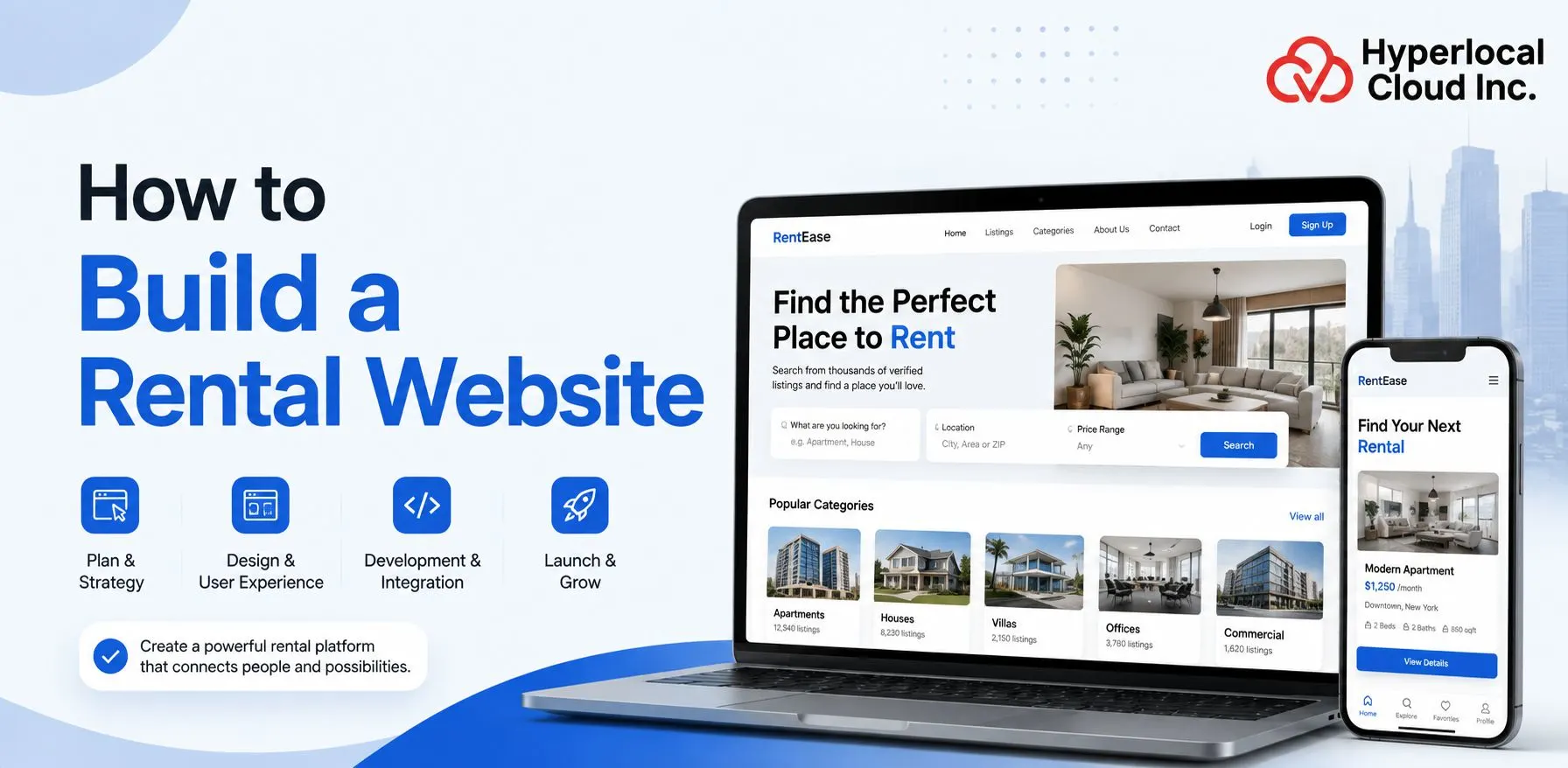
The rental industry is rapidly transforming, and in 2026, businesses across various sectors are moving toward digital platforms to expand their reach and improve operations. From vacation homes and residential properties to cars, equipment, furniture, and event supplies, rental websites provide a convenient way for businesses to showcase their offerings and connect with customers online.
A modern rental website allows businesses to create detailed listings, manage availability, accept online reservations, and handle customer interactions through a centralized platform. With features such as search filters, booking calendars, secure payments, and automated notifications, businesses can provide a smoother rental experience while improving efficiency and reducing manual processes.
In this complete guide, you will learn how to build a rental website in 2026, including selecting the right business model, planning essential features, choosing the best technology stack, understanding development costs, optimizing for SEO, and exploring monetization strategies. Whether you are launching a new rental startup or upgrading an existing business, this guide will help you understand the key steps to create a scalable and successful rental platform.
Overview Rental Website
A rental website is an online platform that allows businesses or individuals to showcase rental products, properties, or services and manage the entire rental process digitally. It enables customers to search for available rentals, compare options, view pricing and availability, make bookings, and complete payments online. From vacation homes and apartments to cars, equipment, and event supplies, rental websites simplify the process of connecting customers with rental providers while helping businesses automate operations, manage inventory, and improve customer experience.
Rental websites generally work through two main models: marketplace platforms and single-business rental websites. Marketplace rental websites connect multiple vendors with customers and typically generate revenue through commissions, subscription plans, or listing fees. Single-business rental websites are built for companies managing their own rental inventory, giving them full control over branding, pricing, and customer relationships. Common business models include direct rentals, commission-based marketplaces, subscription-based platforms, listing fee models, and hybrid approaches that combine multiple revenue streams to create a scalable rental business.
Ready to Build Your Rental Website? Let’s Turn Your Idea Into Reality
Why Every Rental Business Needs a Website in 2026
The rental industry is rapidly moving toward digital-first experiences, and customers now expect businesses to offer convenient online browsing, booking, and payment options. A rental website helps businesses reach more customers, streamline operations, and create a better experience throughout the rental journey. Whether it is a vacation property, vehicle, equipment, or event rental business, having a dedicated website provides several advantages.
Increase Online Bookings
- Customers increasingly prefer booking rental services online rather than making phone calls or visiting physical locations.
- A rental website allows users to check availability, compare options, choose rental dates, and complete bookings instantly.
- Online booking functionality helps businesses capture more customers and generate revenue around the clock.
Provide a Better Customer Experience
- A well-designed rental website makes it easier for customers to find and reserve what they need.
- Features such as search filters, availability calendars, customer reviews, online payments, and automated notifications create a smooth booking experience.
- A better user experience improves customer satisfaction and encourages repeat bookings.
Get Direct Bookings Without Third-Party Commissions
- Many rental businesses depend on third-party platforms that charge commissions for every booking.
- A dedicated website helps businesses receive direct reservations and retain more revenue.
- Businesses can control their pricing, promotions, branding, and customer relationships without depending entirely on external platforms.
Build Higher Credibility and Trust
- A professional website strengthens a rental business’s reputation and builds customer confidence.
- Detailed listings, high-quality images, reviews, secure payment options, and transparent policies help customers make informed decisions.
- An online presence also makes smaller rental businesses appear more established and reliable.
Improve SEO and Local Visibility
- A rental website helps businesses appear in search results when customers look for rental services online.
- SEO strategies such as location-based pages, optimized listings, and valuable blog content can attract more organic traffic.
- Local SEO helps businesses reach nearby customers searching for rental options in specific locations.
Automate Business Operations
- Rental websites can automate repetitive tasks such as booking management, payment processing, customer notifications, and inventory tracking.
- Admin dashboards provide better control over listings, reservations, pricing, and customer data.
- Automation improves efficiency, reduces manual effort, and helps businesses scale more effectively.
Types of Rental Websites You Can Build
Rental websites serve different industries, each with unique audiences, features, and booking needs. Understanding these types helps businesses choose the right features, technology, and development approach for their platform.
Vacation Rental Websites
Vacation rental websites allow travelers to find and book short-term accommodations such as homes, apartments, villas, cabins, and holiday properties. These platforms work similarly to Airbnb-style marketplaces, where property owners can list accommodations and customers can search, compare, and reserve stays online. Common features include property listings, image galleries, location maps, availability calendars, guest reviews, pricing details, and online booking systems.
Property Rental Platforms
Property rental platforms are designed for renting residential and commercial spaces, including apartments, houses, offices, and retail properties. These platforms work like online real estate rental marketplaces, helping landlords and property managers connect with potential tenants. Key features include advanced search filters, location-based searches, property details, inquiry forms, rental agreements, and tenant management tools.
Car Rental Websites
Car rental websites allow customers to search, compare, and reserve vehicles for short-term or long-term rentals. Similar to Turo-style vehicle rental marketplaces, these platforms can support multiple vehicle owners or rental companies offering cars through a single platform. Essential features include vehicle listings, availability tracking, pricing calculations, booking management, payment integration, and customer verification.
Equipment Rental Websites
Equipment rental websites are built for businesses that rent tools, machinery, technology, and specialized equipment. Examples include construction machinery rental platforms, camera rental websites, and industrial equipment marketplaces. These platforms typically require features such as equipment catalogs, availability management, rental duration selection, pricing calculations, maintenance tracking, and booking management.
Furniture Rental Websites
Furniture rental websites allow customers to rent home, office, and event furniture for temporary use. These platforms are useful for people relocating, businesses setting up workspaces, or organizations arranging temporary events. Common features include product catalogs, furniture categories, size and style filters, delivery scheduling, rental period management, and online payment options.
Party & Event Rental Websites
Party and event rental websites allow customers to rent items like furniture, decorations, tents, lighting, and sound equipment online. These platforms include features such as package listings, availability checks, quote requests, booking management, and inventory tracking. A successful rental website also needs tools for payments, agreements, vendor management, and smooth rental operations.
Essential Features Every Rental Website Should Have
From search and bookings to payments and inventory management, these essential features help rental businesses deliver better customer experiences while improving efficiency and scalability.
User Registration & Login
Allow customers, owners, and vendors to create accounts, manage profiles, track bookings, and access personalized dashboards. Secure login options improve convenience and account management.
Property or Product Listings
Listings should include images, descriptions, pricing, specifications, rental terms, and availability details to help customers make informed decisions.
Advanced Search & Filters
Search filters such as location, price, category, availability, ratings, and rental duration help users quickly find suitable rental options.
Interactive Maps
Map integration helps customers discover rentals by location, view nearby options, and make better decisions for property, vacation, and vehicle rentals.
Availability Calendar & Synchronization
Real-time availability management prevents double bookings and keeps rental schedules accurate. Calendar synchronization is especially useful for marketplaces, allowing businesses to manage availability across multiple platforms.
Online Booking System
A booking system allows customers to select dates, calculate rental costs, submit reservations, and receive confirmations through a streamlined process.
Secure Payment Gateway
Payment integration enables secure transactions through cards, wallets, and online banking while supporting payments, refunds, and transaction tracking.
Security Deposit Management
Rental businesses often require deposits for damage protection or security purposes. This feature helps manage deposits, refunds, deductions, and disputes efficiently.
Rental Agreement Management
Digital rental agreements allow businesses and customers to create, sign, and manage contracts online. This is especially important for vehicle, equipment, and property rental platforms.
Customer Reviews & Ratings
Reviews help customers evaluate rental options and build trust between renters and providers.
Messaging Between Customers and Owners
Built-in communication allows customers and rental providers to discuss requirements, ask questions, and resolve issues before or after bookings.
Booking & Rental Management Dashboard
A dashboard helps businesses manage reservations, cancellations, payments, customer details, and rental status from one place.
Inventory & Fleet Management
For equipment and vehicle rentals, inventory management helps track availability, maintenance schedules, rental history, and asset utilization.
Mobile Responsive Design
A mobile-friendly design ensures customers can search, book, and manage rentals easily across smartphones, tablets, and desktops.
Notifications (Email & SMS)
Automated notifications keep users updated about bookings, payments, reminders, cancellations, and important rental updates.
Multi-language & Multi-currency Support
International rental platforms can support users from different regions by offering multiple languages and currencies.
Admin Dashboard
The admin panel provides complete control over users, listings, vendors, bookings, payments, reports, disputes, and platform settings.
Build a Powerful Rental Platform With the Right Features and Technology
Step-by-Step Process to Build a Rental Website
Building a rental website requires a clear strategy, the right technology, and a focus on both customer needs and business operations. Following a structured development process helps create a scalable platform that supports bookings, payments, and future growth.
1. Define Your Rental Business Model
The first step is deciding how your rental platform will operate. Your business model determines the website structure, required features, and revenue strategy.
Common models include:
- Single Vendor: A business rents its own products or properties directly to customers.
- Multi-Vendor Marketplace: Multiple vendors list rentals while the platform earns through commissions or fees.
- Subscription Model: Vendors pay recurring fees to access platform features.
- Commission-Based Model: The platform earns a percentage from each successful booking.
2. Research Competitors and Market Needs
Analyzing existing rental platforms helps identify customer expectations and market opportunities.
Focus on:
- Popular features and booking workflows
- Pricing and commission models
- Customer pain points
- Missing features that can create a competitive advantage
3. Create the User Experience (UX) Design
A rental website should be designed around a simple and convenient booking journey.
Important design areas include:
- Homepage layout
- Search and filtering experience
- Listing pages
- Booking flow
- Checkout process
- Customer and vendor dashboards
4. Select the Right Technology Stack
Choosing suitable technologies ensures better performance, security, and scalability.
The technology stack usually includes:
- Frontend frameworks
- Backend development tools
- Database systems
- Cloud hosting solutions
- Third-party APIs
5. Develop the Minimum Viable Product (MVP)
Start by building the core version of your rental platform with essential features.
An MVP typically includes:
- User accounts
- Rental listings
- Search functionality
- Booking system
- Payment integration
- Basic dashboards
Launching an MVP allows businesses to test the market, collect feedback, and improve the platform before adding advanced features.
6. Integrate Payments and Rental Management Features
After building the core platform, integrate essential rental-specific functionality such as:
- Secure payment gateways
- Availability calendars
- Rental agreements
- Security deposit management
- Notifications
- Inventory or fleet management
These features help automate operations and provide a complete rental experience.
7. Test, Launch, and Scale
Before launch, test the website for performance, security, usability, and booking accuracy. After deployment, monitor customer behavior, analyze feedback, and continuously improve the platform.
As the business grows, additional features such as mobile apps, AI recommendations, advanced analytics, and marketplace tools can be added to support scalability.
Best Tech Stack for Building a Rental Website
Choosing the right technology stack is essential for building a rental marketplace website that can handle listings, bookings, payments, and growing user demand. A modern rental platform requires technologies that offer high performance, scalability, security, and flexibility for future expansion.
Frontend
Next.js: It is a strong choice for rental marketplaces because it provides fast performance, SEO-friendly pages, and better loading speeds. This is especially important for rental platforms that rely on search visibility and listing pages.
React: It helps developers build interactive and reusable user interface components, making it suitable for creating dynamic features such as search filters, booking flows, dashboards, and real-time updates.
Backend
Node.js / NestJS: It provides a scalable backend architecture for managing users, listings, bookings, payments, and marketplace operations. It is a good choice for platforms that require real-time features and high performance.
Laravel: It is a reliable PHP framework known for clean development practices, security features, and rapid application development. It is suitable for businesses looking to build feature-rich rental platforms efficiently.
Database
PostgreSQL: It is one of the best database choices for rental marketplaces because rental platforms rely on complex relationships between users, properties or products, availability schedules, bookings, payments, and transactions.
For example:
- A user can create multiple bookings.
- A rental listing can have multiple availability periods.
- A booking connects customers, vendors, payments, and rental schedules.
PostgreSQL’s strong data consistency, advanced querying capabilities, and reliability make it well-suited for managing these interconnected rental operations.
Additional Technologies
Rental marketplaces often integrate additional services for enhanced functionality:
- Cloud Hosting: AWS, Google Cloud, or Azure for scalable infrastructure.
- Payment APIs: Stripe, PayPal, or local payment gateways for secure transactions.
- Maps & Location Services: Google Maps API for location-based searches.
- Communication APIs: Twilio or similar services for SMS and notifications.
A well-planned technology stack helps rental marketplaces deliver a smooth user experience while supporting future growth, increased bookings, and advanced features.
Build a Rental Website That Simplifies Bookings, Payments, and Business Management
How Much Does It Cost to Build a Rental Website?
The cost to build a rental website depends on several factors, including the type of platform, required features, design complexity, technology stack, and development approach. A simple rental website with basic booking functionality will cost less, while a large marketplace with advanced features, multiple vendors, and mobile applications requires a higher investment.
Basic Rental Website
Estimated Cost: $3,000 – $10,000
A basic rental website is suitable for small businesses that want to showcase rental products or properties and accept online bookings.
Features included:
- User registration and login
- Rental listings
- Basic search functionality
- Booking system
- Payment integration
- Contact forms
- Simple admin panel
Medium-Sized Rental Platform
Estimated Cost: $10,000 – $25,000
A medium-sized rental platform is designed for growing businesses that need advanced features and better automation.
Features included:
- Advanced search and filters
- Availability calendar
- Customer reviews and ratings
- Online payments
- Booking management
- Notifications
- User dashboards
- Advanced admin panel
Enterprise Rental Marketplace
Estimated Cost: $25,000+
An enterprise-level rental marketplace is built for large-scale businesses with multiple vendors and complex requirements.
Features included:
- Multi-vendor marketplace
- Vendor dashboards
- Commission management
- AI-based recommendations
- Advanced analytics
- Mobile applications
- Custom integrations
- High-level security features
Factors Affecting Rental Website Development Cost
Several factors influence the overall development cost, including:
- Design Complexity: Custom designs, animations, and advanced user experiences increase development time and cost.
- Number of Features: Additional features such as AI tools, advanced booking systems, and automation require more development effort.
- Integrations: Third-party integrations for payments, maps, communication, and analytics can affect the budget.
- Mobile Apps: Developing Android and iOS apps alongside the website increases overall costs.
- Maintenance: Regular updates, security improvements, bug fixes, and feature enhancements contribute to ongoing expenses.
Estimated Rental Website Development Timeline
The time required to build a rental website depends on the platform’s complexity, required features, integrations, and level of customization. While a basic rental website can be developed in a few months, a large rental marketplace with advanced functionality requires a longer development cycle.
| Website Type | Estimated Timeline |
| Basic Rental Website | 2–3 Months |
| Marketplace Platform | 4–8 Months |
| Enterprise Rental Platform | 8+ Months |
Common Mistakes to Avoid When Building a Rental Website
Building a rental website requires careful planning and attention to user experience. Many rental businesses lose potential customers because of avoidable mistakes that create friction during browsing and booking. Avoiding these issues helps improve customer satisfaction, increase conversions, and build a stronger online presence.
Complicated Booking Process
A lengthy or confusing booking process can cause customers to abandon their reservations. Keep the booking flow simple with fewer steps, clear instructions, and an easy checkout experience.
Poor Mobile Experience
Many users search and book rentals through smartphones. A website that is not mobile-friendly can lead to poor user engagement and lost bookings.
Slow Loading Speed
Slow websites negatively impact user experience and search rankings. Optimizing images, improving code performance, and using reliable hosting help maintain faster loading times.
Hidden Pricing
Customers expect transparent pricing before making a booking. Hidden fees or unclear charges can reduce trust and increase booking abandonment.
Weak Search Filters
Without effective search and filtering options, customers may struggle to find suitable rentals. Features like location, price range, availability, and category filters improve the search experience.
No Reviews and Ratings
Customer reviews help build trust and influence booking decisions. A rental website without reviews may appear less reliable to potential customers.
Poor Customer Support
Lack of support can frustrate customers when they have questions or issues. Providing chat, email support, FAQs, or automated assistance improves customer confidence.
Ignoring SEO
Without proper SEO optimization, your rental website may struggle to attract organic traffic. Optimized pages, location-based content, and regular blog updates help improve search visibility.
How to Monetize a Rental Website
A rental website can generate revenue through multiple business models depending on the platform type and target audience. Choosing the right monetization strategy helps create a sustainable and profitable rental business.
Direct Rentals
Businesses can earn revenue by renting their own properties, vehicles, or products directly to customers through their website.
Booking Commissions
Marketplace platforms can charge vendors a percentage of each successful booking made through the platform.
Listing Fees
Rental platforms can charge businesses or individuals a fee to publish their listings and showcase their products or properties.
Featured Listings
Businesses can offer premium placement options where vendors pay to promote their listings and appear higher in search results.
Subscription Plans
Rental websites can provide paid subscription packages with additional features such as unlimited listings, advanced analytics, or promotional tools.
Advertising
Platforms with high traffic can generate income by displaying advertisements from relevant businesses and service providers.
Affiliate Partnerships
Rental websites can earn commissions by promoting related services such as travel insurance, transportation, cleaning services, or local experiences.
Launch Your Website With a Development Strategy Built Around Your Goals
Conclusion
Building a successful rental website requires careful planning, the right technology stack, essential features, and a strong focus on user experience. From choosing the right business model and designing a seamless booking process to implementing secure payments and scalable infrastructure, every decision plays an important role in the platform’s success.
As the rental industry becomes more competitive, businesses need websites that are fast, user-friendly, and capable of adapting to customer needs. Starting with a clear business strategy and building a scalable platform allows businesses to grow, attract more customers, and create long-term value. Working with an experienced rental website development team can help transform your idea into a powerful digital platform tailored to your business goals.

Ritu Thakur is a technical writer with more than 7 years of experience creating high-quality content for a wide range of industries. She specializes in developing clear, engaging, and well-researched technical and business content tailored to diverse audiences and industry requirements.

Need Help With
Development?