





Get 30% OFF on All Development Services – Limited Time!
Launch a food delivery marketplace in weeks with Hyperlocal Cloud's JustEat clone solution. Get a ready-made platform with a complete customer, restaurant, delivery partner, and admin ecosystem, fully customizable to match your brand and business model. We also customize the platform to match your brand and business model.
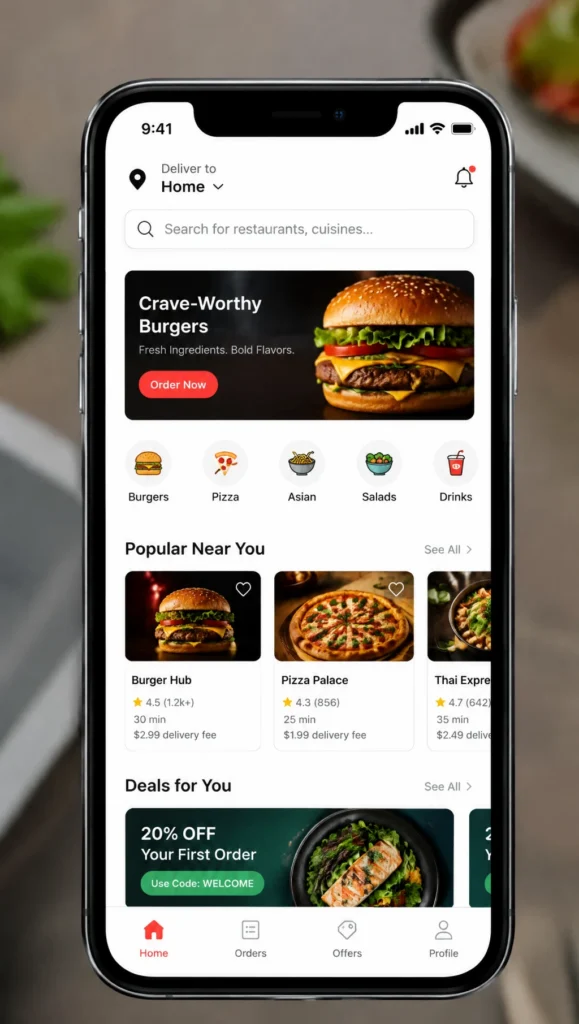
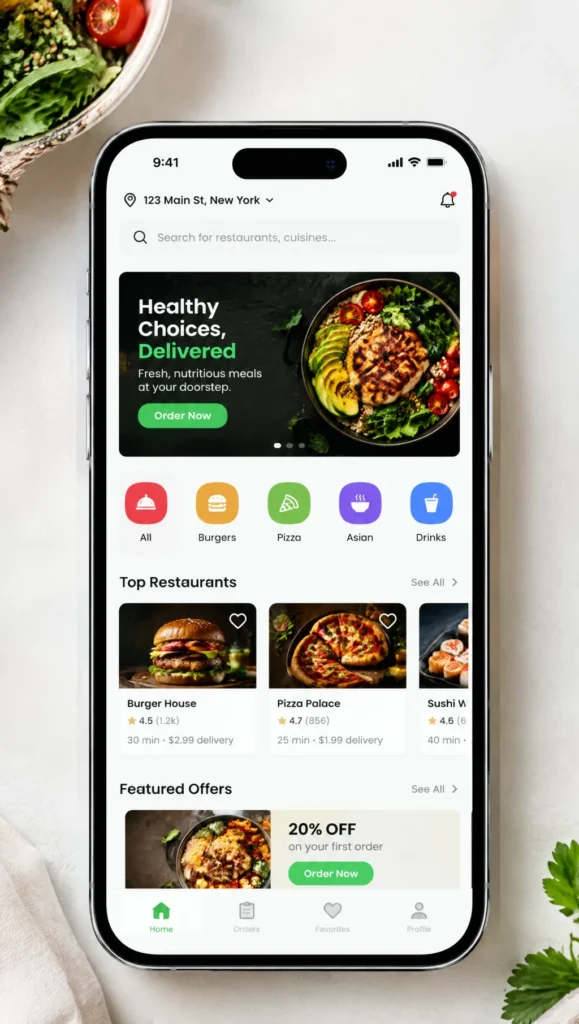
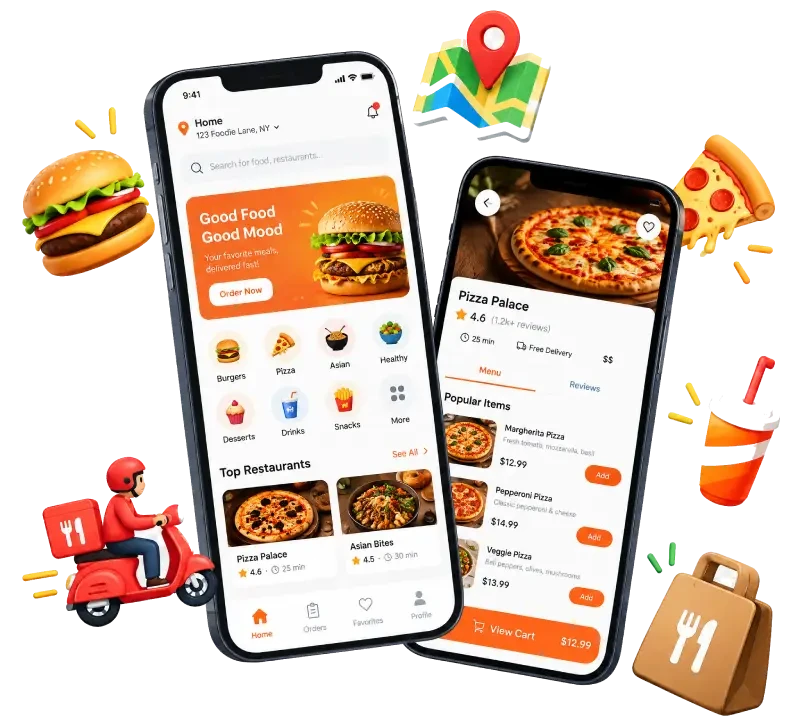
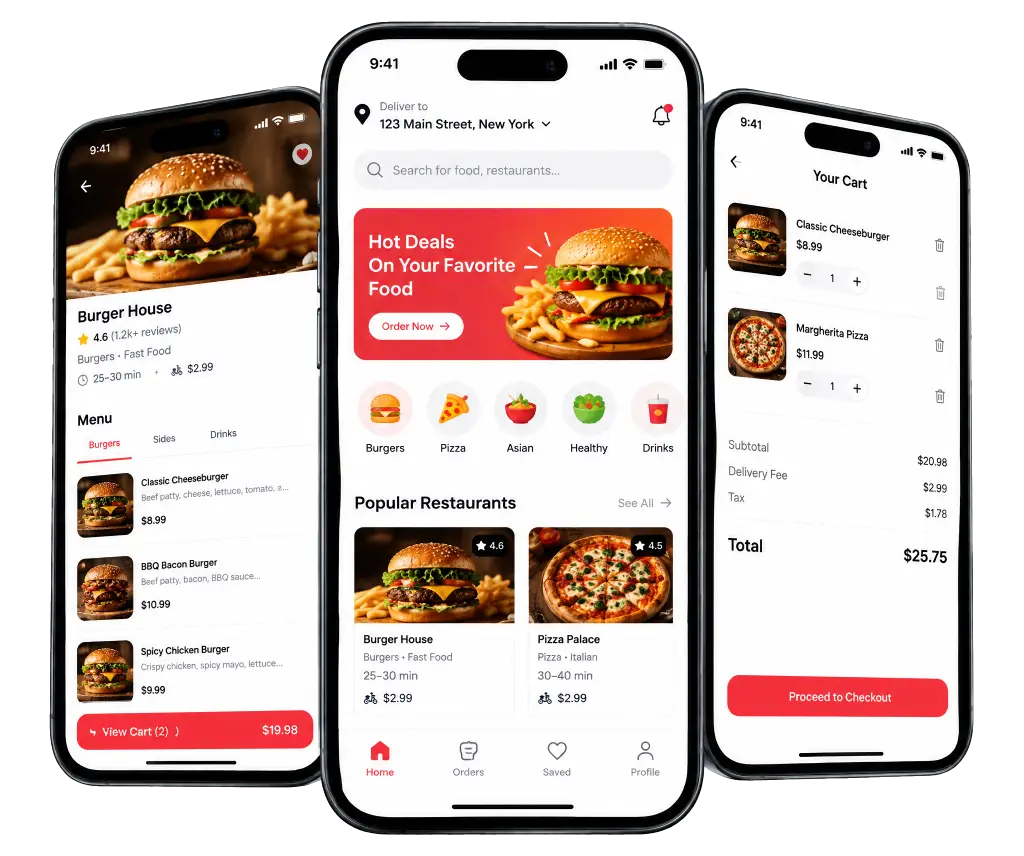
Hyperlocal Cloud is your dedicated partner that develops JustEat Clone Apps for businesses entering the food delivery market. The solution covers the key parts of a delivery marketplace, including customer ordering, restaurant management, delivery operations, payments, and admin controls.
A JustEat-like app gives food businesses their own space to bring restaurants and customers together. You can build an app like JustEat for a local market, niche cuisine, or multi-restaurant network. With food delivery app development, the platform can support restaurant commissions, delivery fees, subscriptions, and promotions. A food delivery marketplace also gives you control over branding, restaurant onboarding, ordering workflows, and service areas, making it easier to shape the platform around your business model.
A JustEat clone app coordinates the complete food ordering process between customers, restaurants, delivery partners, and the admin. The journey typically starts with restaurant discovery and ends with delivery and order completion.
The customer enters a location, browses nearby restaurants, checks menus, ratings, delivery times, and prices, then selects the items they want.
The customer reviews the cart, adds a delivery address, applies an available offer, selects a payment method, and confirms the order.
The restaurant receives the order through its dashboard or app. After accepting it, the restaurant starts preparing the food and updates the order status.
Once the order is ready or reaches the required stage, a delivery partner receives the pickup request. Assignment can depend on availability, location, and delivery rules.
The delivery partner reaches the restaurant, collects the prepared order, and updates the pickup status.
The customer receives status updates and can follow the delivery as the order moves from the restaurant to the destination.
The delivery partner completes the delivery, and the order is marked as completed. The customer can then rate the restaurant and delivery experience.
The admin manages restaurants, customers, delivery partners, orders, payments, commissions, promotions, disputes, and marketplace reports from the central dashboard.

Find restaurants by cuisine, location, rating, price, delivery time, and availability.

Show recent orders, preferred cuisines, offers, and recommended restaurants.

Select portions, add-ons, preferences, and special instructions.

Save and switch between home, office, and other delivery locations.

Support cards, wallets, UPI, and other available payment methods.

Follow order preparation, pickup, and delivery status.

Rate restaurants, dishes, and delivery services after an order.

Update business details, location, opening hours, and contact information.

Add dishes, categories, prices, images, add-ons, and availability.

View incoming orders and manage acceptance, preparation, and completion.
Mark dishes as available or unavailable based on stock.

Create discounts, coupons, meal deals, and limited-time offers.

Monitor orders, revenue, commissions, and payout information.

Review ratings and feedback to understand customer preferences.
View, accept, or decline available delivery assignments.

Access restaurant information, customer address, contact details, and order information.

Get directions to restaurants and delivery locations.

Set online or offline status based on working hours.

Mark orders as accepted, picked up, and delivered.

Track completed deliveries, earnings, incentives, and payout history.

Review previous assignments and completed orders.

Manage customers, restaurants, delivery partners, and account status.
Review restaurant applications, documents, menus, and business details.

Track active, completed, canceled, and disputed orders.

Set restaurant commissions, delivery charges, and platform fees.

Monitor transactions, refunds, settlements, and partner payouts.

Control coupons, promotional campaigns, featured listings, and offers.

Track orders, revenue, restaurant performance, delivery activity, and customer behavior.
Choosing a JustEat clone development company means comparing customization, features, technology, integrations, scalability, pricing, and support. Consider whether the provider offers the customer, restaurant, delivery, and admin components you need. Consider the following companies when evaluating providers for a JustEat-like food delivery platform.
Suffescom Solutions provides JustEat Clone App Development through a customizable, pre-built food delivery solution. Its offering covers customer, restaurant, delivery, and admin functionality, including real-time tracking, payments, menu management, promotions, and commission management.
RisingMax is another company to consider for businesses exploring food delivery and marketplace app development. Its broader software development services cover mobile applications and custom digital solutions, making it relevant for businesses comparing providers for a JustEat-like food delivery platform.
A JustEat Clone can fit different food delivery models. Using our white-label JustEat Clone App, you can launch a branded platform with ready-made ordering, restaurant, delivery, and admin features. It gives you a practical starting point for how to start a food delivery business like JustEat without developing the core platform from scratch.
Run multiple restaurants through one food delivery marketplace, with separate menus, orders, and partner accounts. Customers get one place to discover and order from different restaurants.
Keep ordering and delivery under one system. Restaurants receive orders while your delivery team or logistics partner handles fulfillment.
Let restaurants choose between their own drivers and your delivery network. This gives the food delivery platform more flexibility as operations expand.
Build a food ordering app around a specific audience or category, such as vegan food, halal meals, desserts, healthy food, or home chefs.
Add memberships alongside regular orders. Customers can receive benefits such as reduced delivery fees, exclusive offers, or recurring meal plans.
Bring delivery-only kitchens and virtual food brands into one marketplace. The platform handles discovery, ordering, payments, and fulfillment.
Adapt the platform for businesses ordering meals for employees, meetings, or office events.
Support larger food orders that need advance planning rather than immediate delivery. This works well for events, offices, parties, and corporate functions.
Wondering which platforms matter most for JustEat Clone Development? The right choice depends on where your customers, restaurants, delivery partners, and admin teams need access. A JustEat Clone App can support mobile and web environments, giving you flexibility to serve different users without limiting the platform to a single device.
A JustEat clone iOS app gives customers a dedicated experience to find restaurants, browse menus, place orders, make payments, and track deliveries. Delivery partners can also use the iOS app to manage assigned orders, navigation, delivery updates, and earnings.
A JustEat clone Android app brings the same core food ordering experience to Android users. Customers can search restaurants, customize orders, pay online, and follow deliveries, while delivery partners manage assignments, pickups, routes, and completed orders.
A food delivery web platform gives customers and restaurant partners another way to access the marketplace without installing an app. The web experience can cover restaurant discovery, menu browsing, ordering, payments, account management, and order tracking.
The admin dashboard runs through the web and gives marketplace operators centralized control over restaurants, customers, delivery partners, orders, commissions, payments, promotions, reports, and disputes. It serves as the operational center of the JustEat Clone App.
The white-label JustEat clone app development process starts with selecting the right marketplace setup and ends with a branded food delivery platform ready for launch. The main stages include defining business requirements, configuring the platform, customizing the brand and workflows, connecting required integrations, testing the system, and deploying the final product.
Define the target market, business model, delivery areas, user roles, revenue structure, operational requirements, and customization needs.
Select and configure the required customer, restaurant, delivery partner, and admin panels, along with ordering workflows, delivery settings, payments, and controls.
Apply the business logo, colors, domain, app identity, interface elements, and other brand-specific requirements across the platform.
Customize existing features and workflows for restaurants, customers, delivery partners, and marketplace operations based on business requirements.
Integrate payment gateways, maps, notifications, analytics, and other third-party services while configuring essential privacy, security, tax, and compliance requirements.
Test ordering, payments, restaurant operations, delivery workflows, notifications, integrations, security, and admin functions across supported platforms.
Configure the production environment, hosting, domain, app-store requirements, monitoring, backups, and onboard initial restaurants and delivery partners.
Deploy the white-label Just Eat Clone App, monitor performance and user feedback, fix issues, and introduce new features, integrations, and improvements as the business grows.
If you’re wondering what technology is used to build a JustEat clone app, the choice depends on the platforms you want to support, the features you plan to include, and the integrations your food delivery business requires. The right stack should handle core operations reliably while leaving room for future changes as the platform grows.
Flutter, React Native, React.js help create responsive interfaces for customer, restaurant, delivery, and admin applications across mobile and web platforms.
Node.js and Laravel handle business logic, APIs, user accounts, orders, restaurant operations, payments, and other server-side processes.
MongoDB, PostgreSQL, and MySQL store important platform data such as user profiles, restaurant details, menus, orders, payments, and delivery records.
WebSockets and Firebase support live updates for order status, delivery tracking, notifications, and other time-sensitive activities.
Google Maps and Mapbox provide location services for restaurant discovery, delivery addresses, route planning, and real-time delivery tracking.
Stripe, PayPal, and Razorpay connect the platform with secure online payment options for customer transactions and marketplace operations.
AWS and Google Cloud provide the infrastructure needed to host the application, store data, manage services, and support platform growth.
Firebase Analytics and Google Analytics help track user activity, orders, engagement, and other important performance data across the platform.
These JustEat Clone app development case studies show how a white-label solution can be adapted to different food delivery models. They represent how to build a food delivery marketplace around specific operational and customer requirements.
The client wanted to launch a marketplace where customers could discover multiple restaurants, compare menus, place orders, and track deliveries from one platform.
Using our white-label JustEat Clone App, we customized the platform with separate customer, restaurant, delivery partner, and admin panels. The workflow covered restaurant onboarding, ordering, payments, delivery assignment, and marketplace management.
Increase in Completed Orders
Faster Restaurant Order Processing
Improvement in Delivery Coordination
Reduction in Manual Admin Work
Growth in Repeat Orders
The client needed a localized food delivery platform connecting restaurants with customers in a defined service area. The focus was on faster order handling, local restaurant onboarding, and efficient delivery coordination.
Increase in Order Completion
Faster Restaurant Onboarding
Improvement in Delivery Assignment
Reduction in Manual Order Handling
Increase in Repeat Orders
A JustEat clone app enables businesses to launch a branded food delivery marketplace and earn through multiple revenue streams, such as restaurant commissions, delivery fees, service charges, featured listings, and advertising.
Charge restaurants a percentage of each completed order placed through the platform. The commission rate can vary based on your agreements with restaurant partners.
Add a delivery charge based on factors such as distance, location, order size, or delivery demand.
Restaurants can pay to feature their listings in search results, category pages, or promotional sections.
Offer customers paid memberships with benefits such as reduced delivery fees, exclusive offers, or free delivery on eligible orders.
Create paid promotional placements for restaurants and food brands across banners, search results, and other high-visibility areas.
Add a platform or service fee to eligible orders. The amount can vary by market and business model.
| Development Approach | Estimated Cost | Development Time |
|---|---|---|
| White-Label JustEat Clone | $5,000–$6,000 | 2–4 weeks |
| Custom Food Delivery App | $40,000–$150,000+ | 3–12+ months |
A white-label food delivery app suits businesses that want to enter the market with an established product model, while custom food delivery app development suits businesses with a product concept that requires a ground-up approach. The right option depends on how closely the business model aligns with an existing food delivery platform.
| Comparison Factor | White-Label Food Delivery App | Custom Food Delivery App Development |
|---|---|---|
| Product Fit | Works well when the business model follows established food delivery workflows | Better suited to a business with a highly specific product concept |
| Feature Changes | Existing features can be configured or extended based on requirements | Features are designed specifically around the product requirements |
| User Experience | Existing customer, restaurant, and delivery journeys can be adapted | Every user journey can be designed from the ground up |
| Business Rules | Suitable for standard ordering, delivery, commission, and marketplace rules | Supports complex or unique business rules |
| Integration Choice | Works with supported third-party services and integrations | Integrations can be selected and developed around specific requirements |
| Codebase | Ownership depends on the white-label licensing model | Custom codebase is developed specifically for the business |
| Product Evolution | New requirements can be added within the existing architecture | New requirements are built as part of the custom product roadmap |
| Ideal Use Case | Businesses that want a proven food delivery structure with customization | Businesses creating a highly differentiated food delivery product |
Hyperlocal Cloud is a suitable choice for JustEat Clone Development when you need a food delivery platform tailored to your business model. The team brings experience in marketplace and on-demand platforms, with the flexibility to adapt the solution to your target market, operational requirements, and future product plans.
Experience with multi-vendor and on-demand platforms helps address the workflows involved in restaurant, customer, delivery, and admin operations.
The platform can adapt to different food delivery structures, including multi-restaurant marketplaces, local delivery networks, and niche food platforms.
Business rules, service areas, ordering flows, and marketplace requirements can be adjusted to suit the target market.
A dedicated team handles the technical implementation and coordinates development requirements throughout the project.
Clear communication keeps requirements, development updates, feedback, and project decisions organized throughout the engagement.
The solution is built around the business's brand and requirements, giving the platform owner control over the product and its future direction.
Hyperlocal Cloud is a tech leader harnessing the power of state-of-the-art technologies and delivering innovative app solutions to businesses.