
Get 30% OFF on All Development Services – Limited Time!

Years of Experience

Countries Served

Ongoing Projects

Expert Developers
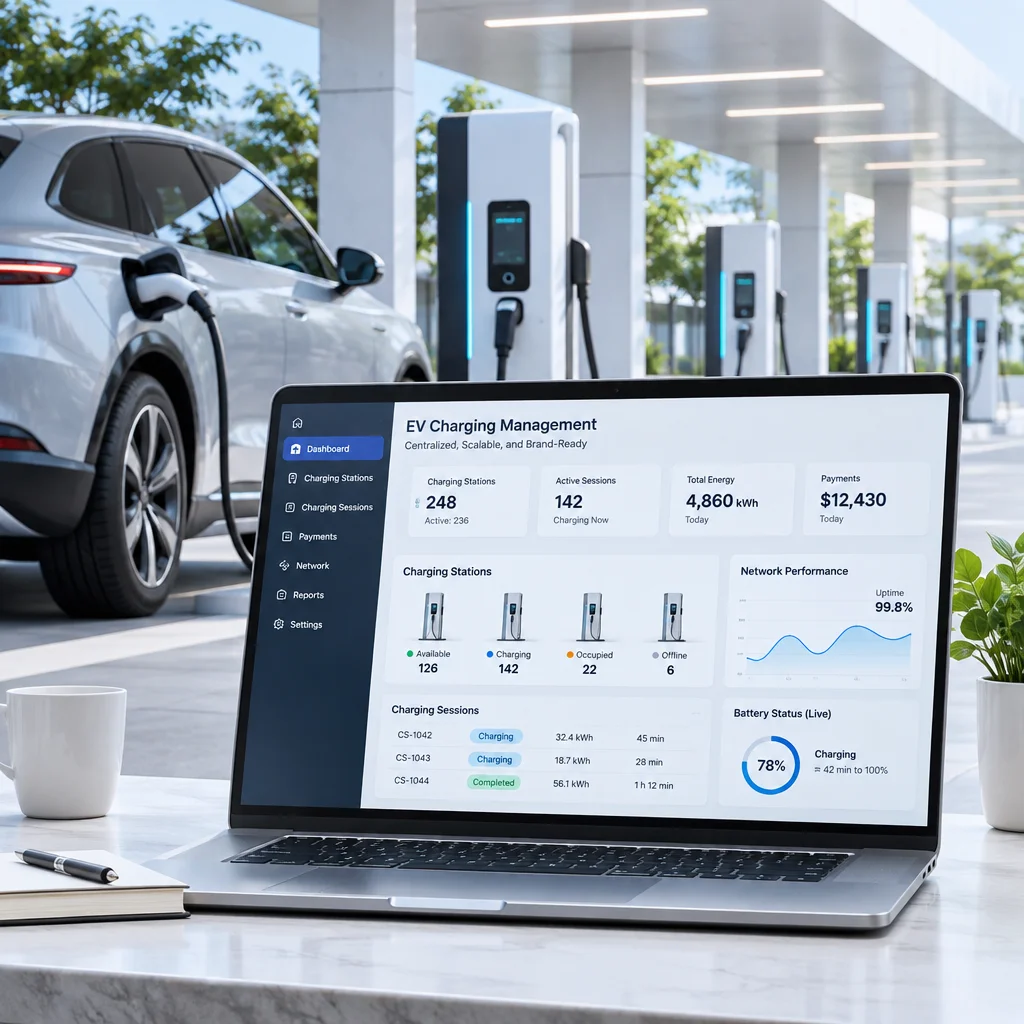
White label EV charging software is a ready-made platform with the help which businesses expand their electric vehicle charging network under their own brand. The software can easily manage charging stations, process payments, charging sessions, and track network performance in a single place.
With our expertise in EV charging management software, we provide flexible, secure, and scalable solutions tailored to your business goals. Unlike many software development companies, we focus on easy customization, smooth hardware integration, business-specific features, and ongoing technical support to help you launch and grow with confidence.
An EV Charging Management System connects EV drivers, charging stations, and network operators through a single platform. It simplifies the entire charging process, from finding a station to making payments and tracking charging sessions.
Users can create accounts, manage their profiles, and add vehicle details through a simple registration process. This provides a smooth, personalized charging experience.
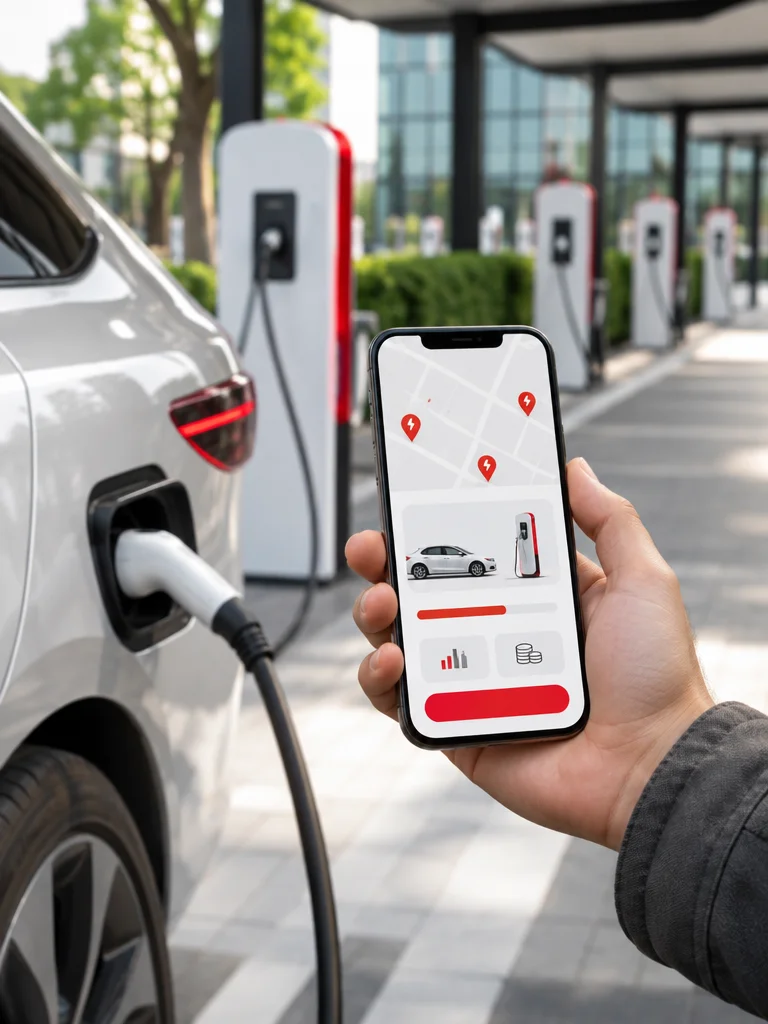
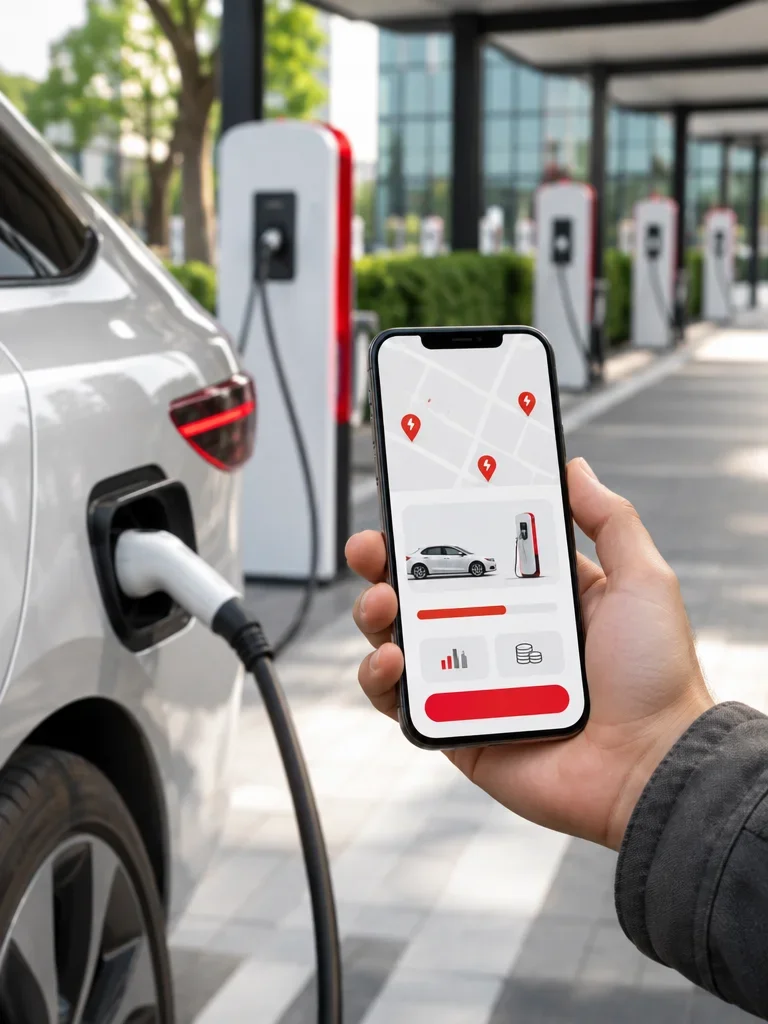
The software helps EV drivers find nearby charging stations using GPS and map integration. Users can also check station locations, charger types, and available facilities.
Drivers can check real-time availability before visiting a station. This feature saves time and helps users find suitable chargers without unnecessary waiting.
Users can book charging slots in advance based on their preferred time and location. This makes station visits more convenient and helps operators manage charging demand.
The EV Charging Software supports secure online payments through different payment methods. Users can easily pay for charging sessions without depending on cash transactions.
Drivers can track their charging sessions, including charging status, energy usage, and session duration. Operators can also monitor charger performance through the EV charging management software.
The platform automatically generates bills and sends notifications about charging sessions, payments, and booking updates. This keeps users informed and simplifies daily operations.
The admin dashboard lets operators manage users, charging stations, payments, and business activities in one place. It also provides useful reports to track network performance.

Modern EV Charging Software needs advanced features to meet the changing needs of EV drivers and charging network operators. Our white label EV charging solution includes modern functionalities that simplify charging operations, improve energy use, and help businesses manage growing networks.
Manage charging sessions based on energy demand, charger availability, and user preferences. This feature improves charging efficiency and reduces unnecessary energy use.
Track charger status, charging sessions, energy usage, and network activity in real time. It allows operators to identify issues quickly and keep charging stations running smoothly.
Set flexible charging prices based on demand, time, and energy consumption. This helps businesses manage peak-hour demand and create better revenue opportunities.
Monitor and manage connected charging stations without visiting each location. Operators can remotely start, stop, and manage charging sessions through the platform, where the charger supports it.
Helps EV drivers find the best charging stations along their travel routes. The feature considers station locations, charger availability, and vehicle charging needs for a convenient journey.
Let users start charging sessions with RFID cards or tags. This provides a quick and simple way to access charging stations without repeated manual login steps.
Enable compatible EVs and charging stations to automatically identify and authenticate each other. This reduces manual steps and makes the charging process easier for drivers.
Distribute available power across connected chargers based on energy demand and capacity. This helps prevent overloads and supports better energy management.
Let drivers book charging slots in advance and manage reservations through the app. Operators can also track bookings and manage station availability.
Make your platform accessible to users from different regions with multiple language options. This helps businesses reach a wider audience and provide a more comfortable user experience.
Send automatic alerts about booking confirmations, charging progress, payment updates, and session completion. These notifications keep users informed throughout their charging journey.
Manage multiple EVs, charging activities, and energy usage through a centralized platform. This feature helps fleet operators control charging schedules and monitor vehicle-related expenses.
Connect your charging network with solar power and other renewable energy sources. This helps businesses use clean energy more effectively and support sustainable charging operations.
Integrate OCPP to enable communication between compatible chargers and your management platform, while OCPI supports roaming and data exchange between charging networks. These protocols help make your white label charge point software more flexible and interoperable.
AI-powered functions can make a Practo clone greener by automating routine tasks and improving the user experience. Our Practo clone app development services help healthcare organizations deploy smart tools that speed up workflows and increase enterprise efficiency.
Use AI to suggest medical doctors based on specialty, region, availability, and patient options. This helps sufferers find appropriate healthcare providers and improves appointment conversions.
Launching a white label EV charging software platform requires proper planning, customization, and testing. Following a step-by-step process helps businesses get a reliable white label EV charging solution that matches their goals and operational needs.
Vue.js
Enable smarter EV journeys with optimized routes, nearby charging station locations, and real-time travel updates.
Choosing between white label EV charging software and custom-built software depends on your budget, business goals, launch timeline, and customization needs. Both options help businesses manage EV charging operations, but they differ in development time, cost, flexibility, and maintenance.
|
Comparison Factors
|
White Label EV Charging Software
|
Custom-Built EV Charging Software
|
|---|---|---|
|
Development Cost
|
$10,000
|
$20,000 - $80,000+
|
|
Development Time
|
1-2 weeks
|
10-12 months
|
|
Customization
|
Lets you customize branding, design, and selected features
|
Offers greater control over features, design, and platform functionality
|
|
Brand Ownership
|
Launch the platform under your own business name and identity
|
Build a platform with complete control over your brand and product design
|
|
Scalability
|
Supports business growth through flexible features and integrations
|
Can be designed around specific long-term scalability requirements
|
|
Maintenance
|
Often includes updates and technical support from the solution provider
|
Requires an in-house team or a development partner for ongoing maintenance
|
|
Integration
|
Supports compatible hardware, payment gateways, and third-party APIs
|
Allows custom integrations based on specific business requirements
|
|
Time to Market
|
Helps businesses enter the EV market quickly
|
Requires more planning, development, and testing before launch
|
|
Technical Expertise
|
Businesses thRequires less in-house development expertiseat want to launch quickly
|
May require dedicated developers and technical resources
|
|
Best Suited For
|
Startups, charging point operators, and businesses looking for faster market entry
|
Businesses with unique requirements and highly specialized workflows
|
Businesses that are looking to invest in electric vehicle charging stations must know about the development cost, which totally depends on the development approach they select to build their own platform. Here, we have mentioned the cost for both a white label EV charging platform and a custom-built one. Let's have a look at the table:
Charge users based on the energy consumed or the duration of their charging sessions.
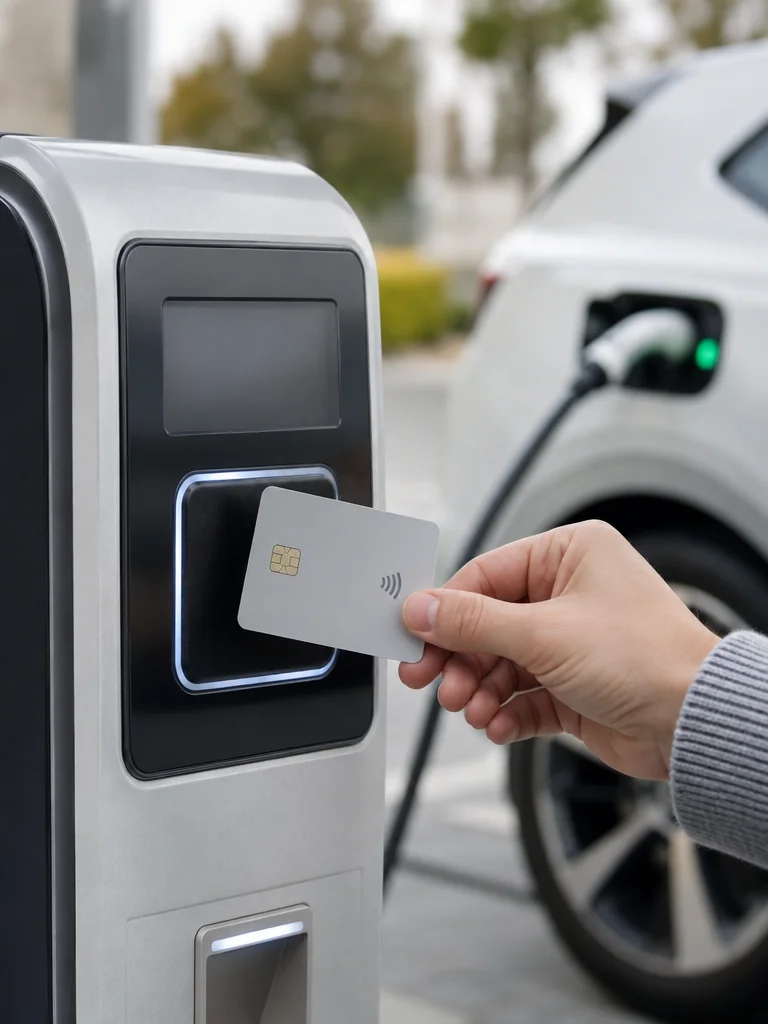
Offer monthly, quarterly, or yearly subscription plans with special charging benefits.
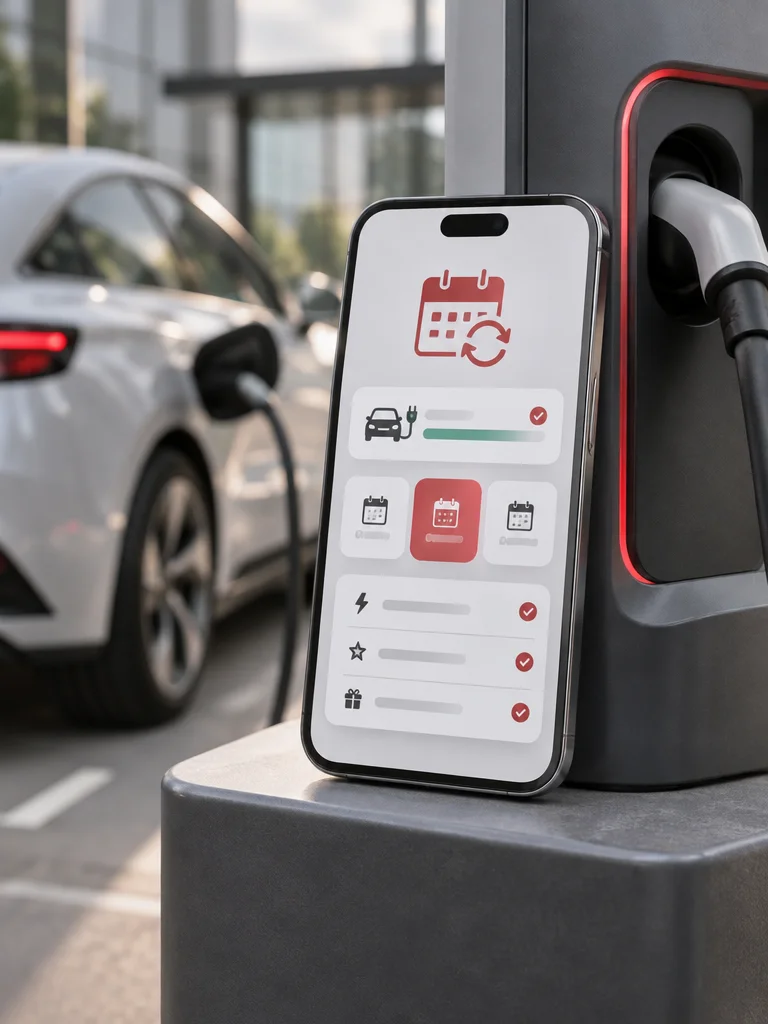
Earn commissions from charging sessions completed through your platform.

Charge fleet operators for using your platform to manage vehicles, charging schedules, and energy consumption.
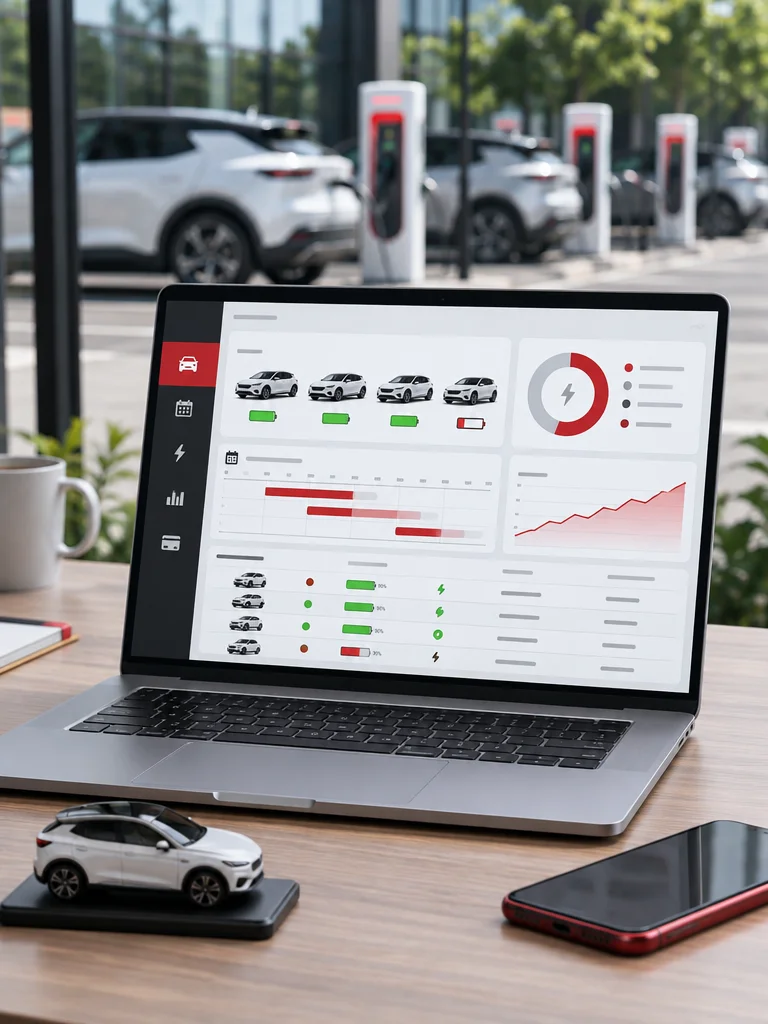
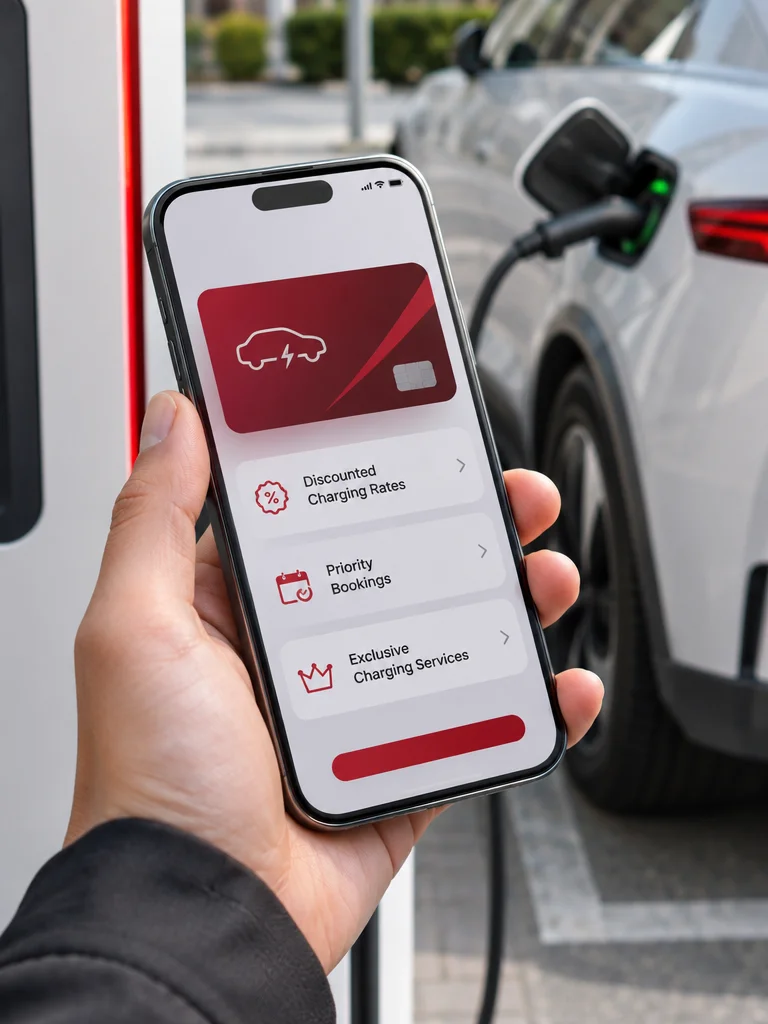
Introduce paid membership plans that offer benefits such as discounted charging rates, priority bookings, and exclusive services.
Generate income by allowing EV drivers to access charging stations across connected charging networks.
Generate additional income by displaying relevant advertisements and promotional offers within your EV charging application.
Yes. You can customize the software with your branding, UI/UX design, business workflows, features, and third-party integrations.
Yes. GPS and map integration let users find nearby charging stations, check availability, and access charging-related information.
Yes. Businesses can configure charging tariffs based on factors such as energy consumption, charging duration, time slots, and location.
Yes. You can integrate with compatible charging hardware through supported communication protocols, APIs, and manufacturer-specific interfaces.
Yes. The platform can be deployed on cloud infrastructure to support centralized management, remote access, scalability, and data synchronization.
Yes. Operators can remotely monitor charger status, start or stop supported charging sessions, configure settings, and troubleshoot compatible chargers.
Yes. It can support multiple charging stations and locations through a centralized management dashboard, depending on the platform architecture.
Yes. It enables operators to monitor charger status, charging sessions, energy consumption, and availability in real time.
Yes. It can support the Open Charge Point Protocol (OCPP), such as OCPP 1.6J and OCPP 2.0.1, depending on the implementation and charger compatibility.
Yes. OCPI (Open Charge Point Interface) can be integrated to enable communication between charging networks and e-mobility service providers, including roaming functionalities.
The software typically uses protocols such as OCPP over secure network connections to exchange charger status, session information, commands, and operational data.
Security measures may include data encryption, secure API authentication, role-based access control, protected payment processing, and regular security updates.
Launch your marketplace under your own brand identity




By sending, you agree to our Terms of Service.