Get 30% OFF on All Development Services – Limited Time!
The H1N1 Influenza Symptoms Tracking System was integrated into an existing patient healthcare app to help patients and healthcare providers monitor influenza-like symptoms more effectively. The feature combines symptom tracking, patient monitoring, alerts, care guidance, and provider communication to identify worsening conditions early and support timely, appropriate follow-up care.
Managing influenza symptoms can be challenging when conditions change rapidly, and patients have limited visibility into their recovery. At the same time, healthcare providers need reliable symptom histories to assess patient progress and determine when intervention may be required. The existing healthcare experience needed a more structured way to connect symptom monitoring with ongoing care.

Patients may not know whether their symptoms are mild, worsening, or serious enough to require medical attention. This uncertainty can delay appropriate care.

Influenza symptoms can change significantly from one day to another. Without regular tracking, patients may struggle to tell whether they are improving or worsening.

Patients may forget when a symptom started, how long it lasted, or how severe it was. This makes it harder to provide an accurate history during consultations.

Patients can struggle to explain their complete symptom journey to healthcare professionals. As a result, important changes between appointments may be missed.

Patients may search the internet for answers when they are unsure about their symptoms. This creates an opportunity to provide relevant guidance directly within their trusted healthcare system.

Patients may manage symptoms, medications, appointments, hydration, and follow-ups separately. Patients need one centralized place to monitor their recovery journey.

Providers may receive only a snapshot of the patient's condition during a consultation, rather than a structured history of symptoms and their progression.

Monitoring patients outside clinical settings can be difficult without a consistent way to collect and review symptom information.

Symptoms can worsen or improve between appointments. Without continuous tracking, meaningful changes may go unnoticed.
Patients showing concerning or worsening symptoms may require earlier attention. Manually identifying these patients can be challenging.

Staff may spend valuable time asking patients about symptom severity, duration, and changes instead of accessing structured information directly.

Without a connected tracking workflow, providers may struggle to review previous recommendations, follow-up actions, and patient recovery progress.
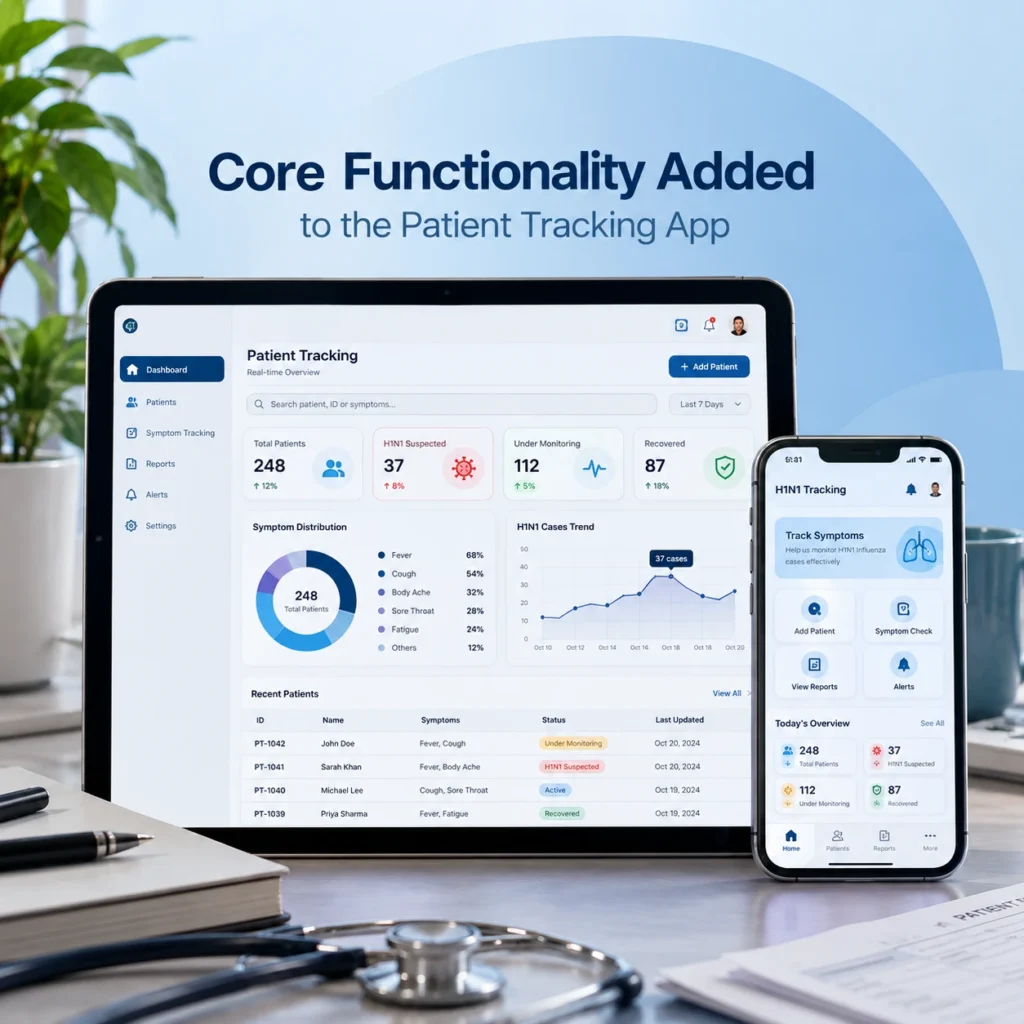
The primary goal was to create an integrated Influenza Symptom Tracking module that supports patients throughout their recovery while giving healthcare providers better visibility into symptom progression.
For healthcare providers, the system makes it easier to:
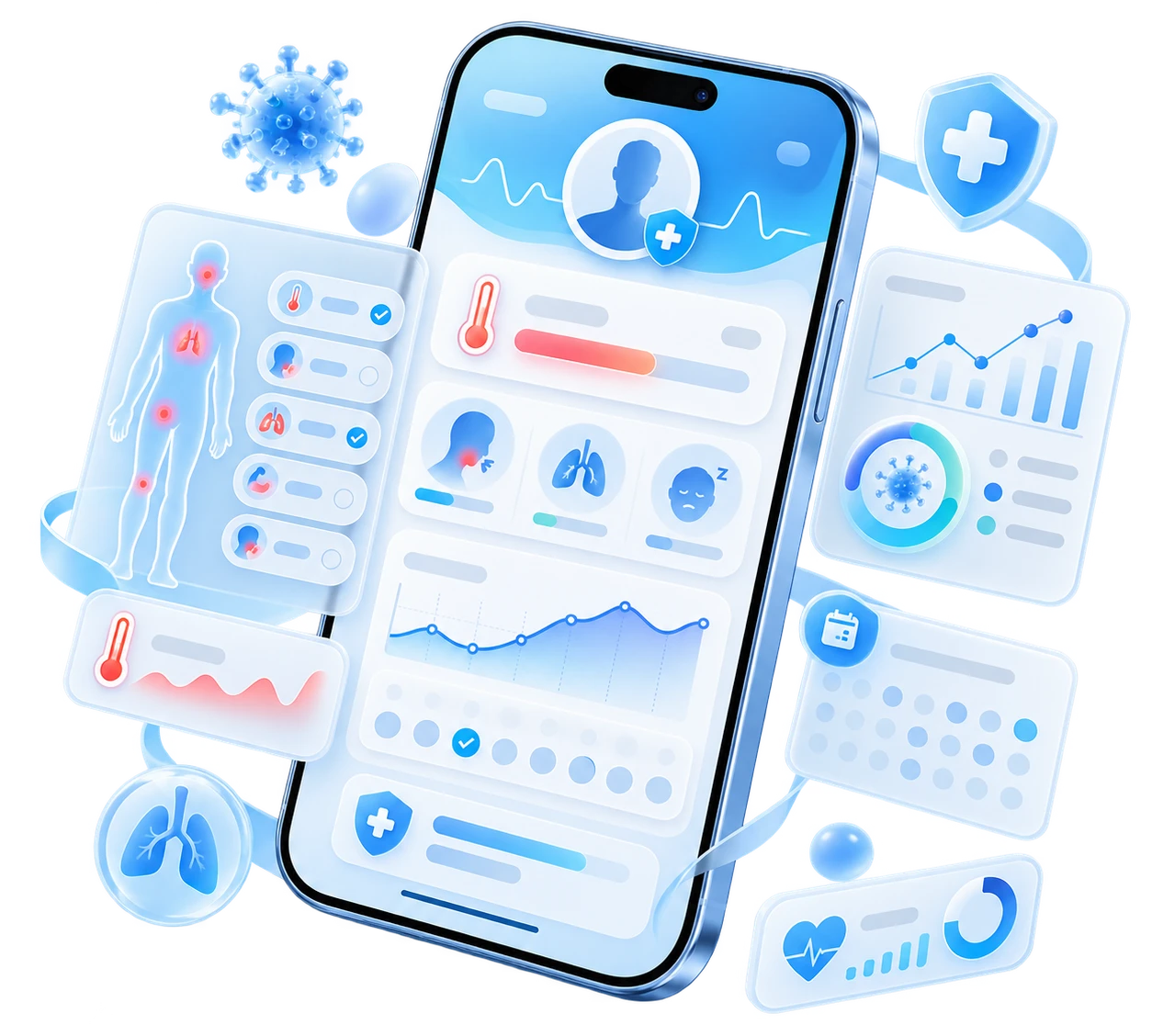
The new influenza tracking experience centers on a centralized dashboard that gives patients a quick understanding of their current condition. Instead of navigating through multiple areas of the application, users can access key information from a single location.
The dashboard includes:
Simple visualizations help users understand changes without requiring them to interpret complex medical data. Trends can communicate whether a symptom is improving or worsening at a glance.
| Symptom | Previous | Today | Trend |
|---|---|---|---|
| Fever | High | Moderate | Improving |
| Cough | Mild | Moderate | Worsening |
| Fatigue | High | Moderate | Improving |
| Appetite | Low | Normal | Improving |
A key part of the solution was integrating influenza monitoring into the existing healthcare ecosystem rather than creating a standalone experience. This allowed symptom information to connect with the patient’s broader healthcare journey.
The module integrates with:
The enhanced solution delivers an integrated influenza symptom-monitoring experience that connects patients, providers, and healthcare workflows. It makes symptom progression easier to track, concerning changes easier to identify, and follow-up care easier to coordinate.
| Before | After |
|---|---|
| Patient experiences symptoms | Patient records symptoms |
| Searches externally for information | System provides relevant guidance |
| Manually manages symptoms | System tracks symptom progression |
| Contacts provider without complete history | Provider receives structured symptom history |
| Provider has limited historical context | Provider reviews symptom trends |
| Changes may remain unnoticed | Concerning patterns can enter the clinical workflow |
| Follow-up is handled separately | Follow-up actions are coordinated |
| Recovery is difficult to measure | Recovery progress is continuously tracked |
Hyperlocal Cloud is a tech leader harnessing the power of state-of-the-art technologies and delivering innovative app solutions to businesses.