

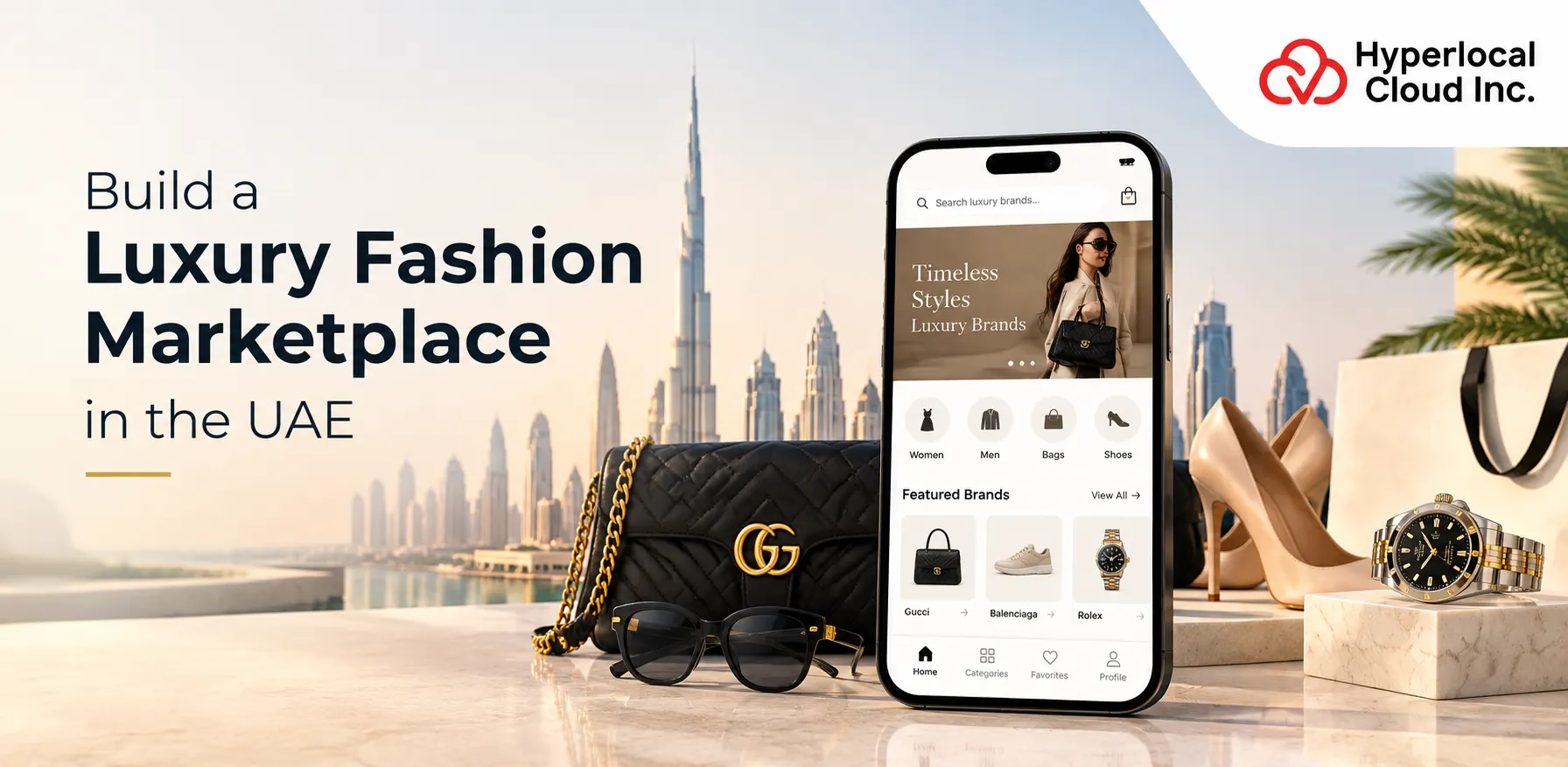
The UAE is one of the Middle East’s important luxury markets. It brings together shoppers and tourists from around the world, top‑class stores, and a fast‑growing online shopping scene. Because of this mix, entrepreneurs and established fashion brands have a chance to create online marketplaces that specialize in designer clothes, verified second‑hand items, collectibles, accessories, boutiques, and exclusive pieces.
A modern luxury fashion marketplace does more than online shopping. It can link buyers, sellers, boutiques, collectors, creators, and fashion communities. It offers ways to discover products, check verified seller profiles, run authentication steps, share on social media, get personalized suggestions, chat, make safe payments, and handle deliveries.
IMARC estimates that the UAE luxury fashion market will rise from $1.4 billion in 2026 to $1.9 billion by 2034. That is a 3.7 percent growth each year from 2026 to 2034. The boost comes from people wanting premium and designer clothes, a bigger group of very wealthy shoppers, more stores going online, and social media helping people find luxury fashion. These trends give a chance for special online platforms that mix luxury shopping with verified resale and community experiences.
Why Build a Luxury Fashion Marketplace in the UAE?
The UAE creates a backdrop for a premium luxury fashion marketplace. Luxury shopping fits well with the country’s stores, tourist flow, and online commerce. A marketplace can bring designer items, used fashion, accessories, collectibles, and unique pieces together. It also gives shoppers ways to find and compare what they want.
Another chance comes from the rising interest in resale and circular fashion. Rather than keeping the platform only for new items, businesses can build a luxury fashion marketplace where shoppers sell the clothes they already own, boutiques keep track of stock, and collectors meet buyers who want certain brands or types.
Dubai can be the place to start, and then Abu Dhabi and other UAE cities can join later. The platform can also handle cross‑border trade, letting buyers and sellers from countries buy and sell where shipping, payments, checks, and rules allow.
Build Your Luxury Fashion Marketplace and Launch Your UAE Business Faster
Core Business Models for a UAE Luxury Fashion Marketplace
A luxury fashion marketplace can be built around different business models based on who sells on the platform, how much control the business wants over products and transactions, and whether it manages authentication and fulfillment. The model can also evolve over time as the marketplace attracts more sellers and customers.
Peer-to-Peer Marketplace
A peer-to-peer model connects individual sellers and fashion collectors directly with buyers. Sellers can create listings, upload product details and images, set prices, and manage orders through the platform. The marketplace primarily provides the technology, payment infrastructure, communication tools, and transaction management.
This model can be suitable for businesses that want to create a large community of individual sellers without holding inventory themselves. The approach is also similar to the operating model behind fashion resale platforms like Vinted, where individuals can list products and connect with potential buyers.
Consignment Marketplace
In a consignment model, sellers provide their luxury products to the marketplace, which manages the selling process on their behalf. The platform can handle product assessment, photography, listing, customer communication, payment, and fulfillment before paying the seller an agreed share after the sale.
This approach provides greater operational control and can work well for high-value pre-owned fashion.
Managed Resale Marketplace
A managed resale model gives the platform even more control over the product journey. Sellers submit their products, which can then go through inspection, authentication, condition assessment, pricing, and fulfillment before being made available to buyers.
This model can be particularly relevant for luxury marketplaces where product authenticity and condition are important parts of the purchasing decision.
Boutique Marketplace
A boutique marketplace allows luxury retailers, independent stores, professional resellers, and fashion businesses to operate their own storefronts within the platform. Sellers can manage their catalogs, inventory, pricing, orders, and customer interactions while benefiting from the marketplace’s shared customer base.
For businesses targeting professional fashion sellers, the marketplace structure can also draw from the principles covered in this guide to building a B2B fashion marketplace, particularly around seller management, catalogs, inventory, and business workflows.
Hybrid Marketplace
A hybrid model combines two or more marketplace approaches within a single platform. For example, individuals can sell their pre-owned items through peer-to-peer listings, boutiques can operate dedicated storefronts, and selected high-value products can go through managed authentication or consignment.
For a growing UAE luxury fashion marketplace, this approach provides flexibility to serve different seller segments while gradually expanding services and revenue streams.
Essential Features for a Premium Fashion Community Marketplace
A luxury fashion marketplace needs more than standard eCommerce functionality. Buyers need sophisticated discovery tools, sellers need efficient inventory and order management, and the community layer needs features that encourage users to return even when they are not making a purchase.
Buyer Features
Buyers should be able to explore products through a visually rich catalog with detailed information about the brand, condition, size, material, price, and authenticity status. Advanced filters can make it easier to find specific designer products without navigating through large inventories.
Important buyer features include:
- Advanced search by designer, product, and category
- Filters for brand, category, condition, size, price, and location
- Personalized product recommendations
- Wishlist and saved searches
- Detailed product pages
- Secure checkout
- Multiple payment options
- Order and delivery tracking
- Reviews and ratings
- Seller profiles and ratings
Seller Features
Sellers need tools that make listing and managing luxury products straightforward. A seller dashboard can allow them to upload product information, images, videos, pricing, inventory details, and supporting documentation while tracking orders and earnings from one place.
Core seller functionality can include:
- Verified seller profiles
- Product listing and editing tools
- Image and video uploads
- Inventory management
- Pricing controls
- Order and sales management
- Seller analytics
- Payout management
- Buyer communication
- Listing status and approval tracking
Community Features
The community layer can make the platform more than a transaction-focused marketplace. Users can follow sellers and fashion enthusiasts, share collections, discuss products, and discover new pieces through a social-style feed.
Useful community features include:
- User profiles
- Follow and follower functionality
- Likes, comments, and discussions
- Personalized fashion feeds
- Collections and wishlists
- Direct messaging
- User-generated content
- Style inspiration
- Product sharing
- Seller and creator content
These features can also create additional opportunities for product discovery because users may encounter items through conversations, collections, or recommendations rather than only through conventional search.
For businesses exploring a fashion marketplace with a strong social and community component, the product discovery and interaction model can also be informed by fashion apps like Depop, where social interaction and product discovery can work alongside marketplace transactions.
Admin Features
The admin panel should provide centralized control over users, sellers, products, transactions, authentication, commissions, and community activity. For a luxury marketplace, moderation and verification tools are particularly important because the platform may handle high-value products.
Key administrative features can include:
- User and seller management
- Product approval and moderation
- Authentication workflow management
- Commission management
- Transaction monitoring
- Dispute management
- Content moderation
- Returns and refund management
- Analytics and reporting
- Seller performance monitoring
Technology Stack for a Luxury Fashion Marketplace
The technology stack should support a visually rich marketplace, multiple user roles, secure transactions, community interactions, search, personalization, and future scalability. The exact technologies can vary depending on the platform’s requirements, development approach, and expected traffic.
| Technology Layer | Suggested Technologies |
| Mobile App | Flutter / React Native |
| Frontend | React.js / Next.js |
| Backend | Node.js / Laravel / Python |
| Database | PostgreSQL / MySQL / MongoDB |
| Cloud Infrastructure | AWS / Google Cloud / Azure |
| Payments | UAE-compatible payment gateways |
| Authentication | OTP / OAuth / Identity Verification |
| Search | Elasticsearch / Algolia |
| Notifications | Firebase / OneSignal |
For a community-driven marketplace, the architecture should also be prepared for real-time capabilities such as messaging, notifications, social interactions, and activity feeds. A modular architecture can make it easier to introduce additional categories, seller types, payment methods, authentication workflows, and international markets as the business expands.
Launch a Customized Luxury Fashion Marketplace Designed Around Your Business Model
How to Build a Luxury Fashion Community Marketplace
Building a luxury fashion community marketplace requires more than developing an online store. The platform needs to bring together product discovery, seller management, authentication, payments, community engagement, and fulfillment in one connected experience. A structured development process helps turn the business idea into a marketplace that can support both early users and future growth.
Step 1: Define the Marketplace Concept
Start by establishing what the marketplace will offer and who it is designed for. Define the target customers, luxury fashion categories, seller types, launch locations, and whether the platform will focus on new, pre-owned, vintage, or collectible products.
At this stage, also determine how product authenticity will be handled and what role the community will play. This could include social discovery, fashion discussions, user collections, seller followings, or content sharing.
Step 2: Choose the Business Model
Select a business model that aligns with how products will be sold and how the marketplace will generate revenue. Options can include transaction commissions, seller subscriptions, listing fees, consignment commissions, authentication fees, delivery charges, memberships, or brand partnerships.
A hybrid model can also combine several revenue streams. The right approach will depend on the seller types, product value, marketplace services, and level of operational involvement.
Step 3: Map User Roles and Marketplace Workflows
Define how each user will interact with the platform from registration through completed transactions. The main roles may include buyers, individual sellers, boutiques, administrators, and community members.
Map important workflows such as seller onboarding, product listing, product approval, authentication, purchasing, payment processing, seller payouts, delivery, returns, messaging, reviews, and dispute resolution. Clear workflows at this stage can reduce complexity during development.
Step 4: Design the Premium User Experience
Create a refined user experience that puts luxury products and effortless discovery at the center. Product photography, descriptions, search, filters, seller profiles, curated collections, community content, and checkout should feel like connected parts of the same journey.
The design should also reflect the expectations of a premium audience without making the interface unnecessarily complicated. Fast navigation, clear product information, intuitive interactions, and a consistent visual identity can make the marketplace easier to explore and use.
Step 5: Develop the Marketplace Platform
Build the marketplace around the workflows and features defined during the planning stage. This may include dedicated buyer and seller applications, a responsive web platform, seller dashboards, community functionality, and an admin control panel.
The development should cover essential marketplace operations such as product management, inventory, orders, user accounts, seller management, authentication workflows, payments, notifications, and reporting. A modular architecture can also make it easier to introduce new categories and features as the platform grows.
Step 6: Integrate Payments, Authentication, and Logistics
Connect the marketplace with the external services required to complete transactions and manage product movement. This can include payment gateways, identity verification services, product authentication systems, shipping providers, notification services, analytics tools, and other APIs.
Each integration should work within the wider marketplace workflow. For example, a successful purchase may need to trigger payment confirmation, seller notification, authentication or fulfillment steps, delivery updates, and eventually seller payout.
Step 7: Test, Launch, and Monitor
Before going live, test the marketplace across supported devices, platforms, and user roles. Review important functions such as registration, product listings, search, checkout, payments, authentication, messaging, notifications, orders, refunds, and delivery tracking.
Security and performance testing should also be part of the launch process, particularly when the platform handles high-value products and financial transactions. Once the core workflows are stable, the marketplace can be launched with a focused selection of categories and sellers.
Step 8: Improve the Marketplace Using User Behavior
Development should continue after launch. Use analytics, customer feedback, seller feedback, and marketplace activity to understand how people discover products, where they leave the buying journey, which categories attract attention, and which community features generate engagement.
These insights can guide improvements to search, recommendations, product presentation, seller tools, personalization, community features, and checkout. Over time, this continuous optimization can help the marketplace adapt to changing customer expectations and business priorities.
Monetization Strategies
A luxury fashion marketplace can combine several revenue streams instead of relying entirely on transaction commissions. The appropriate mix depends on whether the platform focuses on individual sellers, professional boutiques, consignment, or a hybrid marketplace.
Transaction Commissions
The marketplace can earn a percentage from every successful transaction completed through the platform. Commission rates can be structured according to product category, seller type, order value, or the services provided by the marketplace. This creates a direct connection between marketplace revenue and transaction activity.
Seller Subscription Plans
Professional sellers and boutiques can be offered monthly or annual subscription plans with additional marketplace capabilities. Depending on the plan, sellers may receive higher listing limits, advanced analytics, promotional tools, enhanced storefronts, or additional inventory management features.
Listing Fees
The platform can charge sellers a fee for publishing selected products or maintaining certain types of listings. This can be particularly useful for premium, high-value, or limited-edition products where sellers are willing to pay for access to a targeted luxury audience.
Featured Listings
Sellers can pay to increase the visibility of their products across selected discovery areas. Featured products can appear in relevant collections, search sections, category pages, or other designated promotional placements while remaining clearly identified as promoted content.
Premium Seller Storefronts
Luxury boutiques and professional sellers can pay for enhanced storefront functionality. These storefronts can provide additional branding, curated product displays, collection organization, seller information, and performance insights.
Authentication Fees
If the marketplace provides authentication as a separate service, it can charge sellers or buyers for product verification. This can be structured as a per-item fee or included within selected premium marketplace services.
Consignment Commissions
For products sold through the platform’s consignment service, the marketplace can retain an agreed percentage of the final selling price. In return, the platform may handle product assessment, listing, customer communication, payment, and fulfillment.
Delivery Fees
The marketplace can generate additional revenue by charging for delivery services. Standard, scheduled, expedited, or specialized delivery options can be priced according to the destination, product requirements, and fulfillment model.
Membership and VIP Programs
A paid membership program can provide customers with additional benefits such as early access to new collections, exclusive product drops, personalized recommendations, priority assistance, or invitations to selected marketplace experiences.
Brand Partnerships
The platform can work with luxury brands, boutiques, designers, and fashion businesses on curated collections, exclusive launches, sponsored campaigns, and other commercial collaborations. These partnerships can create revenue while also adding new products and experiences to the marketplace.
Advertising Opportunities
Relevant brands and sellers can purchase promotional placements within appropriate areas of the platform. Advertising should remain selective and aligned with the marketplace’s luxury positioning so that commercial placements do not overwhelm the shopping or community experience.
How Much Does It Cost to Build a Luxury Fashion Marketplace in the UAE?
The cost to build a luxury fashion marketplace in the UAE can start from AED 30,000 (Approximately $8,000) for a ready-made/white-label solution. The final cost depends on the marketplace’s features, number of platforms, level of customization, authentication requirements, community functionality, payment integrations, and third-party services.
For a more advanced luxury fashion marketplace with dedicated buyer and seller applications, social features, product authentication, AI-powered recommendations, advanced analytics, and custom integrations, the development investment can increase significantly.
What Influences the Development Cost?
Marketplace Features: Buyer, seller, admin, community, messaging, reviews, wishlists, and other functionality can increase development effort.
Authentication Infrastructure: Luxury marketplaces may require seller verification, product authentication, condition grading, documentation, and approval workflows.
Platforms: Building iOS, Android, and web applications requires more development resources than launching on a single platform.
Community Features: Social feeds, follows, comments, direct messaging, collections, and user-generated content add additional backend and interface requirements.
AI and Personalization: AI-powered recommendations, intelligent search, product categorization, and personalized feeds can increase both development and infrastructure costs.
Third-Party Integrations: Payment gateways, identity verification, shipping providers, analytics tools, notifications, and authentication services can affect the overall budget.
Design and UX: A premium marketplace often requires custom UI/UX design, high-quality product presentation, curated collections, and optimized shopping flows.
Maintenance and Development: Post-launch costs can include security updates, bug fixes, infrastructure management, performance optimization, new integrations, and feature improvements.
Custom Development vs White Label Luxury Fashion Marketplace Solution
Choosing between custom development and a white-label solution depends on the marketplace’s budget, launch timeline, desired level of differentiation, and long-term product strategy.
Custom Development
A custom marketplace is developed around the specific business model and operational requirements. This approach provides greater control over the platform’s functionality, design, integrations, and future development.
- Complete control over UX and functionality
- Flexible buyer, seller, and admin workflows
- Custom authentication and marketplace processes
- Greater flexibility for community features
- Custom integrations and technology architecture
- Easier to build differentiated experiences
- More development time and initial investment
White-Label Solution
A white-label marketplace uses an existing platform as the foundation and adapts it to the business’s branding and requirements. It can be useful for entrepreneurs who want to validate their concept or enter the market without developing every marketplace component from the ground up.
- Faster time to market
- Lower initial development investment
- Pre-built marketplace functionality
- Branding and UI customization
- Ability to add selected features
- Useful for initial business validation
- May have limitations compared with fully custom development
For a UAE luxury fashion marketplace, the choice can also be phased. A business could begin with a white-label or MVP solution to validate demand, sellers, categories, and monetization, then invest in deeper customization as the marketplace gains traction.
Build Powerful Buyer, Seller, and Community Experiences Within One Marketplace
Key Challenges to Consider in the UAE
Launching a luxury fashion marketplace in the UAE requires more than building the technology. The business also needs processes for product verification, seller management, customer service, fulfillment, and regulatory compliance. Addressing these areas early can help create a more reliable marketplace experience as transaction volumes grow.
Luxury Product Authentication
Luxury products can have significant resale value, making authentication an important part of the marketplace operation. The platform should establish a clear process for reviewing products, checking supporting documentation, assessing condition, and communicating authentication status to buyers.
Counterfeit Prevention
Counterfeit products can affect customer trust and create operational and legal risks. Seller verification, product screening, documentation requirements, moderation, transaction monitoring, and appropriate authentication processes can help reduce the risk of unauthorized or counterfeit listings.
Building Buyer and Seller Trust
A two-sided marketplace needs trust from both sides. Verified profiles, transparent seller ratings, product condition information, clear policies, secure payments, authentication records, and responsive customer support can help users make more informed transactions.
Managing Returns and Disputes
Luxury transactions may involve questions about product condition, authenticity, delivery, or whether an item matches its listing. Clearly defined return, refund, cancellation, and dispute-resolution workflows can help the platform handle these situations consistently.
Maintaining Premium Service Quality
A premium marketplace needs consistent service across product presentation, communication, packaging, delivery, and after-sales support. Setting standards for product photography, descriptions, seller response times, packaging, and fulfillment can help maintain a consistent customer experience.
Seller Acquisition
A marketplace needs sufficient quality inventory before it can attract and retain buyers. Businesses may need to recruit individual sellers, collectors, boutiques, luxury resellers, and professional merchants while establishing clear onboarding requirements for each seller category.
Product Quality Control
Product condition should be communicated accurately before purchase. Standardized condition grades, detailed descriptions, photographs, videos, and mandatory disclosure of defects can reduce misunderstandings between buyers and sellers.
Logistics and Cross-Border Delivery
Luxury fashion may require careful handling, secure packaging, insurance, tracking, and specialized delivery arrangements. If the marketplace supports international transactions, businesses also need to consider applicable customs procedures, shipping restrictions, taxes, and return logistics.
Compliance With UAE Requirements
The marketplace should be structured around applicable UAE requirements for eCommerce, consumer protection, payments, privacy, data handling, intellectual property, and commercial activity. Because requirements can vary according to the business structure, activities, and emirate, businesses should obtain appropriate local legal and regulatory advice before launch.
Launch Strategy for a UAE Luxury Fashion Marketplace
A marketplace needs both supply and demand before it can scale effectively. Instead of opening every category and feature at once, businesses can launch with a focused proposition, establish reliable operations, and expand based on customer and seller behavior.
Pre-Launch
The pre-launch stage should focus on defining the market and building enough quality inventory to make the platform useful from day one.
- Identify the initial niche and target audience
- Select priority fashion categories
- Recruit initial sellers and boutiques
- Build a curated product inventory
- Establish authentication and product-quality processes
- Set up payment, delivery, return, and customer-support workflows
- Prepare marketplace policies and seller guidelines
Launch
The initial launch can focus on a specific product category, customer segment, or UAE market rather than trying to serve every possible user immediately.
- Start with a focused category or geographic market
- Partner with boutiques, collectors, fashion communities, and relevant creators
- Introduce curated collections or exclusive product drops
- Encourage early sellers to build detailed storefronts
- Monitor transactions, engagement, and customer feedback
Post-Launch
Once the marketplace has established its initial user base, the focus can shift toward improving retention, expanding supply, and developing the community layer.
- Improve seller onboarding and retention
- Expand product categories based on demand
- Introduce additional community features
- Develop loyalty or membership programs
- Improve personalization and recommendations
- Expand delivery coverage
- Gradually enter additional UAE markets
Future Trends in UAE Luxury Fashion Marketplaces
The luxury fashion marketplace is evolving toward more personalized discovery, stronger trust mechanisms, and increasingly community-driven shopping experiences. Businesses planning a marketplace in the UAE can consider these trends when defining their product roadmap and long-term platform strategy.
AI-Powered Discovery and Personalization
AI can improve how users discover products across large luxury inventories. Intelligent search can understand natural-language queries, while recommendation systems can use browsing behavior, saved products, preferred designers, and purchase history to surface relevant products and collections.
For marketplace operators, AI can also support product categorization, content moderation, customer support, and seller tools. These capabilities can be introduced gradually rather than becoming requirements for the initial marketplace launch.
Social Commerce and Community-Led Discovery
Luxury shopping is increasingly connected with content, creators, recommendations, and social interaction. A marketplace can combine commerce with user profiles, collections, follows, reviews, creator content, and product sharing to give users more ways to discover products.
This approach can help the platform become a destination for fashion discovery rather than simply a catalog of products. Community features can also create additional opportunities for sellers and brands to engage with potential customers.
Digital Authentication and Luxury Resale
Trust will remain important as luxury resale and pre-owned fashion continue to develop. Marketplaces can strengthen buyer confidence through seller verification, product authentication workflows, condition grading, documentation, and transparent transaction records.
Digital systems can help organize authentication and ownership information where appropriate, while structured resale workflows can make it easier for consumers, collectors, and professional sellers to participate in the marketplace.
Cross-Border and Premium Commerce
As a UAE marketplace expands, cross-border commerce can provide access to international buyers and sellers. Supporting multiple currencies, international payments, shipping, customs processes, localized experiences, and appropriate return workflows can become increasingly important.
At the same time, premium delivery, personalized services, curated collections, and exclusive product drops can help differentiate a luxury marketplace from a conventional multi-vendor eCommerce platform.
Why Choose Hyperlocal Cloud to Build a Luxury Fashion Marketplace?
Hyperlocal Cloud can help businesses develop a luxury fashion marketplace around their preferred business model, user journeys, and technology requirements. As an experienced on-demand app development company, Hyperlocal Cloud can also build flexible marketplace solutions tailored to evolving customer expectations and operational needs. The platform can be structured to support buyers, sellers, administrators, and community members while leaving room for future expansion.
Key development capabilities include:
- Marketplace development for multi-sided platforms
- Buyer, seller, and admin applications
- Custom and white-label development options
- Premium-focused UI/UX design
- Payment, authentication, and logistics integrations
- Scalable marketplace architecture
- Community and social functionality
- Post-launch customization and technical support
Whether the goal is to launch a focused UAE marketplace or develop a platform designed for broader regional expansion, the technology can be planned around the required categories, seller workflows, monetization model, and customer experience.
Plan Your UAE Fashion Marketplace With Features Designed for Long-Term Growth
Conclusion
A premium luxury fashion community marketplace can bring together designer fashion, resale, social discovery, authentication, and digital commerce within a single platform. The UAE provides an environment where businesses can explore this model across local consumers, boutiques, collectors, and international customers.
The technology approach should ultimately reflect the marketplace’s business model, target audience, product categories, operational requirements, and expected scale. A focused MVP or white-label platform can provide a starting point for validating the concept, while custom development can support more specialized workflows, community experiences, authentication systems, and personalization as the marketplace evolves.

Patt Cummins is an experienced content writer with over 10 years of experience creating clear and engaging content for technology-focused industries. He specializes in simplifying complex technical topics into easy-to-understand stories that educate readers, support brand communication, and help businesses effectively share their solutions.

Need Help With
Development?