
Get 30% OFF on All Development Services – Limited Time!

Years of Experience

Countries Served

Ongoing Projects

Expert Developers

Investing in a white label coupon platform allows businesses and agencies to launch branded digital voucher, coupon, and gamification campaigns instantly without expensive software development. By using pre-built infrastructure under your own logo, domain, and pricing structure, you significantly reduce time to market and overhead risks.
Our dedicated coupon website development team manages technical maintenance, security, and updates invisibly. This creates a scalable, hands-off product that builds new recurring revenue streams while getting a ready-to-launch platform in just weeks.
Our ready-made solution provides a practical starting point to launch a coupon code listing platform under your own brand, with AI-powered capabilities that support the platform’s growth and day-to-day management.
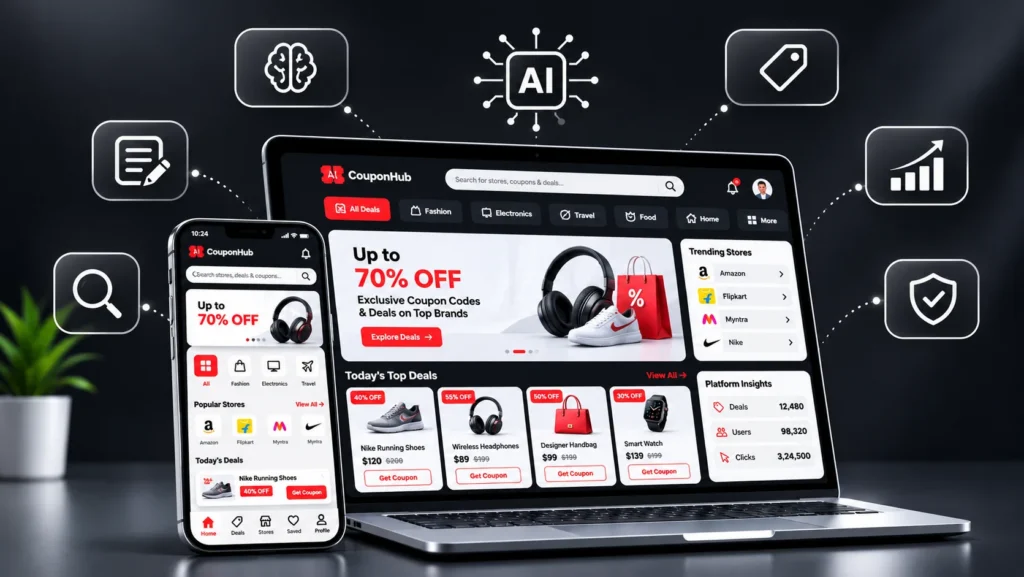

An AI chatbot can answer common shopper questions about coupon codes, discount conditions, minimum order values, and expiry dates. Connected to current platform data, it can guide visitors to relevant listings and explain how to use a promo code before they visit the merchant’s website.

Natural language processing helps shoppers search using everyday phrases instead of exact store names or keywords. For example, someone could search for “discounts on running shoes” or “food delivery offers for new customers.” The search system matches the query against available coupon titles, categories, merchant names, and offer details.

An AI recommendation engine can rank available offers according to relevant signals, such as selected interests, browsing activity, or previous interactions where permitted. A shopper exploring travel deals might see related hotel discounts and flight offers. Recommendation quality depends on the available data and the system’s configuration.

When connected to website analytics and affiliate tracking data, AI tools can summarize coupon clicks, outbound merchant visits, conversion trends, and engagement by category. Platform owners can use these insights to identify popular offers, compare listing performance, and spot deals that may need updating.
Next: Add and Manage Your Fleet
Next: Receive Online Bookings
Next: Manage Payments and Documents
Next: Track Rentals and Fleet Activity
Next: Manage Returns and Grow Your Business
Next: Set Up Your Rental Business
A reliable technology stack keeps a coupon website running smoothly, from displaying active offers to managing merchant information and connecting affiliate services. Each layer handles a specific part of the platform, helping maintain a consistent experience for shoppers and administrators.
Provides the server environment for running the website.
Powers coupon listings, category pages, search interfaces, and responsive layouts.
Coupon websites that earn affiliate commissions need clear disclosures explaining their relationship with merchants. The FTC expects disclosures to be easy to notice and understand, ideally close to the relevant recommendation or affiliate link. A disclosure buried in the footer may not be sufficient.
For a promo code listing platform, this means making commission disclosures visible where shoppers encounter affiliate offers, so they understand how the website earns revenue.
The General Data Protection Regulation (GDPR) governs how covered businesses collect, use, store, and process personal data. Coupon websites should assess how analytics tools, tracking technologies, contact forms, and marketing integrations handle visitor information.
During coupon website development, privacy notices, lawful processing practices, data retention, and applicable user rights need consideration. The specific measures depend on the data collected and the business’s obligations under the GDPR.
The California Consumer Privacy Act (CCPA), as amended by the California Privacy Rights Act (CPRA), establishes privacy rights for California consumers and obligations for businesses covered by the law. These include rights relating to access, deletion, correction, and opting out of certain sales or sharing of personal information.
Businesses planning to launch a coupon website for a US audience should assess whether these requirements apply to their operations. Relevant website policies, privacy request procedures, and tracking configurations should reflect the business’s actual data practices.
The Web Content Accessibility Guidelines (WCAG) 2.2 provide testable criteria for making websites more accessible to people with disabilities. They address areas such as keyboard navigation, text alternatives, visible focus indicators, and accessible form interactions.
For a coupon website, accessibility considerations include ensuring that shoppers can navigate deal categories, read offer conditions, use search controls, and access coupon details without unnecessary barriers. Automated testing can identify some issues, but manual checks are also important.
Hyperlocal Cloud provides a ready-made solution for businesses planning to enter the coupon marketplace industry. As the best website development company USA for businesses seeking a white-label approach, we help them build their own branded platforms with clear ownership, faster deployment, and flexibility for future growth.

Yes, integration with affiliate networks depends on their available APIs, tracking methods, approval requirements, and compatibility with the platform. Before selecting a network, confirm its integration requirements and whether coupon feeds and tracking links can be handled through the existing setup. A white label coupon code listing platform solution should support the affiliate integrations needed for the intended business model.
Administrators can use expiry dates, coupon status labels, validation workflows, and duplicate checks to keep listings organized. Where supported, automated checks can flag expired offers or identify repeated coupon codes for review. During coupon website development, it is important to define how offers are verified, updated, and removed so shoppers encounter fewer outdated or duplicated listings.
Integration depends on the external service's API, available connectors, and technical requirements. Compatible integrations may allow businesses to connect visitor analytics, marketing campaigns, or customer management workflows. Before choosing a promo code listing platform, identify the tools already used by the business and confirm which integrations are available out of the box and which require additional development.
Changes to tracking links or API formats may interrupt offer imports, click attribution, or other connected workflows. The development team needs to review the network's updated documentation, adjust the affected integration, and test it before deployment. When planning to launch a coupon code listing platform, allow room for ongoing integration maintenance because third-party networks may update their systems independently.
Yes, a merchant submission and approval workflow can help administrators review offers before publication, provided the platform includes or is configured for this functionality. The review process may check coupon terms, expiry dates, destination URLs, and promotional claims. Businesses looking to build a coupon platform should establish clear submission rules and approval responsibilities to maintain listing quality as merchant participation increases.
Server requirements depend on listing volume, traffic patterns, database queries, image usage, caching, and third-party integrations. A smaller website may operate with modest resources, while a high-traffic platform may need additional processing capacity, database optimization, caching, and a content delivery network. To launch a coupon website with room for growth, assess expected traffic and workload before choosing the hosting environment.
Launch your marketplace under your own brand identity




By sending, you agree to our Terms of Service.