

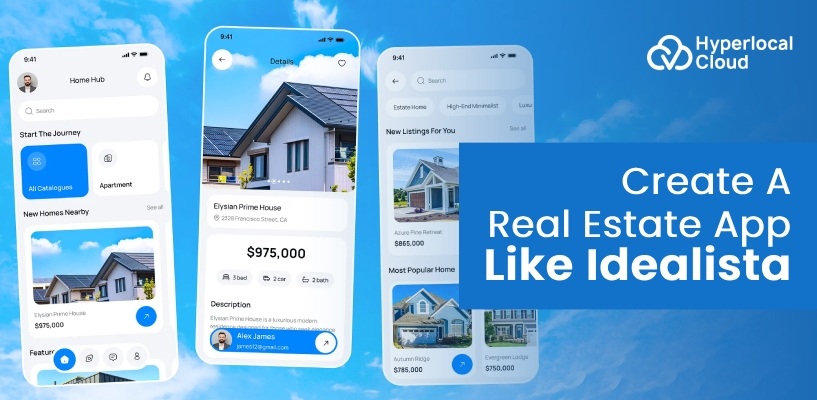
- An Idealista clone app allows businesses to launch an online real estate marketplace where buyers, sellers, renters, property owners, and agents can connect.
- A successful real estate marketplace should offer advanced property search, location-based listings, interactive maps, property filters, and detailed property information.
- Essential features include user registration, property listing management, saved properties, in-app messaging, and secure payment integration where required.
- AI-powered recommendations, virtual property tours, and personalized search can enhance the property discovery experience.
- Choosing a scalable technology stack and user-friendly design helps build a reliable real estate platform.
- A white-label Idealista clone solution can help businesses reduce development time and launch their own branded property marketplace.
- The development cost and timeline depend on the app's features, customization requirements, technology stack, and overall project complexity.
- Regular maintenance, data security, and continuous feature improvements are essential for long-term marketplace growth.
Building an Idealista‑like real estate marketplace is more than making a property listing app. A successful platform must bring together buyers, renters, property owners, and real estate agents with property search tools, map‑based discovery, verified listings, personalized recommendations, messaging, notifications, and secure lead management.
An Idealista clone app is a real estate marketplace that mirrors a business and user experience while letting businesses tweak the features, technology, branding, monetization, and workflows to fit their target market. Depending on the business model, the platform can handle property sales, rentals, agent services, commercial properties, or niche real estate markets.
With AI changing how people find and judge properties, modern real estate marketplaces can move beyond filters. Features like natural‑language property search, AI‑powered recommendations, automated property descriptions, price estimation, lead scoring, and fraud detection can give a personal and trustworthy experience.
In this guide, we will explain how to build an Idealista‑like real estate marketplace, covering its features, user roles, AI capabilities, technology stack, architecture, development process, monetization models, estimated cost, development timeline, security considerations, and strategies for launching and scaling the platform.
Idealista Clone App: Quick Overview
An app that is like Idealista is a real estate marketplace that can be changed to fit needs. It works the way as Idealista, letting people who want to buy or rent look for homes. It also lets people who own homes or who are landlords, agents, or agencies put up listings. Take care of them. This is not a simple website that shows properties. A complete marketplace can have property search, finding homes on a map, handling leads, sending messages, giving alerts, subscriptions, looking at data, and using technology to make suggestions.
The table below gives a look at what a platform like Idealista usually has.
| Aspect | Quick Answer |
| What is an Idealista clone? | A real estate marketplace platform inspired by Idealista’s core functionality, customized with your own branding, features, business rules, and monetization model. |
| Who uses it? | Property buyers, renters, landlords, property owners, real estate agents, agencies, and platform administrators. |
| Core purpose | Connect property seekers with relevant residential or commercial property listings through search, discovery, and communication tools. |
| Essential features | Property listings, advanced search, filters, map search, property details, favorites, saved searches, notifications, messaging, and user profiles. |
| Agent features | Agent profiles, listing management, lead management, analytics, subscription plans, and communication tools. |
| Admin features | User management, listing moderation, agent verification, payments, subscriptions, reports, analytics, and fraud monitoring. |
| AI capabilities | Natural-language property search, personalized recommendations, AI-generated descriptions, price estimation, lead scoring, and suspicious-listing detection. |
| Revenue models | Featured listings, premium placements, agent subscriptions, agency plans, advertising, lead-generation fees, and partner services. |
| Supported platforms | Web applications and mobile apps for iOS and Android, depending on the project requirements. |
| Technology | A typical architecture can use React/Next.js for web, Flutter or React Native for mobile, Node.js/Python/Java for backend services, PostgreSQL or MongoDB for data, and Elasticsearch/OpenSearch for property search. |
| Development approach | Start with an MVP containing core marketplace functionality, validate the business model, then add advanced features, AI, automation, and scalability capabilities. |
| Main business advantage | Provides a foundation for launching a branded real estate marketplace without having to replicate every component of Idealista exactly. |
What Is Idealista and How Does It Work?
Idealista is a real estate platform that helps people find properties for sale or rent. It connects those looking for homes or commercial spaces with homeowners, real estate agents, and property developers. This happens through a marketplace where users can explore different types of properties. People can compare prices, see information about each property, and talk directly with the advertisers.
How Does Idealista Work?
Idealista makes finding a property simple and easy with a search and listing system.
Property Listing: Homeowners, real estate agents, and developers post property listings. These listings include photos, prices, descriptions, and location details.
Property Search: Buyers and renters use filters to find properties. They can search by location, budget, property type, number of bedrooms, and other preferences.
Property Comparison: Users can look at property images, read descriptions, check out amenities, and compare prices to find the options.
Contact Advertisers: If someone is interested in a property, they can contact the owner. Agent directly through the platform. This allows them to get information or schedule a viewing.
Property Management: Advertisers can manage their listings, update information, and reply to messages from interested buyers or renters all through the same platform.
By bringing property listings and potential buyers or renters, Idealista makes real estate discovery easier and more accessible. The platform also offers real estate businesses a way to promote their properties and reach people.
Who Uses an Idealista-Like Platform?
An Idealista-like platform helps people who buy, rent, sell, or manage homes. Every user has needs and can use the right tools.
Buyers: Buyers use the Idealista-like platform to look for houses that are for sale. Buyers can compare prices, see where the houses are, and reach out to the owners or agents.
Renters: Renters use the Idealista platform to find homes for rent. Renters can filter by budget, location, type of home and other needs.
Property Owners: Property owners use the Idealista platform to put homes on sale or rent. Property owners can upload pictures, edit details, and reply to questions.
Real Estate Agents: Real estate agents use the Idealista platform to post listings. Agents can talk to buyers and renters and handle client questions.
Agencies: Agencies use the Idealista platform to oversee many agents and listings. Agencies keep track of questions. Advertise their services.
Administrators: Administrators use the Idealista platform to manage users, check listings, watch platform actions, deal with reports, and run the whole system.
Expand Your Real Estate Business with a Powerful Marketplace App
Why Build an App Like Idealista?
Building an app like Idealista gives businesses a chance to step into the real estate world. It creates a platform that brings together buyers, renters, owners, and real estate professionals. A made property marketplace can make finding homes easier, help people talk to each other better, and let real estate firms reach the right people. Instead of fighting the big players, companies can focus on one city, one type of home, or one kind of customer. With the features and a clear way to make money, an Idealista‑like app can grow into a big real estate business.
Growing Demand for Digital Property Search
Buyers and renters use the internet more and more to look at homes, compare prices, and check locations before they decide. A property search app lets users see listings, view pictures, use filters, and contact sellers without having to visit agencies. For companies, this means they can offer a way to find homes through a website or mobile app. Features like map search, saved lists, alerts, and virtual tours make the app more helpful for people looking for properties.
Opportunities for Local Real Estate Marketplaces
A marketplace can link people who want homes with owners and agents in one city, region, or neighborhood. Unlike portals, a local site can focus on neighborhood details, nearby shops, local prices, and special rules for the area. Companies can build a marketplace for one city or service area, work with agents, and slowly grow into nearby places. This helps create a user community and makes listings more relevant.
Multiple Revenue Streams
An Idealista‑like app can earn money in ways so companies can build a steady business.
Featured listings: Charge owners and agents to boost their spot.
Subscription plans: Offer yearly packages for agents to manage many homes.
Advertising: Show ads from mortgage firms, movers, and home service companies.
Lead generation: Offer premium plans that give agents leads.
Premium tools: Charge for stats, listing tools, and marketing features.
Companies can mix these streams based on who they target the market and how the app grows.
AI and Personalization Opportunities
Artificial intelligence can make home searching more fitting by looking at what users like, their search history, budget, and location needs. An AI‑powered marketplace can suggest listings, sharpen search results, and help people find homes that match. Other ideas include AI chatbots to answer questions, auto‑generated descriptions, image search, and smart lead matching. These add to the user experience. Help agents handle questions faster.
Opportunities for Niche Real Estate Platforms
Instead of developing a general-purpose property marketplace, businesses can focus on a specific real estate segment. A niche platform can provide specialized features and attract users with clearly defined property requirements.
- Luxury properties
- Student housing
- Commercial property
- Vacation rentals
- New construction
- Local or city-specific marketplaces
By choosing a specific audience and addressing its unique needs, businesses can differentiate their platform, develop relevant features, and build a focused real estate marketplace with opportunities for long-term growth.
Features of an Idealista Clone App
An Idealista clone should offer more than basic property listings and search functionality. It needs a complete set of tools for buyers, renters, property owners, real estate agents, agencies, and administrators.
The following sections cover the essential user-role features, core marketplace capabilities, and AI-powered tools that can help businesses build a competitive real estate platform.
Features for Buyers and Renters
Buyers and renters need an intuitive property discovery experience that helps them find suitable properties, compare options, and communicate with advertisers.
-
Property search: Search for residential and commercial properties by location, property type, price, and other requirements.
-
Advanced filters: Narrow results by budget, number of bedrooms, property size, amenities, furnishing, and availability.
-
Map search: Explore listings on an interactive map and identify properties in preferred neighborhoods.
-
Saved properties: Bookmark interesting listings and revisit them later.
-
Saved searches: Save search criteria and receive updates when matching properties become available.
-
Property comparison: Compare selected properties based on price, size, location, amenities, and other relevant details.
-
Notifications: Receive alerts about new listings, price changes, inquiry responses, and appointment updates.
-
Messaging: Communicate directly with property owners and agents through in-app chat.
-
Viewing requests: Request property visits and select from available appointment slots.
-
Mortgage calculator: Estimate monthly mortgage payments using property price, down payment, interest rate, and loan tenure.
-
Virtual tours: Explore properties remotely through 360-degree images, virtual walkthroughs, or supported video tours.
Features for Property Owners
Property owners need simple tools to advertise properties, manage listings, and handle inquiries from interested buyers and renters.
-
Property listing: Create listings with property descriptions, prices, locations, and specifications.
-
Media upload: Upload property images, videos, floor plans, and other supporting media.
-
Listing management: Edit, pause, renew, or remove property advertisements.
-
Lead management: Track potential buyers and renters who express interest in a property.
-
Listing analytics: Monitor listing views, inquiries, saves, and engagement.
-
Featured listings: Promote selected properties through paid visibility options.
-
Inquiry management: View and respond to inquiries, organize conversations, and follow up with interested users.
Features for Real Estate Agents
Real estate agents require tools to manage multiple listings, organize client inquiries, and improve their day-to-day operations.
-
Agent profile: Create a professional profile with contact details, experience, service areas, and property specializations.
-
Multiple listings: Publish and manage several property advertisements from one dashboard.
-
Lead dashboard: Track inquiries, follow-ups, appointments, and lead statuses.
-
CRM integration: Connect the marketplace with customer relationship management systems to synchronize leads and client information.
-
Subscription plans: Offer agents different listing limits, promotional benefits, and premium tools through paid plans.
-
Analytics: Track listing performance, lead conversion, and customer engagement.
-
Team management: Allow agencies to assign leads, manage agent accounts, and coordinate property-related activities.
Features for Admins
Administrators need centralized tools to manage platform operations, maintain listing quality, and monitor business performance.
-
User management: Manage buyer, renter, owner, agent, and agency accounts.
-
Property moderation: Review listings, approve advertisements, and remove misleading or inappropriate content.
-
Agent verification: Verify agent identities, agency information, and submitted business documents.
-
Payment management: Manage subscriptions, listing promotions, payment records, and refunds where applicable.
-
Reports: Handle user complaints, listing reports, and suspected policy violations.
-
Analytics: Monitor registrations, active listings, inquiries, revenue, and platform engagement.
-
Fraud detection: Identify suspicious listings, duplicate advertisements, and unusual user activity for further review.
-
Content management: Manage website pages, FAQs, promotional banners, and other platform content.
Essential Features of an Idealista Clone
The core product features determine how effectively an Idealista-like marketplace connects property seekers with advertisers. These capabilities should work together to create a smooth experience across property discovery, communication, and listing management.
Advanced Property Search
Advanced property search allows users to find suitable properties using keywords, location, price, and property specifications. The search engine should support relevant results, sorting, and quick updates when users change their requirements.
For example, a user searching for apartments in Madrid can refine results by price, bedrooms, property size, and availability. Search results should display essential details such as price, location, images, and property type.
Map-Based Property Discovery
Map-based discovery helps users explore properties according to their preferred location. The platform can display listings as map markers, allowing users to zoom into neighborhoods and view nearby properties.
Useful capabilities include:
-
Interactive map markers with property previews.
-
Search within the visible map area.
-
Nearby amenities and points of interest.
-
Location-based search and neighborhood exploration.
The map and listing results should remain synchronized so users can easily switch between geographic and list-based discovery.
Property Listing Management
Property listing management enables owners, agents, and agencies to create and maintain accurate advertisements.
The listing workflow should support property details, image uploads, pricing, location, amenities, and availability. Advertisers should also be able to update property information, mark properties as unavailable, and renew or remove listings.
A structured listing system helps maintain consistent information across the marketplace.
Advanced Search Filters
Advanced filters allow users to refine property results according to their specific requirements.
Common filters include:
-
Minimum and maximum price.
-
Property type and transaction type.
-
Number of bedrooms and bathrooms.
-
Property size and furnishing status.
-
Amenities such as parking, balconies, and elevators.
-
Availability and listing date.
The platform should apply filters efficiently and make it easy to remove or modify selected criteria.
Favorites and Saved Searches
Favorites allow users to bookmark properties they want to revisit. Saved searches store their preferred search criteria so they do not need to repeat the same search.
These features can work together to improve property discovery. For example, a renter can save a search for furnished apartments in a preferred neighborhood and receive alerts when matching listings become available.
Real-Time Notifications
Real-time notifications keep users informed about important marketplace activity.
Notifications may include new matching properties, price reductions, inquiry responses, viewing confirmations, and subscription updates. Users should be able to manage their notification preferences and choose between supported channels such as push notifications, email, and SMS.
In-App Messaging
In-app messaging creates a direct communication channel between property seekers and advertisers.
Users can ask questions, request additional photos, discuss property availability, and coordinate viewings. Messaging features may include conversation history, unread message indicators, attachments, and reporting or blocking options.
Agent and Agency Profiles
Agent and agency profiles help property seekers understand who is advertising a property.
Profiles can include professional information, contact details, service areas, experience, property specializations, and active listings. Verified profile indicators can help users distinguish accounts that have completed the platform’s verification process.
Property Comparison
Property comparison allows users to evaluate multiple listings side by side.
A comparison interface can display prices, property sizes, locations, bedrooms, amenities, and other relevant specifications. This helps users identify differences between properties and make more informed decisions.
Viewing and Appointment Scheduling
Viewing and appointment scheduling allows property seekers to request visits without relying entirely on manual coordination.
Advertisers can provide available time slots, confirm or reschedule appointments, and manage their calendars. Automated reminders and appointment status updates can reduce missed viewings and improve communication.
Reviews and Ratings
Reviews and ratings can help users evaluate their experience with agents, agencies, and property-related services.
A well-designed review system should support verified interactions, moderation, reporting, and responses from reviewed professionals. Reviews should reflect genuine experiences rather than unverified claims about property quality or advertiser reliability.
Payment Integration
Payment integration enables the marketplace to collect payments for supported services, such as featured listings, premium subscriptions, and advertising packages.
A payment system may include secure payment processing, invoices, transaction history, subscription renewals, and refund management. Rental deposits, rent collection, and property purchase payments should only be included when the business model and applicable legal requirements support them.
Admin Dashboard
The admin dashboard provides centralized control over marketplace operations.
Administrators can manage accounts, review listings, verify advertisers, monitor transactions, investigate reports, and track business performance. Role-based permissions and audit logs can help protect sensitive information and maintain accountability.
Launch an Idealista-Like Property Search App for Buyers and Renters
AI Features for an Idealista-Like Real Estate Marketplace
Artificial intelligence can help an Idealista-like platform deliver more relevant property recommendations, simplify property searches, automate repetitive tasks, and improve listing quality.
For businesses developing a real estate marketplace, AI can be a meaningful differentiator when it solves actual user problems rather than simply adding technology for its own sake.
AI-Powered Property Recommendations
AI-powered recommendations suggest properties based on a user’s preferences, search activity, saved listings, and interactions.
For example, if a renter frequently explores furnished apartments near a university, the platform can recommend similar properties that match their budget and location preferences.
Recommendation systems can combine explicit preferences with behavioral signals to improve relevance. Users should also be able to adjust their preferences and understand why a property is recommended.
Natural-Language Property Search
Natural-language search allows users to describe their property requirements in everyday language instead of manually selecting multiple filters.
For example:
| Example search
“Find a 2-bedroom apartment under €2,000 with parking and a balcony near central Madrid.” |
|
| Bedrooms: 2 | Maximum price: €2,000 |
| Amenities: Parking, balcony | Location: Central Madrid |
| The search engine applies these criteria to the available listings and returns matching or closely related properties. | |
The AI system interprets the user’s intent, identifies relevant property attributes, and converts them into structured search filters. It can also recognize approximate locations, flexible budgets, and preferences expressed in conversational language.
When a request is ambiguous, the platform can ask a follow-up question instead of assuming the user’s intent.
AI Property Valuation
AI property valuation estimates a property’s potential market value using relevant data such as location, size, property type, condition, and comparable listings or transactions.
This feature can help owners understand potential pricing and assist buyers in evaluating properties. However, automated estimates are not guaranteed valuations. Their accuracy depends on the quality, coverage, and freshness of the underlying data.
AI-Generated Property Descriptions
AI can help property owners and agents create clear, structured listing descriptions from information they provide.
For example, an advertiser can enter the property’s location, size, amenities, and key selling points. The system can generate a draft description that the advertiser reviews and edits before publishing.
The platform should prevent AI from inventing amenities, property features, or claims that have not been verified.
AI Lead Scoring
AI lead scoring helps real estate professionals prioritize inquiries based on relevant signals, such as stated requirements, property preferences, engagement, and appointment requests.
The system can organize leads into categories that help agents decide which inquiries need attention first. Scores should support agent decision-making rather than automatically rejecting users or making unsupported judgments about their financial capability.
AI Chatbot for Property Discovery
An AI chatbot can guide users through the property discovery process by answering questions about listings, explaining search filters, and helping users refine their requirements.
For example, a user can ask for affordable apartments near a workplace and then request properties with parking or furnished interiors.
The chatbot can also direct users to relevant listings and help them initiate inquiries. It should distinguish verified listing information from general guidance and avoid making unsupported claims about availability or legal terms.
Duplicate Listing Detection
Duplicate listing detection helps identify properties that have been advertised multiple times.
AI can compare listing descriptions, property images, addresses, prices, and other attributes to identify potential duplicates. Administrators can review flagged listings and decide whether they should be merged, corrected, or removed.
This helps improve listing quality and reduces confusion for property seekers.
Fake Listing and Fraud Detection
AI-powered fraud detection can identify suspicious listing patterns, unusual account activity, misleading property images, and inconsistencies in submitted information.
The system can flag potentially fraudulent advertisements for administrative review. It may also combine automated checks with identity verification, document review, and user reports.
AI detection should be treated as a risk-assessment tool rather than definitive proof of fraud. Human review remains important before taking significant action against an account.
Image-Based Property Analysis
Image-based AI tools can analyze uploaded property photos to identify visual characteristics such as rooms, kitchens, bathrooms, balconies, and certain amenities.
This can help automate image tagging, improve property search, and identify potential inconsistencies between listing descriptions and uploaded media.
Image analysis can also support image-based search, allowing users to explore properties with visual characteristics similar to a reference image. Results should be presented as suggestions, not guaranteed descriptions of the property’s actual condition.
Personalized Search Ranking
Personalized ranking adjusts the order of property listings according to user preferences and the relevance of each result.
For example, two users searching in the same city may receive different rankings because one prioritizes affordability while the other prefers larger properties or specific amenities.
The ranking system should continue to respect essential search filters. Paid promotions should be clearly distinguished from organic relevance so users can understand why certain listings appear prominently.
AI Assistant for Real Estate Agents
An AI assistant can help agents manage routine tasks and improve productivity.
It can draft inquiry responses, summarize conversations, organize follow-up reminders, generate listing descriptions, and provide insights from listing performance data.
Agents should remain in control of important communications and decisions, especially when dealing with property availability, pricing, contracts, and other sensitive information.
Overall, AI should enhance the core marketplace experience rather than replace it. A practical development approach is to launch reliable property search, listing management, messaging, and moderation features first, then introduce AI capabilities based on user needs, available data, and measurable business value.
The AI system interprets the user’s intent, identifies relevant property attributes, and converts them into structured search filters. It can also recognize approximate locations, flexible budgets, and preferences expressed in conversational language.
When a request is ambiguous, the platform can ask a follow-up question instead of assuming the user’s intent.
AI Property Valuation
AI property valuation estimates a property’s potential market value using relevant data such as location, size, property type, condition, and comparable listings or transactions.
This feature can help owners understand potential pricing and assist buyers in evaluating properties. However, automated estimates are not guaranteed valuations. Their accuracy depends on the quality, coverage, and freshness of the underlying data.
AI-Generated Property Descriptions
AI can help property owners and agents create clear, structured listing descriptions from information they provide.
For example, an advertiser can enter the property’s location, size, amenities, and key selling points. The system can generate a draft description that the advertiser reviews and edits before publishing.
The platform should prevent AI from inventing amenities, property features, or claims that have not been verified.
AI Lead Scoring
AI lead scoring helps real estate professionals prioritize inquiries based on relevant signals, such as stated requirements, property preferences, engagement, and appointment requests.
The system can organize leads into categories that help agents decide which inquiries need attention first. Scores should support agent decision-making rather than automatically rejecting users or making unsupported judgments about their financial capability.
AI Chatbot for Property Discovery
An AI chatbot can guide users through the property discovery process by answering questions about listings, explaining search filters, and helping users refine their requirements.
For example, a user can ask for affordable apartments near a workplace and then request properties with parking or furnished interiors.
The chatbot can also direct users to relevant listings and help them initiate inquiries. It should distinguish verified listing information from general guidance and avoid making unsupported claims about availability or legal terms.
Duplicate Listing Detection
Duplicate listing detection helps identify properties that have been advertised multiple times.
AI can compare listing descriptions, property images, addresses, prices, and other attributes to identify potential duplicates. Administrators can review flagged listings and decide whether they should be merged, corrected, or removed.
This helps improve listing quality and reduces confusion for property seekers.
Fake Listing and Fraud Detection
AI-powered fraud detection can identify suspicious listing patterns, unusual account activity, misleading property images, and inconsistencies in submitted information.
The system can flag potentially fraudulent advertisements for administrative review. It may also combine automated checks with identity verification, document review, and user reports.
AI detection should be treated as a risk-assessment tool rather than definitive proof of fraud. Human review remains important before taking significant action against an account.
Image-Based Property Analysis
Image-based AI tools can analyze uploaded property photos to identify visual characteristics such as rooms, kitchens, bathrooms, balconies, and certain amenities.
This can help automate image tagging, improve property search, and identify potential inconsistencies between listing descriptions and uploaded media.
Image analysis can also support image-based search, allowing users to explore properties with visual characteristics similar to a reference image. Results should be presented as suggestions, not guaranteed descriptions of the property’s actual condition.
Personalized Search Ranking
Personalized ranking adjusts the order of property listings according to user preferences and the relevance of each result.
For example, two users searching in the same city may receive different rankings because one prioritizes affordability while the other prefers larger properties or specific amenities.
The ranking system should continue to respect essential search filters. Paid promotions should be clearly distinguished from organic relevance so users can understand why certain listings appear prominently.
AI Assistant for Real Estate Agents
An AI assistant can help agents manage routine tasks and improve productivity.
It can draft inquiry responses, summarize conversations, organize follow-up reminders, generate listing descriptions, and provide insights from listing performance data.
Agents should remain in control of important communications and decisions, especially when dealing with property availability, pricing, contracts, and other sensitive information.
Create a Scalable Real Estate Marketplace for Your Business
How to Build an Idealista Clone App
Building an Idealista clone app requires a structured development process that covers business planning, product design, technology selection, development, testing, and ongoing improvement.
Whether you are launching a local property marketplace or a large-scale real estate platform, following a clear methodology helps control development costs, prioritize essential features, and create a product that meets the needs of your target audience.
1. Market and Competitor Research
Start by researching the real estate market you intend to serve. Analyze existing property portals, including their search functionality, listing experience, pricing models, and user reviews.
Identify common problems faced by buyers, renters, property owners, and agents. These insights can help you discover opportunities to differentiate your platform through better search, verified listings, localized services, or specialized property categories.
2. Define Your Target Audience
Determine who will use your Idealista-like platform and what they expect from it.
Your target audience may include property buyers, renters, landlords, independent agents, real estate agencies, or property developers. Define the primary audience first, then identify secondary user groups and their specific requirements.
For example, a student housing marketplace may prioritize affordable rentals, shared accommodation, and proximity to universities, while a commercial property platform may focus on office spaces, floor areas, and lease terms.
3. Define the MVP
The minimum viable product (MVP) should include the essential features required to launch and validate your marketplace.
A practical MVP may include:
-
User registration and role-based accounts.
-
Property listing creation and management.
-
Property search and essential filters.
-
Property details and image galleries.
-
Owner and agent contact options.
-
Basic listing moderation.
-
An administrator dashboard.
Advanced AI recommendations, virtual tours, complex CRM integrations, and extensive analytics can be introduced in later development phases.
The objective is to launch a usable marketplace, gather feedback, and prioritize improvements based on actual user behavior.
4. Create UX/UI Design
Design the user experience and interface before beginning full-scale development.
Create wireframes, user journeys, and interactive prototypes for the main workflows, including registration, property listing, property search, inquiries, and appointment scheduling.
The design should be intuitive across desktop, tablet, and mobile devices. Pay particular attention to search filters, property images, listing information, and clear calls to action.
5. Choose the Technology Stack
Choose technologies that support the platform’s expected functionality, performance, security, and scalability.
The technology stack may include frontend frameworks, backend technologies, databases, cloud infrastructure, mapping services, and third-party integrations.
Selection should be based on the development team’s expertise, project requirements, integration needs, and long-term maintenance costs rather than popularity alone.
6. Develop Backend and APIs
The backend manages the platform’s core business logic, data, and communication between applications.
Develop APIs for user authentication, property listings, search, messaging, appointments, payments, and notifications. The backend should also handle permissions, listing moderation, and data validation.
A well-structured backend helps maintain consistent information across web and mobile applications while supporting future feature expansion.
7. Develop Web and Mobile Applications
Build the interfaces that buyers, renters, owners, agents, and administrators will use to interact with the marketplace.
Depending on your business goals, you can develop a responsive website, native mobile applications, or cross-platform mobile apps.
The web platform can support detailed property searches and listing management, while mobile apps can provide convenient browsing, messaging, saved searches, and push notifications.
8. Integrate Maps, Payments, and Third-Party APIs
Integrate external services that support the marketplace’s essential functionality.
These may include:
-
Mapping and geolocation APIs for location-based property discovery.
-
Payment gateways for subscriptions and featured listings.
-
Email and SMS services for account verification and notifications.
-
Cloud storage for property images, videos, and documents.
-
Calendar APIs for appointment scheduling.
Select providers based on availability in your target market, pricing, reliability, and data protection requirements.
9. Implement AI Features
Once the core marketplace is operational, introduce AI features that address specific user and business needs.
Start with practical capabilities such as AI-generated listing descriptions, personalized recommendations, natural-language search, or duplicate listing detection.
AI features should be integrated with reliable property data and tested against real user requirements. For example, natural-language search should correctly convert user requests into structured filters and return relevant listings.
10. Testing and Quality Assurance
Test the platform thoroughly before launch to ensure that all major workflows function correctly.
Quality assurance should cover:
-
Functional testing of registration, listings, search, and messaging.
-
Performance testing for large listing volumes and concurrent users.
-
Security testing for authentication, permissions, and data protection.
-
Cross-device and cross-browser compatibility.
-
Payment and third-party integration testing.
-
Usability testing with representative users.
Testing helps identify issues before they affect users and reduces the risk of costly post-launch fixes.
11. Launch
Prepare the platform for launch by configuring production infrastructure, publishing the website or mobile apps, and completing the required operational checks.
Before opening the marketplace to the public, onboard initial property owners and agents, populate relevant listings, and establish a process for handling user inquiries and reported content.
A phased launch in a selected city or property category can help validate the platform before expanding into additional markets.
12. Monitor, Scale, and Improve
After launch, monitor platform performance and collect feedback from users and real estate professionals.
Track key metrics such as active listings, search activity, inquiry volume, viewing requests, lead conversion, and revenue. These indicators can help identify which features are performing well and where improvements are needed.
As the marketplace grows, optimize database queries, search infrastructure, media delivery, and cloud resources to support increased traffic and listing volumes.
Continue improving the product through regular updates, new integrations, enhanced search capabilities, and AI features that provide measurable value.
Recommended Technology Stack for an Idealista Clone
Choosing the right technology stack is essential for building a scalable Idealista clone app that supports property listings, advanced search, interactive maps, real-time communication, and AI-powered recommendations.
A suitable technology stack should provide fast performance, secure data management, reliable third-party integrations, and the flexibility to introduce new features as the marketplace grows.
The following technologies are suitable options for different components of a real estate marketplace. The final selection should depend on the project’s complexity, development budget, team expertise, and expected user traffic.
Web: Next.js + React
Mobile: Flutter
Backend: Node.js + TypeScript
Database: PostgreSQL + PostGIS
Search: OpenSearch
Cache: Redis
Maps: Google Maps or Mapbox
Cloud: AWS
How Does an Idealista Clone Make Money?
An Idealista clone can generate revenue through a combination of paid property promotions, subscription plans, lead generation, advertising, and partnerships with real estate service providers.
The most suitable monetization strategy depends on the target audience, property market, and platform’s business model. A new marketplace can start with a simple revenue model and introduce additional paid services as its user base and listing inventory grow.
Featured Property Listings
Featured property listings allow owners and agents to pay for increased visibility on the platform.
Premium listings can appear in prominent positions in search results, on the homepage, or in dedicated promotional sections. Businesses can offer fixed-duration promotions or pricing based on the selected placement.
This model is suitable for advertisers who want to attract more attention to specific properties.
Agent Subscription Plans
Real estate agents can pay a recurring fee to access advanced listing and business management features.
Subscription packages may include:
-
A specific number of active property listings.
-
Additional listing visibility.
-
Lead management tools.
-
Listing performance analytics.
-
Enhanced agent profiles.
Offering monthly and annual plans can provide recurring revenue while allowing agents to choose a package that matches their business needs.
Agency Subscription Plans
Real estate agencies can subscribe to plans designed for managing multiple agents and property portfolios.
Agency subscriptions may include centralized listing management, team accounts, lead distribution, advanced reporting, and higher listing limits.
Businesses can offer different subscription tiers based on the number of agents, active listings, and available management features.
Lead Generation Fees
A property marketplace can charge advertisers for qualified leads generated through the platform.
For example, an agent may pay for a verified inquiry from a potential buyer or renter who has expressed interest in a particular property.
Lead generation pricing can be based on individual leads, monthly lead packages, or subscription plans that include a set number of inquiries.
The platform should clearly define what qualifies as a lead and avoid charging for duplicate, invalid, or irrelevant inquiries.
Advertising
Advertising provides another potential revenue stream by allowing relevant businesses to promote their services to property seekers and real estate professionals.
Potential advertisers include mortgage providers, moving companies, interior designers, home improvement businesses, and property management services.
Advertising can be offered through sponsored placements, banner advertisements, or relevant promotional content. Advertisements should be clearly identified so users can distinguish paid promotions from organic property results.
Premium Analytics
Premium analytics allow agents and agencies to access more detailed insights into their listing performance and customer engagement.
Paid analytics features may include:
-
Property views and inquiry trends.
-
Listing engagement comparisons.
-
Lead conversion reports.
-
Performance by location or property category.
-
Recommendations for improving listing visibility.
These insights can help real estate professionals understand how their properties perform and make more informed marketing decisions.
Mortgage and Financial Referrals
An Idealista-like platform can partner with mortgage providers, lenders, or financial service companies to connect interested property buyers with relevant services.
For example, a buyer exploring a property for sale could request information about mortgage options or connect with a participating financial provider.
The marketplace may earn referral fees or commissions under an agreed partnership arrangement. Financial promotions and referrals should comply with applicable advertising, disclosure, and financial regulations.
Insurance and Other Partner Services
The platform can expand its revenue opportunities through partnerships with businesses that support property transactions and ownership.
Potential partners include:
-
Home and rental insurance providers.
-
Moving and relocation companies.
-
Property inspection services.
-
Home maintenance and repair businesses.
-
Legal and property documentation services.
Revenue may come from referral fees, commissions, or paid service placements, depending on the partnership model.
Choosing the Right Monetization Strategy
A practical approach is to begin with featured listings and agent subscriptions, then introduce agency plans, premium analytics, and partner services as the marketplace develops.
The platform should prioritize revenue models that provide clear value to advertisers and users. Paid promotions, for example, should improve visibility without compromising the relevance of organic search results.
How Much Does It Cost to Build an Idealista Clone?
The cost of building an Idealista-like real estate marketplace depends on the features, platforms, integrations, and level of customization you need. A focused MVP costs less than a full marketplace with web and mobile apps, advanced search, agent tools, and AI-powered recommendations.
For budgeting, consider these three development levels. The ranges below are illustrative planning estimates, not fixed quotes; the final cost depends on your project scope and development approach.
Idealista Clone MVP Development Cost
An MVP is designed to launch with essential property-search and listing features, validate demand, and collect feedback before expanding. It may include user registration, property listings, filters, map-based search, inquiry forms, and a basic admin panel.
Illustrative budget: $15,000–$40,000
This option is suitable for startups launching in one city or region. Keeping the first release focused—and prioritizing must-have features—can help control the initial investment.
Standard Marketplace Development Cost
A standard marketplace adds more complete functionality for buyers, renters, property owners, and agents. It may include web and mobile apps, saved searches, property alerts, in-app messaging, agent profiles, listing management, subscription plans, and more detailed admin tools.
Illustrative budget: $40,000–$100,000
This level is a fit for businesses preparing to serve a larger audience or operate across multiple locations. The budget will depend on how many platforms are included and how much customization each user role requires.
Advanced AI-Powered Platform Cost
An advanced platform may include AI-based property recommendations, natural-language search, automated listing moderation, lead scoring, predictive analytics, virtual tours, and integrations with external property or customer-management systems.
Illustrative budget: $100,000+
AI features can increase both development and ongoing operating costs. Their impact depends on whether you use existing third-party services or build and maintain custom models, as well as the volume of listings and user activity.
Cost Factors That Affect Development
| Cost factor | Impact |
| UI/UX | Medium |
| Web application | Medium–High |
| iOS/Android | High |
| Backend | High |
| Maps | Medium |
| Payments | Medium |
| AI | Medium–High |
| Admin panel | Medium |
Idealista Clone vs. Custom Real Estate Marketplace
Choosing between an Idealista clone or pre-built solution and custom development depends on your budget, launch timeline, and product requirements. A pre-built platform offers a ready-made foundation for launching sooner, while custom development gives you greater control over features and workflows.
| Factor | Clone/Pre-Built Approach | Custom Development |
| Launch speed | Faster | Slower |
| Initial investment | Lower | Higher |
| Customization | Moderate–High | Very High |
| Scalability | Depends on architecture | Fully controlled |
| Unique workflows | Limited | Fully customizable |
| MVP validation | Faster | Slower |
When to Choose a Clone or Pre-Built Approach
A clone or pre-built solution is a practical choice when you want to enter the market quickly, keep initial costs lower, or test a real estate marketplace idea before making a larger investment. It can provide a foundation of common features—such as property listings, search filters, user accounts, and inquiry management—that you can configure or customize for your brand.
Before choosing one, check how much customization is possible, whether the architecture can support your expected growth, and what is included in the price. “Pre-built” does not automatically mean every feature or integration is ready to use.
When to Choose Custom Development
Custom development is more appropriate when your platform requires distinctive workflows, specialized integrations, or functionality that a pre-built solution cannot support. It gives your team greater control over the product’s design, architecture, and roadmap but typically requires a larger upfront investment and a longer development process.
This approach may suit businesses with validated demand, a clear differentiation strategy, or complex requirements from the beginning.
Let’s Build Your Dream Real Estate Marketplace Together
Idealista Alternatives and Competitors
Several real estate marketplaces offer useful models for businesses planning an Idealista-like platform. Their approaches vary by region, listing types, and the tools they provide to buyers, renters, sellers, landlords, and agents.
| Platform | Market focus | Marketplace model to learn from |
| Zillow | United States | A broad housing platform connecting buyers, sellers, renters, and real estate professionals, with services extending beyond property search. |
| Rightmove | United Kingdom | A property portal centered on searching homes for sale and rent, with listings supplied by property professionals. |
| Realtor.com | United States | A residential property marketplace focused on home search and connecting consumers with real estate professionals. |
| Zoopla | United Kingdom | A property-search platform combining listings with property information, estimated values, saved searches, and alerts. |
| Fotocasa | Spain | A property portal for discovering homes for sale and rent, serving consumers and property advertisers. |
| ImmoScout24 | Germany and other European markets | A real estate marketplace model serving residential property seekers and industry professionals. |
Challenges of Building an Idealista-Like Marketplace
Building an Idealista-like real estate marketplace involves more than developing a property-search website or app. The platform must attract property seekers and listing providers, maintain accurate inventory, deliver relevant results, and protect users from misleading listings and fraud. Addressing these challenges early can help create a more reliable marketplace and support long-term growth.
Building a Two-Sided Marketplace
A real estate marketplace needs both sides to succeed: people searching for properties and owners or agents supplying listings. If there are few listings, buyers and renters may leave; if there are few active users, agents may see little value in posting properties.
Start with a defined market—such as a city, neighborhood, or property category—and build supply and demand together. Make it easy for listing providers to onboard, manage properties, and respond to inquiries, while giving property seekers useful search and contact tools.
Acquiring Property Listings
Getting enough relevant listings is often a major early challenge. Owners and agents may already use established portals, spreadsheets, or their own customer-management systems, so adding another platform can feel like extra work.
Offer a straightforward listing process, bulk uploads where appropriate, and clear value for agents and owners. If using listing feeds or external data sources, confirm permission, data quality, and any applicable display or licensing requirements before importing content.
Maintaining Listing Quality
Incomplete, outdated, duplicated, or misleading listings can quickly weaken user confidence. A property may have changed price, been rented or sold, or appear several times with inconsistent details.
Use structured listing fields, required information, freshness checks, duplicate detection, and a process for updating or removing unavailable properties. Research on online property platforms has also found that sparse listing information is associated with fewer buyer inquiries, underscoring the importance of clear and complete property details.
Preventing Fraud
Fake listings, misleading photos, impersonation, and suspicious contact requests can put users at risk and damage a platform’s reputation. No single check can eliminate every type of fraud, so prevention should combine several safeguards.
Depending on the market, these may include verifying listing providers, reviewing submitted content, flagging unusual activity, enabling users to report listings, and responding promptly to complaints. Verification claims should be clear about what was checked and should not imply that a property’s legal status or condition is guaranteed unless that has actually been established.
Managing Location Data
Property search depends on useful and accurate location information. Address formats can vary, coordinates may be imprecise, and neighborhood boundaries may not match users’ expectations. Incorrect location data can lead to poor search results and misplaced map pins.
Standardize address fields, validate coordinates, and define how exact or approximate locations are displayed. Geospatial search should also support the location queries users actually need, such as searching within a neighborhood or around a selected point.
Search Performance
Users expect property results to respond quickly as they change location, price, property type, or other filters. Search can become slower as listing volume and filter complexity increase, particularly when map results and listing data must stay in sync.
Design the search and indexing approach around expected inventory and query patterns. Test common filter combinations, monitor response times, and optimize map loading and result updates as usage grows.
Scalability
A platform that works well with a small number of listings may struggle as more properties, users, images, inquiries, and integrations are added. Growth can affect database performance, media storage, notifications, and support operations.
Plan for growth with maintainable architecture, monitoring, backups, and tested scaling procedures. Scale based on real usage and performance data rather than adding complexity before it is needed.
Data Privacy and Security
Real estate platforms may handle names, phone numbers, email addresses, saved searches, inquiry histories, and account credentials. Protecting this information is essential for user trust and responsible operation.
Use appropriate access controls, secure authentication, encryption, and careful handling of personal data. Collect only what the platform needs, explain how information is used, and review applicable privacy and data-protection requirements in each operating market.
Competition and User Acquisition
Established property portals may already have strong brand recognition, extensive listing inventory, and relationships with agents. A new marketplace can find it difficult to attract users if it offers the same experience with fewer listings.
Differentiate through a clear niche or better service—for example, verified and well-maintained listings, specialized property categories, a stronger local focus, or simpler tools for agents. Track meaningful outcomes such as active listings, qualified inquiries, repeat usage, and provider retention, rather than relying on traffic alone.
How to Launch an Idealista Clone MVP
Launching an Idealista-like marketplace is more manageable when you validate one market and a focused set of features before expanding. Treat the MVP as a way to test whether property seekers can find relevant listings and whether owners or agents receive valuable inquiries—not as a smaller version of every possible feature.
Start With One Geographic Market
Choose one city, region, or clearly defined neighborhood where you can reach both property seekers and listing providers. Narrowing the launch area helps you understand local search behavior, property categories, pricing expectations, and listing requirements.
Before development, speak with potential users and agents. Identify the main problem your platform will solve, define the first property category, and set measurable launch goals.
Launch Core Search and Listing Features
Build only the features needed to support the marketplace’s main journey. For property seekers, this may include location and price filters, property details, photos, and a way to contact the listing provider. For owners and agents, include account creation, listing submission, and basic listing management.
Add essential trust and moderation tools from the beginning, such as required listing fields, a way to report inaccurate information, and an admin process for reviewing or removing listings. Defer advanced features until you have evidence that users need them.
Recruit Agents and Property Owners
Build a supply of useful listings before promoting the platform widely to property seekers. Contact local agents, landlords, and property owners directly; explain the value of joining and make it easy to submit or update listings.
Check that early listings are complete, current, and relevant to your launch market. Where appropriate, offer onboarding help or bulk-upload options. The goal is not simply to collect a large number of listings, but to create enough quality inventory for users to find suitable properties.
Measure User Behavior
Instrument the main user journey before launch so you can see where people succeed or drop off. Track metrics such as:
- Searches performed and filters used
- Search results that lead to property views
- Property views that lead to contact attempts
- Listing-provider response rates
- Listings that receive inquiries
- Repeat visits and saved-search activity
- Reports of inaccurate or suspicious listings
Use analytics alongside interviews and feedback from early users. Review the results regularly, identify the biggest point of friction, and improve that part of the experience before adding more features.
Add Monetization
Once the platform is delivering value to property seekers and listing providers, test a revenue model that fits your market. Options may include paid featured listings, agent subscriptions, qualified-lead fees, or advertising.
Start with a simple offer and make the pricing and benefits clear. Monitor whether providers are willing to pay and whether paid placements affect the quality or relevance of search results. Avoid making monetization depend on activity the MVP has not yet demonstrated.
Introduce AI After Sufficient Data Is Available
AI is not a prerequisite for launching a useful property marketplace. Begin with reliable search filters, structured listing data, and clear property details. As the platform gathers enough relevant and permissioned data, evaluate whether AI can improve a specific task—such as recommendations, natural-language search, or listing moderation.
Introduce one capability at a time and measure whether it improves meaningful outcomes, such as relevant property views or qualified inquiries. Do not add AI simply because it is available; it should solve a demonstrated user or operational problem.
Expand to Additional Markets
Expand only after the initial market shows consistent signs of value: users can find relevant listings, providers receive inquiries, listing information stays current, and the team can operate the platform reliably.
Then enter a neighboring city or another clearly defined segment. Validate local listing sources, address formats, property categories, user expectations, and applicable requirements before opening the market. Repeat the same process—seed inventory, launch, measure, and improve—rather than assuming that what worked in one location will work everywhere.
How to Scale an Idealista-Like Platform
Scaling an Idealista-like property marketplace means keeping search responsive, listing data accurate, and property pages reliable as traffic and inventory increase. The best approach is to measure performance, identify bottlenecks, and scale the components that need it—rather than adding infrastructure complexity too early.
Search Optimization
Search is central to the property-discovery experience. As listings and filter combinations grow, inefficient queries can slow results and map-based browsing.
Use a search index or geospatial database suited to your inventory and query patterns. Index frequently filtered fields such as location, price, property type, and listing status. Monitor search latency and result relevance, and test common combinations of filters under realistic traffic.
CDN
A content delivery network (CDN) can serve static assets and property images from locations closer to users, reducing repeated requests to the main application servers.
Use a CDN for images, scripts, stylesheets, and other cacheable content. Configure cache rules carefully, especially for listing information that can change or content that must be removed when a listing expires.
Caching
Caching can reduce repeated work for frequently requested data, such as popular searches, property details, and location information.
Consider caching at appropriate layers: browser or CDN, application, and data access. Use expiration and invalidation rules that reflect how quickly each type of information changes. For example, a popular search may be cached briefly, while user-specific account information should not be shared across users.
Database Optimization
As the marketplace grows, database performance can become a constraint for listing updates, user accounts, inquiries, and search-related operations.
Review slow queries, add indexes based on actual access patterns, and avoid retrieving fields that a request does not need. Connection pooling and read replicas may help when read traffic grows, but introduce them only after measuring database load and consistency requirements.
Image Optimization
Property photos are important to listing quality, but large image files can slow pages and increase bandwidth use.
Process uploaded images into suitable sizes and formats, compress them without sacrificing necessary detail, and serve responsive versions for different screen sizes. Lazy-load images that are below the initial viewport, while ensuring the primary listing image loads promptly.
Microservices Where Justified
Microservices can allow separate parts of the platform to scale and deploy independently, but they also introduce operational complexity, service-to-service communication, and additional monitoring needs.
A well-structured monolith is often sufficient for an early marketplace. Consider extracting components—such as listing-feed ingestion, image processing, notifications, or search—when they have distinct scaling needs, release cycles, or reliability requirements.
Asynchronous Processing
Some tasks do not need to finish during a user’s request. Processing them in the background can keep the application responsive.
Use queues for work such as image resizing, bulk listing imports, alert delivery, data enrichment, and scheduled maintenance. Add retries, failure handling, and monitoring so that delayed or failed jobs do not silently leave listings or notifications out of date.
Analytics
Analytics help determine whether technical improvements are also improving the marketplace experience.
Track search latency, page performance, listing freshness, search-to-view rates, inquiry completion, and provider response rates. Combine technical metrics with product outcomes so the team can prioritize work that improves both reliability and user value.
Recommendation Systems
Recommendations can help users discover relevant properties beyond their exact search query. Start with transparent rules—such as similar locations, price ranges, and property attributes—before considering more complex machine-learning approaches.
As the platform gathers sufficient, permissioned behavioral data, test personalized recommendations and measure whether they improve meaningful outcomes, such as relevant property views or qualified inquiries. Provide controls so users can adjust or dismiss recommendations.
Monitoring
Monitoring helps the team detect slowdowns, failed jobs, stale listings, and infrastructure issues before they significantly affect users.
Set alerts for important indicators such as search response times, error rates, database load, queue backlog, failed listing imports, and image-processing delays. Establish clear ownership and response procedures for incidents, and use load testing to prepare for expected traffic peaks.
Geographic Expansion
Expanding into new cities or regions increases the marketplace’s potential audience, but it also adds operational and data challenges. Listing sources, address formats, property categories, regulations, and user expectations may differ by market.
Expand in stages. Validate listing supply and demand in the next location, adapt location data and search behavior, and ensure moderation and support can handle the new market. Track performance and marketplace health separately by geography so local issues are not hidden by overall platform metrics.
Discuss Your Real Estate App Idea with Our Experts
Why Choose Hyperlocal Cloud for Idealista Clone Development?
Choosing a development partner means looking beyond the initial build. You need a team that understands marketplace workflows, can tailor the platform to your business model, and can support it as your property inventory and user base grow. Hyperlocal Cloud offers an Idealista Clone solution for businesses planning to launch a branded real estate marketplace.
Development Expertise
Hyperlocal Cloud’s Idealista Clone offering provides a starting point for building a property marketplace with core listing and search functionality. A defined development process—from planning and product design to development, testing, and deployment—can help organize the project and clarify what needs to be delivered at each stage.
Relevant Marketplace Experience
Hyperlocal Cloud lists real estate products such as Idealista Clone, Zillow Clone, and Bayut Clone, alongside solutions for other marketplace categories. This product range is relevant for businesses evaluating a partner for a multi-sided platform, though you should request examples of comparable client projects and outcomes before making a decision.
Technology Expertise
A property marketplace needs a technology stack that supports listing management, search, maps, media, user accounts, and integrations. Hyperlocal Cloud’s Idealista Clone page describes technologies and platform options for building a real estate app. Confirm the proposed stack, hosting arrangement, source-code access, and integration requirements for your specific project.
Customization
Your marketplace may need its own branding, property categories, user roles, listing rules, search filters, and monetization model. Hyperlocal Cloud invites businesses to share special requirements for a personalized solution. Define which features are configurable, which require custom development, and how changes affect cost and delivery time.
AI Capabilities
AI can support features such as property recommendations, natural-language search, or customer-service chatbots. Hyperlocal Cloud’s Idealista Clone page describes AI-related add-ons, including recommendations and custom chatbots. Select AI features based on a clear user need, and confirm the data requirements, third-party service costs, and level of customization before including them in the project scope.
UI/UX
Property seekers need to compare listings easily, while owners and agents need straightforward ways to publish and manage properties. Hyperlocal Cloud describes a product-design stage focused on user journeys and interface design. Ask to review the proposed user flows and screen designs before development begins, especially for mobile search, listing submission, and inquiry handling.
Post-Launch Support
Launching the platform is only the beginning. Updates, bug fixes, performance improvements, and feature additions may be needed as user activity grows. Hyperlocal Cloud describes ongoing support and maintenance as part of its marketplace development process. Confirm the support hours, response times, maintenance scope, and whether ongoing services are included in your agreement or billed separately.
Scalability
As listings and traffic increase, the platform may need infrastructure changes, performance tuning, or additional capabilities. Hyperlocal Cloud states that it provides cloud deployment, DevOps, performance tuning, updates, and feature additions to support growth. Ask how the proposed architecture will handle your expected listing volume, geographic expansion, backups, and peak traffic—and which scaling services are included.
FAQs (Frequently Asked Questions)

Patt Cummins is an experienced content writer with over 10 years of experience creating clear and engaging content for technology-focused industries. He specializes in simplifying complex technical topics into easy-to-understand stories that educate readers, support brand communication, and help businesses effectively share their solutions.

Need Help With
Development?